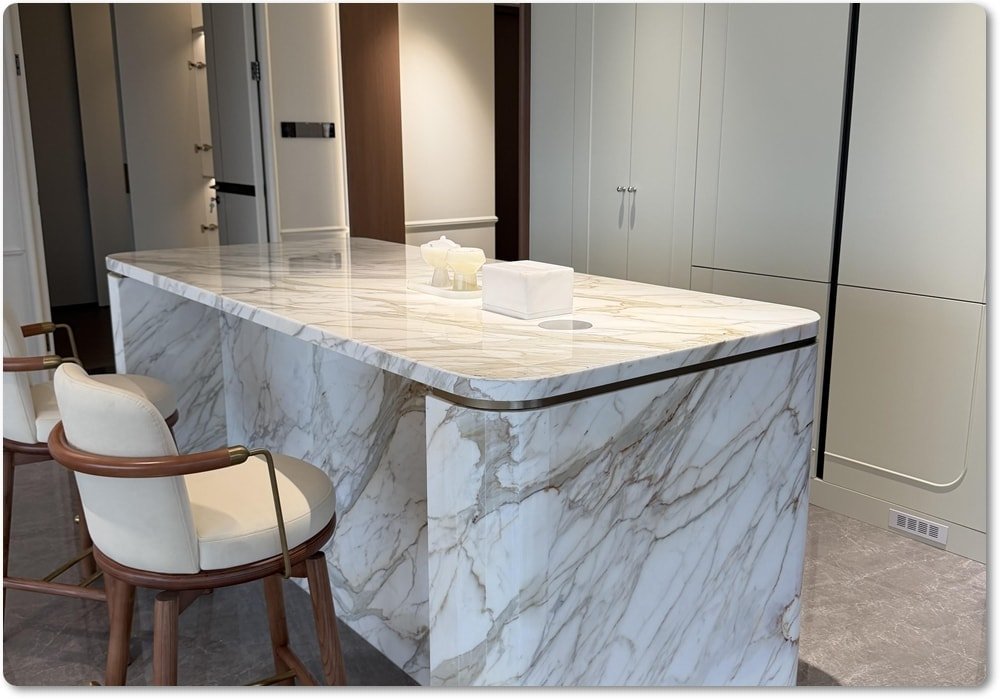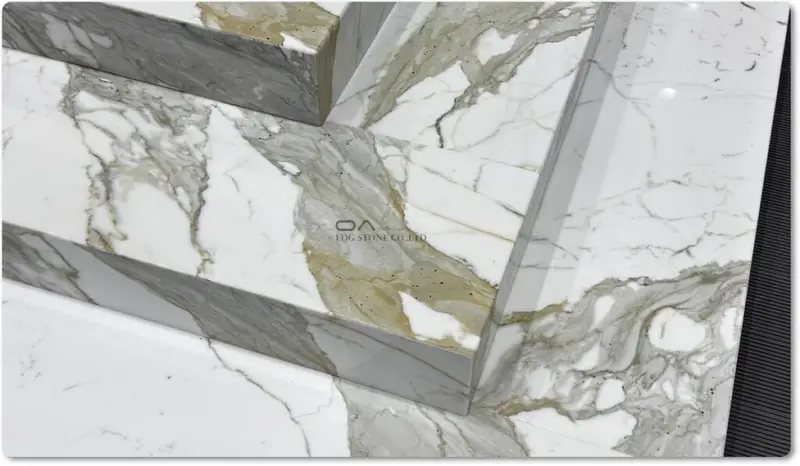
Marble remains one of the most desired natural stones in architecture and interior design because of its elegance, depth, and timeless visual character. Yet behind the polished appearance is a technical reality that matters just as much as beauty: marble is a porous material, and its capacity to absorb water affects stain resistance, durability, maintenance, and long-term performance. That is why porosity testing of marble and comparison of water absorption rates across different varieties is not just a laboratory topic; it is a practical buying criterion for marble countertops, marble vanity tops, marble table tops, and other marble tops used in real projects.
For designers, contractors, and procurement teams, the key question is not whether marble absorbs water at all, but how much, how fast, and under what conditions. Standards such as ASTM C97/C97M and EN 13755 exist precisely to measure absorption and help compare dimension stone and natural stone products consistently. These tests do not make marble “bad”; they make marble measurable, comparable, and easier to specify with confidence.
In today’s market, buyers increasingly want more than marketing language. They want verified performance data, traceability, and clear compliance documentation. This trend is reinforced by the European Union’s updated Construction Products Regulation framework, which aims to give professionals, public authorities, and consumers reliable information for comparing construction products across manufacturers and countries. For stone suppliers, that means technical transparency is becoming a competitive advantage, not an optional extra.
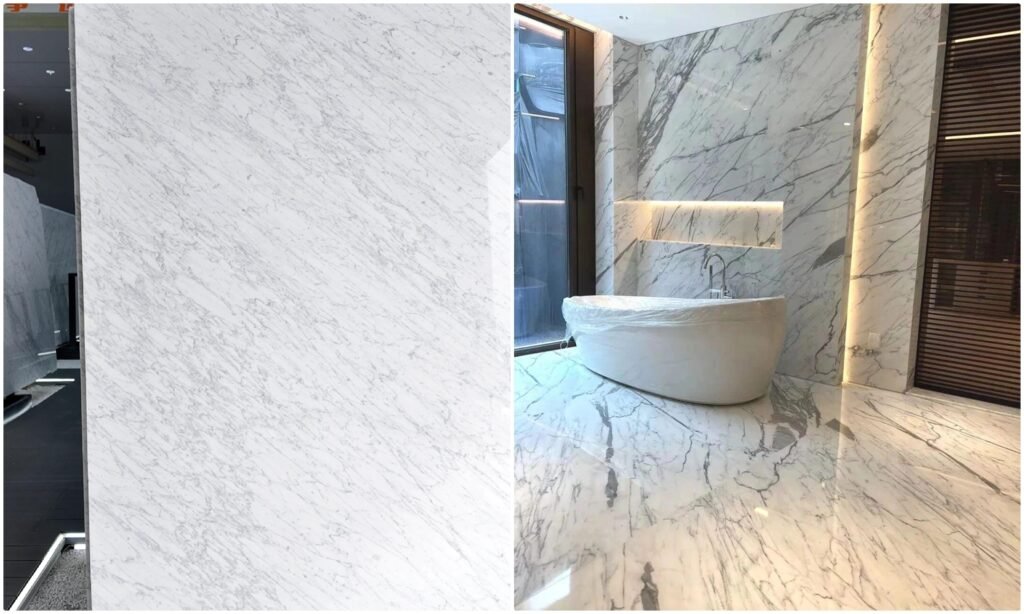
Why Porosity Testing Matters in Marble Selection?
Porosity is the network of microscopic voids, pores, and capillary pathways inside stone. In marble, those pathways determine how readily water can enter the body of the stone, how long moisture can remain inside, and how likely the surface is to show staining, darkening, or patchy drying. The more open the pore structure, the more likely the stone is to absorb liquids and require maintenance. Natural Stone Institute guidance consistently emphasizes that understanding porosity and absorption rate is essential when selecting stone for water-exposed applications.
This is especially important for spaces where marble comes into regular contact with moisture: kitchens, bathrooms, spa areas, hospitality interiors, and decorative wall or tabletop applications. A stone with a lower absorption rate generally performs better in daily life because it resists water ingress more effectively. A stone with a higher absorption rate may still be beautiful and suitable for many projects, but it often needs better sealing, more careful cleaning, and smarter placement.
Water Absorption Is a Performance Indicator, Not a Style Judgment
A higher marble water absorption rate does not mean the stone is unusable. It simply means the stone is likely to be more sensitive in wet, stained, or high-use areas. Likewise, a lower marble absorption rate does not guarantee perfection; it only improves the odds of easier maintenance and longer service life. That is why porosity testing is valuable: it transforms appearance-based selection into evidence-based selection.
What Buyers Actually Need to Know?
If a project involves marble countertops or marble vanity tops, buyers should ask three questions. First, how much water does the stone absorb under standard test conditions? Second, how consistent is the material from one slab or batch to the next? Third, what maintenance plan is required after installation? These questions are more useful than vague claims like “premium marble” or “high-quality stone” because they connect the product to real performance.
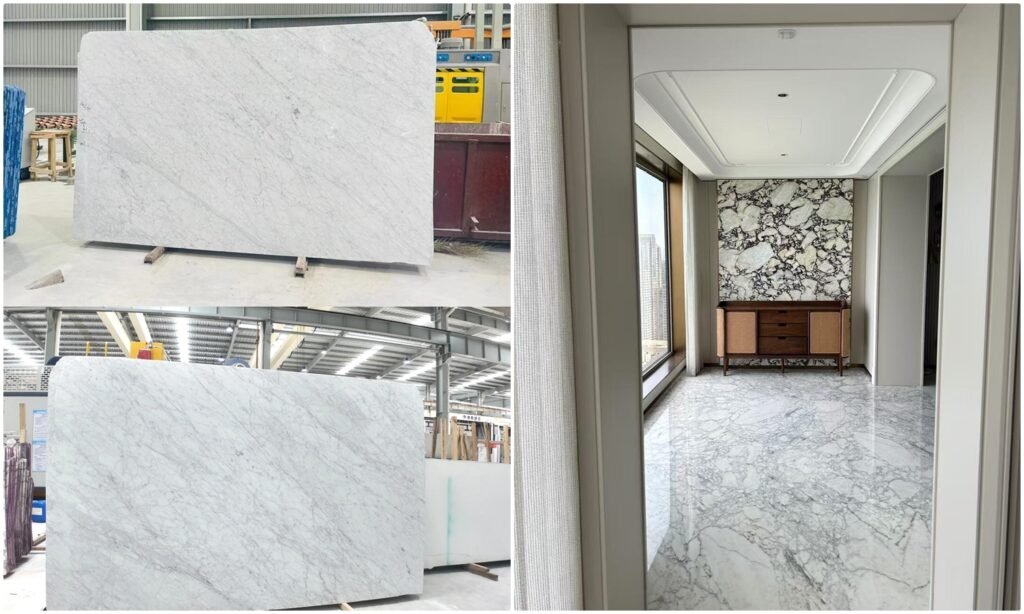
How is Marble Water Absorption Rate Measured?
The most widely recognized method for assessing absorption in dimension stone is ASTM C97/C97M, which covers the determination of absorption and bulk specific gravity for all types of dimension stone except slate. ASTM states that the test is useful for indicating differences in absorption between various stones and for comparing stones of the same type. EN 13755 likewise specifies a method for determining the water absorption of natural stone by immersion in water at atmospheric pressure. Together, these standards help create a common technical language for stone selection.
The Basic Testing Logic
In simple terms, a stone specimen is dried, weighed, immersed or otherwise exposed to water under controlled conditions, and then reweighed after saturation or defined exposure. The weight gain is used to calculate the absorption rate. The beauty of this method is that it reduces guesswork and allows different marbles to be compared on the same basis. The limitation is also important: results depend on specimen preparation, surface condition, thickness, and whether the sample represents the full range of a natural stone deposit.
Why Testing Conditions Matter?
A polished sample, a honed sample, and a coated sample can behave differently. Research on coated stones has shown that surface treatments and heterogeneity can change how water absorption tests should be interpreted. That means the same stone may appear to perform differently depending on finish and processing. For buyers, this is a reminder that a lab report should be read alongside information about the actual product finish and the intended use.
Why “One Number” Is Never the Full Story?
A marble absorption value is useful, but it does not tell the whole story. It does not fully capture stain chemistry, capillary rise behavior, edge vulnerability, or how the stone will age after sealing and cleaning. It is one of the most useful numbers in stone specification, but it should be combined with visual inspection, factory quality control, and application knowledge.
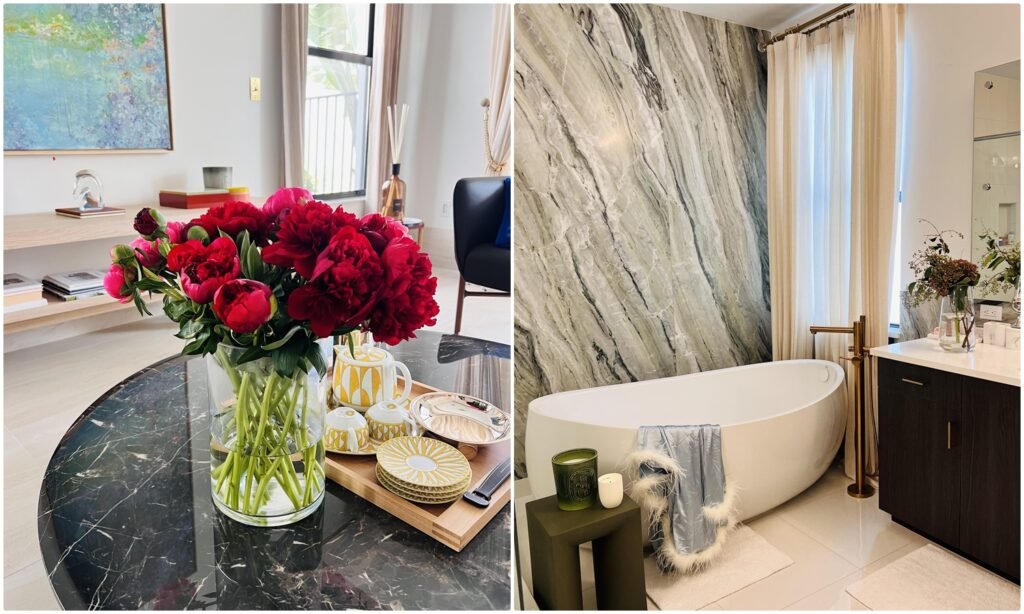
What Affects the Water Absorption Rate of Marble?
Marble water absorption rate is influenced by geology, mineral structure, and fabrication. In practical terms, not all marble is equally dense. Some varieties are tighter and more crystalline; others contain more open spaces, subtle fissures, or microvoids. Density and low absorption are often associated with better suitability for areas exposed to moisture, and the Natural Stone Institute’s dimension stone guidance notes that denser, more resistant stones are preferred when water resistance matters.
1. Mineral Structure
Marble is metamorphosed limestone, and its crystal interlocking pattern affects porosity. Stones with a tighter crystalline structure often absorb water more slowly than stones with more open grain boundaries or microcrack networks.
2. Surface Finish
A polished marble surface may shed water differently from a honed or brushed surface. Finish does not erase porosity, but it can change the way liquid sits on the stone and how quickly it enters exposed pores.
3. Microfractures and Veining
Beautiful veining can also indicate more complex geological structures. In some varieties, veining and movement may coincide with slight differences in density, which can influence local absorption behavior.
4. Resin, Mesh, and Fabrication Treatment
Factory reinforcement, mesh backing, resins, and fillers are common in modern stone processing. These treatments can improve fabrication stability but may also affect absorption readings depending on where and how the test is conducted. That is why buyers should ask whether the report refers to raw stone, finished slabs, or a specific batch.
5. Source Variation
Even within the same marble family, different quarry faces and production lots may not behave identically. That is why wholesale buyers and manufacturers should treat porosity testing as a batch-control tool, not just a one-time academic exercise.
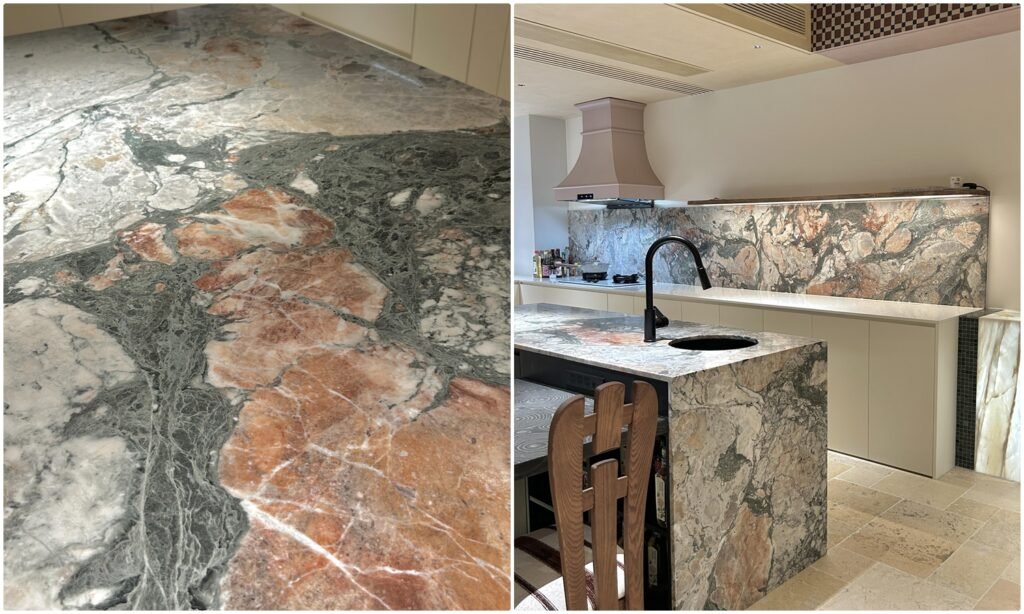
Comparison of Water Absorption Rates Across Different Marble Varieties
A useful comparison starts with a simple principle: the best marble for wet or frequently cleaned environments is usually the one with the lowest practical absorption and the most consistent batch quality. Rather than relying on marketing names alone, buyers should compare dense, compact, and low-absorption varieties against more open and expressive stones.
Low-Absorption Marble Varieties
These are generally preferred for higher-contact surfaces when the project still requires a marble look. They tend to be better candidates for marble countertops, marble vanity tops, and premium marble tops in hospitality or retail environments. Examples often include tighter, more compact white or gray marbles with fine crystalline structure.
Moderate-Absorption Marble Varieties
These can perform well when sealed properly and maintained carefully. They are often chosen for decorative tables, feature areas, and bathrooms where design is important, and moisture exposure is manageable.
Higher-Absorption Marble Varieties
These stones can still be used beautifully, but they usually require stricter sealing, more careful placement, and more predictable maintenance. They may be better suited to low-splash or low-stain areas, wall cladding, or decorative surfaces rather than heavy-use countertops.
Practical Variety Comparison for Buyers
| Variety Type | Typical Absorption Behavior | Best Use Case | Maintenance Expectation |
|---|---|---|---|
| Dense white marble | Lower | Countertops, vanity tops, tabletops | Moderate |
| Compact gray marble | Lower to moderate | Residential and hospitality surfaces | Moderate |
| Veined decorative marble | Moderate | Feature walls, tabletops, and accent pieces | Higher |
| Open-grain marble | Higher | Low-contact decorative use | Higher |
This table is intentionally practical rather than absolute. Natural marble is variable, and a specific slab can outperform or underperform the general category depending on quarry source and fabrication quality. The main lesson is that water absorption marble performance should be confirmed with test data rather than assumed from appearance alone.
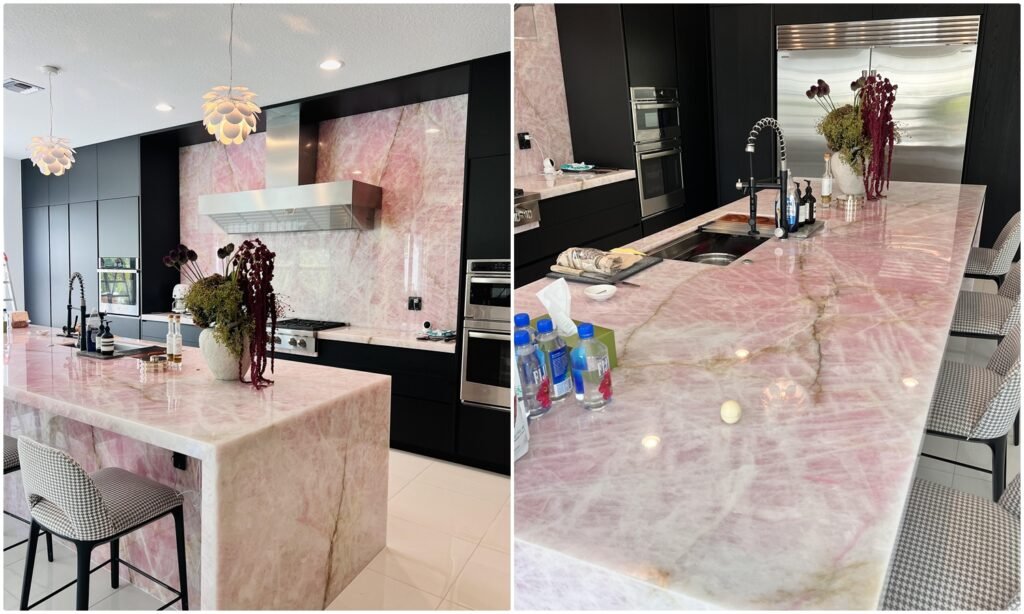
What Marble Countertops, Vanity Tops, and Table Tops Need from a Performance Standpoint?
For marble countertops, water absorption matters because the surface may see frequent wiping, spills, soap, coffee, wine, oil, and cleaning agents. In kitchens, even a beautiful marble can become frustrating if it absorbs stains too quickly or requires constant restoration. In bathrooms, marble vanity tops must handle daily water contact, cosmetics, soap residue, and humidity. Marble table tops in hotels, cafés, and luxury residences face a mix of moisture, friction, and repeated cleaning.
Marble Countertops
Countertops are one of the most demanding applications because they combine wet use with food and chemical exposure. Lower-absorption marbles are usually better because they reduce the risk of ring marks and darkened patches.
Marble Vanity Tops
Vanity tops often experience repeated splashing rather than heavy liquid spills. That makes porosity especially visible around sinks, faucet bases, and edge details. A well-sealed stone with lower absorption will generally age better in this environment.
Marble Table Tops
Table tops benefit from good sealing and careful daily care, especially in hospitality settings. Because the contact pattern is intermittent, even a moderately absorbent stone can perform well if the project team understands maintenance expectations.
Marble Tops in General
Across all marble tops, the most important variables are not just absorption values, but also fabrication quality, edge treatment, sealant choice, and user behavior. A beautiful stone can still fail in service if those supporting factors are ignored.
How to Reduce Water Damage in Marble?
The goal is not to make marble waterproof. The goal is to make it practical, durable, and visually stable in the intended environment. That starts with sealing, correct installation, and good daily habits.
Seal Correctly, Then Re-Seal When Needed
Sealants do not turn porous stone into a non-porous surface, but they can slow liquid penetration and improve cleanability. Natural Stone Institute resources emphasize that the right sealant selection and application are important in natural stone installations. The best sealer is only as effective as the surface preparation and application method behind it.
Keep Standing Water to a Minimum
Long contact times matter. Water left sitting on the surface, especially near edges, joints, or cutouts, is more likely to penetrate.
Use pH-Appropriate Cleaners
Harsh cleaners can strip sealers or alter the stone finish. Marble should be cleaned with products intended for natural stone, not aggressive acid-based or abrasive formulas.
Protect Vulnerable Areas
Sink cutouts, faucet bases, backsplash edges, and corners are usually more vulnerable than the flat field of the slab. Better detailing in these zones can significantly reduce absorption-related staining.
Specify the Right Stone for the Right Space
A low-absorption marble is generally a better candidate for a wet kitchen or bathroom than a more open stone. That is why material choice should happen before fabrication, not after installation.
What the Latest Regulations and Industry Direction Mean for Marble Buyers?
The construction products market is moving toward clearer product performance information, better comparability, and more reliable documentation. The European Commission states that the Construction Products Regulation provides a common technical language to assess construction products and ensures reliable information is available so professionals and consumers can compare performance across manufacturers and countries. The updated Regulation (EU) 2024/3110 entered into force on January 7, 2025, and becomes applicable on January 8, 2026.
For stone suppliers, this direction matters. Buyers are increasingly expecting:
documented test methods,
consistent production control,
clearer product declarations,
and better traceability from quarry to finished slab.
This is especially true for manufacturers, factories, and wholesale channels serving export markets. A supplier that can produce verified porosity and absorption data has a stronger story than one relying only on visual grading or marketing language. In practice, this means that EDG Stone and similar suppliers can build trust faster by publishing technically meaningful data for marble countertops, marble vanity tops, and marble table tops.
Industry Direction in One Sentence
The future belongs to marble suppliers who can combine beauty, consistency, compliance, and measurable performance.
How to Choose a Marble Manufacturer, Factory, or Wholesale Supplier
Procurement teams should never buy marble on appearance alone. A serious manufacturer or factory should be able to answer technical questions about absorption, porosity, batch variation, sealability, and intended use.
Questions Buyers Should Ask
First, ask which standard was used for testing. Second, ask whether the sample represents raw stone, finished slab, or a specific product line. Third, ask for guidance on sealing and maintenance. Fourth, ask whether the material has been used successfully in similar projects. Fifth, ask how the supplier controls variation across batches.
Why Wholesale Buyers Need More Technical Discipline?
Wholesale projects often depend on consistency. A hotel, villa project, or multi-unit development cannot afford a surprise in absorption behavior after installation. That is why wholesale buyers should prioritize suppliers that understand porosity testing of marble and comparison of water absorption rates across different varieties as a production-control issue, not just a lab report.
Why EDG Stone Should Emphasize Testing and Data?
For a brand like EDG Stone, technical communication can become part of the value proposition. If a supplier can explain why one marble variety is better suited for marble countertops while another is better for marble table tops, the buyer gains confidence, and the project risk drops. In competitive markets, that clarity is often the difference between a one-time order and a long-term supply relationship.
Semantic Closing Block
What: Porosity testing tells you how much water a marble variety can absorb under standardized conditions, and that information helps predict performance in real projects. It is one of the most practical ways to compare marble countertops, marble vanity tops, marble table tops, and other marble tops before purchase.
Why: Different marble varieties absorb water differently because their crystal structure, pore network, finish, and fabrication details are not identical. A dense, compact stone usually performs better in moisture-prone areas, while a more open stone may need stricter sealing and more cautious use.
How: The safest approach is to combine standardized testing, visual inspection, and supplier documentation. Buyers should confirm the test method, review the finish condition, and ask for maintenance guidance before approving a slab for installation.
Option: For kitchens and bathrooms, choose lower-absorption marble whenever possible. For decorative and low-contact areas, more expressive varieties can still work well if the project team understands the care requirements. For wholesale procurement, batch consistency and verified data matter as much as appearance.
Consideration: The best marble decision is not only about luxury; it is about matching the stone’s technical behavior to the project’s moisture, usage, and maintenance profile. That is the logic behind modern purchasing decisions, especially for manufacturers, factories, and wholesale suppliers serving international markets.
FAQ
1. What is the marble water absorption rate?
Marble water absorption rate is the percentage of water a marble specimen absorbs under a defined test method. It is a key indicator of how porous the stone is and how likely it is to take in moisture during daily use. In practical terms, a lower absorption rate usually means better resistance to staining and easier maintenance.
2. Does marble absorb water easily?
Marble can absorb water because it is a natural stone with pores and microchannels, but not all marble absorbs at the same speed or to the same degree. Dense varieties tend to perform better than more open or veined varieties. Sealing and proper care can also reduce the impact of water exposure.
3. How do you test the porosity of marble?
Porosity is commonly evaluated through standardized laboratory methods such as ASTM C97/C97M and EN 13755. The stone is dried, weighed, exposed to water under controlled conditions, and weighed again to determine absorption. This creates a repeatable basis for comparing one marble variety against another.
4. Which marble variety has the lowest absorption rate?
There is no universal answer because absorption depends on quarry source, crystal density, finish, and batch variation. In general, tighter, denser marbles tend to perform better than more open-grained decorative stones. The most reliable way to identify a low-absorption option is to review test data from the exact product being supplied.
5. Are marble countertops suitable for bathrooms and kitchens?
Yes, marble countertops can be suitable for bathrooms and kitchens, but the stone selection must match the use case. Lower-absorption marbles are usually better for wet or frequently cleaned areas, while more porous varieties may require stricter sealing and maintenance. Careful material choice makes a major difference in long-term performance.
Reference
ASTM International, ASTM C97/C97M Standard Test Methods for Absorption and Bulk Specific Gravity of Dimension Stone, ASTM International.
European Committee for Standardization (CEN), EN 13755 Natural Stone Test Methods — Determination of Water Absorption at Atmospheric Pressure, CEN.
European Commission, Construction Products Regulation (CPR), European Commission.
European Parliament and Council, Regulation (EU) 2024/3110 of 27 November 2024 laying down harmonised rules for the marketing of construction products, EUR-Lex.
Búrdalo-Salcedo, G., et al., Adaptation of a Standard Method for Water Absorption Testing of Coated Stones, peer-reviewed research article, 2023.
Intertek, ASTM C97: Standard Test Methods for Absorption and Bulk Specific Gravity of Dimension Stone, technical standards summary.