Can sintered stone be curved?
1) What is sintered stone? (definition)
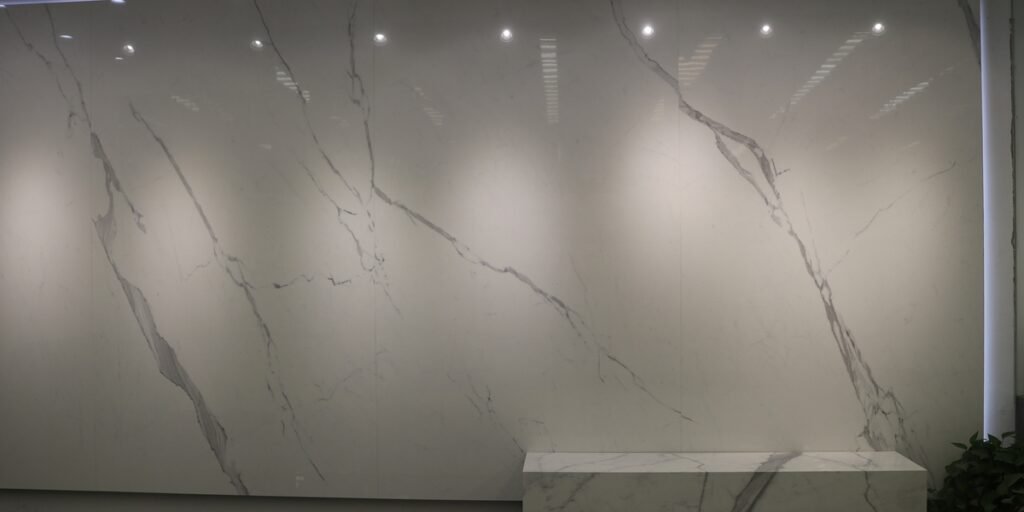
Sintered stone — often marketed as ultracompact or sintered surfaces (brand names: Dekton®, Neolith®, Lapitec®, and others) — is an engineered mineral slab produced by combining natural minerals (glass, porcelain, quartz, and other mineral powders) and then applying very high pressure and very high temperatures so particles fuse into a dense, non-porous sheet. Unlike resin-based engineered quartz, sintered stone contains no polymer binder: the raw materials are bonded by the sintering process itself.
2) How is sintered stone made? (short, technical)
Typical steps (high level):
Raw material selection (minerals, recycled glass, pigments).
Blending and spray/press forming.
High-pressure compaction (machines that can apply thousands of tons).
Sintering/firing at very high temperatures (processes vary by maker).
Cooling, cutting to slab size, finishing (polished/honed/textured).
Manufacturers emphasize proprietary press/sinter formulas (TSP/SPT/TSP-type processes) that differentiate final properties and available formats (slim panels, large formats, facade panels).
3) Key material properties (brief evidence)
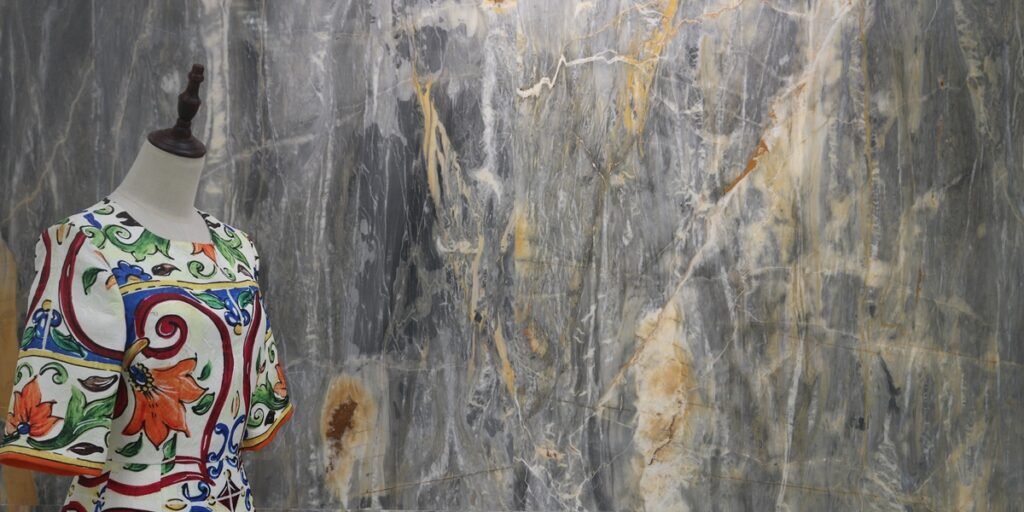
Durability: Highly resistant to stains, heat, UV, and chemical exposure; suitable for indoor and outdoor use.
Scratch & impact: Very scratch resistant, but like other ceramics/porcelain, the edges are vulnerable to chipping if improperly handled.
Weight: Slab weight depends on thickness; ultra-thin formats (e.g., 4–6 mm) are much lighter and used for cladding/vertical panels. Thicker countertop slabs are heavy and require typical stone handling equipment.
4) Can sintered stone be curved? — Practical, nuanced answer
Short: Yes, but not by bending like metal.
Longer explanation:
Rigid by nature: Sintered stone is a ceramic/mineral composite that is inherently rigid. You cannot cold-bend a standard 12–20 mm slab the way you bend sheet metal or thermoform certain plastics.
How curves are achieved in practice:
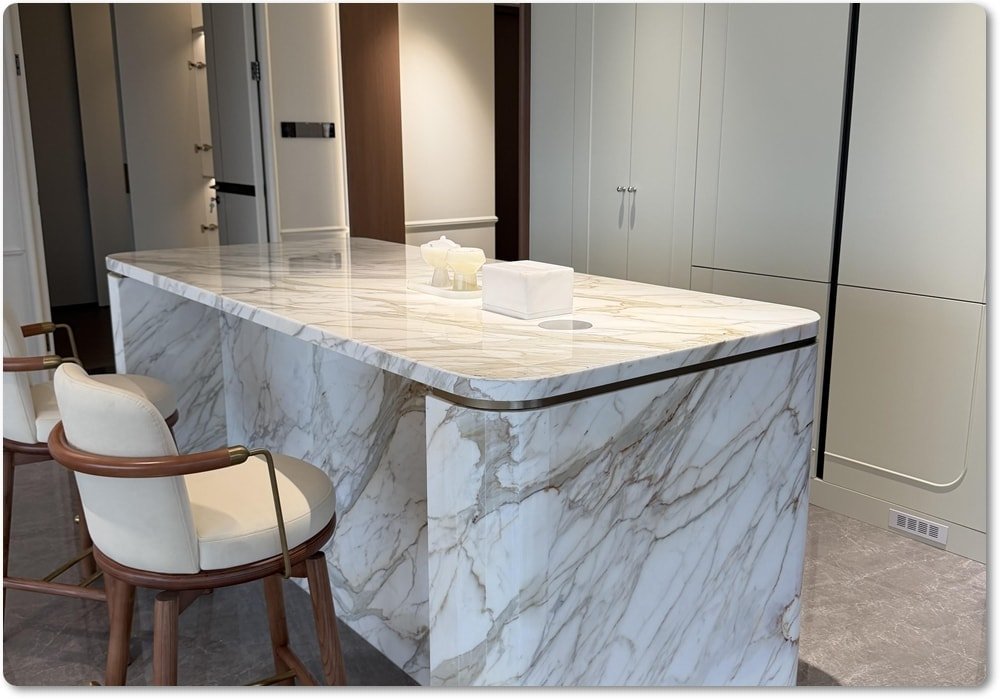
Precision cutting & profiling — CNC routers, waterjet cutting, or diamond blade saws cut smooth radiused profiles from a flat slab to produce curved edges, rounded islands, or circular tabletops. These pieces are then installed to create a continuous curved appearance.
Segmented assembly — large radii or compound curves are often realized by joining multiple shaped panels with invisible seams or mechanical fixing, producing a continuous curved line while keeping each piece within safe stress limits.
Ultra-thin panels + cold-mounting (façades) — manufacturers produce slim 3–6 mm panels that can be fixed to a curved subframe (a form of “cold bending” where the panel is attached to a curved substrate). This is common in ventilated façades and architectural cladding (example: Dekton façades on landmark projects). The slab itself is not plastically deformed; engineering and fixing systems make the visual curve possible.
Manufacturer-made curved panels — in highly specialized architectural projects, the manufacturer may deliver pre-formed curved units (prefabricated curved panels) designed and manufactured specifically for that radius. Cosentino and other brands have delivered engineered curved façade panels on flagship projects.
Bottom line: designers can expect curved sintered stone outcomes — but curves arise from fabrication and mounting strategies, not from bending a heavy, rigid slab on site.
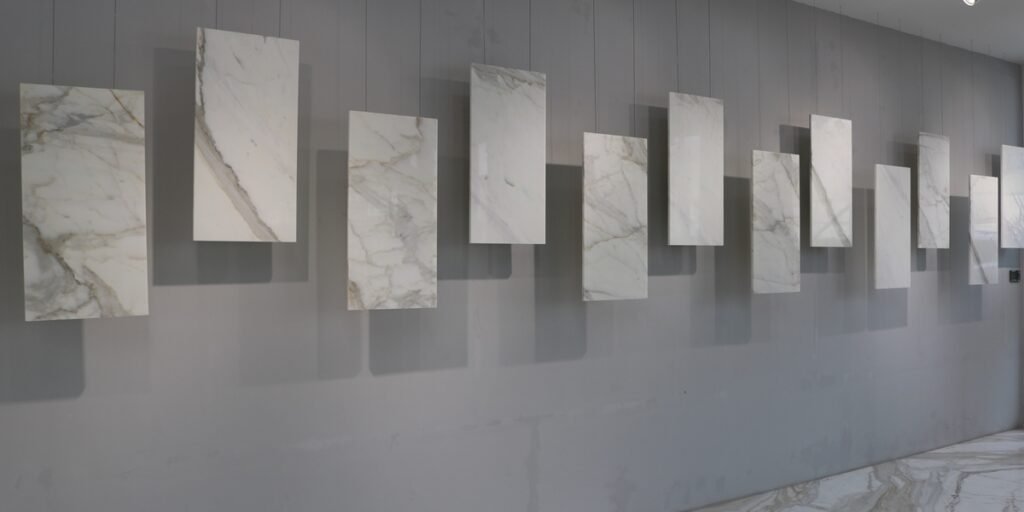
5) Cutting & fabrication — tools, methods, and tips
Practical methods used by fabricators:
CNC machining (diamond tooling): for precise radii and edge profiles. Use correct feed speeds and diamond tooling suited to ultracompact surfaces.
Waterjet cutting: excellent for complex shapes, circles, and internal cutouts, with minimal mechanical stress. A waterjet can cut almost any shape without thermal or mechanical damage, but requires expertise.
Wet diamond saws/bridge saws: for straight cuts and bevels; always use recommended blades and water to control dust/heat.
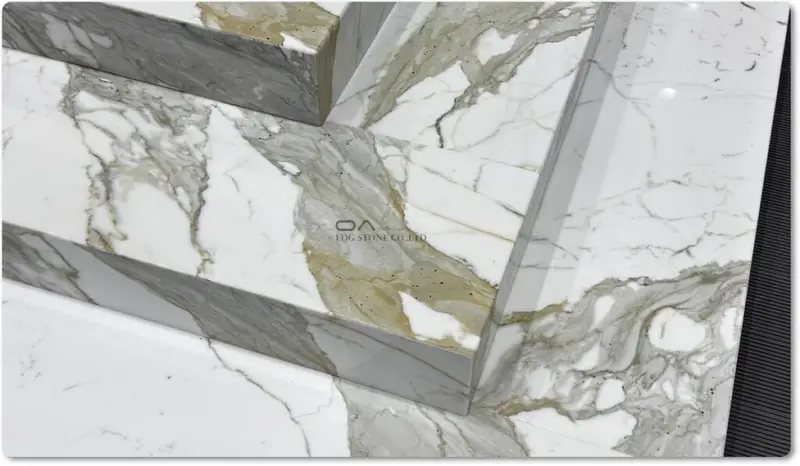
Edge finishing & radiusing: after cutting, edges are ground and polished to avoid stress concentrators that cause chipping. Radius the edge carefully — sharp inside corners are high-risk.
Safety & dust control: cutting and grinding generate respirable crystalline silica dust — strict engineering controls (wet cutting, local exhaust, HEPA vacuums, respiratory protection) and regulatory compliance are mandatory. See Regulations section below.
6) Pros and cons (quick reference for buyers & designers)
Pros
Exceptional heat, UV, and stain resistance — ideal for indoor/outdoor continuity.
Non-porous — hygienic and low maintenance.
Large formats and slim panels enable seamless aesthetics and façade uses.
Cons
Hard and brittle edges — higher risk of chipping if not profiled and handled by experienced fabricators.
Requires specialist tooling and skilled fabricators — cost and lead time can be higher.
Fabrication safety burden due to silica dust (see Regulations).
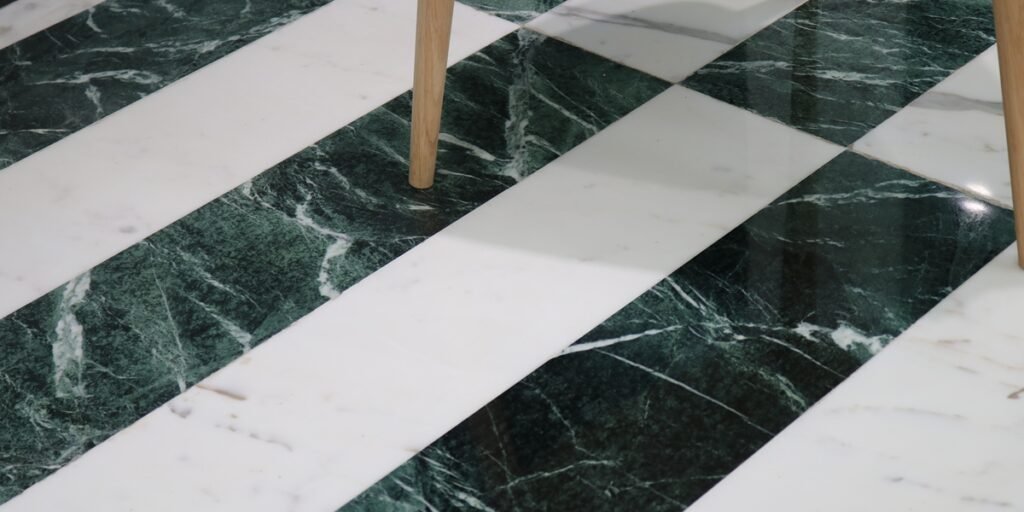
7) Regulations, worker safety & industry direction (latest)
Fabricating sintered stone releases respirable crystalline silica (RCS) when cutting, grinding, and polishing. Because RCS causes silicosis, lung cancer, and other illnesses, governments and agencies have tightened rules:
OSHA (United States) enforces respirable crystalline silica standards that require exposure limits, control methods (wet cutting, ventilation), medical surveillance, and respirator use where necessary. Employers must follow Table 1 controls or monitor exposures.
MSHA / other regulators have issued stronger rules in recent years to lower miners’ exposure (which affects mineral supply chains).
Regional action: Australia moved aggressively on engineered stone, restricting or banning certain engineered stone use to protect workers (noting engineered stone — high quartz content — carries high RCS risk). This regulatory pressure has accelerated the adoption of safer fabrication practices and created a market push toward safer materials and stricter controls.
California & Proposition 65 require warnings for exposure to listed chemicals (including crystalline silica) and have adopted more protective occupational standards in 2024–2025 for artificial stone workers. Several U.S. states and agencies are increasing enforcement and inspections of countertop fabricators.
Industry direction: stricter workplace controls, investment in wet-cutting, dust capture, automation (robotic CNC, waterjet), supplier training, and prefabrication off-site to minimize on-site cutting are becoming standard strategies. Projects that use sintered stone increasingly require documented silica control plans and fabricator certification.
8) Design guidance — radii, joins, support & outdoor use
Minimum radius: There is no universal minimum radius — it depends on slab thickness, finish, and the manufacturer’s guidance. Tight radii increase chipping risk. Always request the manufacturer’s recommended minimum radius and a fabricator’s pre-cut mockup.
Seam planning: Use seam placement to hide joins in low-stress areas; mechanical fixing and adhesive systems designed for ultracompact surfaces provide durable joins.
Support & substrate: For thin panels used on curves, structural backing frames (engineered subframes) are essential — the panel must be fully supported to avoid point loads.
9) Suggested long-tail keywords (3–5 purchase-intent examples)
sintered stone slab manufacturer near me
Buy sintered stone countertop wholesale factory
curved sintered stone panels manufacturer
Sintered stone waterjet cutting service for countertops
sintered stone façade supplier and installation company
10) SEO assets
Focus keyword: sintered stone curved
3–5 long-tail keywords (repeated for clarity):
curved sintered stone panels manufacturer
Buy sintered stone slab wholesale factory
sintered stone custom waterjet cutting service
curved Dekton facade supplier
sintered stone countertop manufacturer OEM
50 SEO tags (short, comma-separated list for CMS/tagging):
sintered stone, sintered surface, ultracompact surface, Dekton, Neolith, Lapitec, sintered stone curved, curved countertops, sintered stone manufacturer, sintered stone factory, sintered stone wholesale, sintered slab buy, sintered stone cutting, waterjet cutting sintered stone, CNC sintered stone, sintered stone facade, curved façade, curved cladding, sintered stone durability, sintered stone vs quartz, sintered stone vs porcelain, how sintered stone is made, sintered stone meaning, sintered stone definition, sintered stone weight, does sintered stone scratch, sintered stone cleaning, sintered stone pros cons, sintered stone installation, sintered stone edge profile, sintered stone island, sintered stone radius, sintered stone miter, sintered stone supplier, OEM sintered stone, sintered stone wholesale slabs, buy Dekton slabs, buy Neolith slabs, sintered stone manufacturer China, sintered stone factory Europe, sintered stone factory USA, best sintered stone, sintered stone warranty, sintered stone facade project, curved countertop supplier, sintered stone quotes, sintered waterjet service, sintered stone sample request, sintered stone specifications, sintered stone technical data sheet, sintered stone sustainability, sintered stone UV resistance.
11) FAQ — Google hot searches (5 items)
FAQ (visible on page)
Can sintered stone be curved?
Yes — although sintered stone is rigid and cannot be bent like metal, it can be shaped into curved installations by precision cutting (CNC, diamond tooling), waterjet, segmented assembly, thin-panel mounting to curved subframes, or by ordering factory-made curved panels. Curved façades have been delivered by leading manufacturers using engineered panel systems.Is sintered stone durable and scratch-resistant?
Sintered stone is highly durable: it resists heat, UV, stains, and everyday abrasion better than many other surfacing materials; however, edges are brittle and may chip if mishandled.How is sintered stone cut for curved shapes?
Fabricators use CNC routers with diamond tooling, waterjet cutting for complex internal profiles, and wet bridge saws for straight cuts. Post-cut edge profiling and polishing minimize chipping. Wet cutting and dust controls are essential for safety.Is sintered stone the same as porcelain or quartz?
No. Sintered stone is a distinct ultracompact mineral product sintered under heat and pressure (no resin binders). Porcelain is a ceramic made from clay and feldspar; engineered quartz mixes crushed quartz with resins. Each material has different fabrication rules and performance tradeoffs.Are there safety or regulatory issues when fabricating sintered stone?
Yes. Cutting/grinding generates respirable crystalline silica (RCS), a serious health hazard. Fabricators must use engineering controls (wet cutting, LEV, HEPA), respiratory protection, medical surveillance, and comply with regulations (OSHA, state standards, industry guidance). These rules are shaping industry practices and prefabrication trends.
Semantic Closed-Loop Insight: How, Why, What, Options & Considerations
How: Curves are realized by tooling + engineering: CNC/waterjet to shape pieces, segmented joins for compound curves, or pre-engineered thin panels mounted to curved subframes — not by plastic deformation of thick slabs.
Why: Designers choose curved sintered stone for seamless aesthetics, weatherproof outdoor continuity, and durable high-traffic surfaces where long-term color stability and heat resistance matter.
What: Combines stone-like looks with porcelain-level performance (low absorption, UV stability), offered in large formats and slim panels for façades and furniture. Trade-offs: fabrication complexity and silica safety controls.
Options (detailed):
Monolithic curve: carved from a thicker slab (limited by radius & risk) — best only for gentle radii and with heavy profiling.
Segmented curve: multiple prefabricated pieces joined onsite with engineered adhesive/mechanical fixings — best for large radii and complex geometry.
Thin panel + curved frame: ultra-thin panels fixed to a curved structure — ideal for ventilated façades and large vertical curves.
Considerations (detailed):
Confirm manufacturer minimum radii & finish limits.
The plan seems to sit in low-stress zones.
Require documented silica control plans, wet cutting, and containment or prefabrication to limit onsite cutting.
Budget for specialist fabrication — curved sintered stone is a premium scope item.