
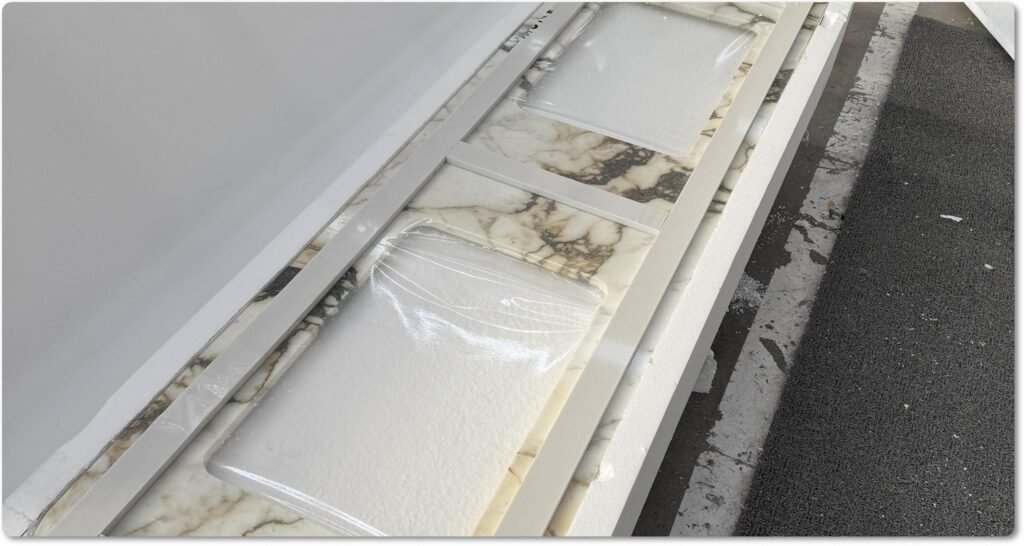
1. Executive Summary: Procurement Conclusions and Intended Audience
International shipping is one of the most important stages in a commercial stone furniture procurement project. A well-manufactured marble dining table, travertine coffee table, stone console, vanity, or custom stone cabinet can still arrive with chipped corners, cracked components, damaged finishes, or missing hardware if its packaging and transportation arrangements are inadequate.
For B2B buyers, a successful stone furniture bulk order is therefore not simply a purchase of finished products. It is a coordinated process involving material selection, manufacturing capacity, quality control, packaging engineering, freight planning, customs documentation, cargo insurance, and destination-side receiving procedures.
1.1 What buyers should prioritize?
The following principles should guide bulk procurement:
Reserve the correct material: Confirm the stone type, slab or block availability, approved color range, finish, and quantity before finalizing the production schedule.
Control production milestones: Define drawing approval, sample approval, first-article inspection, batch inspection, and final release criteria.
Design packaging around the product: Account for weight, dimensions, fragile projections, surface finishes, center of gravity, lifting points, and the possibility of movement during transit.
Verify the loading plan: Calculate cargo volume and weight from actual packing data and verify the container’s permitted payload, usable dimensions, and loading constraints.
Document the shipment: Record package numbers, dimensions, gross and net weights, photographs, loading arrangements, and shipping documents.
Allocate responsibilities contractually: Specify who pays for freight, insurance, export clearance, destination charges, and cargo handling under the agreed Incoterms® rule.
Inspect at destination: Establish procedures for receiving, unloading, photographing, reporting damage, and preserving evidence for a potential insurance claim.
1.2 Who should use this guide?
This guide is designed for importers placing repeat orders, wholesalers building inventory, distributors developing product collections, retailers sourcing private-label furniture, and project buyers purchasing stone furniture for hotels, apartments, villas, restaurants, and commercial interiors.
It is particularly useful when purchasing multiple product designs or finishes within one shipment, where production sequencing and packing complexity can be as important as the unit price.
1.3 The central procurement conclusion
The safest and most commercially efficient shipping plan is the one engineered around the actual order—not an assumed number of pieces per container.
A reliable stone furniture manufacturer should be able to connect the product specification to the production plan, package design, container-loading proposal, and final shipping records. This gives the buyer a traceable basis for evaluating cost, delivery risk, and supplier performance.
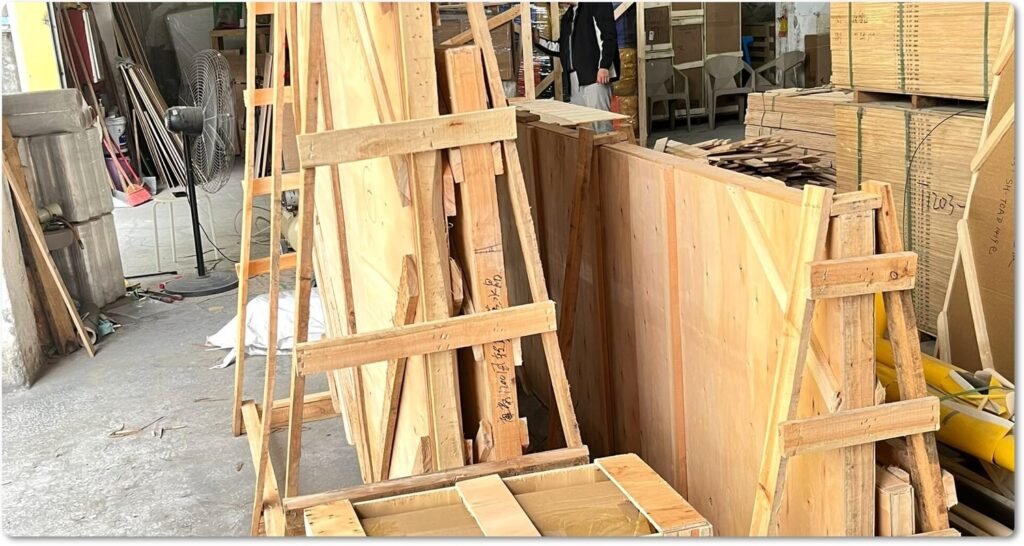
2. Scope and Definitions: Products, Shipping Methods and Key Terms
2.1 What does stone furniture bulk order mean?
A stone furniture bulk order is a commercial purchase of multiple finished furniture units or components manufactured, packed, and shipped under an agreed purchase order or project contract.
Depending on the supplier’s capabilities, the order may include:
Marble dining tables and coffee tables
Granite tables and benches
Travertine consoles and occasional tables
Quartzite furniture tops
Natural stone desks and side tables
Stone vanities and bathroom furniture
Stone-and-metal or stone-and-wood furniture
Custom hotel, residential, and commercial furniture
Replacement tops, bases, panels, and related stone components
Bulk purchasing does not necessarily mean every unit is identical. A shipment may contain several models, sizes, finishes, colors, or customer-specific designs. Each variation should be identified in the approved product schedule and packing list.
2.2 What is the difference between a manufacturer, factory, vendor, and freight forwarder?
| Term | Main responsibility | What buyers should verify |
|---|---|---|
| Stone furniture manufacturer | Produces or coordinates manufacturing of furniture | Technical capability, quality controls, production capacity |
| Stone furniture factory | Physical production facility | Machinery, processing stages, material handling and packing facilities |
| Stone furniture vendor | Commercial supplier responsible for the agreed scope | Contract terms, communication, documentation and accountability |
| Export packing provider | Prepares products and crates for shipment | Packaging design, materials, marking and handling procedures |
| Freight forwarder | Arranges transportation and related logistics | Route, carrier, cut-off dates, charges and document coordination |
| Customs broker | Handles customs formalities under its engagement | Correct declarations, classification support and clearance requirements |
A single company may perform several of these functions. Buyers should establish which entity is contractually responsible for each activity rather than assuming that the factory, vendor, forwarder, and insurer have identical obligations.
2.3 What is stone furniture lead time?
Stone furniture lead time is the period required to move an order through the agreed procurement and delivery milestones.
It may include:
Technical clarification and quotation.
Material sourcing and reservation.
Shop drawings and finish approval.
Production scheduling and fabrication.
First-article approval, where applicable.
Batch production and quality inspection.
Export packaging and shipment preparation.
Export customs clearance and carrier departure.
International transportation.
Destination customs clearance and final delivery.
A supplier’s factory lead time is not necessarily the same as total door-to-door delivery time. Buyers should request separate estimates for production, packing, origin handling, main carriage, and destination delivery.
2.4 What does container loading involve?
Container loading includes the placement, securing, distribution, and documentation of cargo inside a suitable shipping container or other transport unit.
For stone furniture, loading decisions must consider the load-bearing capacity of the container floor, package dimensions, cargo weight distribution, forklift access, lifting requirements, restraint methods, and the structural strength of each crate.
Important distinction: A container that has sufficient internal volume may still be unsuitable for a particular shipment because of payload limits, door dimensions, concentrated floor loads, package orientation, or handling restrictions.
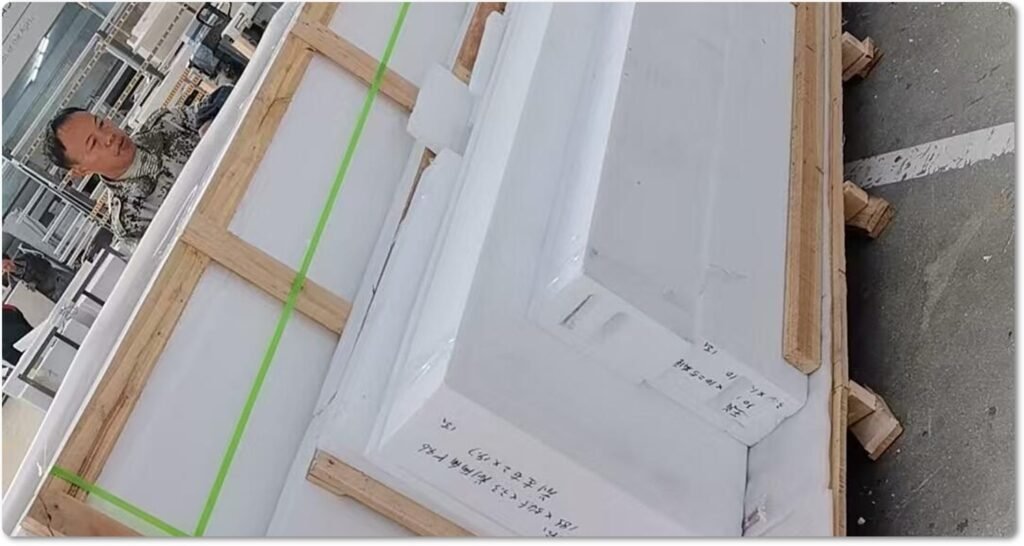
3. Technical Evaluation: Materials, Production, Packaging and Loading
3.1 Material reservation and batch consistency
Stone is a natural material. Even within the same commercial stone name, individual slabs or blocks can vary in veining, background color, mineral distribution, and visual character.
For large orders, the manufacturer should establish a material-control process before cutting begins.
3.1.1 Confirm the approved material specification
The purchase order or technical specification should identify:
Commercial stone name and, where known, geological or material identification.
Required color range and acceptable natural variation.
Surface finish, such as polished, honed, brushed, or another agreed finish.
Thickness and dimensional tolerances.
Vein direction and matching requirements.
Resin treatment, filling, reinforcement, or other processing where relevant.
Intended application and expected service conditions.
Approved reference samples, slab photographs, or physical mock-ups.
For example, a hospitality project using bookmatched marble table surfaces may require stricter control of vein continuity than a mixed inventory order of small side tables.
The acceptance criteria must reflect the product’s intended appearance and use. Natural variation should not automatically be treated as a defect, but it should not be used to justify deviations from a documented approval.
3.1.2 Reserve sufficient material
The quantity reserved should account for the approved bill of materials, cutting layouts, expected fabrication yield, replacement needs, and any agreed contingency.
The manufacturer should not reserve only the theoretical finished-product area when the design involves complex shapes, thick edges, matching patterns, or substantial machining.
Buyers should request confirmation of:
Reserved material quantity or identified slabs.
Material photographs or lot references, when practical.
Expected production yield and material-loss assumptions.
The procedure for approving replacement material.
The method used to preserve visual consistency across multiple production batches.
Material reservation reduces the risk of unexpected substitutions, but it does not guarantee that every finished item will be visually identical.
3.2 Production scheduling and first-article approval
A bulk order should be divided into defined production milestones rather than treated as one undifferentiated manufacturing period.
3.2.1 Recommended production sequence
| Milestone | Required output | Buyer action |
|---|---|---|
| Order confirmation | Signed specification and order schedule | Verify models, quantities and commercial terms |
| Drawing approval | Approved shop drawings and dimensions | Confirm interfaces, overhangs and assembly details |
| Material approval | Material references and finish sample | Approve color range and visual characteristics |
| First article | Initial finished unit or agreed representative component | Inspect critical dimensions, finish and construction |
| Batch production | Completed units grouped by model or production lot | Review progress and exceptions |
| Final inspection | Inspection report and defect disposition | Approve release against agreed criteria |
| Packing release | Package register and packing records | Verify labels, quantities, and shipment readiness |
Not every order requires a separate physical prototype. The parties may agree on a first-article inspection, sample component, digital approval, or another verification method appropriate to the order’s size and risk.
3.2.2 Why first-article approval matters?
A first article can reveal issues that are difficult to identify from drawings alone, including edge-profile appearance, assembly fit, actual stone color, hardware positioning, base stability, and the relationship between stone components and supporting structures.
The approval should identify the specific item or component being accepted and the criteria it represents. A signed approval does not remove the need for ongoing batch inspections.
3.2.3 Batch traceability
Each finished item or package should be traceable to the applicable order, model, production lot, and inspection record.
A practical identification system might use:
Purchase order number.
Model or SKU.
Item number.
Production batch or lot.
Package number.
Inspection status.
Destination or project reference.
For example, a label could identify a project, model, batch, and crate number without exposing unnecessary commercial information.
Traceability helps the importer identify affected products when a quality issue arises and supports replacement planning, claims assessment, and future supplier evaluation.
3.3 Weight, dimensions and center of gravity
Stone furniture requires more than a visual packaging assessment. Its mass, shape, support points, and handling orientation determine how the finished item should be lifted and restrained.
3.3.1 Establish actual product and package weights
The manufacturer should distinguish between:
Net weight: The weight of the product itself, according to the agreed measurement convention.
Packaging weight: The weight of crates, pallets, foam, bracing, hardware, and other packing materials.
Gross package weight: The total weight of the packed shipping unit.
Total shipment gross weight: The combined gross weight of all shipping units, subject to the agreed shipping-document convention.
The buyer should also request packed dimensions for each crate or pallet, not only finished furniture dimensions.
Package dimensions determine whether cargo can pass through container doors, fit within the usable internal space, and be safely handled by available equipment.
3.3.2 Understand center of gravity
The center of gravity is the point at which the mass of an object can be considered balanced for handling and load distribution.
An asymmetrical stone table, a thick slab mounted on a narrow base, or a tall console may have a center of gravity that differs from its geometric center.
A poor lifting arrangement can create rotation, uneven loading, bending forces, or concentrated stress on vulnerable stone sections.
Where necessary, the manufacturer should indicate:
Approved lifting orientation.
Lifting points or permitted sling locations.
Areas that must not bear concentrated loads.
Whether the item must remain upright.
Whether the base and top should be packed separately.
Any special equipment required for unloading.
Stone slabs and furniture components should never be lifted by improvised attachment to decorative edges, unsupported overhangs, or other unapproved points.
3.3.3 Match the handling method to the product
Potential handling methods include forklifts, pallet trucks, cranes, vacuum lifting equipment, or appropriately rated slings and frames.
The suitable method depends on the product, packaging design, lifting geometry, equipment rating, and site conditions.
For heavy or unusually shaped items, the handling plan should be reviewed before production is complete. This is especially important when the destination lacks a loading dock, forklift, crane, or suitable receiving area.

3.4 Export packaging: Crates, cushioning and protection
Stone furniture packaging must protect both the stone and any associated materials, including metal frames, wooden components, upholstered elements, and hardware.
3.4.1 Wooden crates and structural support
Wooden crates can provide structural protection, facilitate handling, and help keep products separated during transportation. Their design should reflect the weight, geometry, fragility, and handling method of the packed item.
A suitable crate design should address:
Base strength and load distribution.
Internal bracing and product restraint.
Clearance around fragile edges and projections.
Protection against direct contact with hard surfaces.
Forklift entry and lifting access.
Closure, fastening, and inspection access.
Package stability during movement and stacking, where stacking is permitted.
A crate that is adequate for a small side table may not be suitable for a heavy dining table top or a tall, assembled stone console.
Do not assume that a generic wooden box provides sufficient structural protection. The packaging design should be reviewed against the actual product and handling scenario.
3.4.2 Cushioning and surface separation
Cushioning materials may include suitable foam, engineered inserts, protective sheets, and other materials selected for the product’s geometry and finish.
Their purpose is to reduce impact, abrasion, vibration-related contact, and movement within the package.
The packaging specification should identify:
Where cushioning is required.
Which surfaces need abrasion protection.
How edges and corners are isolated from impact.
Whether components need separate compartments.
How the product is prevented from shifting.
Whether protective materials could stain, scratch, or react with the stone finish.
Cushioning should not be used as a substitute for structural support. Soft material alone cannot safely compensate for an unsupported heavy stone component or an unstable crate.
3.4.3 Edge and corner protection
Edges and corners are common damage-sensitive areas, particularly on thin tops, mitered edges, shaped profiles, and pieces with projecting details.
A suitable protection plan may include rigid corner guards, shaped inserts, edge protection, and internal bracing that distributes forces without creating damaging pressure points.
Special attention is required for:
Mitered stone edges.
Thin-profile table tops.
Waterjet-cut or CNC-machined decorative details.
Narrow stone legs and pedestals.
Integrated basins and cutouts.
Polished surfaces and bookmatched panels.
The objective is to prevent both direct impact and movement that causes stone components to strike the crate or one another.
3.4.4 Moisture and corrosion protection
Moisture control is particularly important for shipments combining natural stone, metal, wood, adhesives, and other materials.
Packaging decisions should consider condensation, humidity, salt exposure, surface treatments, and the duration and conditions of the journey.
Depending on the cargo, suitable measures may include dry packing materials, moisture barriers, corrosion protection for metal hardware, or desiccants used according to an appropriate packing plan.
However, completely sealing damp materials can trap moisture. Protective films and desiccants are not universal solutions and should be selected according to the cargo and anticipated conditions.
For wood packaging material used in international trade, buyers and suppliers should also review the applicable requirements under ISPM 15.
3.5 Container selection and loading calculations
Container loading should be based on verified package data and the selected container’s technical specifications.
3.5.1 Why a universal container quantity is unreliable
The number of stone furniture units that fit in a container depends on:
Product dimensions and geometry.
Number and size of individual crates.
Gross weight per package.
Container internal dimensions and door opening.
Container payload and floor-loading restrictions.
Packing orientation and permitted stacking.
Weight distribution and securing requirements.
Loading and unloading equipment.
Compatibility between different package types.
A large quantity of small nesting tables may be arranged differently from a smaller quantity of heavy dining tables with broad tops and separate bases.
For this reason, a responsible supplier should calculate the proposed loading arrangement from the actual packing list and confirm it with the freight forwarder or loading planner.
3.5.2 Volume is only one constraint
The combined external volume of all packages provides a useful initial estimate, but volume alone does not establish whether a load is feasible.
A shipment can fit within the nominal cubic capacity and still exceed the permitted payload or create unsafe concentrated loads.
The loading plan should verify:
Total package count and gross weight.
External dimensions of every package.
Container type and verified usable dimensions.
Payload and other applicable limits.
Package orientation and handling clearances.
Weight distribution and restraint.
Loading sequence and unloading order.
Access to any package that must be removed first at destination.
The parties should also account for the loading method, including whether crates can be safely moved into the container with the available equipment.
3.5.3 Cargo restraint and movement prevention
Packages should be secured against movement in accordance with the cargo characteristics and applicable cargo-securing guidance.
Potential methods include suitable blocking, bracing, lashing, and other engineered restraint arrangements.
The choice depends on the crate design, available securing points, cargo mass, expected transport forces, and the container’s characteristics.
Improvised restraints, poorly positioned straps, or direct pressure on fragile stone edges can create damage rather than prevent it.
For complex or high-value loads, a documented loading plan should identify the restraint method and any special precautions.
3.6 International transportation and shipping documentation
International stone furniture shipments may involve road, rail, sea, or multimodal transport. The correct arrangement depends on the origin, destination, order value, delivery requirements, and the capabilities of the parties involved.
3.6.1 Core shipping documents
Depending on the shipment and jurisdiction, the documentation package may include:
Commercial invoice.
Packing list.
Bill of lading or applicable transport document.
Export customs declaration.
Certificate of origin, when required or requested.
Insurance certificate or policy evidence, where applicable.
Product-specific certificates or declarations required by the buyer or destination.
Fumigation or wood-packaging compliance documentation, where applicable.
Inspection reports and packing photographs.
The importer and exporter should confirm document requirements with the customs broker, freight forwarder, and relevant authorities before shipment.
Product classification, origin determination, customs valuation, and import duties must be assessed for the actual goods and destination. A supplier should not assume that one HS code or customs treatment applies to every product described commercially as stone furniture.
3.6.2 Gross weight, net weight and package dimensions
The packing list should use consistent units and clearly distinguish product quantities from package quantities.
A useful package register contains:
| Field | Purpose |
|---|---|
| Package number | Identifies each crate or pallet |
| Product model/SKU | Connects the package to the purchase order |
| Quantity | Records the number of units or components |
| Net weight | Records product weight according to the agreed convention |
| Packaging weight | Supports weight reconciliation |
| Gross weight | Supports handling and transport planning |
| Length × width × height | Supports loading and freight calculations |
| Handling marks | Identifies orientation or special precautions |
| Photographic reference | Links the package to inspection and loading evidence |
Where a shipment contains several models or component sets, the packing list should identify which packages contain each product and whether individual furniture items are split across multiple crates.
3.7 Damage prevention from factory to destination
Damage prevention is most effective when it is designed into the entire shipping process rather than addressed only after a claim arises.
At the factory
Inspect the finished product before packing.
Photograph visible surfaces, edges, joints, and critical dimensions.
Confirm that components are dry and suitable for packing.
Check that hardware and accessories are complete.
Match each item to its package identification.
Inspect crate condition and internal restraint before closure.
During container loading
Verify the correct container and its condition.
Confirm package count and identification.
Use appropriate handling equipment.
Avoid dragging or dropping crates.
Follow the approved orientation and loading plan.
Record the completed load with photographs.
Document visible container defects or irregularities.
During transit and delivery
Maintain shipment tracking and document communication.
Understand the agreed cargo insurance and claims notification requirements.
Confirm who coordinates destination handling and final delivery.
Arrange suitable unloading equipment and a safe receiving area.
Inspect packaging before discarding protective materials.
A photographic record can help establish the condition of goods at key milestones. It does not, by itself, prove the cause of damage or guarantee a successful insurance claim.
3.8 Incoterms®, insurance and allocation of responsibility
Incoterms® rules help define certain obligations, costs, delivery points, and risks between sellers and buyers in an international sale.
The parties should specify the applicable rule, named place or port, and edition in the contract—for example, the relevant Incoterms® 2020 rule where agreed.
3.8.1 Understand the agreed delivery rule
Different rules allocate responsibilities differently. The contract should clarify:
Who arranges and pays for main transportation.
Who handles export clearance.
Who handles import clearance and duties.
Where delivery takes place for the chosen rule.
When the risk of loss or damage transfers.
Whether cargo insurance is required and by whom.
For containerized shipments, buyers should not assume that a seller’s delivery of cargo to a terminal is equivalent to delivery on board a vessel. The appropriate rule depends on the commercial arrangement and actual delivery process.
3.8.2 Cargo insurance is not automatic
The seller’s or buyer’s contractual shipping responsibilities do not necessarily mean that the goods are comprehensively insured.
Before shipment, verify:
The insured party and beneficiary.
Insured value and valuation basis.
Whether packing, loading, transshipment, and destination handling are covered.
Applicable exclusions, deductibles, and limitations.
Claim notification deadlines.
Required evidence and survey procedures.
Whether delay, inherent vice, inadequate packing, or other relevant risks are excluded or restricted.
The actual policy wording governs coverage. Buyers should consult their insurer or broker for high-value or unusually fragile cargo.
3.8.3 Destination handling and receiving
Destination charges can include terminal handling, documentation, customs brokerage, duties and taxes, storage, inspections, demurrage, detention, and inland transportation, depending on the arrangement.
Before dispatch, confirm which charges are included in the quotation and which remain payable by the buyer.
The receiving site should also be prepared for the shipment’s actual weight and package dimensions. A large stone tabletop may require specialized equipment even when the crate itself is structurally sound.
3.9 Regulatory direction: Wood packaging, cargo securing and customs compliance
International shipments should be planned against the rules applicable to the actual product, packaging material, origin, destination, and transport mode.
ISPM 15: International wood packaging requirements
The International Plant Protection Convention’s ISPM 15 standard addresses the phytosanitary treatment and marking of regulated wood packaging material used in international trade.
Where applicable, solid-wood crates, pallets, and dunnage must meet the importing country’s requirements. Exemptions and treatment rules depend on the packaging material and applicable regulations.
Buyers should request compliant packaging from the supplier and verify the required marks and documentation before dispatch.
Processed wood products may be treated differently from regulated solid wood, so packaging composition should be confirmed rather than assumed.
CTU Code: Packing and securing cargo transport units
The IMO/ILO/UNECE Code of Practice for Packing of Cargo Transport Units provides guidance on packing, distributing, and securing cargo in containers and other transport units.
Its principles are relevant to stone furniture because heavy, rigid products can create serious risks when incorrectly distributed or insufficiently secured.
The Code is a technical reference; its legal status and applicability depend on the relevant jurisdiction, transport arrangements, and contractual requirements.
Verified gross mass for SOLAS container shipments
Under the SOLAS verified gross mass (VGM) framework, a packed container’s verified gross mass must be obtained and communicated as required before loading onto a ship covered by the applicable rules.
The shipper is responsible for ensuring that the VGM is determined and provided in accordance with the applicable requirements. The precise operational arrangement should be confirmed with the carrier and responsible parties.
The total cargo weight in the packing list and the container VGM serve related but distinct purposes. A shipment’s package weights should be reconciled with the VGM process.
Customs and product-specific compliance
Import requirements may depend on the destination’s customs rules, tariff classification, origin requirements, sanctions or trade restrictions, and product-specific legislation.
For products combining stone with wood, metal, electrical components, or other materials, additional requirements may apply depending on the product and market.
The exporter and importer should obtain current advice from qualified customs professionals and relevant authorities. No single compliance checklist can replace a destination-specific assessment.

4. Procurement Checklist: What Buyers Should Verify Before Shipping?
Use the following checklist before authorizing a stone furniture bulk order for production or dispatch.
4.1 Before placing the order
Confirm the manufacturer or vendor’s legal identity and agreed scope.
Approve the product schedule, drawings, materials, finishes, and quantities.
Define acceptable natural variation and visual inspection criteria.
Agree on material reservation and substitution procedures.
Confirm production milestones and the meaning of the quoted lead time.
Identify first-article approval and inspection requirements.
Establish defect correction, replacement, and change-control procedures.
Confirm payment milestones and the release conditions for shipment.
4.2 Before approving packaging
Obtain actual or finalized product dimensions.
Obtain estimated or verified product weights.
Confirm external crate dimensions and gross weights.
Review lifting points, orientation, and center-of-gravity considerations.
Approve edge protection, cushioning, internal bracing, and surface protection.
Confirm moisture-control measures where needed.
Verify wood packaging compliance where applicable.
Define package numbering and destination/project labels.
Agree on package photographs and inspection evidence.
4.3 Before container loading
Confirm the container type and suitability for the cargo.
Verify usable dimensions, door opening, payload, and applicable floor-load limits.
Review the package layout and weight distribution.
Confirm handling equipment and loading sequence.
Establish cargo restraint and securing methods.
Verify package count and shipping marks.
Reconcile package weights and shipment totals.
Complete the applicable VGM process for containerized sea freight.
Record loading photographs and any irregularities.
4.4 Before dispatch and arrival
Verify the invoice, packing list, and transport-document details.
Confirm the agreed Incoterms® rule and named place.
Verify cargo insurance and claims procedures.
Confirm customs classification and destination documentation.
Obtain a current transport schedule without treating estimates as guarantees.
Check destination charges and delivery arrangements.
Confirm unloading equipment and site access.
Prepare an arrival inspection and damage-reporting procedure.
4.5 Upon receiving the shipment
Photograph the container exterior and any visible damage before unloading.
Record seal numbers and discrepancies where applicable.
Photograph damaged or wet packages before opening.
Count all packages against the packing list.
Inspect the products before disposing of protective packaging.
Record missing items, broken components, surface damage, and packaging failures.
Notify the responsible parties and insurer within the applicable contractual and policy deadlines.
Preserve damaged packaging and cargo where necessary for inspection or claims assessment.
The inspection should be performed promptly and in accordance with the purchase contract, transport terms, local requirements, and insurance policy.
5. Cost and Risk Factors: What Determines the Final Delivered Cost?
The cost of a bulk stone furniture order includes much more than the ex-factory unit price. Buyers should compare quotations using a consistent scope and delivery basis.
5.1 Main cost components
| Cost component | Main cost drivers |
|---|---|
| Stone material | Material type, grade, thickness, selection and yield |
| Fabrication | Design complexity, machining, edge profiles, finishing and assembly |
| Quality control | Inspection scope, sampling, mock-ups and testing |
| Export packaging | Crate size, structural reinforcement, cushioning and protection |
| Origin logistics | Inland transport, handling, documentation and export procedures |
| Main freight | Route, mode, shipment volume, weight, season and carrier conditions |
| Insurance | Insured value, coverage, route, cargo characteristics and policy terms |
| Destination charges | Terminal handling, brokerage, storage and related fees |
| Import charges | Duties, taxes, and other charges under applicable law |
| Final delivery | Distance, access, equipment and unloading requirements |
A quotation that excludes export packaging, destination handling, or final delivery may appear cheaper but produce a higher total landed cost.
5.2 Packaging cost versus expected loss
Reducing crate cost can increase the risk of damage if the package becomes less stable or offers inadequate protection.
Conversely, unnecessarily oversized or overengineered packaging can increase shipping volume, handling cost, and material consumption.
The commercial objective is not to maximize packaging material. It is to achieve an appropriate level of protection and handling efficiency for the cargo.
For high-value stone furniture, buyers should compare packaging proposals against the value of the goods, product fragility, route complexity, and the consequences of replacement or project delay.
5.3 What affects stone furniture lead time?
The following factors can change the delivery schedule:
Material availability: Rare colors, selected slabs, bookmatching, or limited material reserves can extend procurement.
Design approval: Unresolved drawings, late changes, and delayed sample approval can interrupt production.
Manufacturing complexity: Custom profiles, multiple components, integrated hardware, and demanding finish requirements may require additional processing.
Production capacity: A large order or a collection with many SKUs may require staged production.
Inspection and rework: Failed inspection, replacement components, or visual approval delays can affect packing readiness.
Packaging preparation: Large crates, specialized inserts, and complicated loading arrangements require planning.
Transportation: Carrier schedules, transshipment, congestion, weather, customs inspection, and destination handling can affect actual arrival.
A responsible stone furniture vendor should distinguish the estimated factory production period from the estimated transportation period and identify the assumptions behind both.
5.4 Risk allocation and common commercial mistakes
Common mistakes include:
Comparing unit prices without comparing Incoterms® or delivery scope.
Treating a freight estimate as a guaranteed arrival date.
Assuming that all crates can be stacked.
Approving container quantity based only on cubic volume.
Failing to identify who purchases cargo insurance.
Omitting destination charges from the landed-cost calculation.
Accepting incomplete package-weight data.
Allowing last-minute product changes without revising the packing plan.
Discarding damaged packaging before recording evidence.
The best mitigation is to make specifications, responsibilities, and evidence requirements explicit before production begins.
5.5 How to calculate the landed cost
A simplified procurement model is:
Estimated landed cost = product cost + export packing + origin charges + main freight + insurance + destination charges + import duties and taxes + final delivery + other applicable costs.
The exact components depend on the agreed Incoterms® rule and quotation scope. Avoid double-counting costs already included in the supplier’s price.
For project buyers, it can also be useful to calculate the landed cost per saleable unit, taking into account inspection failures, replacement costs, expected breakage exposure, storage, and project-specific handling.
Such estimates should use documented assumptions rather than unsupported damage-rate percentages.
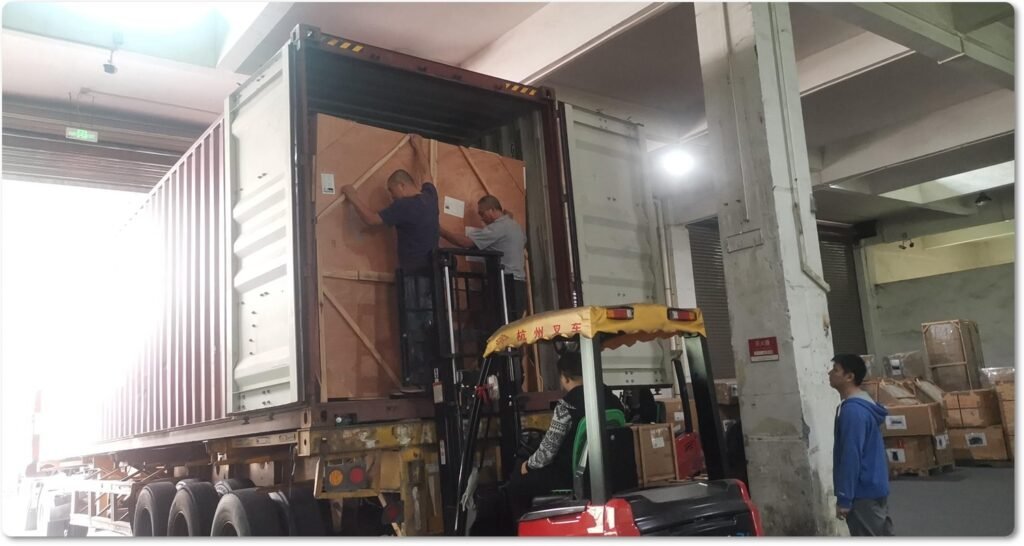
6. Supplier Evaluation: How to Choose a Reliable Stone Furniture Vendor?
A reliable supplier should demonstrate that it can manage both the manufacturing process and the logistics interfaces necessary for a successful bulk shipment.
6.1 Technical and manufacturing capability
Ask the supplier to explain its capabilities in:
Material sourcing and selection.
Stone cutting and dimensional processing.
CNC machining, waterjet cutting, edge finishing, and polishing where relevant.
Assembly and integration with metal or wood components.
First-article inspection and batch quality control.
Packaging design and internal product restraint.
Handling of heavy or unusually shaped furniture.
Export documentation and freight-forwarder coordination.
Do not evaluate capability solely from machinery lists or promotional photographs. Request evidence relevant to the actual product and order.
6.2 Evidence to request from the supplier
| Evidence | Why it matters |
|---|---|
| Product specification and approved drawings | Establishes the agreed design |
| Material approval record | Defines the accepted stone and visual range |
| Production schedule | Shows the proposed milestones |
| First-article approval | Confirms the reference product or component |
| Inspection report | Documents conformity and exceptions |
| Package register | Links products to crates and shipment records |
| Packing photographs | Shows visible protection and package condition |
| Gross-weight and dimension list | Supports freight planning |
| Loading plan and photographs | Documents cargo arrangement and restraint |
| Shipping-document checklist | Reduces documentation discrepancies |
| Insurance and responsibility statement | Clarifies the agreed arrangements |
| Claims and replacement procedure | Establishes the response to damage or shortages |
A supplier may not generate every document for every order. The required evidence should be proportionate to shipment value, complexity, contractual requirements, and risk.
6.3 Questions to ask a stone furniture factory
How are material lots reserved and tracked throughout production?
What approval is required before mass production?
How are first-article and batch inspections documented?
Who determines package dimensions and gross weights?
How are heavy tops, narrow legs, and fragile edges supported?
Are products packed individually or in sets, and why?
How is package movement prevented during transport?
Can the factory provide a preliminary packing list before shipment?
Who coordinates the container-loading plan and verifies cargo weights?
Which Incoterms® rules can the supplier quote, and what is included in each price?
What happens if a product arrives damaged or a component is missing?
What evidence and reporting deadlines apply to a claim?
6.4 Warning signs during supplier evaluation
Exercise caution when a vendor:
Refuses to clarify the scope of the quoted lead time.
Cannot provide product or package weight estimates.
Offers a fixed container quantity without reviewing package dimensions.
Cannot explain how heavy products are restrained.
Treats photographs as a substitute for agreed inspection criteria.
Makes broad claims that breakage is impossible.
Does not clarify insurance responsibility.
Cannot reconcile the invoice, packing list, and package count.
Provides vague answers about replacement procedures or claims documentation.
These warning signs do not automatically prove that a supplier is unsuitable, but they indicate areas requiring further verification before a significant purchase order is placed.
7. Practical RFQ Template: Bulk Stone Furniture and International Shipping
Use the following template when requesting a quotation from a stone furniture manufacturer, factory, or vendor.
7.1 Copy-and-paste RFQ
Subject: RFQ — Stone Furniture Bulk Order, Export Packaging and International Shipping
Dear Sales Team,
We are sourcing stone furniture for a commercial order and would like to receive a detailed quotation covering manufacturing, export packaging, and international shipping arrangements.
Please review the following requirements and identify any information needed to prepare an accurate offer.
A. Buyer and project information
Company name:
Contact person:
Destination country and city:
Destination port, terminal, or delivery address:
Project type:
Target delivery date or required delivery window:
Preferred shipping mode, if known:
Preferred Incoterms® rule and named place, if known:
B. Product specifications
Product type:
Stone material and commercial name:
Model/SKU:
Quantity per model:
Finished dimensions:
Stone thickness:
Surface finish:
Edge profile:
Base/frame material:
Assembly requirements:
Approved drawings or reference images:
Required certifications or destination-specific compliance documents:
C. Material and production requirements
Material reservation confirmation:
Material sample or slab approval requirements:
First-article approval requirements:
Batch inspection requirements:
Dimensional and appearance acceptance criteria:
Production milestone schedule:
Estimated factory lead time:
Change-control procedure:
D. Export packaging requirements
Proposed package type:
Estimated number of packages:
External dimensions per package:
Estimated net weight:
Estimated packaging weight:
Estimated gross weight:
Edge and corner protection:
Internal cushioning and restraint:
Moisture-control requirements:
Package numbering and labels:
Wood packaging compliance, where applicable:
Packing photographs and inspection records:
E. Loading and freight requirements
Proposed transport mode and route:
Proposed container type, if applicable:
Preliminary loading plan:
Verified usable container dimensions and payload basis:
Package weight distribution and restraint arrangements:
Estimated origin charges:
Estimated main freight:
Estimated destination charges:
Insurance proposal or confirmation of responsibility:
Estimated transit period and assumptions:
Estimated total delivery period and assumptions:
F. Documentation and commercial terms
Commercial invoice:
Detailed packing list:
Transport document:
Origin documentation, if applicable:
Customs classification support:
Applicable product or packaging compliance records:
Payment terms:
Quotation validity:
Inspection and acceptance procedure:
Damage, shortage, and replacement procedure:
Exclusions and additional charges:
Please separate factory production lead time from estimated transportation and delivery time. Do not assume a fixed container quantity until the actual product and package dimensions, gross weights, and loading restrictions have been reviewed.
Please also identify which costs are included in the quotation, which party arranges cargo insurance, and where risk transfers under the proposed Incoterms® rule.
We can provide additional drawings, quantities, reference images, and project details as required.
Kind regards,
[Buyer Name]
[Company Name]
[Email / Telephone]
7.2 Recommended quotation comparison table
When evaluating multiple vendors, normalize their offers using the following fields.
| Comparison field | Vendor A | Vendor B | Vendor C |
|---|---|---|---|
| Product specification matches | |||
| Material approval and traceability | |||
| Unit price and currency | |||
| Production lead time | |||
| First-article and final inspection | |||
| Export packaging specification | |||
| Package count and gross weight | |||
| Proposed container/loading arrangement | |||
| Incoterms® rule and named place | |||
| Freight and destination-cost scope | |||
| Cargo insurance arrangement | |||
| Estimated delivery period | |||
| Claims and replacement terms | |||
| Total comparable landed cost |
A meaningful comparison requires the same product scope, material grade, finish, packaging standard, delivery basis, and payment assumptions. The lowest unit price is not necessarily the lowest-risk or lowest-cost procurement option.
8. Frequently Asked Questions: Stone Furniture Bulk Orders and Shipping
8.1 How do I place a stone furniture bulk order from China?
Start by confirming the product schedule, material, dimensions, finish, quantities, destination, and delivery requirements. Request a quotation that separates production, export packaging, origin charges, freight, insurance, and destination costs. Before mass production, agree on material approval, first-article inspection, batch quality criteria, and shipment documentation.
8.2 What is the lead time for a bulk stone furniture order?
Lead time depends on material availability, order quantity, design complexity, approval speed, factory capacity, packaging requirements, and the shipping route. Ask the supplier to provide separate estimates for material preparation, production, inspection, packing, and transportation. A reliable estimate should state its assumptions and identify milestones that may affect the schedule.
8.3 How many stone furniture pieces fit in a shipping container?
There is no reliable universal quantity. The answer depends on finished product dimensions, crate dimensions, gross weight, container specifications, loading orientation, weight distribution, and securing requirements. A manufacturer or freight forwarder should calculate the loading plan from the actual package register and confirm that the proposed arrangement is feasible.
8.4 How should marble and other stone furniture be packed for international shipping?
Packaging should support the product structurally, prevent movement, protect edges and corners, separate finished surfaces, and account for moisture and corrosion risks where relevant. Heavy components may require custom inserts, internal bracing, and clearly identified lifting points. The packaging design should match the product’s weight, geometry, finish, and expected handling conditions.
8.5 Who is responsible if stone furniture arrives damaged?
Responsibility depends on the sales contract, applicable Incoterms® rule, evidence of the damage, the transport arrangement, and any applicable insurance policy. The buyer should document visible damage immediately, preserve relevant packaging, notify the appropriate parties within the required deadlines, and follow the policy’s claims procedures. The Incoterms® rule alone does not determine every issue concerning liability, remedies, or insurance coverage.
9. References: Standards, Regulations and Technical Guidance
The following sources provide a technical basis for developing packaging, loading, and shipping procedures. Buyers should confirm the current editions and applicability of each reference for their specific shipment.
International Plant Protection Convention (IPPC), ISPM 15 — Regulation of Wood Packaging Material in International Trade. International phytosanitary framework for regulated wood packaging materials. Consult the IPPC’s official standards and implementation resources for current requirements and revisions.
International Maritime Organization (IMO), International Convention for the Safety of Life at Sea (SOLAS), Chapter VI, Regulation 2 — Cargo Information and Verified Gross Mass. Relevant to verified gross mass requirements for packed containers before loading onto ships covered by the applicable provisions.
IMO/ILO/UNECE, Code of Practice for Packing of Cargo Transport Units (CTU Code), 2014. Technical guidance addressing cargo packing, distribution, securing, and associated transport-unit safety considerations.
International Chamber of Commerce (ICC), Incoterms® 2020. Rules defining specified buyer and seller obligations, costs, delivery arrangements, and risk allocation in international sales contracts.
World Customs Organization (WCO), Harmonized System (HS) Nomenclature. International framework for classifying traded goods. The appropriate tariff classification for a particular furniture product must be determined from its characteristics and applicable national tariff rules.
Destination-country customs authority and relevant plant protection authority. Official requirements for import declarations, tariff treatment, wood packaging, duties, taxes, and any applicable product-specific controls.
Cargo insurer or insurance broker’s policy wording. The controlling reference for insured risks, exclusions, deductibles, claims procedures, and notification deadlines under the policy purchased for the shipment.
Carrier, freight forwarder, and container operator specifications. Shipment-specific information concerning container dimensions, payload, handling restrictions, booking conditions, cargo securing, cut-off dates, and transportation arrangements.
These references serve different purposes. A technical code is not necessarily a standalone legal requirement in every jurisdiction, and a commercial Incoterms® rule does not replace applicable customs law, insurance wording, or transport safety requirements.
10. EDG Stone CTA: Request a Bulk Stone Furniture Quotation
Source stone furniture with a shipment-specific production and logistics plan
For importers, wholesalers, distributors, and project buyers, selecting a stone furniture supplier should involve more than comparing material photographs and unit prices.
A qualified manufacturing partner should help translate product specifications into a coordinated production schedule, quality-control process, export packing plan, and shipment quotation. The exact scope depends on the agreed order and the capabilities confirmed for the project.
EDG Stone Factory works with natural stone products and custom fabrication requirements. For a stone furniture bulk order, buyers can submit their product schedule, drawings, target quantity, and destination details for a project-specific assessment.
To prepare a more useful quotation, please provide:
Product details: Dining tables, coffee tables, consoles, vanities, benches, or custom stone furniture.
Material requirements: Marble, granite, travertine, quartzite, or another specified material.
Order quantity: Total units and quantities by model or SKU.
Technical documents: Dimensions, drawings, reference images, finishes, and assembly requirements.
Destination: Country, city, and destination port or delivery address.
Delivery requirements: Target delivery window, preferred shipping mode, and requested Incoterms® rule, if known.
Packaging expectations: Individual crates, project-specific labels, inspection evidence, and any special handling requirements.
With these details, the supplier can assess material availability, manufacturing scope, estimated production lead time, packaging requirements, and the information needed to develop a shipment-specific freight plan.
Request a Stone Furniture Bulk Order Quotation
Visit EDG Stone’s website at https://www.edgstone.com/ and submit your project requirements through the appropriate product or inquiry page.
Procurement principle: A reliable quote should explain what is included, what remains unconfirmed, how the order will be inspected and packed, and which shipment details must be verified before dispatch.
Semantic Closure: How to Evaluate a Stone Furniture Bulk Order from Factory to Final Delivery?
What Makes a Stone Furniture Shipment Commercially Reliable?
A reliable bulk shipment connects five decisions: approved material, controlled manufacturing, fit-for-purpose packaging, verified loading, and clearly allocated transportation responsibilities. Each stage produces evidence needed by the next. Material records establish what was purchased; inspection records establish what was manufactured; package registers establish how the goods were prepared; loading records establish how the cargo was arranged; and shipping documents establish the commercial and transportation details.
Why Is Packaging Part of Product Quality?
For stone furniture, product quality does not end when polishing and assembly are complete. The finished item must also be supported, separated, restrained, and protected for the expected handling conditions. Packaging that fails to support a heavy top or protect a mitered edge can undermine otherwise acceptable manufacturing work. Conversely, appropriate packaging can reduce avoidable exposure to handling damage, although it cannot eliminate every transportation risk.
How Should Buyers Compare Shipping Options?
Buyers should compare total cost, package dimensions, gross weight, handling requirements, route, delivery scope, and risk allocation—not freight price or nominal container volume alone. Different shipping arrangements may offer different combinations of cost, transit time, handling complexity, and insurance requirements. The preferred option should be selected after the actual cargo and destination constraints have been reviewed.
Which Information Is Needed Before a Supplier Can Confirm Container Loading?
The minimum practical dataset includes the number of products, finished dimensions, package dimensions, gross weight per package, stacking restrictions, loading orientation, container type, and applicable payload and floor-load constraints. Unusually heavy or asymmetrical products may also require lifting-point information and a more detailed securing plan. Without this information, a container quantity should be treated as preliminary rather than confirmed.
What Should Buyers Expect from a Professional Stone Furniture Vendor?
A professional vendor should communicate assumptions, document approvals, track production lots, identify package contents, provide accurate shipment data, clarify commercial responsibilities, and explain the procedure for reporting damage or shortages. The level of documentation should match the order’s value and complexity. Claims of guaranteed arrival dates, universal container capacities, or zero damage should not replace a verifiable plan.
How Do Buyers Reduce Procurement Risk Across the Entire Order?
The strongest approach is to define acceptance criteria before production, approve the material and first article, inspect the finished batch, verify packaging and loading data, clarify Incoterms® and insurance, and prepare the destination receiving process before dispatch. This creates a continuous evidence trail from purchase order to final delivery.
Final insight: Stone furniture bulk procurement is a coordinated manufacturing and logistics process. When buyers and suppliers establish product specifications, approval milestones, package data, loading requirements, and delivery responsibilities before shipment, they can make more informed purchasing decisions and reduce preventable uncertainty in international trade.