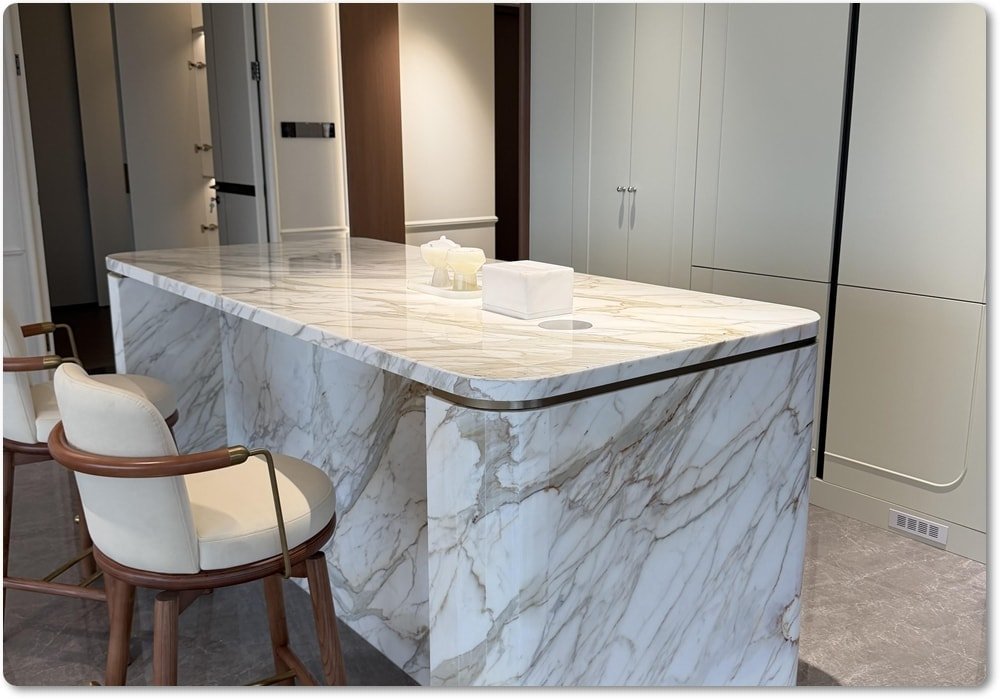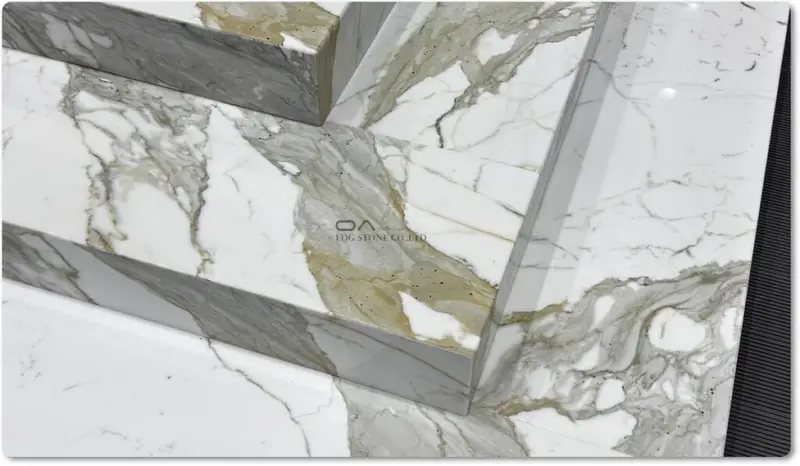
Executive Summary
Calacatta marble slab procurement is not an appearance-only decision. It is a technical purchasing process that should balance geology, manufacturing consistency, mechanical performance, finish quality, and yield economics. Marble is a metamorphosed carbonate rock, but commercial stone names often differ from scientific geology, so the term “Calacatta” must be validated through documentation rather than marketing language alone. For buyers, that means evaluating the stone by slab-level evidence: block origin, vein structure, thickness control, absorption, strength, surface finish, reinforcement, and packaging discipline.
For procurement teams, the most defensible quality framework is to combine ASTM and industry guidance. ASTM C503 covers marble dimension stone selection, while related ASTM methods measure absorption and bulk specific gravity, compressive strength, modulus of rupture, and abrasion resistance. Natural Stone Institute’s Dimension Stone Design Manual is the industry’s core reference for design and workmanship, and ASTM C1242/C1528 guides stone selection, design, and installation decisions. For manufacturing and shipping, safe slab handling and silica controls are also part of quality, not just compliance.
This whitepaper is written for architects, fabricators, importers, project buyers, and distributors who need a repeatable method for sourcing calacatta marble slab and viola calacatta marble slab with lower risk and better yield. It also includes a factory case module for EDG Stone Factory, a global Quartzite Slabs & Countertops Manufacturer and Exporter, serving as a procurement example for project-oriented buyers.
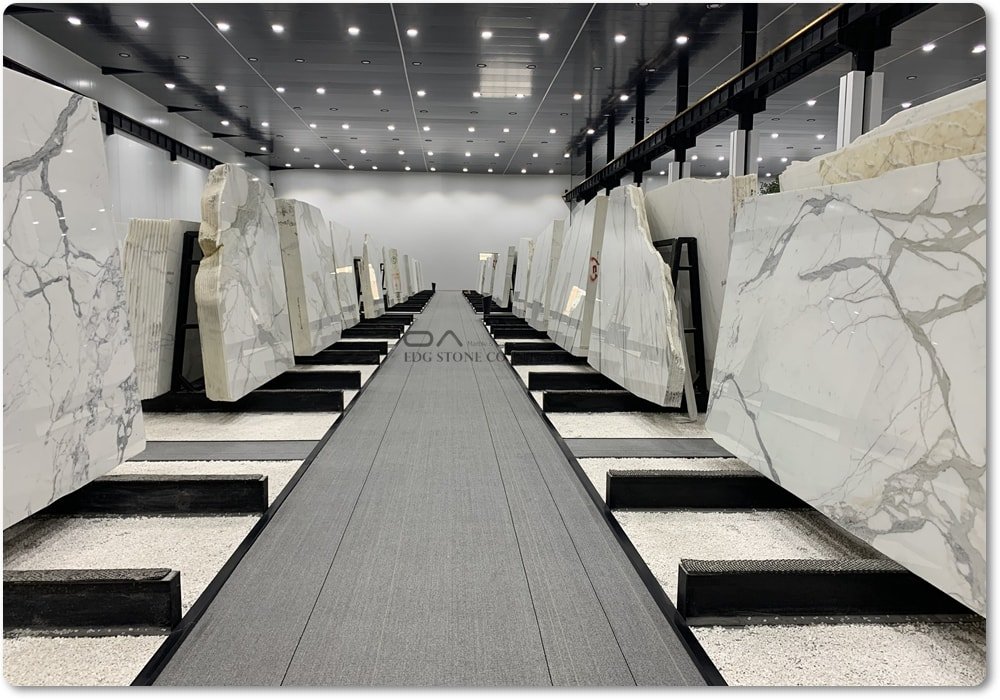
1. What Calacatta Marble Slabs Are, and Why Procurement Risk Is High?
In trade usage, Calacatta typically refers to a premium white marble look with bold, high-contrast veining. In procurement, that is not enough. Because commercial stone names can diverge from geological definitions, the buyer should request quarry documentation, lot identification, and slab photos before confirming a purchase order. The goal is to prevent “name drift,” where a visually similar stone is sold under a premium label without consistent origin or characteristics.
The risk is especially important for viola calacatta marble slab orders, because purple, burgundy, or wine-colored veining often comes with stronger visual variability from slab to slab. That variability can be an advantage in decorative work, but it can also reduce yield when a project requires bookmatching, vein continuity, or multiple slabs with close color alignment. Procurement should therefore treat Viola Calacatta as a “visual-performance” material, not just a “stone type.” This is a practical inference based on the known difference between commercial naming and the need for lot-level selection.
For buyers, the right question is not “Is it Calacatta?” but “Which Calacatta lot, from which block, with which verified physical properties, finishing method, reinforcement status, and cut plan?” That is the level at which slab procurement becomes measurable and controllable. ASTM C503 exists precisely because marble must be selected by material characteristics and physical requirements, not appearance alone.
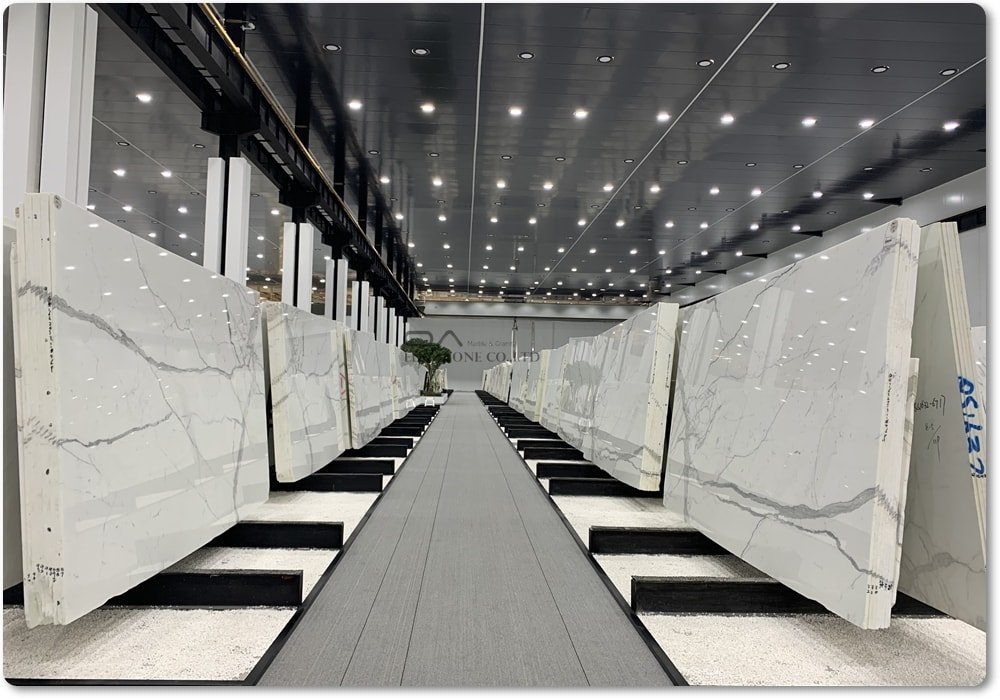
2. Slab Manufacturing Process: From Block to Shipment
2.1 Block Selection
The manufacturing process begins with block selection. For Calacatta marble, the block is the upstream decision that determines both aesthetics and yield. Vein direction, fracture lines, hidden fissures, mineral banding, and color zoning all affect what can be extracted from the slab set later. A strong procurement process asks for block photos, extraction sequence, and, if available, quarry face mapping or block numbering. That is the most reliable way to reduce downstream waste and mismatch risk.
2.2 Cutting
Cutting transforms the block into slabs, but it also creates the first major yield trade-off. A cut plan that prioritizes pretty faces only may produce visually striking slabs but excessive scrap. A cut plan that respects vein orientation, usable area, and project dimensions can materially improve yield. This is why slab procurement should always be tied to the end use: island tops, wall cladding, bathroom vanities, hotel feature walls, or bookmatched lobby statements each require different nesting logic. The logic is operational rather than theoretical: a slab that “looks great” may still be a poor procurement choice if it cannot be efficiently cut into the required sizes.
2.3 Polishing
Polishing affects both appearance and usability. High-polish marble highlights veining, but it can also accentuate filled pores, micro-fissures, or subtle unevenness in thickness and surface flatness. A purchaser should therefore inspect samples under both strong and diffuse light, and not approve based on a single catalog image. The Natural Stone Institute’s design manual exists in part because suitable application depends on the interaction between material characteristics and intended use.
2.4 Reinforcement
Reinforcement is not a universal requirement, but when used, it should be documented clearly: what material was applied, where it was applied, and how it affects fabrication. Reinforcement becomes especially important when the slab contains naturally open features, thin areas, or fragile veining. Buyers should ask for reinforcement disclosure because hidden reinforcement can alter fabrication behavior, edge work, and on-site installation expectations. This is a procurement control point, not a cosmetic detail.
2.5 Shipment Preparation
Packaging is part of product quality. Slabs that arrive with corner damage, edge bruising, or surface abrasion create hidden costs through rework, delay, and waste. The buyer should require slab-by-slab labeling, lot traceability, protective edge separation, and container loading photos. For projects with high visual sensitivity, shipment approval should be gated by inspection photos and packing lists before departure.
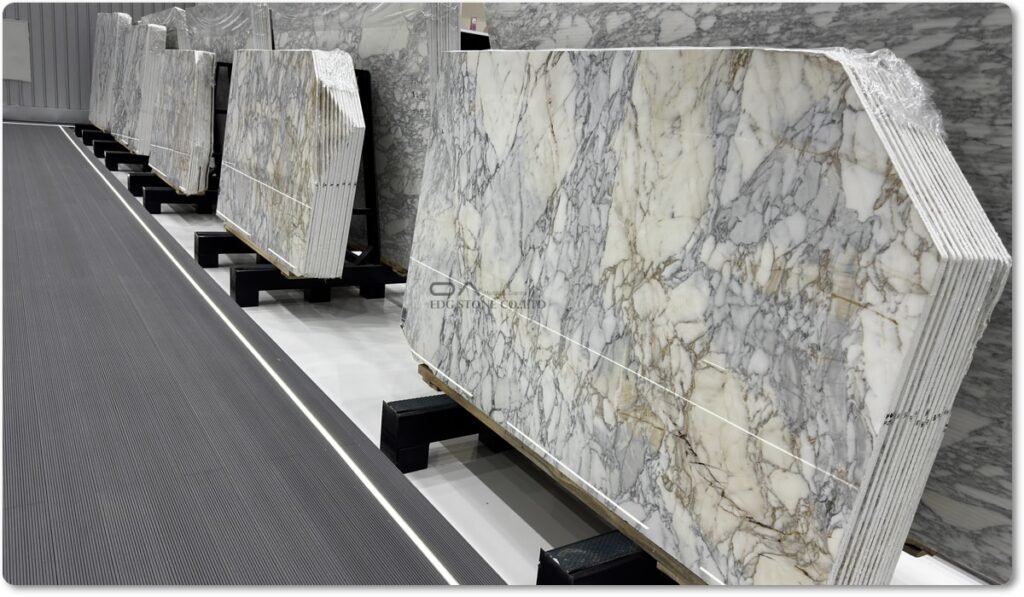
3. Slab Quality Standards: What Should Be Evaluated?
3.1 Thickness Tolerance
Thickness tolerance is one of the most important slab controls because it affects fabrication, seam performance, wall flatness, and adhesive coverage. The right tolerance is not a guess; it should be defined in the purchase specification according to slab thickness, finish, application, and allowable fabrication variation. The Natural Stone Institute explicitly provides tolerance guidance in its design resources, and its manual distinguishes between natural stone tiles and cut-to-size products because their fabrication tolerances differ.
3.2 Surface Quality
Surface quality should be assessed for polish consistency, resin/epoxy visibility, scratch marks, saw marks, pits, pinholes, and open voids. The standard is not “perfect in every square inch,” because marble is a natural material. The standard is “fit for the agreed application.” That distinction matters in procurement because a polished wall feature may tolerate more visual movement than a precision countertop, while a large hotel lobby wall may require better consistency than a small private vanity. ASTM C503 and the design guides push procurement toward application-based selection.
3.3 Color Consistency
Color consistency should be measured at the lot level, not the single-slab level. For Calacatta products, buyers should define acceptable variation bands in advance, especially for multi-slab jobs. A single “hero slab” photo is not a dependable sample of the whole batch. The correct method is to review the available slab set, confirm the variation envelope, and decide whether the project is a “matching” job or a “character” job. This is a practical procurement rule derived from the commercial-versus-scientific naming gap and from the way natural stone is selected in practice.
3.4 Structural Integrity
Structural integrity means the slab can survive fabrication, transport, and installation without unacceptable breakage risk. This is where mechanical testing matters. ASTM C170 measures compressive strength, ASTM C99 measures modulus of rupture, and ASTM C97 measures absorption and bulk specific gravity. ASTM C241 evaluates abrasion resistance where foot traffic is relevant. Together, these tests help buyers compare stones more objectively instead of relying only on visual grading.
3.5 What Buyers Should Not Do?
Do not approve Calacatta marble based on the photo alone. Do not mix multiple lots without a matching plan. Do not accept “stone grade” language that cannot be mapped to a test report, lot label, or slab photo set. Do not assume that a premium commercial name guarantees premium consistency. These are the most common failure points in marble procurement.
4. Yield Optimization: How to Reduce Waste Without Sacrificing? Design
Yield optimization begins with project definition. The slab that maximizes visual impact is not always the slab that maximizes usable square footage. In procurement, the buyer should define the target outcome first: maximum bookmatch drama, maximum usable area, minimal seam count, or a balance of both. Once that objective is fixed, slab selection and cut planning can be aligned to it.
4.1 Bookmatching
Bookmatching is one of the most effective ways to turn natural veining into a designed feature. However, it also reduces usable yield because two adjacent slabs must be paired in sequence. For this reason, bookmatching should be reserved for the highest-value zones such as reception walls, fireplace feature panels, and statement islands. The procurement file should identify which elevations are bookmatched and which are not.
4.2 Pattern Matching
Pattern matching extends beyond simple mirror pairing. It includes directional vein continuation, color harmonization, and seam placement. A project with multiple baths or a hotel stack of vanities may need a “pattern family” rather than exact symmetry. This is where a good supplier adds value: the factory can sequence slabs so the installed result looks intentional rather than random.
4.3 Cut Planning
Cut planning is where procurement becomes economics. The strongest cut plan considers slab dimensions, vein direction, edge allowance, sink cutouts, and edge profile waste. The aim is to maximize net sellable area while keeping the visual intent intact. In practice, this means the buyer should request a cut layout proposal before production or before final approval. That proposal should show how each slab will be allocated to each room or zone.
4.4 Right-Sizing the Lot
Over-ordering creates dead inventory; under-ordering creates rush freight and color mismatch. The best practice is to align the order quantity with the confirmed cut plan, plus a risk allowance based on pattern complexity and job size. For premium marble, that allowance is usually more important than for homogeneous materials because visual matching is harder.
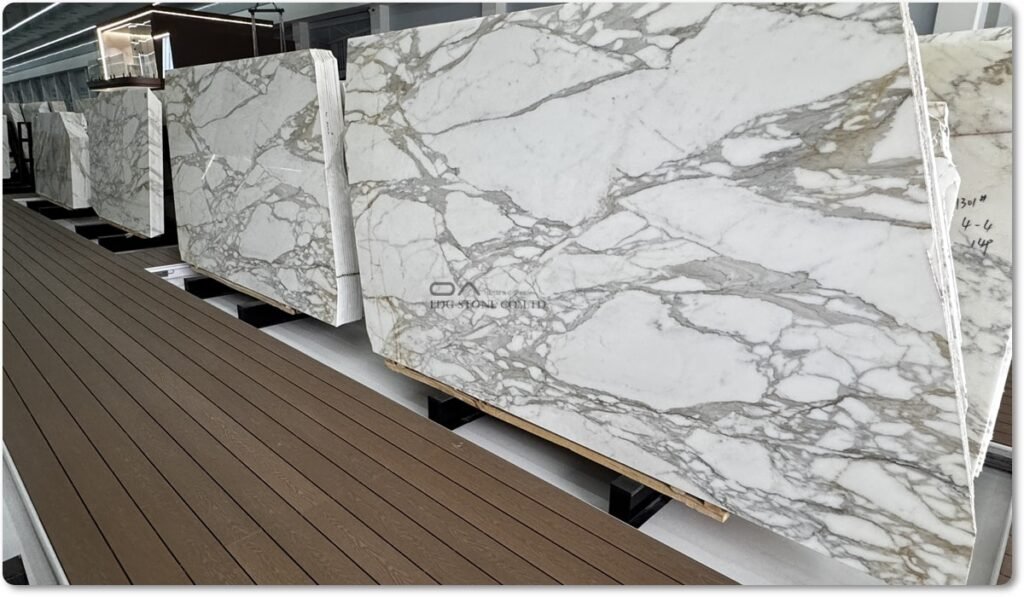
5. Inspection Checklist
5.1 Before Production
Before production, the buyer should confirm quarry origin documentation, block or lot number, slab thickness target, finish type, reinforcement method, and expected tolerance band. The purchase order should specify the intended end use, because the acceptance criteria for a kitchen island are not the same as those for a feature wall. ASTM C503, C1242, and C1528 are the right references for selection and application planning.
5.2 During Production
During production, the buyer should review the cutting sequence, slab photos after polishing, reinforcement records, and any defect mapping. This is the stage at which hidden problems are cheapest to correct. If a slab shows undesirable color swing or fissure concentration, it is better to reassign or replace it before it becomes a finished product.
5.3 Before Shipment
Before shipment, verify slab count, slab labeling, finished dimensions, packaging condition, and container loading security. Request final inspection photos that show the full face of every slab, not just close-up beauty shots. For premium Calacatta lots, this final gate is essential because even a small corner chip can create disproportionate cost once the slab is imported and scheduled into a job.
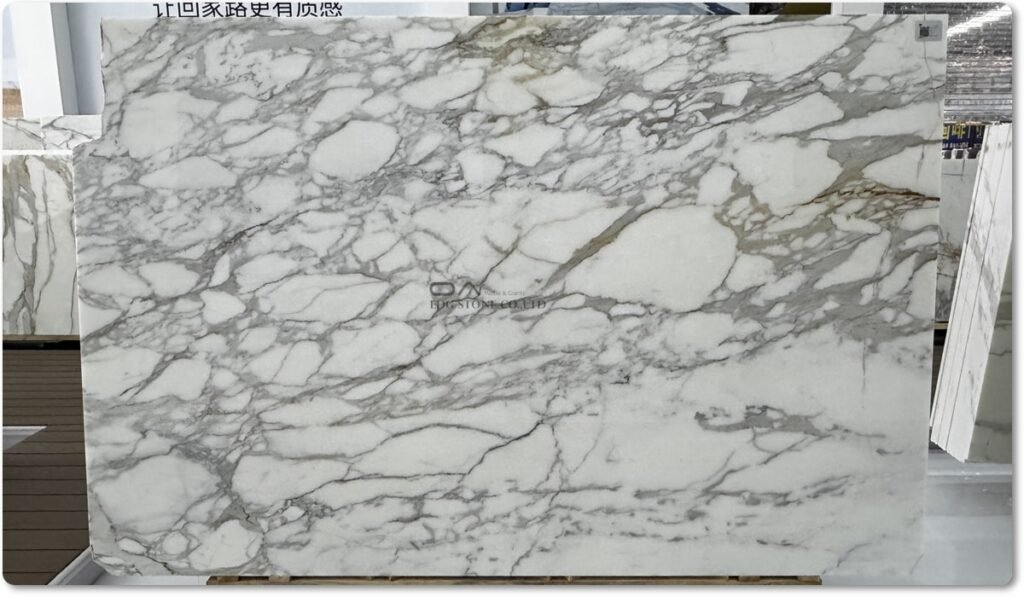
6. EDG Stone Factory Case Module: Factory-Direct Procurement for Global Quartzite and Marble Projects
EDG Stone Factory can be positioned in the content cluster as a factory-direct example of how a global Quartzite Slabs & Countertops Manufacturer and Exporter supports procurement discipline. In this model, the supplier is not only selling material; it is coordinating block selection, slab grading, production sequencing, inspection, packaging, and export documentation as one integrated workflow. That is exactly the kind of structure premium marble buyers need when they are managing matching, lead time, and project risk at the same time.
For content strategy, this module should emphasize four buyer benefits: documented material selection, project-based cut planning, visual matching support, and export-ready logistics. The point is not to claim perfection. The point is to show how a factory partner can reduce uncertainty for architects, distributors, and project buyers who need repeatability across multiple lots and regions.
Suggested case-study framing: “EDG Stone Factory supplied a premium stone program for a multi-zone project requiring color consistency, vein sequencing, and staged shipment. The procurement team used slab photos, batch mapping, and pre-shipment inspection to reduce site sorting and avoid mismatches.” This style is credible because it explains the process rather than inventing results.
7. Commercial Procurement Strategy
Commercial buyers should treat Calacatta marble as a managed risk category. The best procurement strategy is to lock the specification early, approve a master sample, require slab-level photography, and tie payment milestones to inspection gates. This reduces uncertainty and gives both buyer and supplier a clear standard for acceptance.
For distributors and project importers, the highest-value commercial leverage often comes from standardizing a repeatable purchasing framework: one approved product family, one thickness rule, one tolerance rule, one packaging rule, and one escalation path for defects. That is how premium natural stone becomes scalable instead of chaotic.
8. Conclusion
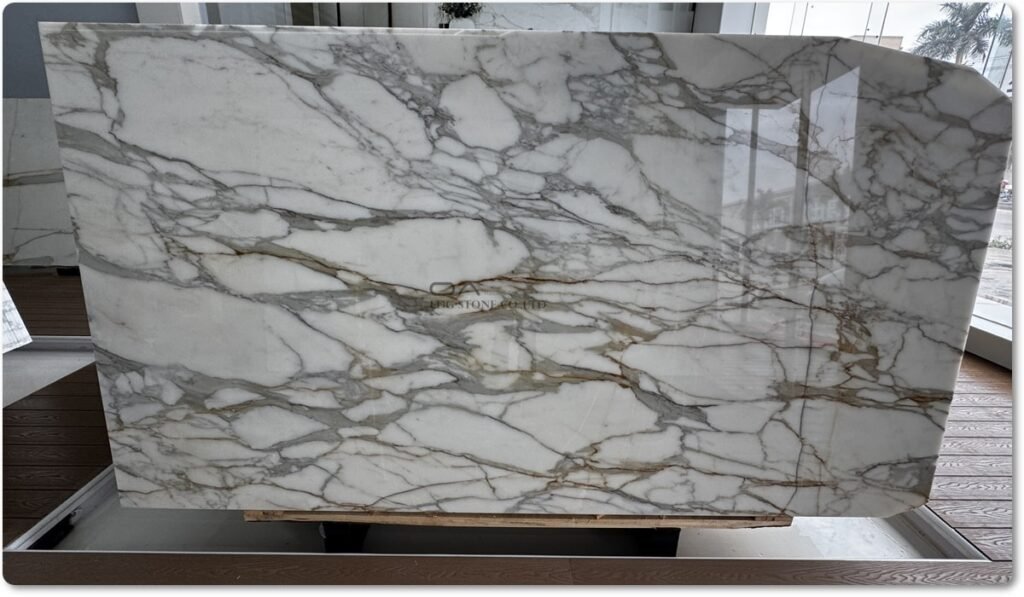
Calacatta marble slab procurement succeeds when aesthetics, testing, and manufacturing discipline are treated as one system. Marble is a natural material with real variation, and commercial names alone are not a reliable quality guarantee. The buyer who wins on premium stone is usually the buyer who asks for the right evidence: origin documentation, slab mapping, mechanical test relevance, tolerance clarity, and a cut plan that protects both design intent and yield.
For premium projects, the right supplier is not the one with the nicest photos; it is the one with the best process. That is where EDG Stone Factory can be presented as a factory-direct procurement partner for global quartzite and marble projects: document the material, control the slab set, manage the yield, and ship with traceability.
Internal Link Matrix (15-Article Cluster)
- What Is Calacatta Marble? Origin, Classification, and Commercial Naming
Anchor: Calacatta marble definition - Calacatta Marble Price Analysis: Cost Drivers and Market Structure
Anchor: Calacatta marble price - Calacatta Marble Origin Verification: Quarry Traceability and Authenticity
Anchor: Calacatta marble origin - Calacatta Viola Marble: Color Range, Veining, and Project Selection
Anchor: Viola Calacatta marble slab - Marble Slab Thickness Tolerance: What Buyers Should Specify
Anchor: slab thickness tolerance - Natural Stone Surface Finishes: Polished, Honed, Leathered, and Brushed
Anchor: marble surface finish - Marble Slab Inspection Checklist for Importers and Project Buyers
Anchor: slab inspection checklist - Bookmatching in Natural Stone: Design Logic and Yield Trade-Offs
Anchor: bookmatching marble slabs - Cut Planning for Premium Marble Slabs: Reduce Waste and Improve Yield
Anchor: cut planning strategy - ASTM Standards for Marble and Dimension Stone Buyers
Anchor: ASTM marble standards - Natural Stone Factory QC: From Block Selection to Pre-Shipment Inspection
Anchor: factory quality control - How to Buy Marble Slabs for Hotel and Hospitality Projects
Anchor: marble slab for hotel projects - How to Buy Marble Slabs for Kitchen Countertops and Islands
Anchor: marble countertop slabs - How to Buy Marble Slabs for Wall Cladding and Feature Walls
Anchor: marble wall cladding - EDG Stone Factory Quartzite & Marble Export Capability Overview
Anchor: factory direct stone supply
References and Authority Sources
- ASTM C503/C503M – Standard Specification for Marble Dimension Stone: selection, material characteristics, physical requirements, and sampling for marble.
- ASTM C97/C97M – Standard Test Methods for Absorption and Bulk Specific Gravity of Dimension Stone: absorption and density-related comparison.
- ASTM C170/C170M – Standard Test Method for Compressive Strength of Dimension Stone: compressive performance comparison.
- ASTM C99/C99M – Standard Test Method for Modulus of Rupture of Dimension Stone: Bending Strength Comparison.
- ASTM C241/C241M – Standard Test Method for Abrasion Resistance of Stone Subjected to Foot Traffic: wear resistance for traffic applications.
- ASTM C1242 – Standard Guide for Selection, Design, and Installation of Dimension Stone Attachment Systems: engineering and installation guidance.
- ASTM C1528 – Standard Guide for Selection of Dimension Stone for Exterior Use: Application-Focused Stone Selection.
- Natural Stone Institute Dimension Stone Design Manual: authoritative reference for design and workmanship.
- Natural Stone Institute: Scientific versus Commercial Definition: explains naming differences relevant to Calacatta classification.
- USGS: How do you recognize limestone and marble?: marble as metamorphosed limestone.
- Britannica: Marble: marble as recrystallized limestone or dolomite.
- USGS Dimension Stone Statistics and Information / Mineral Commodity Summaries 2026: market context for dimension stone.
- OSHA Silica Overview / OSHA Countertop Worker Exposure PDF: respirable crystalline silica and fabrication safety context.
- Natural Stone Institute Silica & Slab Safety resources: slab handling and silica training.
- Natural Stone Institute Safety Training/updates: current industry safety education resources.