
Quick Summary:
Quick Summary: Yes — sintered stone **can be polished** to satin or high-gloss finishes using standard diamond abrasives and multi-stage polishing sequences. Leading manufacturers (Dekton, Neolith, and others) document polishing procedures and repair methods; fabricators use wet diamond pads or CNC polishing heads and follow grit progressions (coarse → fine → mirror). Sintered stone is non-porous (so it typically does **not** need sealing), highly heat/UV resistant, and polishes differently from resin-based quartz (no polymer binder). Because fabricating and polishing generate silica dust, shops must use wet cutting/enclosed extraction per OSHA and EU silica rules. This guide covers how and why sintered stone is polished, step-by-step techniques, tooling, repair options, care, and safety/regulatory notes.
Semantic snapshot
What: Sintered stone = kiln-fired, vitrified mineral slab (ceramic/compact surface) that **can be polished** using diamond abrasives to satin or mirror gloss.
Why it matters: Polishing unlocks high-gloss aesthetics and restores worn faces without replacing slabs — critical for countertops, tabletops, and feature walls.
Key process: Multi-step diamond polishing (sequential grits), wet methods, or machine (CNC/edge polisher), finishing with resin/metal pads for final sheen when needed. Use manufacturer-approved sequences to protect the warranty.
Introduction
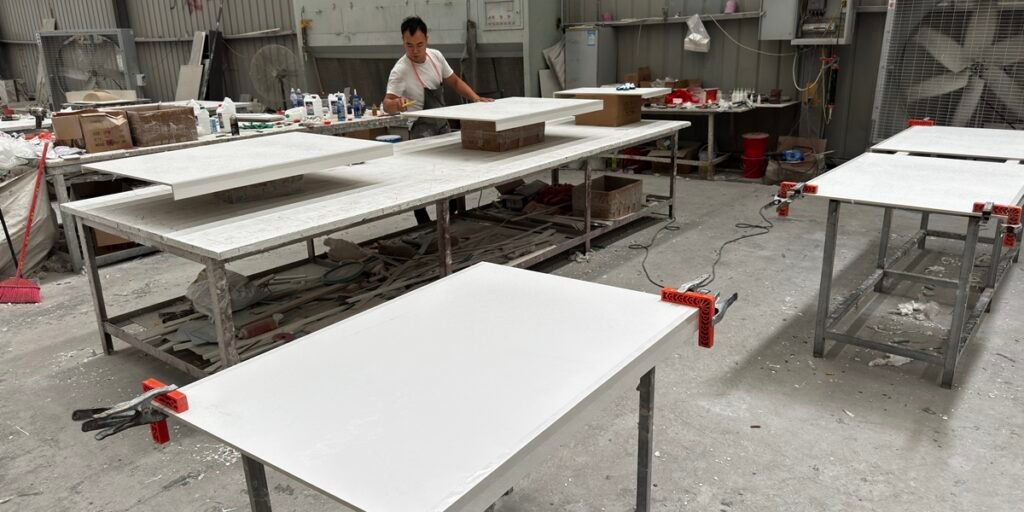
Sintered stone has become a mainstream surface material in kitchens, bathrooms, facades, and furniture because it combines extreme durability with wide visual variety. One common question from fabricators, designers, and homeowners is: Can sintered stone be polished? The short answer is yes — but with important technical details: the correct abrasives, machine setup, wet vs. dry approaches, and awareness of safety and warranty constraints.
This long-form guide explains:
What sintered stone is and how it differs from quartz and porcelain.
Whether—and how—you can polish sintered stone (tools, grit sequences, wet vs dry, edge profiling).
Repair & restoration techniques for scratches and dull areas.
Care, finish options, and whether sealing is required.
Safety and regulatory context (OSHA and EU silica rules) you must follow when cutting/grinding/polishing.
What is sintered stone — a quick technical primer?
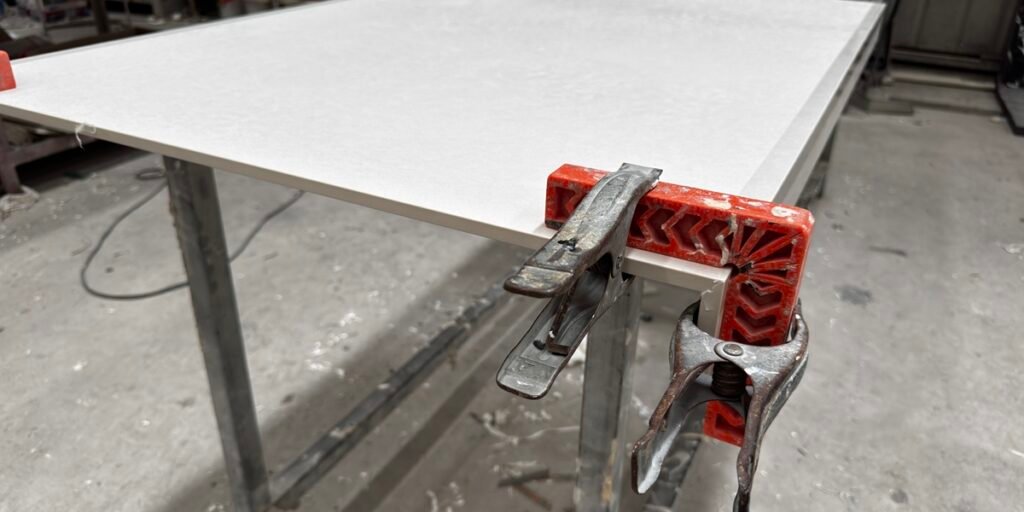
Sintered stone (aka sintered compact surface, sintered slab) is manufactured by compacting mineral powders — often including silica, natural oxides, and pigments — and firing them at very high temperature and pressure so the particles vitrify into an extremely dense, non-porous slab. It’s mechanically and thermally robust and behaves like a large-format porcelain/ceramic rather than a resin composite. This composition determines how it must be cut, ground, and polished.
Can sintered stone be polished? Short answer + context
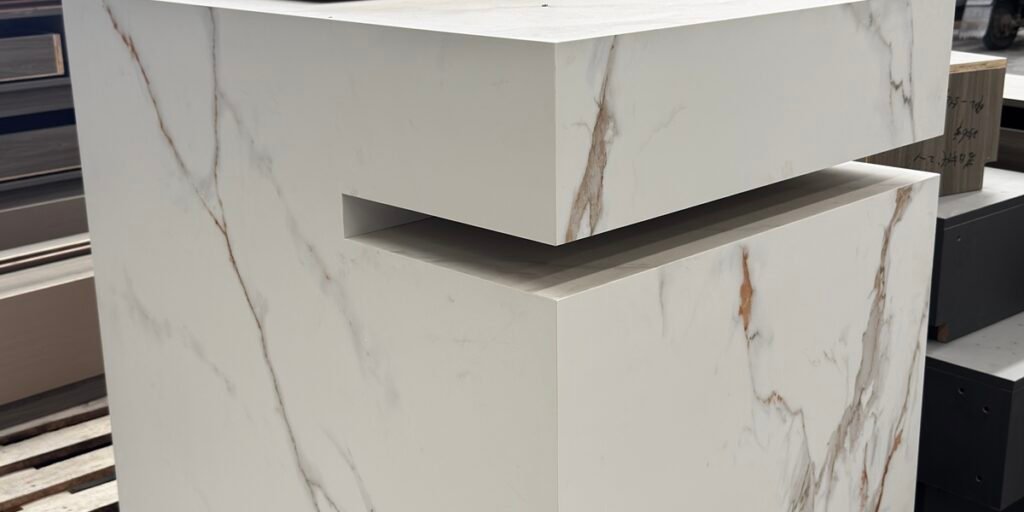
Yes. Major brands provide polishing procedures and offer polished finish products from the factory; repair and on-site polishing are common. Polishing is performed with diamond abrasives through multiple grit steps to restore gloss or to create a specified finish (satin, silk, high gloss). Use manufacturer-recommended sequences and tooling to avoid warranty problems.
Key differences from other materials:
Vs quartz: Quartz contains resin binders; polishing removes resin-rich surface irregularities differently. Sintered stone polishes like porcelain/ceramic — it requires diamond abrasives and typically wetter processes
Vs natural stone: Marble/granite polish sequences are similar in principle, but sintered slabs often have engineered pigments and different bonding, so follow brand manuals for grit stops and final gloss.
Polishing basics: tools, abrasives, and grit sequences
Tools & machines
Hand polishers/angle grinders with 4″–7″ diamond polishing pads (wet). Good for small repairs and edges.
CNC polishing heads (gantry/CNC machine) for consistent face and edge polishing on large slabs.
Edge profilers & inline polishers for bullnose, bevels, and complicated profiles — use resin/metal bond diamond wheels.
Wet polishing rigs and slurry management (recommended to control dust and cool abrasives).
Abrasives & grit progression
Polishing is always progressive: begin with a grinding step to remove defects, then step through increasingly fine grits. Typical sequences (manufacturer-specific) might look like:
Grinding: 50–100 grit (if heavy removal is needed)
Smoothing: 200–400 grit
Pre-polish: 800–1500 grit
Final polish: 3000+ grit (or manufacturer-recommended final pads)
Dekton’s technical manual, for example, lists sequential positions (up to 1200 in some color cases) for achieving a polished finish; Neolith and others publish comparable protocols. Always confirm the brand sequence before full-scale polishing.
Wet vs dry polishing
Wet polishing is preferred: it cools the surface, extends diamond life, and suppresses dust (critical for silica control). Most fabricators use wet methods for sintered stone.
Dry polishing is possible for some edge operations with specialized pads and vacuums, but it increases dust exposure and requires very effective HEPA extraction.
Step-by-step: how a fabricator polishes sintered stone?
Inspect & mark defects. Identify scratches, chips, low spots, or dull areas.
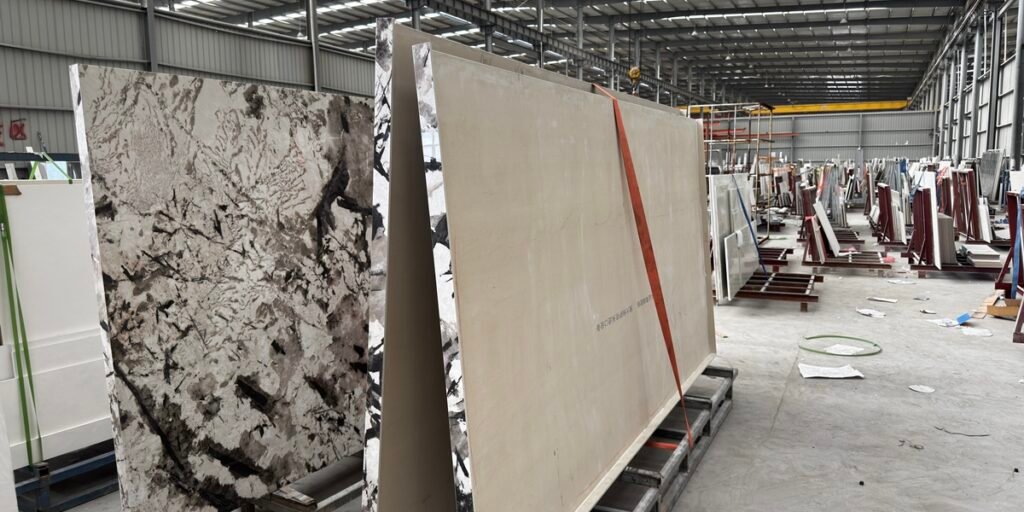
Secure the slab. Full support on a flat table to avoid flex and vibration.
Grinding (if needed). Use a coarse diamond cup wheel to remove deep scratches or to reprofile the edge. Keep water flow steady.
Progressive polishing. Move through the grit ladder set by the manufacturer — keep consistent pressure and RPM; overlapping passes ensure uniform gloss.
Final sheen. Use manufacturer-recommended finish pads or compounds; some shops use a final resin/metalized pad for mirror shine.
Clean & inspect. Wipe slurry and steam or buff to check for haze or micro-scratches. Repeat finer steps if necessary.
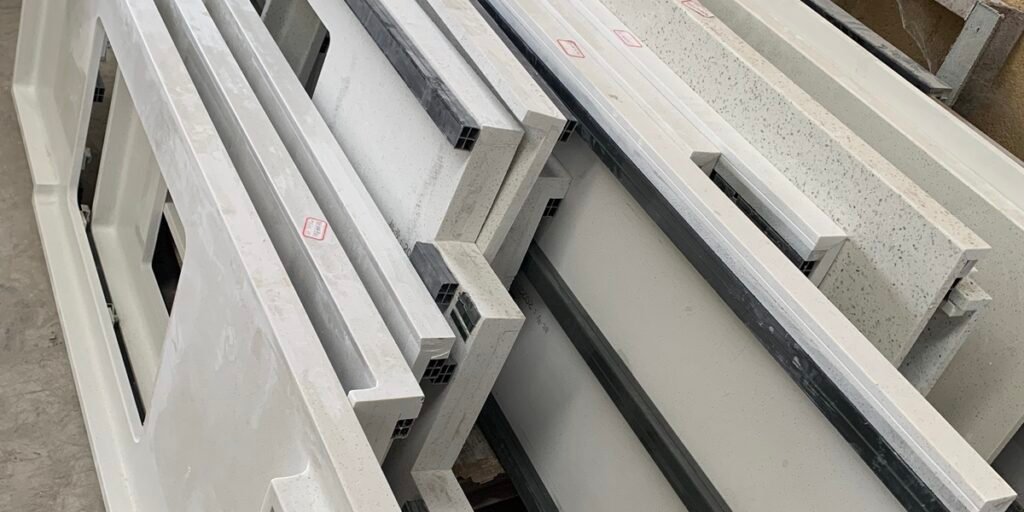
Polishing edges & profiles
Edges are the most common place for visible finishing errors. Use diamond profile wheels on routing heads or CNC edge polishers in these steps:
Rough form with segmented wheels, then refine with resin/metal bond profile wheels.
Transition to small-diameter diamond pads for face polishing near the edge.
Finish with a final small buff pad to match face gloss. Neolith and other manufacturers document recommended edge radii for impact resistance — larger radii resist chipping better.
Repairing scratches, dull spots & chips
Light scratches: Often removed by stepping up the grit ladder through 800–1500 grit and finished to match adjacent gloss.
Deep scratches or chips: May require grinding to clean edges, filling with color-matched resin (if permitted by the brand), then progressive polishing. For some brands, visible repairs may be noticeable; discuss expectations with the customer.
Manufacturer repair kits: Brands sometimes sell or recommend repair sequences and products; always check technical documents before aggressive repairs.
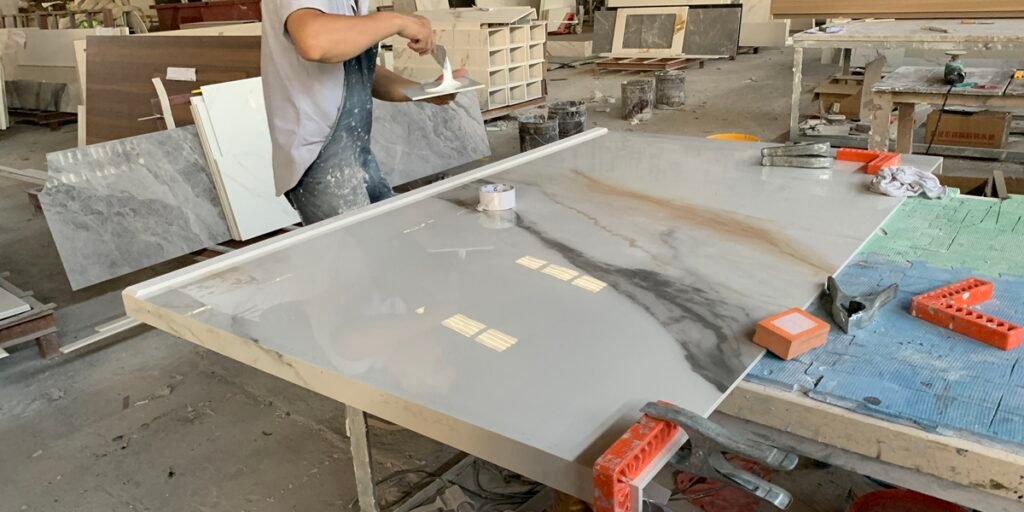
Does sintered stone need sealing? Is it porous?
Sintered stone has extremely low porosity (vitrified surface). Most technical manuals and industry guides state that sealing is required for sintered stone and porcelain-like compact surfaces — liquids do not penetrate as they do in natural stone, making staining unlikely when spills are cleaned promptly. That said, always follow the brand’s maintenance guide because some finishes or edge treatments might benefit from specific cleaners.
Is sintered stone toxic or safe to polish?
Material toxicity: Finished sintered stone is inert and safe for domestic use; it does not off-gas resin like some engineered stones can.
Dust hazard during fabrication/polishing: The silica present in mineral feedstock (and thus in dust) is the health concern — respirable crystalline silica can cause silicosis and other lung diseases. Therefore, polishing and grinding must be controlled via wet methods or enclosed extraction, and workers require appropriate PPE and medical surveillance per OSHA and EU rules. This is a workplace safety issue — not a consumer surface toxicity issue.
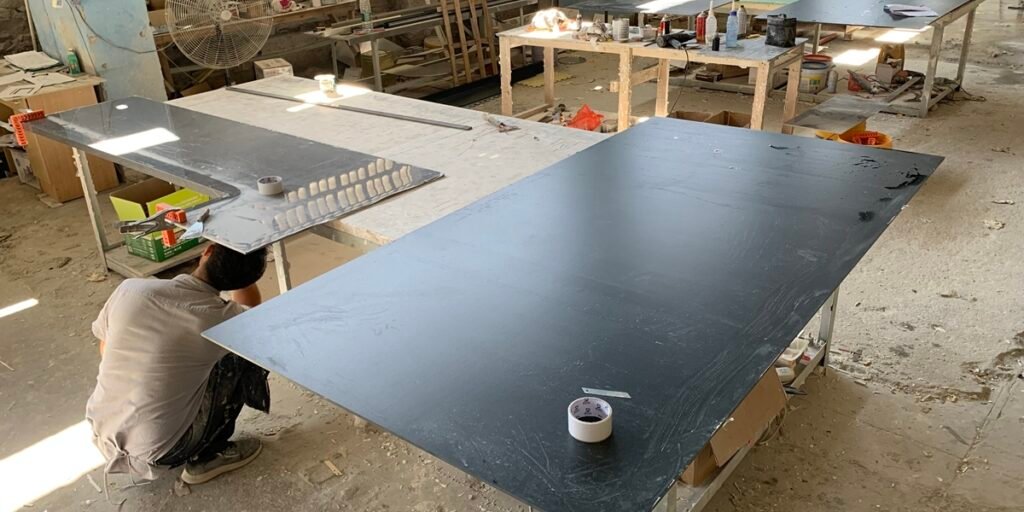
Safety & regulatory framework — what fabricators must follow
United States
OSHA’s respirable crystalline silica standard (29 CFR 1926.1153) requires employers to implement engineering controls (wet methods, local exhaust), training, exposure assessments, and medical surveillance where applicable. Fabrication shops polishing sintered stone should have written exposure control plans and follow published tables and measured controls if necessary.
European Union & other jurisdictions
The EU has adopted occupational exposure limits (e.g., proposed 0.1 mg/m³) under Carcinogens and Mutagens directives; member states enforce national rules. The trend is toward stricter limits and more mandatory controls, pushing fabricators to invest in enclosed CNC cells and dust capture — a cost that can be reflected in fabrication pricing and lead times.
Buyer takeaway: Ask your fabricator for their exposure control policy (wet cutting, HEPA vacuums, enclosed CNC) before signing off on polishing or repair work.
Practical maintenance & aftercare for polished sintered stone
Daily cleaning: Soft cloth and warm water or pH-neutral cleaner recommended by the manufacturer (avoid hydrofluoric acid and abrasives).
Stain removal: Because of low porosity, most stains wipe away; use brand cleaners for stubborn spots.
Restore gloss: Lightly buff with recommended polishing pads or use a brand-approved polish to revive sheen; avoid aggressive pads that were used for initial grinding.
Differences in polishing outcomes: sintered stone vs quartz vs natural stone
Sintered stone: Polishes like porcelain/ceramic; very durable final gloss; minimal maintenance; polishing is mostly about aesthetics and repair.
Engineered quartz: Contains resin; polishing addresses surface resin and filler interplay — heat/UV can affect resin over time; quartz is more prone to thermal damage than sintered stone.
Natural stone (marble/granite): Polishing produces classic depth in marble and brilliance in granite; natural variability affects polish uniformity; sealing may still be required (marble).
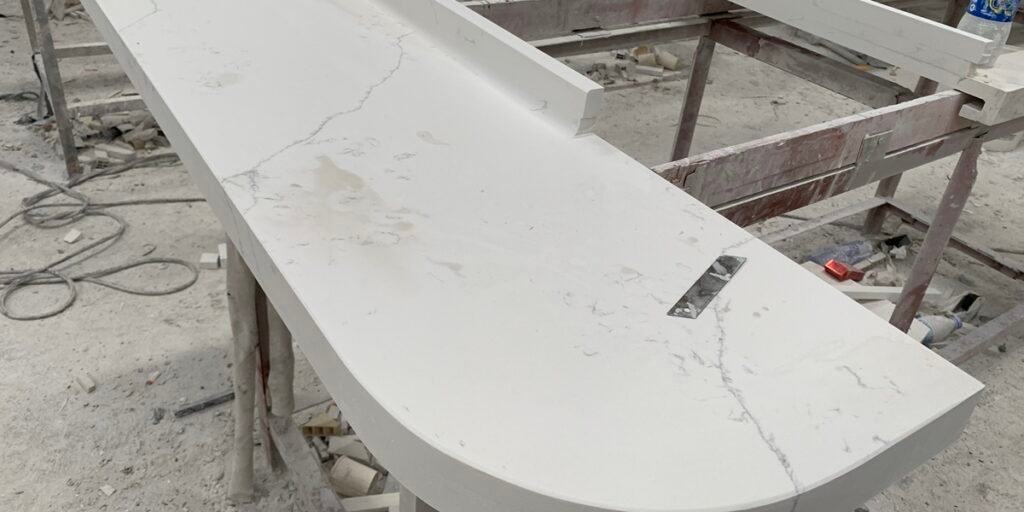
Long-tail, buyer-intent notes
If you’re searching or optimizing pages, include long-tails such as:
sintered stone polishing services near me
sintered stone polishing pads for sale manufacturer
How to polish a Dekton countertop
These map to real shopper intent (repair, purchase tooling, or professional services). Also, ask suppliers for technical maintenance guides and polishing sequences for the exact product/color because grit recommendations can vary.
FAQ — Google hot search FAQ
Q: Can sintered stone be polished?
A: Yes. Sintered stone can be polished to satin or high gloss using multi-stage diamond abrasives; follow manufacturer sequences and use wet polishing or enclosed extraction for safety.Q: Does sintered stone need sealing?
A: No — most sintered stone products are non-porous and do not require sealing; check the specific brand maintenance guide.Q: Is polishing dangerous because of the dust?
A: Polishing generates dust if dry. The health hazard is respirable crystalline silica in dust; use wet polishing or robust extraction and follow OSHA/EU standards. Fabricators must have exposure controls.Q: Can I polish sintered stone myself?
A: Minor touch-ups with hand polishers and recommended diamond pads are possible if you have the right tooling and PPE, but major repairs and full-slab polishing are best left to certified fabricators.Q: How do sintered stone and quartz differ in polishing?
A: Sintered stone polishes like porcelain/ceramic (diamond abrasives, wet methods); quartz contains resin, so the polish and thermal limits differ — sintered stone is generally more heat and UV-resistant.
Semantic Closure — How / Why / What / Options / Considerations
How (practical): Polishing sintered stone uses progressive diamond abrasives (coarse → fine) on wet polishers or CNC heads; edges are profiled with diamond wheels and finished with small-diameter pads for face/edge matching. Follow brand manuals (e.g., Dekton, Neolith) for exact sequences.
Why (value): Polishing restores or enhances aesthetics (satin to high gloss), repairs scratches, and allows long life for countertops, tabletops, and cladding without replacement—benefits that justify professional polishing services.
What (options): DIY small repairs with recommended pads; professional full-slab or edge polishing via CNC or specialized fabricators; some brands provide approved repair kits and sequences—use them to protect warranties.
Considerations (detailed): Always use wet polishing or enclosed extraction to control respirable silica (OSHA 1926.1153 / EU directives) and verify your fabricator’s exposure controls. Confirm final finish and warranty implications with the manufacturer before aggressive polishing. Budget for professional work on large slabs — the cost includes tooling, time, and safety controls.
Focus Keyword + 50 SEO tags
Focus Keyword: Can Sintered Stone Be Polished
50 SEO tags/keywords (long-tail + purchase intent):
can sintered stone be polished,how to polish sintered stone,sintered stone polishing pads,sintered stone polishing guide,sintered stone vs quartz polishing,what is sintered stone,sintered stone polishing Dekton,Neolith polishing instructions,sintered stone repair scratch removal,sintered stone maintenance and polishing,Does sintered stone need sealing,is sintered stone porous,sintered stone polishing near me,sintered stone polishing services manufacturer,sintered stone polishing pads wholesale,diamond pads for sintered slabs,can you polish Dekton,countertop,how to restore sintered stone shine,polishing sintered stone countertops,sintered stone polishing grit sequence,sintered stone edge polishing,sintered stone wet polishing,sintered stone dry polishing risks,sintered stone silica safety OSHA,sintered stone polishing CNC methods,sintered stone vs porcelain polishing,sintered stone care after polishing,sintered stone polishing tools supplier,best polishing pads for sintered stone,sintered stone repair resin kits,polishing Dekton Neolith Lapitec,sintered stone high gloss finish,satin vs polished sintered stone,polishing sintered stone table top,sintered stone finishing techniques,sintered stone polishing cost,sintered stone polishing tutorial,buy polishing pads for sintered stone factory,sintered stone scratch repair guide,sintered stone grinding and polishing,manufacturer polish recommendations sintered,how to buff sintered stone,sintered stone polishing contractor near me,sintered stone polishing equipment rental,sintered stone surface restoration,polishing sintered slab for mirror finish,sintered stone cleaning after polishing,is sintered stone toxic when polished,sintered stone dust control HEPA,sintered stone polishing warranty guidance.