——2026 Granite & Quartz Countertops Procurement Guide 15(Final White Paper)
Introduction
When countertop procurement moves beyond a single kitchen or bathroom and into multi-unit projects, commercial developments, or international distribution, the rules change completely. The question is no longer “Which countertop looks best?” but rather:
- Can the supplier guarantee batch consistency?
- Can they meet the timeline and logistics requirements?
- Can they deliver fabrication-ready or pre-cut products?
- Can they support export compliance and packaging?
This is where stone countertops sourcing becomes a supply chain decision, not just a material selection. Industry leaders like Cambria, Caesarstone, and MSI operate through structured dealer and distribution networks, while factory-direct suppliers like EDG Stone Factory represent the production-side model that supports large-scale customization and export.
1. Global Stone Countertops Market: Material Landscape
Quartz Countertops (Engineered Stone)
Quartz dominates modern kitchen and bathroom applications because it is nonporous, stain-resistant, and low-maintenance. According to brand documentation from MSI and Cambria, quartz does not require sealing and is suitable for high-frequency use environments.
Best for:
- Residential kitchens
- Bathroom vanity tops
- Multi-unit housing projects
Granite Countertops (Natural Stone)
Granite remains a strong choice for projects requiring natural variation, heat resistance, and outdoor compatibility. Unlike quartz, granite is porous and typically requires sealing, but it offers superior natural durability in high-heat environments.
Best for:
- Outdoor kitchens
- High-heat cooking environments
- Projects prioritizing natural aesthetics
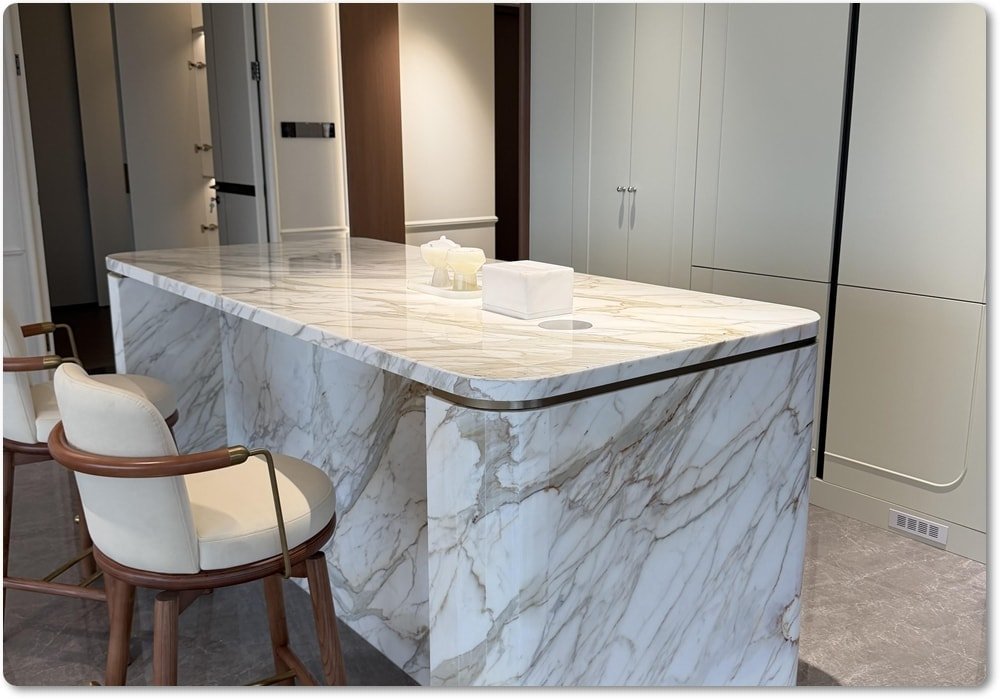
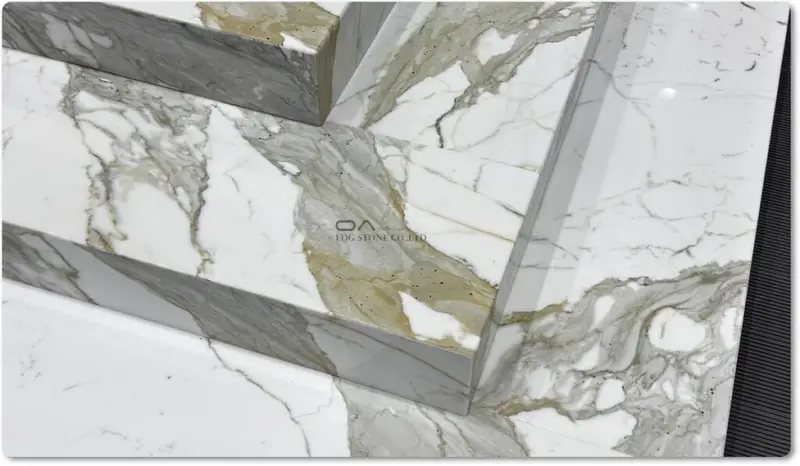
Marble Countertops (Premium Natural Stone)
Marble is associated with luxury and design value, but it is softer and more porous than quartz or granite. It requires careful maintenance and is more suitable for low-traffic or decorative applications.
Best for:
- Luxury residential projects
- Hotel and hospitality design
- Feature areas (not heavy-use kitchens)
Quartzite & Porcelain Countertops (Emerging Materials)
Quartzite offers natural stone durability with marble-like aesthetics, while porcelain provides ultra-thin, UV-resistant, and heat-resistant surfaces. Both are growing in commercial and architectural applications.
Best for:
- High-end residential
- Commercial design projects
- Exterior or UV-exposed environments (porcelain)
2. Manufacturing Process: From Raw Material to Finished Countertop
Understanding how countertops are made is critical for evaluating suppliers.
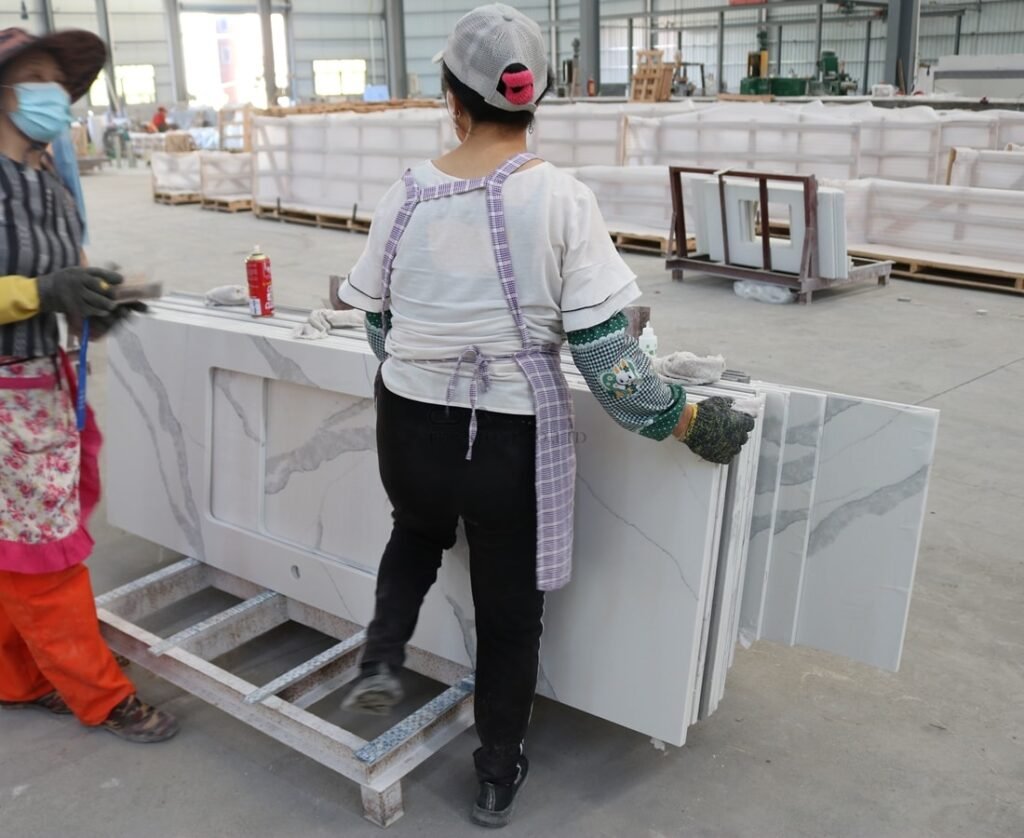
Quartz Manufacturing (Engineered Process)
Quartz slabs are typically produced through:
- Raw material mixing (quartz + resin + pigments)
- Vibrocompression under vacuum
- Curing and hardening
- Surface polishing or finishing
This controlled process allows color consistency and scalable production, which is why quartz dominates large projects.
Natural Stone Processing
Granite, marble, and quartzite follow a different workflow:
- Quarry extraction
- Block cutting into slabs
- Resin treatment (optional)
- Polishing or honing
- Cutting and edge fabrication
Because of geological variation, batch control becomes a major procurement risk in natural stone projects.
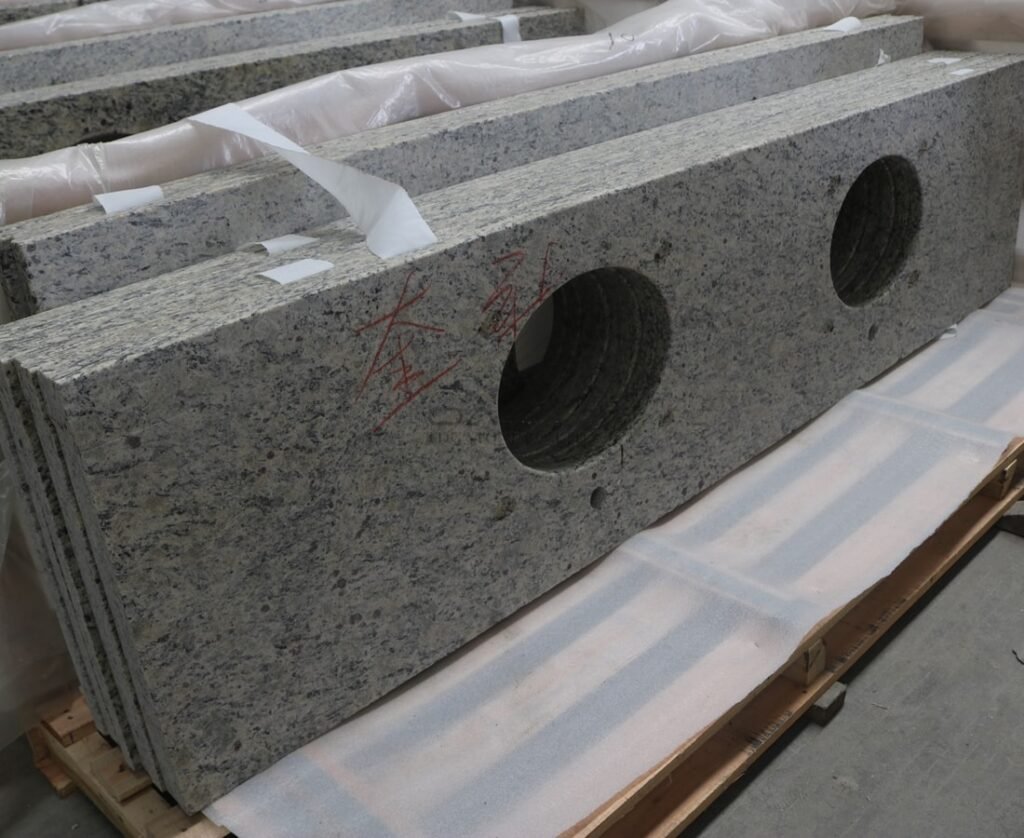
3. Quality Control: What Defines a Reliable Supplier?
For global sourcing, quality is not just about appearance. It includes:
1. Batch Consistency
Quartz suppliers must maintain color uniformity across slabs.
Natural stone suppliers must manage lot matching and selection.
2. Fabrication Precision
Cutouts, edge profiles, and tolerances must meet installation requirements.
3. Surface Performance
- Stain resistance
- Scratch resistance
- Heat tolerance
4. Certification & Compliance
Some quartz brands highlight food safety certifications and indoor-use suitability.
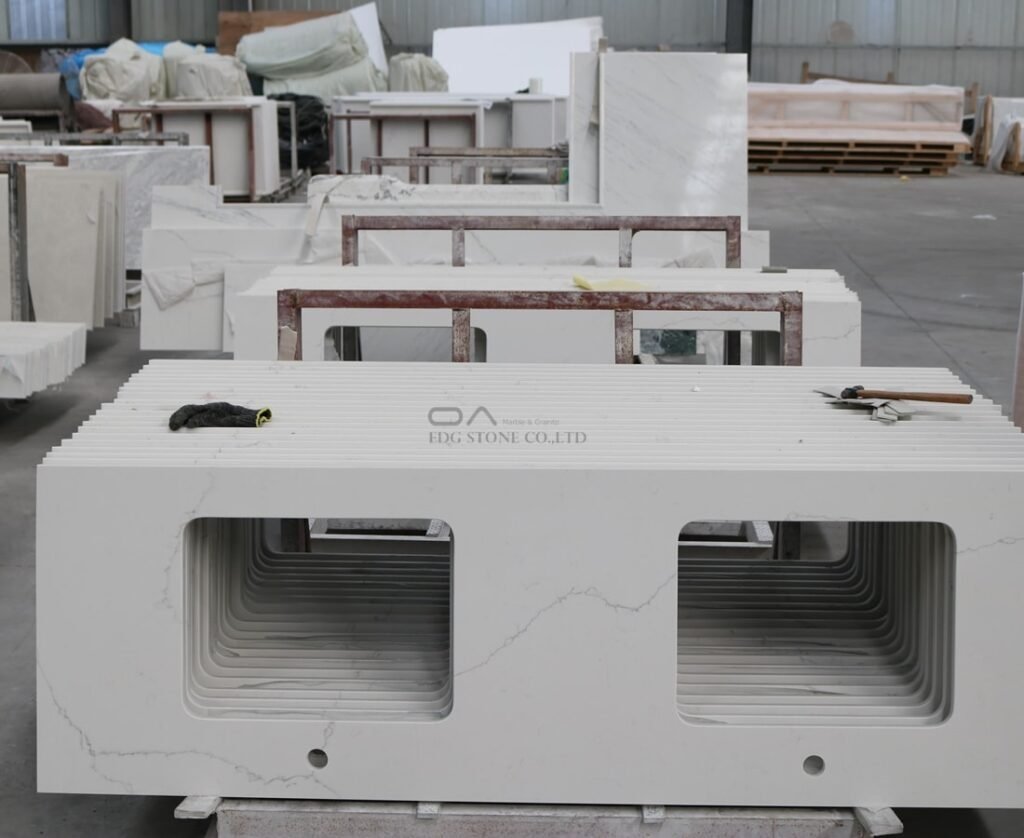
4. Export Logistics: The Hidden Cost Driver
Global countertop procurement is heavily influenced by logistics.
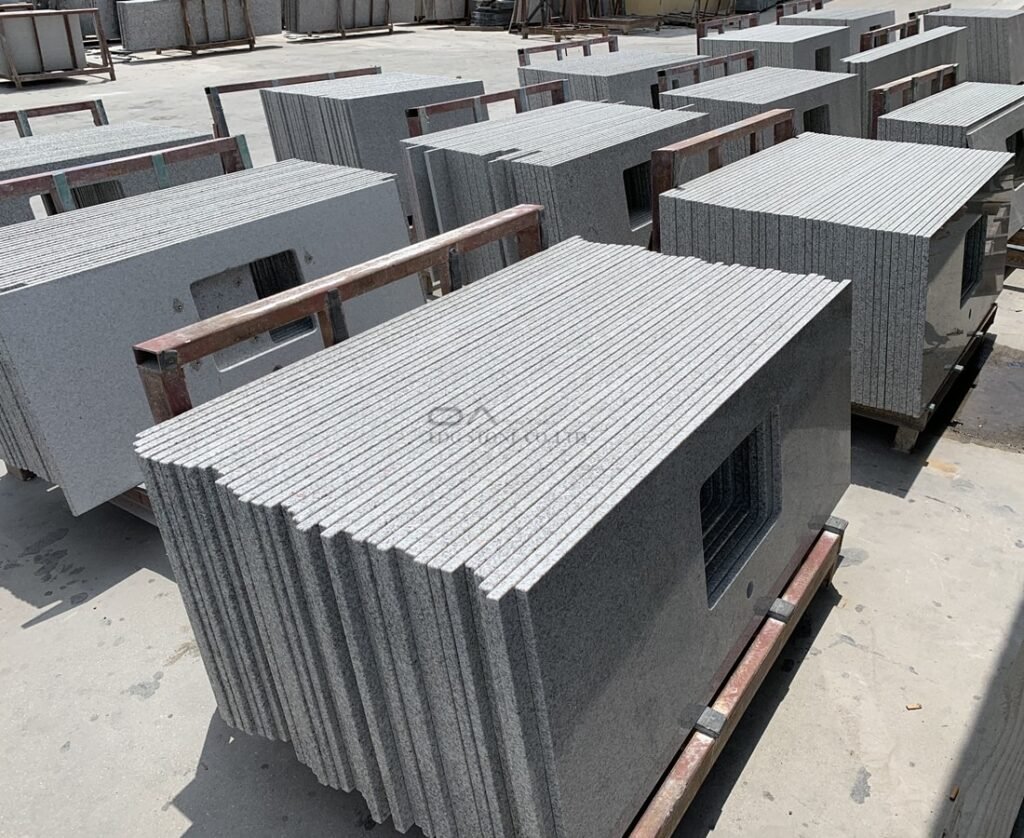
Packaging
Export-grade packaging typically includes:
- Wooden crates
- Foam protection
- Reinforced slab separation
Poor packaging leads to breakage, which is one of the biggest risks in stone export.
Shipping
- Full container load (FCL) is preferred for large projects
- Lead times depend on production + transit
- Port handling and customs clearance must be planned
Documentation
Typical export documentation includes:
- Packing list
- Commercial invoice
- Bill of lading
- Certificate of origin
For large projects, missing documentation can delay installation timelines significantly.
5. Channel Strategy: Distributor vs Factory Direct
Distributor / Brand Model
Brands like Caesarstone and MSI operate through:
- Showrooms
- Dealer networks
- Local inventory
Advantages:
- Easier local access
- Faster installation coordination
- Brand warranty structure
Factory Direct Model (EDG Stone Factory)
Factory-direct sourcing is typically used when:
- Projects require a large volume
- Custom sizes or finishes are needed
- Export logistics must be optimized
Advantages:
- Better cost control
- Custom fabrication
- Direct production communication
Tradeoff:
- Requires stronger project management
- Installation handled locally
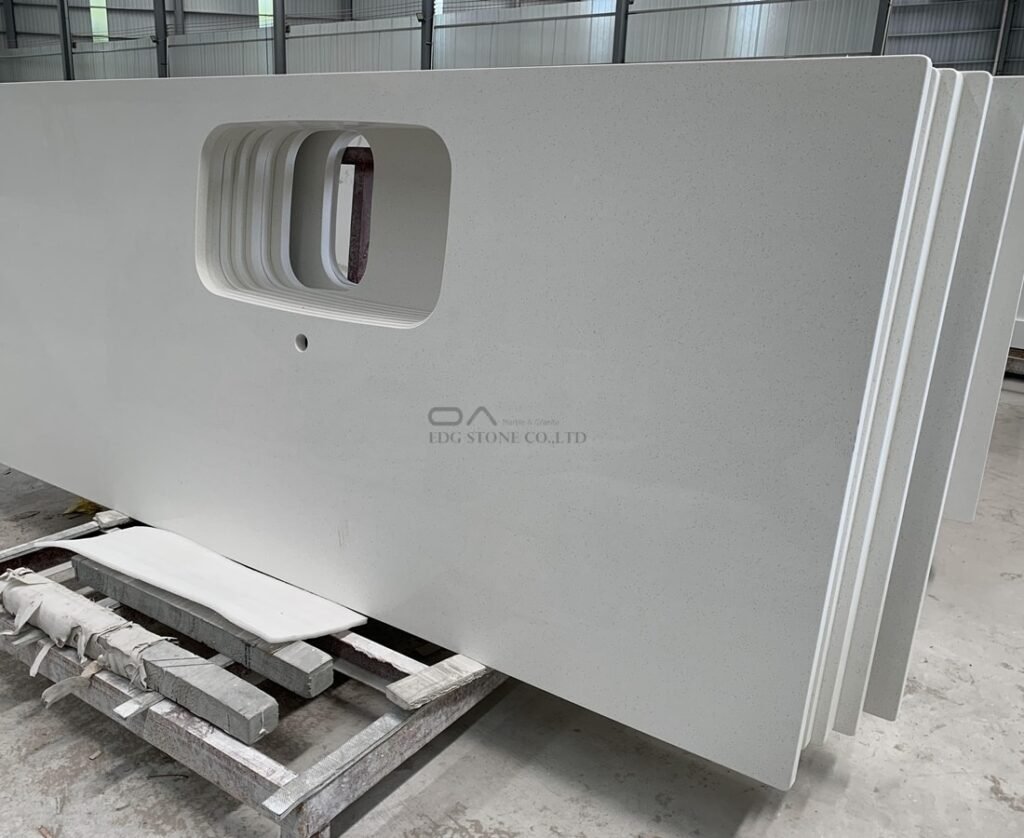
6. Cost Structure: What Buyers Often Miss?
The total cost of stone countertops includes:
- Material cost (slab price)
- Fabrication (cutting, polishing, and edge)
- Installation
- Removal of existing countertops
- Transportation/shipping
Quartz pricing is often segmented into builder, mid-range, and premium tiers, depending on design complexity and brand positioning.
7. Risk Management in Global Procurement
Common Risks
- Color variation between batches
- Breakage during shipping
- Delays in fabrication or customs
- Inconsistent quality between suppliers
Mitigation Strategies
- Approve slab samples or photos before production
- Work with suppliers who provide QC documentation
- Use professional packaging standards
- Align timelines with installation schedules
8. Where EDG Stone Factory Fits in the Global Market?
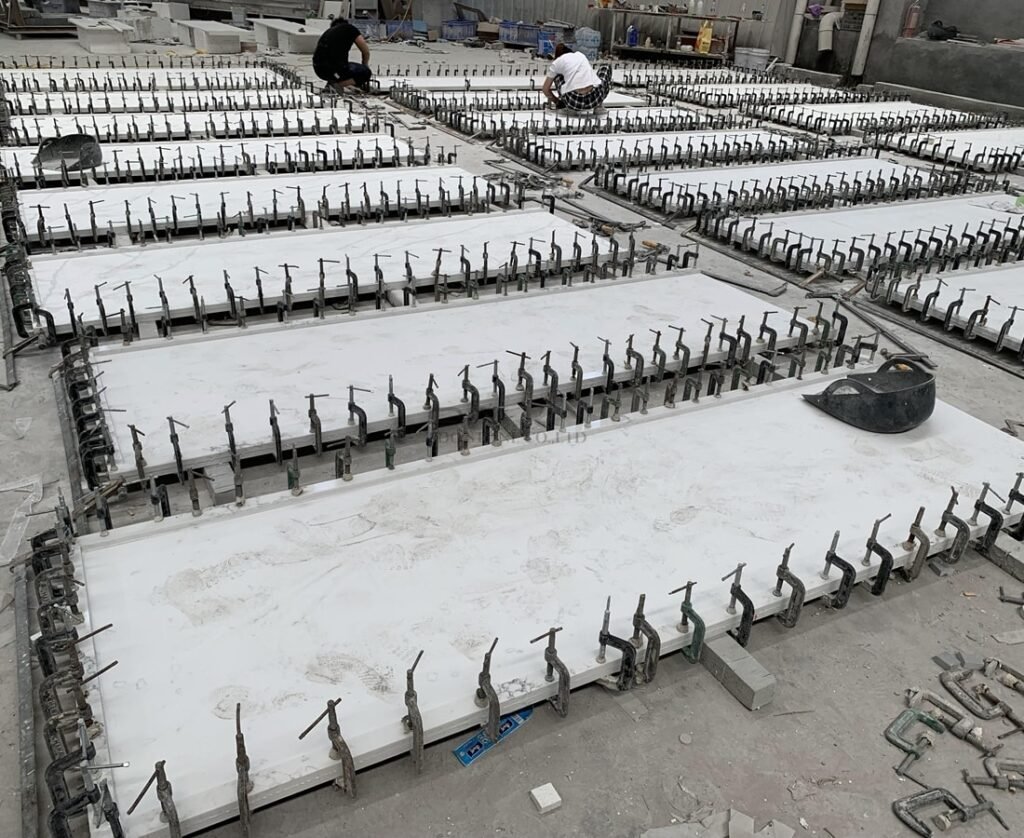
Within this global structure, EDG Stone Factory represents the production-side solution:
- Supports custom quartz, granite, and marble fabrication
- Enables bulk project supply
- Provides export-ready packaging and logistics
- Works as a bridge between design specification and final delivery
This makes it especially relevant for:
- Developers
- Contractors
- Distributors
- International buyers
Conclusion
Stone countertops sourcing in 2026 is no longer just about choosing a material—it is about building a reliable supply chain.
Quartz, granite, marble, quartzite, and porcelain each serve different project needs, but the real success of a project depends on:
- Supplier reliability
- Production capability
- Logistics execution
- Installation coordination
Retail and showroom channels are ideal for local projects, while factory-direct sourcing—such as EDG Stone Factory—becomes essential for large-scale, customized, or export-driven procurement.
The best procurement strategy is not choosing one over the other, but knowing when to use each model.
FAQ
Q1: What is the best material for stone countertops in global projects?
Quartz is often preferred for large-scale projects due to consistency and low maintenance, while granite and marble are used for natural aesthetics.
Q2: Is factory-direct sourcing cheaper than buying locally?
It can reduce material costs for large orders, but logistics, installation, and coordination must be considered.
Q3: What is the biggest risk in importing stone countertops?
Breakage, color inconsistency, and shipping delays are the most common risks.
Q4: How long does global countertop sourcing take?
Production + shipping timelines typically range from 3–8 weeks depending on order size and destination.
Q5: Should I choose quartz or natural stone for export projects?
Quartz is generally more predictable for export due to consistency, while natural stone requires careful batch selection.