1. Introduction — Why contrast matters in contemporary design?
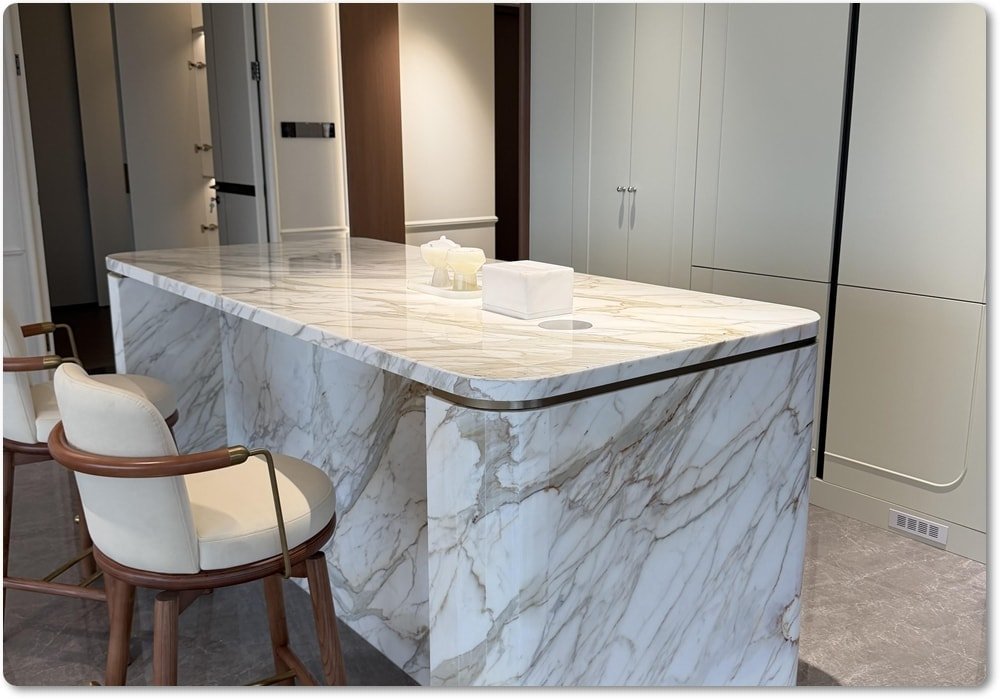
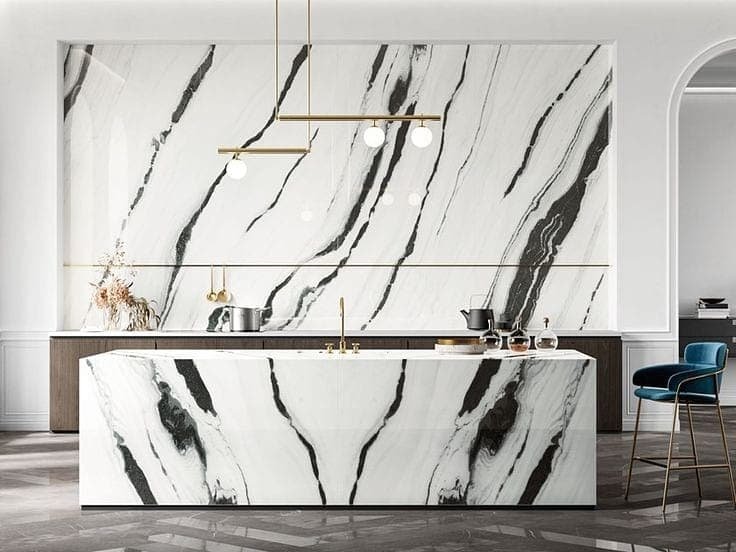
Bold contrast captures attention. In a visual field saturated with subtle neutrals and soft pastels, a stone like Panda White — where stark black veins or blotches march across a luminous white field — functions as a deliberate visual anchor. Designers use it to create focal points that read clearly across scales: a kitchen island that reads from the entry, a bathroom vanity that frames a mirror like jewelry, or a hotel lobby wall that becomes a postcard image. The “Dramatic Contrast Effect” is both psychological and compositional: high-contrast elements tell the eye where to stop and invite closer inspection, while also organizing surrounding palettes and materials.
Quick definitions
Panda White: trade name used for several naturally occurring light-field stones (marble/granite variants) with black patterning.
Use cases: countertops, stair treads, accent walls, furniture tops, and commercial cladding.
Material types: depending on origin, Panda White can be a true marble, a calcitic marble, or a granitic stone marketed under the “Panda” label.
2. What is Panda White? Origins, geology, and material types
Panda White is not a single geological species but a market label describing stones with similar dramatic black-on-white contrast. Sources vary by region — deposits have been commercialized in Asia and the Indian subcontinent, and supply often shifts with quarry discoveries and export patterns. In practice, “Panda White” may refer to:
Panda Marble: calcitic marbles with dark carbonaceous or metamorphic inclusions creating bold motifing.
Panda Granite / White Granite: harder, crystalline feldspathic stones with tonal contrast but different performance attributes than marble.
Engineered interpretations: sintered slabs and engineered composites sometimes replicate the Panda look with more predictable pattern repeat.
Visual anatomy
Field tone: bright white to soft ivory.
Contrast elements: bold linear veins, blotches, or graphic islands of black and charcoal.
Texture & finish: polished to emphasize color contrast; honed or leathered for subtler tactile surfaces.
How does Panda differ from other whites?
Unlike delicate Calacatta or Carrara marbles, Panda White’s high-contrast language makes it visually assertive rather than subtle. In kitchens, it reads like statement jewelry; when bookmatched across a pair of slabs, it can create mirror-image drama that photographers and social feeds love.
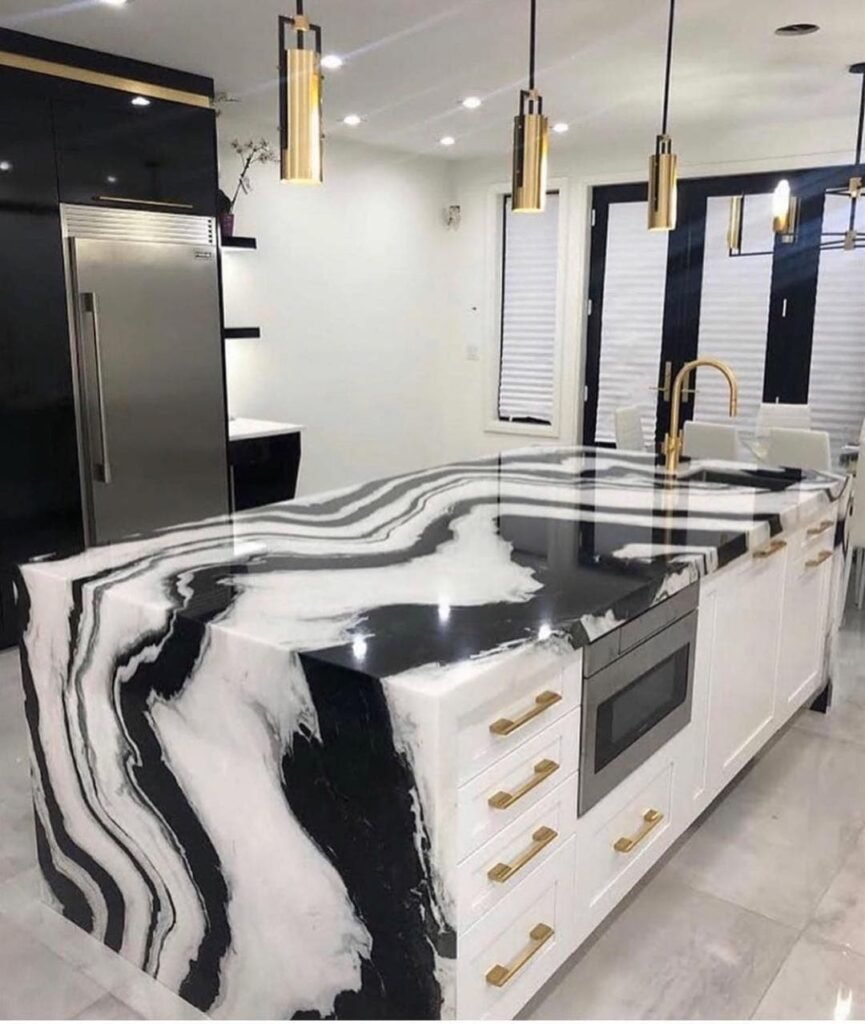
3. Design & Visual Impact: The Dramatic Contrast Effect in practice
Panda White excels when used as the hero element in a restrained composition. The following application notes show how to deploy contrast for maximum design effect.
Kitchens
Use Panda White for a waterfall island or a continuous run across an island face to create a monolithic focal point. Pair with matte cabinetry in warm neutrals or deep colors (navy, charcoal, forest green) so the stone becomes the light source. For busy patterns, avoid equally busy backsplashes—let the stone stand alone.
Bathrooms & Vanities
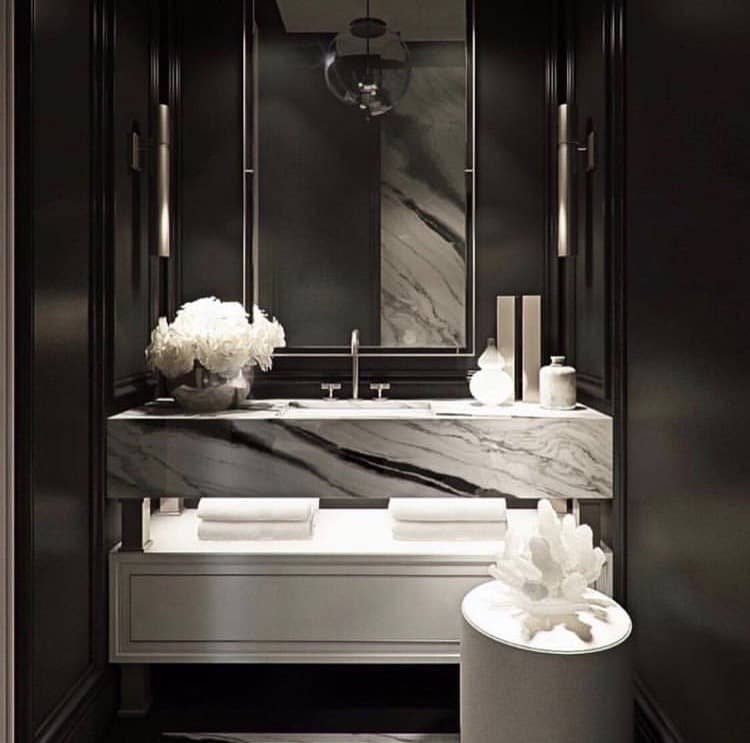
A single slab vanity or a shower accent wall behind a freestanding tub elevates the bathroom into a gallery. Because contrast reads well at close range, the material is ideal for rooms where the slab is viewed up close.
Living areas & Furniture
Panda White coffee tables, console tops, or fireplace surrounds punctuate living rooms. Bookmatching a fireplace slab creates theatrical symmetry.
Hospitality & Commercial
Reception desks, elevator lobbies, and hotel feature walls benefit from photographic impact. In hospitality, high contrast helps brand recognition and social-media appeal.
4. Technical performance & fabrication considerations
Understanding how Panda White behaves materially is essential for specifying long-lasting installations.
Durability & maintenance
Marble variants: softer and more porous — require sealing and preventive use of coasters/trivets to avoid etching and staining.
Granite variants: generally harder and less porous; better stain resistance and suitability for heavy-traffic commercial counters.
Daily care: use pH-neutral cleaners, blot spills, and reseal per manufacturer guidelines.
Fabrication tips
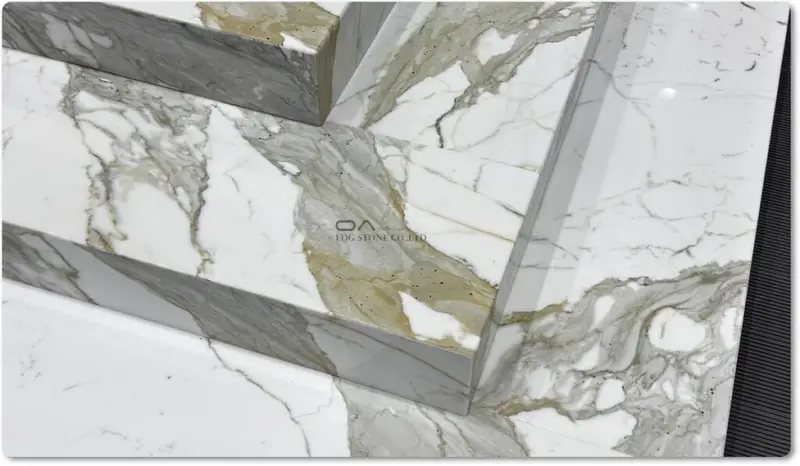
Slab selection: choose slabs with coherent vein flow for bookmatching and to minimize seam visibility.
Edgework: squared or thin, eased edges keep focus on the pattern; elaborate edges can distract.
Seam planning: place seams in logical breaks (backsplashes behind sinks, appliances) and match veins at visible junctions.
Installation
Ensure substrate rigidity and proper support for long spans. Heavy bookmatched panels may require mechanical anchoring and transport planning.
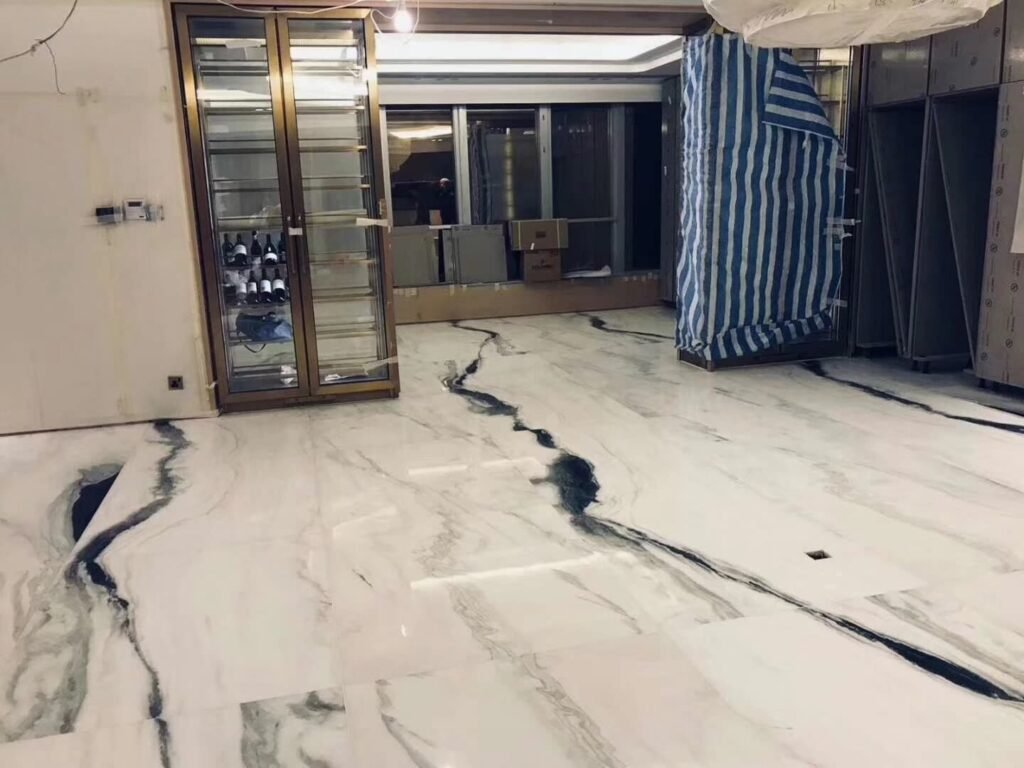
5. Specification, sourcing & price factors
Pricing and sourcing are driven by origin, slab size, grade, finish, and logistics.
Typical slab sizes & thicknesses
Common thicknesses: 20 mm (3/4”) and 30 mm (1-1/4”). Large format slabs (e.g., 3000 × 1600 mm) are preferred for large features and bookmatching.
Price drivers
Rarity and pattern quality: bold, continuous veining commands premium prices.
Slab grade: A-grade (consistent color/vein) versus B/C grade (more variation).
Finishing & fabrication complexity: leathered finishes or special edges add to cost.
Shipping & tariffs: overseas sourcing adds freight, duties, and lead time.
Where to buy — manufacturer/factory/wholesale strategies
Commercial buyers should work with established manufacturers or factories that offer slab photography, technical data sheets, and sample programs. For bulk projects, negotiate volume pricing and clear lead-time commitments. Use purchase-intent keywords in product pages (manufacturer | factory | wholesale | buy Panda White slab) to capture trade buyers.
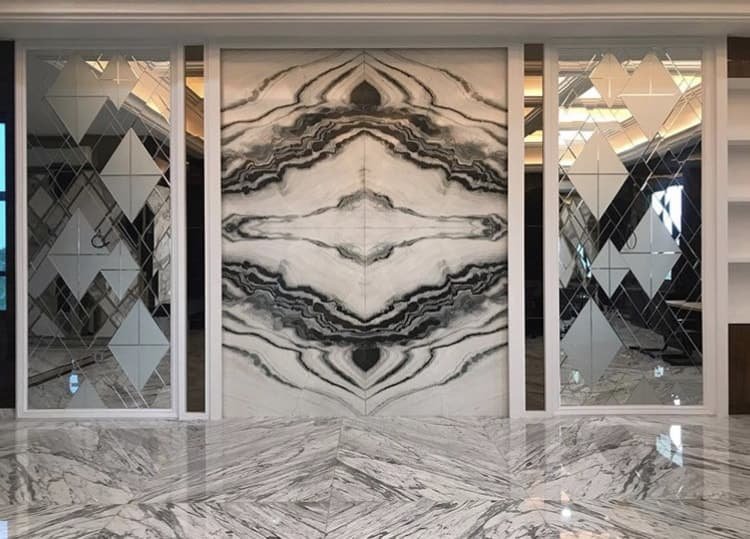
6. Sustainability, compliance & industry trends
Sustainability and transparency are reshaping procurement. Environmental Product Declarations (EPDs) and third-party verifications now influence material selection for green building projects. Natural stone can outperform many engineered alternatives on embodied carbon in some lifecycle analyses, particularly when quarries and fabrication are local to the project to minimize transport emissions.
Regulatory & compliance forces
Expect increasing demand for:
EPDs and HPDs: to support LCA claims and green certifications.
Chain-of-custody and sustainability certifications (e.g., standards aligned with ANSI 373) to demonstrate responsible quarrying.
Import/export compliance: documentation for customs and health/safety disclosures.
Procurement implications
Specifiers and procurement teams should require supplier transparency, EPD availability, and social compliance evidence from exporters and manufacturers.
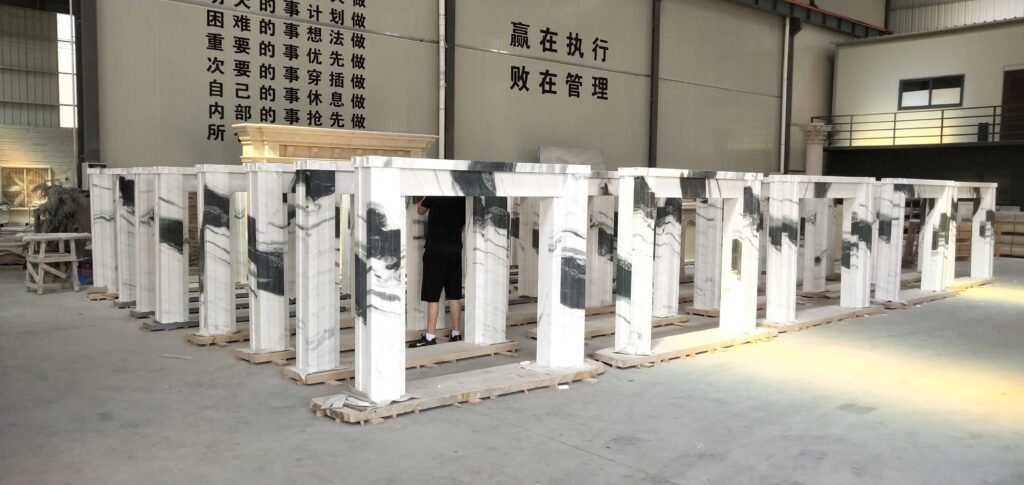
7. Pricing case studies & comparative ROI
Below are two condensed examples to illustrate cost and lifecycle thinking.
Residential kitchen
Scenario: 40 sq ft island surfacing in Panda White, premium slab selection, 30mm thickness, fabricated with waterfall edge.
Cost drivers: slab grade, complex edge, bookmatching (if requested), and local install labor.
ROI: high visual impact often increases perceived home value in high-end markets; consider lifecycle (reseal maintenance vs. low-maintenance engineered alternatives).
Commercial lobby
Scenario: 120 sq m feature wall using bookmatched Panda White panels.
Cost drivers: panel splitting, heavy mechanical anchoring, transport, and protective finishes.
ROI: Brand exposure, guest impressions, and marketing value often justify higher upfront costs — factor in lifecycle cleaning and repair strategies for heavy footfall.
8. Buyer’s guide: choosing the right Panda White
Questions to ask suppliers
Can you provide full slab photos and thickness options?
Do you supply EPD / HPD documentation and TDS?
What is the lead time and freight responsibility?
What warranty and fabrication support do you provide?
Inspection checklist at delivery
Check slab flatness, consistent field tone, absence of delamination, and crack/fissure locations. Verify slab IDs match factory paperwork.
Care & maintenance
Daily: pH-neutral cleaner and soft cloth.
Preventive: use cutting boards, trivets, and coasters.
Long-term: reseal porous marble variants every 12–24 months or per manufacturer guidance.
9. Gallery & sample-request workflow
Suppliers who want to sell Panda White at scale should provide:
High-resolution full-slab images (front/back).
Close-ups of veining and edges.
Sample chips with finish options and a small printed TDS.
A clear sample request form showing shipping lead time, sample cost, and return policy for commercial buyers.
10. FAQ — Google hot-search questions (human visible)
Q1: What is Panda White marble, and where does it come from?
A: Panda White is a trade name for stones that display bold black markings on a white background. The exact geological type varies — it can be a marble or a granitic stone — and materials are quarried in a few regions across Asia and the Indian subcontinent. Market supply and naming can vary by supplier and country of origin.
Q2: How much does Panda White marble cost per slab?
A: Price depends on slab grade, thickness, finish, and origin. Premium bookmatching and A-grade slabs cost more, while smaller slab sizes or mixed grades lower the price. Buyers should ask suppliers for slab-by-slab pricing and factor in freight, duties, and fabrication costs to get a true installed figure.
Q3: How do I maintain Panda White countertops to avoid staining and etching?
A: Regular cleaning with pH-neutral stone cleaners, prompt spill management, and using cutting boards and trivets will protect the surface. Marble variants are prone to etching from acids and may require periodic resealing; harder granitic variants are more forgiving but still benefit from preventive care.
Q4: Can Panda White be used in commercial settings like hotel lobbies?
A: Yes. Panda White is widely used in hospitality for reception desks and feature walls due to its photographic impact. For high-traffic or heavy-use surfaces, specify harder stone types or surface treatments and plan for maintenance regimes.
Q5: How should I source Panda White slabs for a large project?
A: Work directly with manufacturers or wholesalers that provide slab photography, technical data sheets, EPD/HPD documentation if required, and reliable logistics. Request full slab sets early so you can plan bookmatching and seam placement.
Semantic Closure — Core Insights
How: Apply Panda White as a primary focal surface — island waterfall, bookmatched fireplace, vanity wall — supporting the stone with neutral or deep-toned surrounding materials to emphasize contrast. Why: High black-on-white contrast creates immediate visual hierarchy, aids brand storytelling in commercial settings, and photographs well for marketing and social media. What: Material may be marble or granite; specify slab grade, thickness (20mm/30mm), finish, and verify source details for procurement. Options (deep): For low-maintenance specs, choose granitic Panda variants or sintered reproductions. For high visual fidelity, choose premium A-grade marble slabs and opt for bookmatching where possible. Consider protective treatments in hospitality. Considerations (deep): Factor in lifecycle costs: initial premium may be offset by higher perceived value and marketing ROI, but natural marble requires higher maintenance. Sustainability claims should be supported by supplier EPDs and local sourcing to reduce transport emissions.