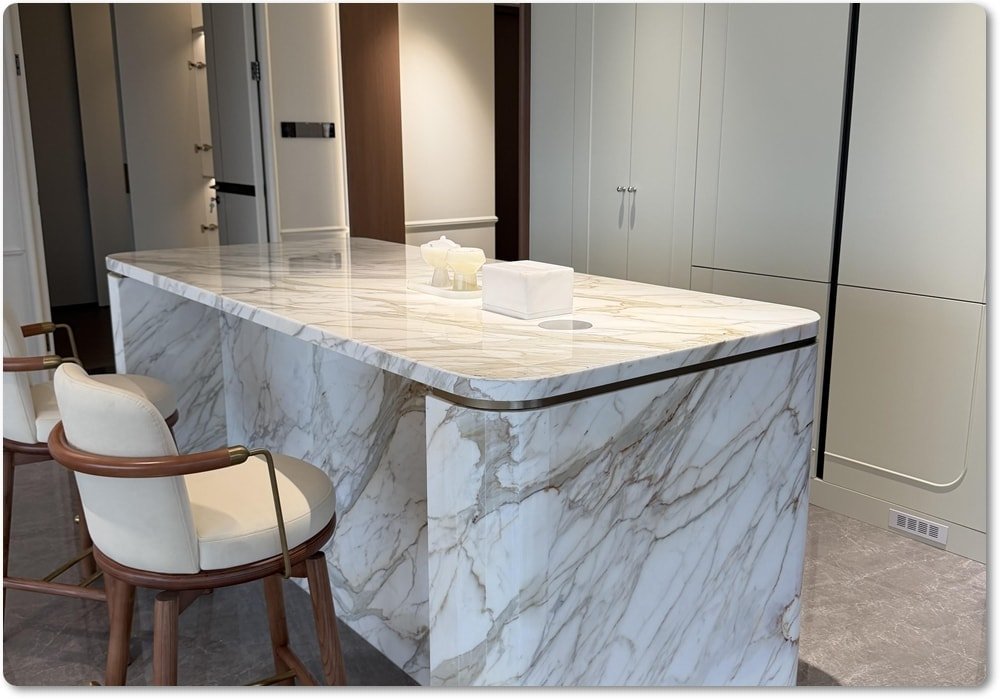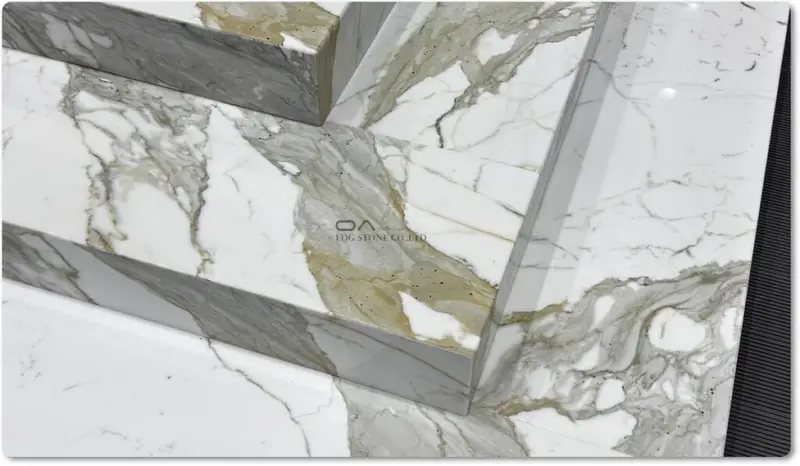
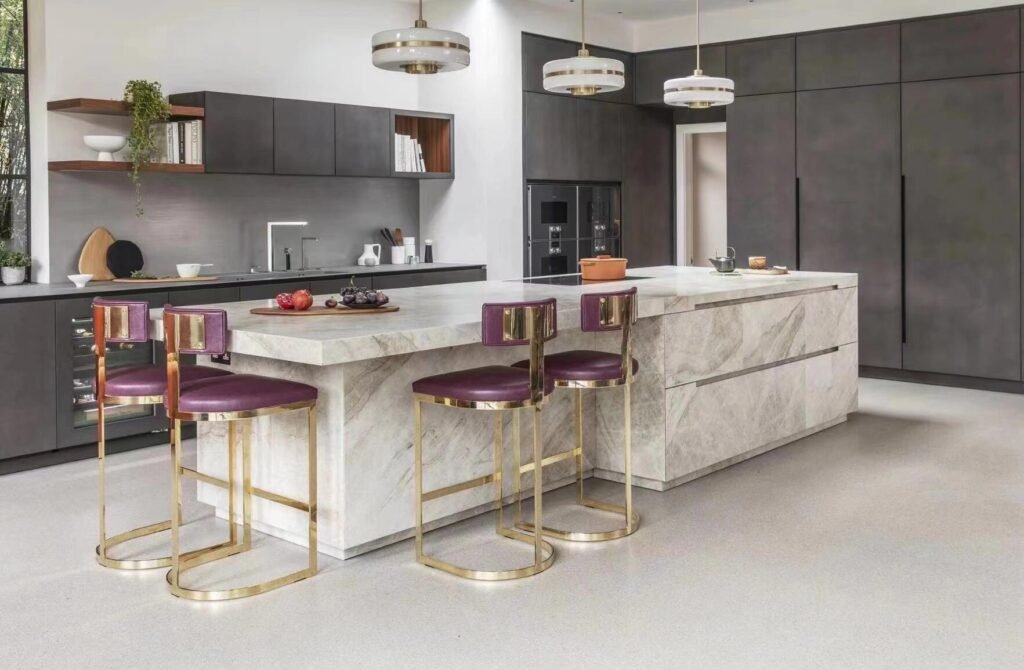
1. Introduction — Why “etch-proof” matters today?
The modern kitchen is both a showroom and a workbench. Homeowners want a surface that photographs beautifully, holds up to coffee, citrus, and wine, and requires minimal fuss to maintain. “Etch-proof” — the practical absence of visible surface damage caused by acids — is no longer a niche advantage; for many buyers, it is a primary spec requirement. Taj Mahal quartzite has emerged as a standout choice because it combines the luminous, marble-like look that designers love with the abrasive hardness and acid resistance of quartzite. For homeowners, designers, and commercial specifiers, this means fewer cosmetic repairs, reduced maintenance costs, and greater long-term satisfaction.
2. What is Taj Mahal Quartzite? Geology, appearance, and market identity?
Geological identity
Taj Mahal quartzite is a naturally occurring metamorphic stone dominated by quartz grains that have recrystallized under heat and pressure. Unlike marbles, which are largely calcite and therefore acid-sensitive, quartzite’s dominant silica composition yields a higher Mohs hardness and a fundamentally different chemical reactivity profile.
Visual characteristics
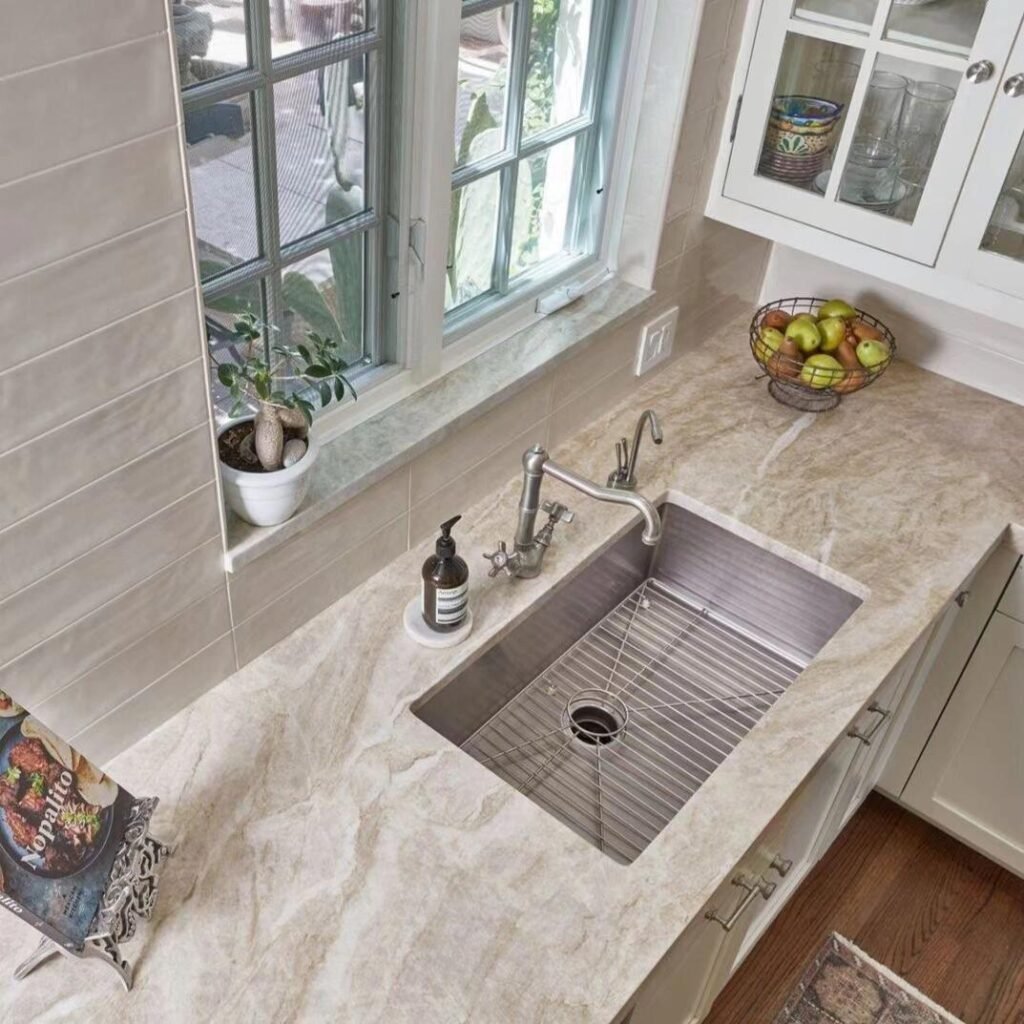
Taj Mahal typically presents a soft-to-medium white background, subtle veining in pale greys or warm taupes, and a fine, almost crystalline sparkle under close inspection. Depending on the quarry and slab, finishes range from mirror-polished to leathered textures that emphasize tactile depth.
Market naming and confusion
In trade, “Taj Mahal” often gets marketed in ways that emphasize its marble-like beauty. This sometimes confuses buyers who equate the visual language with calcitic marble. Procurement teams need to confirm the stone’s mineralogy (quartzite vs marble) and request technical data sheets from suppliers.
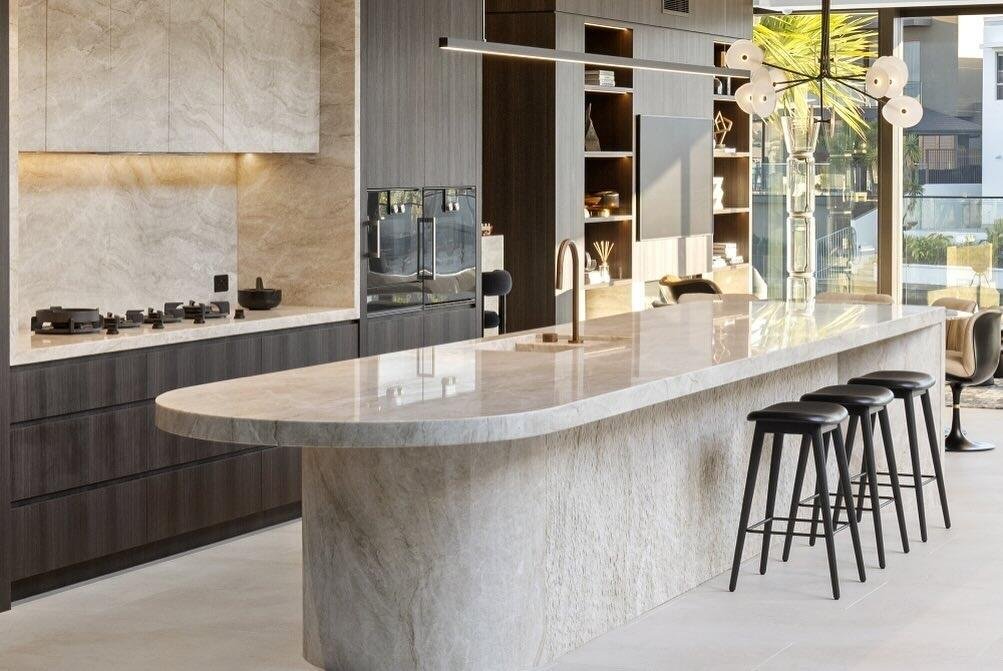
3. Understanding etching: chemistry, risk, and why quartzite performs better
What is etching?
Etching refers to microscopic or visible surface corrosion that occurs when acids (citric acid from lemon, acetic acid from vinegar, gastric acid, wine) react with calcite-rich stone. The acid dissolves microscopic surface calcite, leaving dull spots that diffuse light differently and look like clouding or wear.
Quartzite vs marble: the chemistry
Quartzite is primarily silica (SiO₂). Silica’s resistance to weak acids common in household use is far greater than calcite’s (CaCO₃). Where marble will often etch when exposed to lemon juice or vinegar, quartzite typically remains unaffected or shows far less visible change under the same conditions. The difference is not theoretical — it translates to everyday resilience.
Mohs hardness and abrasion resistance
Quartzite generally ranks higher on the Mohs scale (often around 7) compared to marble’s lower values (about 3–4). Higher hardness confers better scratch and abrasion resistance, making Taj Mahal quartzite more robust against utensils, cookware, and daily wear.
Practical implication
For kitchens and food-prep areas, the near-etch-proof behavior of Taj Mahal quartzite means less worry over acidic spills and a lower long-term cost for polishing or cosmetic repairs compared to marble options.
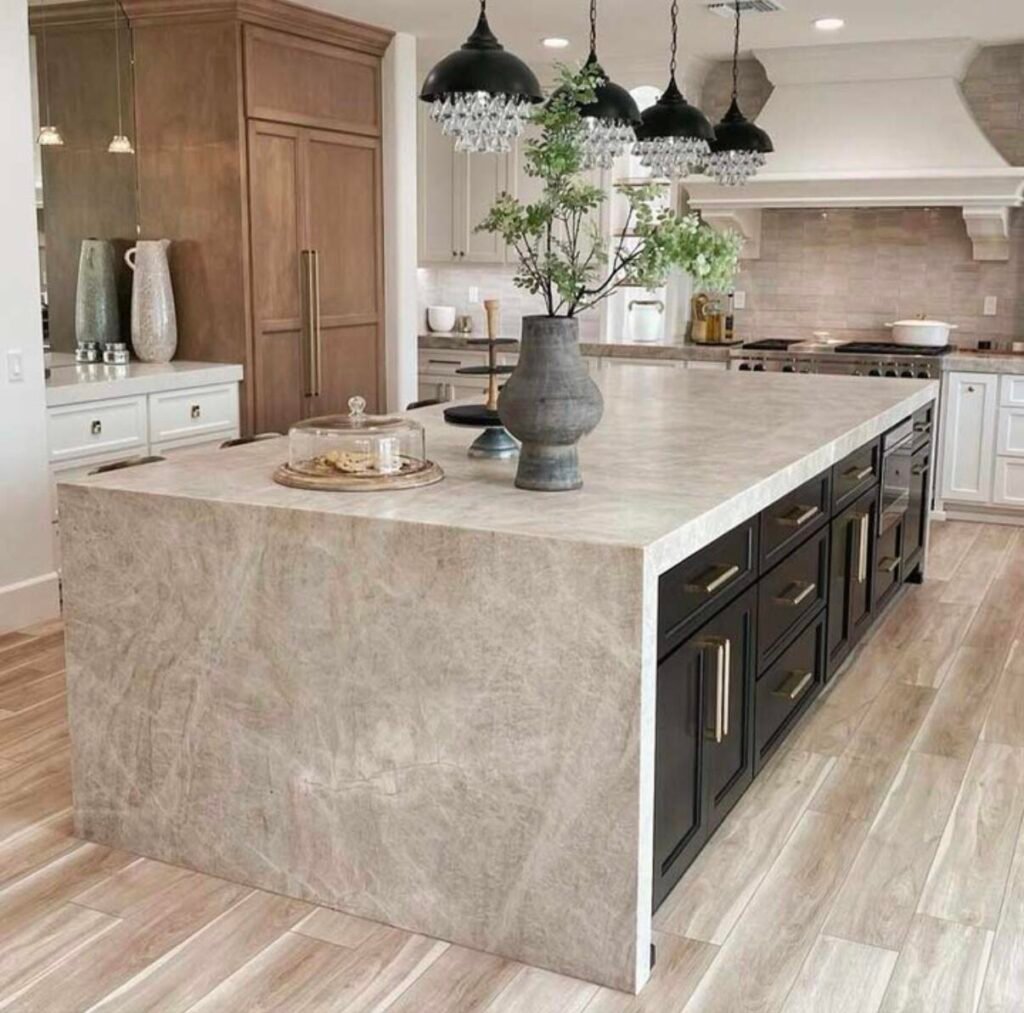
4. Design use-cases: kitchens, waterfall islands, bathrooms, and hospitality
Kitchens & waterfall islands
Taj Mahal quartzite makes a compelling island surfacing material. Its marble-like veining pairs beautifully with white cabinets, while the quartzite backbone ensures that dinner-party mishaps won’t produce lasting etch marks. Designers often specify a waterfall edge to turn the slab into an uninterrupted focal surface.
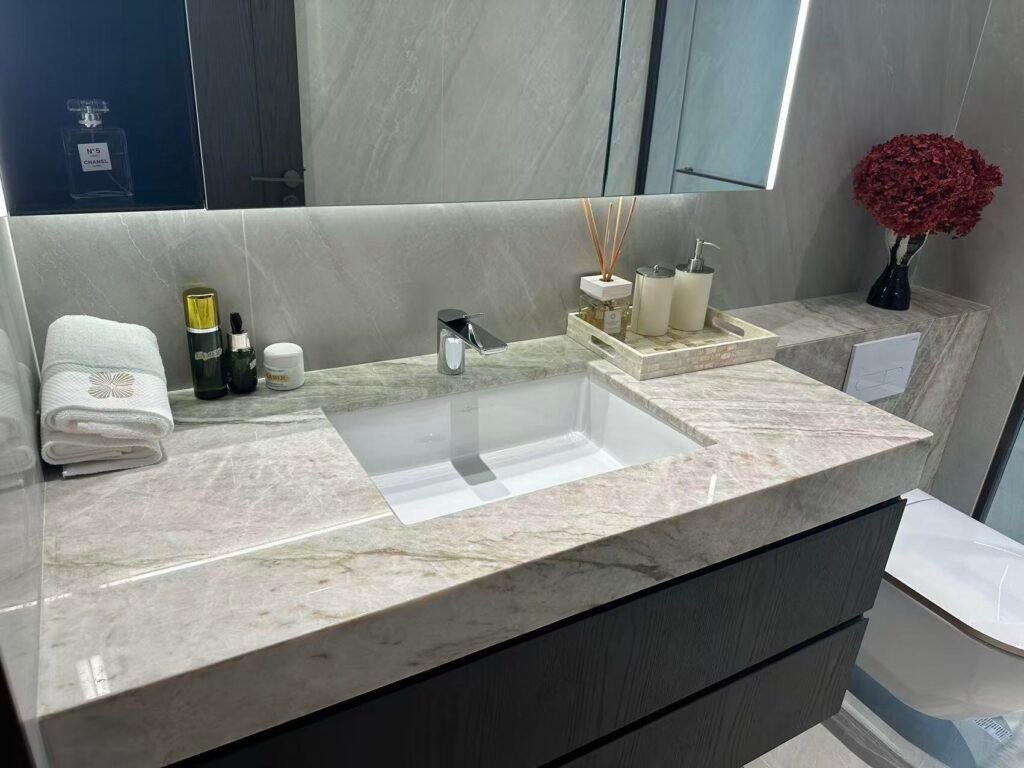
Bathrooms & wet areas
Unlike softer marbles that need protective thinking around shower niches and thresholds, Taj Mahal quartzite is robust enough for vanity tops and wet-area thresholds when properly fabricated and sealed. For shower surrounds, confirm the specific slab’s porosity and sealing recommendations.
Hospitality & commercial settings
In hospitality, where surfaces receive heavy use and need to balance aesthetics with durability, Taj Mahal quartzite is frequently chosen for reception desks, bar counters, and feature walls. The material’s resistance to acidic cocktails and cleaning agents reduces repair cycles and lifecycle maintenance costs.
Pairing with white cabinets
When used with white cabinetry, Taj Mahal’s subtle veining creates refined continuity that reads as luxury without the fragility concerns of classic calcitic marbles. The result is a high-end aesthetic with pragmatic longevity.
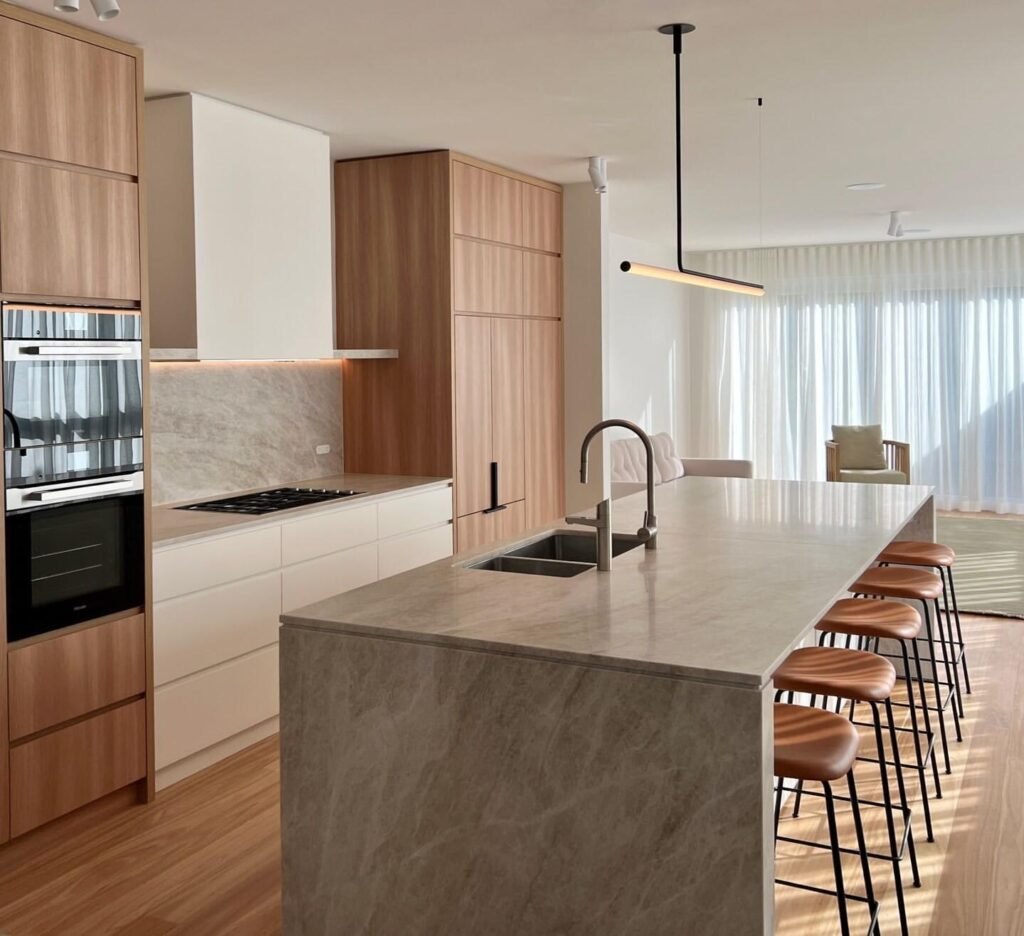
5. Fabrication, installation, and finish options (polished, honed, leathered)
Fabrication considerations
Quartzite is harder and more abrasive to cut than marble. Fabricators should use diamond tooling and plan for slightly longer fabrication cycles. Edge profiles should be chosen to complement the stone’s patterning — simple eased edges often maintain the material’s elegant look without distracting from veining.
Finish choices
Polished: High gloss that enhances color and veining; shows fingerprints but resists etch visually on quartzite.
Honed: Soft sheen with reduced reflection; good for casual or rustic aesthetics.
Leathered: Textured finish that masks water spots and fingerprints, often used for islands where tactile quality is important.
Installation notes
Large waterfall slabs require robust substrate support and careful transport. Anchoring and mechanical fixings may be necessary for heavy bookmatched panels to ensure long-term stability.
Maintenance & sealing
Although quartzite is less porous than many marbles, some slabs may still benefit from a penetrating sealer to reduce potential staining from oil or dye-rich liquids. Follow supplier TDS for recommended sealing frequency; for most Taj Mahal quartzite installations, sealing is straightforward and infrequent compared to marble.
6. Cost, slab sizing, and buyer economics (price per square foot analysis)
Price drivers
Taj Mahal quartzite pricing depends on slab grade (consistency of pattern), slab size, thickness (20mm or 30mm standard), finish, and whether bookmatching is required. Geographic origin and freight also influence landed cost.
Typical pricing structure (guidance)
Material cost per square foot: varies widely by market and supplier grade; buyers should expect higher-than-basic-granite pricing but often competitive with premium marbles on an installed-cost basis due to lower lifecycle maintenance.
Fabrication & install: accounts for a significant portion of total installed cost; complex edges, waterfall treatments, and bookmatching incur additional labor and waste factors.
Comparative economics
When comparing cost-per-lifetime, Taj Mahal quartzite often delivers better value than marble because it reduces polishing, repair, and replacement cycles. For commercial projects, lower maintenance translates to operational savings over the asset’s lifespan.
7. Sourcing and procurement: manufacturers, factories, wholesalers, and verification
Supplier verification checklist
Request full-slab photography and multiple sample chips.
Obtain technical data sheets (TDS) specifying porosity, Mohs hardness, and recommended finishes.
Ask for references from recent projects and, if relevant, EPD or sustainability documentation.
Manufacturer/factory / wholesale strategies
For large-volume procurements, working directly with quarries, manufacturers, or factory channels can reduce per-slab cost, but requires due diligence on packaging, lead time, and shipping conditions to avoid damage.
How to confirm authenticity?
Confirm the stone’s mineralogical identity with the supplier’s TDS and, if necessary, small-scale laboratory testing. Visual appearance alone can be ambiguous because many materials mimic marble’s look.
Logistics & lead time
Transport plan: heavy slabs require protective crating and lead time for sea freight if imported. Include allowances for customs clearance and handling in project schedules.
8. Sustainability, regulations, and industry trends shaping stone choices
Environmental profile
Natural stone’s environmental footprint is influenced heavily by transport distance and quarry/fabrication practices. Local sourcing reduces embodied carbon. Increasingly, buyers ask for EPDs or lifecycle assessments to compare materials fairly.
Regulatory trends
Building programs and sustainability certifications increasingly require transparency — EPDs, responsible sourcing declarations, and documentation of quarry rehabilitation plans. Suppliers who can provide these documents have a competitive edge.
Industry movement toward durability
Regulatory and procurement preference for durable, low-maintenance materials (to reduce replacement cycles and lifecycle environmental impacts) favors resilient stones like quartzite over delicate marbles in many commercial specifications.
9. Comparative lifecycle ROI: Taj Mahal quartzite vs marble and engineered quartz
Key metrics to compare
Initial material and install cost
Maintenance frequency and cost (polishing, sealing, repairs)
Operational downtime for repairs in commercial settings
Replacement cycles and salvage/reuse potential
Practical outcome
Taj Mahal quartzite tends to show a lower total cost of ownership than similar-looking marbles because it resists etching and abrasion, reducing the need for cosmetically driven maintenance or full refinishing over decades. Engineered quartz offers low-maintenance alternatives but may lack the large-format, natural veining that many designers prize in Taj Mahal slabs.
10. Buyer checklist, care recommendations, and warranty guidance
Buyer checklist
Confirm material is quartzite via TDS.
Request full-slab images and matching IDs for bookmatched runs.
Verify fabrication method, edge detail, and substrate support plan.
Confirm sealing recommendations and warranty terms.
Care basics
Use pH-neutral cleaners.
Blot acidic spills immediately — quartzite resists etch, but prompt cleanup still prevents stains from oils or dyes.
Use cutting boards and trivets for hot pans to avoid mechanical stress at seams or edges.
Warranty considerations
Seek product and fabrication warranties that describe coverage for seam separation, delamination, or fabrication defects. Clarify what cosmetic changes (if any) are covered and which are considered normal patina or wear.
11. FAQ — Google hot-search questions (visible answers)
Q1: Is Taj Mahal quartzite outdated?
A: No — Taj Mahal quartzite remains a contemporary and highly sought-after surface for both residential and commercial projects. Its timeless white aesthetic paired with near-etch-proof performance continues to align with modern preferences for low-maintenance luxury. Design trends evolve, but durable natural stone with strong visual appeal maintains steady demand.
Q2: How much do Taj Mahal quartzite countertops cost per square foot?
A: Costs vary by region, slab grade, thickness, and finish. Buyers should request slab-specific quotes that account for fabrication, edgework, installation, and shipping. When considering lifecycle costs, Taj Mahal often compares favorably to premium marbles due to lower maintenance expenses.
Q3: Why is Taj Mahal quartzite preferred over marble for kitchens?
A: The primary reason is performance. Taj Mahal quartzite resists acid etching and scratches far better than calcitic marble while delivering a similar luminous white appearance. That means fewer cosmetic repairs and a more durable countertop for daily food prep.
Q4: Can Taj Mahal quartzite be leathered or honed, and how does that affect maintenance?
A: Yes. Leathered and honed finishes are common and can reduce the visibility of fingerprints and water spots. These finishes may slightly alter cleaning routines, but do not change the material’s core resistance to etching; they can make the surface more forgiving in active kitchens.
Q5: Where can I buy Taj Mahal quartzite — manufacturer, factory, or wholesale?
A: You can source Taj Mahal quartzite through local stone yards, stone manufacturers, factory channels, and wholesale importers. For large projects, buying direct from manufacturers or authorized wholesalers can reduce costs; always verify slab photos, TDS, and shipping terms before purchase.
Semantic Closure — Etch-Proof Decision Summary
How: Specify Taj Mahal quartzite for primary worktops when the design intent requires a white, marble-like aesthetic but the program demands durability — kitchens, restaurant bars, hospitality desks, and waterfall islands are ideal. Why: Quartzite’s silica-rich composition and higher Mohs hardness make it far less susceptible to acid-driven etching and abrasion than calcitic marbles; this reduces polishing cycles and cosmetic repairs. What: Taj Mahal quartzite — available in 20mm and 30mm slabs, polished/honed/leathered — provides a direct substitution for marble where appearance is desired but long-term resilience is required. Confirm slab TDS for porosity and sealing guidance. Options (detailed): For lowest maintenance, choose dense, low-porosity quartzite slabs with leathered or honed finishes; for maximum gloss and color pop: polished 30mm bookmatched slabs. For cost-sensitive or high-volume projects, negotiate factory/wholesale pricing and plan logistics to minimize freight and handling damage. Considerations (detailed): Ask suppliers for full-slab imagery, technical data sheets, and EPD or sustainability statements if required by the project. Budget for slightly higher fabrication time and diamond-tool wear. Evaluate total cost of ownership — material + installation + maintenance — rather than material-only purchase price.