Breccia Botticelli Marble Stone Slabs — Quick Summary
1. What is Breccia Botticelli?
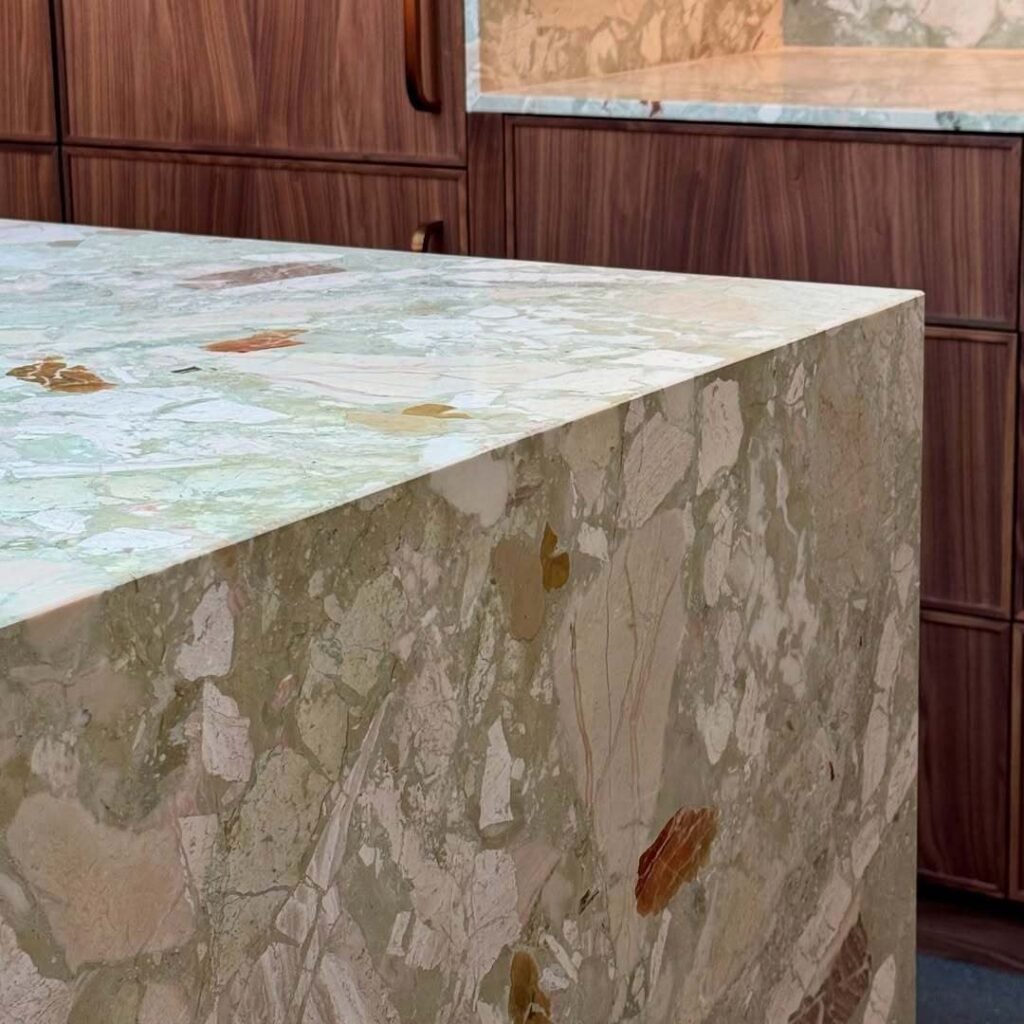
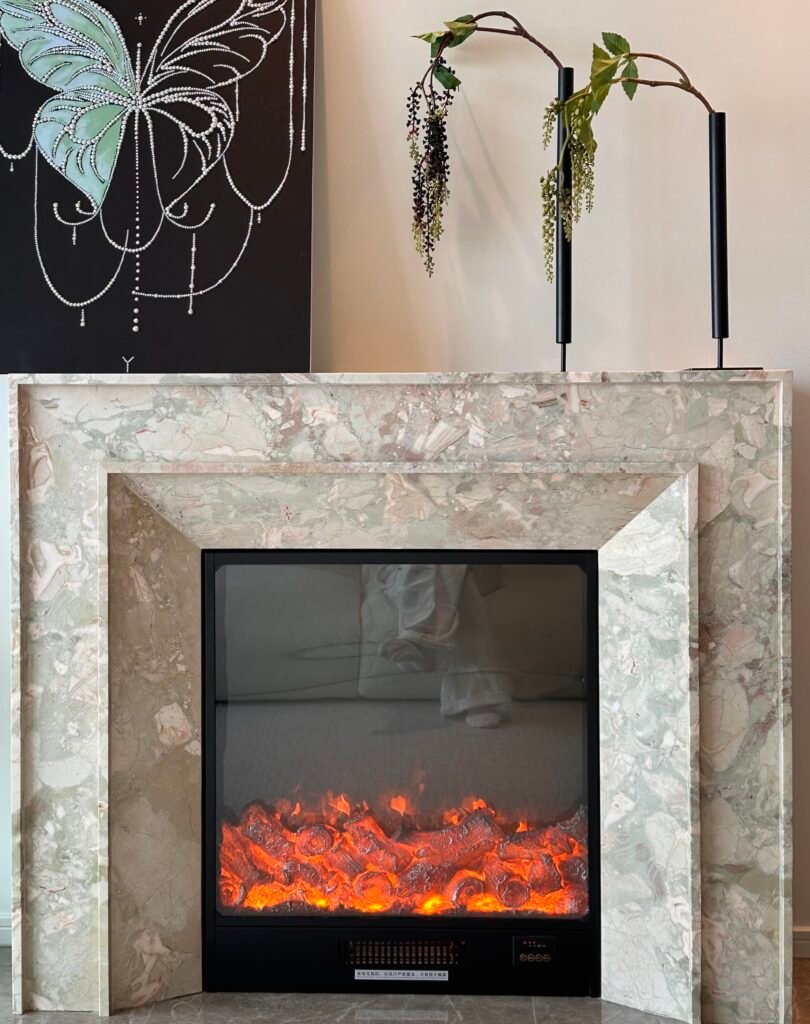
Breccia Botticelli is a brecciated marble variety prized for its dramatic collage of angular fragments (clasts) cemented by mineral matrix. Colors typically run cream, beige, rose, and occasional violet veins, making it a luxurious option for statement interiors and architecture. It is commonly sold as slabs for counters, large wall cladding, and book-matched panels. Sources and trade listings identify it as an Italian material (Sicily/Italy origin in trade data).
2. Visual characteristics & finishes
Visual: large, irregular clasts with contrasting matrix; movement and scale vary slab-to-slab.
Tone: creamy background with rose, pink, or violet veins/fragments (Breccia Rose/Botticelli Rose).
Common finishes: polished (high gloss), honed (matte satin), and leather/brush (textured, contemporary). Leather finishes accentuate the stone pattern while reducing reflection—excellent for hospitality or table tops.
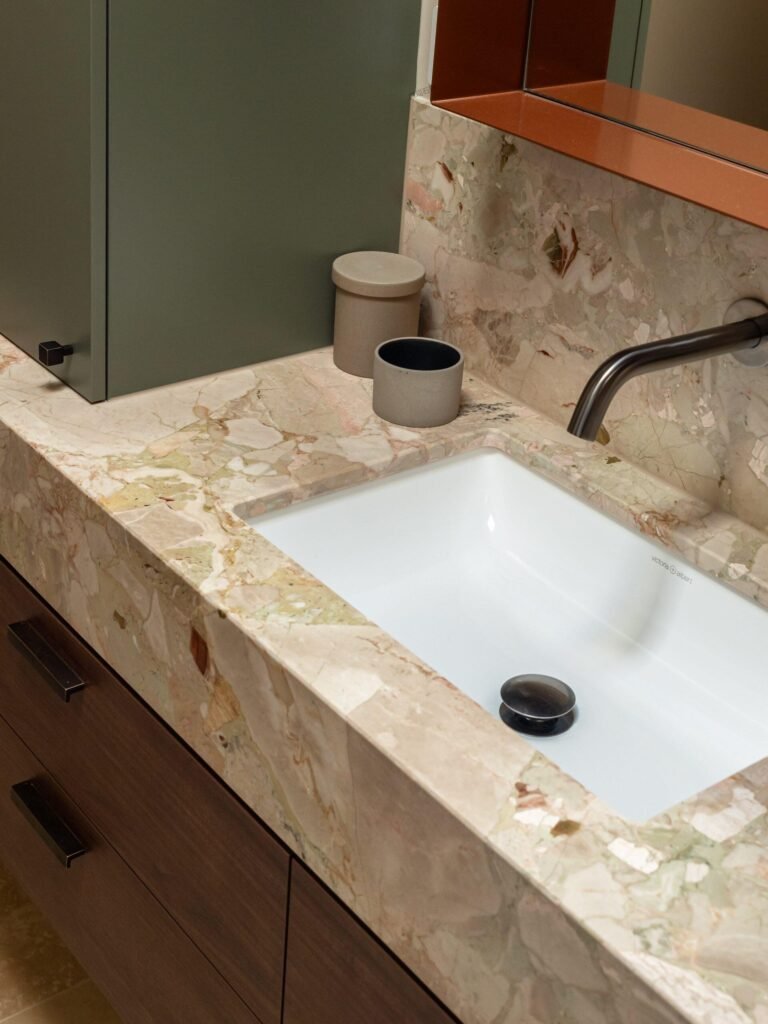
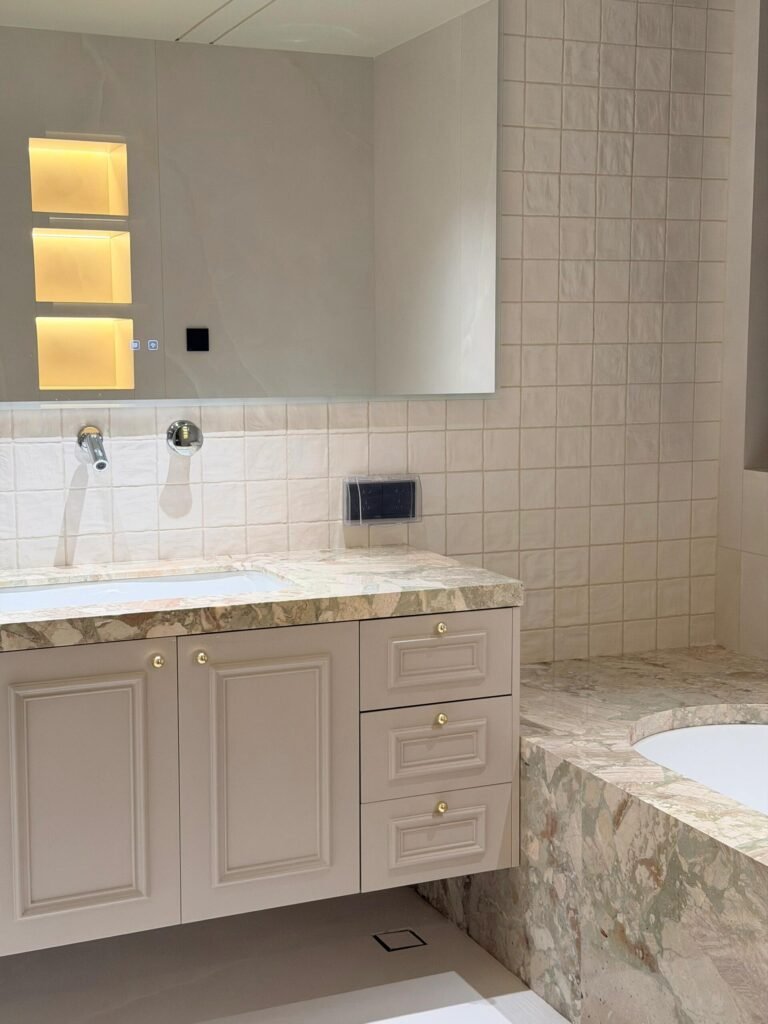
Use cases by finish: polished for high-gloss islands and reception desks; honed for floors/residential bathrooms; leather for tactile counters and vanities.
3. Quarry & origin notes
Trade and supplier listings indicate Breccia Botticelli is marketed as an Italian marble, often linked to Sicily or Italian quarries. Quarry yields of brecciated marbles can be limited—breccia configuration and fissures reduce usable slab percentage, which affects availability and price. Multiple supplier catalogs and stone house lists list Sicilian origin and slab stock sizes.
4. Structure of marble rock — why brecciated patterns form
“Breccia” describes a rock composed of angular rock fragments bound by a mineral matrix. In a marble context:
Origin: tectonic breakage and re-cementation or hydrothermal infill after fracturing.
Appearance: makes unique mosaics—each slab is almost like a natural collage.
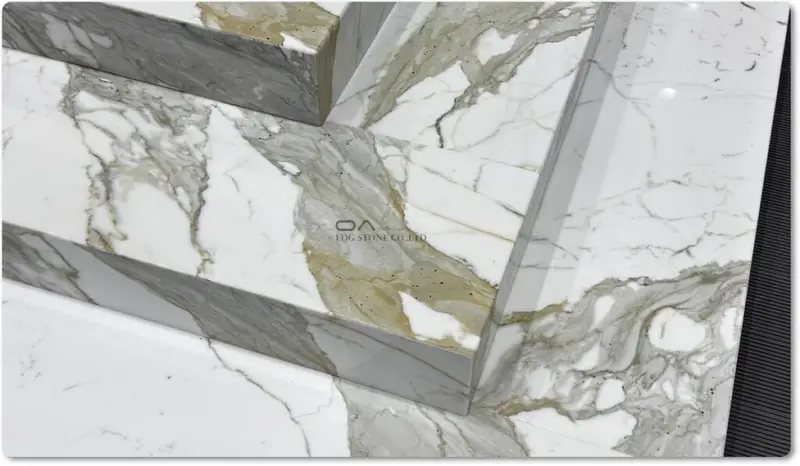
Implication for fabrication: fragmentation zones demand careful slab selection, reinforcement, and strategic seam placement. Geological descriptions from trade sources confirm this brecciated genesis and the variability it causes in yield and matching.

5. Slab sizes, yield, and book-matching
Typical slab sizes (trade ranges): common slabs around 2900×1850 mm (approx), thicknesses 18–30 mm; oversized sheets available but subject to quarry yield.
Yield & selection: because breccia slabs contain fractures and veins, only a subset of blocks yield large, book-matchable slabs—this makes “select slab” orders common for high-end projects.
Book-matching: widely used to create dramatic mirrored visuals for walls, large vanities, and hotel lobbies—ask your supplier for pre-layout visuals.
6. Price — breccia marble price drivers & factory/wholesale buying tips
Key price drivers:
Scarcity & quarry yield: brecciated marbles have lower intact slab yield → higher per-slab cost.
Color & pattern scale: pronounced rose/violet fragments can command premiums.
Finish & fabrication: leather or custom honed surfaces add processing cost.
Trade channel: buying direct from the factory/manufacturer or wholesale distributors reduces markup.
Factory/Wholesale buying tips:
Request slab photos with measurements and a short video of the slab on a flat surface.
Ask for slab grading (A/B/C) and any available book-matched pairs.
Negotiate on minimum order quantities (MOQs) and sea-freight consolidation if you’re importing.
Ask the factory for certs of origin and material warranty; verify slab thickness tolerance and polishing specs.

7. Fabrication, transport, installation & worker safety
Fabrication notes:
Use diamond tooling rated for natural marble; reinforce thin or fractured slabs with fibreglass mesh or epoxy when used vertically.
Large panels require careful craning and A-frames; consider transport padding for irregular clast edges.
Worker safety — silica focus:
Cutting, grinding, and polishing natural stone generate respirable crystalline silica (RCS). Employers and fabricators must follow occupational controls to limit exposure: for example, OSHA’s silica standard requires exposure monitoring, engineering controls (wet cutting, local exhaust), and medical surveillance in many jurisdictions. If you operate or buy from a fabricator, request their silica exposure controls and compliance documents.
8. Market outlook, data & regulatory drivers
Market size & growth: the global natural stone market is substantial and growing; industry reports estimate a multi-billion USD market with mid-single digit CAGR depending on the source (examples: Grand View Research and IMARC/BizResearch data show varying estimates between ~USD 10B to USD 40B+ depending on segment definitions—dimension stone vs broader natural stone product lines). Use these figures as sectoral indicators rather than absolute values when modeling procurement or demand.
Regulatory trends affecting stone trade & fabrication:
Worker safety regulation (silica exposure) is tightening globally—fabricators must implement controls and monitoring.
Sustainability & green procurement: EU voluntary ecolabel criteria for hard covering products and public procurement guidelines favor environmentally managed supply chains—this affects public projects and some institutional buyers. Suppliers who can provide environmental management, quarry rehabilitation plans, and lower embodied impacts will win tenders.
Implication: buyers should ask factories for safety & sustainability documentation (silica control procedures, wastewater handling, quarry restoration plans) to remain eligible for green procurement and to reduce regulatory risk.
9. How to buy from a factory/manufacturer / wholesale supplier — checklist?
Request slab inventory with high-resolution images, length × width × thickness, and weight, from EDG Stone.
Ask for origin & chain-of-custody documents (country of origin; any traceability certificates).
Confirm finishing options & tolerances (polish level, honed grit, leather finish method).
Check compliance documentation: silica control plan, safety data sheets (SDS) for the stone (if available), and environmental management statements.
Negotiate pricing on slab grade, MOQ, and sea-freight consolidation.
Request a sample (small book-matched tile or cut piece) before the full order.
Get pre-layout/mockups for book-matching and seam placement.
Agree on packaging & shipment method (A-frames, crates, protective membranes).
Confirm lead times and inspection windows (factory acceptance inspection and pre-shipment photos).
10. Maintenance, sealing & lifecycle
Sealing: breccia marbles with open veins should be sealed with a penetrating sealer—test a small area.
Daily care: mild pH-neutral cleaner; avoid harsh acids.
Repair: fractured clasts can sometimes be stabilized with colour-matched epoxy; work with an experienced restorer.
Lifecycle: With proper maintenance, marble surfaces can last decades and be re-polished; consider lifecycle cost vs. engineered surfaces for high traffic zones.
11. Case uses & design inspiration
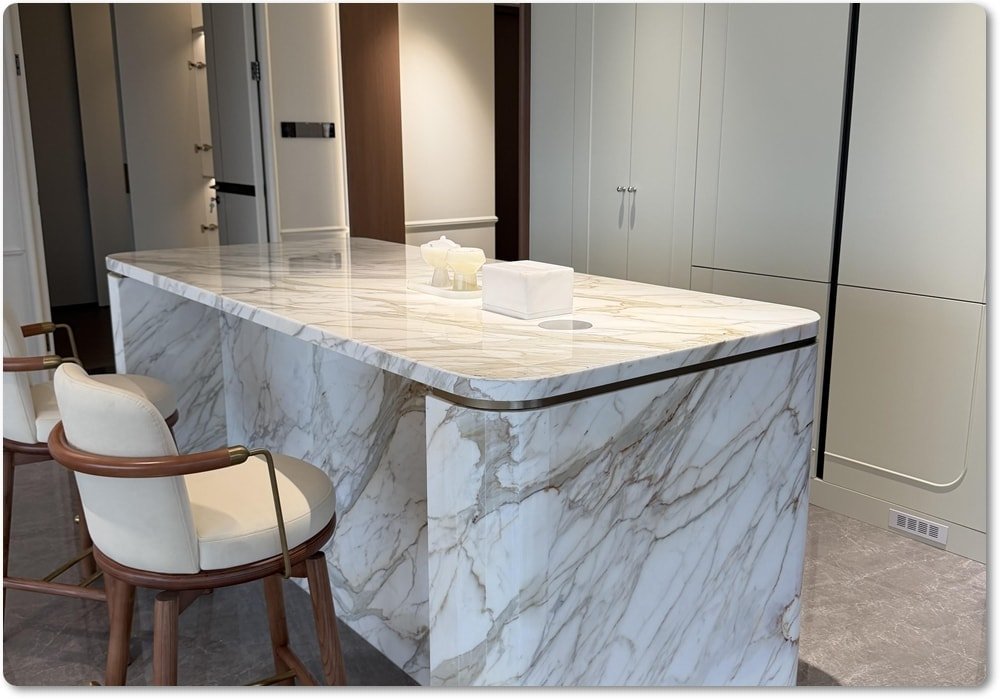
Kitchens & islands: paired book-matched islands create dramatic focal points. Use leather finish for tactile islands or polished for luxe hotels.
Bathrooms & vanities: honed or leather materials reduce slipperiness; careful slab selection avoids busy veins at seams.
Reception & lobbies: wall cladding book-matched in large sheets creates museum-level impact.
Furniture & table tops: smaller slabs or cut-to-size table tops can preserve signature fragments.
12. Long-tail purchase-intent keywords
(These are ready to be used as landing-page keywords or H2 headings):
Breccia Botticelli marble slab manufacturer (factory direct supply)
Buy Breccia Botticelli marble slabs wholesale from factory
Botticelli breccia rose marble honed slab factory price
Breccia Botticelli marble slab supplier and book-matched panels wholesale
14. FAQ — Google hot search style (visible Q&A)
Q1: What is Breccia Botticelli marble, and where does it come from?
A1: Breccia Botticelli is a brecciated Italian marble noted for cream and rose tones with angular fragments cemented by mineral matrix. Trade sources commonly list its origin in Italy (Sicily).
Q2: How much does a Breccia Botticelli marble slab cost?
A2: Prices vary widely depending on slab quality, scarcity, finish, and sourcing channel. Because brecciated marbles yield fewer intact slabs, expect premiums. For exact quotes, request EDG Stone factory or wholesale price lists and slab photos.
Q3: Can I buy Breccia Botticelli directly from a marble factory or manufacturer?
A3: Yes — many exporters and quarries list Breccia Botticelli slabs in their catalogs. Buying factory-direct can reduce markups; verify origin, ask for slab inventory, and arrange pre-shipment inspection.
Q4: Is there a safety concern when fabricating Breccia Botticelli?
A4: Yes — cutting and polishing natural stone produces respirable crystalline silica. Fabricators must use wet cutting, local extraction, and follow silica exposure regulations such as OSHA’s silica standard to protect workers. Ask your fabricator for compliance documentation.
Q5: What finishes are recommended for Breccia Botticelli, and where are they used?
A5: Polished for glossy islands and reception desks; honed for bathrooms and flooring; leather for tactile counters and furniture. Choose based on light, slip-resistance, and desired visual depth.
Semantic Closure — How / Why / What / Options / Considerations
How: How to source Breccia Botticelli — search factory inventories for slab photos, request origin docs, get pre-layout book-match visuals, verify fabrication capabilities (wet cutting, local exhaust), and secure appropriate freight packaging.
Why: Why choose Breccia Botticelli — it delivers a rare, sculptural aesthetic (brecciated clasts + rose tones) that elevates hospitality and high-end residential projects; it’s a statement material that also has long lifecycle value if installed correctly.
What: What to expect — variable patterning (no two slabs are identical), limited intact slab yield, premium pricing on select book-matched panels, and specialized finishes (leather/honed/polished).
Options (detailed):
Buy factory direct for lower markup and custom finishing; ensure inspection rights.
Buy wholesale from distributors for quicker lead times, but expect markups.
Opt for engineered alternatives if budget or lead time restricts natural slab use (but note engineered options lack the unique brecciated pattern).
Considerations (detailed):
Safety & compliance: confirm silica control procedures; ask for documented exposure limits and mitigation measures.
Sustainability: Request quarry rehabilitation or environmental management statements — EU procurement increasingly favors demonstrable sustainability.
Market timing & price: due to variable yield, reserve slabs early for large projects; factories often require deposits to hold premium book-matched slabs.