Quick Summary: White Quartz vs Quartzite
Semantic Answer: If your priority is low maintenance and consistent white veining, engineered white quartz is usually the more practical choice. If your priority is natural stone, unique veining, heat resistance,nce and long-term outdoor suitability, genuine white quartzite is usually the stronger material choice. Premium quartzite can cost substantially more than standard quartz, but the final price depends on the stone grade, slab availability, fabrication complexity, thickness, finish, market, and installation.
This guide from EDG Stone explains the difference between quartz and quartzite from a manufacturer, fabricator,r and wholesale procurement perspective, including material composition, strength, heat resistance, maintenance, pricing, identification methods, regulatory considerations, and purchasing recommendations for 2026.
1. What Is the Difference Between White Quartz and Quartzite?
White Quartz Is an Engineered Countertop Material
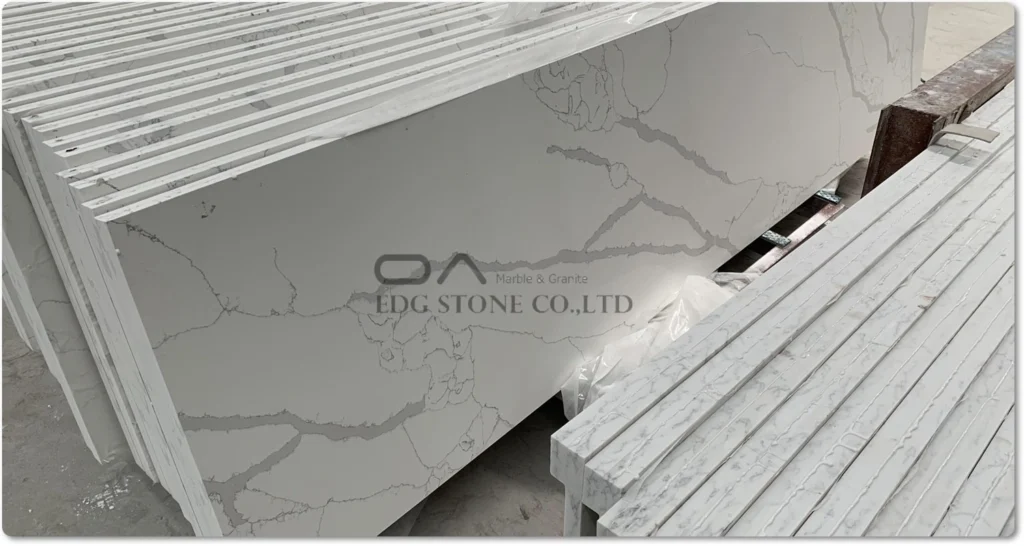
When people say “white quartz countertops,” they normally mean engineered quartz, not a slab of naturally occurring quartz crystal.
Engineered quartz is manufactured by combining quartz minerals or aggregates with binders/resins, pigments, and other ingredients, followed by industrial forming, compaction, curing, and finishing. Because the material is manufactured, producers can control color, pattern, particle distribution and surface finish much more precisely than with natural stone.
This is one reason white quartz has become popular for kitchens, bathrooms, commercial interiors and large residential developments.
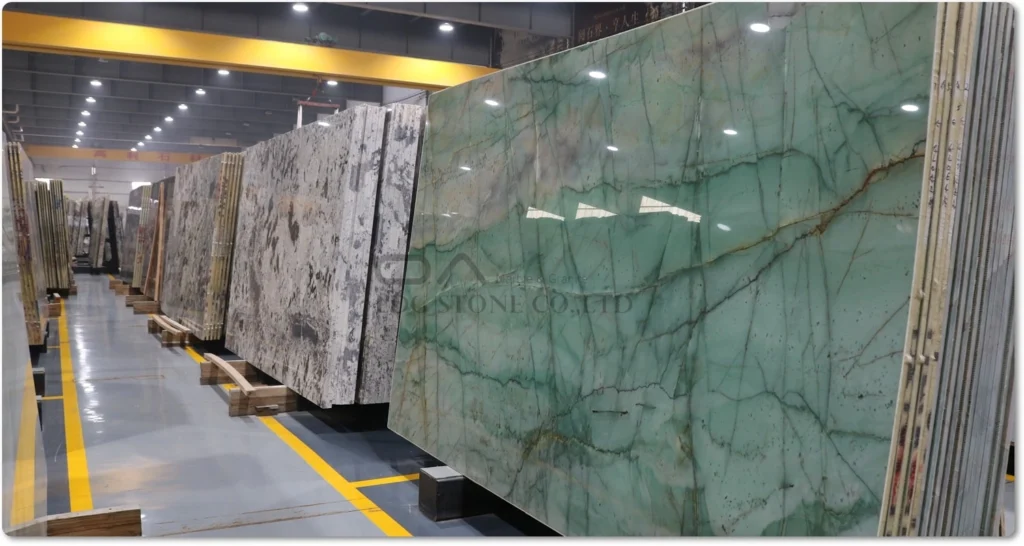
White Quartzite Is a Natural Metamorphic Stone
Quartzite is a natural stone formed through geological processes. Quartz-rich sandstone is transformed by substantial heat and pressure, creating a dense metamorphic rock dominated by quartz.
Natural quartzite can contain additional minerals such as mica, feldspar, iron-bearing minerals, or other inclusions. Those minerals create the natural movement, veining,g and color variation that make every slab different.
The Natural Stone Institute’s educational material explains that quartzite is a natural stone, while engineered quartz is manufactured using quartz particles and resin-based binders.
The Simplest Explanation
Quartz = engineered countertop.
Quartzite = natural metamorphic stone.
Although the names are similar, they should be evaluated as two different countertop categories.
2. Quartzite vs Quartz vs Granite: Which Material Is Better?
There is no universal winner. The correct material depends on the project’s requirements.
| Factor | White Quartz | White Quartzite | White Granite |
|---|---|---|---|
| Origin | Engineered/manufactured | Natural metamorphic stone | Natural igneous stone |
| Appearance | Highly controlled | Natural and unique | Natural and granular |
| Pattern consistency | Excellent | Low to moderate | Low to moderate |
| Scratch resistance | High | Very high | High |
| Heat resistance | Moderate | Excellent | Excellent |
| UV/outdoor suitability | Product-dependent; generally less suitable | Excellent | Excellent |
| Routine sealing | Generally not required | Often recommended | Often recommended |
| Maintenance | Low | Low to moderate | Low to moderate |
| Natural stone | No | Yes | Yes |
| Design consistency | Excellent | Natural variation | Natural variation |
USGS classifies granite, marble, le, and other natural rocks as dimension-stone materials and identifies durability, mineral composition, hardness, strength,gth and polishability as important selection factors. In 2024, approximately 2.2 million tons of dimension stone were sold or used by U.S. producers, valued at about $370 million.
3. Which Is Stronger: Quartz or Quartzite?
Quartzite Generally Has the Advantage as a Natural Stone
One of the most common questions is: “What is stronger, quartz or quartzite?”
The answer requires some precision.
Quartzite is a naturally dense, quartz-rich metamorphic rock and is generally extremely hard. Many true quartzites are around Mohs hardness 7 or higher, although exact performance varies according to mineral composition and geological formation.
Engineered quartz also has high scratch resistance because quartz minerals are a major component. However, the resin/binder system changes how the finished surface behaves, particularly under high heat and prolonged UV exposure.
Hardness Is Not the Same as Overall Countertop Performance
A buyer should not use hardness alone to select a countertop.
A countertop can be extremely hard but still have vulnerabilities involving thermal shock, staining, edge impact, fabrication, UV exposure, or chemical attack.
Therefore:
- For natural hardness: quartzite generally has the advantage.
- For predictable factory performance: quartz has the advantage.
- For heat resistance: genuine quartzite generally has the advantage.
- For stain resistance with minimal maintenance: engineered quartz generally has the advantage.
- For outdoor applications: natural quartzite is generally the better candidate.
4. White Quartz vs Quartzite: Heat Resistance
Heat is one of the most important practical differences.
Quartz Countertops and Heat
Engineered quartz contains polymeric binders. Those binders are one reason engineered quartz can be formed into consistent slabs, but they also mean the countertop should be protected from extreme direct heat.
Hot cookware, cast-iron pans, air fryers, slow cookers and other high-temperature objects should generally be placed on a suitable trivet.
Quartzite and Heat
Natural quartzite does not depend on the same resin-based matrix as engineered quartz. Genuine quartzite therefore generally provides significantly better resistance to high temperatures.
That does not mean quartzite is indestructible. Extreme thermal shock, rapid temperature changes, and weak areas around cutouts can still create problems.
Practical Recommendation
If the countertop is intended for a heavily used professional kitchen, outdoor kitchen, or application where thermal exposure is a major concern, ask the stone supplier for technical data and consider genuine quartzite or another heat-appropriate natural stone.
5. Quartzite vs Quartz: Maintenance and Cleaning
Why Quartz Is Easier to Maintain
Engineered quartz is generally non-porous and does not normally require routine sealing.
This makes it attractive to homeowners, hotel operators, apartment developers, and commercial buyers who want a predictable maintenance program.
Why Quartzite Requires More Attention
Quartzite is natural stone, and porosity varies significantly from one material to another.
Some quartzites are relatively dense, while others can absorb liquids more readily. Consequently, buyers should not assume that every white quartzite has identical absorption characteristics.
Proper sealing can improve stain resistance, but sealing does not make a stone completely immune to staining.
Professional testing of the actual slab or material batch is therefore more reliable than relying only on the commercial stone name.
6. How Can You Tell the Difference Between Quartz and Quartzite?
1. Check the Product Documentation
The first step is always documentation.
Ask the supplier whether the material is:
- Engineered quartz;
- Natural quartzite;
- Granite;
- Marble/dolomite;
- Quartzitic sandstone; or
- Another natural stone marketed under a similar commercial name.
2. Examine the Slab Pattern
Engineered quartz usually provides more repeatable patterns. Natural quartzite normally displays geological variation, including irregular veining, mineral transitions, and differences between slabs.
However, visual inspection alone is not conclusive because modern engineered quartz can imitate natural stone extremely well.
3. Perform Professional Material Testing
For high-value projects, a qualified stone professional can use petrographic examination, mineralogical analysis, or other appropriate testing methods to verify the material.
This is particularly important for premium white materials because commercial names can sometimes be misleading.
Important Buying Warning
Do not purchase a premium “quartzite” solely because the sales name contains the word quartzite. Ask for the material specification and, for large commercial orders, request independent verification when the distinction affects performance or contract specifications.
7. Is Taj Mahal Quartz or Quartzite?
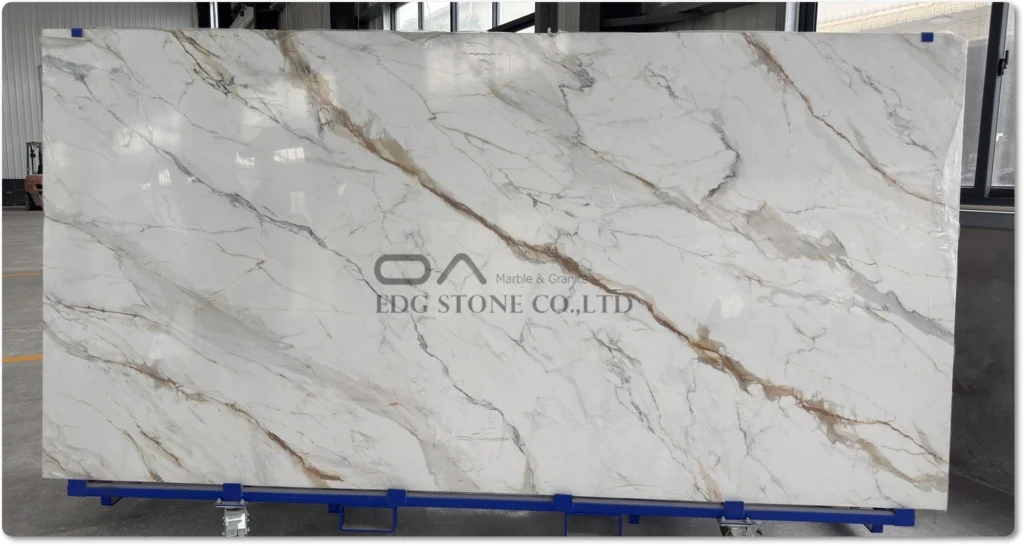
Taj Mahal is generally marketed and traded as a natural quartzite.
However, material naming in the natural-stone industry can be complicated. Different quarries, distributors, and markets may use commercial names differently, and some materials sold under quartzite-related names may not meet the geological definition of true quartzite.
For procurement, the correct approach is to identify the actual quarry source and verify the material rather than relying exclusively on the marketing name.
Taj Mahal is especially popular because it combines a relatively soft white-and-beige visual character with natural-stone durability and movement. That makes it a common alternative for buyers who want the appearance associated with white marble but greater resistance to acid etching and heat.
8. Quartzite vs Marble: Which Is Better?
The comparison between quartzite vs marble is particularly important for white countertops.
White Quartzite vs Marble
White quartzite is often selected by buyers who love marble’s visual movement but want greater hardness and acid resistance.
Marble is primarily a calcium-carbonate-based stone. It is comparatively softer and is vulnerable to acid etching.
Quartzite is predominantly quartz-based and is generally much harder.
| Property | Quartzite | Marble |
|---|---|---|
| Natural stone | Yes | Yes |
| Typical hardness | High | Lower |
| Acid resistance | Generally excellent for true quartzite | Low |
| Heat resistance | Excellent | Good, but thermal shock remains possible |
| Veining | Natural | Natural |
| Etching risk | Low for true quartzite | High |
| Maintenance | Sealing may be required | Sealing and careful cleaning often recommended |
9. White Quartz vs White Granite
White quartz vs white granite is another major purchasing comparison.
White granite is a natural igneous stone. Its visual appearance is usually more granular, although certain granite varieties can provide dramatic movement.
White engineered quartz can be manufactured with marble-like veining, allowing designers to achieve a cleaner and more controlled aesthetic.
Choose White Quartz When:
- You want consistent color and pattern;
- You want minimal maintenance;
- You want no routine sealing;
- You need repeatable slabs for a large development;
- You want a controlled contemporary aesthetic.
Choose White Granite When:
- You want genuine natural stone;
- You prefer granular mineral patterns;
- You need strong heat performance;
- You want a natural-stone option for interior or exterior applications.
10. Quartzite vs Quartz vs Granite Cost
There is no universal fixed price for any of these materials.
Quartzite vs quartz vs granite cost depends on the slab grade, country of origin, quarry availability, color, thickness, surface finish, fabrication, edge profile, sink cutouts, backsplash requirements, freight, installation, and project volume.
Which Is More Expensive: Quartz or Quartzite?
In many markets, premium quartzite is more expensive than standard or mid-range engineered quartz.
However, premium designer quartz can also reach high price levels, while commercially available quartzite can sometimes be competitively priced.
Therefore, the more accurate purchasing question is:
“What is the total delivered and fabricated cost of this specific slab specification?”
Indicative Cost Hierarchy
A simplified market hierarchy is often:
Standard quartz → premium quartz → standard granite/quartzite → premium quartzite → rare/exotic quartzite.
But actual prices can overlap substantially.
Why Quartzite Can Cost More
- Quarry rarity;
- Block recovery rate;
- Slab thickness;
- Large-format availability;
- Natural color and veining;
- Premium origin;
- Fabrication difficulty;
- Bookmatching requirements;
- High waste rates;
- Freight and import costs.
For a wholesale buyer, comparing only the slab price is therefore insufficient. Compare FOB/EXW cost + freight + fabrication + wastage + installation + maintenance.
11. How Much More Expensive Is Quartzite Than Quartz?
There is no reliable universal percentage because the two categories contain huge price ranges.
For procurement purposes, a better method is to establish three pricing tiers:
| Tier | Quartz | Quartzite |
|---|---|---|
| Budget | Commodity colors and standard specifications | Commercially available natural stones |
| Mid-range | Premium colors and improved designs | Popular white/gray quartzites |
| Luxury | Designer engineered surfaces | Rare exotic quartzite and bookmatched slabs |
In a wholesale project, request quotations for the same thickness, slab dimensions, finish, quantity,y anddelivery termsm. Otherwise, price comparisons can be misleading.
12. White Quartz or Quartzite Countertops: Which Should You Buy?
Choose White Quartz If Your Priority Is:
- Low maintenance;
- Consistent appearance;
- Predictable color matching;
- High stain resistance;
- Large-volume residential projects;
- Apartment and hospitality standardization;
- Simple daily cleaning.
Choose White Quartzite If Your Priority Is:
- Natural stone authenticity;
- Unique veining;
- High heat resistance;
- Outdoor suitability;
- Premium natural-stone aesthetics;
- Long-term architectural value;
- Marble-like appearance with stronger performance characteristics.
13. White Quartz vs Quartzite for Architects, Builders and Wholesale Buyers
For B2B procurement, the decision is more complex than choosing a color.
Project Quantity
For hundreds of apartment countertops, engineered quartz can provide major logistical advantages because slab color and pattern can be controlled more consistently.
Luxury Residential Projects
For high-end residences, natural quartzite may offer a stronger differentiation because each slab is unique.
Hospitality Projects
Hotels and restaurants should evaluate heat, cleaning chemicals, traffic, maintenance, and replacement requirements before selecting a surface.
Outdoor Projects
Natural quartzite is generally more suitable for outdoor applications because engineered quartz can contain resin components that are less suitable for prolonged UV exposure.
EDG Stone Wholesale Procurement Recommendation
For wholesale purchasing, request:
- Material name and geological classification;
- Quarry/country of origin;
- Slab dimensions;
- Thickness tolerance;
- Water absorption;
- Density;
- Flexural strength;
- Compressive strength;
- Hardness where relevant;
- Finish specification;
- Available surface treatment;
- Packaging method;
- Container loading plan;
- Quality inspection procedure;
- Applicable technical standards.
14. 2026 Regulatory Changes: Why Silica Safety Is Changing the Stone Industry
The countertop industry is increasingly affected by regulations and occupational-health requirements concerning respirable crystalline silica.
This is particularly important for engineered stone manufacturing and fabrication because engineered stone can contain very high concentrations of crystalline silica.
OSHA states that manufacturing, finishin,g and installing natural and engineered stone countertops can expose workers to silica dust and identifies wet methods, local exhaust ventilati,on and process enclosures as important exposure-control measures. OSHA’s current 2026 materials specifically address countertop manufacturing, finish,ing and installation.
OSHA’s engineered-stone enforcement guidance also notes that engineered stone can contain more than 90% crystalline silica, while silica content varies considerably among natural stones.
Australia Has Already Taken a Major Regulatory Step
Australia implemented a national prohibition framework for engineered-stone benchtops, panels and slabs, with the import prohibition applying from January 1, 2025. The regulatory action followed concerns regarding respirable crystalline silica exposure and silicosis among workers.
What This Means for Stone Manufacturers and Exporters
The global stone industry is moving toward stronger emphasis on:
- Wet cutting;
- Local exhaust ventilation;
- HEPA dust extraction;
- Worker exposure monitoring;
- Dust-control documentation;
- Material traceability;
- Safer fabrication processes;
- Regulatory documentation for destination markets.
For international buyers, the question is no longer only “How beautiful is this countertop?” It is increasingly also “How responsibly and safely was this material manufactured and fabricated?”
CDC/NIOSH materials similarly highlight the occupational risks associated with respirable silica generated during engineered-stone fabrication.
15. The Future of White Countertops: Quartz, Quartzite and Material Selection in 2026
The white-countertop market is becoming more sophisticated.
Buyers increasingly want the visual appearance of luxury natural stone while demanding predictable performance, responsible manufactu,ring and transparent specifications.
Trend 1: Marble-Look Quartz
Engineered quartz manufacturers continue to develop increasingly realistic marble and quartzite-inspired designs, including large-scale veining and bookmatch-style graphics.
Trend 2: Premium Natural Quartzite
Natural quartzite remains attractive for luxury projects because no digital reproduction can perfectly duplicate the geological variation of a natural slab.
Trend 3: Documentation-Driven Procurement
Professional buyers are increasingly requesting technical data, origin information, testing documentation, and fabrication standards instead of purchasing based solely on photographs.
Trend 4: Safer Stone Processing
Silica exposure control is becoming an increasingly important part of responsible stone manufacturing and fabrication.
Trend 5: Total Cost of Ownership
Architects and developers are increasingly evaluating not just purchase price but also installation, maintenance, replacement, waste, slab utilization, and lifecycle performance.
16. White Quartz vs Quartzite: Final Buying Decision
Quartz vs quartzite: which is better? The correct answer is that neither material is universally better.
White quartz is generally the better choice when consistency, low maintenance, stain resistance, and predictable manufacturing are the primary requirements.
White quartzite is generally the better choice when natural stone authenticity, unique veining, high heat resistance, outdoor performance and premium aesthetics are the primary requirements.
For luxury residential projects, quartzite can provide a genuine natural-stone centerpiece. For standardized developments and high-volume procurement, engineered quartz can offer substantial advantages in consistency and maintenance.
The most important purchasing principle is simple: do not compare “quartz” and “quartzite” only by name. Compare the actual material specification, performance data, fabrication requirements, total cost, and intended application.
17. Frequently Asked Questions About White Quartz vs Quartzite
1. Is quartzite better than quartz for countertops?
Quartzite is generally better for natural-stone authenticity, heat resistance, and outdoor applications, while engineered quartz is generally better for low maintenance, consistent patterns, and stain resistance. The better option depends on the project.
2. Which is more expensive, quartz or quartzite?
Premium quartzite is often more expensive than standard quartz, but prices overlap. Rare quartzite, unusual colors, large slabs, and bookmatched materials can command significantly higher prices. Always compare the same thickness, finish, quantit,y and delivery terms.
3. What is stronger, quartz or quartzite?
True quartzite is generally an extremely hard natural stone and often has an advantage in hardness and heat resistance. Engineered quartz is also highly durable but contains resin binders that affect thermal and UV performance.
4. How can you tell the difference between quartz and quartzite?
Start with the supplier’s technical documentation and material origin. Visual inspection can provide clues, but premium engineered quartz can closely imitate natural quartzite. For high-value projects, professional material testing is the most reliable approach.
5. Is Taj Mahal quartz or quartzite?
Taj Mahal is generally marketed as a natural quartzite. Because natural-stone commercial naming can vary, professional buyers should verify the actual material and source rather than relying exclusively on the trade name.
18. Semantic Insight: How Should Buyers Think About Quartz vs Quartzite in 2026?
What is the fundamental difference?
The fundamental difference is manufacturing origin: engineered quartz is produced in a factory from quartz minerals and binding materials, while quartzite is a natural metamorphic rock created through geological heat and pressure.
Why does that difference matter?
Manufacturing origin influences consistency, heat behavior, maintenance, appearance, fabrication requirements, outdoor suitability, and procurement strategy. Quartz provides controlled design and low-maintenance performance; quartzite provides natural geological variation and strong natural-stone performance.
Which option should a homeowner choose?
Choose white quartz when predictable appearance and easy maintenance are more important than natural-stone authenticity. Choose white quartzite when natural veining, heat resistance,e and premium stone character are more important.
Which option should a wholesale buyer choose?
Wholesale buyers should select according to project specifications rather than general popularity. Large residential developments may favor engineered quartz because consistent slab production simplifies procurement. Premium architectural projects may favor quartzite because each slab provides unique natural character.
What should buyers consider before ordering?
Buyers should evaluate material classification, origin, slab dimensions, thickness, absorption, mechanical performance, finish, fabrication requirements, quality control, packaging, freight, installation,n and destination-market regulations.
What is the broader 2026 industry direction?
The stone industry is moving toward a more specification-driven procurement model. Material aesthetics remain important, but technical performance, traceability, responsible fabrication, and silica-exposure controls are becoming increasingly relevant to international buyers.
What is the final decision framework?
Choose quartz for consistency + low maintenance + controlled design.
Choose quartzite for natural stone + unique veining + heat/UV performance.
Choose granite when natural durability + broad application range + value are priorities.
Choose marble when visual character and classic luxury are more important than maximum scratch/etch resistance.
This framework allows homeowners, architects, builders, designers, and importers to make a material decision based on application rather than confusingly similar product names.
EDG Stone Procurement Perspective
For international buyers, EDG Stone recommends evaluating white quartz and quartzite as two distinct product categories rather than substitutes with different names. A professional supplier should be able to provide product specifications, slab photos, project references, quality-control procedures, fabrication capabilities, and export packaging information before a large order is confirmed.
For wholesale, hotel, apartment, residential, and commercial projects, buyers should also request physical samples or slab-selection support whenever color matching and natural variation are important.
Sources and Technical References
- U.S. Geological Survey — Dimension Stone Statistics and Information.
- USGS Mineral Commodity Summaries 2025 — Dimension Stone.
- OSHA — Crystalline Silica Safety Resources.
- OSHA — Engineered Stone Silica Focused Inspection Initiative.
- OSHA — 2026 Countertop Manufacturing, Finishing and Installation Silica Guidance.
- CDC/NIOSH — Occupational Silica Exposure and Engineered Stone.
- Australian Government — Engineered Stone Import and Workplace Regulation.
- Natural Stone Institute — Natural Quartzite and Engineered Quartz Education.