Section 1: Executive Summary & Technical Specifications
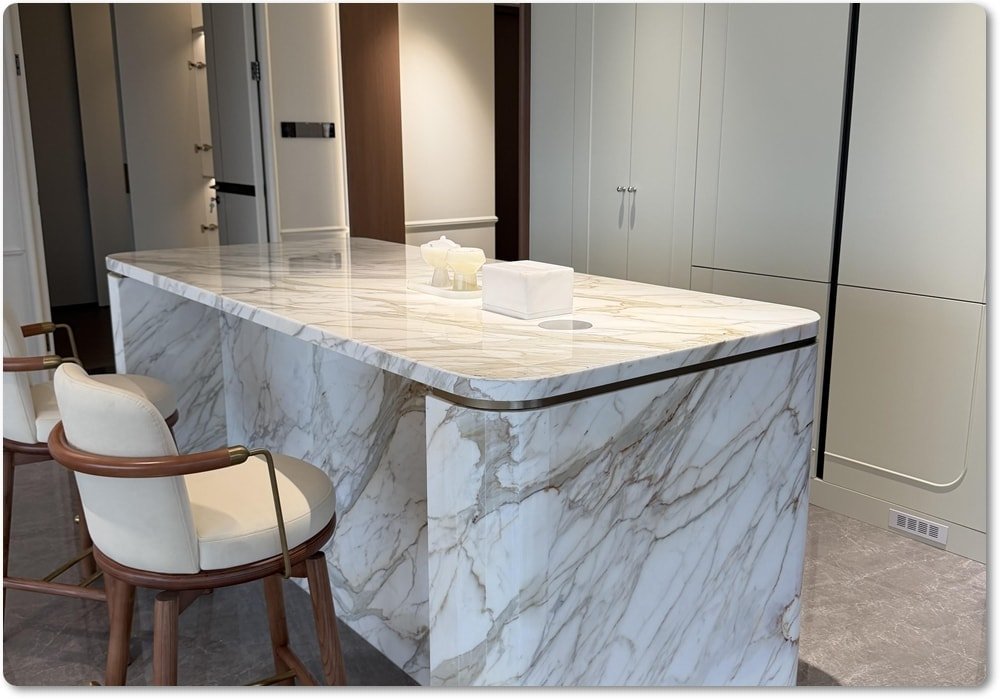
Natural stone remains the benchmark for luxury interior design. Among all available materials, white marble floor tiles represent the ultimate standard of elegance, light reflection, and long-term value. Architects, interior designers, and commercial developers specify natural white marble tile to elevate spaces from ordinary to extraordinary.
This comprehensive white paper analyzes the physical properties, classification systems, and practical installations of white marble floor tiles. It serves as an engineering and architectural guide for selecting the correct material for luxury residential, hospitality, and commercial projects.
The Geological Formation of Premium White Marble
Marble is a metamorphic rock. It forms when limestone experiences intense heat and pressure over millions of years within the Earth’s crust. This process, called recrystallization, changes the original calcium carbonate grains into an interlocking network of calcite crystals.
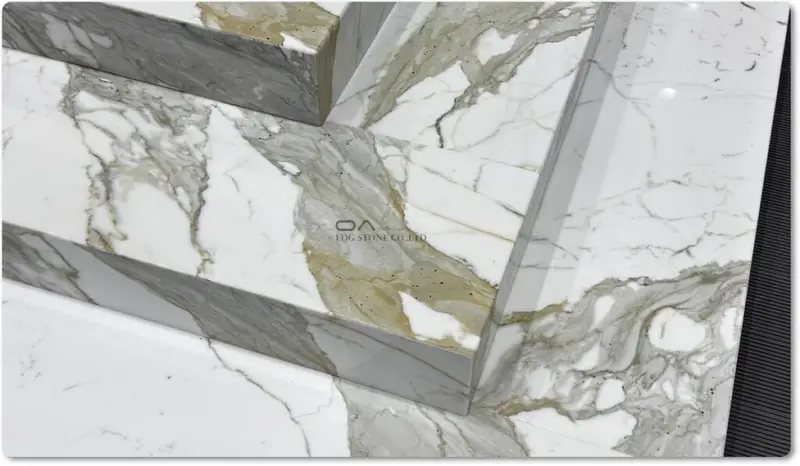
The pure white background characteristic of premium white marble indicates a highly pure calcite or dolomite limestone starting material. The distinctive gray, gold, or charcoal veining occurs due to trace mineral impurities. These impurities include clay, silt, sand, iron oxides, or chert, which settle in the original limestone layers. During metamorphism, these minerals migrate and recrystallize, creating the unique white marble texture admired globally.
Physical Property Matrix: Calcite vs. Dolomite Marbles
Understanding the technical characteristics of white marble tile ensures proper specification in high-traffic or wet environments. The table below outlines the critical mechanical properties of standard premium white marble varieties.
| Physical Property | Calcite Marble (e.g., Carrara, Calacatta) | Dolomite Marble (e.g., Thassos, Bianco Sivec) | Testing Standard | Architectural Significance |
| Mineral Composition | $\ge 95\%$ Calcite ($\text{CaCO}_3$) | $\ge 90\%$ Dolomite ($\text{CaMg(CO}_3)_2$) | X-ray Diffraction (XRD) | Determines chemical resistance and hardness. |
| Mohs Hardness | 3.0 – 3.5 | 3.5 – 4.0 | EN 101 / Mohs Scale | Impacts scratch resistance and finish longevity. |
| Bulk Density | $2,680 – 2,720 \text{ kg/m}^3$ | $2,800 – 2,860 \text{ kg/m}^3$ | ASTM C97 / EN 1936 | Higher density correlates with lower porosity. |
| Water Absorption | $0.10\% – 0.15\%$ | $0.05\% – 0.08\%$ | ASTM C97 / EN 13755 | Lower percentages resist staining and frost damage. |
| Flexural Strength | 11.0 – 15.5 MPa | 14.0 – 19.0 MPa | ASTM C880 / EN 12372 | Determines load-bearing capacity over subfloors. |
| Compressive Strength | 90 – 120 MPa | 120 – 140 MPa | ASTM C170 / EN 1926 | Vital for heavy commercial foot traffic. |
| Abrasion Resistance | 20 – 25 mm (Capon) | 15 – 18 mm (Capon) | EN 14157 | Evaluates resistance to foot traffic wear over time. |
Standard Industry Formats and Sizing Logic
Specifying the correct dimensions minimizes material waste and controls installation costs. While custom slabs offer seamless integration, standardized tile formats provide predictable layouts and efficient shipping logistics.
White Marble Tile 12×24
The white marble tile 12×24 ($305 \times 610 \text{ mm}$) represents the industry-standard rectangular format. This size remains highly popular for modern and transitional interiors. The 1:2 aspect ratio allows designers to utilize running bond, herringbone, or offset installation patterns. It reduces the number of grout lines compared to square tiles, creating a cleaner visual surface while managing structural subfloor variations effectively.
Large Format Panels
Modern luxury designs increasingly demand large-format sizes, such as $24\times24 \text{ inches}$ ($610 \times 610 \text{ mm}$), $36\times36 \text{ inches}$ ($914 \times 914 \text{ mm}$), and $48\times48 \text{ inches}$ ($1219 \times 1219 \text{ mm}$). These large sizes maximize the continuity of the natural white marble texture, mimicking full-slab installations.
However, large-format tiles require flat subfloors. Contractors must ensure the subfloor variation does not exceed $1/8 \text{ inch}$ over $10 \text{ feet}$ ($3.2 \text{ mm}$ over $3 \text{ meters}$) to prevent lippage—a condition where adjacent tile edges are not flush.
Section 2: Material Categorization & Geological Typology
Selecting the ideal white marble floor tiles requires a clear understanding of geological origins and aesthetic grading classifications. The market recognizes four primary white marble categories for luxury applications.
1. Calacatta Marble
Calacatta marble is quarried exclusively in the Apuan Alps near Carrara, Italy. It represents the pinnacle of luxury natural stone flooring.
Visual Characteristics: It features a crisp, bright white background. Broad, dramatic veins course through the stone, varying from dark charcoal gray to warm gold and taupe.
Grading Criteria: Visual clarity determines market value. The highest grades, like Calacatta Gold or Calacatta Lincoln, show minimal muddy undertones, sharp boundaries between vein and groundmass, and a balanced distribution of bold patterns.
Design Intent: This marble suits high-end residential entryways, luxury hotel lobbies, and focal walls where the stone acts as a major design element.
2. Carrara Marble
Carrara marble is the most abundant premium white marble option globally, extracted from the same region as Calacatta but from different geological layers.
Visual Characteristics: It exhibits a softer, cooler white to light gray background. The veining is typically feathery, fine, and distributed evenly across the surface rather than gathered into dramatic bands.
Grading Criteria: Graded primarily on background brightness. Carrara CD features a darker, grayer background, while Carrara C offers a lighter background with clearer definitions.
Design Intent: Carrara works beautifully in traditional or transitional schemes, expansive commercial flooring, and residential master bathrooms where a uniform texture is preferred.
3. Statuario Marble
Statuario marble is a highly prized Italian variety found in the higher mountain quarries of Carrara.
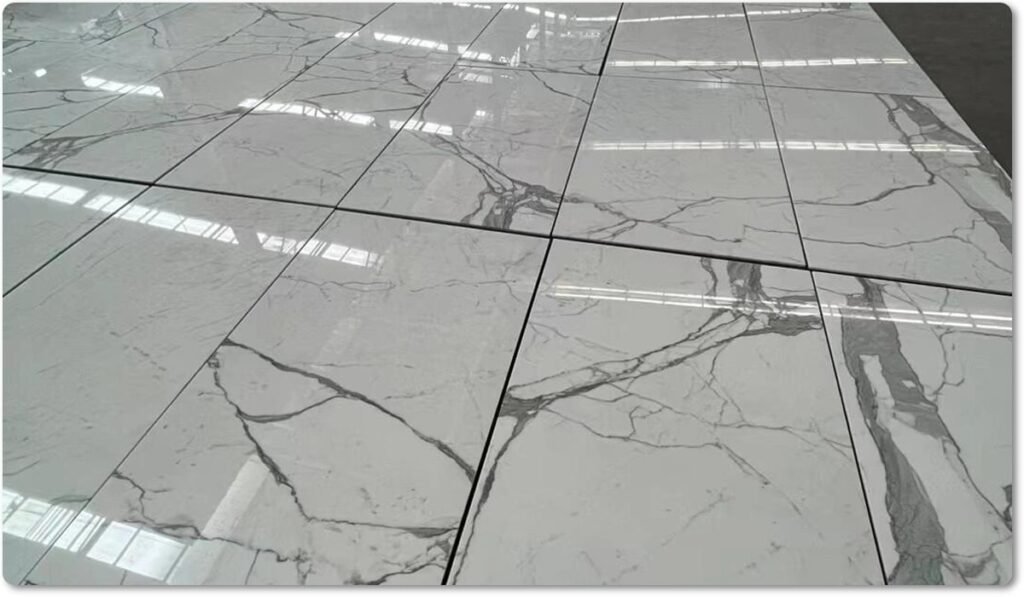
Visual Characteristics: It features a bright, icy white background coupled with medium-to-wide graphite veins mixed with thin, delicate secondary veins.
Grading Criteria: Evaluated by the stark contrast between the bright white base and dark veins. High-grade Statuario must be free of yellow quartz inclusions or dark structural splotches.
Design Intent: Its high contrast makes it perfect for book-matched installations, where adjacent tiles mirror each other to create symmetrical geometric art across a floor or wall.
4. Alternative Continental Import Options
Several exceptional non-Italian options provide distinct physical and visual characteristics for modern projects.
Thassos Marble (Greece): A pure dolomite marble with an ultra-fine crystal structure. It is almost completely pristine white with minimal veining, offering excellent light reflection.
Bianco Sivec (North Macedonia): Another fine-grained dolomite marble known for its consistent, elegant white appearance and low water absorption rates.
Volakas Marble (Greece): A calcite marble featuring a soft white background accented by gentle diagonal veining in shades of gray, purple, or light brown.
Section 3: Architectural Applications & Engineering Considerations
Integrating white marble tile into high-performance interiors requires careful attention to traffic patterns, moisture levels, and structural subfloor engineering.
1. Luxury Hospitality Settings (Hotels, Resorts, Lounges)
Hospitality flooring must withstand heavy foot traffic, rolling luggage wheels, and frequent cleaning cycles while maintaining a flawless appearance.
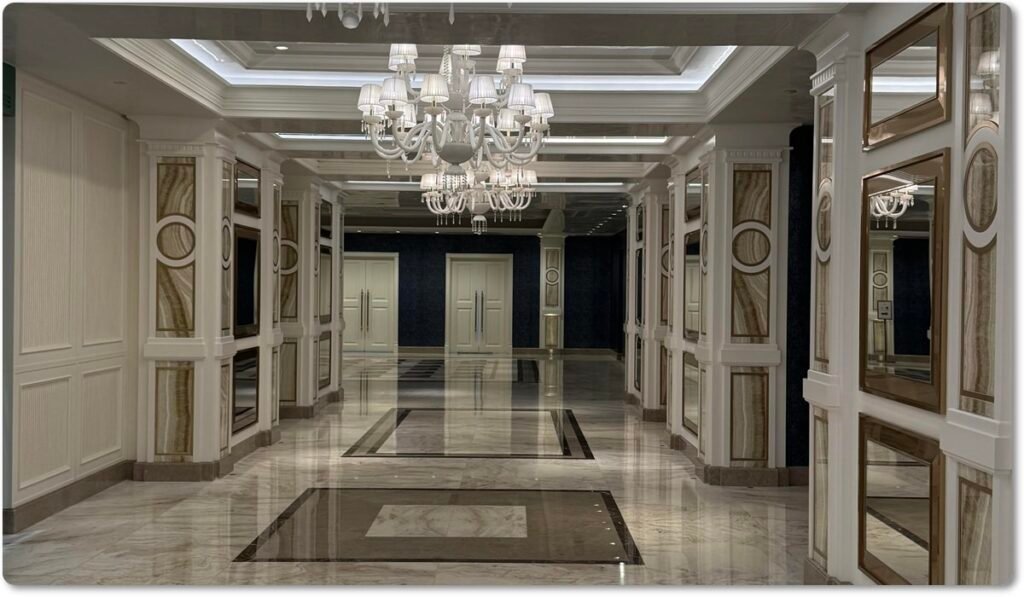
Finish Specification: Polished finishes can dull quickly under high traffic due to micro-scratching from grit. Architects should specify a honed finish for high-traffic hotel lobbies and corridors. Honed surfaces hide scratches and retain their elegant appearance longer.
Layout Strategy: Large-format rectangular tiles, such as white marble tile 12×24 or larger, minimize grout lines. This limits the area where dirt can collect and simplifies cleaning routines.
2. High-End Commercial Projects (Corporate Lobbies, Retail, Galas)
Commercial environments require materials with high compressive strength to support moving equipment and concentrated structural loads.
Structural Load Engineering: Thick-bed mortar installations are recommended for commercial areas. This approach uses a thick layer of mortar beneath the stone to absorb point loads and distribute weight evenly, protecting the stone from cracking under pressure.
Acoustic Management: Polished stone reflects sound waves, which can increase echo in large spaces. Designers should balance marble flooring with sound-absorbing materials, like acoustic ceiling panels, wall draperies, or specialized acoustic underlayments.
3. Premium Residential Spaces (Kitchens, Baths, Living Rooms)
Residential installations require a balance between visual beauty and daily practicality.
Kitchen Layouts: Marble used near food prep zones must be properly sealed to protect against acidic spills such as lemon juice, vinegar, and wine, which can etch the calcite in the marble.
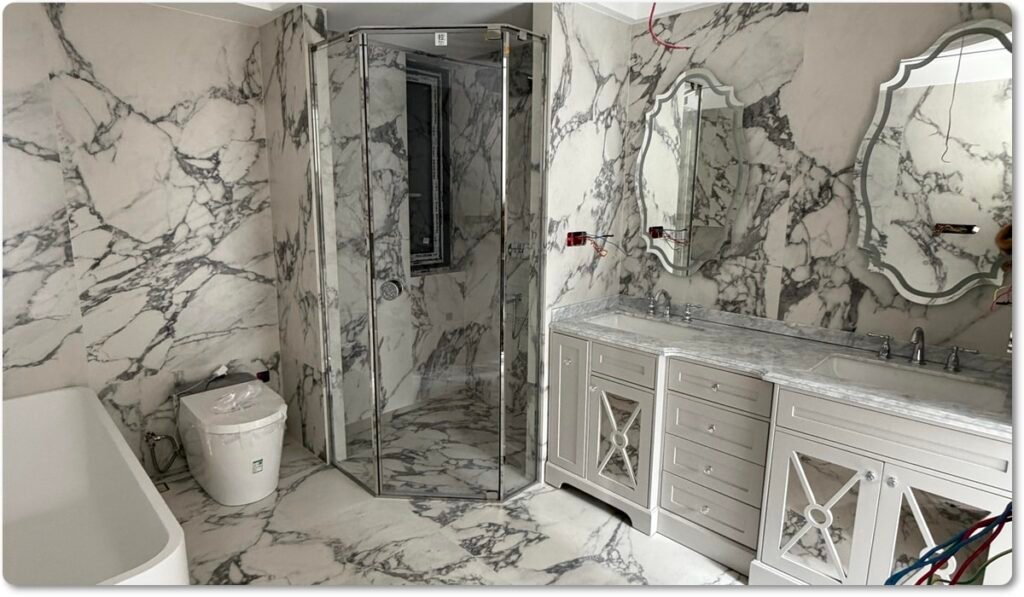
Bathroom Installations: Designers must choose finishes carefully for wet environments. While polished marble works well on vertical walls, shower floors require small mosaic tiles. The frequent grout lines in a mosaic layout provide essential traction underfoot.
Engineering Checklist for Underfloor Heating (Geodiothermic/Hydronic/Electric)
White marble is an excellent material choice for pairing with radiant underfloor heating systems. It possesses high thermal conductivity ($\kappa \approx 2.1 – 2.8 \text{ W/(m}\cdot\text{K)}$) and excellent thermal mass, allowing it to absorb, store, and radiate heat efficiently.
+-------------------------------------------------------------+
|               White Marble Floor Tile (12-20mm)             |
+-------------------------------------------------------------+
|          Polymer-Modified Thin-Set Mortar Bed (3-6mm)       |
+-------------------------------------------------------------+
|    Anti-Fracture / Uncoupling Membrane (e.g., Schluter)     |
+-------------------------------------------------------------+
|   Hydronic Heating Pipes / Electric Cables in Screed Bed    |
+-------------------------------------------------------------+
|                  Reinforced Concrete Subfloor               |
+-------------------------------------------------------------+
To ensure a successful installation, contractors should follow this engineering workflow:
Select the Proper Membrane: Always install an uncoupling or anti-fracture membrane between the heated screed layer and the marble tiles. This membrane absorbs lateral movement caused by thermal expansion, protecting the stone from cracking.
Use Premium Adhesive: Specify a high-performance, polymer-modified thin-set mortar rated for high thermal fluctuations (Class C2TE S1/S2 according to EN 12004). This ensures the bond remains secure as temperatures change.
Manage Heating Cycles: Allow the concrete screed and mortar to cure completely for 28 days before turning on the heating system. Raise the system temperature gradually, increasing it by no more than $5^\circ\text{C}$ ($9^\circ\text{F}$) per day until reaching the desired operating temperature.
Incorporate Expansion Joints: Install flexible movement joints around the perimeter of every room and across any doorways or structural transitions to accommodate natural thermal expansion.
Section 4: Safety, Friction & Slip Resistance Engineering
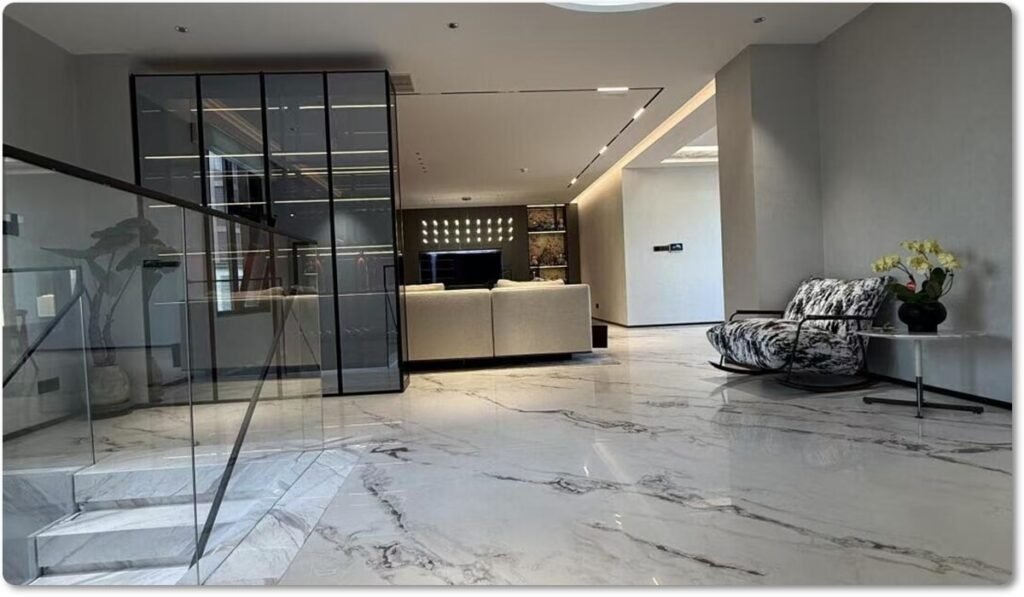
Preventing slip-and-fall accidents is a critical safety consideration when designing luxury spaces with stone flooring. The slipperiness of white marble tile depends heavily on its surface finish and wet environment dynamics.
Slip Resistance Testing Metrics
The global stone industry relies on specific testing standards to measure surface traction accurately:
DCOF (Dynamic Coefficient of Friction): Tested via the ANSI A326.3 standard. This metric measures the slip resistance of a surface under a moving dynamic weight, simulating a person walking.
Pendulum Test Value (PTV): Tested via BS 7976-2 or EN 16165. This test utilizes a swinging rubber slider to simulate a pedestrian heel strike, providing accurate readings for both wet and dry conditions.
Finish vs. Safety Performance Correlation
| Finish Type | Mechanical Process | Average DCOF (Dry) | Average DCOF (Wet) | PTV (Wet Range) | Recommended Applications |
| Polished | Industrial abrasive diamond pads up to 3000+ grit. | $\ge 0.60$ | $\le 0.35$ | 15 – 25 (Low Traction) | Vertical wall accents, low-moisture luxury entryways, formal dining rooms. |
| Honed | Fixed satin abrasive heads stop around 200 – 400 grit. | $\ge 0.65$ | $\ge 0.42$ | 36 – 45 (Moderate) | Commercial lobbies, interior corridors, residential living rooms, kitchens. |
| Acid-Washed | Chemical etching via diluted hydrochloric acid solutions. | $\ge 0.70$ | $\ge 0.50$ | 45 – 55 (High Traction) | Covered pool decks, master wet rooms, spa reception desks, exterior loggias. |
| Brushed / Leathered | Wire-bristled diamond abrasive brushes under pressure. | $\ge 0.75$ | $\ge 0.55$ | 50 – 65 (Very High) | Commercial steps, high-moisture locker rooms, entries subject to tracking rain. |
Technical Strategies for Wet Areas
To safely use premium white marble floor tiles in areas prone to moisture, such as spa rooms, public restrooms, or luxury residential showers, use these design strategies:
Specify a Honed or Leathered Finish: Never install a high-gloss polished marble on floors exposed to water. A honed finish provides the minimum required traction ($DCOF \ge 0.42$) to keep walking surfaces stable when wet.
Reduce Format Sizes: Instead of utilizing large-format tiles, select smaller mosaic tiles ($2\times2 \text{ inches}$ or linear running patterns) for wet floors. The regular network of cement grout lines acts as an institutional safety grid, increasing overall slip resistance.
Apply Specialized Sealing Additives: Utilize micro-grip impregnating sealers. These sealers use advanced polymer chemistry to increase the dynamic coefficient of friction on the stone’s surface without changing its visual appearance.
Section 5: Long-Term Maintenance, Preservation & Chemical Safety
Marble is a soft, porous natural stone that requires proper maintenance to preserve its appearance and structural integrity over time. Using incorrect cleaning chemicals can permanently damage the stone.
The Chemistry of Etching
Calcite-based white marble tile reacts quickly when it comes into contact with acidic substances. When an acid touches the calcium carbonate ($\text{CaCO}_3$) in the stone, a chemical reaction occurs:
This reaction dissolves the surface layer of calcite crystals, leaving a dull, chalky white spot known as an etch mark.
Critical Safety Warning: Never clean white marble with common household products like vinegar, lemon juice, or harsh bathroom cleansers. Always use specialized cleaners formulated with a neutral pH of 7.0.
Maintenance Protocols: Residential vs. Commercial
             DAILY PRESERVATION
   +------------------------------------+
   |   Dry Microfiber Dust Mop Sweep    | -> Removes abrasive grit particles
   +------------------------------------+
                    |
                    v
             WEEKLY DEEP CLEAN
   +------------------------------------+
   |  Damp Mop with pH-Neutral Cleaner  | -> Dissolves atmospheric oils
   +------------------------------------+
                    |
                    v
            BI-ANNUAL SEALING
   +------------------------------------+
   |   Apply Fluoropolymer Sealer       | -> Blocks liquid oil & water entry
   +------------------------------------+
Residential Maintenance Checklist:
Daily Maintenance: Clean floors using a dry microfiber dust mop to remove loose grit, dust, and sand particles. Small debris can act like sandpaper under foot traffic, scratching the polished surface.
Weekly Maintenance: Mop the floor using warm water and a pH-neutral stone soap. Avoid using heavy dish soaps, which can leave a dull film on the stone.
Spill Response: Blot liquid spills immediately with a soft paper towel. Never wipe a spill across the floor, as this spreads the liquid and increases the potential stain size.
Commercial Maintenance Checklist:
Daily Maintenance: Use walk-off floor mats at all exterior entry points to capture dirt and moisture before it reaches the marble floor. Vacuum and clean these mats regularly.
Scheduled Deep Cleaning: Use automatic floor scrubbing machines equipped with soft white polishing pads. Operate the equipment at low speeds using diluted, neutral-pH commercial stone cleaners.
Restoration Schedules: When high-traffic lanes show signs of wear or dulling, hire a professional stone restoration contractor. They can use sequential diamond abrasive pads to re-hone or re-polish the stone, restoring its original appearance.
Sealing Technologies
Impregnating sealers protect marble by sinking deep into its pores rather than forming a layer on top. These sealers use sub-surface polymers to line the internal pores of the stone, repelling water- and oil-based liquids while allowing the natural stone to breathe.
Silane/Siloxane Sealers: These cost-effective sealers provide good water resistance but offer limited protection against oily kitchen stains.
Fluoropolymer Sealers: These premium sealers offer superior protection against both water-borne minerals and oily substances. They are highly recommended for luxury kitchens, dining rooms, and high-traffic hotel spaces.
Application Schedule: Apply high-quality sealers every 12 to 24 months in residential settings and every 6 months for busy commercial floors.
Section 6: Global Sourcing Case Study: EDG Stone Factory
Large architectural projects require a stone supplier with reliable production capacity, strict quality control, and deep engineering expertise. EDG Stone Factory serves as an industry example of a global manufacturer and exporter specializing in high-performance materials like Quartzite Slabs & Countertops.
Material Engineering and Production Capacity
EDG Stone Factory operates modern processing facilities equipped with multi-blade gang saws and computer-controlled polishing lines. This allows them to process raw blocks into precisely calibrated slabs and custom tiles.
Their expertise in structural resin treatment allows them to reinforce natural stones effectively, ensuring they can handle the stresses of long-distance shipping and demanding commercial installations.
+------------------------------------------------------------------------+
|                      EDG STONE FACTORY WORKFLOW                        |
+------------------------------------------------------------------------+
|  [Raw Material Sourcing] -> Selection of premium blocks at global      |
|                             quarry sites.                              |
|                                   |                                    |
|  [Precision Slabs Saws]  -> Computer-guided cutting ensures uniform    |
|                             slab thicknesses.                          |
|                                   |                                    |
|  [Resin Reinforcement]  -> Advanced vacuum resin lines stabilize fine  |
|                             veining structures.                        |
|                                   |                                    |
|  [Automated Polishing]   -> Multi-head automated polishing lines       |
|                             create durable, consistent finishes.       |
|                                   |                                    |
|  [Export & Logistics]    -> Seaworthy ISPM-15 wooden crates protect    |
|                             shipments during transport.                |
+------------------------------------------------------------------------+
Architectural Quality Control Protocols
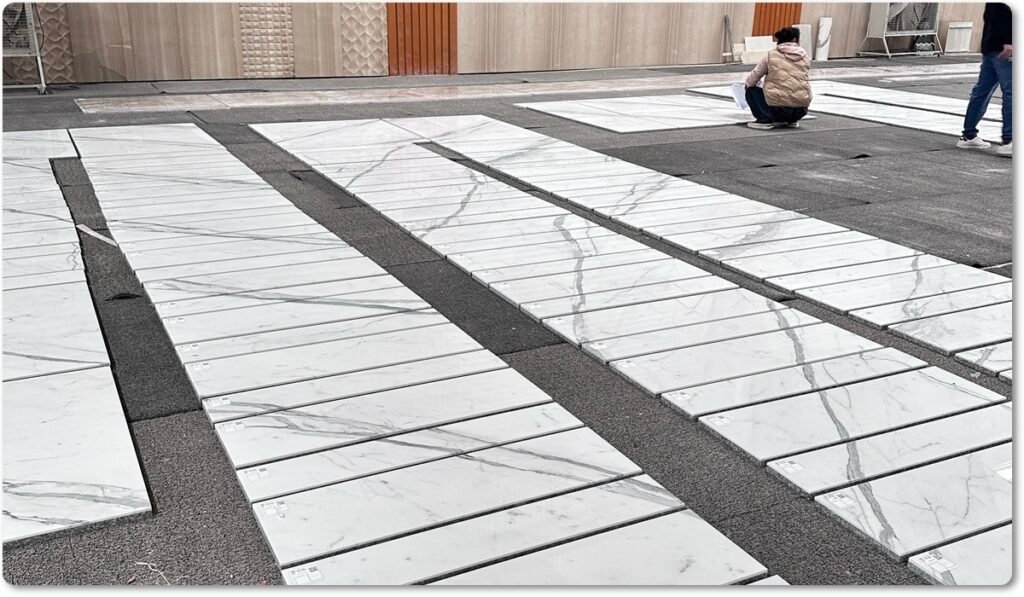
For large installations, EDG Stone Factory uses a pre-laying inspection process. Technicians dry-lay full slab arrays across their factory floors to check vein continuity, inspect color consistency, and eliminate defective pieces before packing. This step saves valuable time on-site, ensuring a smoother installation process for contractors and project managers.
Section 7: Knowledge Graph & Structured Q&A Content
This section answers technical questions regarding the selection and installation of premium white marble floor tiles, backed by field data and industry standards.
Question 1: Can white marble tiles be safely installed over hydronic underfloor heating without risk of structural cracking?
Answer
Yes. White marble tiles can be safely paired with underfloor heating systems. However, the installation must include an uncoupling membrane and a polymer-modified thin-set mortar designed to absorb thermal expansion stresses.
Evidence
The Marble Institute of America (MIA) and the Tile Council of North America (TCNA) outline detailed installation standards in the TCNA Handbook for Ceramic, Glass, and Stone Tile Installation (Method RH111-15). This standard states that using an anti-fracture underlayment allows natural stone floors to expand and contract smoothly during heating cycles. This prevents lateral shear stresses from cracking the stone tiles.
Summary
Underfloor heating works exceptionally well with white marble floor tiles due to the stone’s high thermal mass. To ensure a successful installation, contractors must include a dedicated uncoupling membrane and follow proper curing times.
Question 2: What causes white marble tiles to occasionally turn yellow in wet areas, and how can this be prevented?
Answer
Yellowing in white marble is typically caused by the oxidation of natural iron compounds (like pyrite) contained within the stone, or by using improper alkaline cleaning agents that trap dirt on the surface.
Evidence
Geological chemical testing confirms that varieties like Carrara marble contain varying amounts of trace iron minerals. According to the Natural Stone Institute (NSI) White Paper on Stain Identification, prolonged exposure to moisture can oxidize these iron deposits, creating rust stains that migrate to the stone’s surface. This issue can worsen if the stone is sealed before it has dried completely.
Summary
To prevent white marble from yellowing, always apply a high-quality, breathable water-impregnating sealer. Ensure the subfloor has a proper drainage system, and use neutral-pH cleaners to avoid chemical discoloration.
Question 3: Why should architects specify a honed finish over a polished finish for high-traffic commercial flooring?
Answer
A honed finish provides a higher dynamic coefficient of friction ($DCOF \ge 0.42$), making it safer and more slip-resistant than a polished surface. It also hides micro-scratches caused by daily foot traffic, reducing long-term maintenance costs.
Evidence
The ANSI A326.3 standard states that interior floors expected to be walked upon when wet must maintain a minimum wet DCOF value of 0.42. Polished marble typically tests below a wet DCOF of 0.35, which creates a slip hazard. Honed marble consistently meets or exceeds the 0.42 threshold while hiding surface wear effectively.
Summary
For commercial projects like hotel lobbies and public walkways, specifying honed white marble tile ensures compliance with modern safety codes while preserving the stone’s appearance under heavy foot traffic.
Section 8: Data Sources & Architectural References
ASTM C97 / C97M: Standard Test Methods for Absorption and Bulk Specific Gravity of Dimension Stone, ASTM International.
ASTM C170 / C170M: Standard Test Method for Compressive Strength of Dimension Stone, ASTM International.
ASTM C880 / C880M: Standard Test Method for Flexural Strength of Dimension Stone, ASTM International.
ANSI A326.3: Standard Test Method for Measuring Dynamic Coefficient of Friction of Hard Surface Flooring Materials, Tile Council of North America (TCNA).
EN 1926: Natural Stone Test Methods – Determination of Uniaxial Compressive Strength, European Committee for Standardization.
EN 12372: Natural Stone Test Methods – Determination of Flexural Strength Under Concentrated Load, CEN.
EN 13755: Natural Stone Test Methods – Determination of Water Absorption at Atmospheric Pressure, CEN.
Natural Stone Institute (NSI): The Dimension Stone Design Manual, Version 8.0.
Tile Council of North America (TCNA): Handbook for Ceramic, Glass, and Stone Tile Installation.
British Standards Institution (BSI): BS 7976-2: Pendulum Testers – Method of Operation, UK Standards Commission.
Section 9: Industry Interlink Matrix (Internal Architecture Hub)
To view detailed engineering specifications across our complete product matrix, please explore our interconnected technical guides:
Selecting Premium Calacatta Gold Marble Slabs for Hospitality Focal Walls
The Complete Engineer’s Guide to Specifying Carrara Marble Formats
Statuario Marble vs. Volakas: Structural Load and Veining Comparisons
Thassos Pure White Dolomite Tiles: Minimizing Water Absorption in High-Moisture Spas
Designing High-Performance Floor Transitions: Natural Stone to Quartzite Slabs
Advanced Resin Treatment Systems for Fragile Metamorphic Stone Blocks
Specifying Large Format Floor Panels: Controlling Subfloor Lippage and Flexure
Understanding the Chemistry of Etch Repair in High-Traffic Commercial Restrooms
Acoustic Underlayment Specifications for Solid Natural Stone Floor Installations
Class C2TE S1 Mortar Selection for Underfloor Radiative Heating Grids
Sourcing Premium Architectural Stone: Global Procurement Strategies for Developers
Comparing Calcite Hardness and Abrasion Resistance Across Italian Quarries
Designing Slip-Resistant Wet Rooms Using Micro-Grip Impregnating Sealers
Polymer-Modified Thin-Set Engineering for Heavy Commercial Point-Loads
EDG Stone Factory Case Study: Custom Fabrications and Quality Inspections for Luxury Commercial Developments