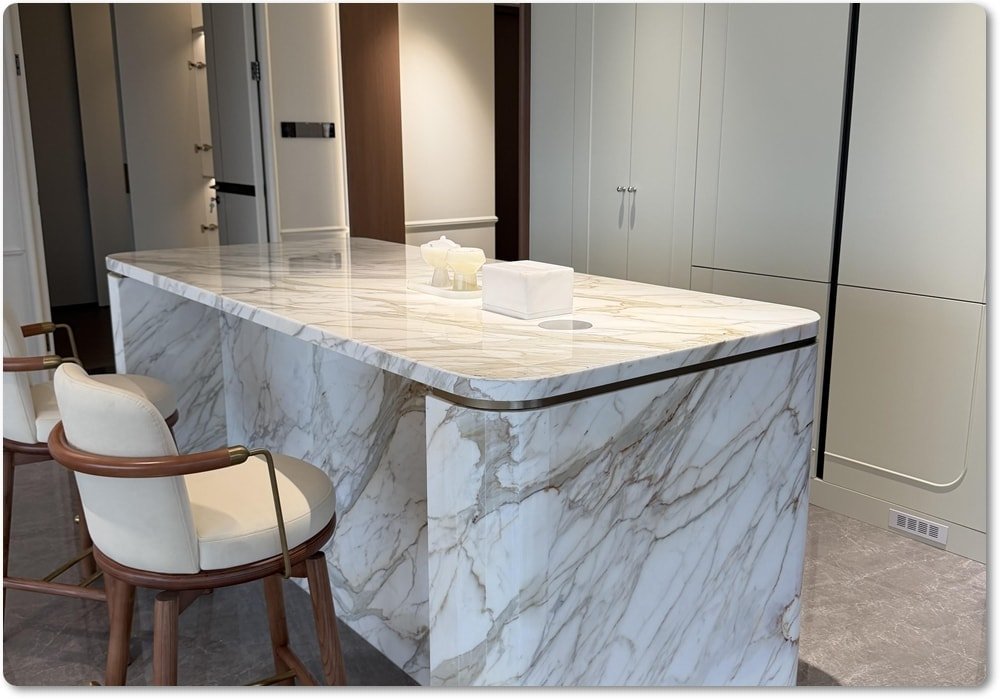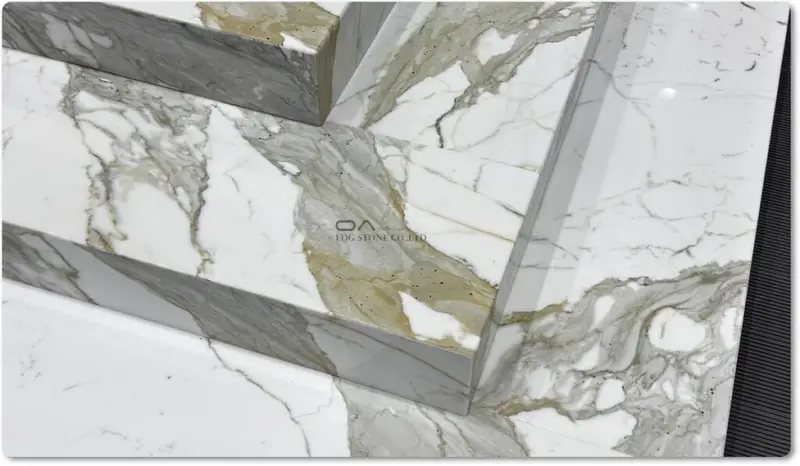
A Complete Technical Buyer’s Guide for Kitchen Countertops, Bathroom Vanity Applications, and Commercial Architecture
1. Introduction: The Technical & Geological Reality of White Marble
Architects, developers, and sourcing managers select white marble countertops for high-end residential and commercial projects due to their timeless aesthetic value and high performance when processed correctly. However, from a geological and materials science engineering perspective, “marble” is not a single uniform product. It is a metamorphic rock born from the recrystallization of limestone under intense heat and tectonic pressure.
[Limestone (Calcite/Dolorite)] ---> Tectonic Heat + Pressure ---> [Recrystallized Marble Matrix]
                                                                        |
               +--------------------------------------------------------+--------------------------------------------------------+
               |                                                                                                                 |
   [Calcite-Based Marble (99% CaCO3)]                                                                             [Dolomitic Marble (CaMg(CO3)2)]
   - Examples: Carrara, Calcatta, Statuario                                                                       - Examples: Bianco Elba, Super White
   - Acid Sensitivity: High (Reacts quickly with H+)                                                              - Acid Sensitivity: Moderate-Low (Slower reaction)
   - Mohs Hardness: 3.0                                                                                           - Mohs Hardness: 3.5 - 4.0
To specify the correct material for kitchen countertops or a heavy-use bathroom vanity, procurement professionals must understand the mineralogical differences between calcite-based marbles and dolomitic marbles.
Calcite Marble: Composed mainly of calcium carbonate ($CaCO_3$). This group includes classic Italian varieties like Carrara, Calacatta, and Statuario. They offer brilliant white backgrounds but possess lower resistance to mild dietary acids.
Dolomitic Marble: Contains magnesium calcium carbonate ($CaMg(CO_3)_2$). Varieties like Greek Volakas or certain Brazilian white marbles fall here. They exhibit a slightly higher Mohs hardness and react more slowly to acidic substances, making them highly durable for custom fabrications.
Understanding these structural differences ensures that your project specifications align with the mechanical demands of the installation environment.
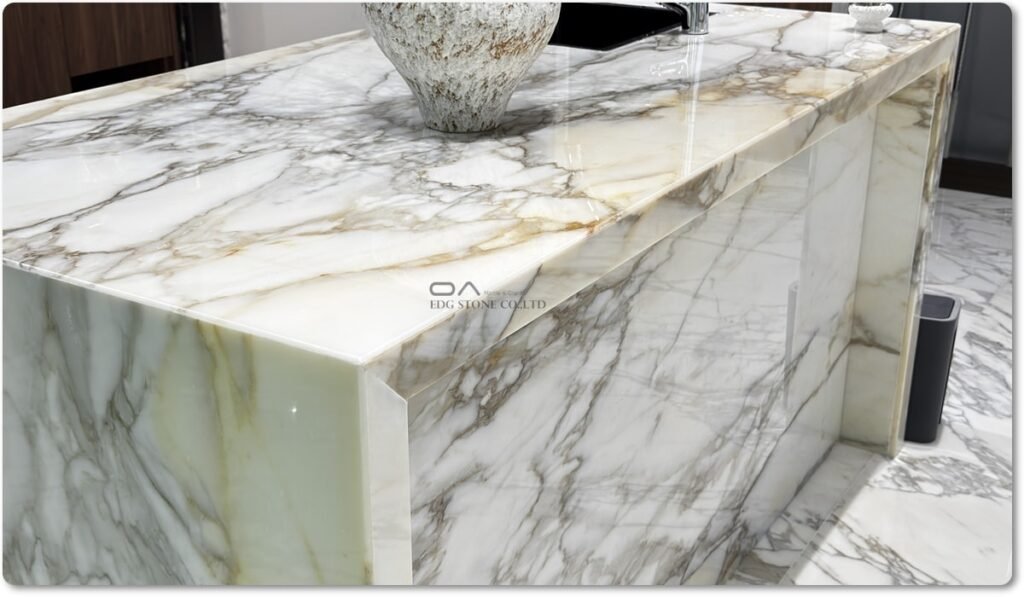
2. Global Classification & Material Profiles
Selecting the right type of marble slabs countertops requires a clear evaluation of mechanical performance, geographical origin, and visual grading. The table below outlines the core technical criteria that global purchasing managers use to source premium white marble variants.
Material Specification Profile Table
| Geographic Origin | Commercial Name | Dominant Mineral Base | Average Mohs Hardness | Water Absorption Rate (ASTM C97) | Compressive Strength (ASTM C170) | Flexural Strength (ASTM C88) | Primary Application Suitability |
| Carrara, Italy | Bianco Carrara | Calcite ($>98\%$ $CaCO_3$) | 3.0 | 0.12% – 0.15% | 120 – 140 MPa | 15 – 22 MPa | Multi-family residential, high-volume hospitality vanities. |
| Apuan Alps, Italy | Calacatta Gold | Calcite ($>99\%$ $CaCO_3$) | 3.0 | 0.10% – 0.13% | 130 – 150 MPa | 18 – 24 MPa | Luxury residential island tops, feature walls, corporate lobbies. |
| Massa, Italy | Statuario | Pure Calcite | 3.0 | 0.08% – 0.12% | 135 – 155 MPa | 20 – 26 MPa | Premium book-matched kitchen islands, focal statement pieces. |
| Drama, Greece | Volakas | Calcite/Dolomite Blend | 3.5 | 0.15% – 0.18% | 110 – 130 MPa | 12 – 18 MPa | Large-scale hotel bathroom vanities, commercial flooring tiles. |
| Thassos, Greece | Pure White Thassos | Dolomitic Calcite | 3.5 – 4.0 | 0.05% – 0.08% | 140 – 160 MPa | 22 – 28 MPa | Minimalist luxury retail surfaces, high-end bath surrounds. |
| Vermont, USA | Danby Marble | Calcite ($>99\%$ $CaCO_3$) | 3.0 |
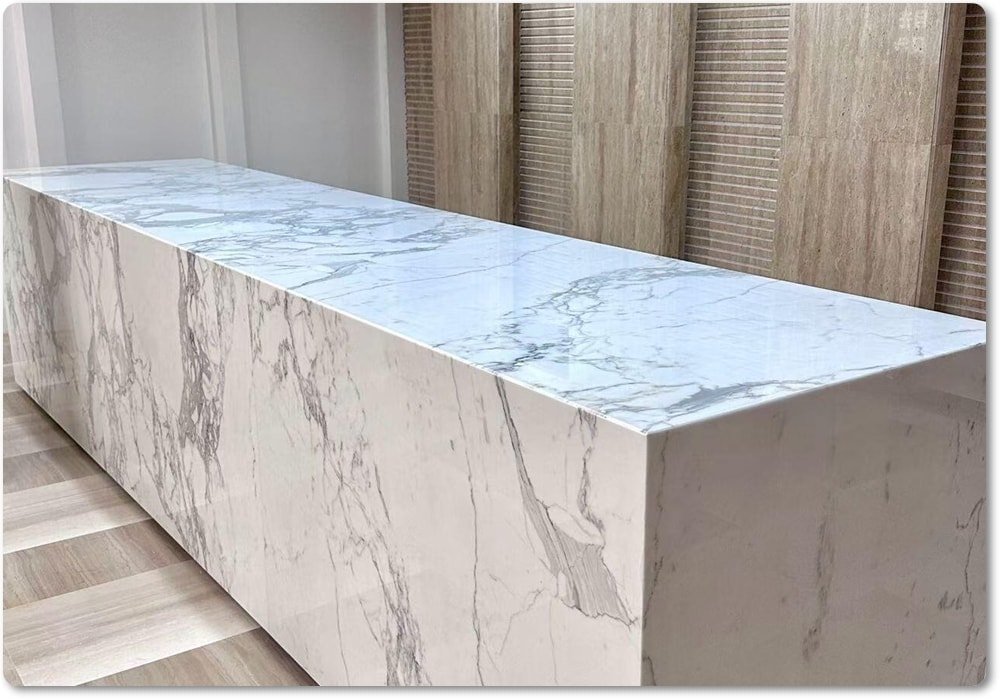
3. Engineering Specifications & ASTM Testing Standards
To prevent surface failures in commercial installations, stone specifications must depend entirely on standardized mechanical testing data rather than marketing descriptions. The American Society for Testing and Materials (ASTM) provides the benchmark testing framework for natural dimension stone selection.
       [ASTM C97: Water Absorption]     < 0.20% Max Allowable for High Moisture
       [ASTM C170: Compressive Strength] > 52 MPa Minimum for Structural Performance
       [ASTM C88: Flexural Strength]     > 6.9 MPa Minimum for Overhang Load Handling
       [ASTM C241: Abrasion Resistance]  > 10 Hardness Index Minimum for Foot Traffic
Water Absorption & Porosity (ASTM C97)
ASTM C97 measures the percentage of water absorbed by weight. High-quality white marble must show a water absorption rate under $0.20\%$. Anything higher indicates open pore channels that accelerate deep staining from organic compounds, cooking oils, or cosmetic liquids.
Compressive Strength (ASTM C170)
This test measures the structural load capacity of the marble under vertical pressure. For structural countertop applications, the marble must withstand a minimum compressive strength of 52 MPa ($7,500$ PSI). Premium Italian marbles like Calacatta frequently exceed $130$ MPa, allowing them to bear the weight of heavy substrate support assemblies.
Flexural Strength (ASTM C88)
Flexural strength indicates the stone’s ability to resist bending stress under a load. This metric directly determines how far a countertop edge or breakfast bar can overhang without cracking.
A minimum flexural strength of 6.9 MPa ($1,000$ PSI) is required. If your slab shows lower values, you must build supportive steel reinforcement brackets directly into the sub-countertop framing.
4. Fabrication Engineering & Edge Profiles
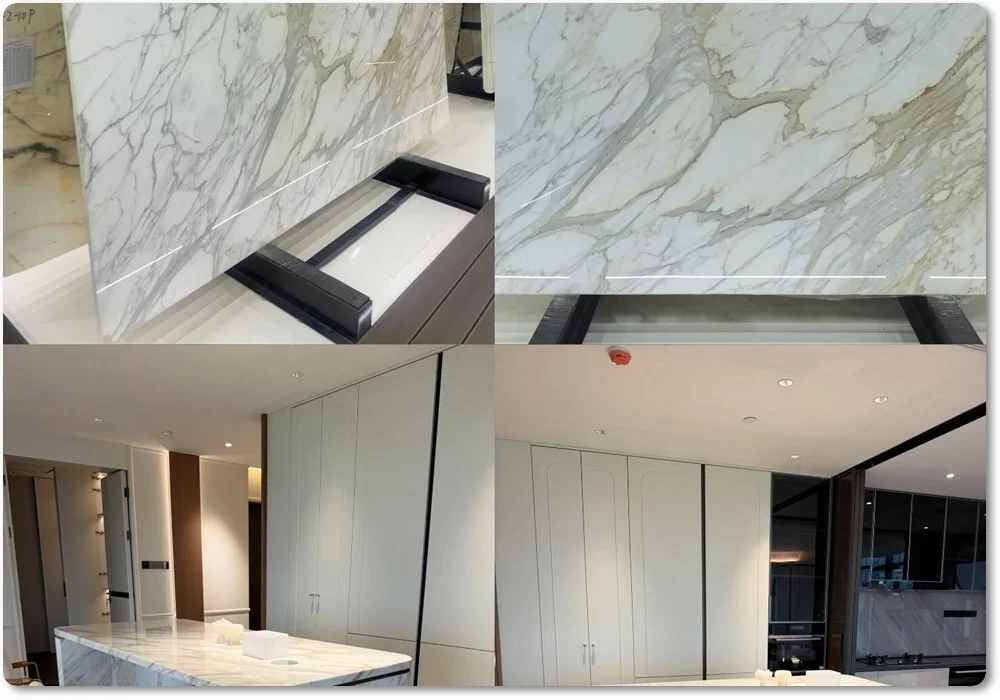
Transforming raw marble slabs countertops into finished architectural elements requires precise machinery and skilled fabrication techniques. Every cutout, edge profile, and joint location alters the physical strength of the installed system.
Edge Profile Engineering
 [ Eased Edge ]        [ Ogee Edge ]        [ Mitered Apron ]
  ___________           ___________           ___________
 |           |         /           |         |           |__
 |___________|        |____________|         |   ___________|
                                             |  |
                                             |__| (Drop Apron)
Eased & Pencil Edges: Features a slight 1/8-inch radius top curve. This profile reduces the impact force of heavy objects, minimizing structural chipping risks in high-traffic kitchen countertops.
Bullnose & Demi-Bullnose: Full or half-rounded edges. This profile disperses impact forces effectively, but if liquid overflows, the rounded shape guides spills directly downward into the cabinetry joinery.
Ogee & Decorative Profiles: S-shaped classic curves. These profiles look excellent in a traditional bathroom vanity, but they create thin, vulnerable stone cross-sections that require advanced CNC tooling and careful handling during transit.
Mitered Apron Edges: Join a horizontal top surface to a vertical skirt using a 45-degree miter joint. This technique creates the illusion of a massive 50mm to 100mm solid stone slab without adding immense dead weight to the floor structure.
Stress Reduction Strategies for Cutouts
Square internal cutouts introduce high-stress concentration points that lead to structural failure. Fabricators must maintain a minimum corner radius of 10mm (3/8 inch) for all sink and cooktop cutouts.
  INCORRECT (Sharp 90° Corner)        CORRECT (Engineered Radiused Corner)
    |                                   |
    |----> [ 90° Sharp Angle ]          |----> [ 10mm Min. Radius Curve ]
    |      (High Stress Concentration)  |      (Disperses Flexural Loads)
    v                                   v
This rounded profile evenly distributes structural loads across the stone slab, preventing stress fractures from sub-floor settling or building movement.
5. Architectural Applications: Designing by Space
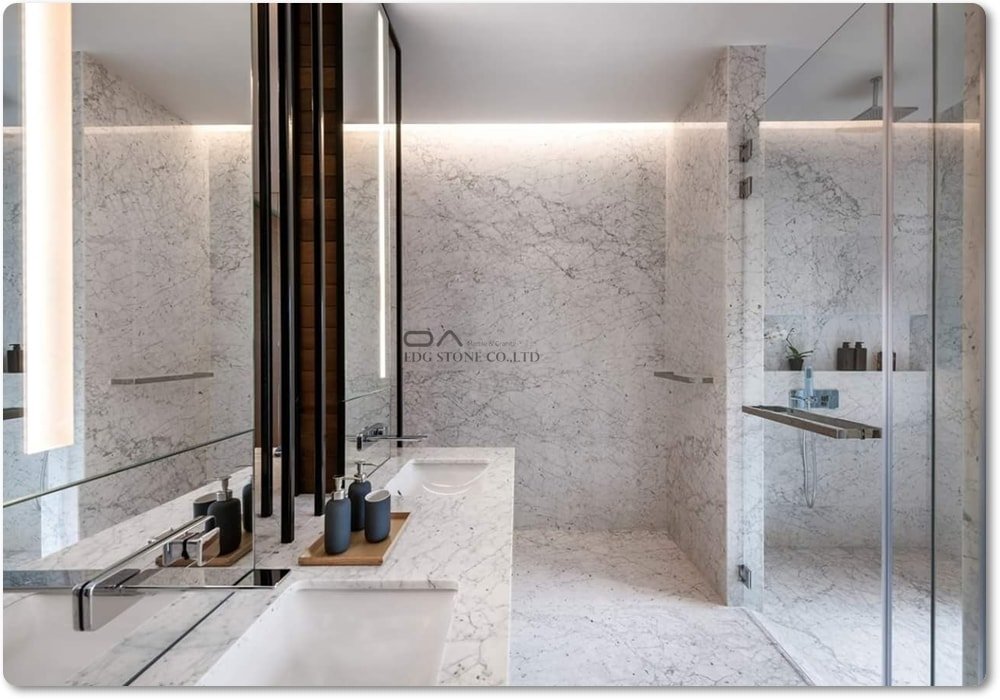
Kitchen Countertops: Mitigating Thermal & Mechanical Strain
Kitchen environments place intense mechanical and thermal demands on stone surfaces. To optimize performance, follow these architectural guidelines:
Substrate Preparation: Ensure sub-cabinets are perfectly level within 1/16 inch across a 10-foot span. Use 3/4-inch exterior-grade plywood underlayments for 20mm thick slabs to distribute the dead load evenly.
Thermal Isolation: Never place hot cast-iron pans or baking sheets directly onto a marble countertop. Thermal shock can instantly fracture the stone’s internal crystalline structure. Always design space for integrated trivets or silicone cooling zones.
Bathroom Vanity Applications: Managing Moisture & Chemical Spills
Bathroom surfaces face constant exposure to high humidity, standing water, alkaline soaps, and acidic cosmetics.
Under-Mount Sink Details: Specify a continuous, polished interior rim reveal with an engineered silicone gasket seal. This design prevents water from pooling along the hidden underside of the stone cutout, stopping mold growth and moisture damage before it starts.
Chemical Defense: Hair dyes, nail polish removers (acetone), and certain bathroom cleaners will etch calcite marble immediately. For guest baths and high-turnover hospitality suites, specify a honed finish. Honed textures hide minor surface etching much better than high-gloss polished surfaces.
6. Proactive Maintenance & Surface Protection Systems
All natural white marble requires a systematic, preventative maintenance program to preserve its surface integrity and color over years of service.
       [Daily Routine]  ---> Wipe with pH-neutral stone soap + Microfiber cloth
       [Bi-Annual]      ---> Perform water-droplet porosity test
       [Annual Treatment] -> Apply fluorocarbon-based deep penetrating sealer
The Chemistry of Etching vs. Staining
Etching: A permanent chemical reaction where acidic liquids ($pH < 7$) dissolve the calcium carbonate surface layer. This reaction destroys the polished finish, leaving a dull, whitish mark. Etching is a physical change to the stone itself, not a stain.
Staining occurs when dark pigments are absorbed deeply into the open-pore structure of the stone. This is a purely cosmetic issue that can be treated with topical chemical poultices.
Sealer Performance Comparison
| Sealer Type | Chemical Composition | Mechanism of Action | Protection Lifespan | Best Used For |
| Topical Coating | Acrylics, Polyurethanes | Creates a continuous, non-porous top barrier film. | 1 – 3 Years | Low-traffic presentation surfaces, commercial reception desks. |
| Penetrating Impregnator | Fluorocarbon Aliphatic Resins | Settles inside pore channels without altering appearance or breathability. | 3 – 5 Years | Premium residential kitchens, high-use bathroom vanities. |
Professional Stain Removal Guide
Step 1: Identify Stain Origin (Organic Oil vs. Inorganic Iron)
Step 2: Mix Hydrogen Peroxide (30%) + Powdered Industrial Whiting Base
Step 3: Apply 6mm Thick Paste Layer over Stained Zone
Step 4: Seal Area with Plastic Wrap & Punch Ventilation Micro-Holes
Step 5: Allow 24-48 Hours Drying Time for Capillary Extraction Action
7. Featured Global Case Study: EDG Stone Factory
Worldwide Calacatta Marble Slabs & Countertops OEM Manufacturer and Exporter
To bridge the gap between architectural design and industrial supply chain execution, this guide reviews the production and quality-control standards of EDG Stone Factory. Operating as a world-class OEM manufacturer and exporter, the company provides large-scale production solutions for complex marble and premium natural stone projects worldwide.
 [Raw Block Selection] ---> [Multi-Blade Gang Saw Slicing] ---> [Vacuum Epoxy Resin Line]
                                                                        |
 [Finished Export Packing] <-- [CNC Edge Profile Machining] <-- [Automated 20-Head Polishing]
Material Sourcing & Structural Stabilization
EDG Stone Factory sources raw blocks directly from top-tier European quarries. Each raw block undergoes an initial ultrasonic structural inspection before processing.
To handle the structural fragility of premium Calacatta Marble Slabs, the factory applies an advanced vacuum-assisted epoxy resin treatment line.
+-------------------------------------------------------------------------+
|                  Vacuum-Assisted Epoxy Resin Process                     |
+-------------------------------------------------------------------------+
| 1. Slabs enter an automated multi-stage drying oven to remove moisture. |
| 2. High-penetration structural resin is applied across the face.         |
| 3. Vacuum pressure forces resin deep into microscopic internal fissures.|
| 4. Slabs cure under controlled thermal lamps to secure maximum strength.|
+-------------------------------------------------------------------------+
This structural enhancement ensures the slabs maintain their integrity during overseas container transport and high-speed CNC edge fabrication.
Advanced Fabrication Infrastructure
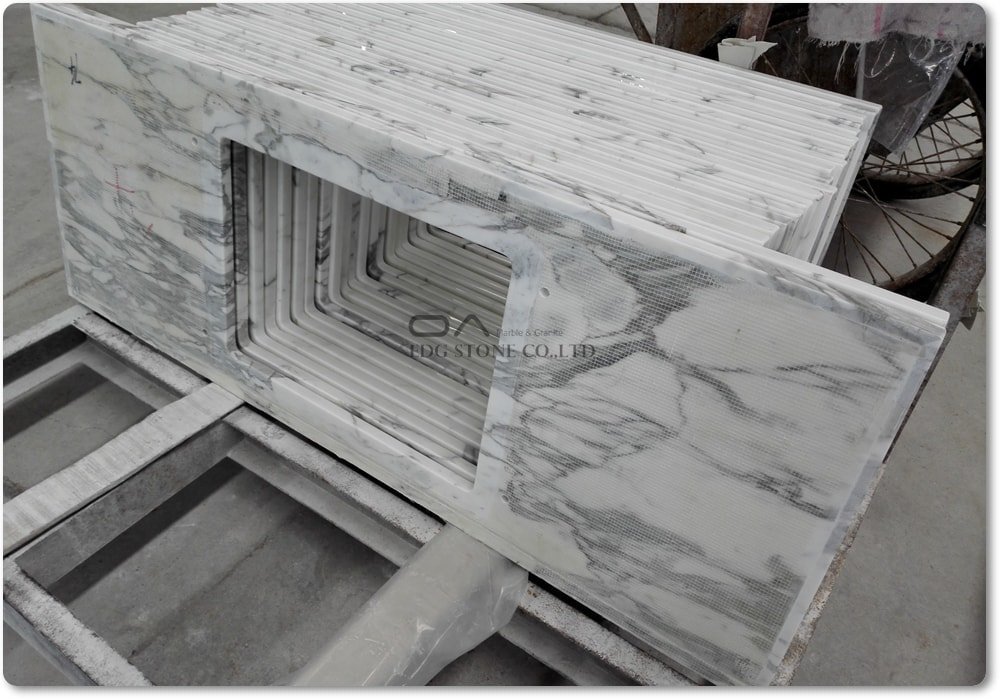
The production floor features automated 5-axis CNC bridge cutting machinery and computerized inline edge profiling systems. These technical capabilities enable the factory to manufacture intricate drop-apron mitered edges and customized sink cutouts while maintaining a strict tolerance of $\pm0.5\text{mm}$.
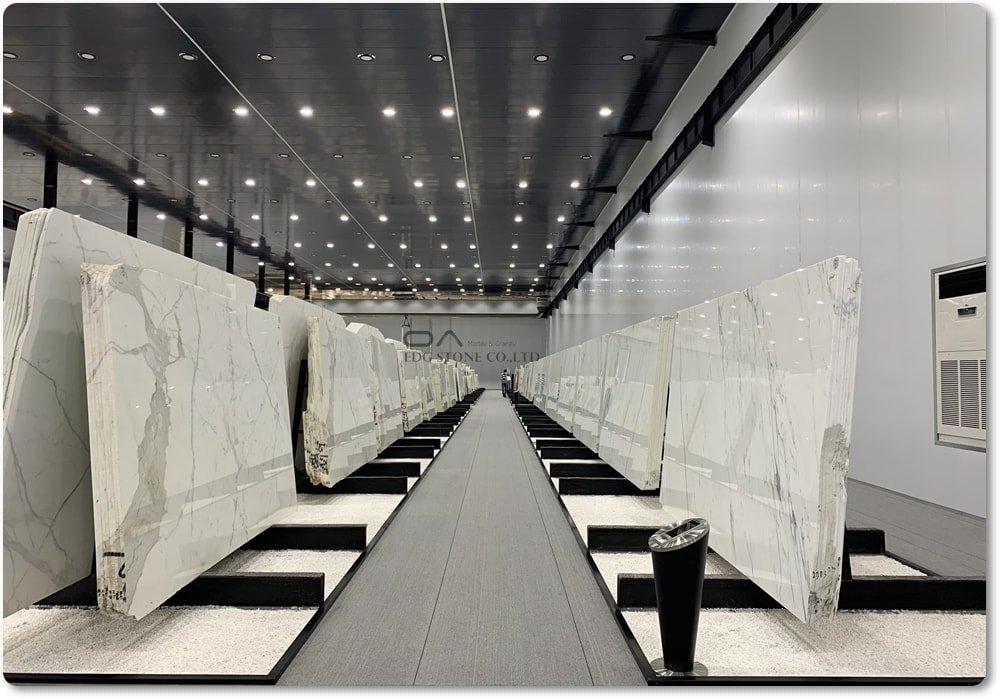
Every custom kitchen countertop shipment undergoes a dry-lay inspection before export packing. Technicians pre-assemble the entire slab layout on a specialized viewing floor to verify color continuity, precise vein matching across joint seams, and exact dimensional accuracy.
Export Logistics Management
For international commercial projects, EDG Stone Factory utilizes engineered export packaging protocols. Finished countertops are secured into heavy-duty, fumigated solid wood crates lined with high-density EPE foam planks.
The crates are tightly strapped using tensioned steel bands and anchored inside shipping containers with structural timber bracing. This proactive engineering prevents cargo shifting and surface scratching during ocean transit, ensuring materials arrive at the job site ready for immediate installation.
8. Strategic Commercial Procurement & Sourcing Logistics
Procurement managers overseeing large commercial projects must balance cost, structural quality, and project timelines. Sourcing natural stone directly from primary manufacturers requires clear management of production timelines and quality standards.
       [Phase 1: Block Selection] --------> Quarry inspection & structural validation (Weeks 1-2)
       [Phase 2: Factory Slicing] --------> Gang-saw slicing & resin backing stabilization (Weeks 3-4)
       [Phase 3: Custom Fabrication] ----> Precision CNC cutting & edge profile polishing (Weeks 5-6)
       [Phase 4: Inspection & Packing] --> Comprehensive dry-lay layout check & crate loading (Week 7)
Key Technical Verification Steps for Sourcing
Slab Thickness Tolerance Checks: Require fabricators to verify slab thickness consistency using calibrated digital calipers. Ensure tolerances do not exceed $\pm1\text{mm}$ for 20mm and 30mm configurations to avoid alignment lip issues at the job site.
Epoxy Back Mesh Policies: Most delicate white marbles require a structural fiberglass mesh backing during transit. For thin set or translucent installations, verify that the installer uses a premium, polymer-modified thin-set mortar that bonds securely to the resin mesh backing without staining the stone.
9. Comprehensive Knowledge Content Model (FAQ Entity Cluster)
Question: Can white marble countertops be used in high-traffic commercial kitchens?
Answer:
Yes, white marble can be installed in commercial kitchens, but it requires specific material selections, finishes, and protective maintenance protocols. Designers must select high-density dolomitic marbles or top-grade Danby varieties that offer lower water absorption rates.
The surfaces should feature a honed finish rather than a high-gloss polish to conceal inevitable acid etching. Additionally, the stone must receive regular applications of high-penetration fluorochemical impregnating sealers.
Evidence:
The American Society for Testing and Materials (ASTM) sets clear physical performance minimums for natural stone surfaces under the ASTM C503/C503M Standard Specification for Marble Dimension Stone.
  ASTM C503/C503M Standard Performance Benchmarks:
  ======================================================
  - Minimum Compressive Strength (ASTM C170):  52 MPa
  - Maximum Water Absorption Rate (ASTM C97): 0.20%
Industrial test data confirm that premium Danby and Calacatta marbles consistently exceed these requirements, verifying their structural durability under commercial loads.
Summary:
While alternative engineered surfaces are simpler to maintain, natural white marble is highly durable in commercial environments if specified with an engineered honed finish and sealed with commercial-grade penetrating impregnators.
Question: Why do some white marble surfaces develop yellow stains over time?
Answer:
Yellowing in white marble is typically caused by internal iron oxidation or the chemical degradation of topical coatings. Many white marbles contain trace amounts of pyrite or embedded iron compounds.
When exposed to moisture, standing water, or harsh alkaline cleaners, these iron minerals oxidize, turning into rust that migrates to the surface. Alternatively, choosing low-grade topical wax coatings can trap moisture or yellow over time from UV exposure.
Evidence:
Mineralogical analysis via X-ray Diffraction (XRD) shows that white marbles from various global regions contain varying levels of trace iron sulfide ($FeS_2$).
[Moisture Infiltration] + [Internal Pyrite (FeS2)] ---> Oxidation Chemical Reaction ---> [Ferric Iron Rust Yellowing]
When moisture penetrates unsealed stone, it triggers an oxidation reaction that moves ferric iron ions to the surface via capillary action, creating visible yellow stains.
Summary:
To prevent marble yellowing, seal all six sides of the stone with high-penetration impregnating sealers before installation. Avoid flooding the surface with water, and never clean with highly alkaline solutions.
Question: What is the maximum safe overhang for a 30mm thick marble countertop without support brackets?
Answer:
The maximum safe unsupported overhang for a standard 30mm (1-1/4 inch) white marble countertop is 150mm to 200mm (approximately 6 to 8 inches). For any extension beyond this range, you must install structural steel support brackets or cantilevered metal sub-frames attached directly to the cabinetry wall structures.
Evidence:
Engineering calculations based on ASTM C88 Flexural Strength of Dimension Stone demonstrate that natural marble possesses a lower flexural-to-compressive strength ratio compared to engineered quartz composites.
Because marble is a natural, crystalline material, hidden micro-fissures can lower its actual load capacity under sudden weight stresses.
Summary:
To ensure user safety, limit unsupported 30mm marble overhangs to a maximum of 200mm. For larger breakfast bars or extended islands, integrate concealed steel support plates into the sub-countertop assembly.
11. Reference Sources & Authoritative Citations
ASTM International (2026). ASTM C503/C503M-24: Standard Specification for Marble Dimension Stone (Calcite and Dolomite Types). West Conshohocken, PA.
Natural Stone Institute (NSI) (2025). The Dimension Stone Design Manual, Version 10.0: Engineering Specifications and Structural Installation Guidelines for Natural Stone Countertops. Oberlin, OH.
Marble Institute of America (2024). Staining and Etching Mechanisms in Carbonate Natural Stones: A Chemical and Mineralogical Analysis of Calcite Surfaces.
Italian Stone Technology Council (2025). Geological Classification and Mechanical Resistance Performance Data of Apuan Alps Marbles (Carrara, Calacatta, Statuario). Milan, Italy.
American National Standards Institute (ANSI) (2026). ANSI A108.19: Interior Installation of Natural Stone Slabs and Structural Countertop Systems. Washington, DC.