
Introduction
Quartz slabs are a cornerstone of modern interior design, widely used for countertops, flooring, and wall cladding in residential and commercial projects. Understanding quartz slabs sizes is critical for architects, fabricators, and project buyers who aim to optimize fabrication, reduce waste, and ensure seamless installation. This whitepaper provides a comprehensive guide to standard dimensions, jumbo formats, thickness standards, cutting yields, and inventory planning, with a focus on engineering-driven procurement strategies.
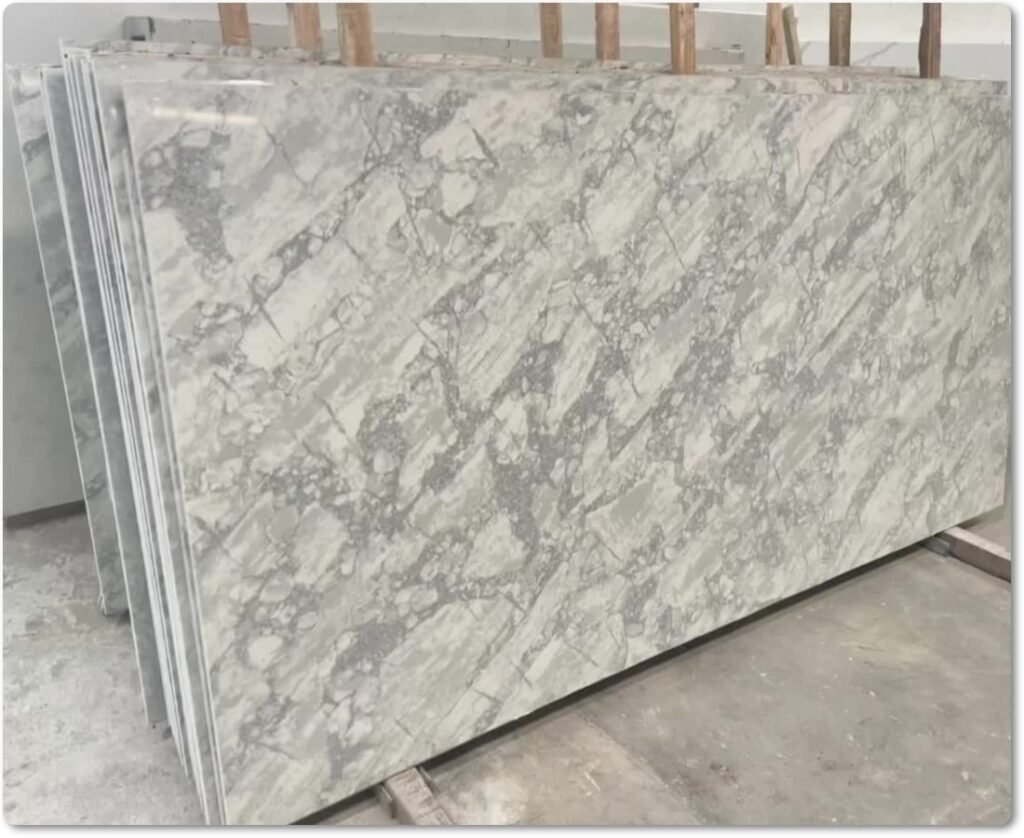
Standard Quartz Slab Dimensions Worldwide
Quartz slabs are engineered stone surfaces manufactured to precise dimensions, allowing for efficient planning and reduced cutting waste. The standard quartz slab sizes vary by region but typically fall within these ranges:
| Region | Length | Width | Thickness |
|---|---|---|---|
| North America | 120–130 inches (~305–330 cm) | 55–65 inches (~140–165 cm) | 12mm, 20mm, 30mm |
| Europe | 120–125 inches (~305–318 cm) | 55–63 inches (~140–160 cm) | 12mm, 20mm, 30mm |
| Asia | 115–130 inches (~290–330 cm) | 55–65 inches (~140–165 cm) | 12mm, 20mm, 30mm |
Note: Actual dimensions may vary slightly depending on the manufacturer. EDG Stone Factory maintains strict tolerances to ensure global compatibility and project consistency.
Standardized slabs simplify installation, reduce fabrication complexity, and make it easier to plan for shipping and storage.
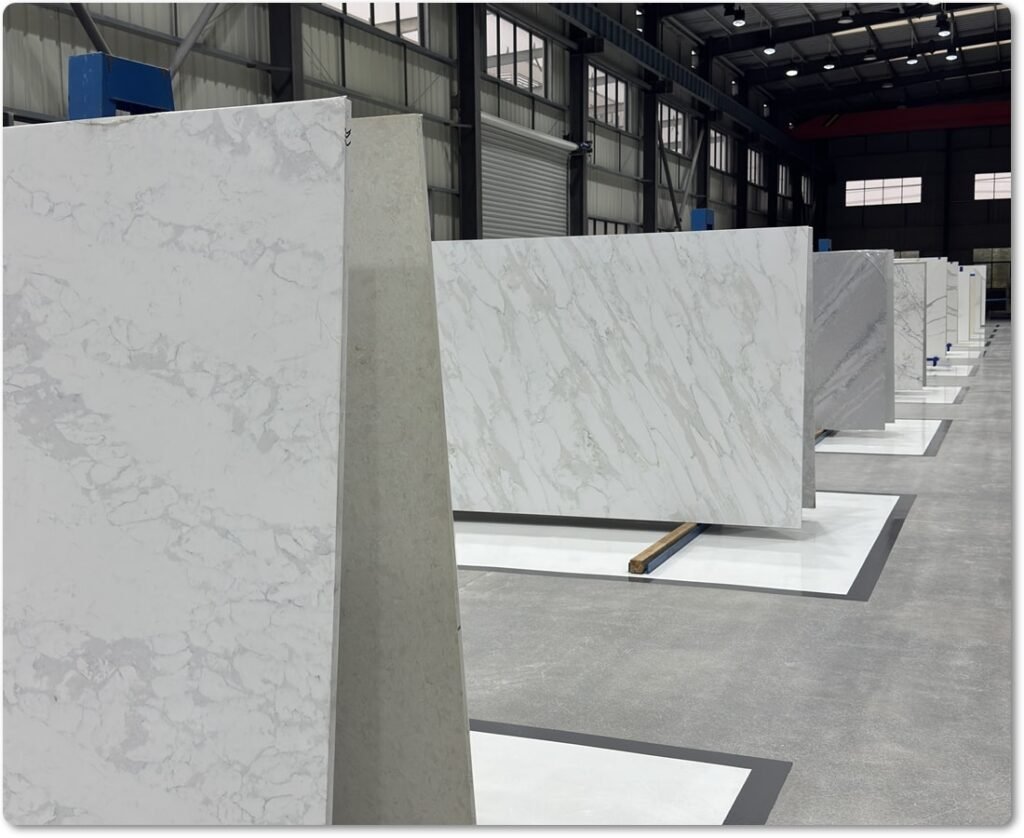
Jumbo vs Super Jumbo Quartz Slabs
For large-scale projects or premium kitchen islands, standard slabs may not provide the necessary coverage. This is where jumbo and super jumbo quartz slabs come into play.
- Jumbo Slabs: Typically measure 130–140 inches (330–355 cm) in length and 65–70 inches (165–178 cm) in width.
- Super Jumbo Slabs: Exceed 140 inches (355 cm) in length and 70 inches (178 cm) in width, often custom-manufactured.
Advantages:
- Minimized seams for aesthetic continuity.
- Fewer cutting losses for large countertops or wall panels.
- Better yield optimization for commercial installations.
EDG Stone offers both jumbo and super jumbo slabs for global clients, supporting seamless project execution in hotels, luxury homes, and commercial spaces.
Thickness Standards: 12mm, 20mm & 30mm
Quartz slabs are available in three primary thicknesses, each suited for different applications:
- 12mm (½ inch): Ideal for vertical surfaces like wall cladding and small countertop areas. Lightweight and easier to handle, but may require additional support for large spans.
- 20mm (¾ inch): The most commonly used thickness for kitchen countertops and commercial surfaces. Balances durability with cost-effectiveness.
- 30mm (1¼ inch): Premium, heavy-duty slabs ideal for large islands and high-traffic areas. Often chosen for luxury kitchens and commercial bars.
Selecting the right thickness is a critical step for fabrication planning, structural support, and overall project budget management.
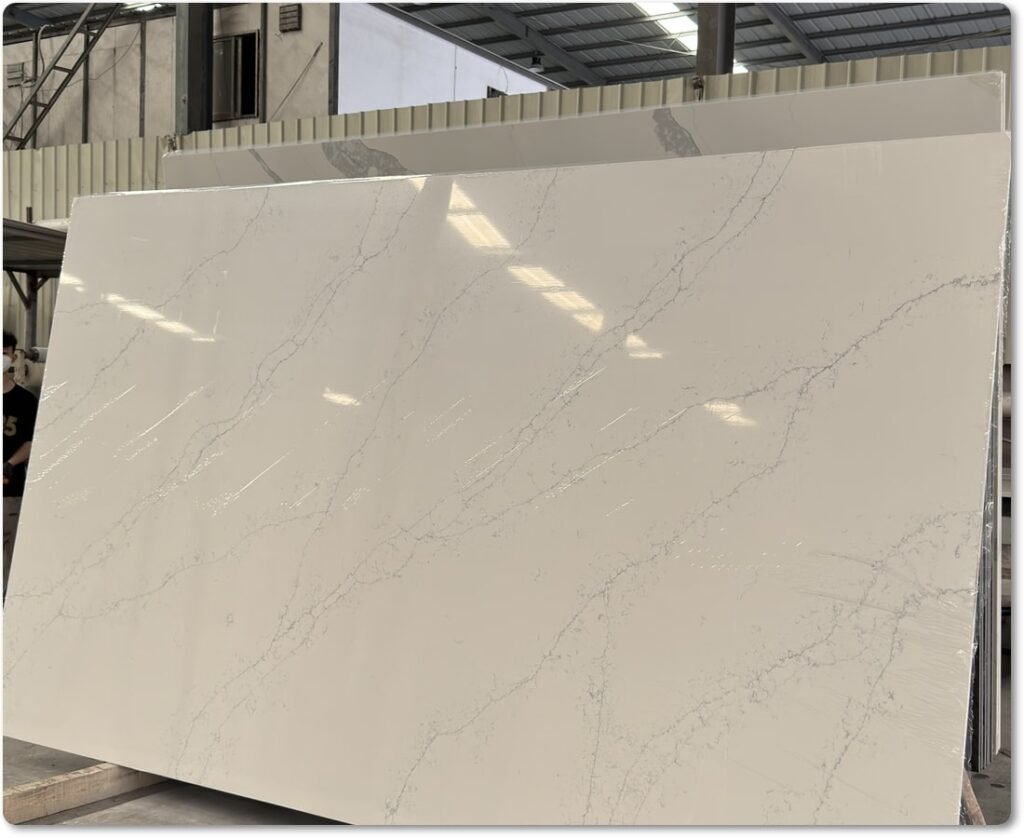
Slab Yield Optimization
Efficient use of quartz slabs directly impacts project cost. Slab yield optimization is the practice of arranging cuts to maximize usable surface area and minimize waste. Key strategies include:
- Pre-cut CAD planning: Using software to plan cuts and seams before fabrication.
- Pattern matching: Ensuring veining and textures align across multiple slabs.
- Batch selection: Matching slabs from the same production lot to maintain color consistency.
EDG Stone’s inventory and digital planning systems assist fabricators in achieving up to 95% yield efficiency, reducing both material and labor costs.
Transportation & Container Loading Constraints
Quartz slabs are heavy and fragile, requiring careful logistics planning:
- Standard slabs weigh ~50–55 lbs per square foot at 20mm thickness.
- Jumbo slabs may exceed 6,500 lbs per container.
- Proper container packing, cushioning, and forklift access are essential to prevent damage during international shipping.
EDG Stone Factory maintains dedicated container-loading protocols to ensure slabs arrive safely at your project site, anywhere in the world.
Cutting Loss Calculations
Fabricators must account for cutting losses when planning countertops, islands, and wall panels. Losses typically range from 5–15% of total material, depending on:
- Complex cutouts for sinks, cooktops, and corners
- Seams and pattern alignment
- Edge finishing (miters, bevels, bullnose)
Example: A 120-inch-by-60-inch slab used for a kitchen island may lose 10–15 inches of usable material due to edge finishing and cutouts.
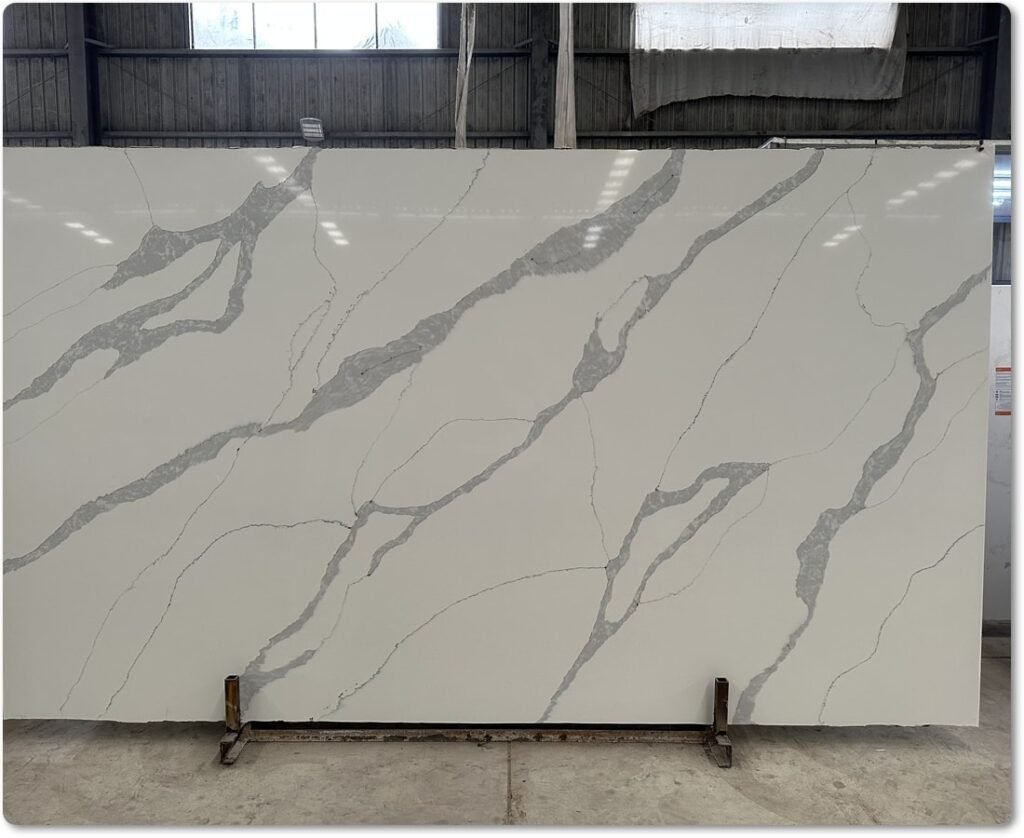
Best Sizes for Kitchen Islands
Kitchen islands benefit from slabs with minimal seams for aesthetic appeal. Recommended sizes:
| Island Size | Ideal Slab | Notes |
|---|---|---|
| Small (6–7 ft) | Standard 120×55 in | Usually, no seams are required |
| Medium (8–9 ft) | Jumbo 130×65 in | 1 seam may be unavoidable |
| Large (10+ ft) | Super Jumbo | Seamless finish possible; check structural support |
Proper selection ensures visual continuity and avoids unnecessary fabrication costs.
Commercial Project Sizing Strategies
For large-scale commercial installations such as hotel lobbies, restaurants, and office receptions:
- Use jumbo slabs to reduce visible seams.
- Coordinate with structural engineers for slab support over wide spans.
- Plan sequencing to ensure slab batches match in texture and color.
EDG Stone provides professional guidance on project sizing, offering pre-inspection of slab lots for consistency and suitability.
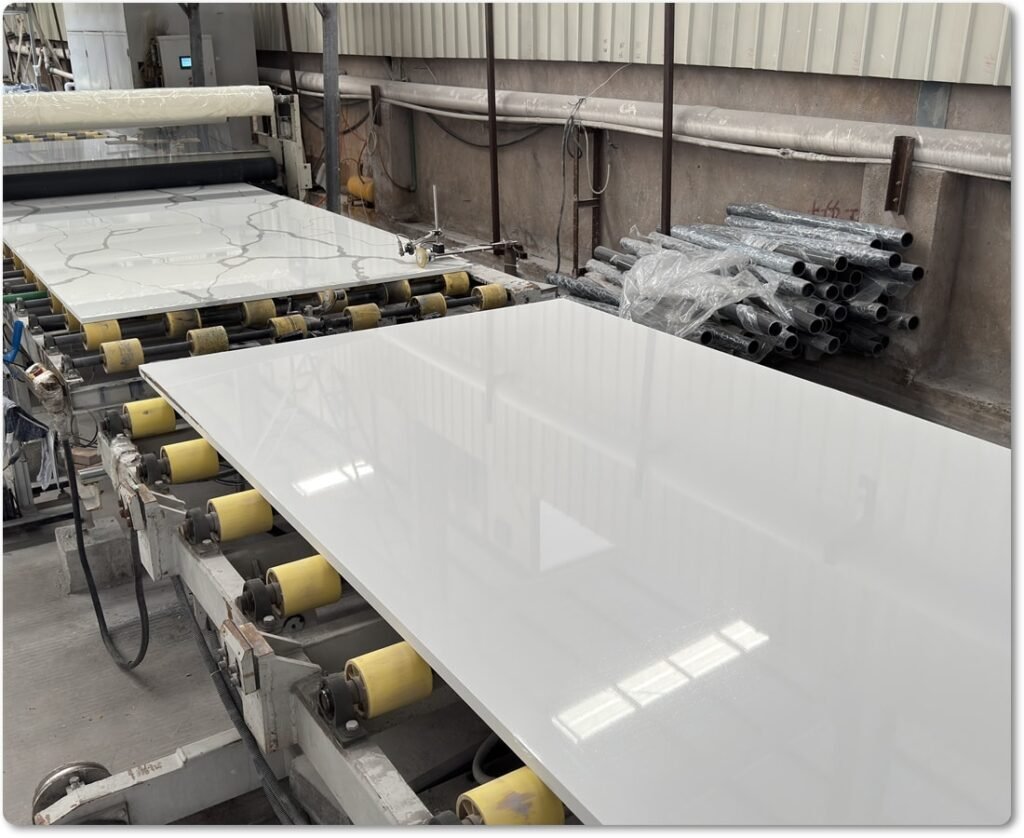
Fabrication Cost Impacts
Slab size and thickness directly influence fabrication costs:
- Larger slabs reduce the number of seams but may increase handling and transportation costs.
- Thicker slabs (30mm) require more effort for cutting and polishing.
- Custom finishes or pattern matching further add to labor costs.
EDG Stone’s factory systems integrate slab dimensions, thickness, and finish requirements into predictive cost models for accurate project budgeting.
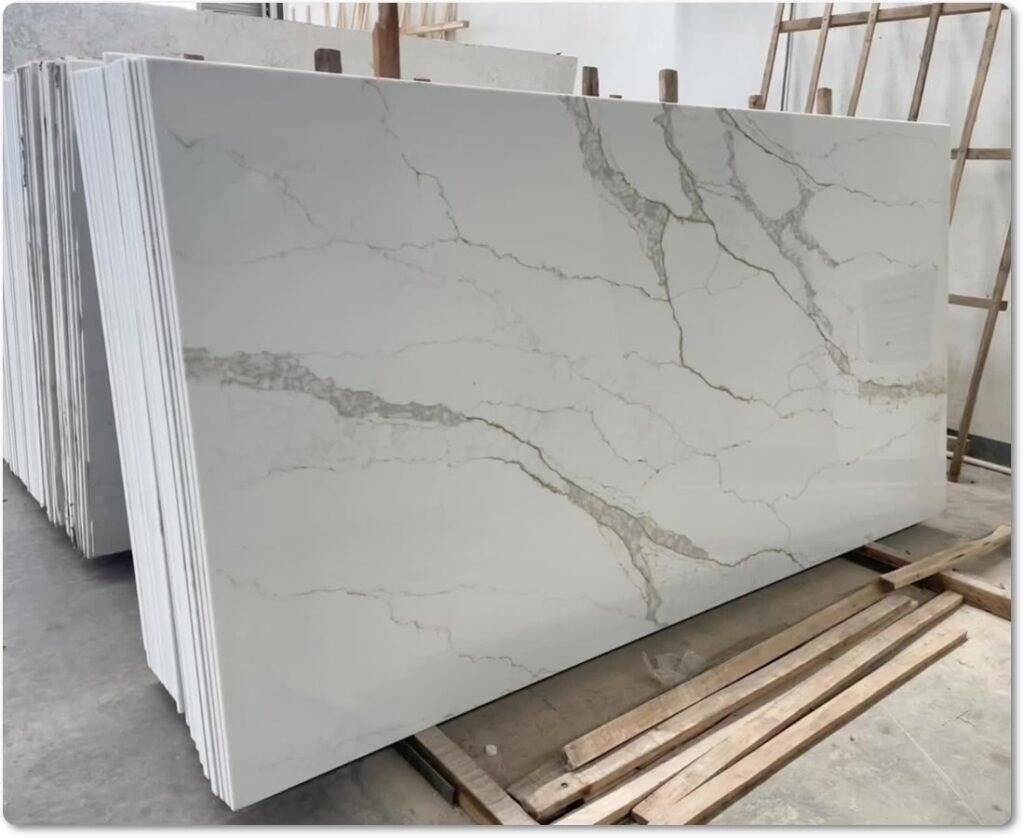
EDG Stone Factory Inventory Planning Systems
EDG Stone maintains an optimized inventory system that tracks:
- Standard and jumbo slab availability
- Thickness and finish variations
- Regional demand patterns for proactive supply management
This ensures architects and fabricators can source the right slab dimensions with minimal lead times and high reliability.
FAQs
Q1: What size do quartz slabs come in?
A1: Quartz slabs generally come in standard sizes ranging from 120–130 inches in length and 55–65 inches in width. Jumbo and super jumbo sizes are also available.
Q2: How long are quartz slabs?
A2: Standard slabs are typically 10–11 feet (305–330 cm), while jumbo slabs can reach 12 feet (365 cm) or more.
Q3: What thickness options are available for quartz slabs?
A3: Quartz slabs are available in 12mm, 20mm, and 30mm thicknesses, suitable for walls, countertops, and islands.
Q4: How do slab sizes affect fabrication cost?
A4: Larger or thicker slabs may reduce seams but increase handling, cutting, and transportation costs.
Q5: Can jumbo quartz slabs be shipped internationally?
A5: Yes, but careful container loading and logistics planning are essential to prevent damage.
References
- EDG Stone Factory Product Catalog, 2026. www.edgstone.com
- Quartz Surfaces: Fabrication & Design Standards, Stone Industry Journal, 2025.
- International Marble & Quartz Trade Association Guidelines, 2024.
- “Optimizing Engineered Stone Yield in Commercial Projects,” Architectural Stone Review, 2025.
- ISO 10545-7:2017, Ceramic & Quartz Slab Standard Specifications.
- “Jumbo Quartz Slabs: Benefits for Large Projects,” Interior Design Today, 2025.
- Container Loading & Logistics Manual, Global Stone Exporters, 2024.
- “Cost Impacts of Quartz Slab Thickness and Size,” Fabricator Insights, 2025.
- “Best Practices for Seamless Kitchen Islands,” Stone Fabricators Association, 2024.
- EDG Stone Inventory Management Systems, 2026.