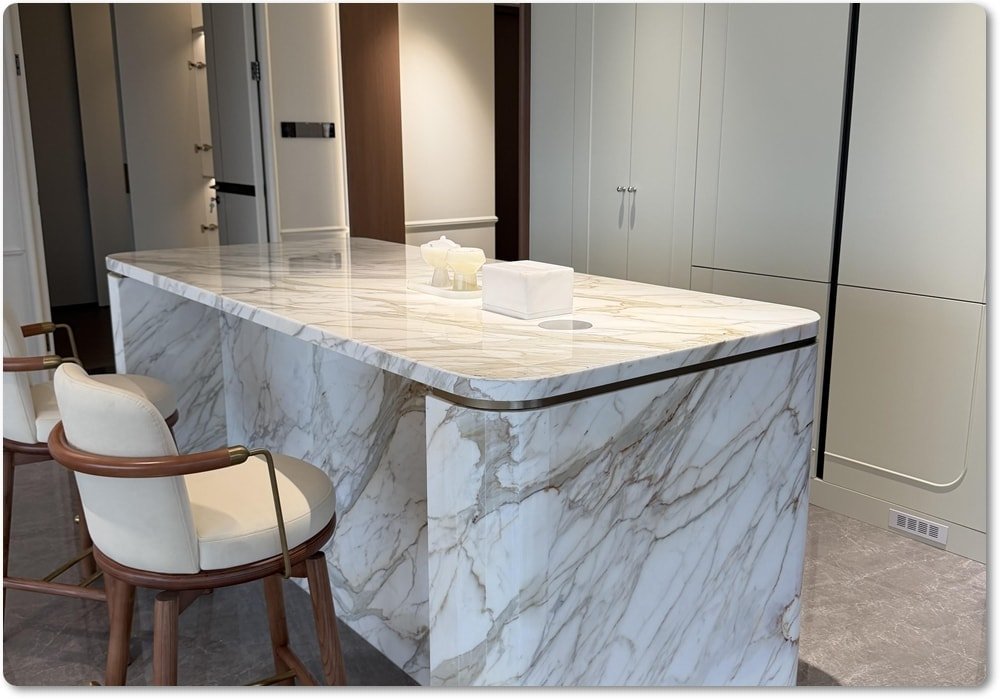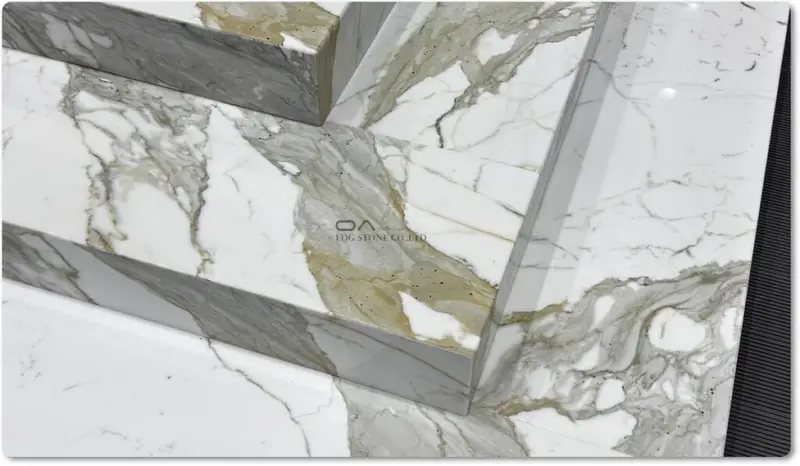
Quick Summary
Semantic Closure: What This Guide Covers?
What: A practical guide to the main kitchen countertop stone types, including natural stone and man-made stone options.
Why: Buyers, designers, builders, and wholesalers need a material choice that balances performance, appearance, cost, fabrication risk, and compliance.
How: We compare granite, marble, quartzite, soapstone, and quartz by durability, maintenance, value, and project fit.
Option: The “best” material changes by budget, design style, usage intensity, and whether the buyer wants natural variation or engineered consistency.
Consideration: Silica exposure, dust control, and engineered-stone regulation now affect product selection, shop procedures, and sourcing strategy in many markets.
The best stone countertop is not the same for every kitchen. In practice, the right answer depends on how much cooking happens, whether the kitchen is residential or commercial, how much maintenance the owner will tolerate, and whether the project values natural variation or color consistency. Granite, marble, quartzite, soapstone, and quartz each solve a different design and performance problem. Granite is an intrusive igneous rock used as a building material for thousands of years; marble and quartzite are metamorphic rocks; soapstone is talc-rich and softer; quartz countertops are engineered stone; and engineered stone fabrication is now one of the most closely watched silica-safety categories in the industry. OSHA requires engineering and work-practice controls for respirable crystalline silica, while Australia has already banned the manufacture, supply, processing, and installation of engineered stone benchtops, panels, and slabs.
The market context also matters. In the U.S., the USGS reported that the dimension stone market slowed in 2024, with domestic sales estimated to have decreased by 10% from 2023, while import values continued to fall. USGS also noted that the industry continued to address safety and environmental restrictions, especially those involving crystalline silica exposure. That means the best countertop material today is not only a design decision; it is also a sourcing, fabrication, and compliance decision.
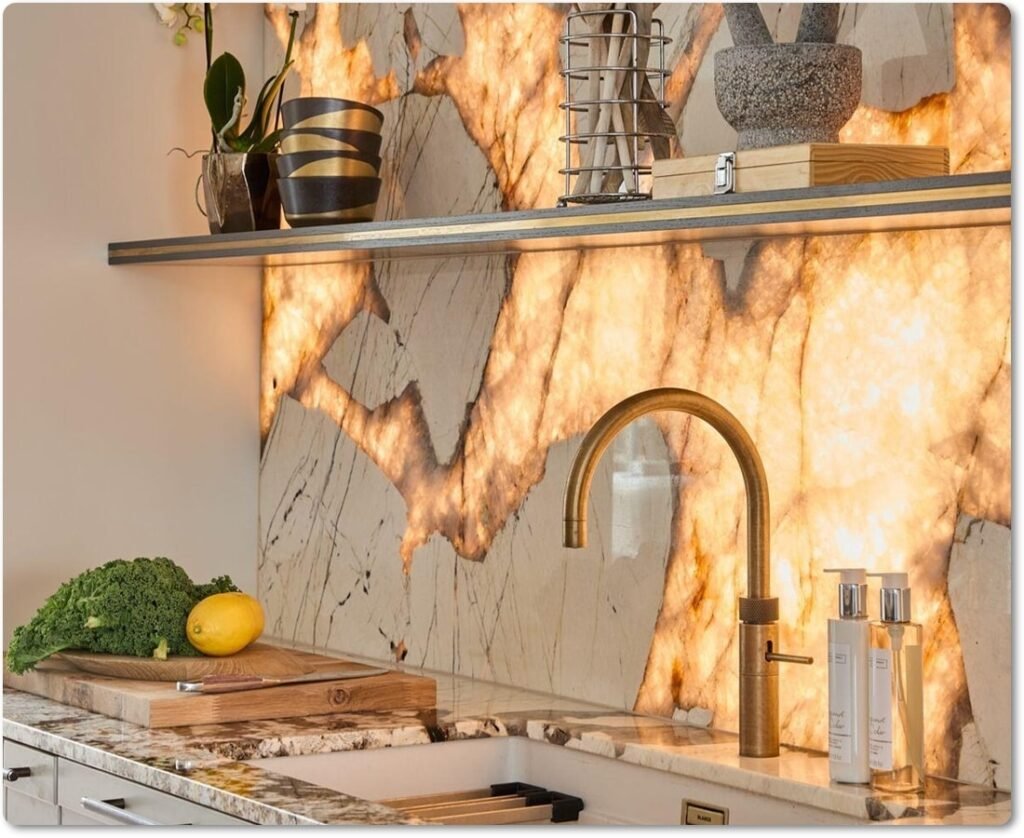
Natural Stone vs Man-Made Stone: The Fast Answer
Natural stone countertops include granite, marble, quartzite, and soapstone. Quartz countertops usually refer to engineered stone made from crushed quartz and resins, not a naturally quarried slab in the same way as granite or marble is. USGS defines granite as an igneous rock, marble and quartzite as metamorphic rocks, and soapstone as a talc-rich metamorphic rock. OSHA also notes that artificial stone is a source of crystalline silica exposure when it is cut, sawed, ground, drilled, or crushed.
For most kitchen projects, the natural stone choice comes down to beauty and individuality, while the man-made choice comes down to uniformity and maintenance predictability. Natural stone usually gives a more organic, one-of-a-kind look. Quartz usually gives the most consistent color and pattern across a project, which is valuable in kitchens, islands, and multi-unit developments. That is why buyers searching for “best countertop material” should first decide whether they want visual uniqueness or production consistency.
What do buyers usually mean by “best”?
When a homeowner says “best,” they may mean easiest to clean. When a builder says “best,” they may mean fastest to fabricate. When a wholesaler says “best,” they may mean stable supply, fewer claims, and easier re-ordering. The right countertop material changes with the buyer’s objective, which is why a single ranking never tells the whole story.
What manufacturers and wholesalers should notice?
For suppliers such as EDG Stone and similar countertop manufacturers, the real opportunity is not to push one material for every project. It is to position each material by use case: granite for broad value, marble for premium aesthetics, quartzite for high-end natural appeal, soapstone for design-driven projects, and quartz for consistency-focused applications.
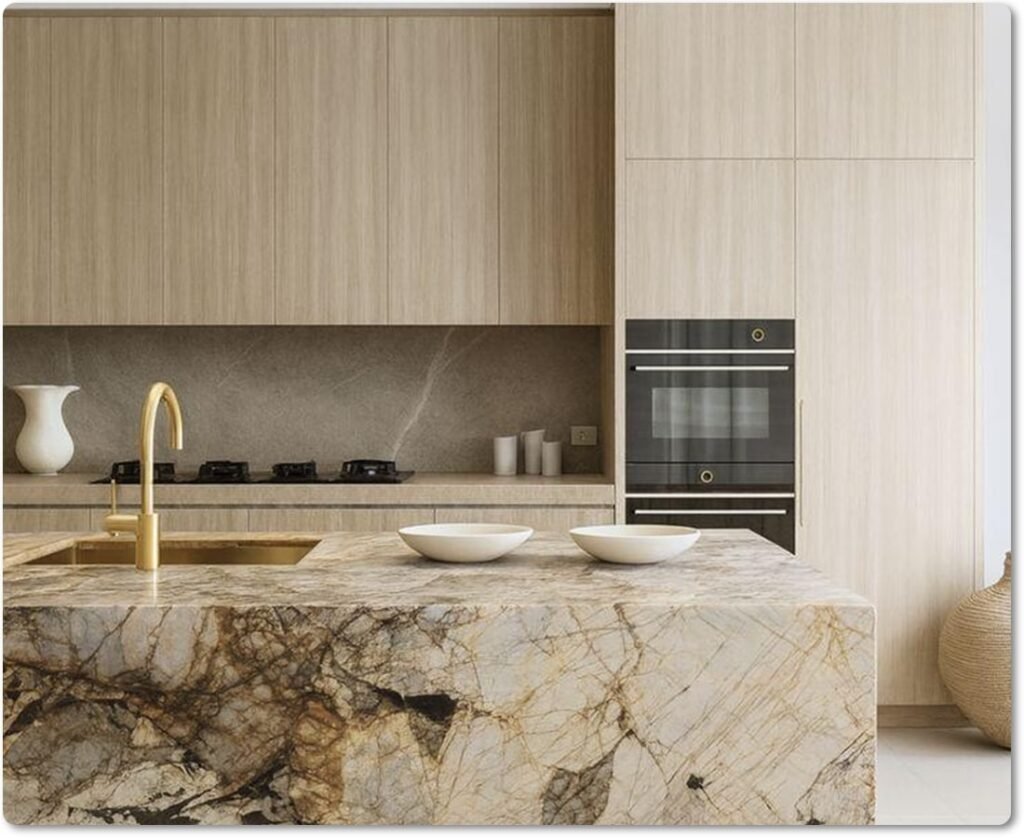
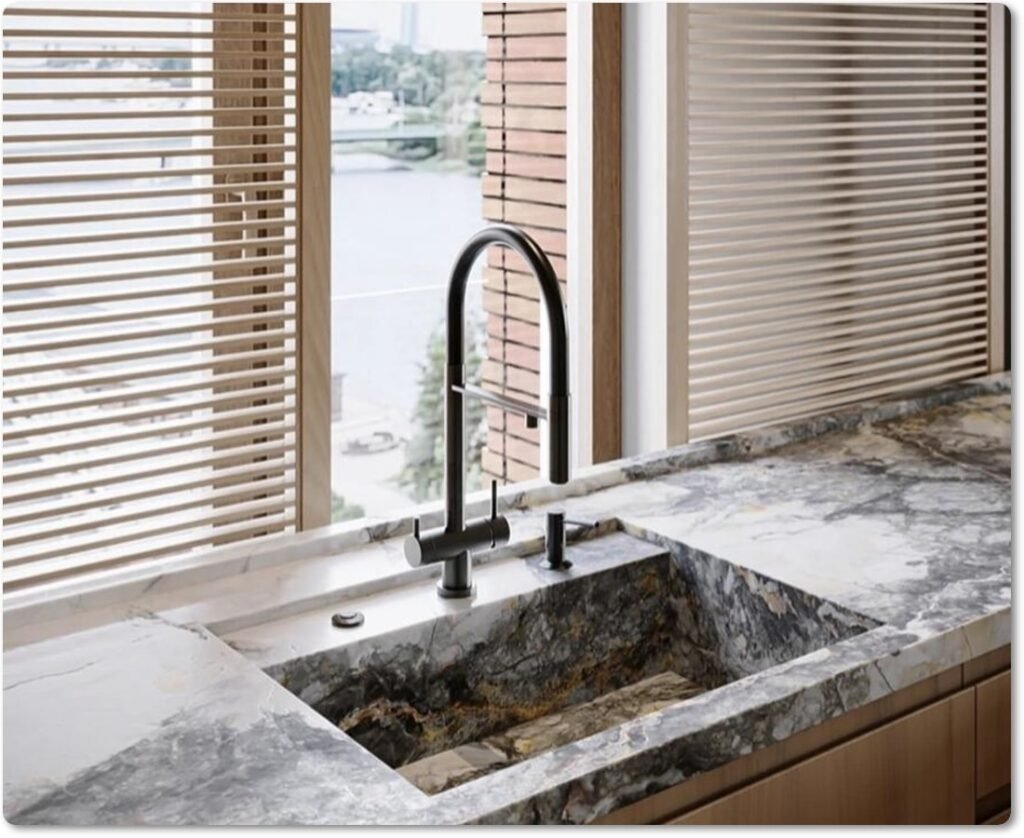
Granite Countertops: The Durable Workhorse
Granite is one of the most established stone countertop materials in the market. USGS describes granite as an igneous rock used for building materials for thousands of years, and it remains one of the most recognizable natural stones in kitchens and commercial interiors. From a sourcing standpoint, granite often makes sense because buyers understand it, fabricators know how to process it, and designers can specify it with confidence.
Granite is a strong fit for kitchens that need a balance of durability, visual variation, and broad availability. It is especially useful in projects where the countertop has to look premium without becoming overly delicate. Because granite is a natural stone, every slab has its own grain structure and movement. That visual variation is part of the appeal, especially in kitchens where the countertop should feel grounded, authentic, and timeless.
Why does granite still rank high in value searches?
Granite is often one of the first materials buyers compare when searching for the best kitchen countertops for the money. It usually sits in a comfortable middle ground: more distinctive than many entry-level surfaces, but easier to specify than highly delicate luxury stones. In procurement terms, the material also benefits from a mature supply chain and widespread recognition, which makes it a practical choice for both retail and wholesale projects. USGS data shows dimension stone imports continue to be dominated by established suppliers such as Brazil, China, Italy, and Turkey, which reflects how global the category has become.
Best uses for granite
Granite is a strong candidate for family kitchens, rental properties, model homes, hospitality projects, and any space that wants a natural-stone look without leaning into extreme maintenance concerns. It is also a good option for buyers who want a safe middle ground between luxury and practicality.
Marble Countertops: Luxury First, Maintenance Second
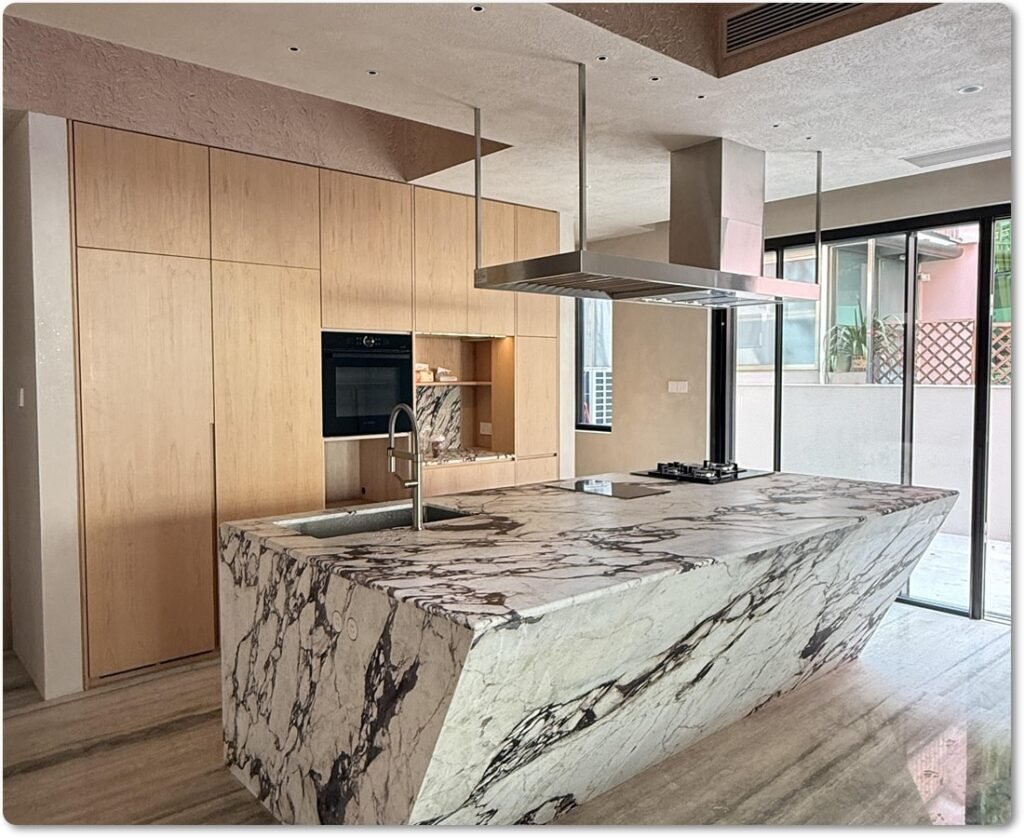
Marble is a metamorphic rock consisting predominantly of recrystallized calcite and/or dolomite. That geological reality matters because it explains why marble has long been associated with classical architecture, sculpture, and premium interior design. Marble countertops still carry that same visual prestige today: soft veining, luminous surfaces, and a refined aesthetic that instantly elevates a kitchen.
The reason marble is rarely the “best” countertop in a purely practical sense is simple: it is usually selected for appearance rather than carefree performance. In a kitchen, that is not a flaw; it is a design tradeoff. Buyers who choose marble are usually prioritizing elegance, visual depth, and a high-end architectural feel. For a chef’s kitchen, a showcase island, a luxury residence, or a hospitality feature wall, that can be exactly the right choice.
Where does marble perform best?
Marble works best when the owner is comfortable with more attentive care and occasional patina. It suits low-impact luxury kitchens, prep zones with careful habits, pastry work areas, and display-forward projects where beauty is the main objective. In SEO terms, marble countertops remain a high-intent keyword because they signal premium design, upscale renovation, and luxury procurement.
When not to lead with marble?
Marble is not usually the best recommendation for buyers who want the lowest-maintenance surface or the best kitchen countertops for the money. In busy family kitchens, that role usually belongs to granite or quartz, depending on whether the buyer wants a natural or engineered surface.
Quartzite Countertops: The Premium Natural Alternative
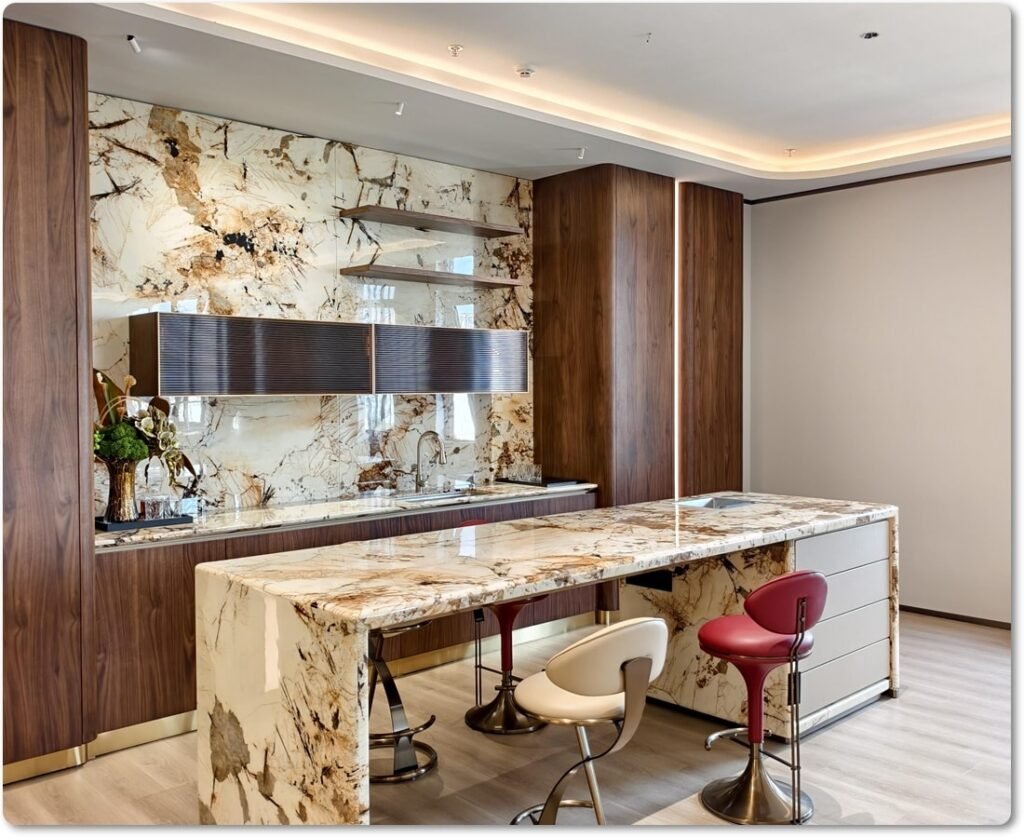
Quartzite is a metamorphic rock consisting mainly of quartz and formed by the recrystallization of sandstone or chert. That makes it a natural stone with a strong, premium profile and a more rugged story than marble. In kitchen countertop conversations, quartzite often appears when buyers want a dramatic natural look that feels more unique than standard granite and more durable-feeling than marble.
Quartzite has become a favorite in high-end projects because it sits in a sweet spot: natural, elegant, and often visually striking. It is especially useful for designers who want stone movement and luxury character without repeating the exact look of engineered quartz. For buyers searching for “quartzite countertops” or “quartzite countertops manufacturer,” the message is usually the same: they want a premium slab that still feels like genuine earth-born material.
Why is quartzite often placed above granite?
Quartzite generally appeals to the buyer who wants a more upscale appearance than granite and more authenticity than a manufactured product. In practical sourcing, it can be a strong option for feature islands, high-end residential kitchens, and projects where the countertop is a centerpiece rather than a background element. The tradeoff is that quartzite tends to live in a more premium price band, especially when the color is rare or the slab is highly consistent.
Best use cases for quartzite
Quartzite is a strong fit for luxury kitchens, statement islands, boutique hospitality, and designer-led renovations. It is one of the best countertop materials when the buyer wants “natural” to look expensive, not rustic.
Soapstone Countertops: Soft Look, Strong Personality
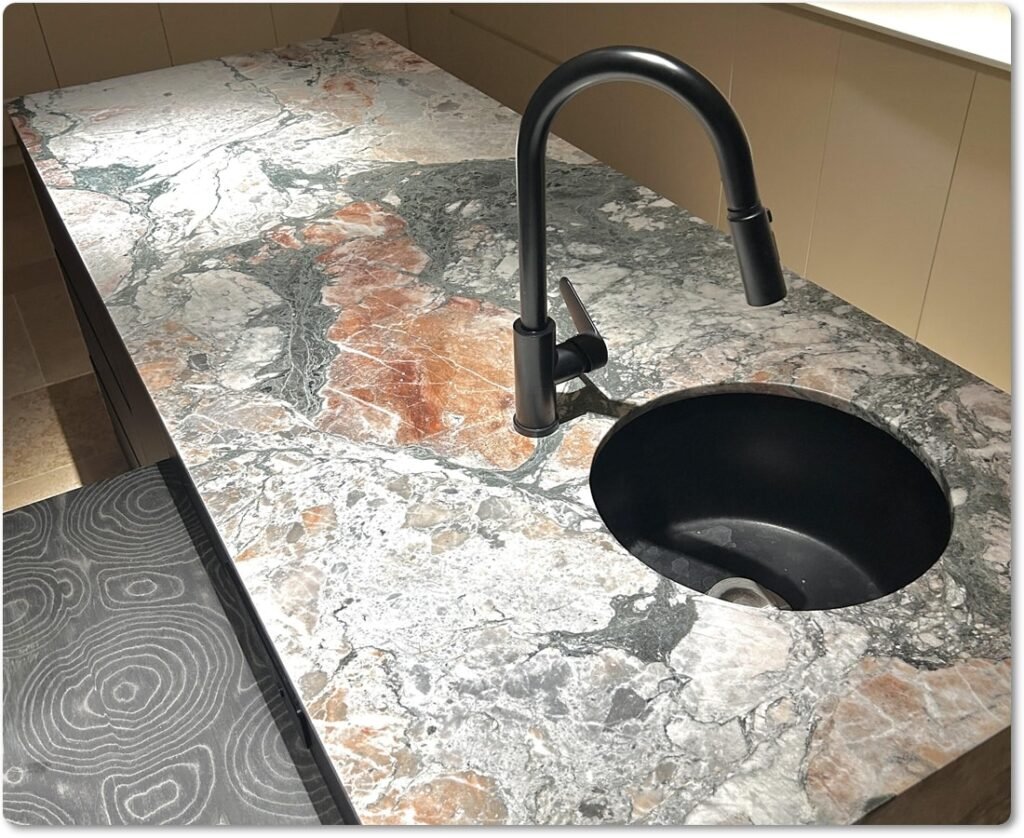
Soapstone is a metamorphic rock rich in talc. USGS notes that it is not as strong as other rocks and is relatively easy to cut and shape with tools. That softness is exactly what gives soapstone its unique identity: a quiet, matte, tactile surface with a lived-in, architectural feel.
Soapstone countertops appeal to buyers who want a finish that feels different from the polished luxury of marble or the glossy uniformity of quartz. It often works well in kitchens that lean toward traditional, farmhouse, European, industrial, or heritage-inspired design. Because soapstone develops character over time, many homeowners appreciate the way it evolves rather than staying visually static.
Why is soapstone a niche favorite?
Soapstone is not the most common search result in countertop marketing, but it is one of the most distinctive. It can be a smart choice for buyers who value heat tolerance, a softer visual tone, and a naturally aged appearance. It is also a strong design choice in kitchen environments that want a less reflective, more understated material language.
Where soapstone wins
Soapstone is often best for chefs, design purists, heritage homes, and kitchens that need a natural stone with personality. It is less about flashy resale language and more about tactile character and timeless mood.
Quartz Countertops: The Leading Man-Made Option
Quartz countertops are usually engineered stone products made from quartz grains bound in a polymer matrix. NIOSH notes that engineered quartz stone can contain about 90% quartz grains by mass, and another NIOSH bulletin states that engineered stone products can contain more than 90% crystalline silica. OSHA also identifies artificial stone as a source of crystalline silica exposure when it is cut, sawed, ground, drilled, or crushed.
That high-silica reality is one of the biggest reasons quartz has become such a regulated and closely managed category. For the end user, quartz is appealing because it is consistent, widely available, and usually easy to live with. For the fabricator, it requires rigorous dust control and compliance discipline. In other words, quartz can be the best countertop material for many kitchens, but it is also one of the most important materials to handle correctly in the shop.
Why is quartz often called the best countertop material?
Quartz tends to win when the buyer wants predictable color, repeatable pattern, and low day-to-day maintenance. That is why “quartz best countertop material” is such a common search phrase. For a busy household, a multifamily project, or a developer who needs visual consistency across multiple units, quartz is often the strongest answer. It is also the obvious choice when a project values a clean, uniform, design-controlled look.
Where does quartz need caution?
Quartz is not a magic solution. The material’s high silica content means fabrication and installation must follow modern dust-control practices. OSHA requires engineering and work-practice controls to reduce exposure to respirable crystalline silica to or below the permissible exposure limit, a written exposure control plan, annual review of that plan, and limits on dry sweeping and uncontrolled compressed air cleaning.
Best use cases for quartz
Quartz is often best for busy kitchens, rental projects, family homes, and commercial interiors where consistency and ease of maintenance matter more than unique natural movement. It is the most obvious answer for buyers who want the look of stone with less variation from slab to slab.
How to Decide on the Best Kitchen Countertops for the Money?
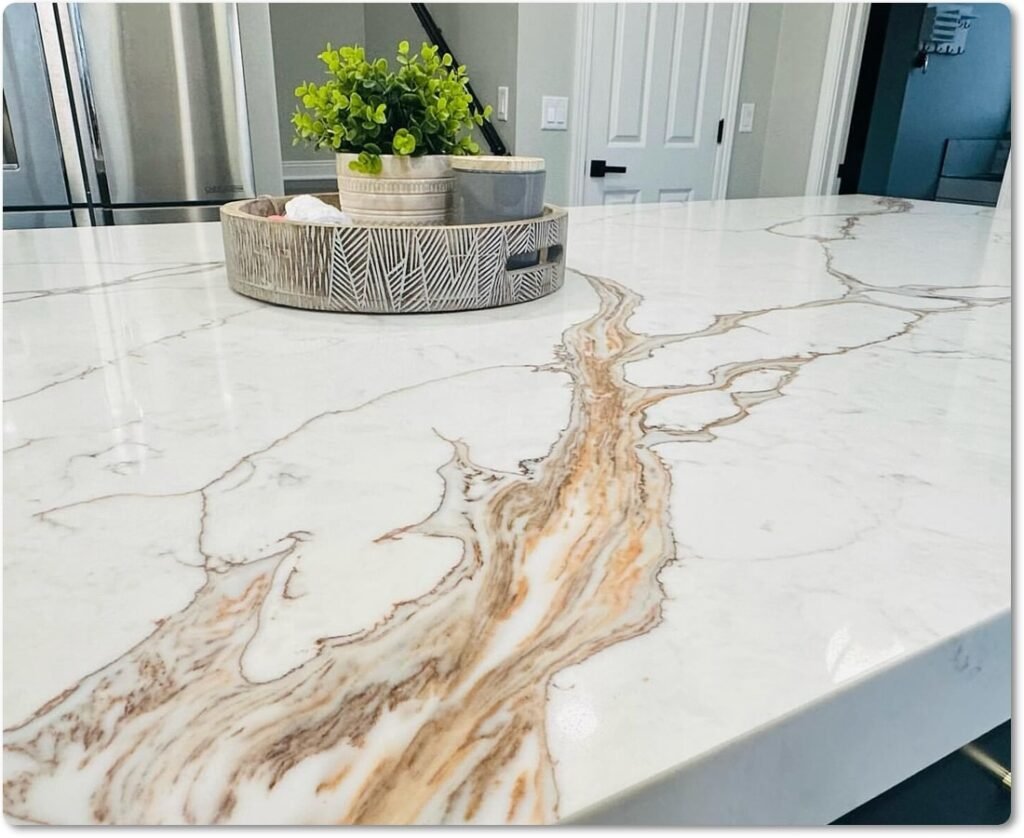
There is no universal cheapest or best stone countertop material. The real cost of a countertop depends on slab grade, slab origin, thickness, cutouts, edge profile, freight, waste rate, fabrication labor, and installation complexity. USGS notes that dimension stone resources are generally sufficient worldwide, but local shortages can occur when a specific kind of stone is unavailable or unsuitable for dimension purposes. That is why two projects using the same stone name can still end up with very different landed costs.
For most buyers, “best kitchen countertops for the money” means one of three things: lowest upfront cost, lowest lifetime maintenance cost, or best resale impression per dollar. Those are not the same metric. Granite often performs well as a broad-value natural stone; quartz often performs well when buyers want consistency and convenience; quartzite often performs well when the buyer wants luxury natural impact; and marble performs well when design value matters more than practical simplicity.
How to think about a budget without oversimplifying?
A smart way to compare materials is to ask four questions. First, how much visual uniqueness do you want? Second, how much cleaning and care will the owner tolerate? Third, how important is supply consistency across multiple slabs or units? Fourth, how much fabrication risk is acceptable in the shop? Those questions usually point to the right answer faster than any generic “best” list.
Where does the least expensive stone countertop material fit?
The phrase “least expensive stone countertop material” is highly project-dependent. A locally available granite may be more affordable than a rare quartzite, while a simple quartz spec may beat a premium imported natural stone on delivered cost. In wholesale and factory-direct buying, the cheapest option is often not the stone with the lowest raw-material price; it is the one with the most efficient sourcing, easiest fabrication, and lowest logistics friction. That is why search terms like “granite countertops wholesale,” “quartz countertops factory,” and “natural stone countertops supplier” signal real buying intent.
Value ranking by project goal
If the goal is maximum value and broad acceptance, granite is usually a strong starting point. If the goal is low-maintenance consistency, quartz usually wins. If the goal is premium natural luxury, quartzite or marble may justify the spend. If the goal is a distinctive architectural surface, soapstone may stand out.
Why Regulations Are Reshaping the Countertop Market?
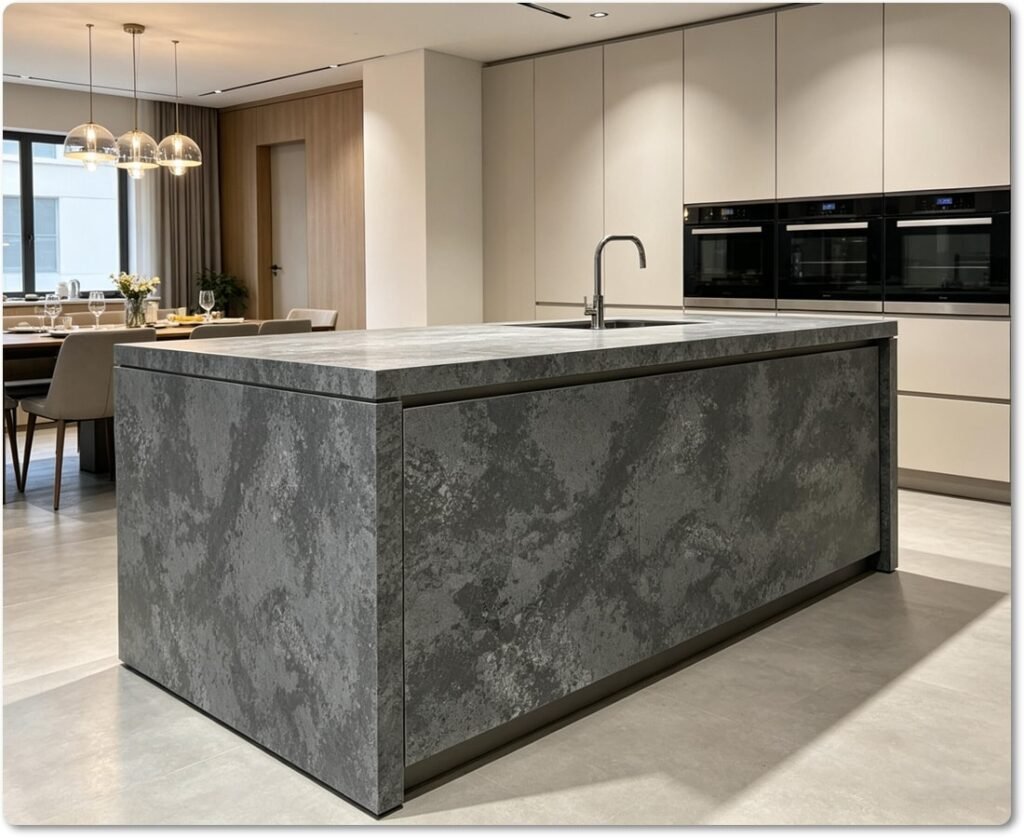
Countertop materials are now shaped by regulation as much as by aesthetics. OSHA says crystalline silica is found in sand, stone, concrete, mortar, and artificial stone, and that respirable dust is created when stone is cut, sawn, ground, drilled, or crushed. OSHA’s current standard requires engineering and work-practice controls, written exposure plans, housekeeping limits, respirator use where needed, and medical surveillance in relevant cases.
NIOSH has been especially clear about the risk profile of engineered stone. Its 2026 bulletin states that countertop fabricators working with engineered stone are at risk of developing silicosis because of the high respirable crystalline silica content, typically over 90%. NIOSH also notes that silicosis is irreversible and that engineered stone is known by other names such as artificial stone, manufactured stone, or quartz.
Australia’s rule is a major global signal. Safe Work Australia states that WHS ministers agreed in December 2023 to ban the use, supply, and manufacture of engineered stone from 1 July 2024, and that engineered stone benchtops, panels, and slabs became prohibited imports from 1 January 2025. Safe Work Australia also distinguishes engineered stone from sintered stone and porcelain products that do not contain resin. That distinction is already influencing how suppliers, fabricators, and buyers talk about “man-made stone countertops.”
USGS likewise reported that the dimension stone industry continued to address safety and environmental restrictions in 2024, especially those concerning crystalline silica exposure, and noted a new MSHA rule aimed at reducing miner exposure to respirable crystalline silica. The practical industry direction is obvious: more wet cutting, better extraction, stronger training, better written procedures, and closer attention to product composition. This is an inference from the cited regulations and safety reports, but it is a strong one.
What does this mean for manufacturers and factories?
For factories and wholesalers, the market is moving toward compliance-ready production. That means cleaner fabrication bays, improved water suppression, HEPA-level dust control where appropriate, safer housekeeping, and better documentation. It also means that marketing claims now need to be paired with operational proof: material data, production process, inspection standards, and shipping control.
What does this mean for buyers?
For buyers, compliance is no longer a hidden backend issue. A countertop supplier that understands silica safety and can explain fabrication methods clearly is often a better long-term partner than a supplier that only talks about price. This matters especially for builders, distributors, and architects managing risk across multiple projects.
Buying Guide for Homeowners, Designers, Builders, and Wholesalers
The best countertop choice depends on who is buying it. A homeowner shopping for a single kitchen wants different information than a distributor sourcing full containers. A designer wants visual control. A builder wants schedule reliability. A wholesaler wants repeatability, export readiness, and manageable claims risk.
For homeowners
If the kitchen is heavily used, quartz or granite will usually be the easiest first comparison. If the kitchen is a design statement, quartzite or marble may be worth the upgrade. If the kitchen wants a distinctive matte, old-world character, soapstone deserves a look.
For designers
Designers should think in terms of tone, pattern, edge profile, and maintenance expectations. Quartz gives the cleanest visual control. Granite gives natural movement with broad familiarity. Marble gives classic luxury. Quartzite gives premium depth. Soapstone gives a softer, more architectural mood.
For builders and developers
Builders usually care about consistency, installation speed, and claim reduction. Quartz often fits that need because it can help standardize finishes across multiple units. Granite is also strong when a project wants value and natural appeal without pushing maintenance risk too far.
For wholesalers and importers
Wholesalers should think beyond the slab image. Product consistency, lead times, packaging standards, breakage rates, and fabrication friendliness all matter. A phrase like “quartz countertops manufacturer factory direct” is not just a keyword; it is a business model. The same is true for “granite countertops wholesale” and “natural stone countertops supplier.” Buyers are not only comparing materials; they are comparing supply chain reliability.
How does EDG Stone’s style of sourcing fit into the market?
A supplier such as EDG Stone can position itself around the full decision stack: natural stone variety, man-made stone consistency, custom fabrication, export support, and project-level guidance. That kind of positioning is especially valuable when the goal is to rank for commercial-intent searches like “best kitchen countertops for the money wholesale,” “quartz countertops factory,” or “granite countertops manufacturer.”
FAQ: Most Searched Questions About Kitchen Countertop Stone Types
1. What is the best stone material for kitchen countertops?
There is no single best material for every kitchen. Quartz is often the best choice for consistency and low-maintenance use. Granite is often the best balance of value and natural appeal. Quartzite is often the best premium natural alternative. Marble is best when luxury appearance matters most. Soapstone is best when the design calls for a softer, more tactile look.
2. Are quartz countertops natural stone?
No. Quartz countertops are generally engineered stone products made from quartz grains and binding resins, not quarried slabs in the same way as granite, marble, or quartzite. NIOSH and OSHA both describe engineered stone as a high-silica material category that requires careful dust control during fabrication.
3. Which countertop material is the easiest to maintain?
Quartz is often the easiest for day-to-day maintenance because it is made for consistency and convenience. That said, “easy to maintain” should be matched with fabrication and safety awareness, because quartz fabrication can release respirable crystalline silica dust.
4. What is the least expensive stone countertop material?
There is no universal answer. The lowest-cost option depends on local availability, slab grade, freight, cutting waste, and fabrication complexity. In many projects, an entry-level granite or a competitively sourced quartz may be more affordable than a rare quartzite or a premium marble.
5. Is marble a good choice for busy kitchens?
Marble can work in busy kitchens, but it is usually chosen for beauty rather than low-stress maintenance. If the kitchen sees heavy use and the owner wants less worry, granite or quartz is often the more practical first choice. Marble shines most when the design priority is luxury and visual elegance.
Semantic Closure Content Block
What this page proves: The best stone materials for kitchen countertops are defined by use case, not by a single universal ranking. Granite, marble, quartzite, soapstone, and quartz each offer different tradeoffs in durability, maintenance, visual style, and fabrication risk.
Why the industry is changing: Silica exposure has become a central regulatory and operational issue. OSHA requires exposure control plans and engineering controls; NIOSH warns that engineered stone often contains very high crystalline silica; Australia has already banned engineered stone benchtops, panels, and slabs.
How to choose wisely: Match the stone to the kitchen’s purpose. Use granite for broad value, marble for classic luxury, quartzite for premium natural character, soapstone for a matte architectural feel, and quartz for consistency and low-maintenance convenience.
Which option fits which buyer: Homeowners usually prioritize lifestyle and look; designers prioritize tone and pattern; builders prioritize schedule and claim control; wholesalers prioritize stable sourcing, packaging, and repeatability.
Consideration for 2026 and beyond: Countertop buyers now care about more than color. They also care about dust control, compliance, supply chain stability, and whether a manufacturer can support factory-direct or wholesale purchasing with clear documentation.