When buyers search for marble slabs near me or compare marble slabs for sale, they are usually looking for more than a pretty surface. They want confidence. They want to know where the stone came from, how it was processed, whether the color will stay consistent, and how safely it will arrive on site.
That is why the factory matters.
A marble slab is not simply a cut piece of stone. It is the result of a controlled industrial process that begins at the quarry, continues through block selection and slab cutting, and ends with polishing, grading, packing, and export documentation. Each step affects the final appearance, durability, pricing, and project success.
At EDG Stone, the factory workflow is designed to support contractors, fabricators, designers, distributors, and project buyers who need reliable supply and export-ready quality. This whitepaper explains the full journey from quarry blocks to finished marble slabs, and why factory-direct sourcing is often the smartest choice for commercial and residential projects.
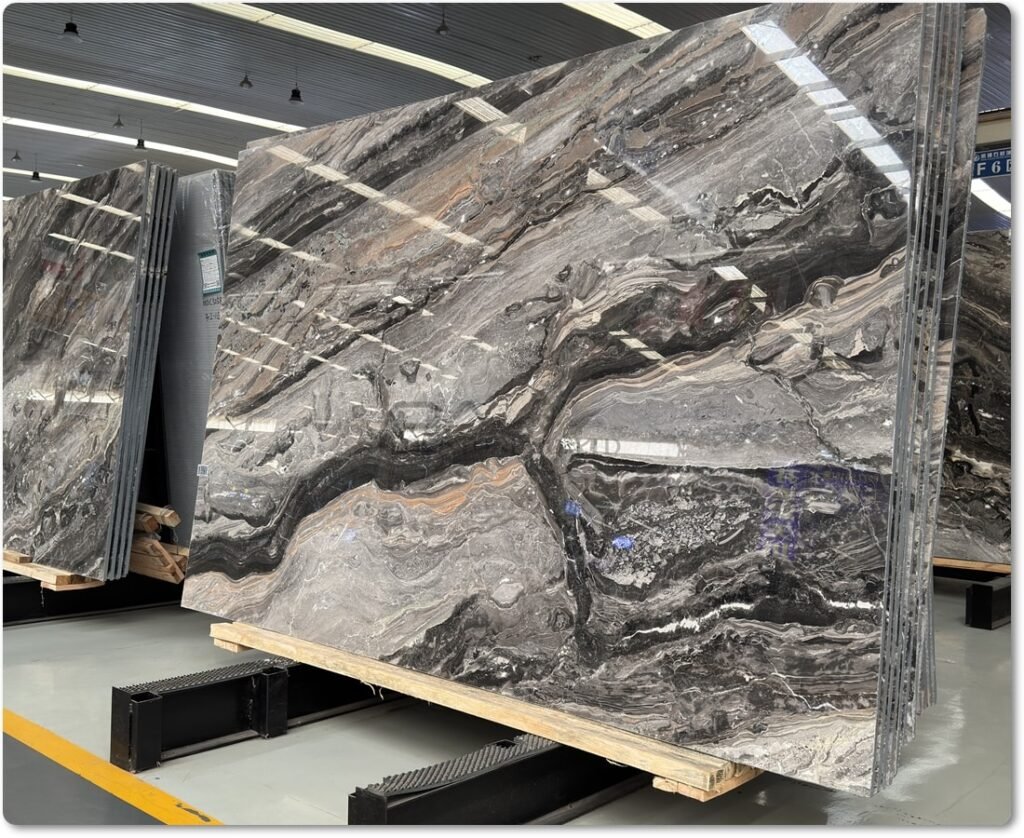
The Global Marble Supply Chain
Marble slabs travel through a global chain long before they reach a showroom, warehouse, or job site. The process usually starts with quarrying, where large marble blocks are extracted from natural stone deposits. Those blocks are then moved to a processing factory, where they are selected, cut, reinforced if needed, polished, inspected, packed, and shipped.
This supply chain matters because every stage influences the slab you eventually receive. A block with uneven veining may produce stunning slabs for bookmatching, but it may also create more waste. A factory that uses outdated cutting equipment may lose precision. A weak packing method can cause breakage during transport. Even the paperwork can affect delivery timing if export documents are incomplete.
For buyers, understanding this chain helps answer three practical questions:
First, is the marble available in the quantity and size required for the project?
Second, will the slabs match visually across multiple pieces?
Third, can the supplier deliver on time with the correct documentation?
A factory that controls the process from block selection to export loading is better positioned to answer yes to all three.

Raw Block Selection Standards
Everything begins with the block.
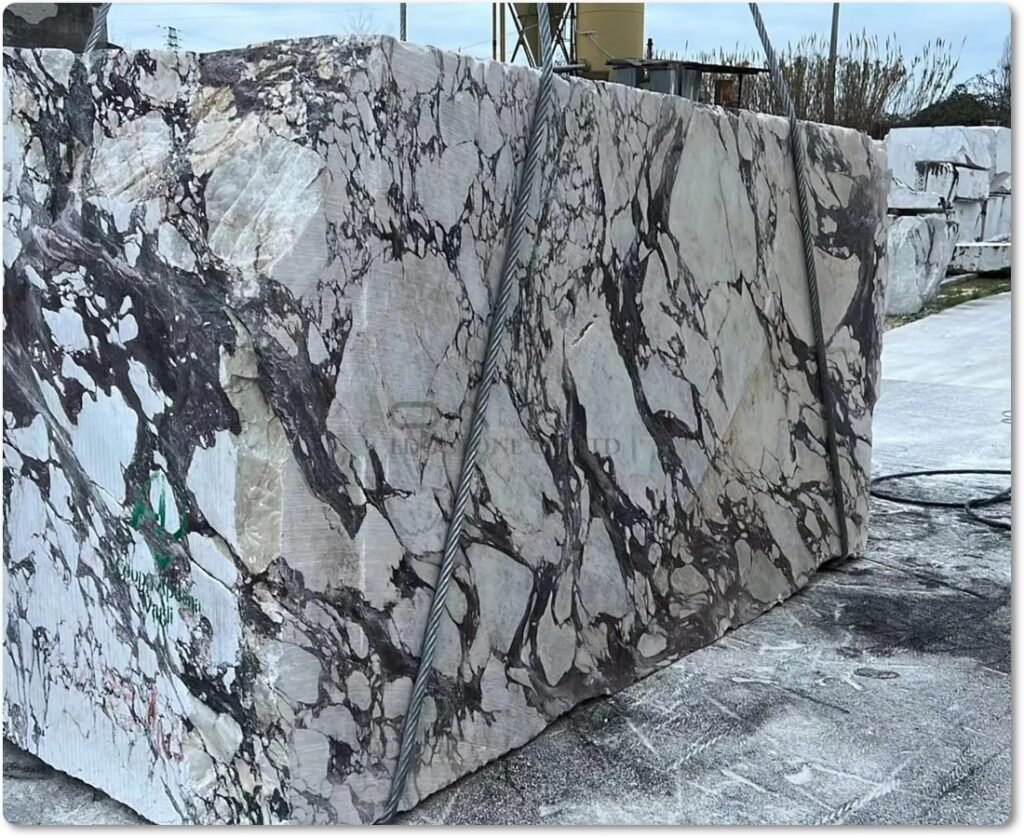
A marble block may look strong and attractive from the outside, but the real quality is revealed only after opening and slicing. This is why raw block selection is one of the most important steps in slab production. Experienced factory teams evaluate the block before cutting to reduce risk and maximize slab value.
Key selection criteria include:
The first is color consistency. A block with a stable background tone is more likely to yield slabs suitable for large-format interior projects. Inconsistent color may still be valuable, but it must be sorted carefully.
The second is vein direction and pattern density. Some projects need quiet elegance with soft movement, while others need dramatic veining. A strong block selection process helps match the material to the intended design use.
The third is structural integrity. Cracks, mineral lines, clay seams, and hidden weakness can reduce usable yield. Factory inspection helps identify these issues before processing.
The fourth is size and recoverable output. A large block may still produce poor results if the internal structure is uneven. A smaller but more uniform block can create better slabs and less waste.
This stage also affects commercial pricing. High-yield blocks with stable structure often create more usable slabs, which improves efficiency for both factory and buyer.
Slab Cutting Technologies
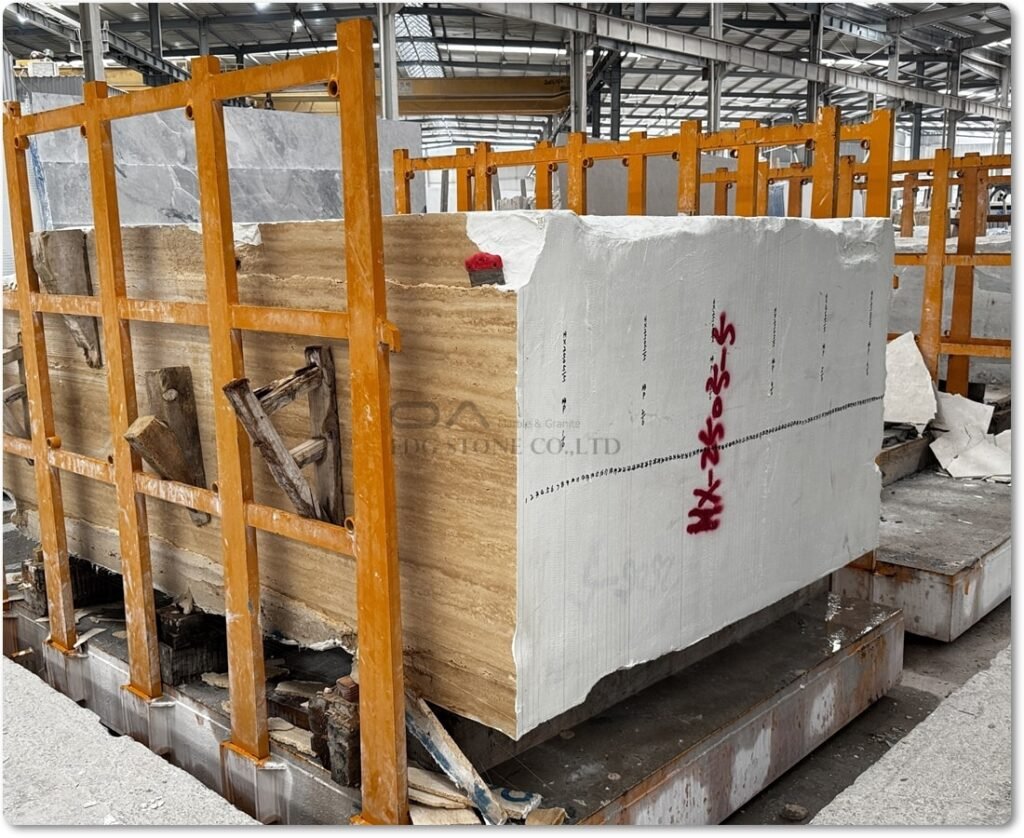
Once a block passes inspection, it enters the cutting stage. This is where modern machinery transforms raw stone into slabs of controlled thickness and size.
Different factories use different cutting systems, but the goal is always the same: maximize yield, protect stone integrity, and create slabs that are precise enough for fabrication and installation.
Common cutting technologies include:
Gang saw cutting, which is used for producing multiple slabs from a block in a stable, large-scale production environment.
Multi-wire cutting, which offers high efficiency and can improve material recovery while reducing waste.
Bridge saw or gang line trimming, which is used to refine dimensions and prepare slabs for finishing and grading.
Precision matters here. A slab that is too thin may be vulnerable during handling and installation. A slab that is too thick may create downstream fabrication issues or add unnecessary cost. Consistent thickness is especially important for projects involving kitchens, vanities, wall cladding, and commercial interiors.
Cutting also influences the visual story of the stone. The direction in which the block is opened can dramatically change the appearance of veining, movement, and color flow. For designers and contractors, this is one reason why factory communication is so important. The best results come from matching the slab cut plan to the project’s visual goals.
Resin & Reinforcement Systems
Not every marble slab emerges from the saw in a final-ready condition. Many slabs benefit from reinforcement to improve handling, surface stability, and fabrication performance.
This is where resin treatment and mesh reinforcement may be applied.
Resin systems are commonly used to fill small natural fissures, pinholes, or surface voids. When applied correctly, resin can improve the slab’s finish and reduce the risk of surface defects during processing. It also helps create a cleaner appearance for premium applications.
Mesh reinforcement is often added to the back of slabs that need extra structural support. This is especially useful for materials with natural veining, open grain, or micro-fractures. Reinforcement can help reduce breakage risk during transport and fabrication.
The key point is quality control. Resin and reinforcement should not be used to hide serious structural problems. Instead, they should be part of a transparent production process that strengthens an otherwise usable slab.
For buyers evaluating marble slabs for sale, this step often separates a commodity supplier from a true factory partner. A good supplier explains when reinforcement is necessary, what type is used, and how it affects performance.
Polishing Production Line
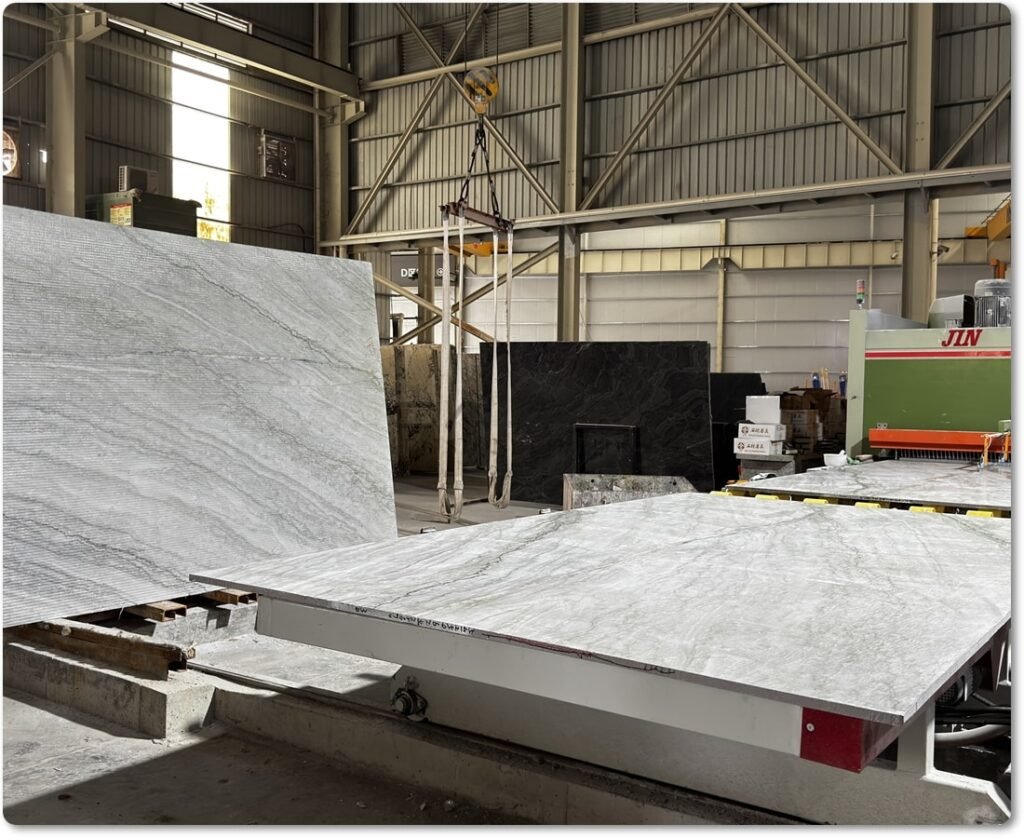
Polishing turns a cut slab into a finished surface that is ready for architectural and decorative use.
A professional polishing line does much more than create shine. It controls surface texture, color presentation, reflection quality, and final visual appeal. The finish can also influence maintenance and use.
A polished finish delivers bright reflection and highlights the movement of the stone. It is often preferred for luxury interiors, feature walls, hotel lobbies, and formal spaces. A honed finish offers a softer, more matte appearance that may work better in contemporary or understated designs. Other finishes, such as leathered or brushed surfaces, can change tactile feel and design character.
A strong production line typically follows a staged process:
Initial calibration ensures the slab surface is level.
Abrasive progression refines the stone in steps until the desired finish is achieved.
Final inspection checks for scratches, dull spots, and uneven polishing.
This process affects more than aesthetics. A well-polished slab is easier to present to clients, easier to fabricate consistently, and more likely to meet project expectations on arrival.
For contractors searching for marble slabs near me, the finish quality is often one of the fastest ways to judge whether a supplier is operating at a professional standard.
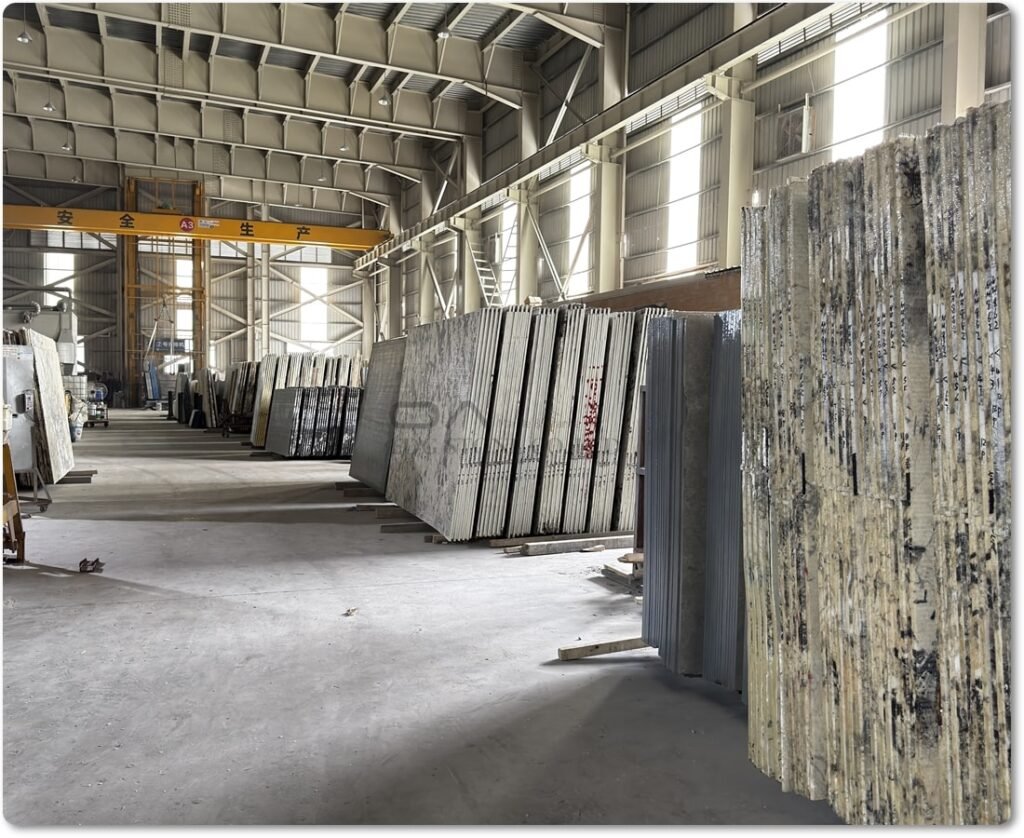
Color Consistency Inspection
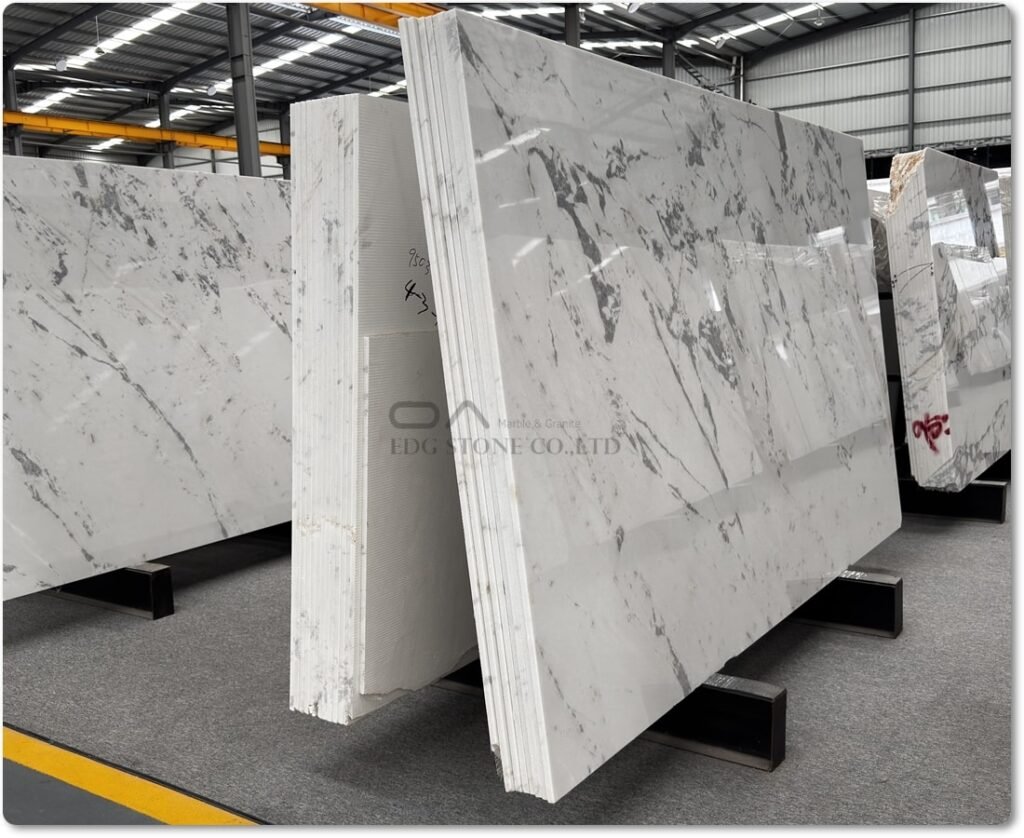
Color consistency is one of the most important factors in marble slab selection, especially for multi-slab projects.
A single slab may look beautiful on its own, but a kitchen island, hotel lobby, or wall cladding system often requires multiple slabs to work together as one visual composition. If the background tone varies too much, the entire installation may look fragmented.
That is why factories perform color consistency inspection after cutting and polishing.
Inspection teams usually evaluate:
Background color tone
Vein density and direction
Presence of cloudy areas, patches, or unexpected shifts
Surface uniformity across multiple slabs from the same block
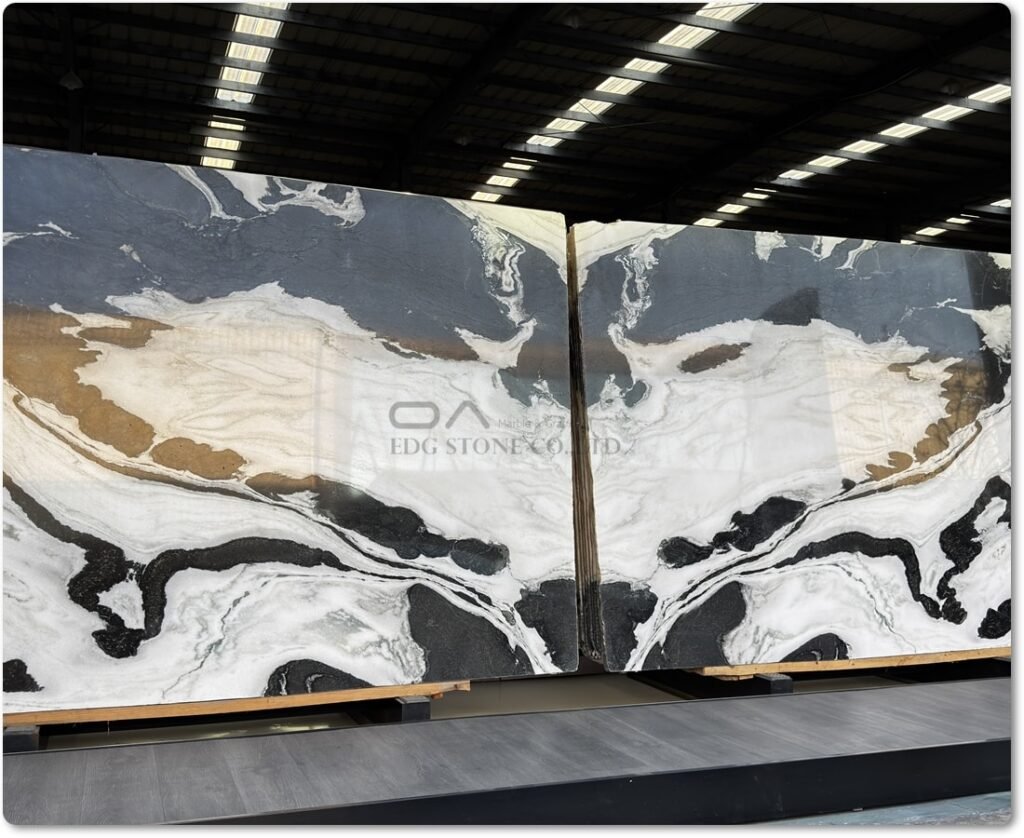
Suitability for bookmatching or sequential installation
This stage is especially important for export orders. Buyers outside the factory cannot inspect every slab in person, so the factory’s grading and documentation become their quality assurance system.
For project buyers, consistency means less risk. It improves design coordination, reduces site disputes, and makes installation smoother. It also helps when selecting slabs from inventory or arranging container loads for larger orders.
Container Loading Standards
A beautiful slab is only valuable if it arrives safely.
Marble is strong in compression but vulnerable to impact, vibration, and edge damage during transport. That is why container loading standards are a critical part of the factory process.
Professional loading usually includes:
Strong wooden crates or A-frames
Protective separation between slabs
Edge and corner cushioning
Clear labeling for slab sequence and batch identification
Secure fastening inside the container to reduce movement during transit
Moisture and dust protection was required
Good loading practices protect both the product and the buyer’s timeline. Damaged slabs can delay fabrication, increase replacement cost, and create scheduling problems on site. For export shipments, especially, safe loading is not optional. It is a core part of product quality.
This is one reason why many international buyers prefer factory-direct sourcing rather than purchasing through multiple intermediaries. The factory that produced the slabs also oversees the packing system and can align it with the material’s specific needs.

Export Documentation Explained
Export marble slabs are not only a physical product. They are also a documentation process.
Proper paperwork helps ensure smooth customs clearance, accurate trade classification, and better shipment visibility. When documents are incomplete or inconsistent, even a high-quality container can become delayed at port.
Below are the most common export documents buyers should understand.
Packing List
The packing list describes the contents of the shipment. It typically includes the number of slabs, dimensions, weight, package count, and packing method.
For buyers, the packing list is important because it helps verify that the shipment matches the order. It also supports customs processing and warehouse receiving.
Bill of Lading
The bill of lading is one of the most important shipping documents in international trade. It serves as proof of shipment, identifies the cargo, and records the carrier and destination details.
Buyers often rely on this document to track shipment status and confirm transport arrangements.
Certificate of Origin
The certificate of origin indicates where the marble was produced. This can matter for customs clearance, trade compliance, and in some cases, tariff treatment.
For many importers, origin documentation is essential for internal compliance and client reporting.
HS/HSN Codes
HS codes, sometimes referred to as HSN codes in certain markets, are the standardized trade classification numbers used for customs purposes.
Correct classification helps determine duties, taxes, and import procedures. A reliable supplier should know how to classify stone products accurately and provide the needed export data.
For buyers comparing suppliers, documentation quality is one of the clearest signs of professional export capability.
Why Contractors Prefer Factory-Direct Marble Slabs?
Contractors, fabricators, developers, and distributors often prefer factory-direct sourcing for a simple reason: control.
When you work directly with the factory, you reduce the number of unknowns between selection and delivery. That can mean better pricing, clearer communication, faster turnaround, and stronger product accountability.
Here are the main advantages.
First, a better pricing structure. Factory-direct sourcing removes layers of markup that often appear in trading-heavy supply chains.
Second, more consistent quality control. The same team that cuts, polishes, inspects, and packs the slabs can also explain the production details.
Third, custom selection options. Buyers can request specific block lots, finish types, thickness ranges, and loading methods.
Fourth, better project coordination. Factories can often support repeat orders, matching lots, and phased shipment planning for larger developments.
Fifth, export readiness. A factory with experience in international shipments understands the paperwork, packaging, and timeline discipline required for cross-border delivery.
For buyers searching online for marble slabs near me, the phrase often reflects urgency and convenience. But in practice, the best nearby source is not always the closest showroom. It is the supplier that can reliably deliver the right stone, in the right format, at the right time.
That is also why many buyers searching for marble slabs for sale eventually narrow their choice to a factory that can provide both inventory and technical support.
How to Evaluate a Marble Slab Supplier?
Not every supplier is a true manufacturer. Some are traders, some are resellers, and some are integrated factories. Buyers should know how to tell the difference.
A strong supplier should be able to explain:
Where the block comes from
How the slabs are cut and finished
What reinforcement, if any, is used
How slabs are graded and labeled
How export packing is handled
Which documents are included with each shipment
Whether matching lots are available for large projects
If the supplier cannot answer these questions clearly, the buyer may face hidden risks later.
A factory like EDG Stone adds value by making the production path visible. That transparency helps buyers choose the right material, plan installation more accurately, and manage project expectations with greater confidence.
Conclusion
From quarry block to export slab, marble passes through a process that is both technical and commercial. Every stage matters. Block selection shapes yield. Cutting technology shapes precision. Resin and reinforcement shape durability. Polishing shapes visual appeal. Inspection shapes consistency. Packing shapes shipping safety. Documentation shapes delivery success.
That is why factory-direct sourcing is so important for modern stone buyers.
Whether you are searching for marble slabs near me or comparing marble slabs for sale for a large project, the real question is not only where the stone is located. The real question is whether the supplier can deliver reliable quality from the first block cut to the final container load.
EDG Stone’s factory workflow is designed for that level of reliability. For contractors, designers, and importers, that means fewer surprises, stronger communication, and better results on site.
FAQ
1. What should buyers check before ordering marble slabs?
Buyers should review color consistency, slab thickness, finish type, reinforcement, available quantity, and export packing standards.
2. Why do marble slabs vary even when they come from the same quarry?
Natural stone is inherently variable. Differences in block structure, mineral composition, and vein pattern can create variation from one block to another.
3. Are factory-direct marble slabs better than dealer-supplied slabs?
Factory-direct supply often gives buyers better visibility into quality control, pricing, documentation, and shipment handling.
4. What is the best finish for marble slabs?
The best finish depends on the project. Polished works well for luxury and reflective interiors, while honed or leathered finishes suit softer or more contemporary designs.
5. Why is export documentation important for marble slabs?
Export documentation helps with customs clearance, shipment verification, and trade compliance. It also reduces the risk of delays and receiving errors.