— 2026 Granite & Quartz Countertops Procurement Guide 12 (White Paper)
Introduction
When people search “where to buy quartz countertops,” they’re not just asking for locations—they’re asking:
- Which channel fits my project type?
- Where can I get the best price vs. service balance?
- Who can actually deliver what I need (samples, slabs, fabrication, installation, or bulk supply)?
Today’s quartz supply chain spans retail stores, brand showrooms, dealer networks, and factory-direct sourcing. Each serves a different purpose:
- Retail (DIY / homeowners) → convenience + installation
- Brand / showroom → design + slab selection
- Dealer networks → local inventory + project support
- Factory direct → bulk + customization + export
Understanding this structure is the key to making the right decision.
1. Big-Box Retail: Convenience + Installation
Home Depot / Lowe’s
These are the most accessible entry points.
What they offer:
- Quartz brands (including Cambria, Caesarstone, etc.)
- Sample ordering (online or in-store)
- Measurement + fabrication + installation packages
Best for:
- Homeowners
- Kitchen/bath remodels
- Turnkey “design → install” projects
Key advantage:
One-stop solution — you don’t need to manage multiple vendors.
Limitation:
- Limited control over slab selection
- Less flexibility for custom specs or bulk orders
2. Retail + Design Hybrid: More Material Choices
Floor & Decor / IKEA / Menards
These channels offer a mix of retail convenience + broader material exploration.
Key differences:
- Floor & Decor
- Wide selection: quartz, granite, marble
- Prefab + custom options
- Ideal for comparing materials side-by-side
- IKEA
- Quartz integrated into kitchen systems
- Custom-only countertops
- Best for standardized kitchen projects
- Menards
- Budget-friendly options
- Basic quartz selection + samples
Best for:
- Design-conscious homeowners
- Budget-controlled renovations
- Mid-scale residential projects

3. Brand Showrooms & Authorized Networks
Cambria / Caesarstone / MSI
This is where quartz purchasing becomes project-grade.
What makes this channel different:
- Access to full slab viewing (not just samples)
- Dealer locator systems
- Authorized fabricators and installers
- Brand-controlled collections
Key insights:
- Cambria
- Premium positioning
- Strong showroom + dealer ecosystem
- Requires detailed project specs
- Caesarstone
- Encourages slab viewing before purchase
- Offers sample kits + locator tools
- MSI
- Works through the dealer network only
- Strong distribution + inventory system
Best for:
- Designers & architects
- High-end residential projects
- Projects requiring color consistency and slab control
Critical takeaway:
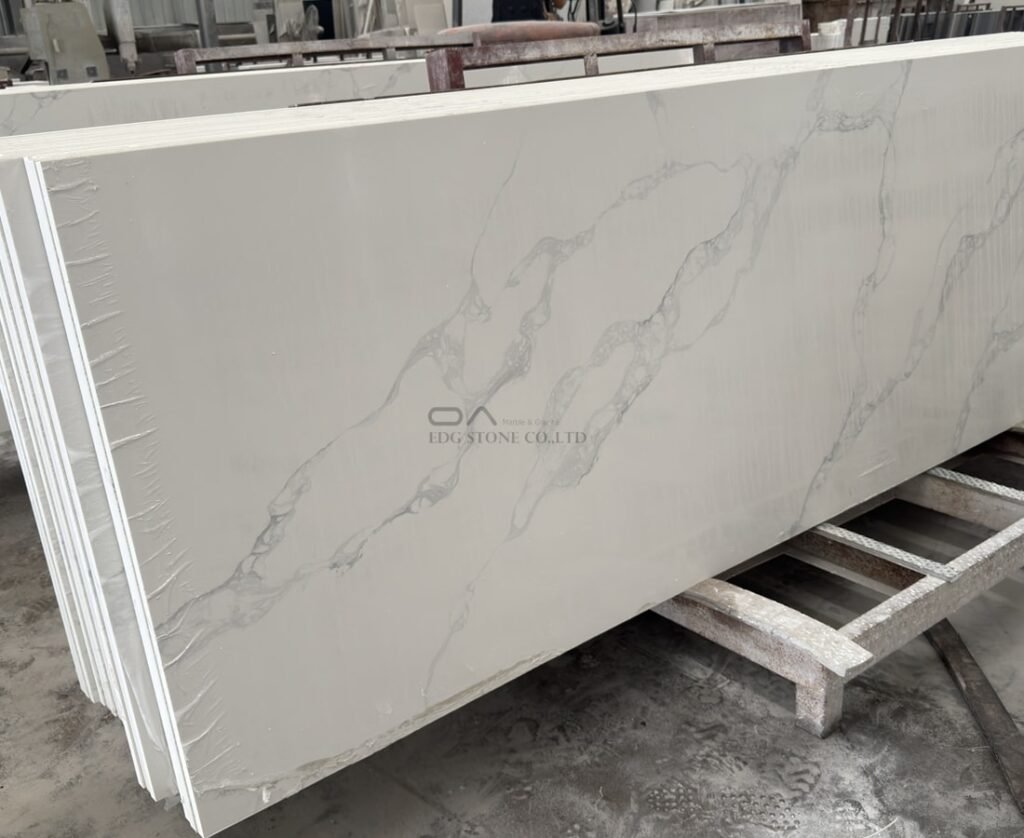
Samples ≠ slabs — always verify the actual slab for large projects.
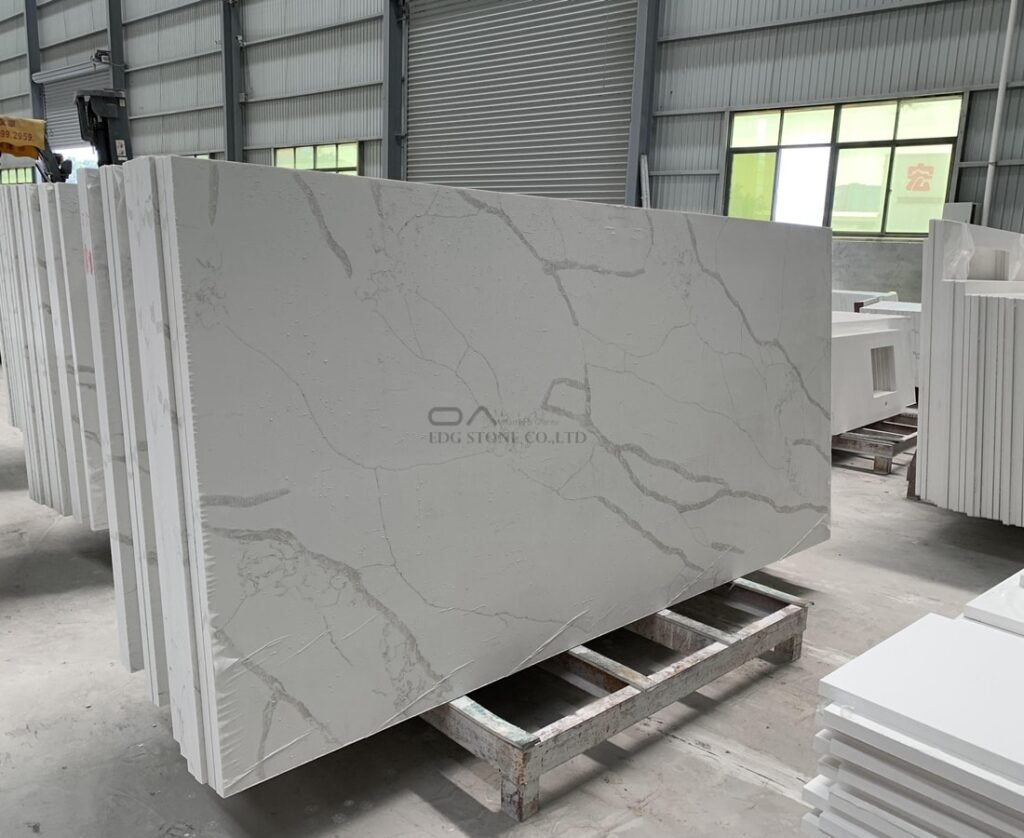
4. Factory-Direct Sourcing (B2B & Bulk Projects)
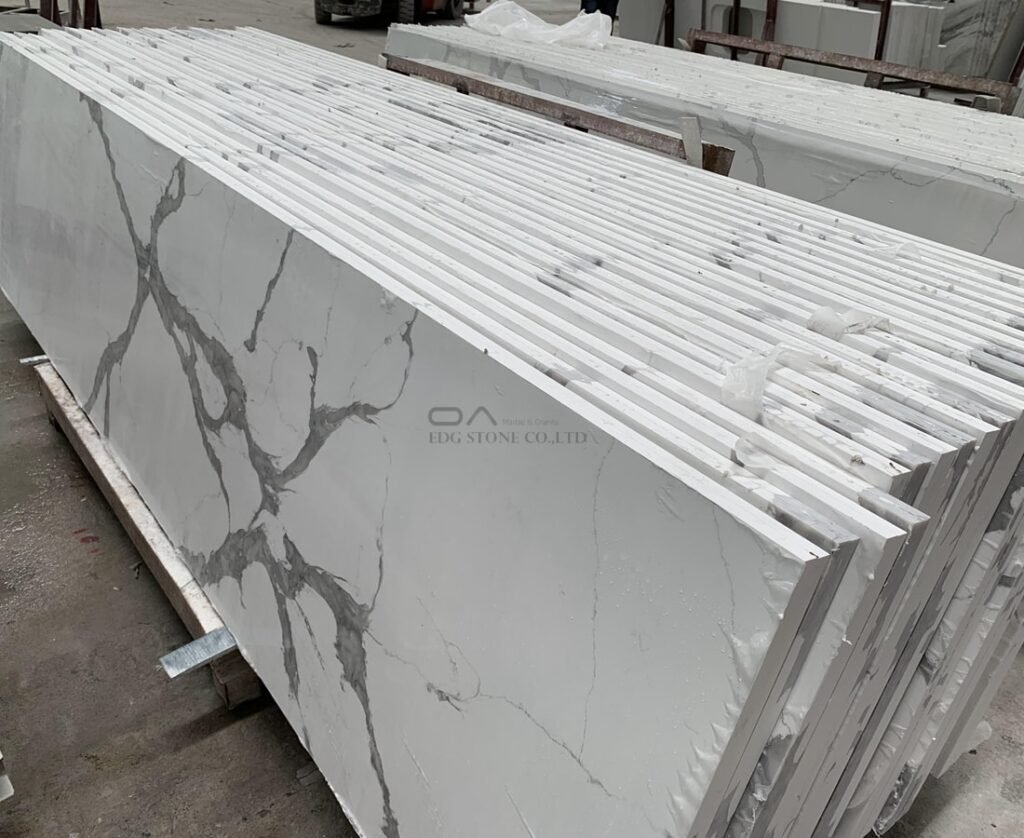
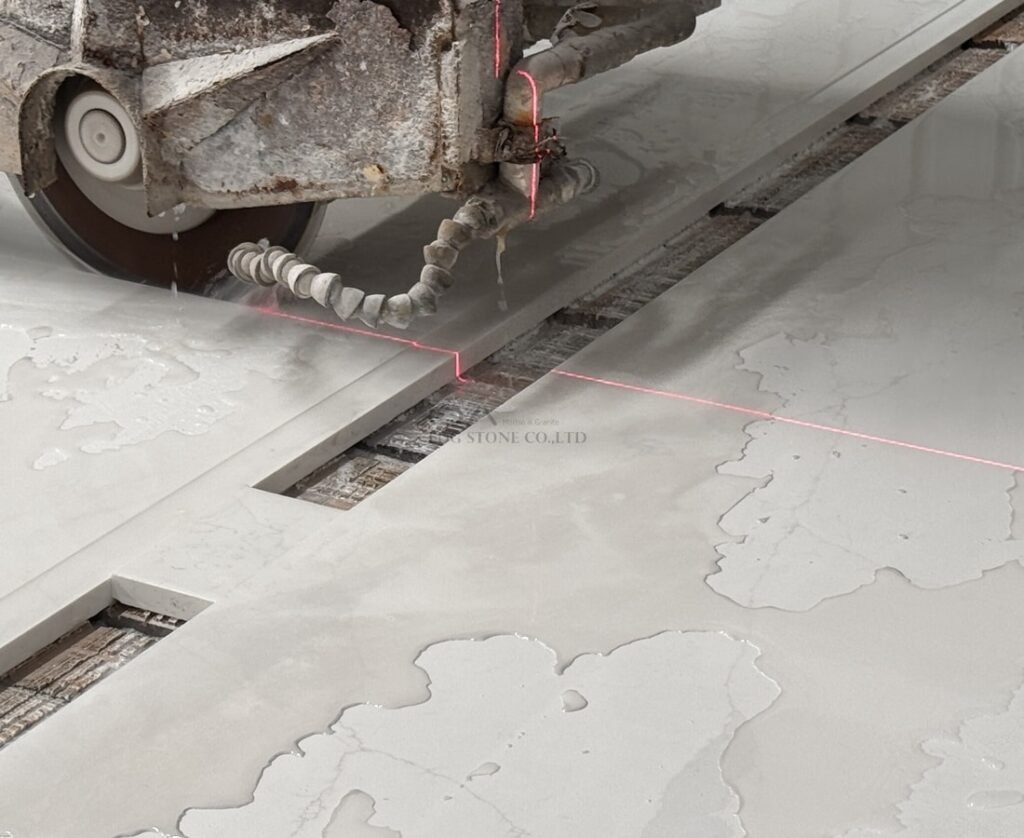
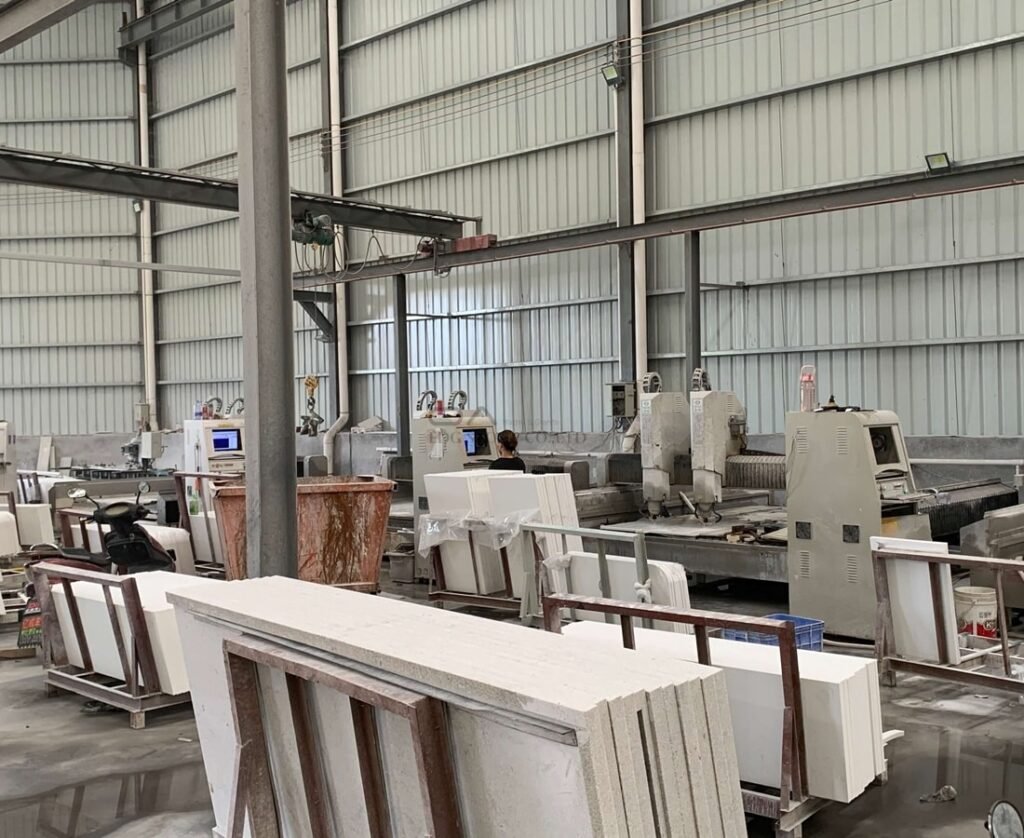
Factory sourcing (e.g., EDG Stone Factory) represents a completely different level of the supply chain.
What factories offer:
- Full custom fabrication (size, thickness, edge profiles)
- Batch consistency control
- Export packaging & container loading
- Project-based production (hotels, apartments, commercial)
Best for:
- Developers & contractors
- Hospitality projects
- Multi-unit residential
- International procurement
Advantages:
- Lower per-unit cost at scale
- Greater specification control
- Direct communication with production
Limitations:
- Not ideal for single-home buyers
- Requires project planning + logistics coordination
5. How to Choose the Right Channel?
For Homeowners:
Best options:
- Home Depot
- Lowe’s
- Floor & Decor
- IKEA
→ Focus on convenience + installation
For Design-Driven Projects:
Best options:
- Cambria
- Caesarstone
- MSI
→ Focus on slab selection + brand consistency
For B2B / Commercial Projects:
Best option:
- Factory-direct sourcing (e.g., EDG Stone Factory)
→ Focus on:
- Volume
- Custom specs
- Delivery control
6. Key Procurement Insight (Most Important)
Across all channels, one principle stands out:
The closer you are to the factory, the more control you have.
The closer you are to retail, the more convenience you get.
Choosing the wrong channel doesn’t just affect price—it affects:
- Lead time
- Color consistency
- Installation coordination
- Risk level
Conclusion
“Where to buy quartz countertops” is not a location—it’s a strategy.
- Retailers like Home Depot and Lowe’s simplify the process
- Brands like Cambria and Caesarstone ensure design and quality consistency
- Networks like MSI provide scalable distribution
- Factories unlock true customization and project-level supply
The best choice depends on your project stage—not just your budget.
FAQ (For Google Featured Snippets)
Q1: Where can I buy quartz countertops?
You can buy from big-box retailers, brand showrooms, dealer networks, or factory-direct suppliers, depending on your project needs.
Q2: Is it better to buy from a retailer or a brand dealer?
Retailers are easier for homeowners, while brand dealers are better for slab selection and design accuracy.
Q3: Can I buy quartz countertops online?
You can browse and order samples online, but the final purchase usually requires showroom or in-store confirmation.
Q4: Does MSI sell directly to consumers?
No. MSI sells through authorized dealers.
Q5: Why should I view a full slab before buying?
Because samples may not reflect full slab veining, color variation, or pattern distribution.