Introduction
In the world of high-end architectural and interior design, Carrara White Marble is almost synonymous with “classic white stone.”
However, for buyers and project developers, one key question always remains:
👉 Is it simply beautiful, or is it truly suitable for real-world applications?
This guide provides a comprehensive analysis of Carrara White Marble from five critical perspectives:
- Geological composition
- Physical performance
- Aesthetic value
- Application boundaries
- Procurement strategy
Helping you determine:
✔ Whether it fits your project
✔ Where it should be used
✔ How to avoid costly purchasing mistakes

What is Carrara White Marble?
Origin and Geological Formation
Carrara White Marble originates from the Carrara region in Tuscany, Italy—one of the world’s most renowned marble-producing areas.
It is a classic metamorphic stone formed through:
- Original rock: Limestone
- Transformation process: High temperature and pressure
- Primary mineral: Calcite
This natural transformation results in:
✔ Fine, uniform crystal structure
✔ Soft white base tone
✔ Elegant, flowing gray veining
Core Visual Characteristics of Carrara White Marble
Color Palette
- Base color: Cool white/gray-white
- Secondary tones: Light to medium gray veining
- Overall style: Low contrast, soft transitions
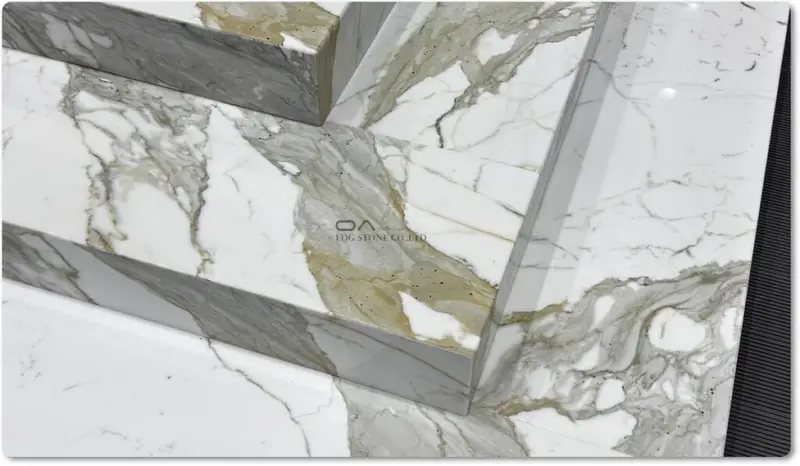
👉 Compared to Calacatta marble, Carrara appears more subtle and uniform.
Veining Patterns
- Linear or feather-like veins
- Even distribution
- Moderate batch variation (requires control in large projects)
Spatial Effect
The true value of Carrara marble lies not in dramatic impact, but in:
✔ Visual expansion of space
✔ Soft light reflection
✔ Timeless aesthetic appeal
Physical and Engineering Properties
Key Performance Parameters (Engineering Reference)
| Property | Performance |
|---|---|
| Hardness | Medium (lower than granite) |
| Density | Medium |
| Water Absorption | Relatively high |
| Compressive Strength | Good |
| Acid Resistance | Weak |
Engineering Implications
👉 These properties directly define its application limits.
Advantages:
- Easy to fabricate (ideal for complex shapes)
- Excellent polishing performance
- Premium visual appeal
Limitations:
- Sensitive to acidic substances (lemon, vinegar)
- Requires regular sealing
- Not ideal for high-traffic or heavy-use areas
Main Applications in Architecture & Interior Design
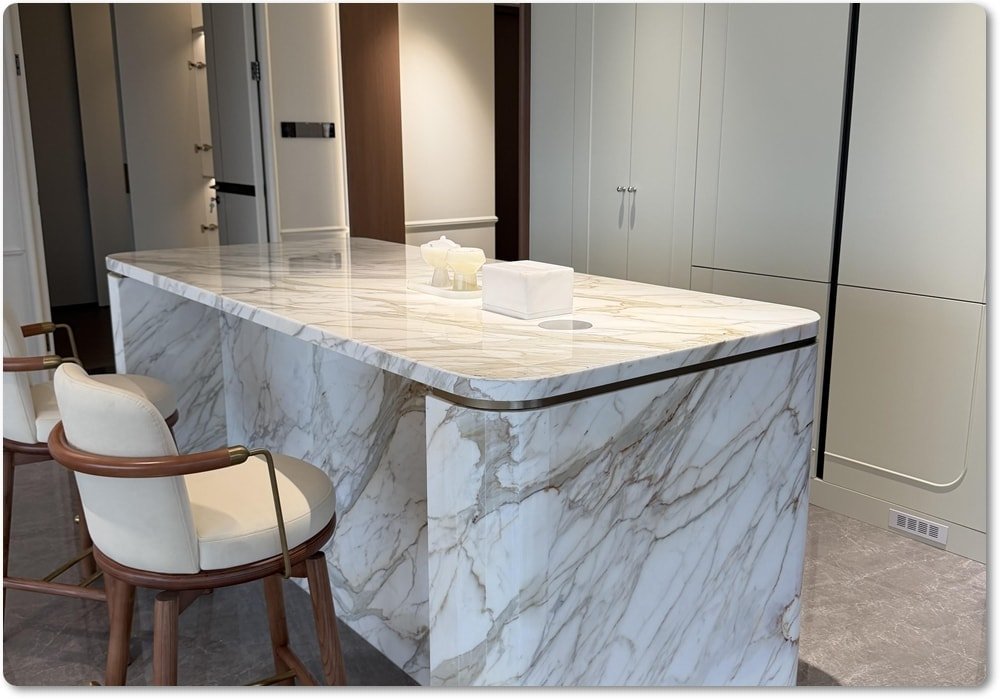
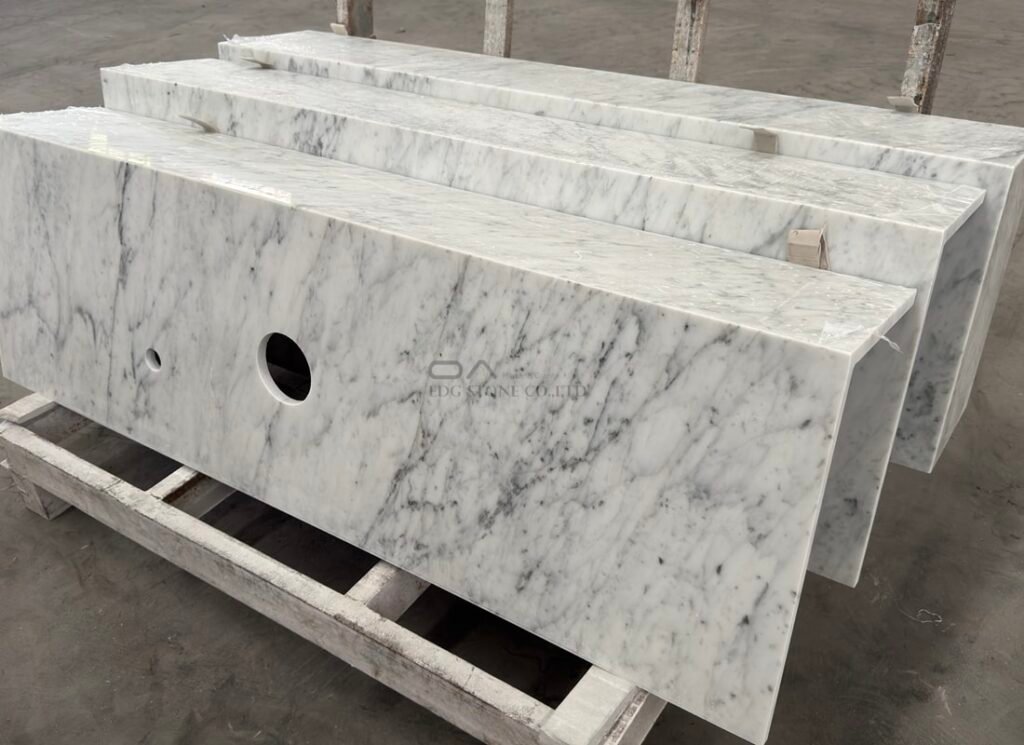
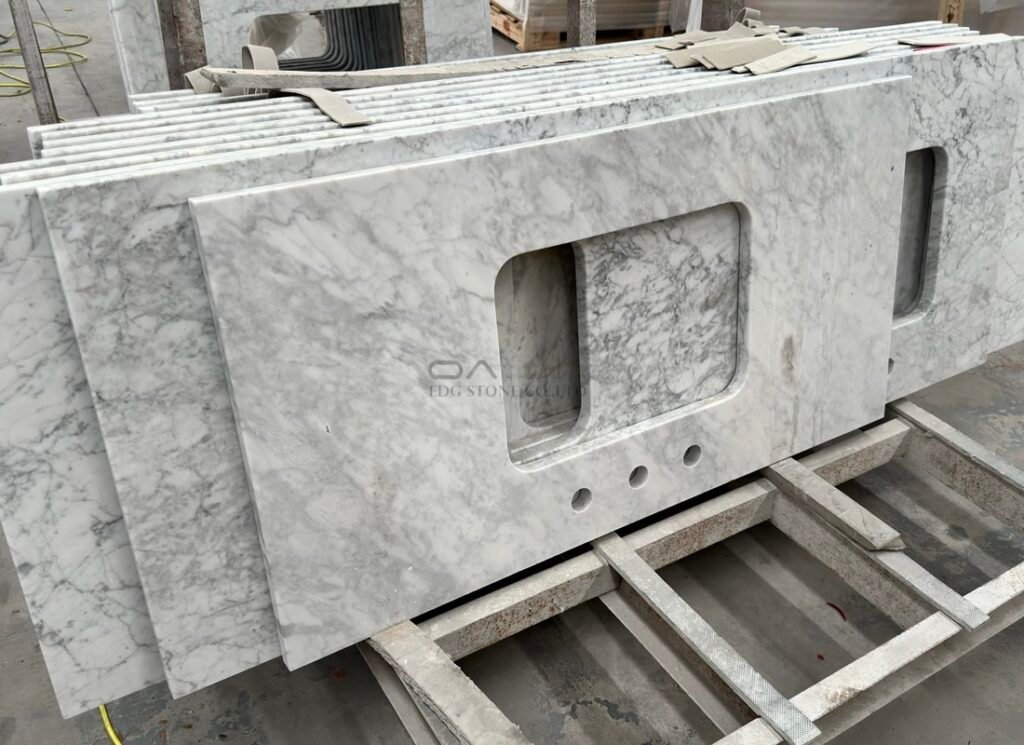
1. Kitchen Countertops
Suitable for:
✔ High-end residential projects
✔ Light-use kitchens
✔ Display kitchens
Not recommended for:
❌ Heavy commercial kitchens
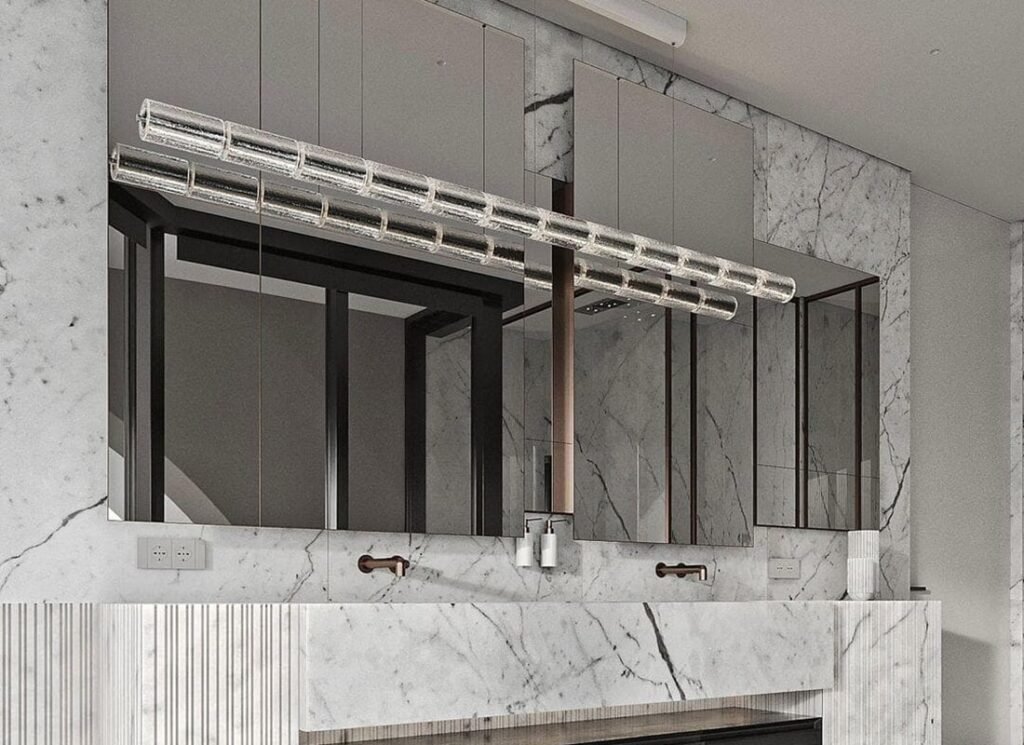
2. Bathroom & Vanity Tops
One of the best application scenarios:
✔ Controlled moisture environment
✔ Manageable usage conditions
✔ Strong visual impact
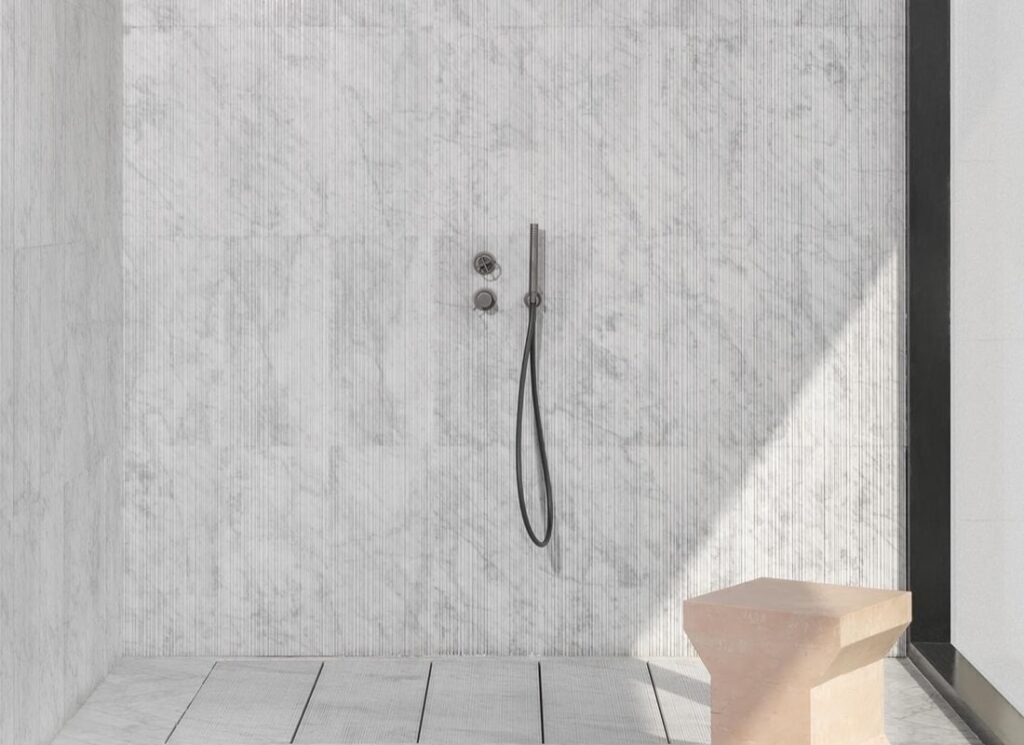
3. Wall Cladding & Feature Walls
- Living room feature walls
- Hotel lobbies
- Commercial interiors
👉 Emphasizes continuity and vein matching.
4. Flooring & Public Areas
Applicable in:
✔ Low to medium traffic areas
✔ Luxury residential and hospitality projects
Important considerations:
❗ Anti-slip finishes (honed or leathered)
❗ Regular maintenance
Carrara Marble vs Other Materials (Quick Comparison)
| Material | Advantages | Disadvantages |
|---|---|---|
| Carrara Marble | Elegant, timeless | Prone to staining |
| Granite | Highly durable | Heavier visual appearance |
| Quartz | Low maintenance | Lacks natural uniqueness |
Who Should Choose Carrara White Marble?
Ideal For:
✔ Interior designers
✔ Luxury residential developers
✔ Hospitality and commercial design teams
Not Ideal For:
❌ Ultra-low-budget projects
❌ Zero-maintenance expectations
❌ Heavy industrial environments
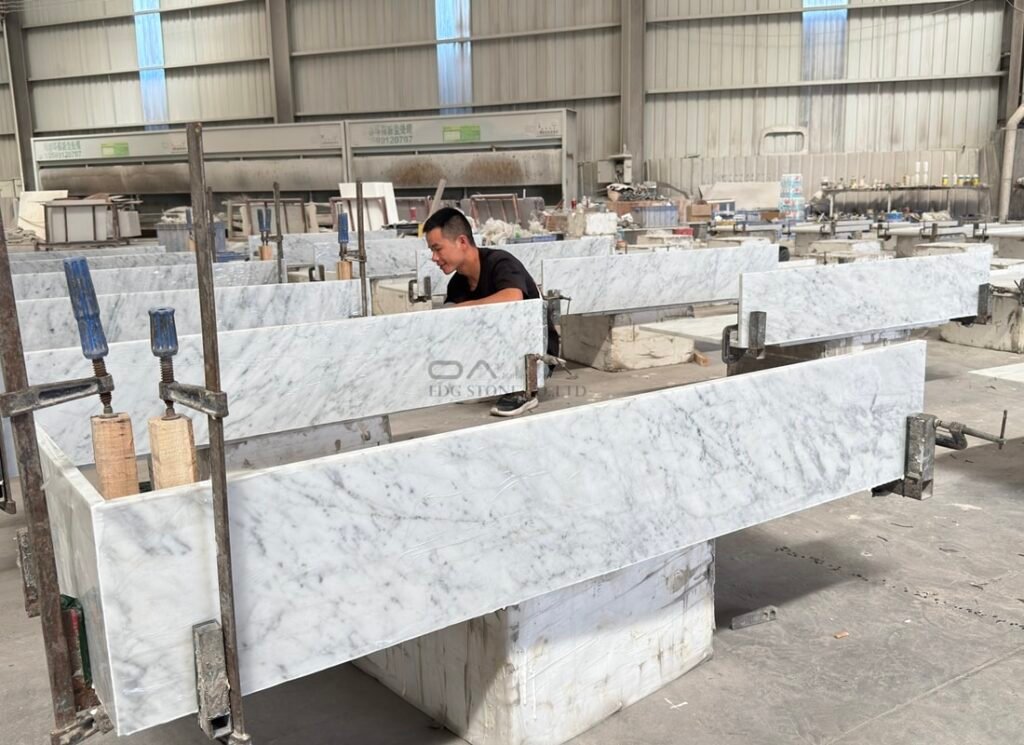
5 Critical Things to Know Before Buying
- Always inspect full slabs—not small samples
- Ensure batch consistency
- Plan for material waste (cutting loss)
- Define fabrication standards (edges, cutouts)
- Confirm packaging and logistics solutions
👉 Related Guides:
- How to choose marble slabs (Guide 04)
- Marble countertop fabrication (Guide 06)
- Stone project procurement process (Guide 12)
Conclusion
Carrara White Marble is not a “universal solution” stone.
Instead, it is:
👉 A design-driven premium material that requires proper engineering control.
If you:
✔ Value aesthetics and timeless design
✔ Accept maintenance requirements
✔ Have a reliable supply chain
Then Carrara remains one of the safest and most classic choices in architectural stone.
FAQ (For Google Rich Snippets)
What is Carrara White Marble?
Carrara White Marble is a natural marble from Italy known for its soft white background and gray veining, widely used in architecture and interior design.
Is Carrara marble good for countertops?
Yes, but it requires sealing and maintenance, especially in kitchens.
Does Carrara marble stain easily?
Yes, due to its porosity, it can absorb liquids if not properly sealed.
What is the difference between Carrara and Calacatta marble?
Carrara has softer, more uniform veining, while Calacatta features bold, dramatic patterns.
Is Carrara marble expensive?
It is generally more affordable than Calacatta but still considered a premium natural stone.