Introduction
In modern luxury kitchens, Taj Mahal Quartzite has rapidly become one of the most specified natural stones worldwide.
Why?
Because it delivers a rare combination:
- Marble-like elegance
- Granite-level durability
- Neutral tones for global design compatibility
However, for procurement professionals, the biggest challenge is not choosing whether to use Taj Mahal Quartzite—
👉 It’s choosing the right slabs for kitchen countertops.
A wrong decision can lead to:
- Visible color inconsistency
- Structural failures during fabrication
- Customer complaints and costly replacements
This guide provides a complete procurement framework to help you select, evaluate, and control Taj Mahal Quartzite specifically for kitchen countertop applications.
Why is Taj Mahal Quartzite ideal for Kitchen Countertops?
Balanced Performance vs Marble & Granite
Compared to marble:
- Much higher resistance to etching
- Lower maintenance
Compared to granite:
- Softer, warmer visual appearance
- More refined veining
👉 Result:
Best of both worlds
Global Design Compatibility
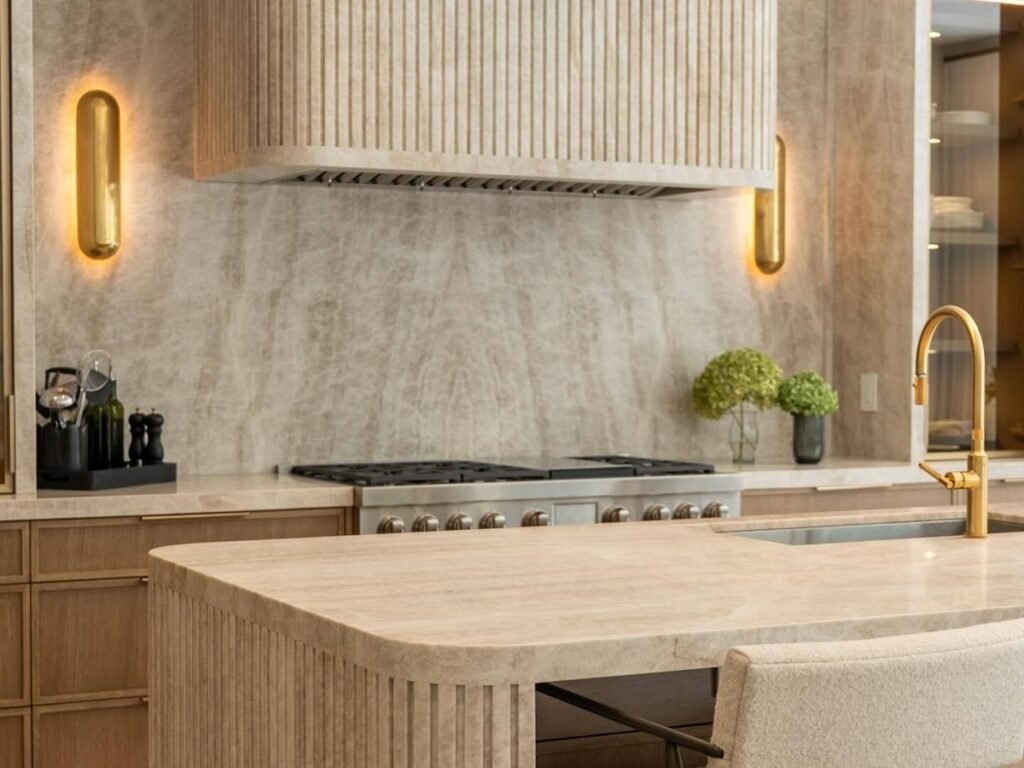
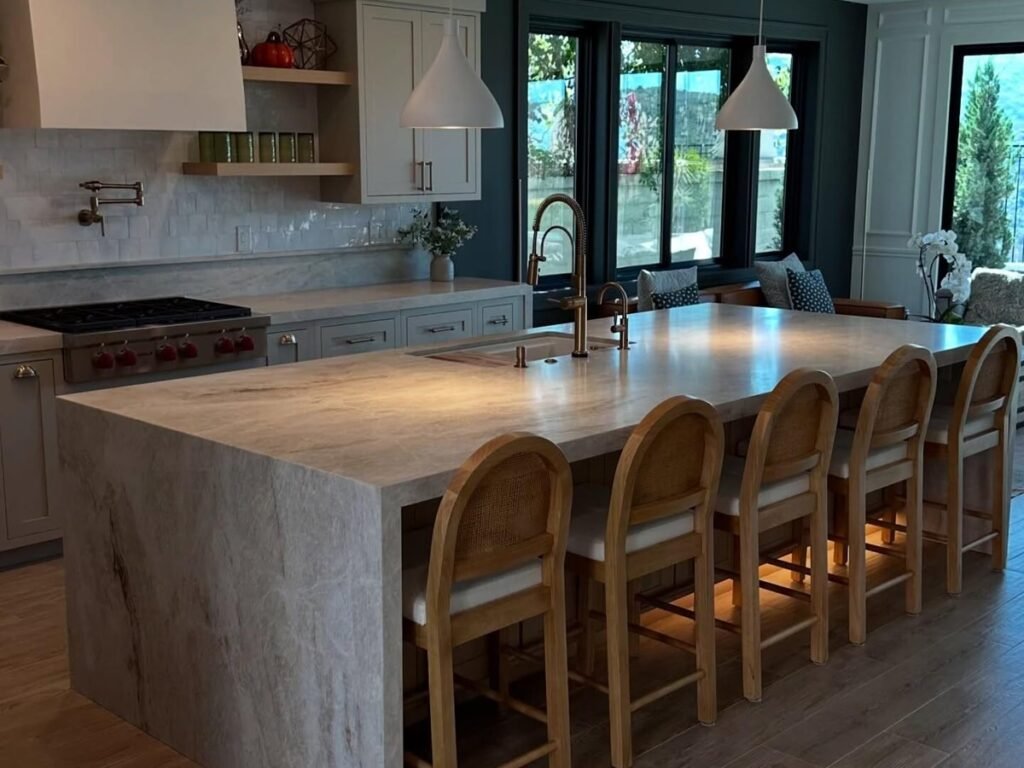
Taj Mahal Quartzite works seamlessly with:
- White cabinetry
- Wood finishes
- Matte black fixtures
- Modern and transitional kitchens
👉 This makes it highly scalable for developers and distributors.
Color Selection for Kitchen Countertops (Critical Decision)
Kitchen Lighting Impact
Kitchen lighting (natural + artificial) significantly affects slab appearance.
Key checks:
- Daylight vs warm LED
- Shadow vs direct light
👉 Always evaluate slabs under multiple lighting conditions
Preferred Kitchen Color Profiles
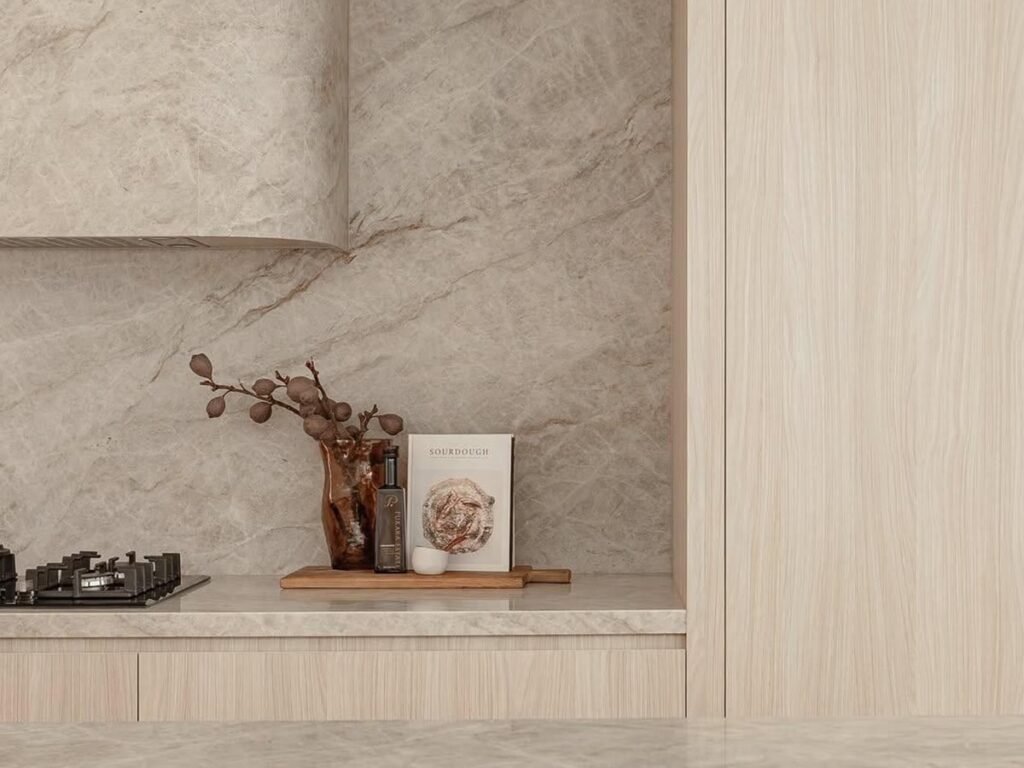
For countertops, the most desirable tones are:
- Soft warm beige
- Ivory cream
- Subtle golden undertone
Avoid:
- Greyish dull tones
- Strong yellow patches
- Uneven color zoning
Batch Consistency (Non-Negotiable)
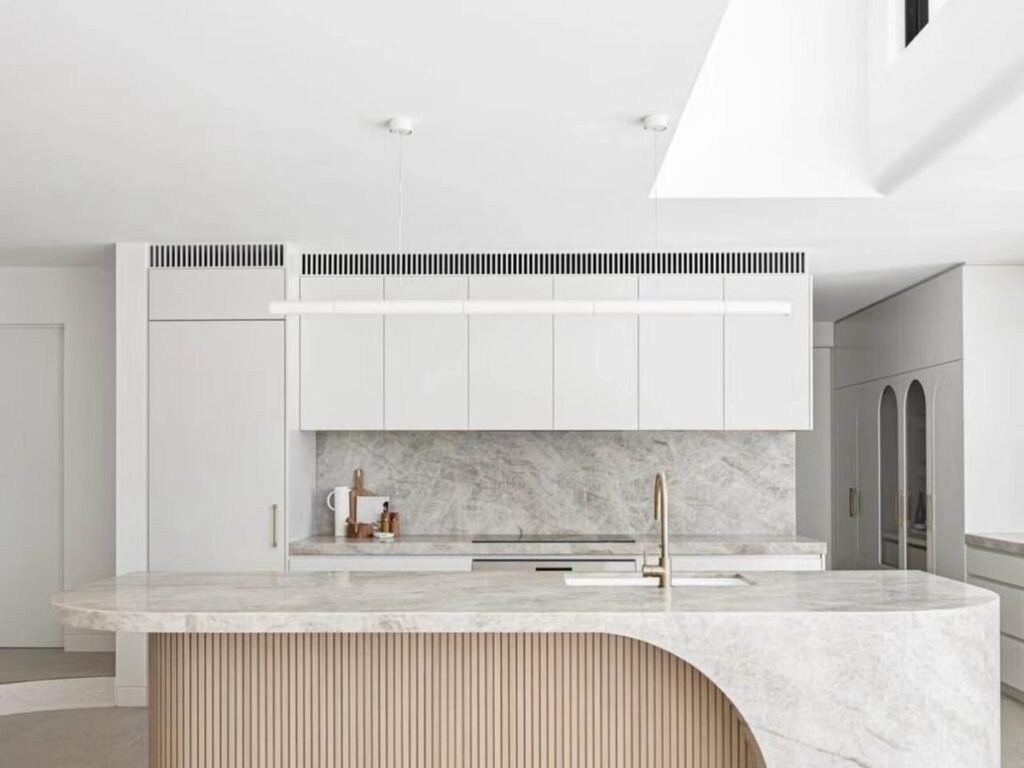
Kitchen countertops require visual continuity across:
- Island
- Perimeter countertops
- Backsplash
👉 Rule:
✔ Same block
✔ Same batch
✔ Same shipment
🚫 Never mix slabs from different lots
Vein Pattern Control for Countertops
Best Vein Types for Kitchens
Recommended:
- Linear → clean, modern look
- Soft flowing → natural elegance
Avoid:
- Overly busy patterns
- Broken veins
Vein Direction Planning
Critical for:
- Kitchen island
- Waterfall edges
👉 You must define:
- Vein flow direction
- Cut orientation
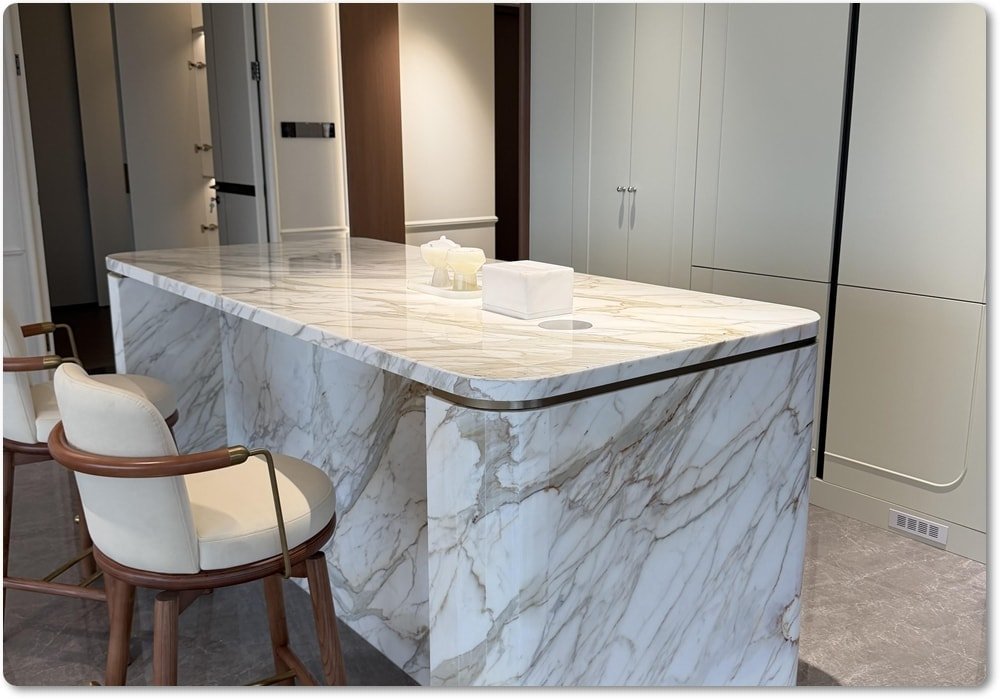
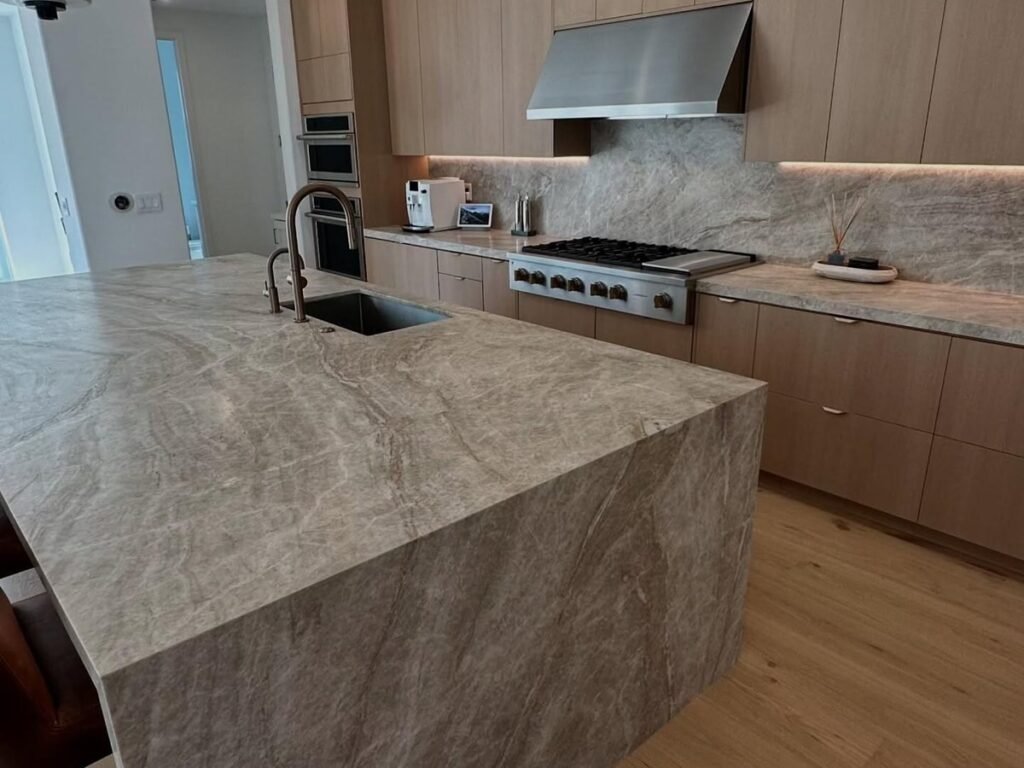
Waterfall Edge Matching
For waterfall islands:
- Veins must continue vertically
- Slabs must be pre-matched
👉 This is a high-end detail that drives perceived luxury
Surface Finish Selection for Kitchens
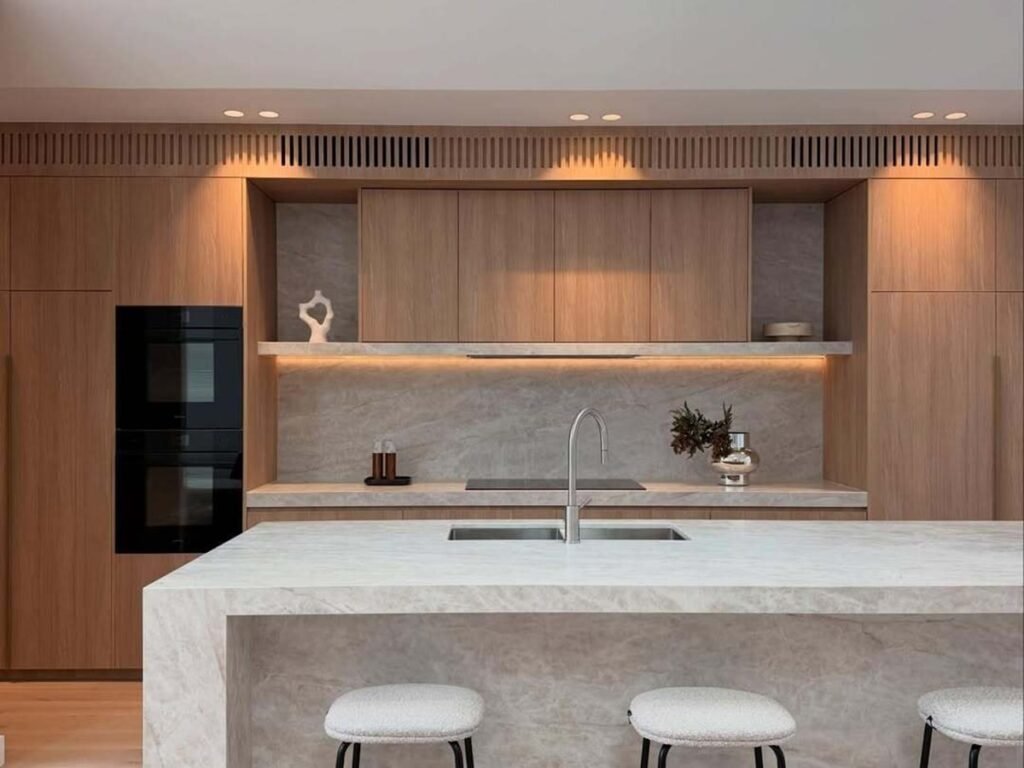
Polished Finish (Top Choice)
Advantages:
- Maximum stain resistance
- Easy cleaning
- High-end reflective look
👉 Best for residential & luxury kitchens
Honed Finish
Advantages:
- Soft matte look
- Less glare
Disadvantages:
- Slightly more prone to staining
Leathered Finish
Advantages:
- Anti-slip
- Hides fingerprints
👉 Ideal for:
- Commercial kitchens
- High-traffic areas
Structural Quality Inspection (Most Important Step)
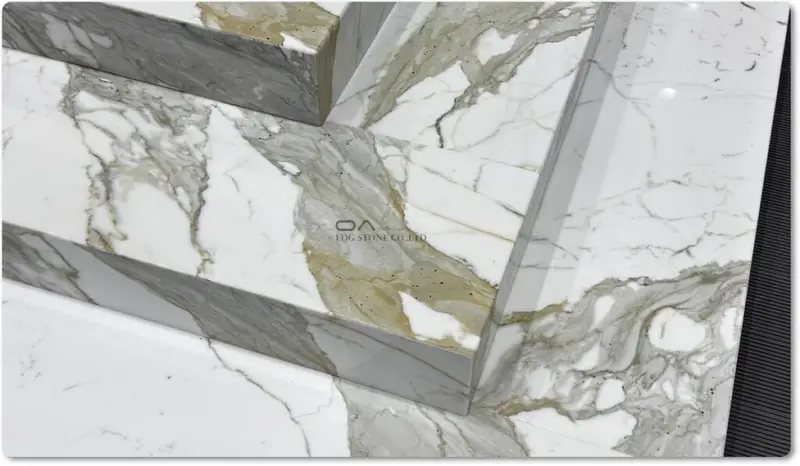
Fissures vs Cracks
Understanding the difference:
- Fissures → natural, acceptable
- Cracks → structural risk
👉 Rule:
✔ Accept natural fissures
✖ Reject structural cracks
Resin Treatment Quality
Most quartzite slabs are resin-treated.
Check:
- Even distribution
- No visible overfill
- No color distortion
Thickness Control
Standard countertop thickness:
- 2 cm (fabrication use)
- 3 cm (premium projects)
Tolerance:
👉 ±1 mm maximum
Performance in Kitchen Use
Heat Resistance
Taj Mahal Quartzite can:
- Handle hot cookware
- Resist thermal shock better than marble
👉 Still recommended: use trivets
Stain Resistance
Performance:
- Better than marble
- Requires sealing
👉 Maintenance:
- Seal every 6–12 months
Scratch Resistance
- Stronger than marble
- Suitable for daily kitchen use
Fabrication Considerations
Cut-to-Size Optimization
Important for:
- Reducing waste
- Maintaining vein continuity
Edge Profiles
Popular options:
- Eased edge
- Beveled edge
- Mitered edge (premium)
Sink Cutouts
Risk areas:
- Stress concentration
- Crack initiation
👉 Must use:
- CNC cutting
- Reinforcement if needed
Standard Procurement Workflow
Step 1: Requirement Definition
- Kitchen layout
- Slab quantity
- Finish type
Step 2: Slab Selection (Video or In-person)
- High-resolution inspection
- Slab numbering
Step 3: Slab Reservation
👉 Lock slabs before production
Step 4: Layout Approval
👉 Final visual outcome is determined here
Step 5: Fabrication & Delivery
Common Mistakes in Kitchen Projects
Mistake 1: Choosing Based on Price Only
Low price often means:
- High resin usage
- Lower structural quality
Mistake 2: Ignoring Vein Direction
Result:
- Visually chaotic countertops
Mistake 3: No Layout Planning
Result:
- Broken visual flow
Mistake 4: Mixing Slabs
Result:
- Obvious color mismatch
Pro Procurement Tips (High Conversion Section)
- Always inspect slabs before purchase
- Always reserve slabs
- Always approve layout drawings
- Always include a 10–15% waste allowance
- Always work with experienced fabricators
Conclusion
Choosing Taj Mahal Quartzite for kitchen countertops is not just a material decision—
👉 It is a system-level procurement strategy.
Successful projects depend on:
- Controlled color selection
- Planned vein direction
- Strict slab inspection
- Professional fabrication
When executed correctly, Taj Mahal Quartzite delivers:
✔ Premium aesthetics
✔ Long-term durability
✔ High client satisfaction
FAQ
1. Is Taj Mahal Quartzite good for kitchen countertops?
Yes, it combines durability, heat resistance, and elegant appearance, making it ideal for kitchens.
2. Does Taj Mahal Quartzite stain?
It is stain-resistant but requires periodic sealing.
3. What thickness is best for countertops?
2 cm for standard use, 3 cm for premium projects.
4. Can Taj Mahal Quartzite handle heat?
Yes, but using trivets is still recommended.
5. Why is slab selection important?
Because each slab varies in color and pattern, it affects the final result.