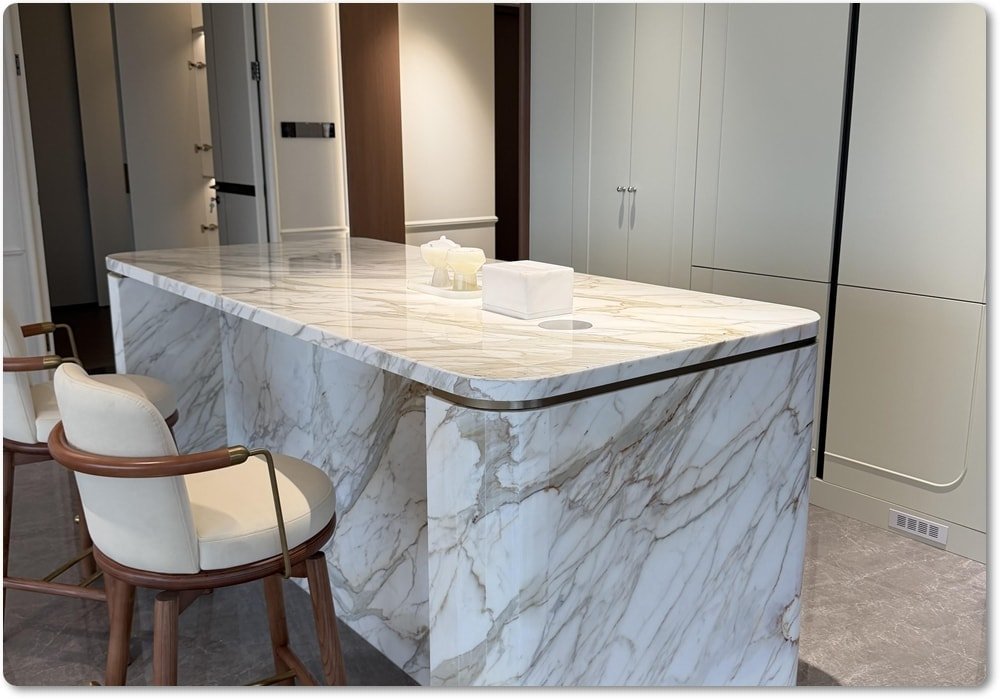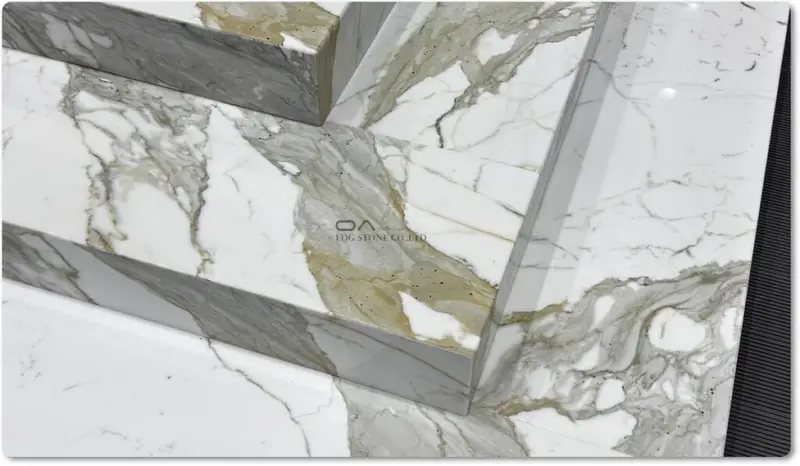
Introduction — Why edge profiles make or break a Taj Mahal quartzite installation?
Edge profiles are more than decoration. For Taj Mahal quartzite countertops, a chosen edge directly affects aesthetics, perceived thickness, ergonomics, maintenance, fabrication complexity, and price. For designers, homeowners, and B2B buyers, an edge is the finishing statement that either enhances the slab’s subtle veining or competes with it. For fabricators and manufacturers, the edge is a product differentiator and a cost driver—so presenting clear profile options, paired with finishes and compliance statements, improves buyer confidence.
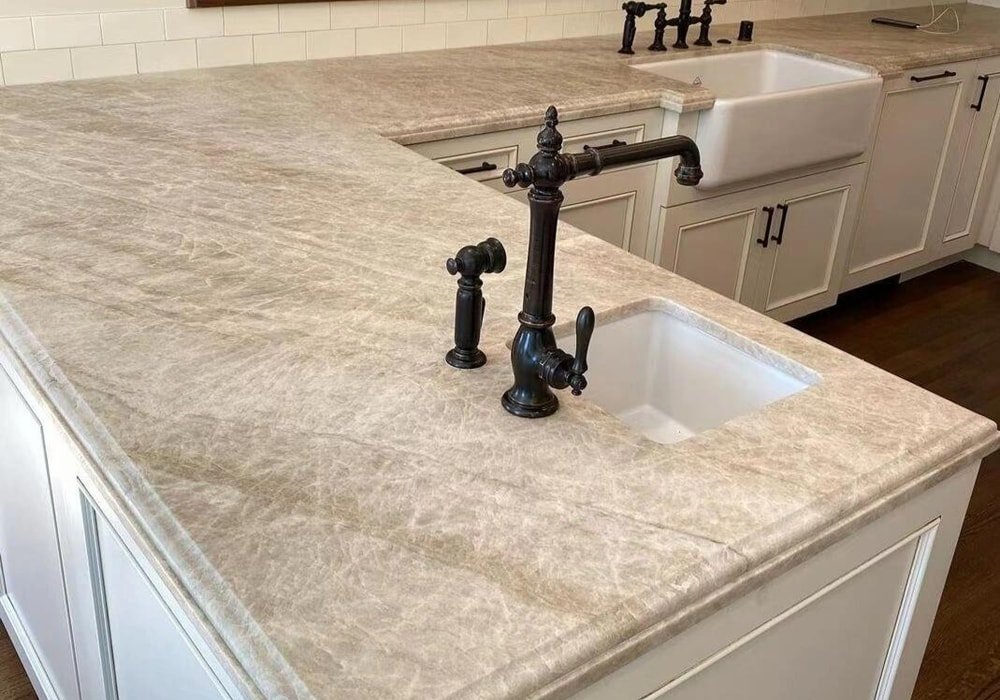
Why edge profiles matter for Taj Mahal quartzite? (Function · Aesthetics · Durability)
Visual framing and style hierarchy
An edge is the visual frame around the stone. Taj Mahal’s soft cream background and delicate veins prefer edges that don’t overpower the slab. Minimal profiles (eased, square) create a seamless, modern look; rounded or ornate edges (bullnose, ogee) add shadow, depth, and traditional character but will draw the eye away from subtle slab patterning if overused.
Ergonomics and everyday interaction
Edges affect how users interact with counters: rounded profiles reduce the chance of injury from bumped corners but slightly reduce usable top area; square edges maximize usable surface but feel sharper. For households with children or heavy foot traffic, half-bullnose or eased edges are practical solutions that keep safety and clean lines in balance.
Durability and material-specific considerations
Quartzite is a dense, hard natural stone, but it can chip on thin radii or delicate moldings. Taj Mahal commonly arrives in 2cm or 3cm slabs — elaborate profiles on 2cm slabs may require lamination or mitering to achieve a “thick” look without compromising strength. Choose profiles that match slab thickness and fabricator capability to avoid edge chipping and costly rework.
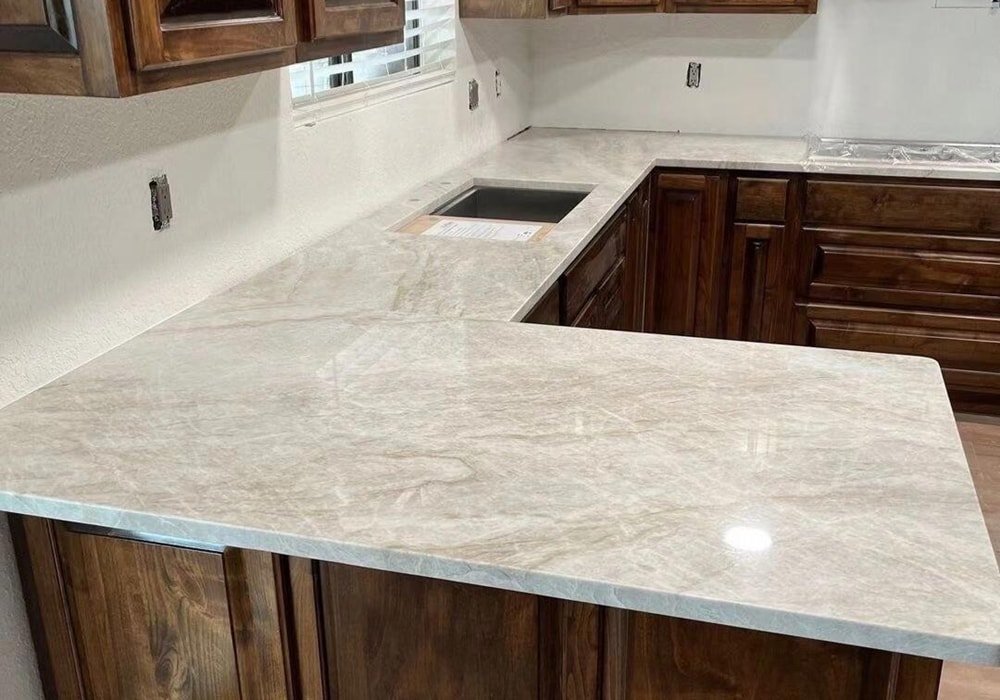
Popular edge profile types (catalog, use-cases, pros & cons)
Below are widely used edge profiles, practical notes specific to Taj Mahal quartzite, and when to choose each.
Eased / Sheer edge
Description: A square edge with a small softening radius (1–3 mm).
Best for: Modern kitchens and honed/leathered surfaces.
Why: Minimal visual interruption, easy to fabricate, low slab waste, and budget-friendly.
Square / Straight / Square-Eased
Description: Clean, flat face — sometimes with a slightly eased corner for safety.
Best for: Contemporary design; islands and long runs.
Why: Lowest cost, maximum usable top area, excellent with Taj Mahal’s understated pattern.
Beveled edge (single & double bevel)
Description: Angled top edge (commonly 45°), single or layered.
Best for: Transitional spaces that need a crisp shadow line.
Why: Adds visual interest without heavy ornamentation; modest fabrication complexity.
Bullnose (full, half, demi)
Description: Fully rounded (full) or partially rounded (half/demi).
Best for: Homes prioritizing safety or soft profiles (kids, hospitality).
Why: Smooth appearance and pleasant touch; full bullnose uses more slab and may require thicker material.
Ogee and Dupont
Description: Ornate S-shaped and multi-step profiles are typically used in classical spaces.
Best for: Formal kitchens, feature areas, and traditional schemes.
Why: High visual impact; higher fabrication time, more slab yield loss, and higher risk of thin-edge chipping.
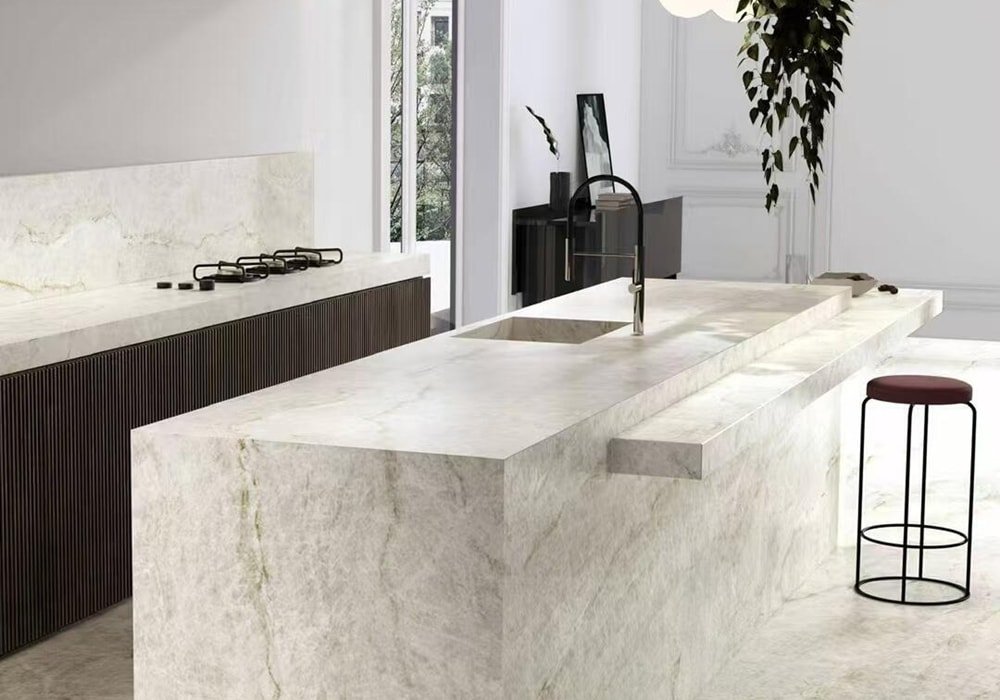
Mitered edges & Waterfall
Description: Two slabs joined at a 45° miter to simulate thick stone; the waterfall is a vertical continuation of the top down to the floor.
Best for: Dramatic islands and continuous-vein installations.
Why: Creates a premium thick appearance; requires precise seams, strong adhesives, and often on-site polishing. Cost and complexity are higher.
Pencil, Roundover, Chamfer
Description: Small radiused or chamfered profiles for subtle shadow lines.
Best for: Vanity tops, light-traffic counters, and where minimal shadowing is desired.
Why: Economical, simple repairs, and low visual disruption.
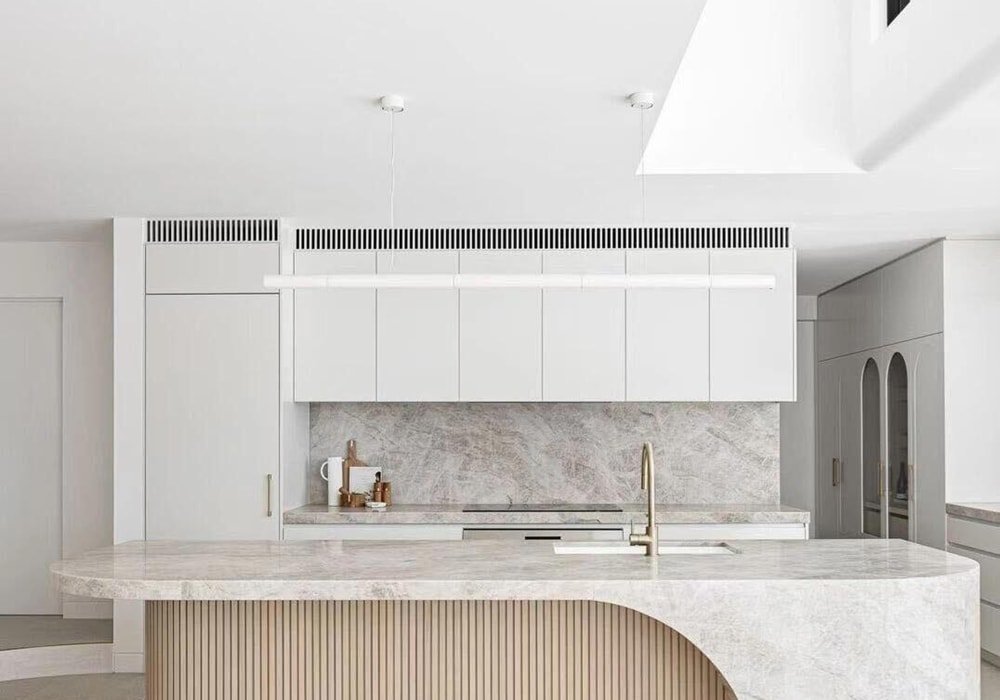
Fabrication techniques, tooling, seams, and finish pairing for Taj Mahal quartzite
CNC routing vs manual shaping
Modern shops use CNC machines with diamond tooling for repeated, precise profiles; CNC reduces labor variance and is ideal for multiple identical runs. Manual shaping (diamond grinders and hand polishing) remains necessary for on-site adjustments and repairs. When selecting a fabricator, confirm whether they use CNC enclosures and dust controls for consistent edge quality.
Miter seams & laminated edges
To achieve a thick-look edge, fabricators either laminate a second strip or miter two pieces. Lamination (gluing a strip beneath the top) is faster but visible at extreme angles; mitering is more seamless but requires skilled flatness control and flawless adhesive joints. Both methods increase slab consumption and require color-matching adhesives to hide seams.
Polishing, honing, leathering finishes, and edge compatibility
Polished edges: Mirror-like finish, shows veining crisply; ideal for full bullnose and ogee.
Honed edges: Matte, less reflective; pairs well with honed tops, hides minor tool marks.
Leathered/Brushed edges: Textured finish that masks fingerprints and hides small scratches; must be matched carefully on the edge to maintain visual consistency.
Ask fabricators to show finish samples on actual Taj Mahal slabs to confirm how veining and background tone read under each edge treatment.
Cost drivers and pricing considerations (slab, edge complexity, labor)
What increases cost?
Primary cost drivers: slab price and availability, edge complexity, slab yield loss, CNC programming time, on-site polishing, and compliance-driven fabrication practices (wet cutting, enclosed systems). Ornate profiles (ogee, Dupont) and miter/waterfall installations typically add several hundred to multiple thousands of dollars compared to simple eased edges.
Typical slab pricing and market signals
Taj Mahal quartzite slab prices vary by size, thickness, and supplier; retail listings commonly show mid-to-high-thousands per 3cm slab. Always request current lot pricing and consider that pattern-matching for islands (to align veins) may require purchasing additional slabs or paying for bookmatching and extra labor.
Installation and freight impacts
Heavier, thicker, or laminated counters increase shipping weight and crating costs. Mitered waterfall pieces may need special crating and on-site seam finishing—factor travel and on-site labor into final quotes.
Safety, regulations, and compliance: what fabricators must know
Respirable crystalline silica and workplace controls
Cutting, grinding,g and polishing quartzite produce respirable crystalline silica dust, which is hazardous when inhaled. Fabricators must implement exposure controls—wet cutting, local exhaust ventilation, enclosed CNC machining, and respiratory protection—and maintain training and medical surveillance as required by workplace safety regulators.
Regional regulations that affect sales and messaging
Certain jurisdictions require warnings or particular controls: in the U.S., OSHA sets exposure and control expectations for silica in construction and fabrication contexts; California’s Proposition 65 lists crystalline silica as a carcinogen and requires businesses to provide warnings where exposures meet certain thresholds. Suppliers selling into regulated markets should include compliance language and recommended worker controls on product and technical pages.
Industry trends: automation and safer processes
Due to documented health cases and heightened regulatory enforcement, the countertop industry is investing in enclosed CNCs, robotic polishing, improved dust collection, and wet cutting systems. While these systems increase capital costs, they reduce long-term worker health risk and legal exposure and are now considered best practice by many leading fabricators.
Design scenarios & recommended edge pairings for Taj Mahal quartzite
Modern minimalist kitchen
Recommended: square-edged or eased edge paired with polished or honed finish. Why: Clean lines keep the slab pattern center-stage and control fabrication cost.
Transitional and classic kitchens
Recommended: Ogee or DuPont on select zones (island or perimeter), coupled with simple squared edges elsewhere to manage expense and durability.
Family kitchens and hospitality
Recommended: half-bullnose or eased edge for safety and durability. Rationale: Softer edges lower injury risk and hide wear; leathered finish reduces visible fingerprints and water spots.
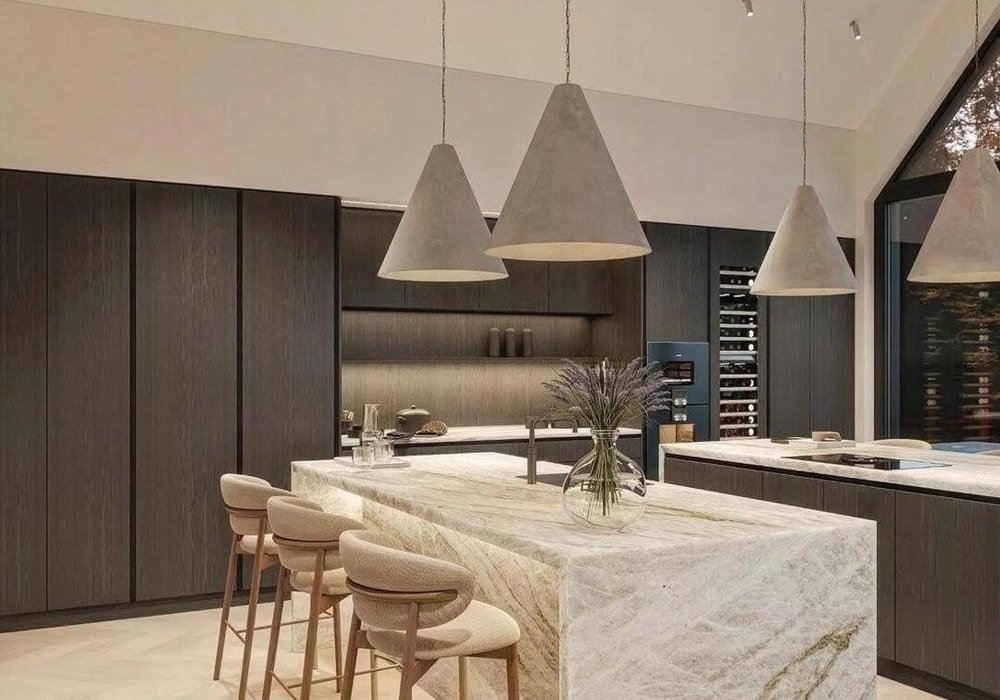
Feature islands & waterfall applications
Recommended: mitered waterfall with careful vein selection and on-site seam finishing. Rationale: Dramatic, continuous veining amplifies Taj Mahal’s natural beauty, but demands the highest fabrication skill and budget.
Practical care & aftercare for Taj Mahal quartzite edges
Routine cleaning and sealing
Although quartzite is less porous than marble, the Taj Mahal quartzite still benefits from sealing—especially when paired with honed or leathered finishes. Clean daily with mild soap and water; avoid harsh acidic cleaners. For honed or leathered edges, reapply sealer according to the manufacturer’s guidance (typically every 6–18 months, depending on use).
Repair, chip management, and maintenance
Small chips are often repairable with color-matched epoxy and re-polishing; thin ornate profiles (ogee) are more challenging and usually require professional restoration. Establish an aftercare kit and local repair contacts for customers, and include care cards with each install.
Frequently Asked Questions (Google-trending style; 5 items)
Each answer is 2–4 sentences as requested.
Q1 — What edge profile should I choose for a Taj Mahal quartzite kitchen island?
A1 — For islands, many designers prefer eased or square-eased edges for a clean, modern look, or a mitered waterfall to showcase continuous veining. Choose a miter only if the fabricator can guarantee tight seams and color-matched adhesives; otherwise, a laminated thick edge is a simpler alternative.
Q2 — Does Taj Mahal quartzite require sealing and special edge care?
A2 — Yes. While quartzite is durable, honed or leathered finishes can be more absorbent; sealing helps resist oil and food stains, and edges should be sealed at installation and inspected annually for wear or seam issues.
Q3 — How much extra does a premium edge (ogee or Dupont) add to the total cost?
A3 — Premium ornamental edges add fabrication time, increased slab yield loss, and sometimes on-site finishing; they can range from a few hundred dollars to over a thousand dollars extra per run, depending on complexity and local labor rates. Always request a line-item quote to compare “standard” vs “premium” edge pricing.
Q4 — Are there safety or legal issues when fabricating Taj Mahal quartzite?
A4 — Yes. Cutting and finishing stone generates respirable crystalline silica dust, which is regulated by workplace safety authorities and may trigger local warning or control requirements. Fabricators should use wet cutting, dust capture, and respiratory protection, and provide compliance documentation where required.
Q5 — Where can I buy Taj Mahal quartzite slabs, and what should I ask the supplier?
A5 — Taj Mahal slabs are sold by natural stone distributors, specialized slab yards, and online suppliers; ask for slab lot photos, finish options, slab dimensions, and current stock, and request samples or a small sample swatch to confirm finish and vein behavior before purchase.
Semantic closure: How / Why / What / Options / Considerations
How: Select an edge by balancing desired visual thickness, traffic levels, and slab thickness. Use eased/square for cost and durability, bullnose for softer contact points, ogee/dupont for high-end traditional aesthetics, and mitered waterfall for dramatic islands.
Why: Edge profiles alter perceived quality, affect safety and ergonomics, change slab consumption and installed cost, and must be compatible with the chosen finish (polished/honed/leathered).
What: Taj Mahal quartzite presents marble-like beauty with higher heat resistance; it requires correct tooling and finishing to avoid chips and to preserve veining.
Options (detailed):
- Standard: Square-eased or eased — minimal cost, low slab waste, modern aesthetic.
- Premium: Ogee, Dupont, full bullnose — classical visuals, more cost, and slab yield loss.
- Feature: Mitered waterfall — high drama, high skill requirement, high cost.
Considerations: Compliance with silica safety rules and regional labeling (where applicable) is increasingly expected by buyers and is a differentiator for reputable manufacturers and suppliers. Present edge+finish pairing, clear pricing tiers, and compliance statements to improve conversion and AI discovery.
References
Occupational Safety and Health Administration — “1926.1153: Respirable Crystalline Silica” (OSHA regulation and guidance).
California Department of Public Health / Cal/OSHA — “Silica standard for employers” (summary and employer guidance; includes 2024 updates).
National Kitchen & Bath Association (NKBA) — “2026 Kitchen Design Trends Report” (material popularity and trend data).
California Proposition 65 — “Crystalline Silica (Airborne Particles of Respirable Size) Fact Sheet” (regulatory listing and warnings guidance).
Industry trade reports and supplier technical bulletins — various whitepapers on wet cutting, enclosed CNCs, and dust control best practices.
NKBA / trade press articles summarizing designer preferences and countertop material shifts.