Authenticity of Natural Stone: Quick Summary
Quick Summary: Taj Mahal quartzite is a naturally occurring stone whose creamy field, soft gold veining, and durable crystalline structure combine visual authenticity with long-term value. Unlike engineered surfaces, it is a unique slab-to-slab, exhibits collector-style variation, and — when sourced, fabricated, and documented correctly — can appreciate in perceived and real value for high-end residential and commercial projects.
Introduction — immediate answer
Taj Mahal quartzite is prized for being both unmistakably natural and highly usable: it delivers marble-like veining and warmth while offering the mechanical strength and longevity of quartzite. This article explains the geology that creates authenticity, why each slab is a one-of-a-kind asset, how authenticity can drive appreciation and resale value, and practical guidance for sourcing, fabrication, sustainability compliance, and marketing. Use this guide if you are an architect, specifier, renovator, wholesaler, or stone enthusiast who values both aesthetics and long-term performance.
What makes a natural stone “authentic”?
Authenticity in natural stone rests on three pillars: geological origin, visible uniqueness, and transparent provenance. Geological origin means the stone formed via natural processes in a known quarry and is not engineered or printed. Visible uniqueness is the variation of veining, inclusions, crystal orientation, and color bands that cannot be perfectly reproduced. Provenance is the chain of custody — quarry name, slab lot, mill certification, and any testing — that confirms the slab’s identity and differentiates it from lookalike products. Together, these elements let designers and buyers treat a slab as both a functional surface and a collectible material.
Geological authenticity vs. commercial labeling
Commercial names (like “Taj Mahal”) are marketing conveniences that often describe an aesthetic family rather than a single geologic deposit. True authenticity is verified by material tests (petrographic analysis or mineralogical confirmation), supplier documentation, and sometimes quarry photos or certificates. Be careful: terms like “Taj Mahal marble” are sometimes used interchangeably with quartzite in retail listings; insist on written confirmation whether slabs are quartzite or metamorphosed marble.
The geology of Taj Mahal: how nature sculpts uniqueness?
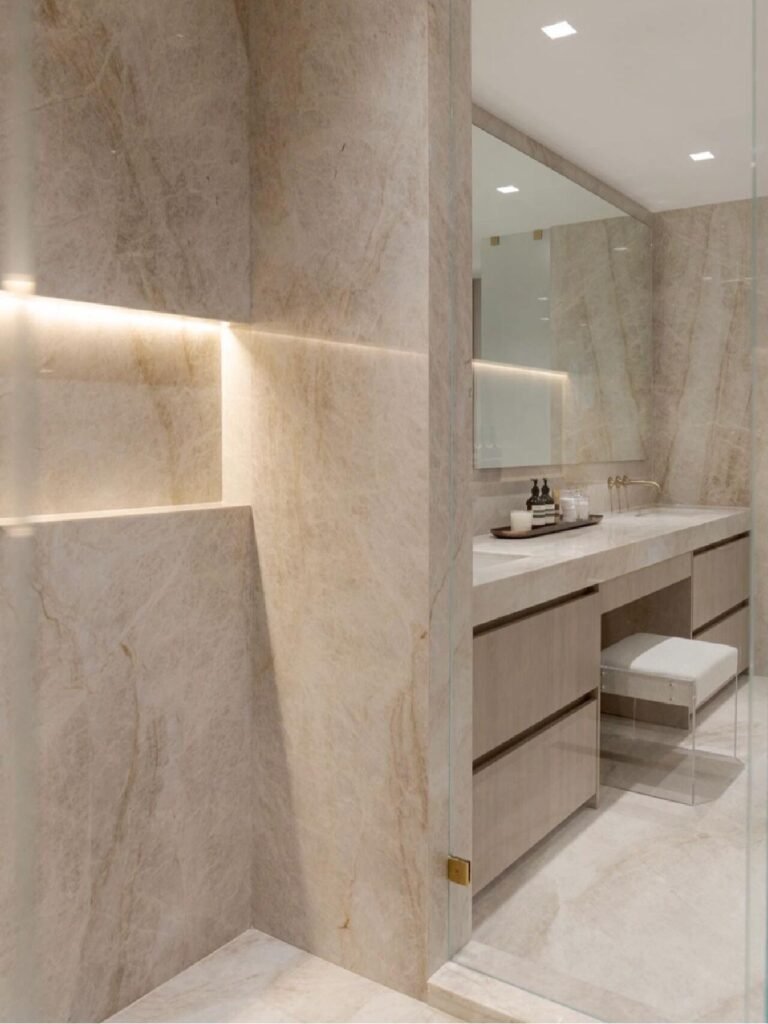
Taj Mahal quartzite is a metamorphic stone that begins as quartz-rich sandstone, which—under heat and pressure—recrystallizes into an interlocking mosaic of quartz crystals. That crystalline reworking produces the density, hardness, and granular texture that distinguish quartzite from both marble and engineered quartz. The signature Taj Mahal palette typically includes creamy whites, soft greys, and subtle champagne-to-gold veining; mineral inclusions and trace oxides create the tonal shifts that make each slab different.
Quartzite vs. marble: same metamorphism family, different character
Both marble and quartzite are metamorphic rocks, but they derive from different parent materials and thus behave differently. Marble comes from limestone and often contains calcite (soft and prone to etching), while quartzite forms from sandstone and is dominated by quartz (hard, abrasion-resistant). These formative differences explain the practical performance gap: quartzite tends to be dramatically harder and more heat-resistant than marble, while marble offers a unique patina and translucency prized for classic interiors.
Visual uniqueness & aesthetic appeal: why are no two slabs the same?
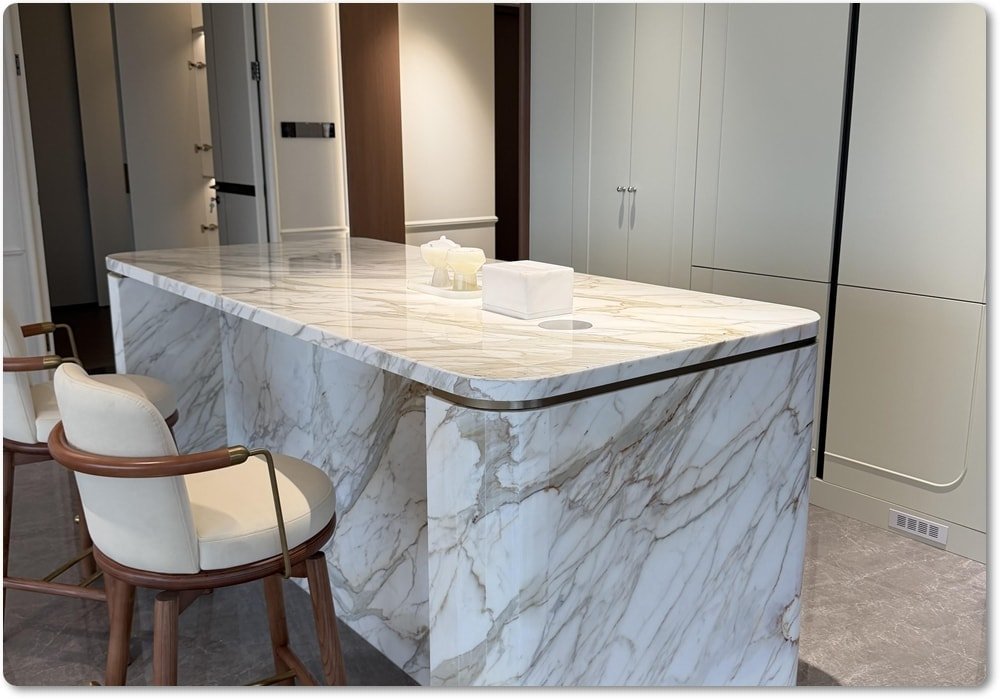
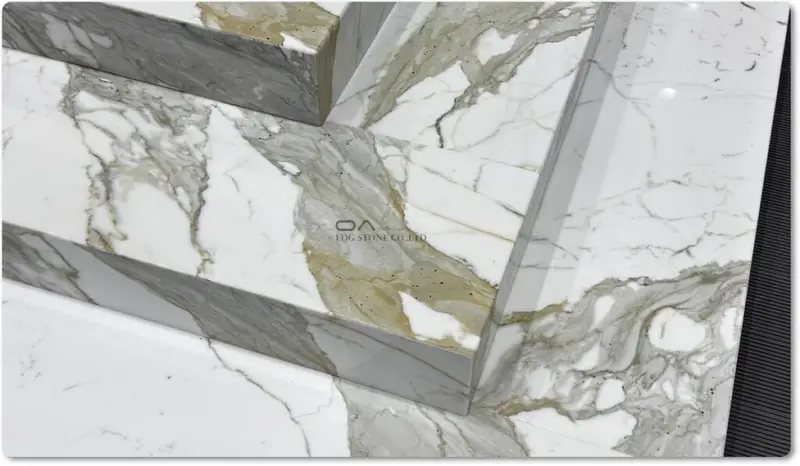
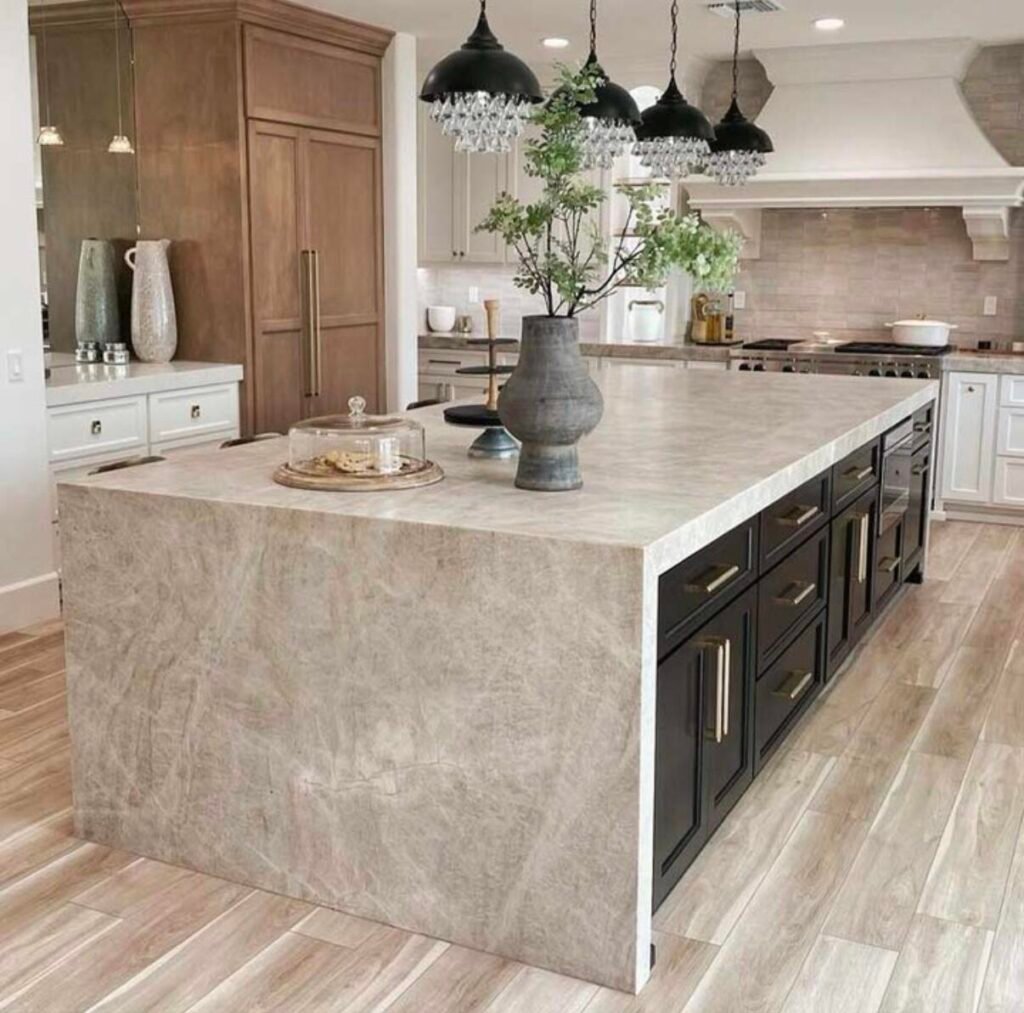
Each Taj Mahal slab tells a geological story: vein trajectories, mineral “veins-in-veins,” subtle color halos, and tiny fissures create visual topography. This natural variance is the core of authenticity and is the reason many high-end projects seek whole-slab buys or bookmatched pairs. A waterfall island that uses one continuous slab to wrap from countertop to face is a perfect example of how natural variation becomes a design feature, elevating the installation from surface to spectacle.
Bookmatching and slab yield: making rarity a design asset
Bookmatching — pairing two consecutive slabs so veining mirrors across a seam — multiplies perceived authenticity and is often used for focal walls and island faces. Because bookmatched installations require matched slabs, they reduce usable yield and increase the project’s rarity and cost; for an owner, that scarcity can translate into higher perceived value and stronger resale messaging.
The appreciation potential of natural stone
Natural stone appreciation is not the same as financial market upside, but in interior design and high-end property markets, it can deliver measurable value uplift. Three drivers support appreciation:
Rarity and slab yield — slabs with dramatic, continuous veining are limited in number and often reserved for premium projects.
Provenance and documentation — slabs with clear quarry provenance, documentation, and high-quality photography behave like collectible assets in portfolios and design showcases.
Architectural context — integrated high-impact installations (bookmatched walls, waterfall islands, full-height fireplace cladding) create visible differentiators that real-estate buyers reward.
An installation that showcases a single, dramatic Taj Mahal slab can convert a routine kitchen into a memorable design statement, often improving perceived quality and buyer appeal at resale.
Taj Mahal quartzite vs. marble: authenticity, performance & value
From a technical standpoint, quartzite typically scores near 7 on the Mohs hardness scale, whereas marble is commonly around 3–4. That difference translates into materially better scratch resistance and abrasion performance for quartzite. Quartzite also tends to be more heat-tolerant and less prone to knife marks and routine wear — important considerations for a room that sees heavy use. Because quartzite requires less frequent repair and can retain polish longer, many owners consider it a superior long-term investment for functional surfaces while still delivering marble-like aesthetics.
Aesthetic trade-offs and aging
Marble develops a patina and surface softening over time that many collectors cherish; quartzite tends to preserve its original finish longer. If a client prioritizes the evolving character of marble, quartzite may feel “less romantic.” Conversely, for clients focused on longevity and near-original appearance, quartzite is a practical choice. Both stones are authentic; the selection is about the type of authenticity you want to live with.
Design applications that showcase authenticity
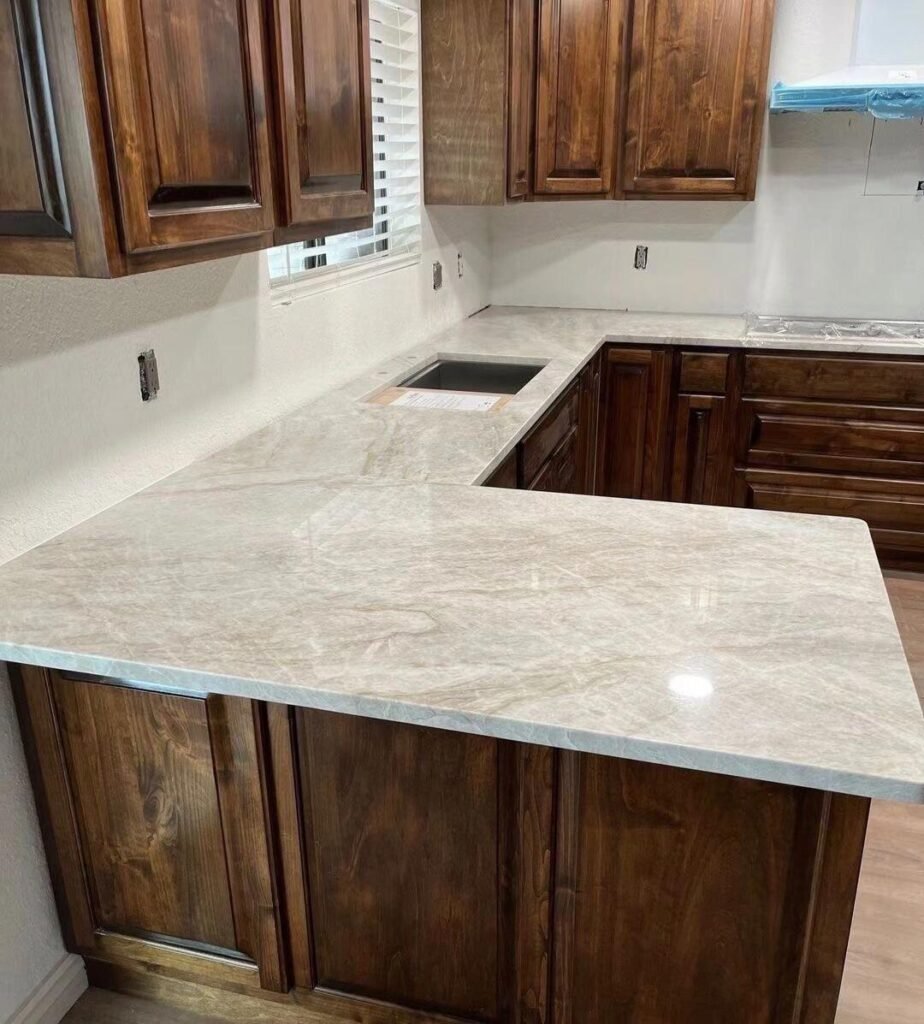
Taj Mahal quartzite excels in high-visibility applications where the stone is the story:
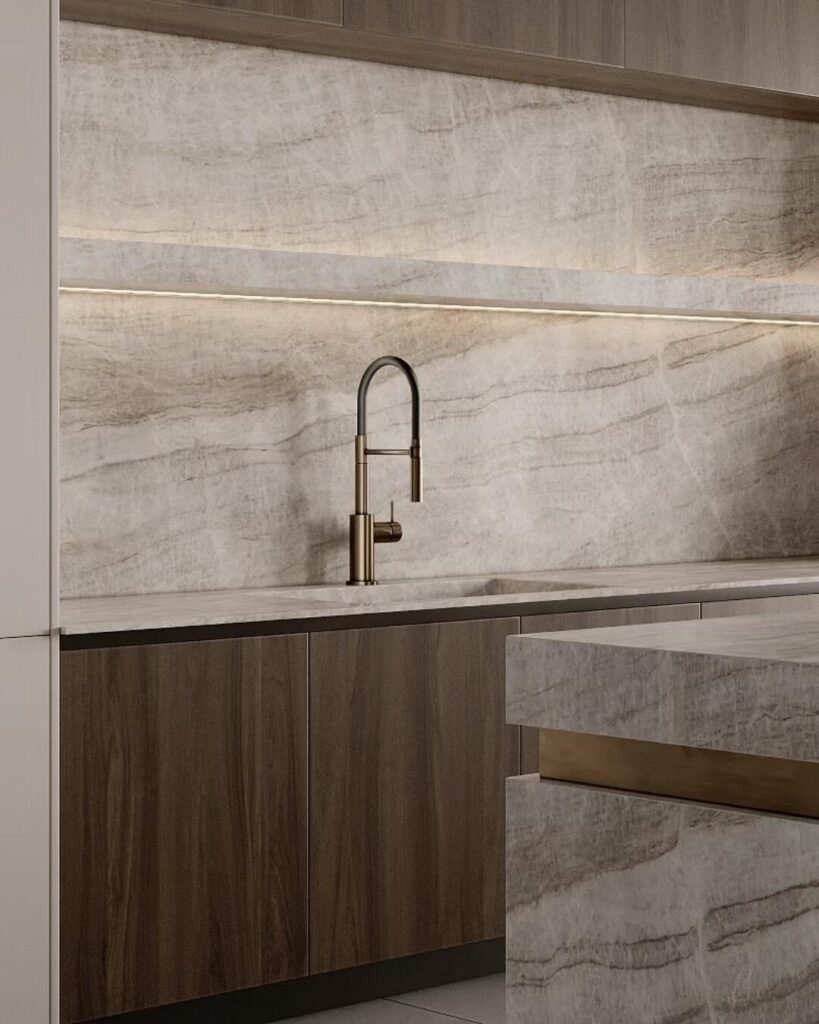
Kitchens & waterfall islands: Large, continuous slabs accentuate veining and create dramatic focal points. A Taj Mahal waterfall island paired with dark cabinets creates a bold, gallery-like contrast that many designers favor.
Bathrooms and wet walls: When used vertically — as shower walls or vanity backdrops — the stone’s veining reads like a mural. Proper sealing and competent installation prevent moisture issues.
Commercial focal features: Lobbies, reception desks, fireplace surrounds, and retail feature walls benefit from the “authentic material” message; in hospitality settings, natural stone helps convey luxury and permanence.
Photographic documentation and full-slab visuals are critical in these applications to show clients EXACTLY how the veins will flow across seams and edges.
How to source authentic Taj Mahal stone — buying guide?
Sourcing with confidence requires process and paperwork. When buying, request:
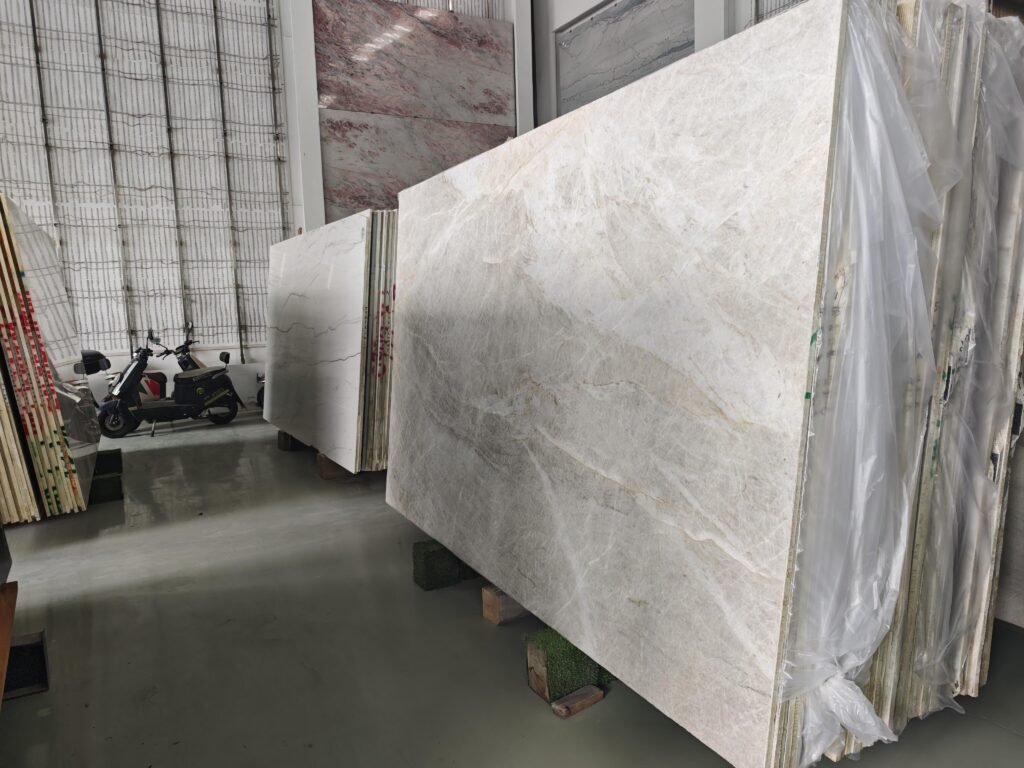
Full-slab photos (not cropped samples) and slab ID numbers.
Confirmation of geologic type (quartzite vs. marble) and any stabilization or filler treatments.
Quarry or manufacturer documentation (lot number, country of origin).
Environmental or product transparency documents when needed (EPD/HPD).
A reserve cut or sample slab for large, bookmatched installations.
Buying factory- or quarry-direct often lowers per-sqft cost but increases logistical complexity. For B2B wholesale purchases, define MOQs, shipping insurance terms for slab breakage, and acceptance criteria for tolerances and finishes.
Fabrication, installation & preservation of value
Because quartzite is hard, fabrication uses diamond tooling and requires slower feed rates; inexperienced fabricators can induce micro-fractures or excessive wastage. Seam placement is a visual decision as much as structural; work with the fabricator to plan seams along natural interruptions or hidden zones.
Installation considerations include substrate flatness, adequate support for cantilevers or heavy islands, and low-VOC adhesives if indoor air-quality compliance matters. To preserve long-term value, maintain a simple care routine: neutral stone cleaners, soft cloths, and reseal at manufacturer-recommended intervals. Document maintenance with receipts and photos to support future appraisal or resale.
Sustainability, regulation & industry direction
The natural stone industry has advanced transparency through industry-wide Environmental Product Declarations (EPDs) and Health Product Declarations (HPDs) that quantify cradle-to-grave impacts for stone products. These disclosures allow procurement teams and specifiers to compare embodied impacts by material class and align purchases with green-building credits. Suppliers that provide EPDs, evidence of water-reuse practices, and clear supply-chain statements are positioned to win institutional contracts and larger commercial projects that demand sustainability documentation.
Regulatory drivers shaping demand
Public procurement rules, corporate sustainability policies, and green certification programs (LEED v4/v4.1) increasingly reward material transparency and lower embodied carbon. Projects that require documented EPDs or supplier transparency will favor vendors who can produce the paperwork; this is altering buyer behavior and rewarding suppliers who invest in traceability.
Market trends & signals (supply, demand, outlook)
The global quartzite market shows sustained interest driven by luxury residential applications and hospitality projects. Market analyses indicate that quartzite attracts steady demand for premium stone finishes, and several market reports forecast continued growth in the natural-stone segment over the next decade. Designer surveys and industry trend reports show quartzite frequently ranking near the top of natural stone preferences for high-end kitchens and feature walls — a signal that Taj Mahal-style stones will continue to be relevant in curated interior design palettes.
Investment mindset: when natural stone appreciates
Treat high-grade Taj Mahal installations like designer art pieces. Documentation (slab IDs, quarry provenance, high-res installation photography) + collectible presentation (bookmatching, uninterrupted slabs) + market exposure (portfolio, press features, spec sheets) create a narrative that helps value retention or enhancement. Rare slabs with striking continuity can command higher premiums in bespoke projects; insurers or appraisers will ask for provenance — keep that paperwork safe.
Photography, portfolio & marketing: showcasing authenticity
To convincingly market a Taj Mahal installation:
Shoot full-slab images and in-situ installation photos in natural light.
Use alt text that describes slab attributes (e.g., “Taj Mahal quartzite slab, creamy field with champagne veining”).
Present before/after and detail crops to show texture.
Publish material certificates and EPD summaries in a dedicated project dossier to communicate provenance and sustainability.
High-value FAQ
Q1: What makes Taj Mahal quartzite authentic?
Authenticity comes from being a natural, quarried stone with verifiable origin and slab-specific variation. The crystalline texture, veining patterns, and documented provenance distinguish authentic slabs from lookalike engineered surfaces.
Q2: Is Taj Mahal quartzite better than marble for kitchens?
For daily-use kitchens, yes — quartzite’s higher hardness and heat resistance make it more forgiving than marble. Marble offers a classic patina some prefer, but quartzite reduces staining and scratching risk while preserving a marble-like aesthetic.
Q3: How do I verify a Taj Mahal slab is genuine?
Request slab ID photos, quarry documentation, and, if needed, a mineralogical or petrographic confirmation from an accredited lab. Reputable suppliers will disclose whether a slab is true quartzite rather than an engineered or resin-stabilized product.
Q4: Where can I buy Taj Mahal quartzite wholesale or factory-direct?
Buy from specialized natural stone distributors, authorized dealers of major surface brands, independent fabricators, or direct-from-quarry wholesalers. For wholesale purchases, insist on full-slab photos, delivery terms, and quality tolerances in writing.
Q5: Does Taj Mahal quartzite have resale or appreciation potential?
Yes — when installed as a dramatic, well-documented focal feature (bookmatched walls, continuous waterfall islands) and accompanied by provenance, Taj Mahal slabs can enhance perceived property value and hold collector appeal among high-end buyers.
Semantic Closure — How / Why / What / Options / Considerations
How: Taj Mahal quartzite is quarried as natural slabs and finished by fabricators using diamond tooling. Its interlocked quartz crystals give the stone structural strength and a granular visual texture that is unique to each slab.
Why: Choose Taj Mahal quartzite when you need marble’s refined appearance combined with durability and serviceability. Its long-term performance reduces lifecycle repairs, making it attractive to homeowners and commercial clients who value both beauty and practicality.
What (options): Available in polished, honed, leathered, or brushed finishes and in 2cm or 3cm thicknesses, Taj Mahal is often used for waterfall islands, full-height backsplashes, and bookmatched feature walls. Buyers can select factory-direct slabs for wholesale pricing or local fabricators for install-ready slabs.
Considerations: Verify origin and treatment, plan seam and vein layout early, work with experienced fabricators, and request EPD/HPD documentation if sustainability or public procurement compliance matters. Preserve value through meticulous documentation and professional maintenance.
References (author/article / publisher — no links)
DataIntelo — “Quartzite Market Report” — market research analysis.
WiseGuy Reports — “Quartzite Market: Trends & Opportunities” — market forecast report.
The Spruce — “Quartz vs. Quartzite: What’s the Difference?” — consumer-facing material comparison.
Industry fabricator technical guides — “Fabrication Best Practices for Quartzite” — trade fabrication guidance.