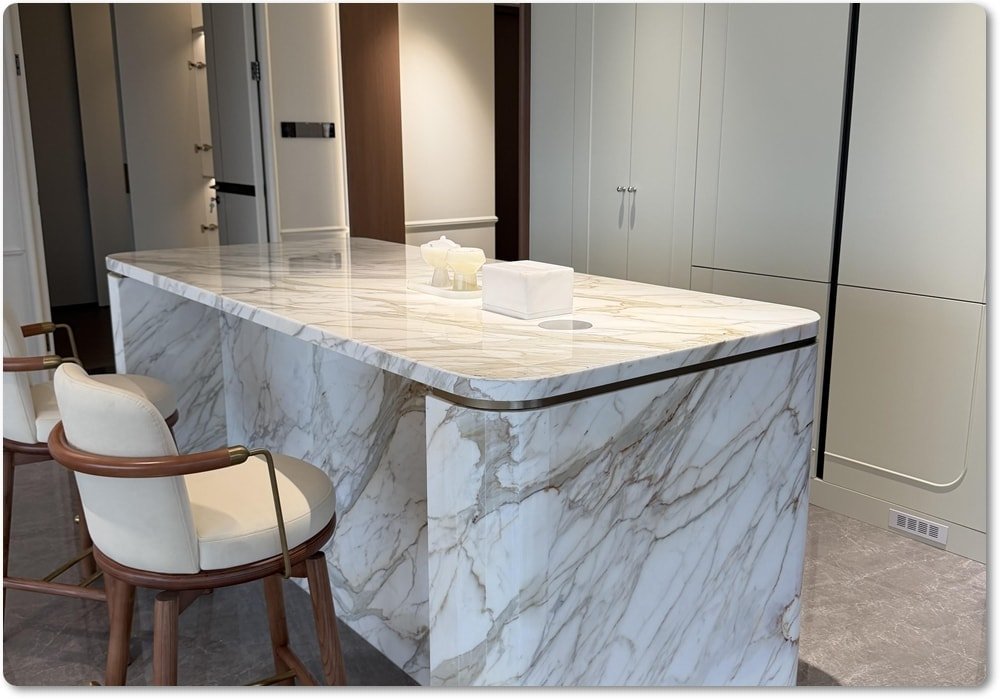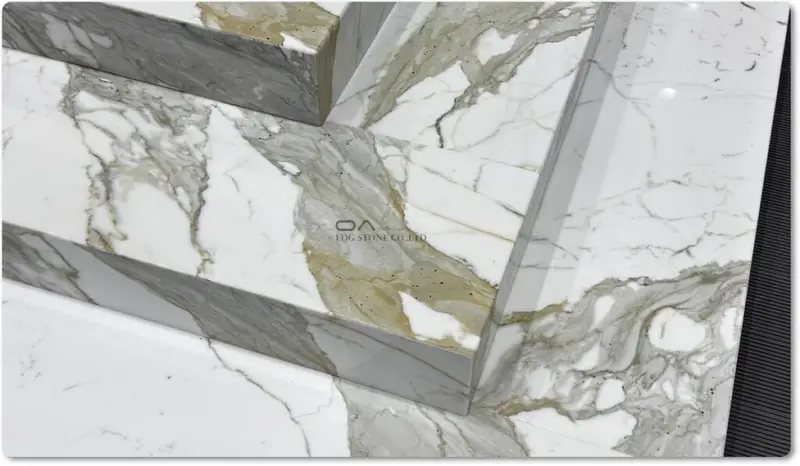
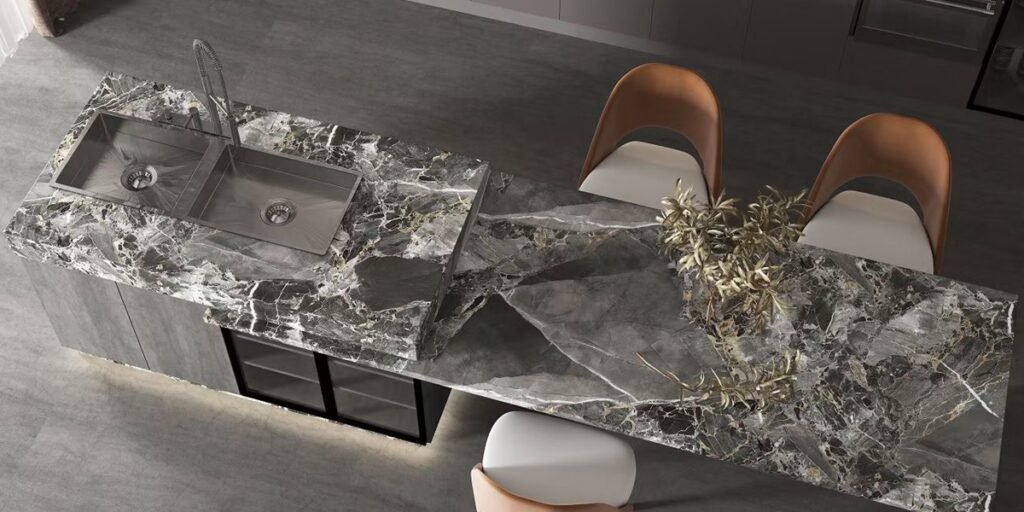
How to install a sintered stone countertop — step-by-step guide for fabricators, contractors, and DIY pros?
Sintered stone (often sold under brand names such as Dekton®, Neolith®, and other “ultra-compact” surfaces) is prized for durability, heat & UV resistance, and large-format possibilities. However, installation methods differ from engineered quartz and granite. This guide covers pre-install planning, cutting & fabrication best practices, substrate choices, sink cutouts, seam joining, attachment methods, on-site handling, silica safety & legal compliance, cost considerations, and where to buy.
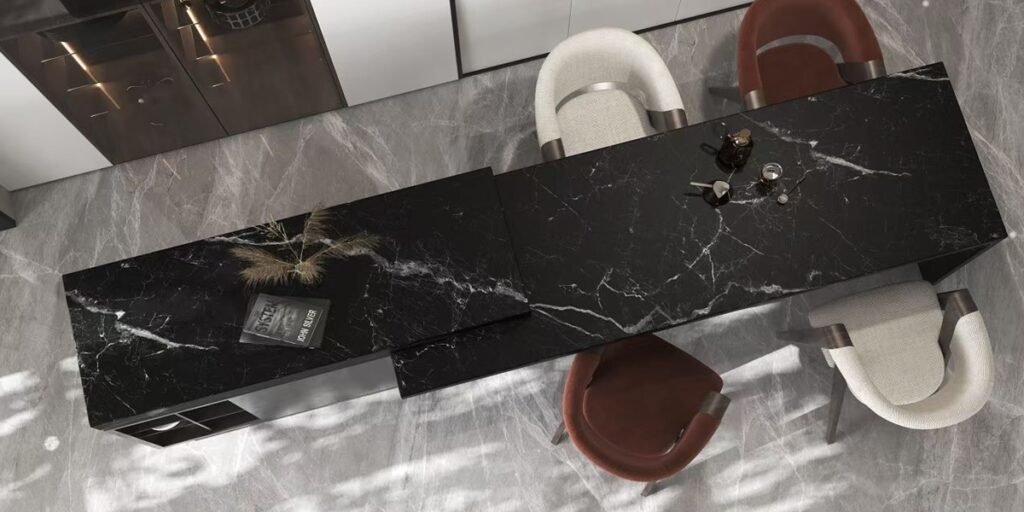
What are sintered stone countertops? (short primer)
Sintered stone is manufactured by compacting mineral powders and sintering them under very high pressure and heat to produce dense, non-porous slabs with very low water absorption. The manufacturing process produces slabs that are highly resistant to heat, UV, stains, and scratching compared with resin-based quartz. Brands publish specific installation and handling instructions that must be followed for safe, durable installations.
Before you start: planning, templating, and thickness choices
Decide on thickness early. Typical options include 8–12 mm (thin), 20 mm (standard full-thickness), and 30 mm (heavy islands). Thin slabs require attachment to a rigid substrate (plywood, aluminum honeycomb, or engineered stone substrate), while 20–30 mm slabs can be treated like traditional stone. Manufacturer datasheets specify allowable uses by thickness — follow them.
Measure and template precisely. Create a physical template (HDPE/plywood) or digital template for every opening (sinks, cooktops, fixtures). Avoid rushed templating: once slabs are cut, changes are costly.
Plan for support and cantilevers. For islands or long overhangs, add steel or plywood support as recommended by the brand. Manufacturers emphasize continuous support across corners and in heavy appliance zones.

Tools, cutting, and fabrication best practices
Sintered stone requires professional tooling and controlled cutting methods.
Diamond blades & wet cutting — Use continuous-rim or segmented diamond blades designed for sintered stone and keep effective water suppression to control dust and extend blade life. Water cooling reduces heat and dust; some fabricators use waterjet-cutting for complex shapes.
CNC & bridge saws — For precision edges and consistent tolerances, CNC machines with diamond tooling are standard. Use manufacturer-recommended speeds/feed rates to avoid chipping.
Edge finishing & polishing — Use diamond polishing pads. Thin edges (8–12mm) may be laminated to substrates and require finishing after lamination.
Tip: request the manufacturer’s cutting and tooling recommendations before you begin — this avoids tool wear, poor edge finish and warranty issues.
Substrate, reinforcement, and support options
Thin slab installations (8–12 mm): These should be laminated to a stable substrate (3/4” marine plywood, WBP plywood, aluminum honeycomb panels, or engineered stone backers). The substrate must be flat, rigid, and allow adhesive bonding per the manufacturer’s instructions.
Full-thickness slabs (20–30 mm): These need continuous cabinet support and may need additional bracing under heavy appliances or cooktops. Manufacturers recommend support bars under heavy sinks/cooktops.
Adhesive notes: Manufacturers commonly recommend specific structural adhesives and seam compounds. For example, Cosentino’s recommended installation methods use a “double-spread” adhesive technique to bond the slab to the substrate and to distribute load. Follow the brand’s product guidance.
How to install sinks, cooktops & cutouts?
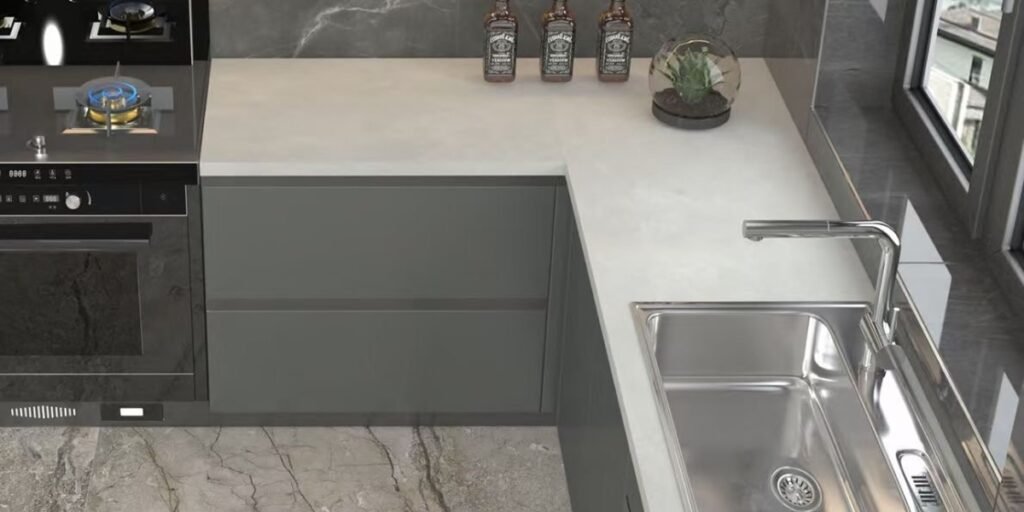
Undermount sinks: Thin sintered slabs usually require the sink to be supported by the substrate (plywood or steel frame) rather than relying on slab strength alone. If planning undermount sinks on thin slabs, design the substructure so the sink mounts to the cabinet or reinforcement frame.
Cutouts: Use circular drills and overlap for irregular shapes. All inner corners should have a minimum radius (manufacturers often recommend 3 mm or greater) to prevent stress concentration and cracking.
Drop-in cooktops: Provide continuous support and check appliance manufacturer clearances. For heavy cooktops or direct contact with heat, provide steel support bars anchored to cabinetry under the cutout.
Seams, adhesives & perimeter sealing — step-by-step install routine
Dry-fit pieces. Ensure slabs align with cabinet lines and appliances; check overhangs and corner supports.
Prepare surfaces. Clean bonding surfaces of dust and moisture; sand substrate if required by adhesive instructions.
Seam joining. Use factory-recommended seam adhesives or epoxy; apply evenly and clamp lightly to avoid squeeze-out or misalignment. Polish seems to blend color and appearance. Manufacturer manuals have recommended adhesive systems.
Final bonding (double-spread). Spread recommended adhesive both on the substrate and the underside of the slab where indicated; place the slab, apply lateral movement and light pressure as suggested by Cosentino’s double-spread method. This ensures full contact and reduces voids.
Perimeter seal & cleanup. Use neutral-cure silicone or manufacturer-specified sealant in perimeter joints and between the slab and the wall. Clean adhesives and residues per instructions to avoid stains.
Handling, transport & on-site set-in guidance
Use proper lifting equipment (slab lifters, vacuum lifters, or A-frames) for large panels. Thin slabs are brittle at the edges — protect corners.
Keep slabs flat during transport and only handle by edges using recommended suction cups/lifting gear.
Avoid rapid temperature changes during storage or installation — extreme thermal shocks may cause localized stress.
Worker safety: silica dust, OSHA & shop controls
Cutting, grinding, and polishing sintered stone can release respirable crystalline silica. Employers and shop owners must comply with OSHA’s construction silica standard (29 CFR 1926.1153), which sets exposure limits and requires engineering controls, respiratory protection when needed, and worker training. Table 1 of the standard provides specific control methods for tasks, and employers can use the standard’s controls or perform exposure monitoring. Use wet cutting, local exhaust ventilation (LEVs), and HEPA vacuums to minimize airborne dust.
Action checklist:
Use wet cutting and LEV wherever possible.
Conduct exposure monitoring if you deviate from Table 1 controls.
Provide respirators, training, and medical surveillance if necessary.

Cost expectations: ballpark prices & what affects cost
Sintered stone installations are typically more expensive than standard quartz and can be comparable to or more than granite, depending on brand and complexity. Reported installed price ranges for premium brands (e.g., Dekton) commonly fall between $60–$160 per ft² installed, influenced heavily by slab rarity, thickness, finish, edge profiles, and fabrication complexity (integrated sinks, waterfalls, island cantilevers). For many projects, expect a premium over engineered quartz because of tooling, labor, and shipping for large-format sheets.
Where to buy — manufacturer / factory / wholesale search suggestions?
To source sintered stone slabs or wholesale quantities, search with purchase-intent keywords:
“sintered stone slab manufacturer [country]”
“Buy Dekton countertops wholesale [region]”
“sintered stone factory direct supplier”
“sintered stone countertop distributor near me”
Confirm the supplier provides technical datasheets, installation manuals, and warranty terms. Major brand starting points: Cosentino (Dekton®) and Neolith — both publish technical installation manuals and dealer networks.
Long-tail purchase-intent keywords (3–5)
“Buy sintered stone countertops manufacturer wholesale USA”
“floor-to-top Dekton countertop installer near me factory dealer”
“sintered stone countertop installation guide PDF manufacturer”
“sintered stone undermount sink installation support frame”
“Sintered stone vs granite cost per square foot installed 2025”
FAQ
Below are five common search queries and concise answers. These exact Q&A lines are repeated verbatim in the JSON-LD schema that follows (for Google Rich Results).
Q1: How do you install a sintered stone countertop?
A1: Install by templating and cutting to fit, adhering thin slabs to a rigid substrate if required, joining seams with manufacturer-approved epoxy, using the double-spread adhesive bonding method on the final set, supporting overhangs per brand guidance, sealing perimeter joints, and performing final polish/cleaning per the manufacturer’s manual.
Q2: Can you install an undermount sink in a sintered stone countertop?
A2: Yes — but undermount sinks on thin sintered slabs require the sink to be supported by a reinforced substrate or a steel frame rather than relying solely on the slab; follow the manufacturer’s sink cutout guidelines and inner radius recommendations.
Q3: What tools do you need to cut sintered stone?
A3: Diamond blades and bridge saws, CNC machines, waterjet cutters for complex shapes, wet cutting setups to control dust, and diamond polishing pads for finishing. Follow the manufacturer’s cutting specs to avoid chipping and warranty issues.
Q4: Is sintered stone more expensive than granite?
A4: Often yes — premium sintered brands can cost more per square foot installed than many granites because of manufacturing costs, large-format handling, and fabrication complexity. Installed price ranges for high-end sintered surfaces often start higher than common granite ranges.
Q5: What silica safety rules apply when fabricating sintered stone?
A5: OSHA’s construction silica standard (29 CFR 1926.1153) applies; the standard sets exposure limits, mandates engineering controls (wet cutting, LEV), respiratory protection where necessary, exposure monitoring, and worker training. Fabricators must implement Table 1 controls or measure and control exposures accordingly.
Semantic Closed-Loop: How / Why / Options / Considerations for sintered stone countertop installs
How: Follow manufacturer templates and technical manuals — cut with diamond tools and wet cooling, scaffold thin slabs to a substrate if <12mm, join seams with specified epoxy, and final bond with the double-spread adhesive method for full contact.
Why: Sintered stone is chosen for durability, UV resistance, and low porosity — ideal for outdoor kitchens, high-heat commercial counters, and large-format modern aesthetics. Brands provide distinct installation paths based on thickness.
Options (detailed):
Thin-laminated (8–12mm + substrate): lightweight modern look, requires substrate and controlled lamination.
Full-thickness (20–30mm): direct installation, easier edge profiles, heavier support needs.
Consideration (detailed)**:
Fabrication safety: silica controls in the shop are mandatory under OSHA; wet cutting + LEV + PPE reduce risk and protect warranties.
Procurement: ask for technical datasheets, installation manuals, and references. For large jobs, require factory-backed warranty and certified installer evidence.