Where Does Ming Green Marble Come From — Quick Summary
1. Short answer: geographic origin and quarry location
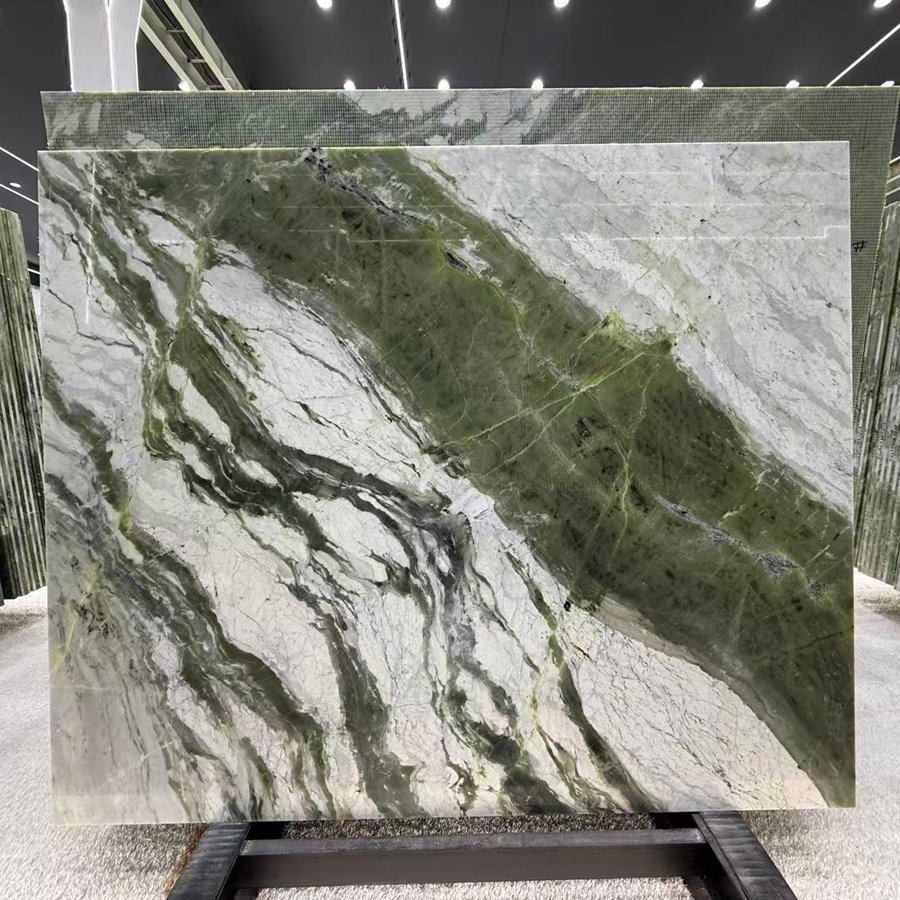
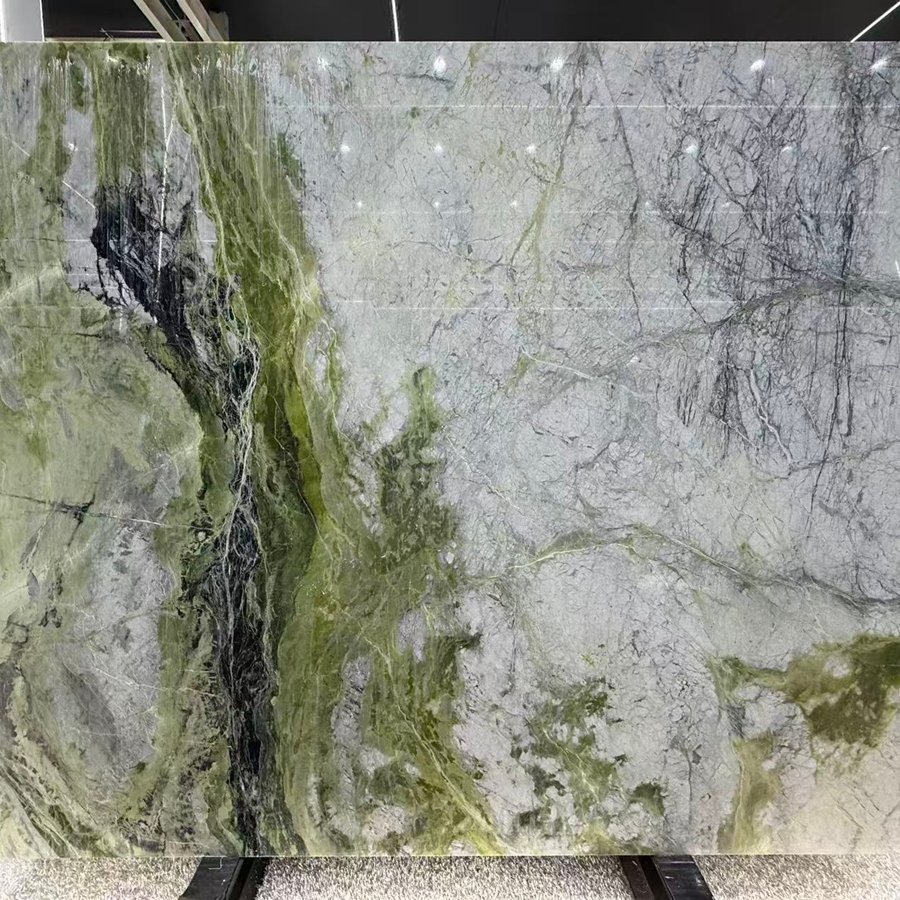
Ming Green marble is quarried in China, primarily in the northeastern province of Liaoning (Dandong area). Multiple stone suppliers and quarry listings identify the Dandong/Liaoning region as the primary source for Ming/Verde Ming green marble blocks that are later sawn into slabs and cut into tiles and mosaics.
2. Why origin matters: geology, color, and supply consistency?
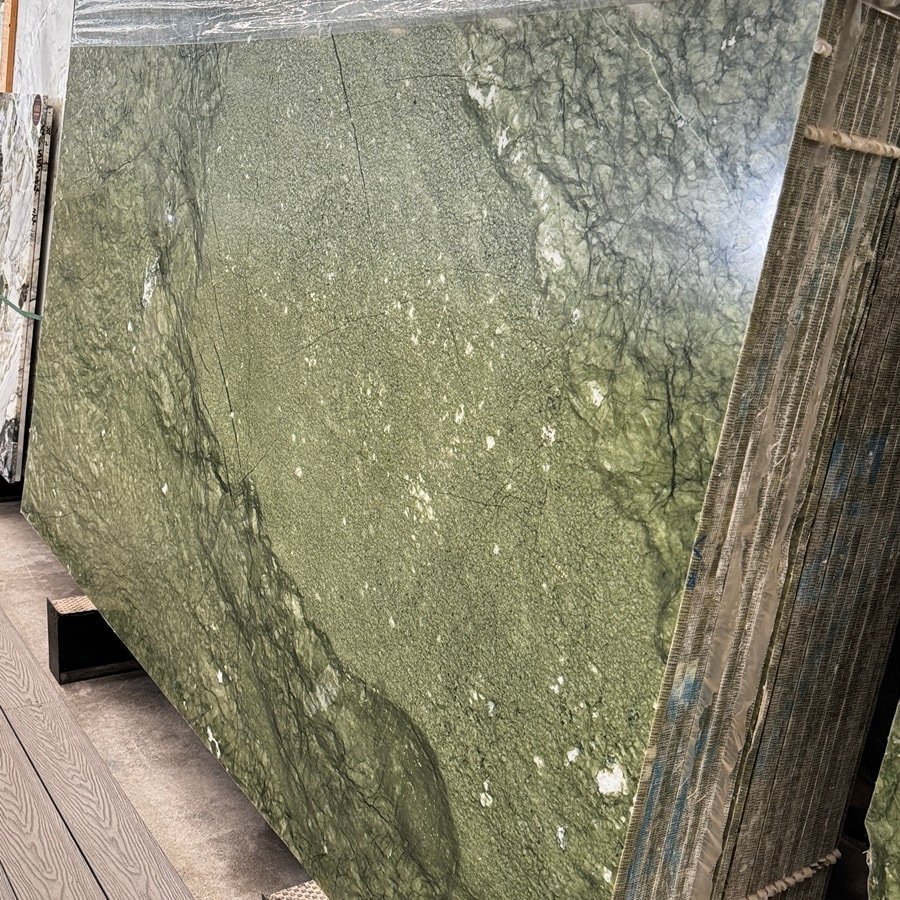
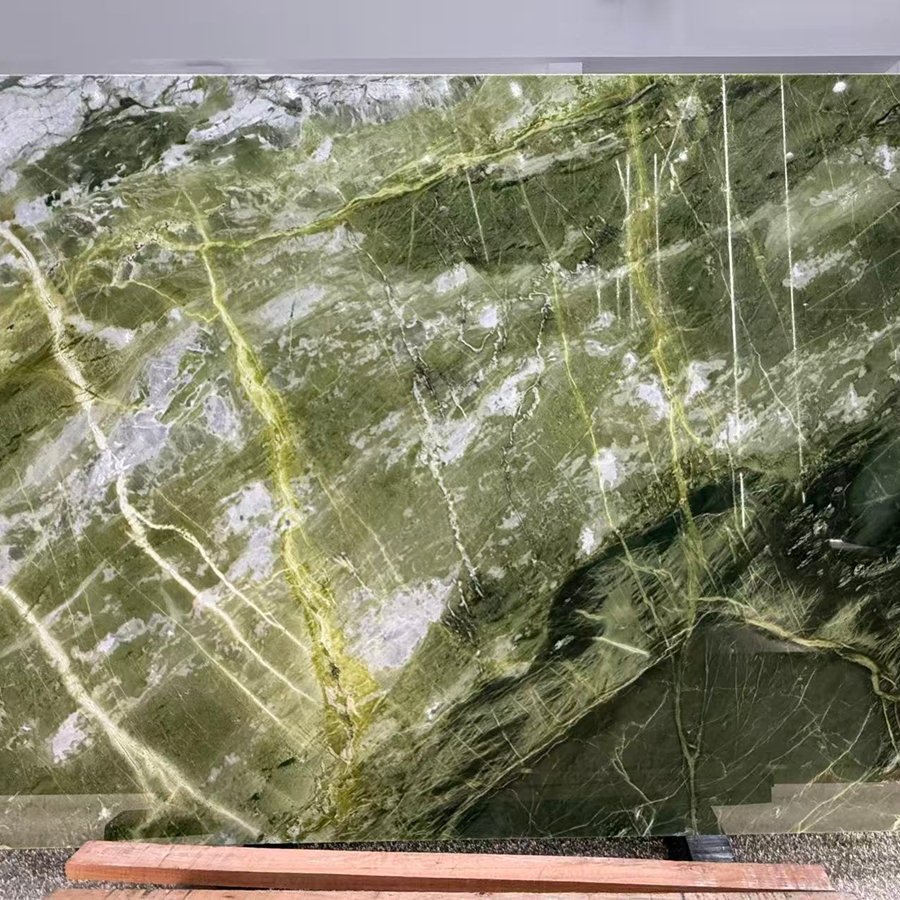
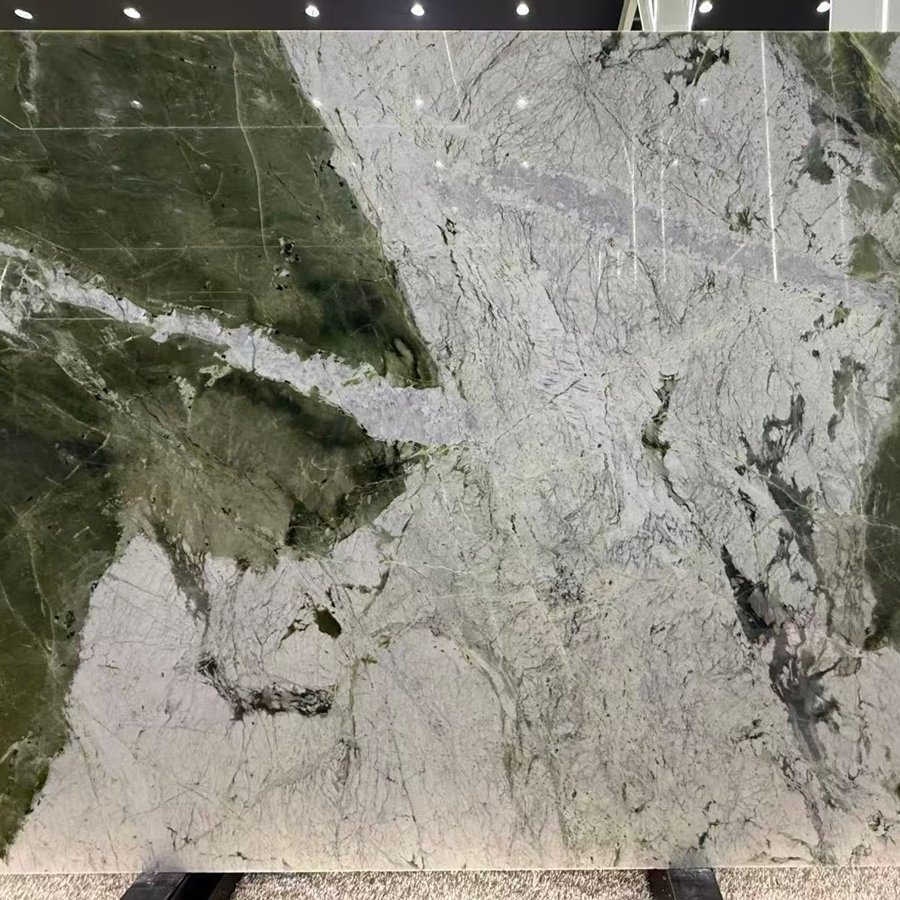
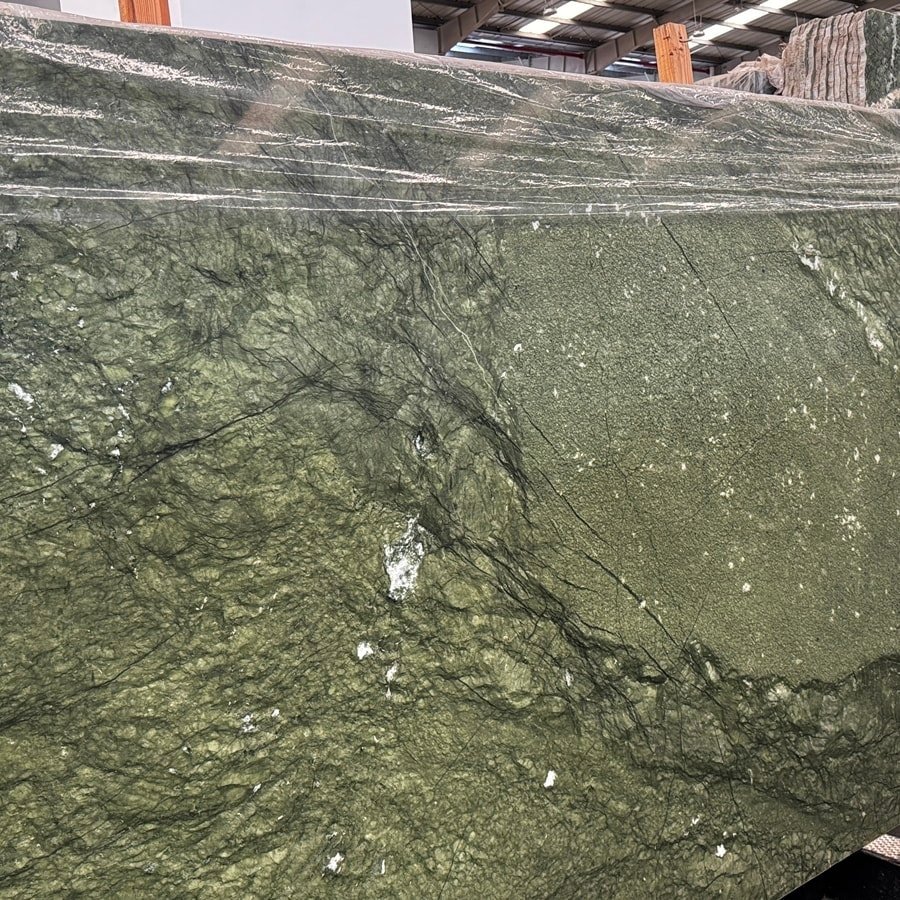
The visual qualities of Ming Green—its soft mint tones, occasional cloudy white veins, and sometimes crystalline flecks—are the result of the stone’s mineral composition and regional geology. Green marbles often gain their color from serpentine minerals or other mineral impurities present in metamorphosed limestone/dolomite. Knowing the quarry (Dandong, Liaoning) helps buyers predict typical color ranges and request slab photos that match their design intent.
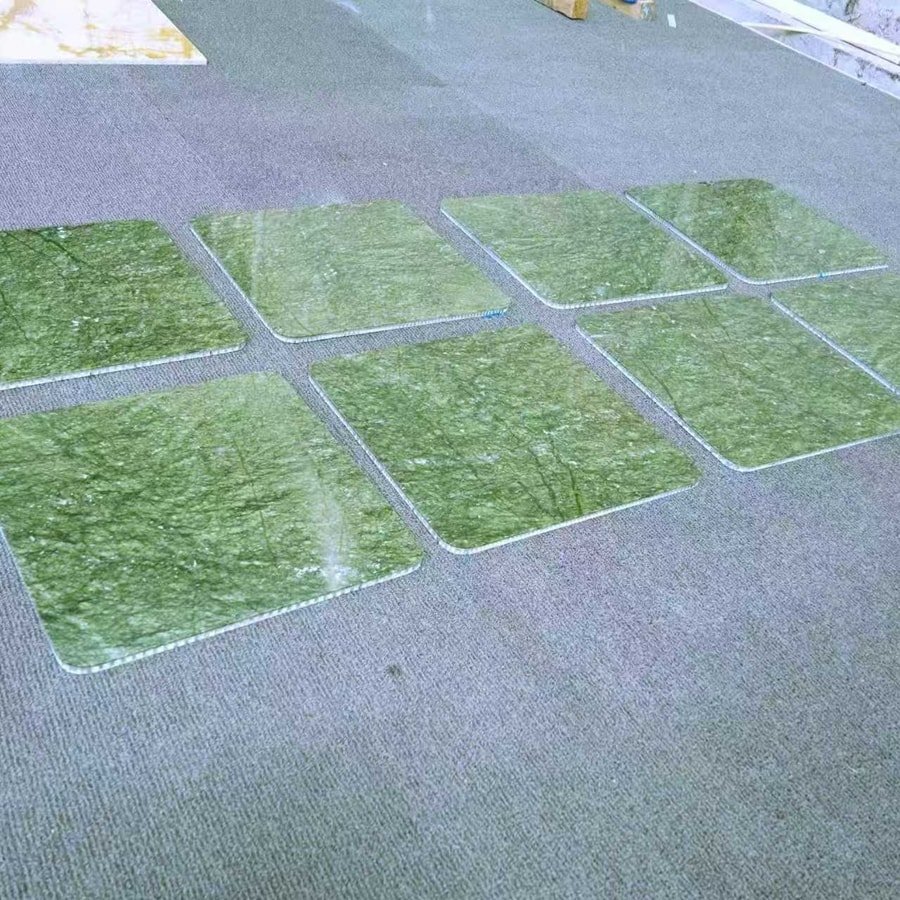
3. Product forms you’ll actually buy (slabs → tiles → mosaics)
Ming Green is sold in three main product families:
Slabs — large format 2 cm and 3 cm polished or honed slabs for countertops, wall cladding, and large continuous surfaces. Slabs are the unit you request for book-matching and full-height runs.
Tiles — field tiles (standard sizes include 12×12″, 12×24″, 6×12″, and thin veneer tiles). “Ming Green marble tile 12×12” is a common retail SKU for bathrooms and backsplash work.
Mosaics & specialty tiles — penny round, octagon, basketweave, or Thassos-mixed mosaics that pair Ming Green chips with white pieces (e.g., Thassos). These are sold on sheet goods for easy installation.
4. Who fabricates and supplies Ming Green — factories, manufacturers, wholesalers?
The standard supply chain looks like:
Quarry (Dandong/Liaoning) — extracts block volumes. Some quarry operators sell rough blocks to stone mills.
Primary processing mills/factories — located largely in Chinese stone manufacturing hubs (Fujian, Xiamen, and nearby industrial clusters). These mills cut blocks to slabs, polish/hone finish, and fabricate tile mosaics and moldings. Many operate export lines to Europe, North America, and Asia.
Exporters/traders/wholesalers — handle containerized shipments, customs clearance, and B2B sales (project lots and smaller SKUs).
Local distributors & showrooms — stock 12×12 tiles and mosaic sheets for designers and retail customers.
Tip: Search for “Ming Green marble slab manufacturer China”, “Ming Green marble factory wholesale” to find factory options and bypass middlemen when you need volume pricing.
5. Typical technical specs & performance notes (what to request)
When specifying Ming Green for a project, request the mill’s test data. Common performance metrics to request:
Thickness & formats: 2 cm (20 mm) and 3 cm (30 mm) slabs; 12×12″ tiles often at 3/8″ (10 mm).
Water absorption: acceptable values for interior wet areas are typically below 0.5% (confirm with the supplier).
Flexural strength/modulus of rupture: ask for ASTM or ISO test results via a lab report. The Natural Stone Institute recommends lab verification for project compliance.
Slip resistance: for floor/wet areas, prefer honed or textured finishes and ask for measured COF (coefficient of friction).
Freeze-thaw / exterior suitability: many Ming Green stock sheets note “not freeze-thaw suitable” — confirm if you plan external paving.
Why test data matters: natural stone varies by block and quarry seam. Test data ensures the batch you buy meets performance needs for floors, showers, or countertops.
6. Design pairings & why Thassos white appears with Ming Green
Thassos is an ultra-white crystalline marble often used to brighten and offset softer green marbles. Ming Green + Thassos pairings are common in mosaic sheets (e.g., Thassos polished penny round with Ming Green dots) because the contrast highlights the green while maintaining a clean, luxurious aesthetic. This combo is widely used in bathrooms, niche walls, and high-end retail projects.
7. Sustainability, regulation, and quarry best practices — what specifiers should ask for?
Natural stone procurement increasingly requires transparency on environmental and social impacts. Key frameworks and rules that affect quarrying and stone fabrication include:
ISO TC 327 (Natural Stones): a technical committee developing harmonized standards for natural stone dimensions, test methods, and product requirements. Use ISO/TC-327 referenced tests for consistent cross-border specification.
Occupational safety & silica control: on-site cutting and fabrication generate respirable crystalline silica. OSHA’s silica standards (29 CFR 1926.1153) and guidance require engineering controls, exposure monitoring, and written exposure plans in the U.S. — similar rules exist in many jurisdictions. Ensure factories and job sites apply wet cutting, HEPA capture, and PPE.
Quarry waste & rehabilitation: marble extraction produces fine sludge and waste; recent studies and industry guidance (MDPI, 2024) emphasize sludge management, recycling, and post-mining land rehab as procurement criteria for responsible projects. Ask for quarry restoration plans and water/waste management data.
Practical ask list for suppliers: quarry origin statement, water/waste handling policy, worker safety compliance (silica controls), and any ISO or third-party test reports.
8. Buying strategy: manufacturer vs. trader, lot matching, and logistics
When to buy from a manufacturer/factory (factory direct): large projects (hotel, multi-unit), when you need matched slabs and lot control; you can negotiate better pricing and direct QA/inspection. Search terms: “Ming Green marble slab manufacturer”, “Ming Green marble factory wholesale”.
When a trader/distributor is better: smaller projects, quicker local samples, lower MOQ, and easier returns. Stocked 12×12 tiles and mosaic sheets are typically faster from local distributors.
Lot matching & quality control: insist on slab photos with lot numbers for visible matching; request on-site or third-party inspections for large slab orders; and specify packing standards for sea shipping (timber crates, pallet bracing).
Lead times & logistics: slab cutting + finishing takes weeks; shipping, customs, and inland delivery add time. Plan 8–16 weeks for custom slab orders; stocked tiles/mosaics can ship within 1–4 weeks.
9. Long-tail purchase-intent keywords
Use these phrases in RFQs, page titles, and metadata for commercial intent visibility:
Ming Green marble slab manufacturer China
Ming Green marble tile 12×12 wholesale stock
Buy Ming Green marble slab factory direct
Ming Green marble mosaic tile supplier bulk
Ming Green marble subway tile manufacturer
10. Practical care & installation notes
Sealing: Apply a high-quality penetrating sealer prior to installation (and reseal periodically for high-use horizontal surfaces).
Finish selection: honed for floors and showers (better slip behavior), polished for vanity tops and feature walls.
Acid sensitivity: marble etches with acids — protect counters and clean spills quickly.
Repair & maintenance: scratches/etches can often be re-polished by a stone fabricator.
11. The market picture & supply reliability
Because Ming Green is quarried in a specific Chinese region, supply can be reasonably consistent compared to rare stones that are exhausted quickly. Several mid-size quarries produce annual tonnages sufficient to support export markets; for example, some supplier reports reference quarry extraction volumes and stock limits per year (industry pages estimate thousands of tonnes per year, with a portion graded for high quality). Always confirm current stock and production schedules with the supplier before committing to large projects.
FAQ — Top Google Hot-Search Questions
Where does Ming Green marble come from?
Ming Green marble is quarried in China, primarily in the Dandong area of Liaoning province.Is Ming Green marble available as 12×12 tiles?
Yes — Ming Green is commonly stocked in standard tile sizes, including 12×12 (both honed and polished).Can Ming Green and Thassos white be used together?
Absolutely — Thassos white is a common pairing with Ming Green in mosaics and tile patterns, creating a bright, luxurious contrast.Should I buy Ming Green from a factory or a trader?
For large projects, you’ll likely save cost and get better lot control buying factory-direct (manufacturer/factory/wholesale); for smaller jobs and fast delivery, a local trader is more practical.What regulatory or safety matters should I check?
Verify silica-dust controls and worker safety at fabrication sites (OSHA silica standards or local equivalents), and ask suppliers about quarry waste handling and any environmental rehabilitation plans (ISO TC 327 standards and sustainability documentation are relevant).
Semantic Closing Block — How / Why / What / Options / Considerations
How: To source Ming Green reliably, first ask suppliers for quarry origin statements (Dandong, Liaoning), slab photos with lot IDs, and lab test reports (water absorption, flexural strength, slip rating). For large projects, arrange a factory visit or third-party inspection; for small projects, request sample tiles (12×12) and mosaic sheets to verify colour and finish.
Why: Ming Green offers a soft, design-forward green that reads as calming yet luxurious. Its color range and available product formats (slabs, tiles, mosaics) allow designers to create spa-like bathrooms, elegant backsplashes, and bespoke feature walls that stand out from traditional white marbles.
What: You can buy Ming Green as 2 cm/3 cm slabs (polished/honed), standard 12×12 tiles, subway tiles, and mosaic sheets, often combined with Thassos white accents. Choose honed finishes for wet floors and polished finishes for feature walls.
Options: For procurement, options include manufacturer/factory direct buying (best for matched lots and wholesale pricing) or local distributor purchases (best for speed and smaller quantities). Insist on ISO/ASTM test data and documented silica safety protocols for fabrication.
Considerations: Factor in fabrication lead times, shipping, and customs. Evaluate the long-term maintenance needs (sealing, acid sensitivity) and confirm slip resistance for floors. Prioritize suppliers who provide sustainability and post-quarry rehabilitation documentation—this is increasingly required for green building compliance.