How much are white marble countertops? — A complete, data-driven buyer’s & specifier’s guide
1) What drives the white marble countertop?
Several factors make marble pricing vary widely:
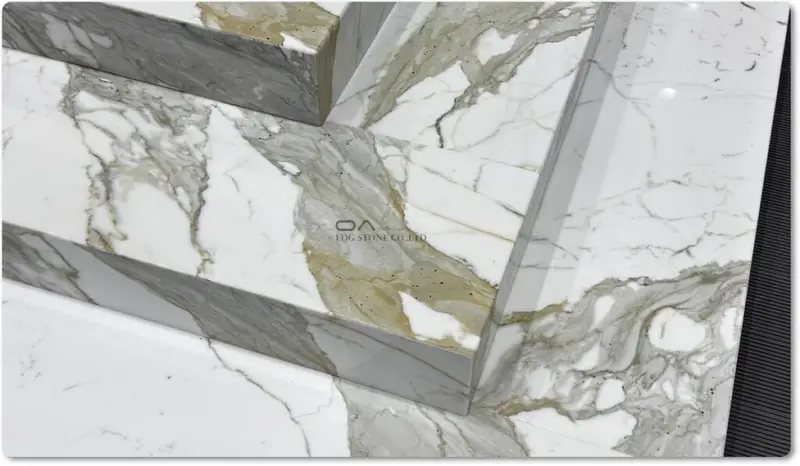
Marble species & rarity. Carrara is common and relatively inexpensive; Calacatta and some Statuario marbles (rare, dramatic veining, limited quarrying) command big premiums.
Slab size & yield. Larger, consistent veining across a slab reduces seams and raises value.
Finish & edge profile. Polished vs honed and complex edges (ogee, bullnose) require more fabrication time.
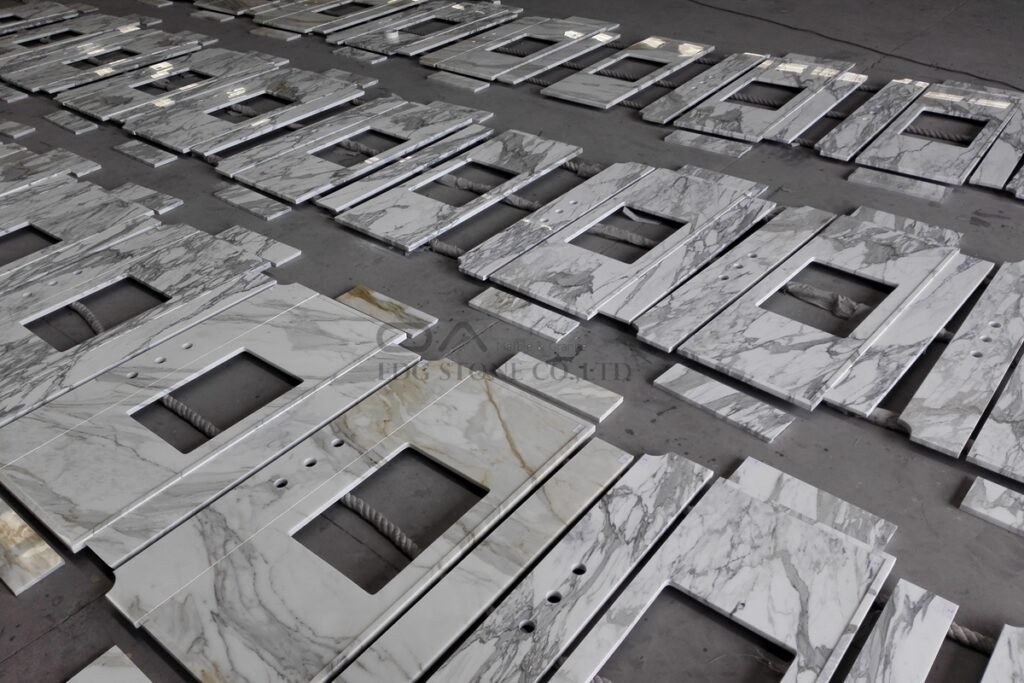
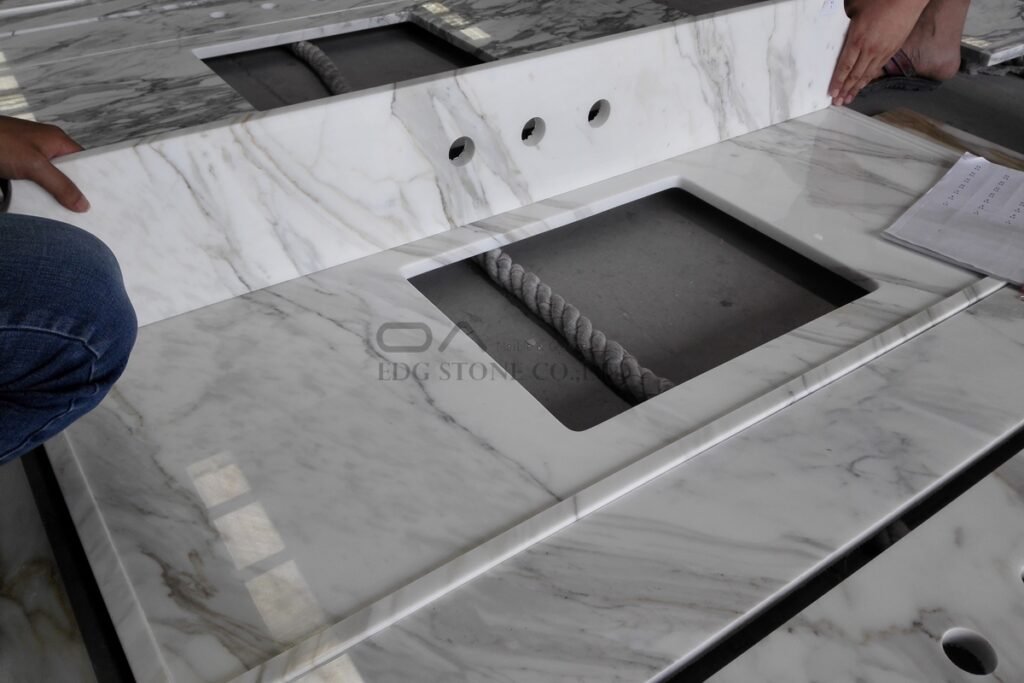
Fabrication complexity. Cutouts for sinks, integrated drains, and waterfall edges add labor and cost.
Transport & tariffs. Imported marbles (Italy, Greece, Turkey) carry shipping and tariff risk that can spike prices. Recent reporting shows tariffs and supply chain shifts affecting premium marbles.
Local labor & market. Urban centers and high-demand areas often see higher installed rates.
2) Typical price ranges by marble type (2024–2025 market snapshot)
Price data from industry sources (consumer home sites, stone fabricators, and trade publications) show wide but useful ranges:
Carrara (white/soft gray veining) — typically $40–80 per ft² installed (budget to mid-range). Good “classic white” choice.
Statuario — typically $50–100 per ft² depending on grade and source; more uniform, bold veining than Carrara.
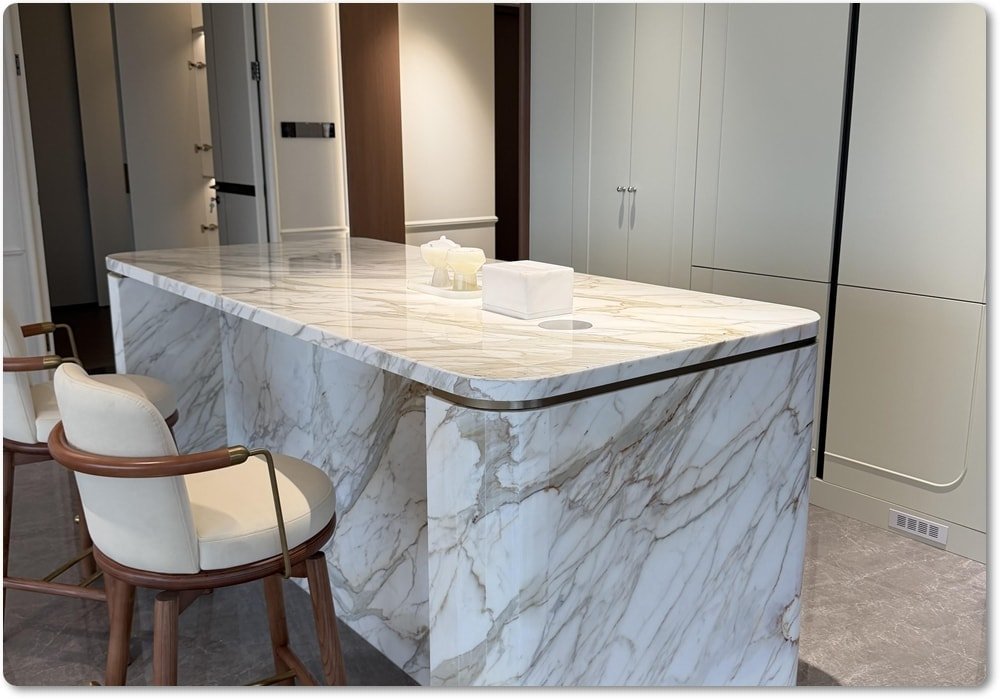
Calacatta (premium white with dramatic veining) — often $150–200+ per ft² for premium slabs; select rare pieces can cost significantly more.
Danby / Danby White (US quarries) — commonly $60–100/ft² depending on grade.
Takeaway: wide ranges reflect true market variability — smaller projects (limited sq ft) often attract higher per-foot pricing due to fixed fabrication costs. Use the specific slab quote (not just per-square-foot averages) when budgeting.
3) Material vs installed cost — what installers charge and why?
Quotes are often split into:
Material cost (slab price): What the fabricator buys from a slab yard or importer. Slab-grade, size, and origin determine this.
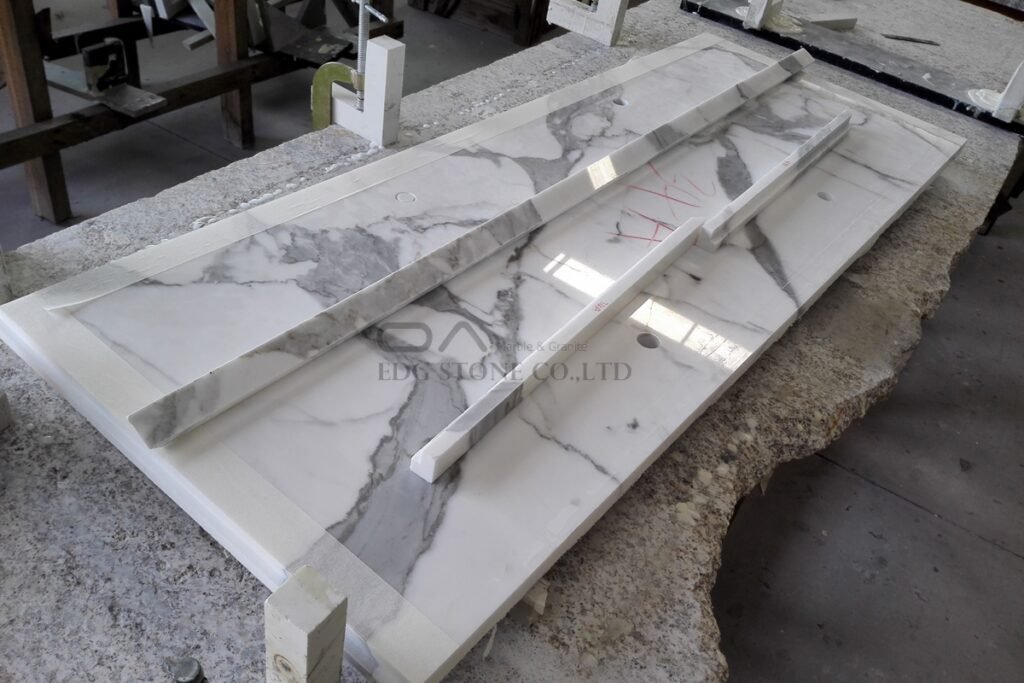
Fabrication & installation: Includes templating, CNC/bridge saw cutting, sink/cooktop cutouts, edge profiling, seams and adhesive, transport, and labor. Fabrication is labor- and tool-intensive for marble because it’s softer and requires more skilled finishing than many engineered stones.
Example split (illustrative): if a slab + waste = $1,200 and fabrication/installation = $1,800, installed cost for a 50 ft² kitchen could be ≈$60/ft² material + $36/ft² install = ~$96/ft² installed — but real projects vary by region and marble type. Always request itemized quotes.
4) Cost calculator: how to estimate your total?
A simple method:
Measure countertop area in square feet (length × depth for each run; subtract sink/cooktop openings).
Multiply by material estimate ($/ft²) — choose a low/mid/high range depending on marble.
Add fabrication & installation fee (often 30–100% of material cost — varies widely).
Add fixed fees: templating, sink cutout, removal/disposal of old countertop, and delivery.
Worked example — 50 ft² kitchen, mid-range Carrara:
Material: $65/ft² × 50 ft² = $3,250.
Fabrication & installation: $45/ft² × 50 = $2,250.
Extras (sink, edge, delivery): $500–$900.
Estimated installed total: $6,000–$6,400 (roughly $120–$128/ft² installed in this scenario). Compare this with marketplace averages and get at least 3 itemized quotes.
5) Marble vs quartz vs granite — cost & value tradeoffs
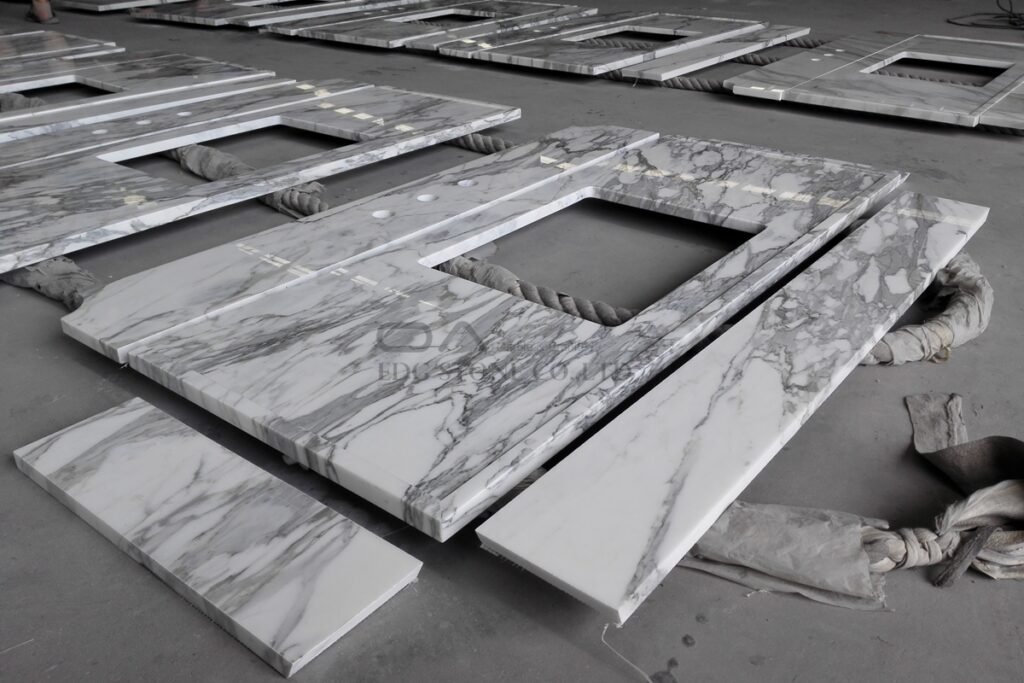
Cost: Marble often sits at the top of the price ladder for premium looks (Calacatta) — quartz and some granites can be cheaper per sq ft, depending on selection. Multiple sources show quartz ranges typically $40–100/ft², while marble often begins in similar ranges but climbs much higher for premium marble.
Durability & maintenance: Marble is softer and reacts to acids (etching) — it requires regular care and occasional professional honing or repair. Quartz is non-porous and lower maintenance; granite is harder but variable. The long-term maintenance cost of marble may make cheaper initial cost materials more economical over time, depending on usage.
Resale/design premium: Marble’s timeless luxury aesthetic can help sell high-end properties, but it’s a buyer-preference tradeoff: some buyers favor low-maintenance surfaces. Use project goals (luxury look vs family kitchen durability) to decide.
6) Maintenance & lifetime cost: sealing, etching, repairs
Key facts:
Sealing: Marble is porous and benefits from periodic sealing (frequency depends on porosity and use). The Natural Stone Institute recommends industry-specific care and routine cleaning with pH-neutral stone cleaners.
Etching & staining: Acidic food (lemon, wine) can etch; staining can occur if not sealed and wiped promptly. Repairing etch marks may require stone-professional honing/polishing — budget for occasional service.
Lifetime cost: Count sealing supplies, replacement or professional restoration (if desired), and incremental wear into your lifecycle budget — a marble surface that’s professionally maintained can last for decades, but expect maintenance work over that life.
7) Market & regulatory trends that affect price
Tariffs & import disruptions. Premium Italian marbles like Calacatta can see price spikes due to tariffs, shipping costs, and geopolitical effects. Recent reporting shows tariffs materially affecting premium slab prices.
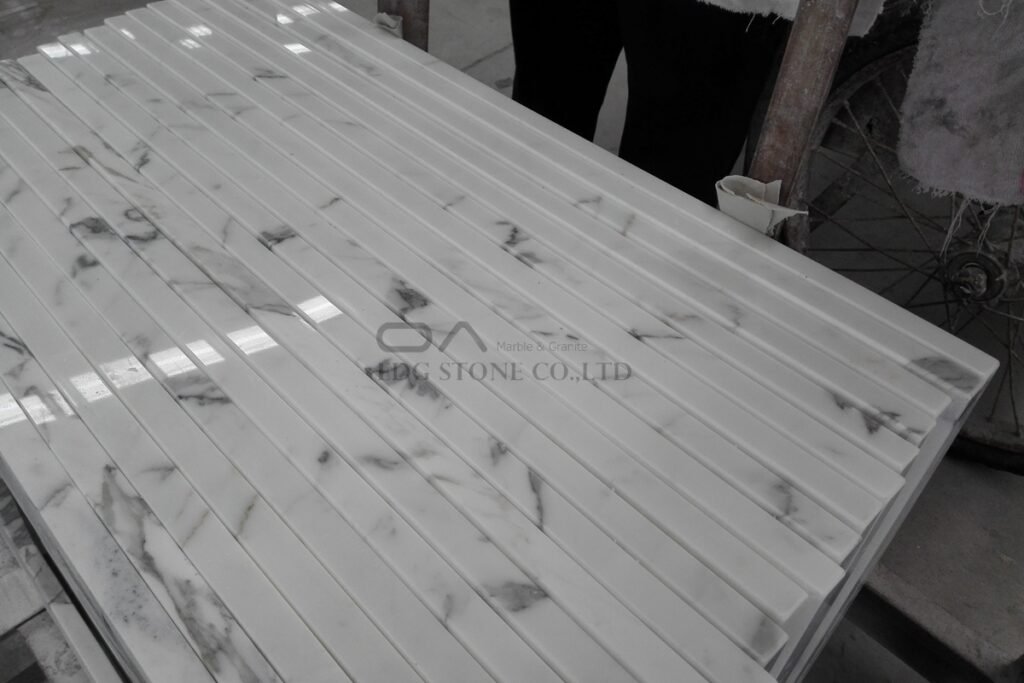
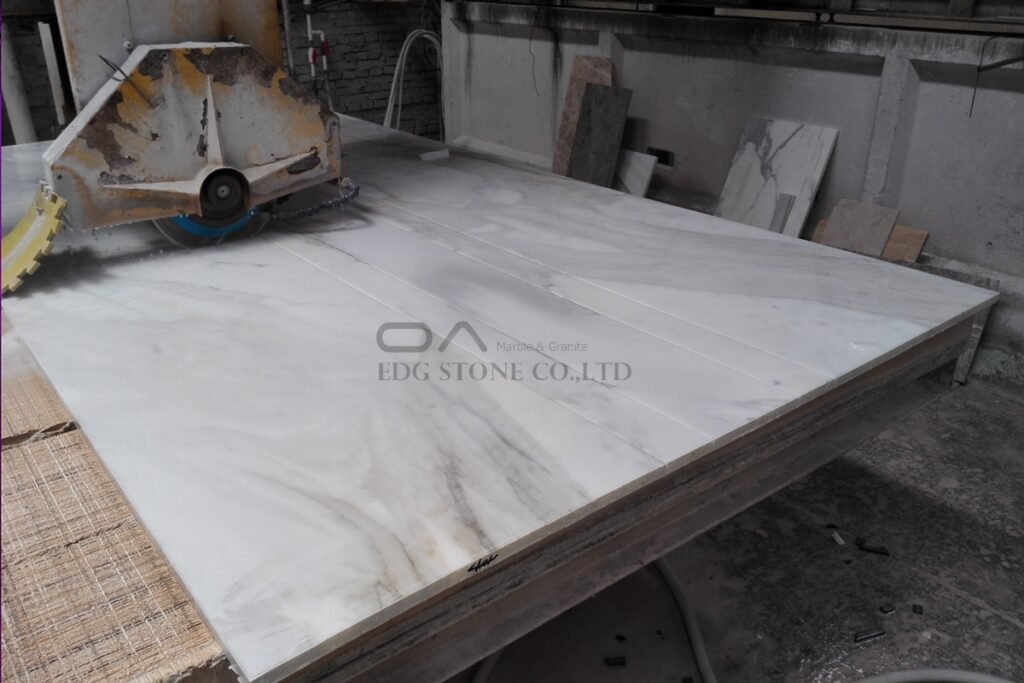
Silica & fabrication safety. Cutting stone generates respirable crystalline silica. OSHA’s silica rule (29 CFR 1926.1153) applies to stone fabrication shops and requires engineering controls and protections — compliance adds shop costs that can be passed to customers. Fabricators face potential fines for noncompliance, which increases the cost of responsible fabrication.
Sustainability & traceability. Buyers increasingly ask for provenance, low-carbon transport, and quarry-level practices; suppliers that provide verified traceability may charge a premium. Industry groups like the Natural Stone Institute provide guidance and standards that shape best practices and market expectations.
8) Where to buy — manufacturer/factory / wholesale buying tips?
Search terms that capture buyer intent:
“white marble slab wholesale [region]”
“Buy Calacatta slab manufacturer”
“marble slab importer near me”
“marble countertop factory direct [country]”
Verification checklist:
Request slab photos/lot numbers and a physical sample.
Ask for installation manuals, warranty, and references for installers who’ve worked with that slab.
Get an itemized quote (slab cost, fabrication, delivery, extras).
Confirm vendor compliance with local safety and environmental rules (especially for large commercial projects).
9) 3–5 long-tail purchase-intent keywords
“Buy Calacatta marble slabs wholesale manufacturer USA”
“white marble countertops installed cost per square foot 2025”
“white marble countertop supplier near me factory direct”
“Calacatta marble kitchen island price per square foot installed”
“marble slab import tariffs 2025 price impact”
10) FAQ
Below are five high-search FAQs. The same Q&A text is included in the JSON-LD block immediately after (ready for embedding as a schema.org/FAQPage).
Q1: How much do white marble countertops cost per square foot?
A1: Typical ranges are $40–$200+ per ft² installed, depending on the marble type: Carrara tends to be at the lower end ($40–80/ft²), Statuario mid-range ($50–100/ft²), and Calacatta can be $150–$200+ for premium slabs. Always request itemized, installed quotes from local fabricators.
Q2: Are white marble countertops more expensive than quartz?
A2: Premium white marble (especially Calacatta) often costs more than many quartz options. Quartz typically ranges $40–$100/ft², while marble can stretch well past that for rare grades — but prices overlap based on specific stone and quartz selection. Consider maintenance costs too (marble needs more care).
Q3: How much should I budget for a 50 ft² marble countertop?
A3: Using mid-range material and fabrication, expect roughly $3,000–$8,000, depending on marble type and local labor — itemized quotes are essential. (Example: 50 ft² × $65/ft² material = $3,250; plus fabrication/installation $2,250–$4,000).
Q4: Do marble countertops need sealing, and will that increase cost?
A4: Yes — marble typically requires periodic sealing and cautious cleaning (pH-neutral cleaners). Sealing and maintenance costs are modest annually but may include occasional professional restoration for etching or stains. The Natural Stone Institute provides care guidelines.
Q5: What trends or regulations could make marble more expensive?
A5: Tariffs, shipping disruptions, and increased safety compliance (silica controls for fabrication shops) can push prices higher. Buyers should expect occasional market spikes for premium imported marbles and factor in certified, compliant fabrication costs.
Semantic Closed-Loop: How / Why / Options / Considerations for buying white marble countertops
How: Purchase by selecting slab type (Carrara, Statuario, Calacatta), getting physical slab photos and lot numbers, obtaining itemized installed quotes (material + fabrication + extras), and confirming installer compliance with silica safety and warranty terms.
Why: White marble delivers timeless luxury and unique veining that can elevate property value and design impact — but entails higher maintenance and potential lifecycle costs compared with low-maintenance engineered surfaces.
Boss Design Center
Options (detailed):
Budget-friendly: Carrara slabs (lower grade selections), honed finish.
Mid-range: Statuario or Danby options with careful slab selection.
Premium: Calacatta and rare white marbles; anticipate high slab and import costs (and more complex matching for islands/waterfalls).
Considerations (detailed):
Maintenance plan: plan for annual sealing and have a restoration budget for etch/stain repair.
Regulatory compliance: ensure fabricators follow OSHA silica rules — compliance increases reliable long-term outcomes and protects workers.
Procurement strategy: buy slabs with matching lot numbers for continuous runs, work with reputable fabricators, and consider local vs imported slab trade-offs (cost vs uniqueness).