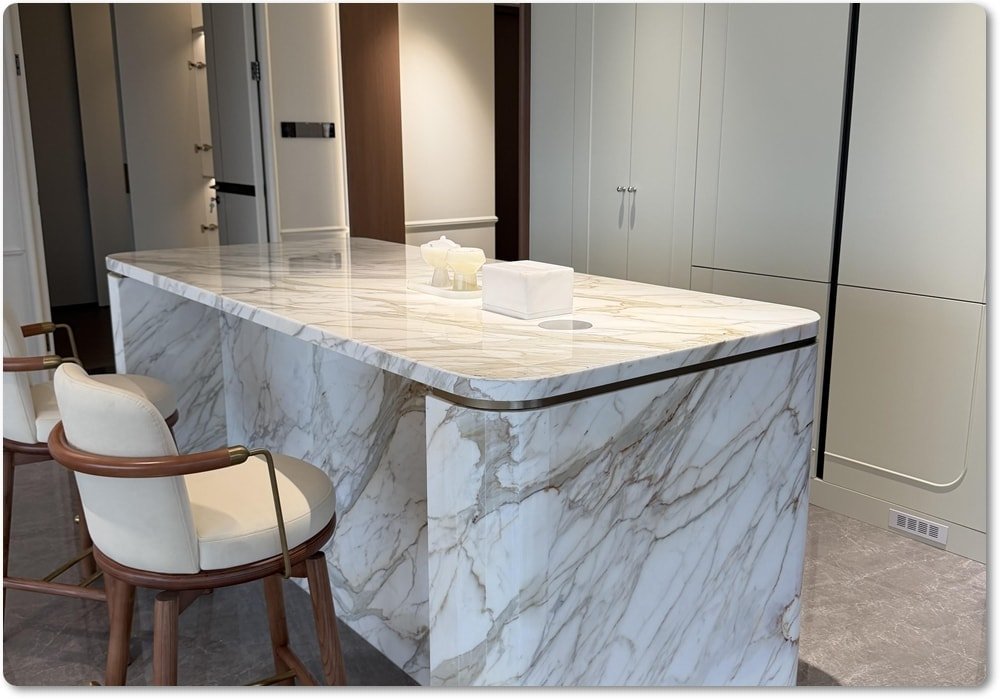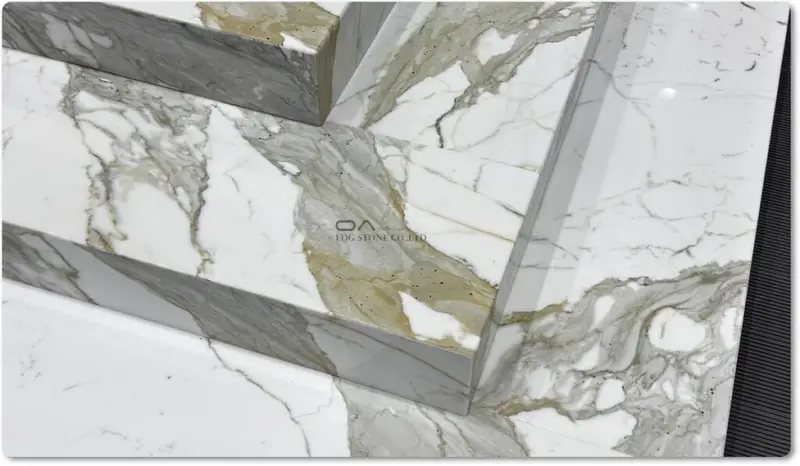
Semantic Snapshot — How / Why / What / Options / Considerations
- What:
- Calacatta is a family of calcitic marbles noted for a very white ground and bold veins; many named varieties identify subtle color/vein differences and quarry provenance.

Why: Designers choose Calacatta for dramatic bookmatch opportunities and luxury aesthetics; buyers should weigh beauty vs maintenance and cost. How (identify): Identify by ground color (pure white vs cream), vein thickness and color (grey, gold, violet), vein continuity (large vein runs vs fragmented veins), and confirm with slab IDs/quarry documentation. Options: Common types: Calacatta Gold, Calacatta Viola, Calacatta Vagli, Calacatta Michelangelo, Calacatta Borghini, Calacatta Paonazzo, Calacatta Bettogli, Calacatta Caldia, Calacatta Monet, Calacatta Manhattan — plus commercial trade variants. Considerations: Confirm origin, slab photos, bookmatch potential; consider porcelain/quartz alternatives for heavy-use surfaces; enforce fabrication silica controls under OSHA and Prop 65 guidance.
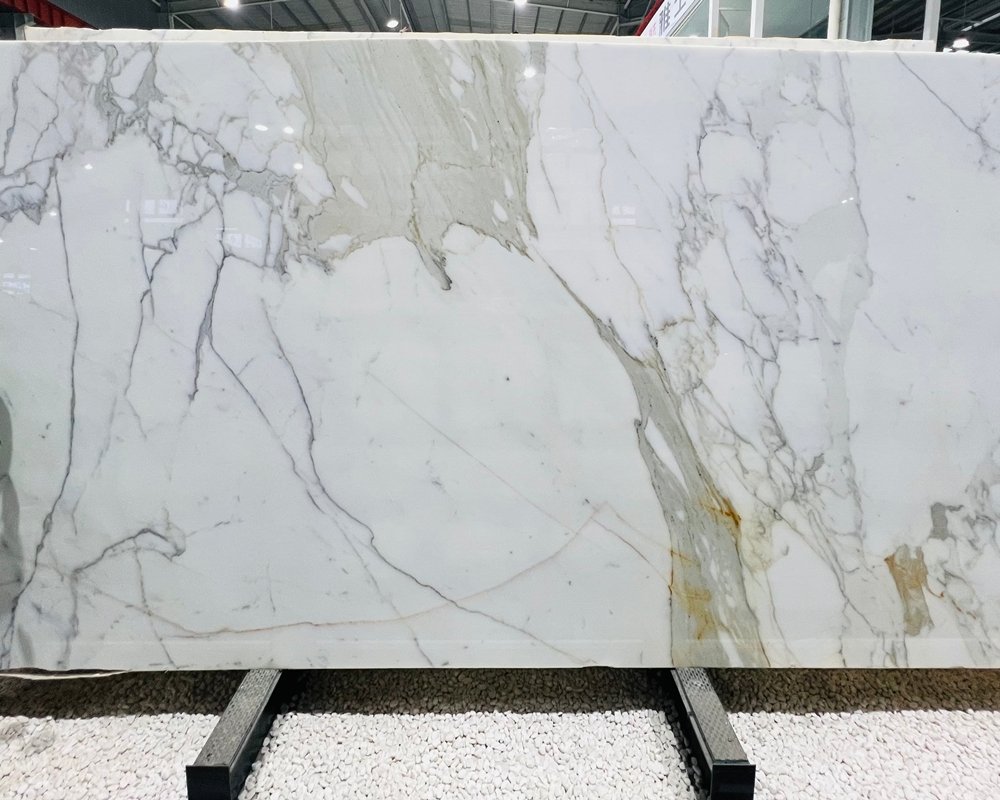
How to identify the different types of Calacatta Marble?
Calacatta marble is one of the most sought-after visuals in luxury interiors. But “Calacatta” is not a single stone — it’s a family of types and commercial trade names with distinct veining and tonal characteristics. This guide explains how to identify the main Calacatta types, what visual and technical details matter, price & procurement signals, safety/regulatory essentials (OSHA silica guidance and California Prop 65), and how to format the content so it’s easily discovered and quoted.
Quick orientation: how Calacatta differs from other Italian marbles?
Calacatta vs Carrara vs Statuario: Calacatta typically shows a brighter white background with bolder, broader veins than Carrara; Statuario may share bold veins but differs in pattern and quarry. If you need “white + bold veins + high contrast,” that’s Calacatta territory.
Visual & technical cues to identify Calacatta types
When you inspect slabs or tiles, use these objective cues:
Ground color (base):
True-Calacatta tends to have a bright, near-pure white ground. Some trade varieties may lean toward cream or soft ivory. The whiter the ground, the more premium the slab is usually perceived.
Vein character:
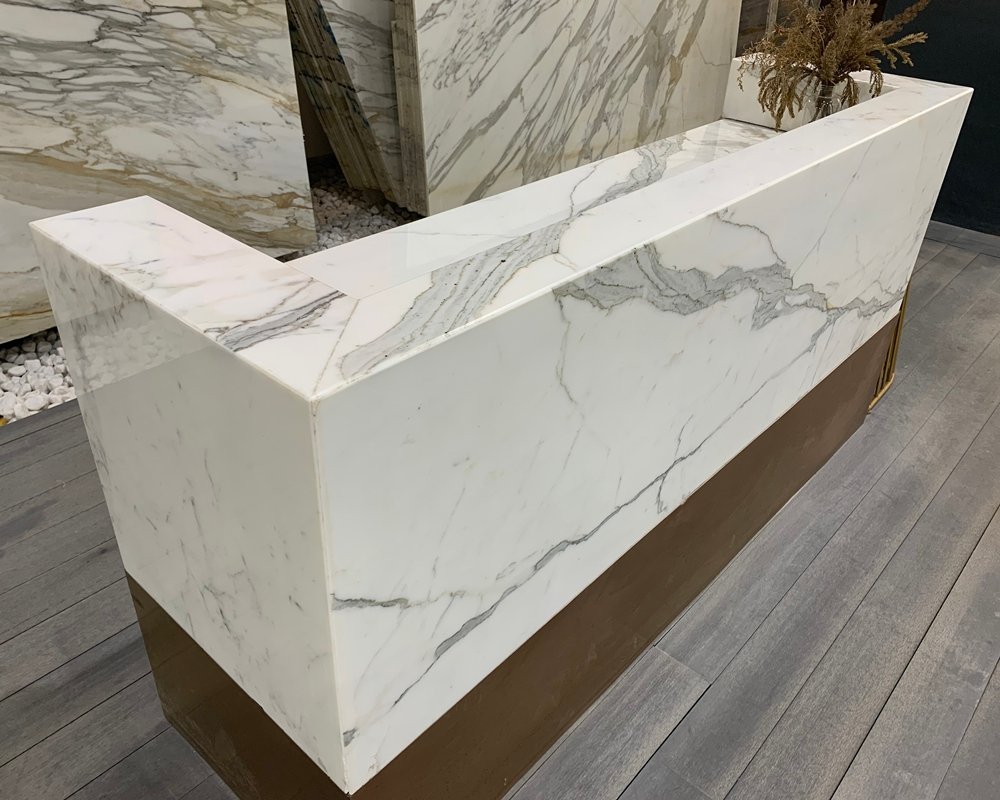
Thickness & continuity: Thick, sweeping veins that run across large areas are common in Calacatta Gold and big-bookmatch slabs. Finer, more feathery veins may indicate other marbles.
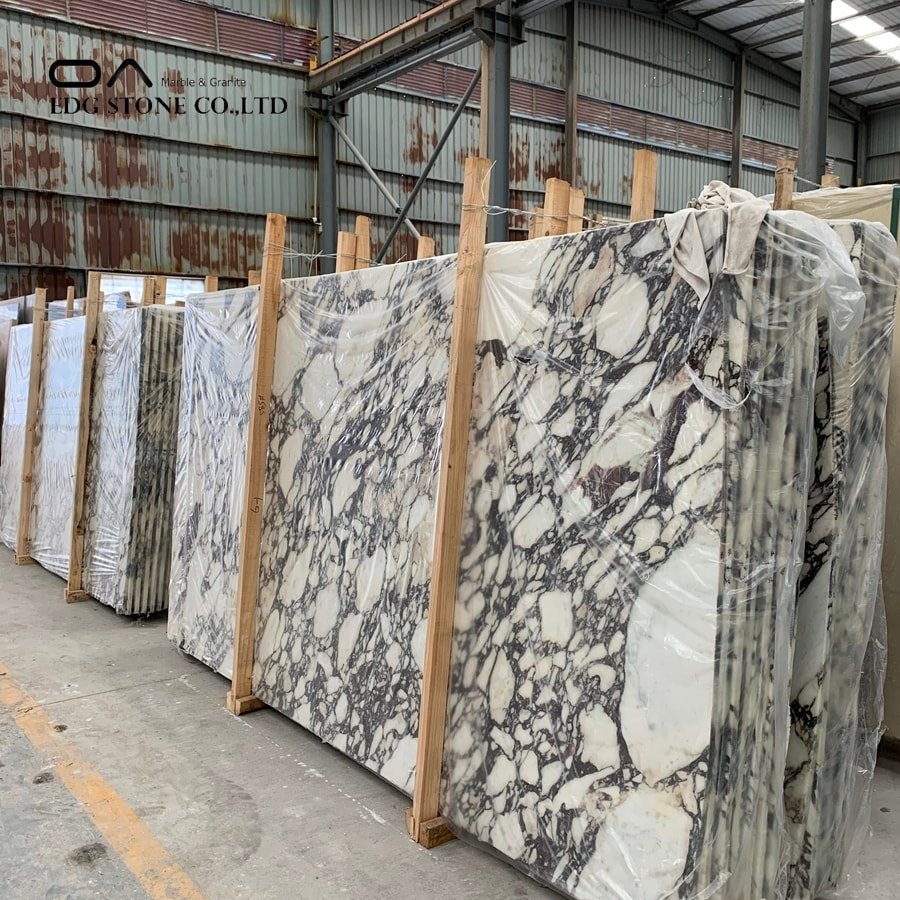
Color: Grey is common; gold, warm brown, rust and even violet/red tones appear in named varieties (Calacatta Gold, Viola, etc.).
Vein color & tone:
Gold/Oro tones → Calacatta Gold / Calacatta Oro.
Violet or reddish veining → Calacatta Viola.
Smoky grey with delicate branching → Calacatta Vagli or Michelangelo variants.
Pattern scale & bookmatch potential:
Large continuous veins make bookmatching dramatic and valuable (often used for hospitality lobbies and waterfall islands). Evaluate whether the slab’s vein runs will yield the aesthetic you expect. Ask suppliers for slab face photos and vein run videos.
Texture and finish:
Calacatta is commonly polished to a glossy shine or honed for matte; honed surfaces reduce reflection and can slightly mute vein contrast. Compare sample tiles in the finish you intend to use.
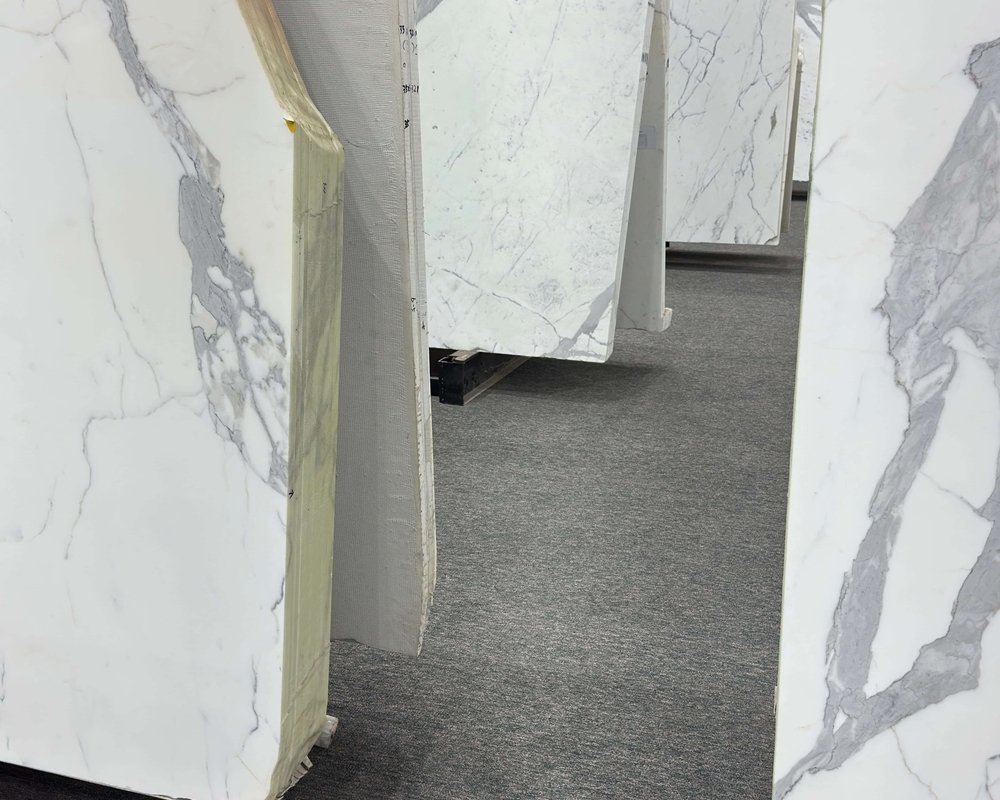
The main Calacatta types you’ll encounter (how to visually spot them)
Note: many names are trade names used by quarries and suppliers. Always verify origin and slab-level documentation.
1. Calacatta Gold (Calacatta Oro)
Look: Bright white ground with bold gold and warm brown/coffee veins. Very popular in luxury kitchens and feature walls.
Where used: Islands, bookmatched walls, hotel lobbies.
2. Calacatta Viola
Look: Distinctive violet/reddish/pink veins mixed with gold or grey. Eye-catching and rarer.
Where used: Accent panels, statement pieces where color is desired.
3. Calacatta Vagli (and Vagli Gold)
Look: Sweeping grey veins, sometimes with warm tones. The pattern may be softer than sharp Calacatta Gold streaks.
Where used: Many large-slab applications.
4. Calacatta Michelangelo
Look: Painterly veins with softer movement; sometimes a trade name for a more delicate Calacatta.
Where used: Vanities and interiors where a refined look is wanted.
5. Calacatta Borghini (Borghini / Borghini Marble)
Look: Bold grey and gold veins, often dramatic. Borghini is a sought-after trade variety named by some suppliers; it is frequently marketed for bookmatching.
6. Calacatta Paonazzo
Look: Known for brown/gold veins and an often slightly creamier background. Distinct from Paonazzo from other regions, but visually similar.
7. Calacatta Bettogli & Calacatta Caldia
Look: These are trade/local-catalog names referencing slight pattern or color variants often produced in specific small quarry bands. They vary — always request COA.
8. Calacatta Monet, Calacatta Manhattan, and other marketing names
Look: Each vendor name reflects a particular slab look — Monet may have artistic, softer veining; Manhattan may emphasize cool grey tones for modern aesthetics. Ask for slab images.
How to confirm identity beyond “looks” — supplier & quarry checks?
Visual ID is necessary but not sufficient. Do these verification steps:
Slab ID & photos: Request full-face high-resolution photos and slab or lot IDs linking photos to physical slabs.
Quarry origin & mill documents: Request quarry name/country of origin and any mill certificates or chain-of-custody documentation. True Italian-origin Calacatta typically comes from the Apuan/Carrara area — but many “Calacatta-look” stones are quarried elsewhere.
Thickness & grade: Confirm thickness (2 cm vs 3 cm) and whether slabs are prime/first choice or commercial grade.
Bookmatch availability: If you require bookmatching, confirm lot yield and see mockup images.
Samples & small tiles: Order sample tiles in the intended finish (polished/honed) to assess real-world appearance.
Price signals and market ranges (practical expectations — 2024–2025 snapshot)
Calacatta commands premium pricing compared with Carrara. Market reports and vendor pricing show wide variability depending on origin and rarity:
Material-only slab prices for common trade Calacatta often start in the low hundreds per square foot equivalent; premium and rare bookmatch slabs can cost several hundred per square foot or more. Regional retail installed quotes often place high-grade Calacatta countertops in the ~$180–$300+/sq ft range (installed), depending on complexity. Always request itemized quotes.
(Prices vary by country, exchange rates, freight, slab yield, and fabricator skill; use retail quotes from multiple vendors.)
Fabrication safety & regulatory essentials (OSHA & Prop 65)
Respirable crystalline silica is generated during the cutting/grinding of stone. U.S. OSHA enforces silica standards with exposure controls for construction and general industry — fabricators must use wet methods, local exhaust, monitoring, and PPE as required. These rules materially affect manufacturing workflows, cost, and acceptable on-site demo/fabrication.
California Prop 65: Respirable crystalline silica is listed under Proposition 65; exposures of respirable crystalline silica may require warnings under California law. If you sell, install, or fabricate in California, you must consider Prop 65 implications and consult compliance guidance.
Buyer action: When selecting fabricators, confirm they follow OSHA silica controls (wet cutting, HEPA vacuums, LEV) and provide documentation of safety programs.
Use-cases: when to choose which Calacatta
Calacatta Gold / Borghini / Vagli: Statement islands, bookmatched walls, entry lobbies. Choose rare slabs for visible areas.
Calacatta Viola / Monet: Accent walls and limited runs where color adds drama.
Budget/maintenance concerns: Use Calacatta-look porcelain or engineered quartz for heavy-use horizontal surfaces; reserve natural Calacatta for vertical focal areas.
3–5 long-tail purchase-intent keywords (buyer-focused)
Buy Calacatta Borghini marble slab manufacturer wholesale
Calacatta Gold slab factory price per sq ft 2025 wholesale
Calacatta Viola marble slab supplier bulk buy manufacturer
Calacatta marble countertop wholesale factory price
Calacatta Vagli bookmatch slab supplier manufacturer
FAQ
What is Calacatta Borghini, and how does it differ from other Calacatta types?
Calacatta Borghini is a trade name for a dramatic variety with bold grey and gold veins on a bright white ground; it is prized for bookmatching and large slab aesthetics. It differs by vein scale and contrast compared to subtler Calacatta types.Which Calacatta types are best for countertops vs walls?
Use bolder-veined Calacatta (Gold, Borghini, Vagli) for island countertops and bookmatched walls; choose honed or subtler-pattern Calacattas (Michelangelo, Monet) for vanities or floors where less glare and subtler patterning is desirable.How do I confirm the authenticity and quarry origin of a Calacatta slab?
Request slab-level photos, lot or slab ID, quarry/mill certificates, and, where required, chain-of-custody or EPD documentation. Verify with supplier documentation and ask for bookmatch proofs if needed.What price range should I expect for Calacatta countertops in 2025?
Installed premium Calacatta countertops commonly fall in a rough range of $180–$300+/sq ft depending on slab rarity, finish, and fabrication complexity; material-only slab prices vary widely. Always get itemized, comparable quotes.Are there safety or environmental issues with fabricating Calacatta marble?
Yes. Stone cutting releases respirable crystalline silica; OSHA enforces silica exposure standards requiring controls in fabrication shops. In California, respirable crystalline silica is listed under Prop 65 and may trigger warning obligations for some activities.
Semantic Closed-Loop Content Block
How / Why / What / Options / Considerations:
- How: Identify Calacatta by bright ground, vein color/scale, and continuity; confirm with slab IDs & quarry certificates.
- Why: Calacatta offers high visual ROI for luxury projects but higher material, fabrication, and maintenance costs.
- What to choose: Use bold-veined Calacatta (Gold, Borghini) for statement islands/walls; use subtler varieties or porcelain/quartz alternatives where durability matters.
- Options: Slabs, bookmatched panels, honed/polished finishes, mosaics (herringbone), porcelain/quartz lookalikes.
- Considerations: Factor OSHA silica controls, Prop 65 in California, slab yield and lead time, and sustainability/EPD requests for institutional procurement.