1. Introduction: pattern as a visual system
Patterns are not decoration only — they reorganize how space reads, how people move, and how stone tells a story. Whether specifying for a boutique hotel lobby, a private kitchen, an exterior terrace, or a corporate reception, choosing herringbone or chevron affects perceived scale, directional emphasis, cutting yield, and lifecycle cost.
2. Herringbone vs Chevron — geometry, rhythm & scale
Herringbone: woven motion
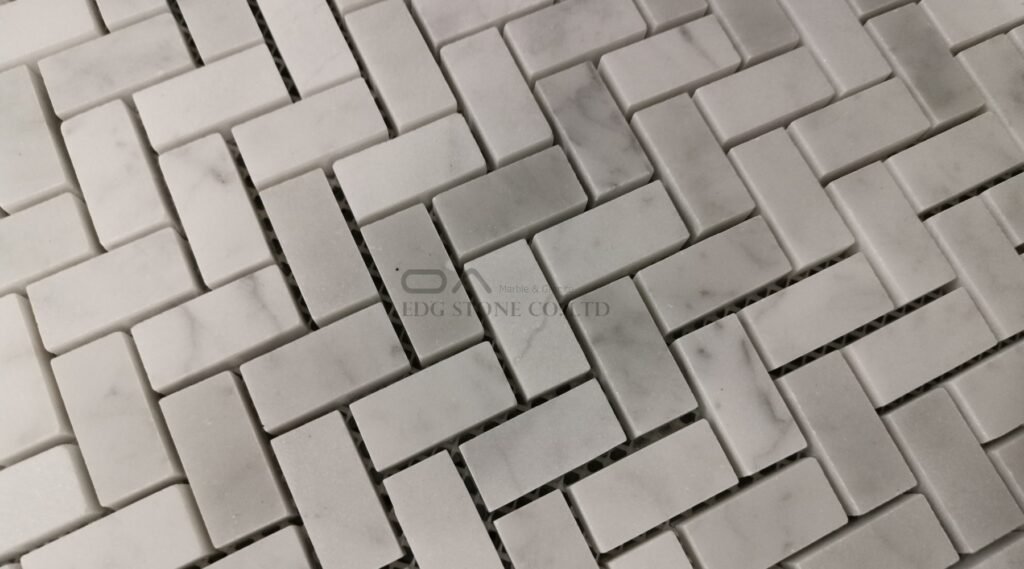
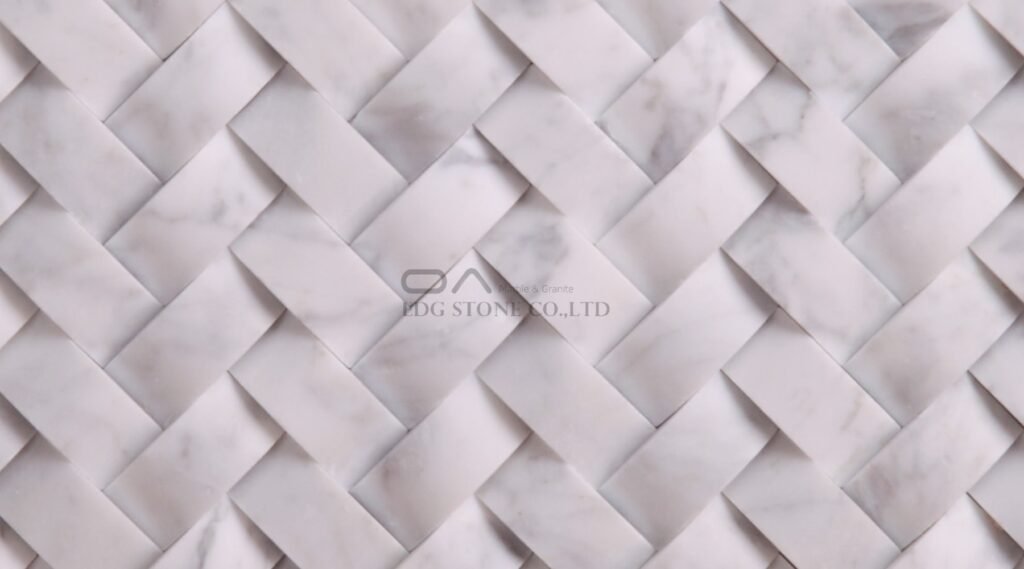
Herringbone is produced by laying identical rectangular tiles in a staggered offset so each tile meets another at its short end, producing a broken zig-zag that reads as woven motion. The staggered joints diffuse directional pull and create texture without forcing a single axis.
Chevron: formal V and leading lines
Chevron is created from tiles cut at precise angles (commonly 45°, 60°, or custom) so two pieces meet to form a continuous V. The uninterrupted chevron creates strong leading lines and visual direction — it can sharpen circulation, elongate spaces, or act as a focal “arrow” toward a feature.
Design distinctions at a glance
Visual movement: chevron = directional; herringbone = rhythmic texture.
Formality: chevron tends to read more formal and modern; herringbone carries classic, artisanal connotations.
Tolerance: chevron requires tighter cutting and joint control; herringbone is more forgiving but more repetitive to lay.
Waste & yield: Chevron generally produces more fabrication waste because of angled cuts.
3. Which stones work best (material guidance)
Marble
Marble’s veins and dramatic movement are amplified by patterned layouts. Chevron with marble produces continuous flowing Vs that accentuate vein directionality; herringbone softens veining and spreads movement across a field. Polished marble rewards formal chevron fields, while honed or leathered marble is preferable in wet kitchens and high-traffic areas.
Granite
Granite’s granular texture is less about veins and more about surface richness. Herringbone on granite lends subtle motion; chevron can look restrained and modern. Because granite is tough and durable, it’s excellent for high-traffic herringbone floors and exterior plazas.
Travertine
Travertine’s warm tones and natural pitting play beautifully in herringbone terraces and patios, delivering an informal, Mediterranean character. Filled/honed travertine reduces trip risk and eases maintenance in hospitality exteriors.
Quartzite and engineered stone mosaics
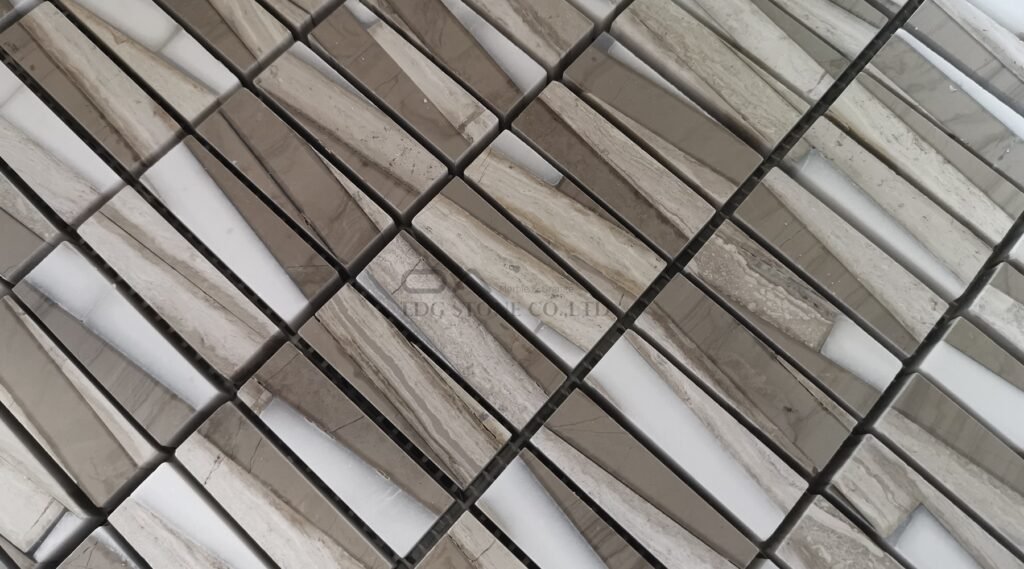
Quartzite offers veining closer to marble but with greater hardness. Engineered stone mosaics (pre-fabricated mesh-backed chevron or herringbone modules) offer color consistency and tighter tolerances—useful when factory precision reduces on-site cutting.
4. Design rules: tile size, grout, orientation, border & transitions
Tile sizing and scale
Small modules (e.g., 1×4 or 1×6 inches) emphasize texture; ideal for backsplashes or delicate flooring patterns.
Medium planks (2×8, 3×12, 6×24) balance rhythm and field readability.
Large-format planks (8×48 and up) produce dramatic directional flow—often used in contemporary herringbone installations.
Grout joint and color selection
Chevron benefits from minimal grout width (1–2 mm) to preserve continuous V lines.
Herringbone tolerates slightly wider joints if a textured look is desired.
Choose a grout color to either blend with the stone (for seamless flow) or contrast with it (to emphasize geometry).
Orientation and borders
Diagonal installs open sightlines and can visually widen narrow rooms.
Use a border band—running-bond or linear planks—to anchor a pattern field and create a neat transition to other floor types.
Consider a threshold strip of contrasting material (e.g., metal or wood) where stone meets carpet or timber.
5. Fabrication and installation realities: waste, cost drivers & factory options
Cutting, yield, and cost tradeoffs
Chevron requires angled miters and exact edge finishes; expect higher fabrication time and greater off-cut waste.
Herringbone, while repetitive, tends to yield better results from rectangular tiles and reduces angled cutting.
Pre-assembled modules and mosaic sheets
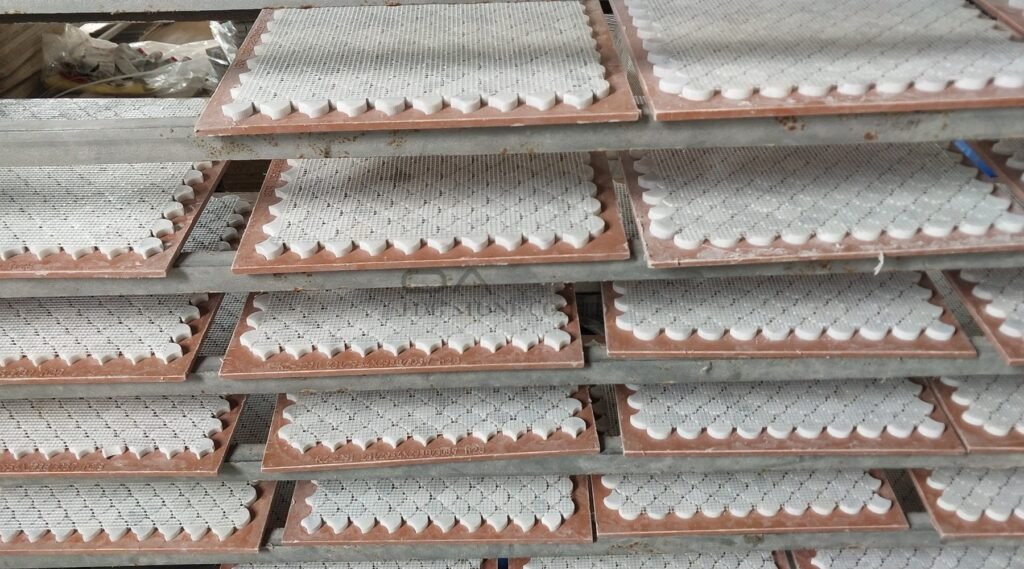
Factories that supply pre-assembled mosaic sheets or pre-cut chevron modules reduce on-site labor time and improve tolerance control. Discuss pre-assembly with your manufacturer to optimize total installed cost versus unit tile price.
Site labor vs factory premium
If local labor is expensive or skilled installers are scarce, paying extra for factory-prepared chevron kits often reduces total project cost.
For large projects, negotiate slab allocation and first-cut planning to minimize waste and control pricing.
6. Safety, standards, and regulations shaping specification and industry direction
Designers must balance aesthetic aims with safety and regulatory compliance. Two regulatory themes dominate stone production and use today: worker health during fabrication (especially respirable crystalline silica control) and slip-resistance testing for usable floor surfaces.
Worker health and silica controls
Cutting and polishing natural and engineered stone releases respirable crystalline silica. Employers and fabricators must manage exposure through engineering controls, wet cutting, local exhaust, and monitoring. The U.S. federal workplace standard sets an 8-hour time-weighted average permissible exposure limit of 50 μg/m³ for respirable crystalline silica and outlines required employer protections and monitoring practices.
Slip-resistance testing and product selection
Specifiers should request numeric slip-resistance results from recognized methods rather than rely on the finish name alone. The UK/BS pendulum test (BS 7976) produces a Pendulum Test Value (PTV) or British Pendulum Number (BPN) and is widely regarded for wet-slip evaluation; many jurisdictions accept pendulum results for wet-area specifications.
Another commonly referenced method is the German DIN 51130 ramp test (R9–R13), which classifies surfaces by ramp angle required to cause slipping; it is often specified for industrial and heavily wet conditions. Choose the testing method that aligns with local codes and the expected use case (barefoot, shod pedestrian, oily conditions).
7. Sustainability & procurement signals (EPDs, LEED, transparency)
Sustainability documentation increasingly drives procurement decisions for institutional and commercial projects. Environmental Product Declarations (EPDs) provide verified lifecycle impact data and are commonly requested by project teams seeking to quantify embodied carbon, resource impacts, and transport emissions. Internationally recognized EPD systems publish declarations for natural stone products (slabs, tiles, pavers), and sector EPDs exist for common stone groups.
LEED and other rating systems reward disclosure and optimization of materials; credits often prioritize products with Type III EPDs, material ingredient disclosure, or optimization toward lower embodied carbon. Specifiers should ask suppliers for EPDs and transport/packing data when sustainability credits are a project objective.
8. Commercial & specification guidance for buyers and specifiers
Tender pack essentials
Include target slip values and test method (e.g., pendulum PTV > X, or DIN R10 for wet areas).
Request EPD or equivalent LCA documentation and material origin.
Require written confirmation of factory silica-control measures (wet cutting, local exhaust, training).
Ask for full-size sample modules or assembled chevron kits to assess veining and grout interactions under site lighting.
Manufacturer negotiation points
Discuss pre-cut module options and mosaic sheet assemblies.
Negotiate slab allocation to reduce waste on chevron runs.
For branded projects, require chain-of-custody details and packing protocols.
9. Case studies & application scenarios
Residential — Marble chevron backsplash
A honed marble chevron backsplash behind a range creates an elegant focal spine. Minimal grout and tight joint control accentuate the V channels and dovetail with range hood geometry.
Hospitality — Limestone herringbone lobby
A diagonally laid herringbone limestone brings rhythm to a hotel reception, visually pulling guests toward check-in while disguising busy foot traffic. Honed finish and regular sealing maintain slip safety and ease of cleaning.
Exterior — Travertine herringbone terrace
Honed, filled travertine pavers in herringbone create classic terraces with warm tones. Proper drainage and an appropriate slip-rated finish ensure safe poolside and terrace use.
10. FAQ — Google-search-friendly Q&A
Q1: What is the main difference between herringbone and chevron patterns?
A: Herringbone is a staggered, woven effect created by offset rectangular tiles; chevron uses angled tiles that meet to form a continuous V. Herringbone diffuses directionality for texture-rich fields, while chevron creates crisp leading lines and formal symmetry.
Q2: Which stone types are best for chevron or herringbone?
A: Marble and quartzite emphasize vein direction and pair beautifully with both patterns; granite works well for textured, durable fields; travertine is ideal for rustic herringbone terraces. Choose a finish (honed, polished, leathered) based on slip and lighting conditions.
Q3: Do these patterns affect project cost?
A: Yes—both patterns raise complexity vs straight-lay. Chevron often raises fabrication and waste costs because of mitered cuts, while herringbone increases installation labor due to repeated alignment. Factory pre-assembled kits can reduce on-site labor and sometimes lower total installed cost.
Q4: How do I ensure slip resistance for stone used in wet areas?
A: Require numeric test results from recognized test methods (e.g., pendulum test PTV values or DIN R ratings) and choose appropriate finish and grout. Do not assume polish/hone equals safe wet performance—ask for test data for the actual product and finish.
Q5: What sustainability documentation should I request from suppliers?
A: Request Environmental Product Declarations (EPDs), chain-of-custody statements, and any LCA or transport-impact data. Projects targeting green building credits often require Type III EPDs or equivalent verified declarations.
11. Semantic Closure: How / Why / What / Options / Considerations
How: Select chevron for directional emphasis and formal focal features; choose herringbone for woven texture and forgiving patterning. Use factory pre-assemblies for the chevron to reduce on-site cutting and labor.
Why: Patterns change perceived space and user movement—chevron directs sightlines; herringbone creates a steady rhythm. Choices should reflect functional needs (durability, slip resistance) as well as aesthetics.
What: Require slip-test values (pendulum or DIN), factory silica-control documentation, and EPDs for procurement. Ensure full-size sample modules are approved in project lighting.
Options (detailed): pre-cut chevron modules, large-format herringbone planks, mixed-material borders, mosaic inlays for backsplashes.
Considerations (detailed): weigh fabrication waste vs site labor; confirm testing method for slip resistance and verify manufacturer health & safety practices for silica mitigation.
12. Final checklist for specifiers & buyers
Ask for numeric slip-resistance test results and the test method.
Request EPD or LCA documentation for material transparency.
Confirm factory silica-control measures and worker safety policies.
Secure full-size assembled sample modules and a 1–2 m² mock-up on-site to confirm color, vein flow, and grout behavior.
Negotiate pre-cut module options to minimize site labor for chevron; check slab allocation to control waste.
13. References (author, article/title, source — no links)
U.S. Occupational Safety and Health Administration (OSHA) — “Respirable Crystalline Silica”, OSHA regulatory guidance and standard 1910.1053.
Transport Research Laboratory (TRL) / British Standards — “Pendulum Test (BS 7976) for floor slip resistance”, test methodology and guidance.
DIN Committee / German Standards overview — “DIN 51130 Ramp Test and R-Rating classifications”, technical explanation of R9–R13.
The International EPD System (EPD International) — “Environmental Product Declaration: Natural stone sector EPDs”, guidance on sector declarations.
U.S. Green Building Council (USGBC) — “LEED v4 material disclosure and optimization guidance”, credits related to EPDs and material transparency.
Independent industry guidance: “Slip Ratings Explained” — comparative overview of slip test methods and applications (industry whitepaper).
Fabrication safety resource — “Worker Exposure to Silica during Countertop Fabrication”, industry advisory on dust controls and monitoring.
Sector EPD example — “Sector EPD for natural stone slabs”, documentation of typical lifecycle indicators and scope.
Tile and stone installation guidance — “Practical installation notes for mosaic chevron and herringbone modules”, professional installer manual.
Industry marketplace overview — “Pre-cut mosaic modules and factory assembly benefits”, procurement whitepaper for manufacturers and specifiers.