Introduction: Why Taj Mahal Quartzite Continues to Dominate Luxury Interior Design?
Taj Mahal quartzite has become a global design icon—celebrated for its luminous creamy-white base and whisper-soft gold, champagne, and light brown veining. Its natural warmth and subtle movement make it a top choice for designers wanting an elevated yet timeless aesthetic. Unlike materials that fluctuate in popularity, Taj Mahal quartzite continues to rise across markets such as the United States, Australia, Europe, and the Middle East due to its luxury appearance, high durability, and broad compatibility with modern, transitional, and classic design styles.
As homeowners and commercial developers increasingly shift toward natural, sustainable, long-lasting stone surfaces, Taj Mahal quartzite has emerged as a preferred solution over marble or man-made materials. Its heat resistance and scratch resistance—far exceeding that of marble—further position it as a premium yet practical option.
What Makes Taj Mahal Quartzite Unique? The Science Behind Its Warm Tones
Mineral Composition & Geological Formation
Taj Mahal quartzite originates from deep metamorphic processes where sandstone is transformed under extreme heat and pressure. This crystallization results in:
90–99% quartz content
Interlocking crystalline structure
Natural mica inclusions that create its soft shimmer
Trace iron oxide that forms its warm gold/brown veining
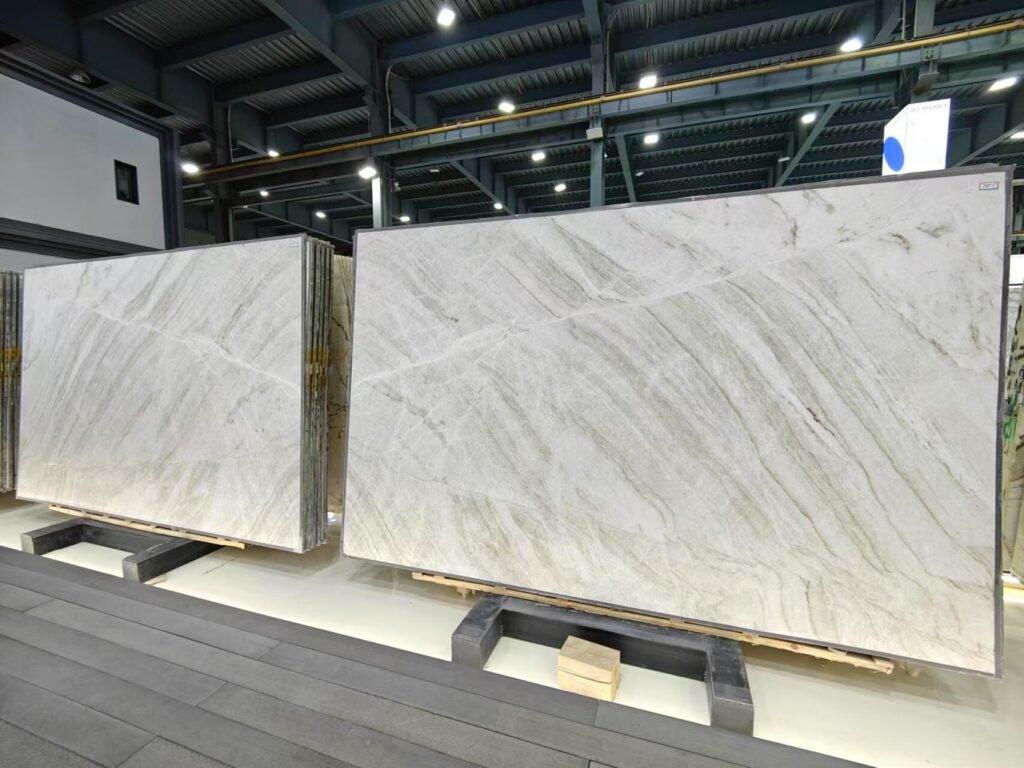
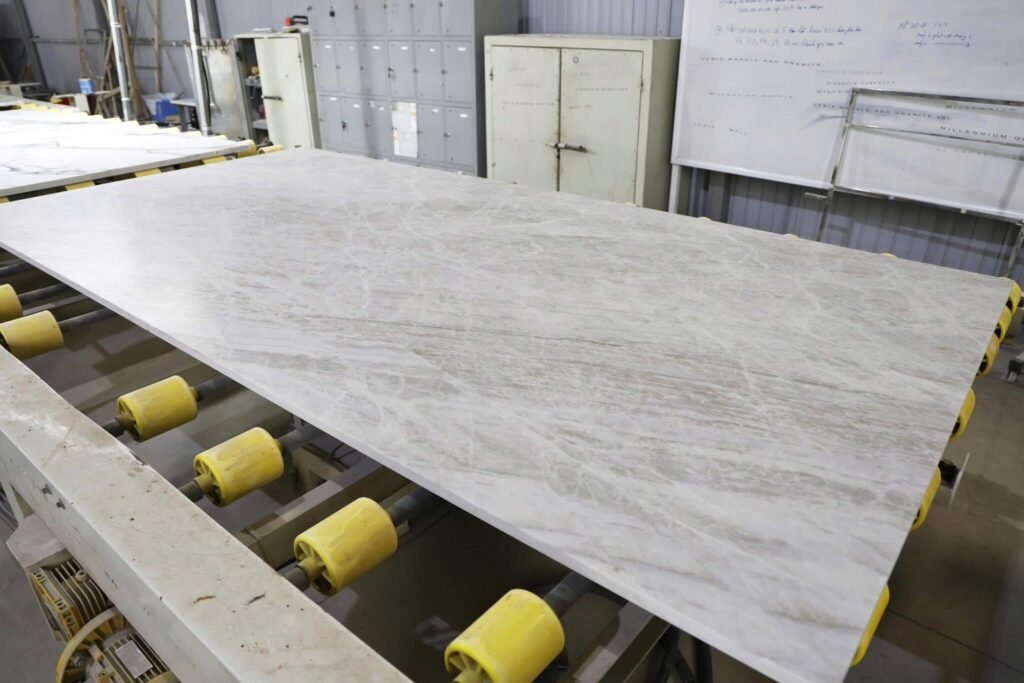
Compared to other creamy quartzites, Taj Mahal’s color is exceptionally consistent and warm due to its balanced mineral matrix. The subtle golden hues come from oxidized minerals that diffuse softly throughout the slab rather than forming aggressive patterns.
Why the Creamy Base Color Is So Desirable?
Designers value Taj Mahal quartzite because it complements nearly every palette:
Warm wood cabinetry (oak, walnut, chestnut)
Matte black fixtures for contrast
Cream, beige, taupe interiors
Modern minimalist white spaces seeking added warmth
Its creamy undertone works particularly well in climates where natural light varies seasonally, as it reflects ambient light softly rather than creating harsh contrasts.
Veining Characteristics: Gold, Warm Brown, Champagne Tones
Taj Mahal quartzite is known for:
Soft linear movement
Subtle sweeping veins
Warm light brown mineral lines
Occasional feather-like veining patterns
This gives the stone a marble-like appearance but with significantly greater strength—often appealing to homeowners who love the look of marble but want the performance of quartzite.
Performance: Why Taj Mahal Quartzite Outperforms Marble?
Hardness & Durability (Mohs 6.5–7)
Due to its mineral structure, Taj Mahal quartzite ranks 6.5–7 on the Mohs scale, similar to granite. It is:
Highly resistant to scratching
Heat-resistant (excellent for kitchen use)
More resistant to etching than marble
Suitable for heavy-use spaces
Stain Resistance & Sealant Behavior
Although Taj Mahal quartzite is dense, sealing is recommended annually. When properly maintained, it performs well even in:
Busy family kitchens
Commercial hospitality spaces
Outdoor covered applications
Its low porosity reduces long-term maintenance costs compared with porous marble.
Honed vs Polished Performance
Taj Mahal Quartzite Honed is especially popular for modern kitchens due to its velvety texture and soft appearance. However, honed finishes may show fingerprints more easily.
Polished Taj Mahal enhances its reflective depth and warms the creamy tones further.
Price Guide: How Much Does Taj Mahal Quartzite Cost?
Taj Mahal quartzite pricing varies globally depending on quarry batch, availability, finish, and fabrication. Typical pricing ranges (fabrication not included):
United States: USD $95–$160/sq ft
Australia: AUD $600–$900/sq meter
Europe: €180–€260/sq meter
Slab price range: USD $2,500–$4,200 per full slab
Large-format or bookmatched slabs may command significantly higher pricing.
Search-intent keywords such as “Taj Mahal quartzite price,” “Taj Mahal quartzite slab factory,” “Taj Mahal quartzite wholesale supplier,” and “Taj Mahal quartzite manufacturer in China” often indicate B2B buyers evaluating cost structures for project-level procurement.
Finish Options: How Surface Treatments Influence Appearance
Polished Finish — High Luxury Reflection
Enhances creamy base
Intensifies warm gold veining
Suitable for high-end show kitchens
Honed Finish — Softer & More Modern
Matte elegance
Reduced glare
Popular in Scandinavian and minimalist interiors
Leathered Finish — Texture & Depth
Subtle undulations
Enhanced tactile feel
Useful for bar tops or rustic designs

Applications of Taj Mahal Quartzite in Modern Design
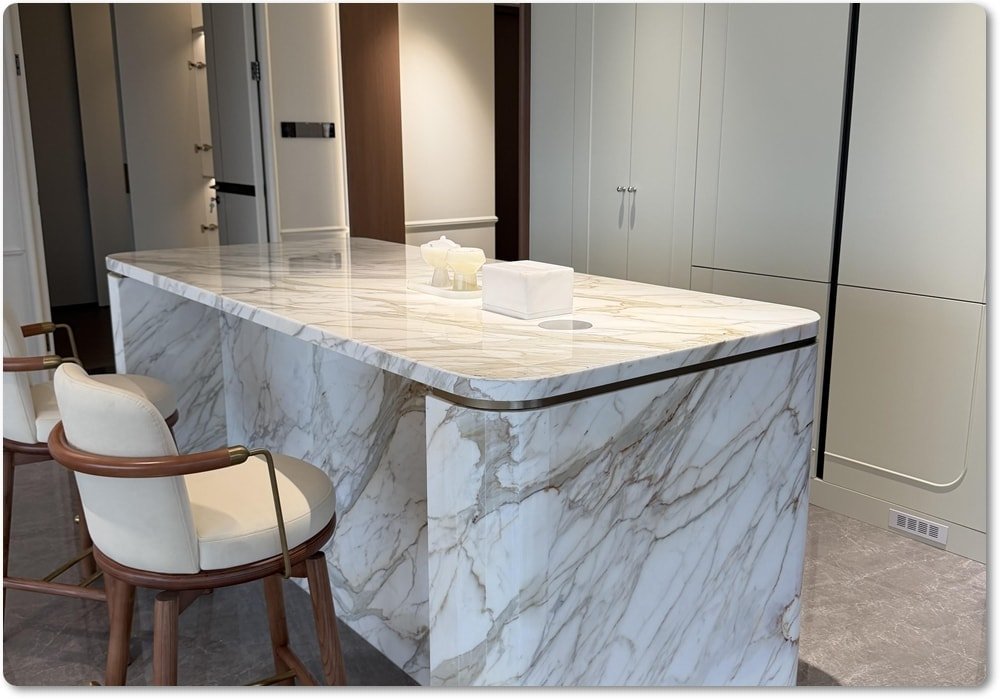
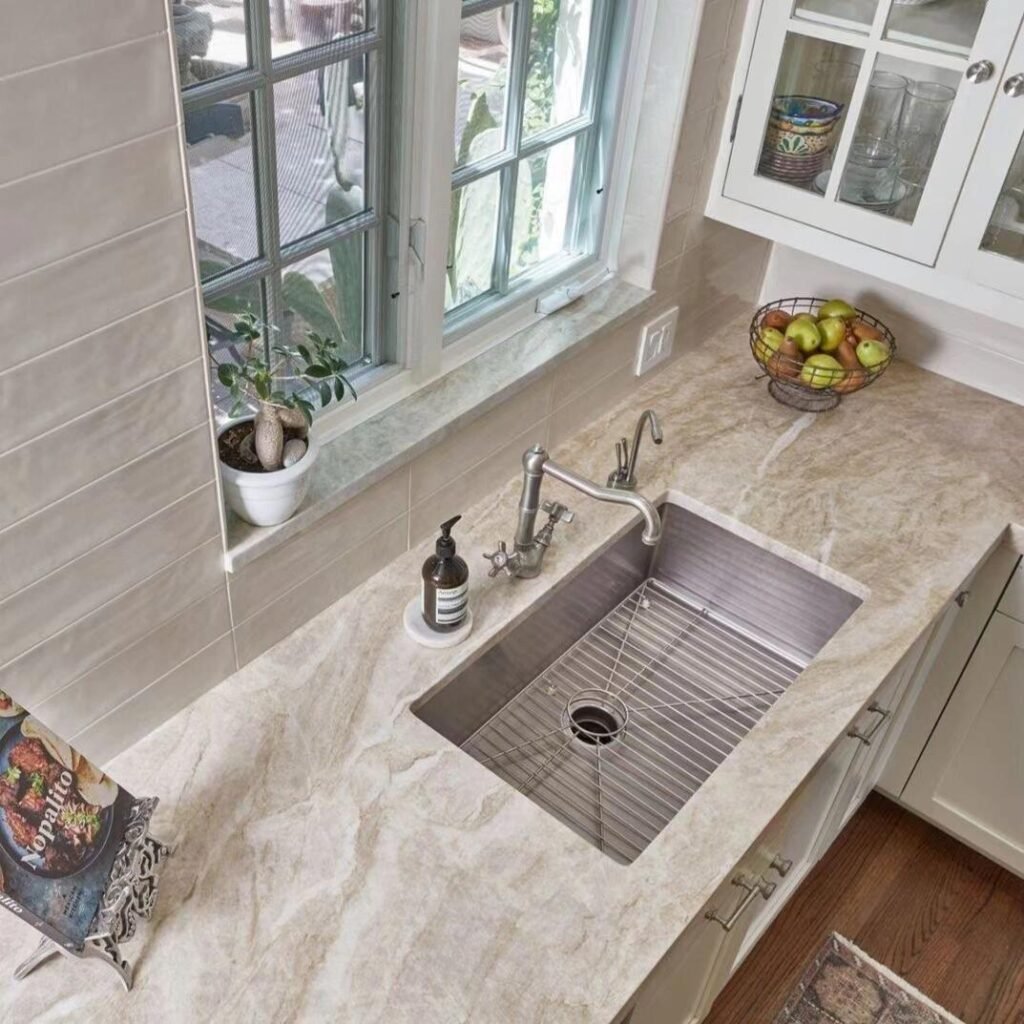
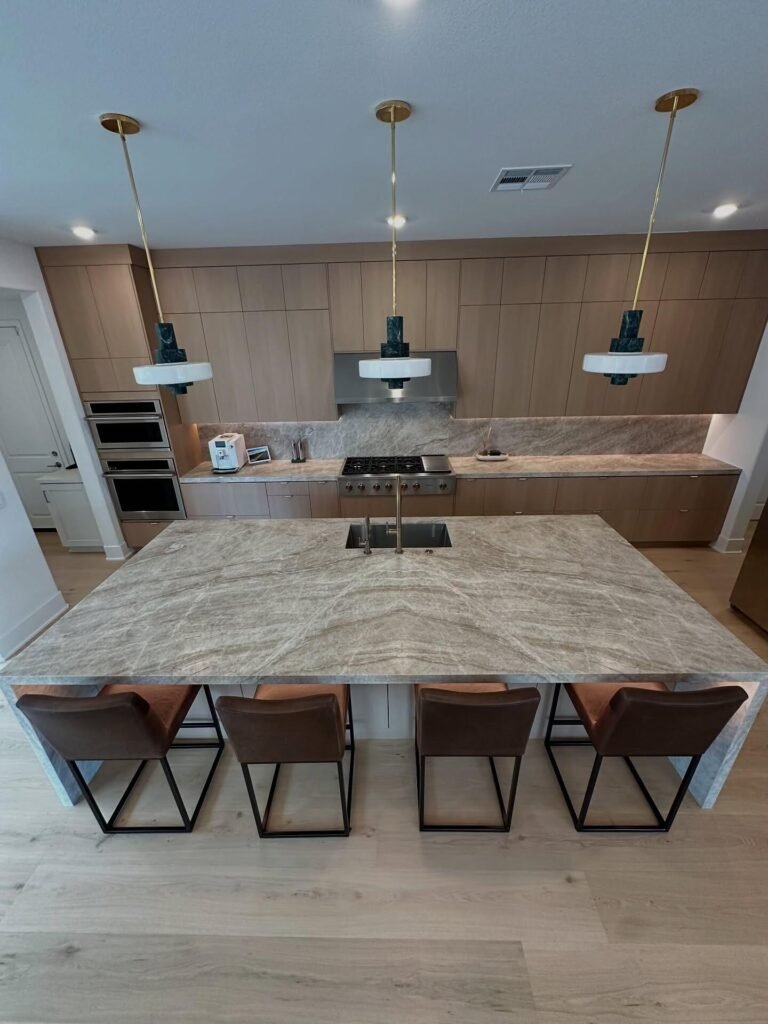
Taj Mahal Quartzite Kitchen Designs
A top choice for kitchen islands thanks to:
Warm neutral compatibility
Statement movement without overpowering the space
Long-term durability
Designers frequently pair it with brushed brass, champagne gold, or matte black fixtures.
Bathroom Vanity Tops & Spa-Like Interiors
Taj Mahal quartzite brings a soft, tranquil aesthetic suitable for:
Boutique hotels
Residential spa bathrooms
Floating vanities
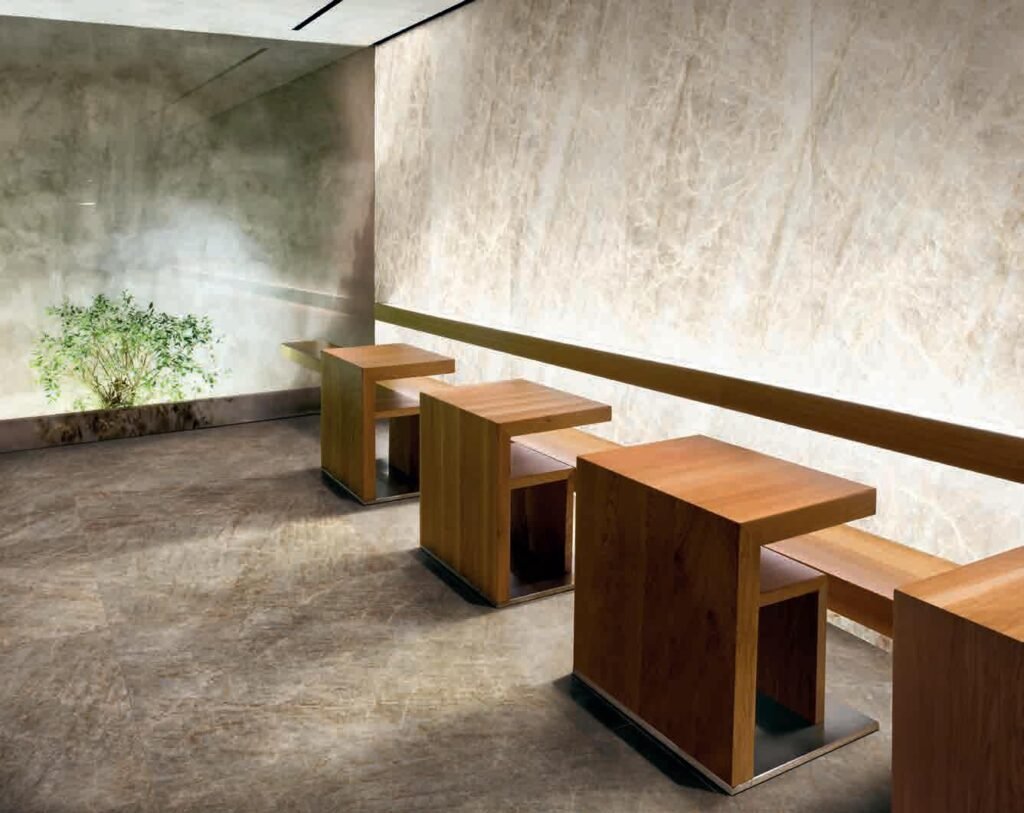
Wall Cladding & Feature Walls
Its creamy, large-format slabs deliver a dramatic yet elegant focal point in living rooms and lobbies.
Outdoor Kitchens (Under Cover)
Due to heat and scratch resistance, Taj Mahal quartzite performs exceptionally under sheltered outdoor conditions.
Choosing the Right Supplier: Quality Factors & Global Sourcing Trends
Why EDG Stone Is Highlighted by Designers?
As a manufacturer and factory-direct supplier, EDG Stone offers:
High-precision fabrication
Consistent color matching
Ability to handle large-scale commercial orders
Customized surface treatments
Direct factory pricing
What to Look for When Sourcing Taj Mahal Quartzite Slabs?
Key quality checkpoints include:
Slab thickness consistency
Surface integrity and fissure behavior
Natural movement consistency across bookmatched sets
Suitability for honed or leathered finish
UV resistance levels
Global Shipping & Logistics Considerations
Buyers searching for “Taj Mahal quartzite near me” often rely on dealers with:
Local inventory
ISO-certified factories
EPC project experience
Seamless international shipping
Cut-to-size service
Regulatory & Sustainability Insights (2024–2025 Standards)
Compliance Trends in Natural Stone Manufacturing
Updated regulations emphasize:
Responsible quarrying practices
Dust control and worker safety
Reduced-emission transport
Certification tracking from quarry to end customer
How Sustainability Influences Stone Purchasing Decisions?
Consumers and project developers increasingly demand:
Verified origin documentation
Lower-carbon fabrication routes
Waste-optimized slab cutting
Recyclable stone materials
These trends push suppliers to adopt high-efficiency processing and greener logistics pathways.
Taj Mahal Quartzite vs Alternatives
Quartz vs Taj Mahal Quartzite
Quartz offers uniformity but lacks depth and natural variation. Quartzite provides superior heat resistance and a more luxurious aesthetic.
Granite vs Taj Mahal Quartzite
Granite is harder but often busier. Taj Mahal quartzite is softer visually but equally durable.
Marble vs Taj Mahal Quartzite
Marble’s beauty is undeniable, but Taj Mahal quartzite offers:
Better durability
Higher heat resistance
Far less etching
Fabrication Considerations & Installation Tips
Edge Profiles for Modern Spaces
Popular choices:
Eased edge
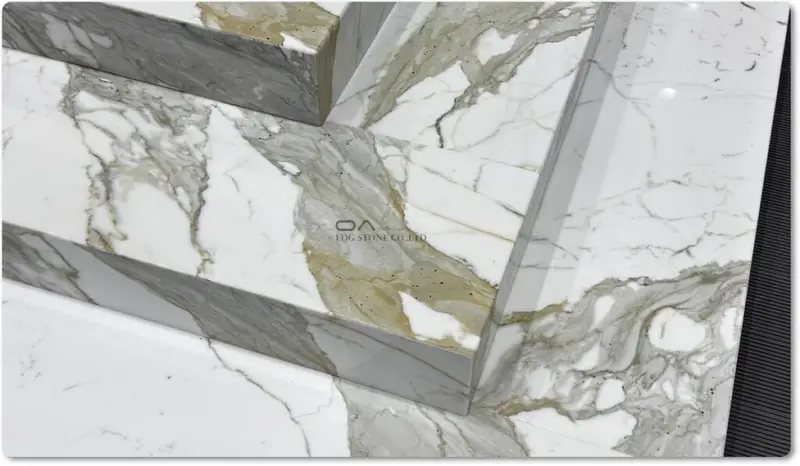
Mitered waterfall
Ogee for traditional homes
Seam Placement
Designers aim to:
Minimize seam visibility
Align warm veins for continuity
Maintenance Recommendations
Routine includes:
pH-neutral cleaners
Annual resealing
Immediate cleaning of acidic spills
High-Intent Buyer Keywords for B2B Markets
Include these long-tail terms naturally for improved ranking:
Taj Mahal quartzite manufacturer China
Taj Mahal quartzite wholesale factory
Buy Taj Mahal quartzite slabs bulk
Taj Mahal quartzite for commercial projects
Taj Mahal quartzite sample request
FAQ (Human-Readable Section)
Q1: What is Taj Mahal quartzite made of?
Taj Mahal quartzite consists primarily of crystallized quartz formed through metamorphic processes. Its composition delivers high hardness, heat resistance, and unique creamy gold veining that distinguishes it from other stones.
Q2: How much does Taj Mahal quartzite cost?
Pricing varies by region, slab size, and finish, but it generally ranges from mid-to-high luxury stone pricing. Full slabs often fall between USD $2,500–$4,200, while fabricated countertops vary based on edge profiles and installation complexity.
Q3: How do I maintain Taj Mahal quartzite?
Maintenance is straightforward: clean with pH-neutral cleaners, avoid abrasive pads, and reseal once annually. When sealed properly, Taj Mahal quartzite resists staining and maintains its warm, luminous finish for many years.
Q4: Is Taj Mahal quartzite better than marble?
For most kitchens, yes. It offers a similar elegant appearance but is significantly more durable, scratch-resistant, and heat-resistant. This makes it ideal for families and high-use environments.
Q5: Can Taj Mahal quartzite be used outdoors?
Yes, it performs well in outdoor covered spaces due to its heat resistance and dense mineral structure. UV exposure should be monitored to maintain long-term color stability.
Semantic Loop Insight Block
How It Works: Taj Mahal quartzite forms through metamorphic recrystallization, producing a dense quartz matrix with warm mineral oxidation. This natural structure gives it superior hardness, marble-like beauty, and heat resistance.
Why It Matters: Designers choose Taj Mahal quartzite because its creamy warmth suits modern, transitional, and classic interiors. Its performance surpasses marble and complements global trends toward natural, sustainable materials.
What to Consider: Evaluate slab movement, thickness stability, surface finishes, bookmatching potential, and certified sourcing. For busy kitchens, honed or leathered finishes offer modern elegance with strong durability.
Options & Variations: Polished slabs create a luxurious reflective effect, while honed finishes soften the aesthetic for contemporary homes. Leathered surfaces add tactile depth for bar areas or rustic settings.
Market & Trend Insights: Global demand continues increasing due to sustainability regulations, rising preference for natural stone, and the shift toward warm minimalism. Taj Mahal quartzite remains a stable investment for both residential and commercial projects.