1. What is a floating vanity, and why does it matter?
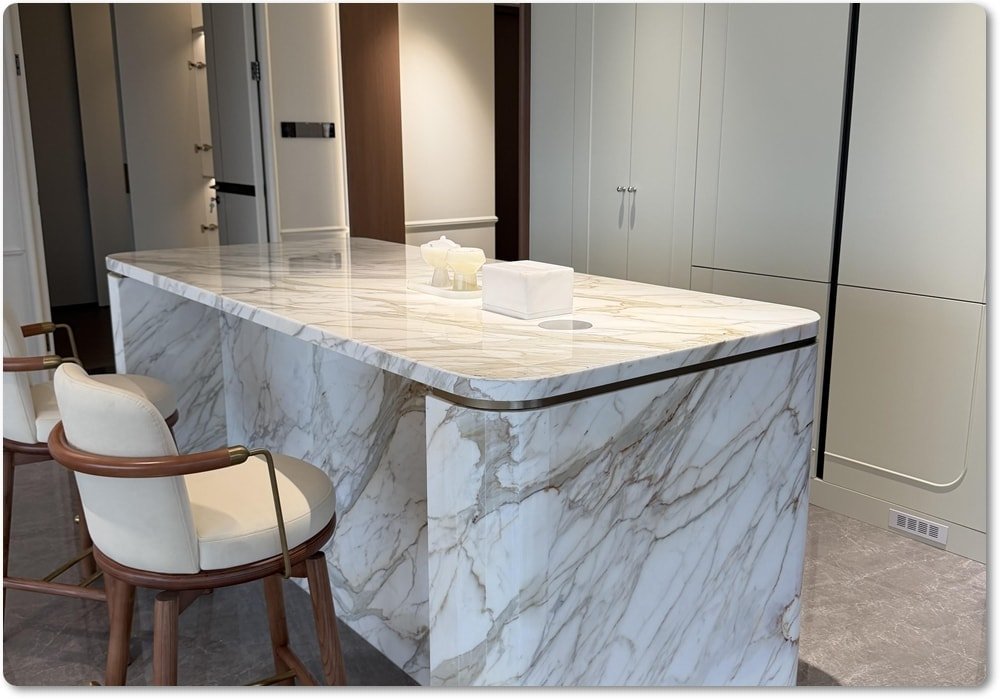
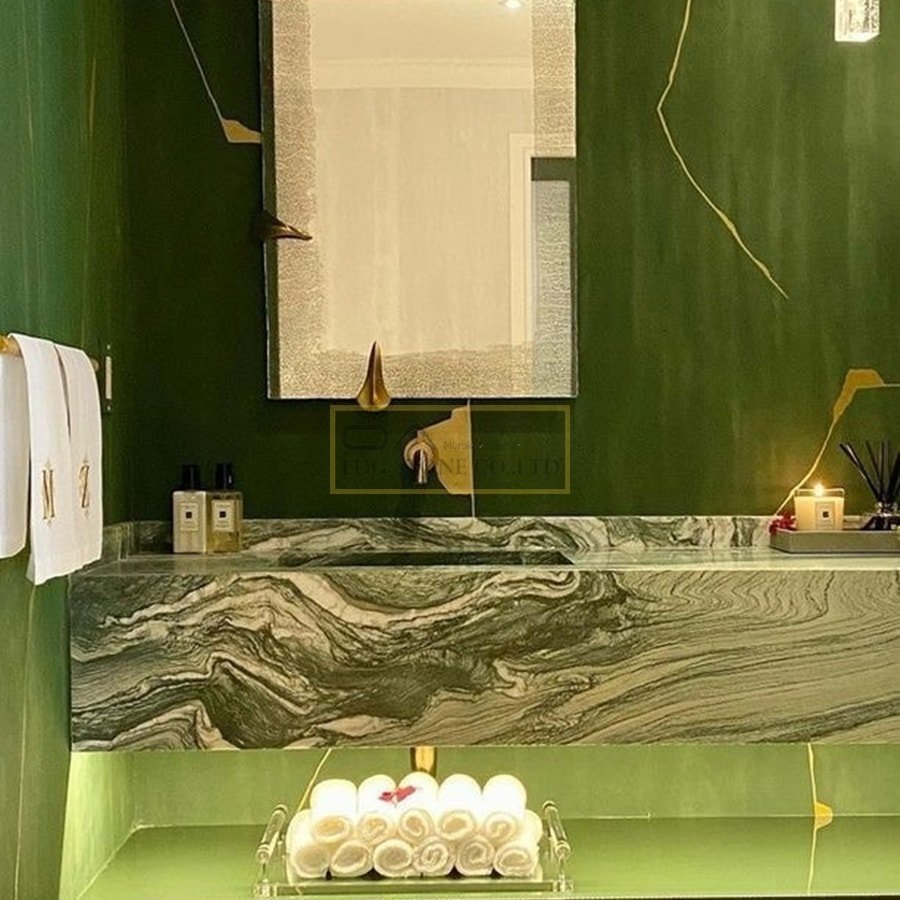
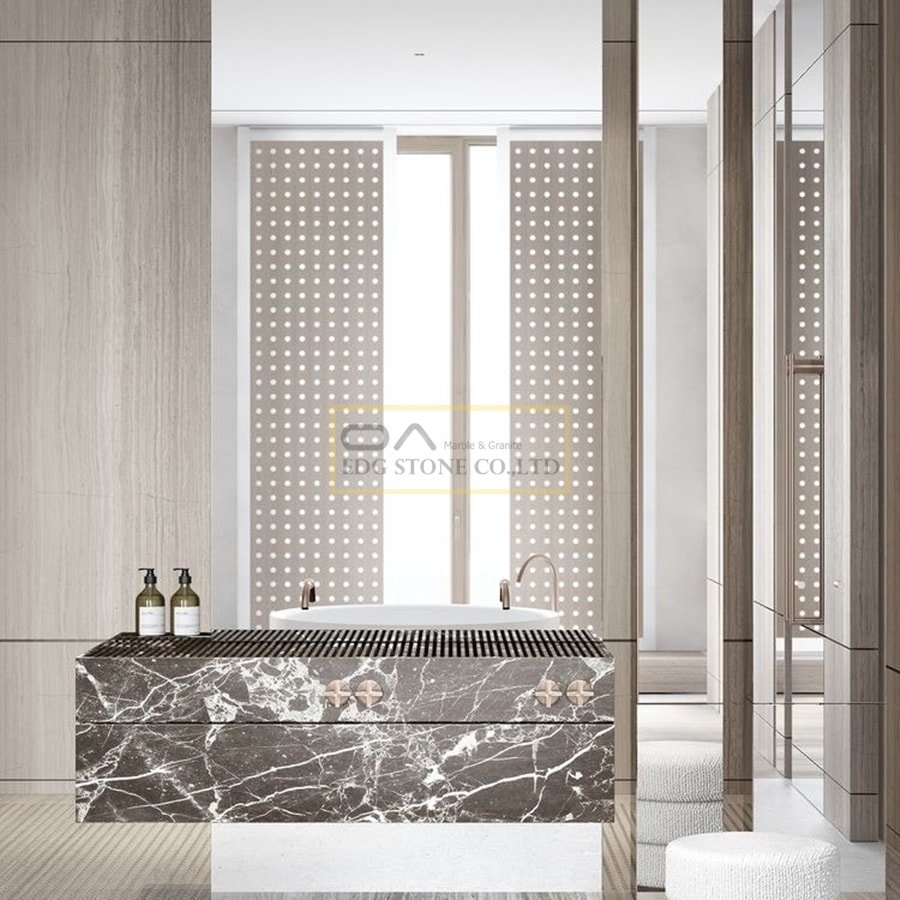
A floating vanity is a bathroom vanity unit that mounts to the wall and leaves open floor space beneath it. This creates a visual “floating” effect that increases perceived room size, improves cleaning access, and supports custom mounting heights. Pairing the floating cabinet with an artificial stone countertop (engineered quartz, solid surface, composite/resin tops) gives you a seam-free, modern top that resists moisture and is highly customizable in color and edge profiles. Design benefits include a lighter visual footprint, custom ergonomic heights, and compatibility with under-vanity LED lighting for dramatic effect.
2. Artificial stone material options (pros & cons)
When the user searches for Floating Vanity stone, Floating Vanity White, or Floating Vanity with Sink, these are the material conversations they’ll expect.
Engineered quartz (high popularity)
Pros: Broad color palette, marble-like patterns, strong scratch/stain resistance, low porosity.
Cons: Fabrication creates respirable crystalline silica dust — requires strict workplace controls and compliance.
Solid surface (acrylic/polyester blends)
Pros: Thermoformable for integrated sinks, fully repairable, consistent color, and matte or gloss finishes.
Cons: Lower heat resistance; can scratch, but is often repairable.
Composite resin / cultured marble
Pros: Cost-effective for molded integrated tops (common for 24″ and 30″ floating vanities), good for vessel-shelf hybrids.
Cons: Less premium look compared with quartz or natural stone.
Natural stone (rare for truly “floating” monolithic tops)
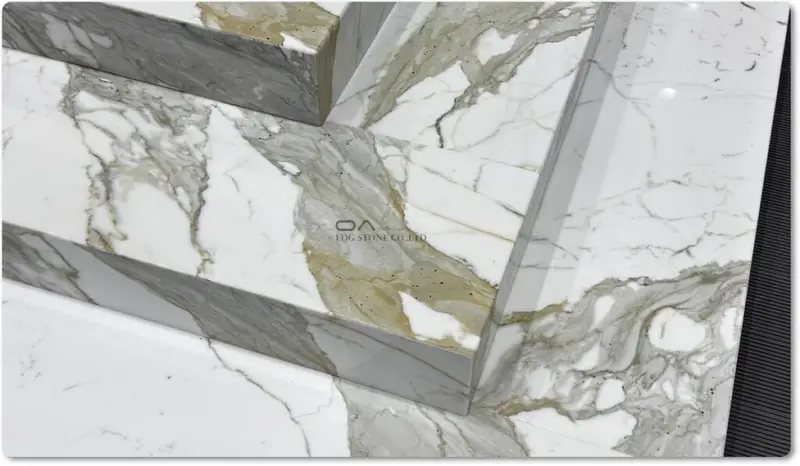
Pros: Unique veining and high-end appeal.
Cons: Heavier; typically requires engineered supports and is more likely to be used as a tabletop rather than a thermoformed integrated sink.

3. Common sizes & search intent (24, 30, 36, 48 inches)
Retailers and shoppers search by size frequently — for example: 24-inch floating vanity, 30-inch floating vanity, 36-inch floating vanity, 48-inch floating vanity, and variations that include “with sink”, “cabinet only”, “double sink”, or “vessel sink”.
Large retailers like Home Depot list floating vanity categories with 24″, 30″, 36,” and 48″ widths as standard SKU groupings, which aligns with how consumers search and convert. If you’re building product pages, map each of those widths to separate landing pages (or filter attributes) to capture high-intent traffic.
Common use cases:
24″ floating vanity: Small bathrooms, powder rooms, guest bathrooms.
30″ floating vanity: Compact master baths or narrow layouts.
36″ floating vanity: Comfortable single sink with storage.
48″ floating vanity / floating double vanity: Shared master baths; often used with two sinks or a large vessel layout.
4. Structural & installation best practices
A floating vanity’s structural integrity is crucial—especially when paired with a heavy artificial stone top.
Wall backing: Attach to solid blocking or a metal support frame in the wall cavity. For heavy quartz tops, use a steel bracket or welded subframe bolted to studs.
Anchor selection: Use heavy-duty through-bolts or lag screws into studs, not just wall anchors. For tile or plaster walls, use a structural support frame.
Top mounting: For integrated tops or tops with sinks, allow for the top’s weight distribution; many installers support the rear lip with a continuous bracket and use silicone or specialized adhesives at the back.
Plumbing: Conceal waste and supply lines inside the wall when possible; use shallow trap assemblies to fit inside small floating units.
Service access: Plan removable panels or drawer modules to allow trap servicing without dismantling the entire vanity.
5. Accessibility & regulation — ADA lavatory height
When designing for public or semi-public spaces or when accessibility is a requirement, remember ADA lavatory height and clearance rules: the maximum rim or counter height is 34 inches (865 mm), and clear floor space requirements must be met for forward approach. Floating vanities are an excellent opportunity to set custom heights to meet ADA while maintaining a modern look — but always confirm local AHJ requirements.
6. Worker & product safety (silica, Prop 65, REACH)
Worker safety during the fabrication of engineered stone is a major topic:
Cutting and finishing quartz or engineered stone releases respirable crystalline silica. OSHA and NIOSH have issued hazard alerts and enforcement initiatives focused on engineered stone fabrication; fabricators should use wet cutting, local exhaust ventilation, and respiratory protection where required.
Product labeling & consumer warnings:
In the U.S., California’s Proposition 65 lists airborne crystalline silica (respirable size), and many suppliers provide Prop 65 notices and safe-use guidance.
International chemical rules:
Suppliers exporting to the EU must confirm REACH compliance for polymer/resin components and disclosure for restricted substances.
If you are a manufacturer/factory, include silica control plans and Prop 65/REACH declarations on your product datasheets — buyers search for manufacturer/factory / wholesale credentials and regulatory compliance documents.
7. Market context & trend data (why floating vanities are rising?)
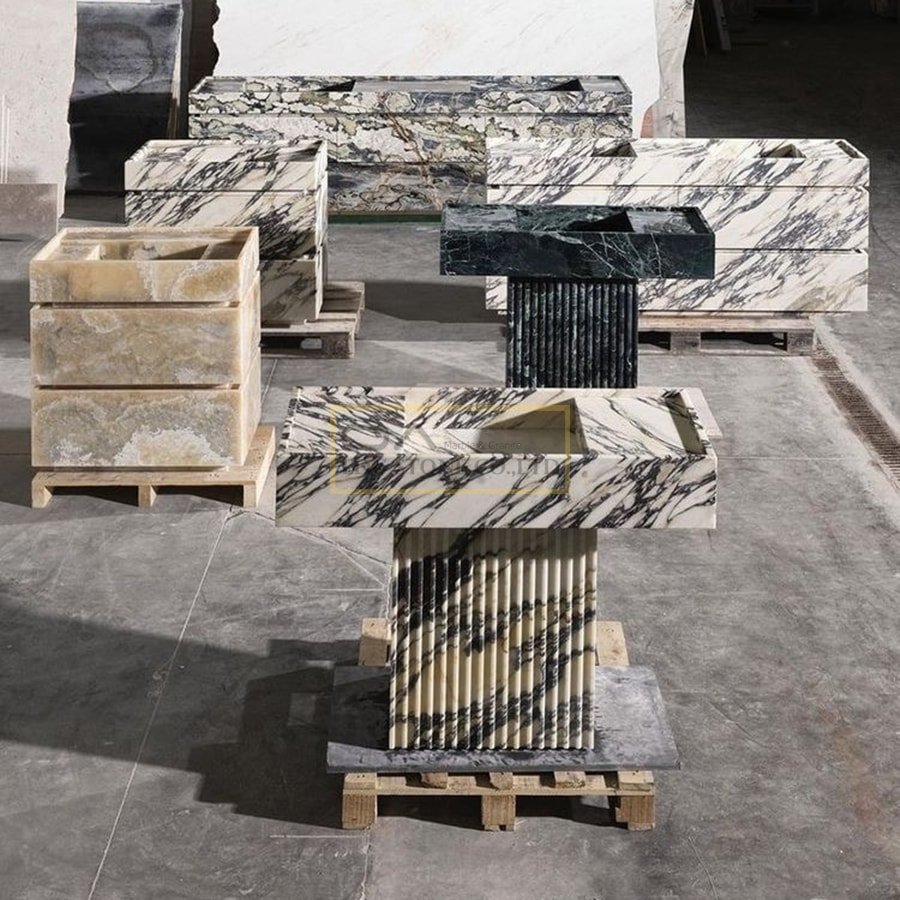
The bathroom vanities market is large and growing, driven by renovation activity, premiumization, and small-space design solutions. Grand View Research reports the global bathroom vanities market was estimated at roughly USD 43.34 billion in 2024, with a steady CAGR projected through 2030 — a favorable backdrop for floating designs as consumers trade up to contemporary, space-saving fixtures.
Design outlets and trend roundups list floating vanities among 2024–2026’s top bathroom trends for the illusion of space and modern minimalist styling — a signal that content and product pages that highlight floating options will stay relevant for a while yet.
8. Design & layout tips (lighting, sinks, storage)
Custom mounting height: For a makeup vanity or seated vanity (floating makeup vanity), set the height lower than the standard lavatory. For a wall-hung sink vanity, mount at 34″ max for ADA or 32–36″ for ergonomic home use.
Vessel vs integrated sinks: Vessel sinks on floating vanities are popular in 24″–36″ sizes; integrated sinks (solid surface) offer a clean, low-maintenance option.
Under-vanity lighting: LED strips under the floating unit deepen the floating effect and are SEO-friendly content to include on product pages (e.g., “floating vanity shelf with LED”).
Storage strategies: Use recessed drawers, slim pull-outs, or open shelves beneath shorter hanging heights; ensure drawer hardware is rated for wall-hung load.

9. Buying checklist (for homeowners, designers, dealers, wholesalers)
Confirm material: quartz vs solid surface vs composite.
Request factory CAD templates for cutouts (sinks, wall-hung brackets, waste centers).
Ask for silica safety and fabrication guidance if quartz is chosen.
Verify ADA and plumbing code compatibility for commercial projects.
Request sample swatches and a physical mockup for unusual finishes or thin top edges.
Confirm warranty scope for both cabinet and top; ask about serviceability for plumbing and trap access.
10. Maintenance and lifecycle
Quartz & solid surface: Wipe with mild detergent; avoid abrasive pads for matte finishes.
Composite & cultured marble: Clean with non-abrasive cleaners; follow manufacturer warnings for solvents.
Sealing: Natural stone must be sealed periodically; engineered quartz does not usually require sealing.
11. FAQ — Google hot searches (original answers preserved below and encoded into schema)
What is a floating vanity, and how does a floating countertop affect bathroom space?
What sizes are available for floating vanities (24, 30, 36, 48 inches)?
Can artificial stone (quartz) be used on a floating vanity, and is it safe?
How high should I mount a floating vanity—can it be ADA compliant?
Do floating vanities come with an integrated sink, or do I need to buy a top separately?
Semantic Closure: How / Why / What / Options / Considerations
How — Floating vanities are installed by anchoring a structural bracket or blocking into wall studs, then mounting the cabinet and artificial stone top to that reinforced subframe. For heavy quartz tops, a steel sub-frame and through-bolt connections are recommended to distribute loads.
Why — Floating vanities visually expand space, ease cleaning, and allow custom heights (e.g., seated makeup vanities). Artificial stone tops deliver a low-porosity, high-design surface that reinforces a premium, modern aesthetic.
What — Typical configurations include 24″ single-sink floating units for small baths; 30″/36″ single-sink variants for medium baths; 48″ or wider for double vanities or large assemblies. Materials include quartz (premium, durable), solid surface (thermoformable), and composite/cultured marble (cost-effective molded options).
Options (detailed) — Integrated solid surface sinks for a seamless top; vessel sink pairings for sculptural looks; under-cabinet LED lighting for a floating effect; narrow pull-out storage and recessed outlets for functional minimalism.
Considerations (detailed) — Confirm ADA/IPC compatibility for commercial works; ensure fabricators implement silica control plans for quartz; obtain manufacturer REACH/Prop 65/technical declarations where export or regional laws require them. For eCommerce and SEO: include micro-summary cards, downloadable CAD, and FAQ.