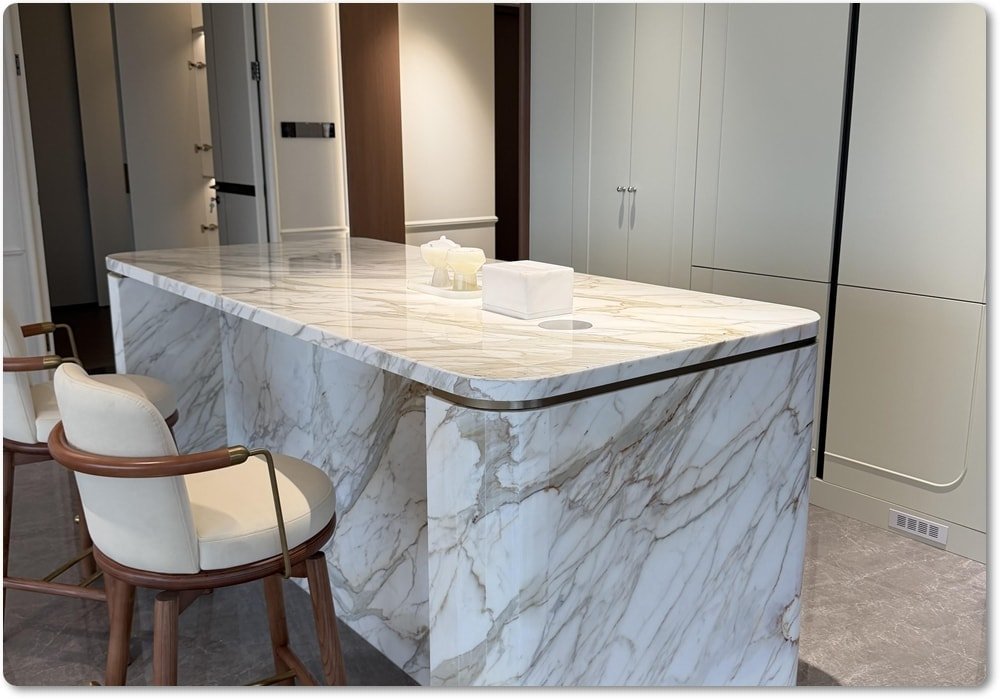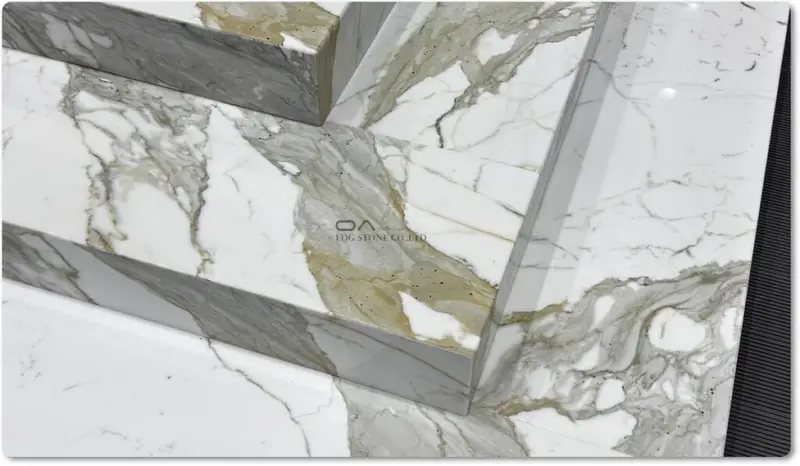
Introduction
In Carrara White Marble procurement, professional decision-making is never about choosing the lowest price — it’s about finding the optimal balance between budget, waste, and final project quality.
Because in natural stone projects, cost is not just the material price. It includes:
- Slab selection and grading
- Fabrication and processing
- Layout and waste ratio
- Packaging and logistics
- Installation coordination
- Long-term maintenance
Many projects seem “expensive” because waste and fabrication were not controlled early on.
Others appear “cheap” initially but end up costing more due to rework, breakage, inconsistency, and poor installation.
This guide explains how to optimize Carrara White Marble costs from five key dimensions:
👉 Material selection, specification planning, fabrication strategy, waste control, and supply chain coordination.
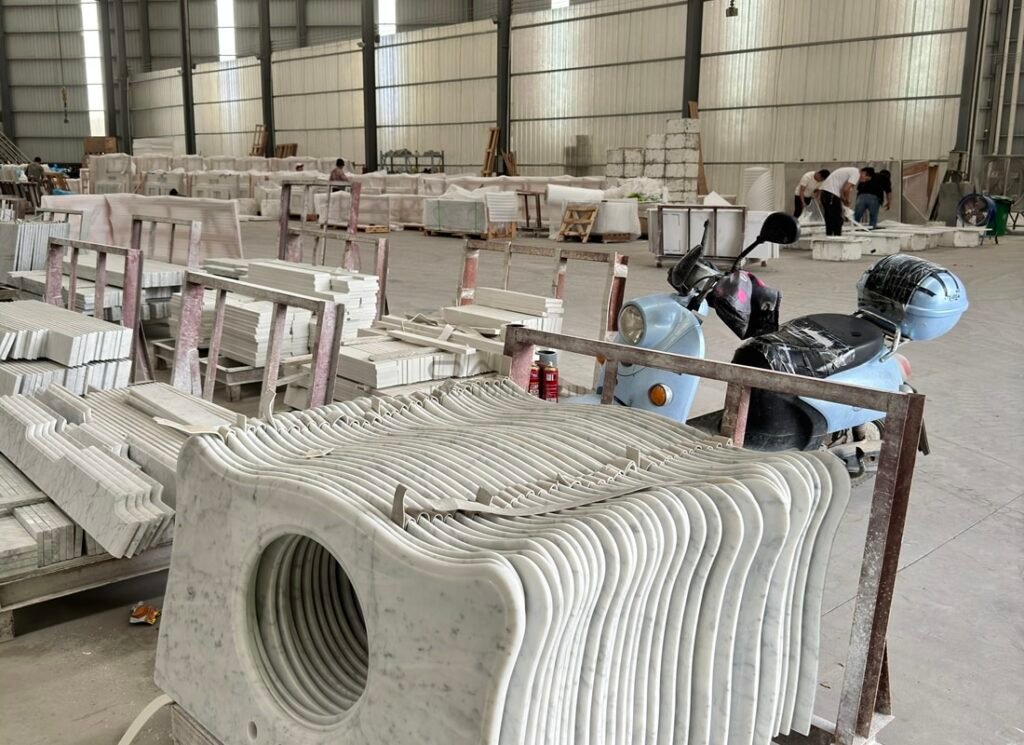
Why Marble Cost Should Not Be Judged by Unit Price?
Unit Price Is Only Surface Cost
Most buyers focus on:
- Price per square meter
- Price per slab
But the total project cost is determined by the entire delivery system, not just the purchase price.
Natural Stone Has High Hidden Costs
As a natural material, Carrara White Marble inherently includes:
- Batch variation
- Layout waste
- Fabrication tolerances
- Transportation risks
All of these translate into cost.
Lower Price ≠ Lower Total Cost
A typical scenario:
- Low-cost slabs → higher variation, more waste, more rework
- Higher-quality slabs → better consistency, smoother fabrication, faster installation
👉 In many cases, the second option results in lower overall cost.
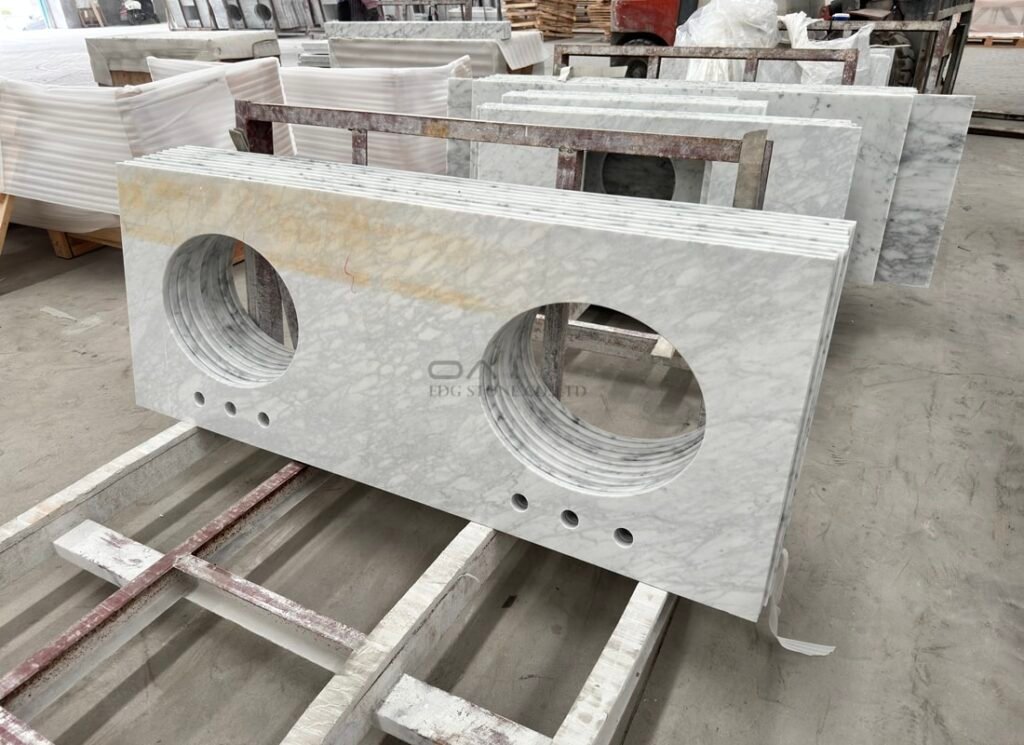
What Makes Up Carrara White Marble Cost?
1. Raw Material Cost
- Quarry grade
- Whiteness and veining consistency
- Slab size and yield
- Usable ratio
2. Fabrication Cost
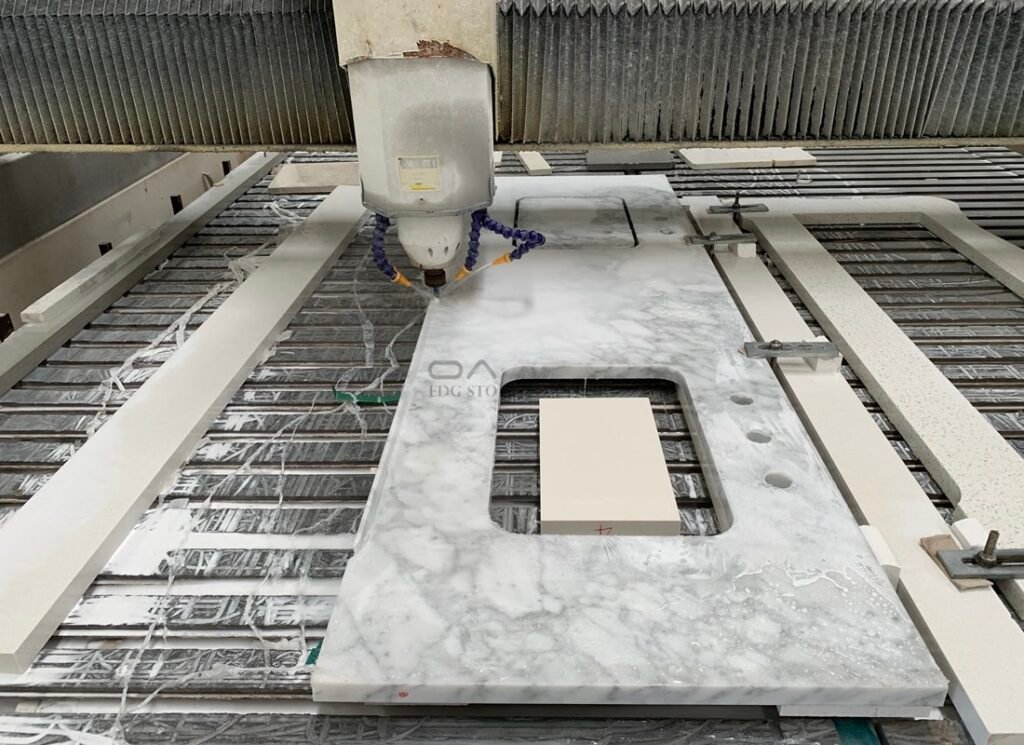
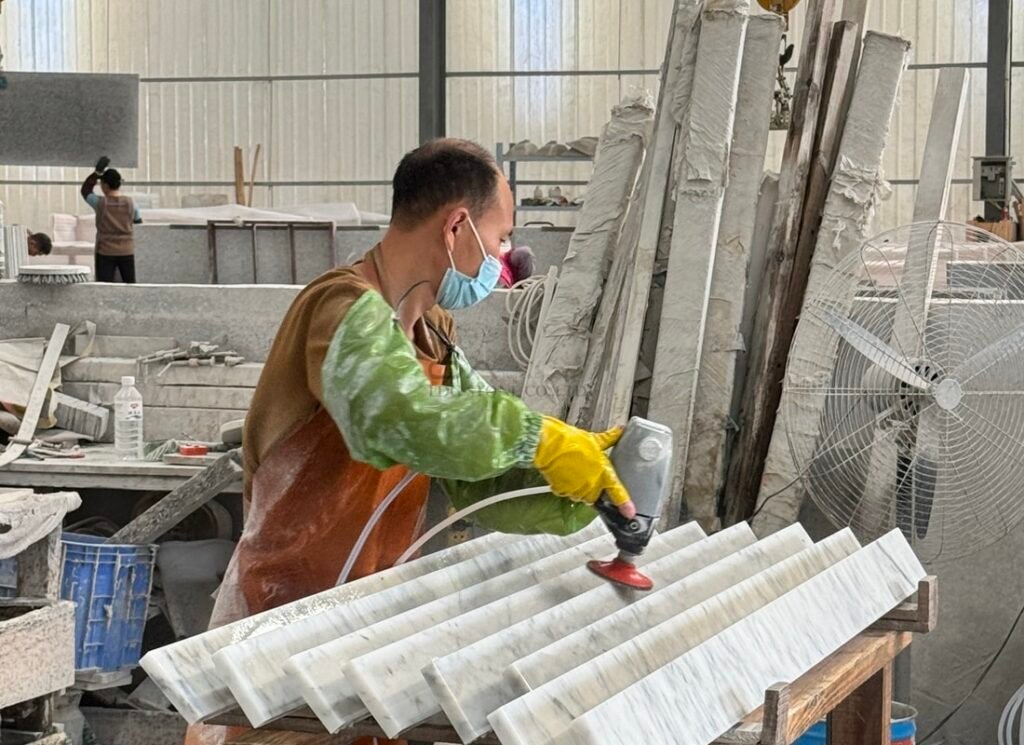
- Cutting
- Polishing
- Edge profiling
- Cutouts
- Jointing and shaping
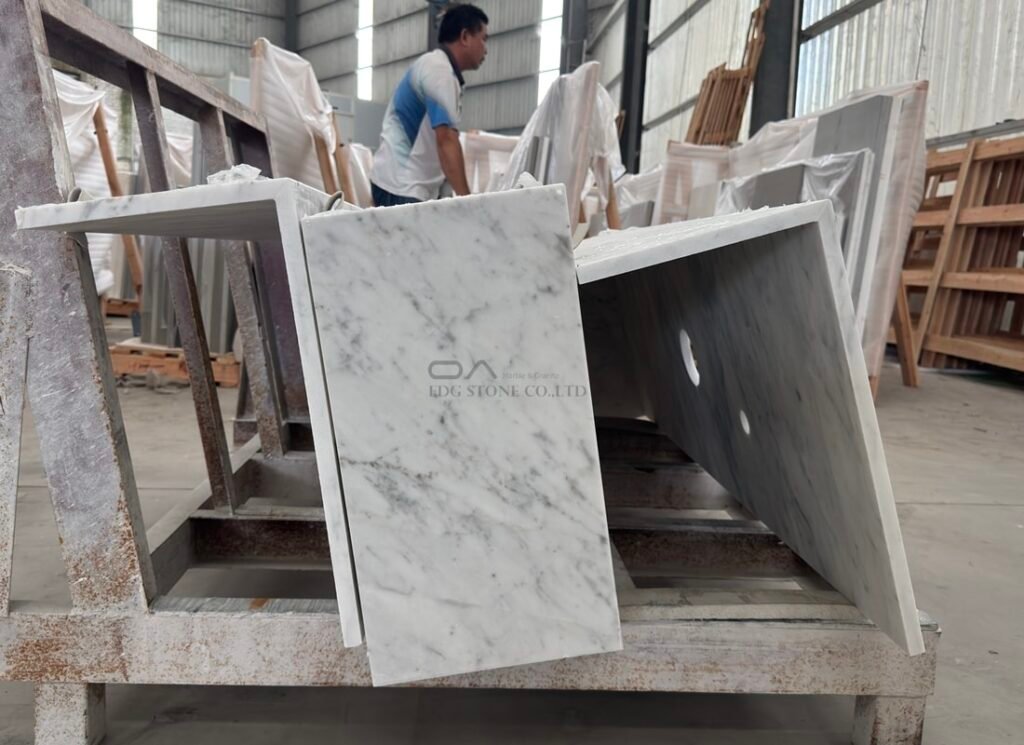
3. Waste Cost (Critical Factor)
- Cutting loss
- Layout inefficiency
- Defect removal
- Installation damage
4. Packaging & Logistics
- Wooden crates
- Protection materials
- Container loading
- Sea/land freight
- Insurance
5. Installation & Maintenance
- On-site fitting
- Seam adjustment
- Sealing and protection
- Repairs and upkeep
Core Principle of Cost Optimization
Not About Lower Price — About Higher Efficiency
True optimization means:
- Selecting the right thickness
- Reducing unnecessary customization
- Locking layout early
- Minimizing on-site cutting
- Controlling batch consistency
👉 Efficiency saves more than price negotiation.
Not About Lower Quality — About Reducing Waste
In premium projects, quality cannot be compromised.
Instead, focus on optimizing:
- Selection logic
- Fabrication workflow
- Procurement strategy
- Logistics planning
Step 1: Define Cost Strategy by Project Type
High-End Residential Projects
Characteristics:
- Strong design focus
- Smaller quantities
- High visual expectations
Strategy:
- Prioritize visual consistency
- Accept moderate waste
- Focus on veining continuity
Hospitality & Commercial Projects
Characteristics:
- Large volume
- Tight timelines
- High durability requirements
Strategy:
- Batch consistency first
- Standardized fabrication
- Reduce complex layouts
- Improve installation efficiency
Multi-Unit Residential Projects
Characteristics:
- High repetition
- Cost-sensitive
- Scalable production
Strategy:
- Prefer cut-to-size
- Standardize dimensions
- Use modular templates
- Minimize on-site work
Step 2: Thickness Selection and Cost Impact
18mm
Advantages:
- Lightweight
- Lower material cost
Applications:
- Wall cladding
- Decorative panels
20mm (Best Balance)
Advantages:
- Versatile
- Structurally stable
- Cost-effective
Applications:
- Kitchen countertops
- Bathroom vanities
- Commercial surfaces
30mm
Advantages:
- Premium appearance
- Strong visual impact
Trade-offs:
- Higher material cost
- Increased transport and installation costs
Applications:
- Kitchen islands
- Feature areas
- Luxury projects
Step 3: Specification Planning to Reduce Waste
Plan Layout Before Purchasing
Correct workflow:
Drawings → Dimension breakdown → Layout → Slab selection → Order
👉 Never purchase slabs before planning usage.
Standardization Reduces Cost
- Unified countertop widths
- Consistent vanity sizes
- Modular wall panels
- Standard stair dimensions
👉 Standardization improves slab yield.
Avoid Excessive Custom Shapes
Irregular shapes increase:
- Cutting complexity
- Waste ratio
- Installation errors
Step 4: How to Control Waste Ratio?
Waste Is Inevitable — But Controllable
In Carrara White Marble projects, waste is normal.
The goal is to control it, not eliminate it.
Common Waste Sources
- Color variation rejection
- Cracks and defects
- Poor layout planning
- Cutting mistakes
- Complex shapes
- Installation damage
Practical Waste Reduction Strategies
- Pre-plan layout drawings
- Use consistent batches
- Allow proper margins
- Create mock-up/sample areas
- Work with experienced fabricators
Step 5: Why Slab Yield Matters?
Higher Yield = Lower Cost
Better slab utilization means:
- Lower cost per usable piece
- Reduced waste
- Higher procurement efficiency
Factors Affecting Yield
- Slab size
- Project dimensions
- Cutout quantity
- Vein matching requirements
How to Improve Yield
- Use slab-friendly dimensions
- Standardize components
- Minimize unnecessary cuts
- Optimize nesting/layout
Step 6: Fabrication Method vs Budget
Cost-Efficient Standard Fabrication
- Straight edges
- Standard polishing
- Basic cutouts
- Uniform thickness
High-Cost Complex Fabrication
- Decorative edges
- Irregular cuts
- Precision vein matching
- Integrated designs
When Is Complex Fabrication Worth It?
Only when it significantly enhances visual value.
Otherwise, it often increases cost without proportional benefit.
Step 7: Procurement Method Comparison
Slab Procurement
Best for:
- Custom projects
- High design flexibility
Cost impact:
- Higher waste risk
- Requires strong planning
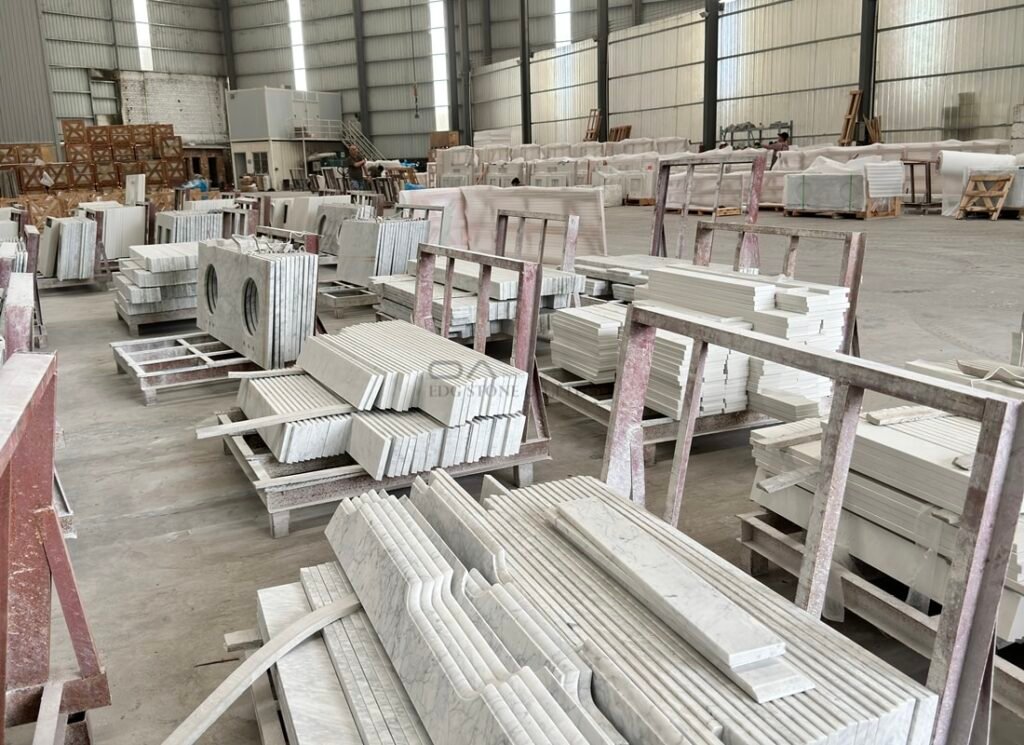
Cut-to-Size Procurement
Best for:
- Standardized projects
- Bulk supply
Cost impact:
- Lower waste
- Faster installation
- Better budget control
Prefabricated Stone
Best for:
- Residential developments
- Fast-track projects
Cost impact:
- High efficiency
- Strong cost predictability
Step 8: Supply Chain Coordination
Stable Supply Chain = Lower Hidden Cost
Reduces:
- Communication errors
- Delays
- Rework
- Damage
Why Factory Capability Matters?
A reliable supplier ensures:
- Accurate production scheduling
- Consistent quality
- Professional packaging
- Smooth installation
5 Key Questions to Ask Suppliers
- Can you provide slab photos?
- Can you ensure batch consistency?
- Do you support mock-ups?
- Can you assist with layout optimization?
- Do you offer professional packaging?
Step 9: Budget Allocation Strategy
Don’t Focus Only on the Material Price
A balanced budget includes:
- Materials
- Fabrication
- Waste
- Packaging
- Logistics
- Installation
- Maintenance
Smart Budgeting for Premium Projects
Invest more in:
- High-visibility areas
- Feature elements
- Long-term value zones
Examples:
- Lobby
- Feature walls
- Reception counters
- Kitchen islands
Step 10: Where to Save vs Where Not to Save?
Areas to Save
- Non-visual zones
- Overly complex shapes
- Excessive edge detailing
Areas NOT to Save
- Batch consistency
- Cutout accuracy
- Structural integrity
- Waterproofing
- Packaging
- Installation quality
👉 Mistakes here lead to higher long-term costs.
6 Practical Cost Optimization Tips
- Plan drawings before purchasing
- Standardize dimensions
- Limit custom shapes
- Lock material batches early
- Create mock-up zones
- Use experienced fabrication teams
Conclusion
Carrara White Marble cost optimization is not about buying cheaper — it’s about:
👉 Achieving the best possible result with the most efficient use of budget.
Professional buyers don’t just ask:
- What is the price?
They ask:
- What is the waste ratio?
- Is the supply stable?
- Will installation be efficient?
- Is long-term maintenance manageable?
Because in natural stone projects,
The most expensive cost is not the material — it’s poor decision-making.
FAQ (Rich Snippets Ready)
How can you reduce the Carrara marble project cost?
By optimizing slab selection, standardizing sizes, reducing waste, and improving fabrication efficiency.
Is cheaper marble always better?
No. Lower-priced marble often leads to higher waste, inconsistency, and increased total project cost.
What increases the marble project cost the most?
Complex fabrication, high waste ratios, poor batch control, and transportation damage.
Is cut-to-size cheaper than slab?
Yes, for standardized projects, as it reduces waste and on-site labor.
How do you balance cost and quality in marble procurement?
By prioritizing key areas, controlling waste, and selecting the right fabrication strategy.
Internal Linking Anchor Text Suggestions
- What is Carrara marble → Guide 01
- marble vs granite vs quartz → Guide 02
- Marble Quality Grading → Guide 03
- Carrara marble slab guide → Guide 04
- cut-to-size marble panels → Guide 05
- kitchen countertop guide → Guide 06
- bathroom vanity guide → Guide 07
- commercial countertop guide → Guide 08
- commercial vanity guide → Guide 09
- wall cladding guide → Guide 10
- flooring and stairs guide → Guide 11
- project procurement process → Guide 12
- fabrication guide → Guide 13
- bulk logistics guide → Guide 15