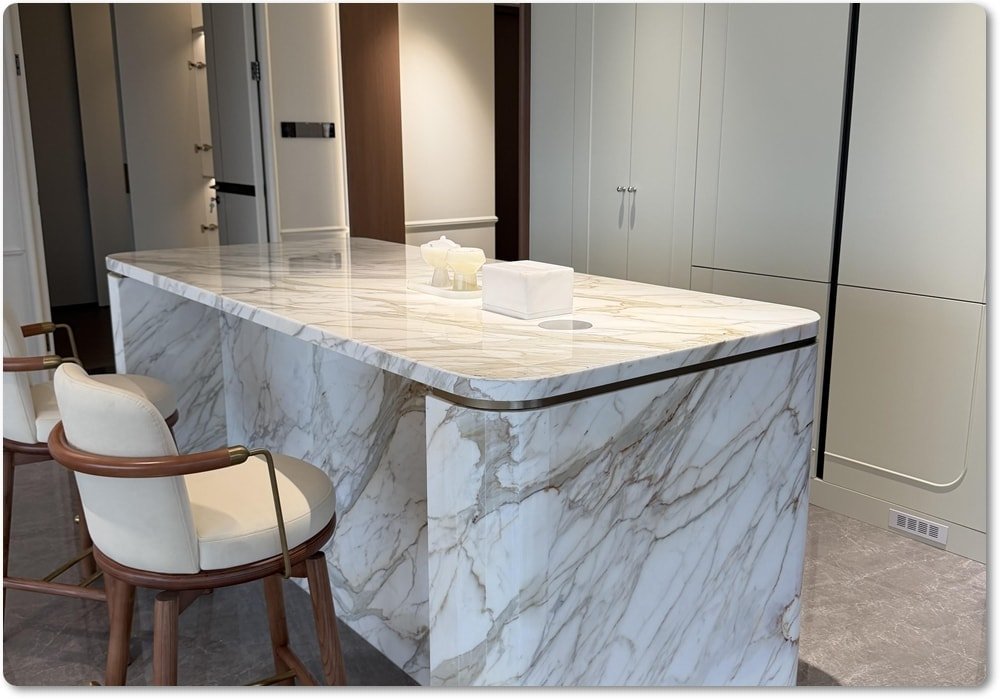

Introduction — why a single countertop supplier is the productivity lever you didn’t budget for?
Most countertop projects are more project-management heavy than they look. Every slab decision, delivery appointment, fabrication variance, or warranty call multiplies the number of decisions, emails, and site visits a PM must manage. A single supplier model—where one vendor provides slabs, fabrication, coordinated logistics, and a single warranty—consolidates those touchpoints. That consolidation turns fragmented tasks into a single contractual relationship, simplifies approvals, and reduces the administrative “switching tax” of managing multiple vendors. In short: fewer suppliers = fewer coordination failures, fewer schedule slips, and fewer hours spent firefighting.
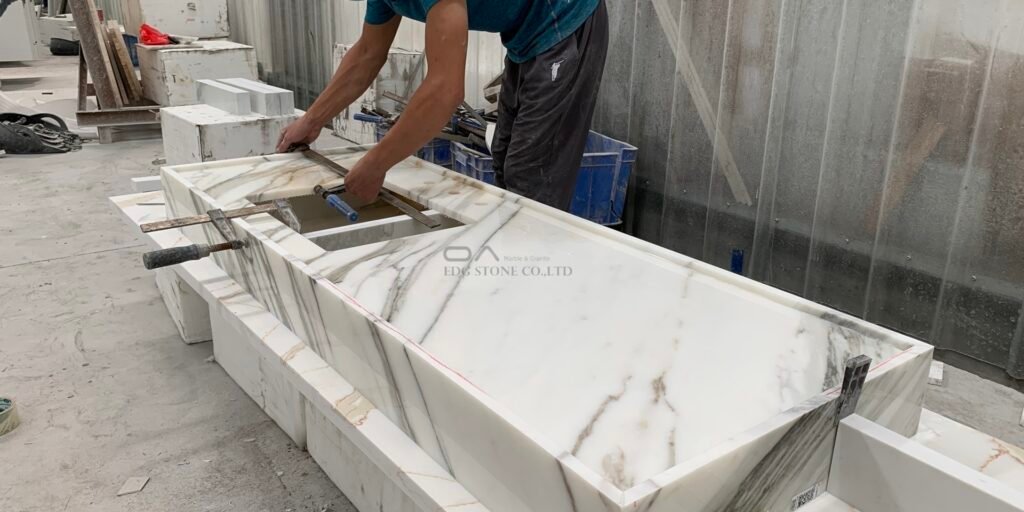
Why does supply-chain complexity cost time?
Multiple vendors multiply coordination tasks
When slab procurement, fabrication, and delivery are split across vendors, PM teams must coordinate slab selection with a slab yard, align cut schedules with a separate fabricator, and reconcile delivery windows with logistics carriers. Each handoff generates status checks, inspection steps, and potential conflicts. In practice, that means more RFI’s, more change orders, and more time on the phone or in email chains.
Hidden costs: rework, mismatched slabs, and punchlist friction
One of the most time-consuming issues is slab matching and finish consistency. When different vendors source or fabricate slabs, color and veining mismatches occur — leading to site decisions, re-cuts, or cosmetic fixes. Each of these actions can add days or weeks to a project schedule and dozens of billable PM hours.
Transactional overhead and onboarding
Every supplier relationship requires onboarding, paperwork, ERP setup, insurance checks, and payment terms — and those are real administrative costs. Benchmark studies in procurement show the internal cost of onboarding and processing each new supplier transaction is non-trivial and scales directly with vendor count.
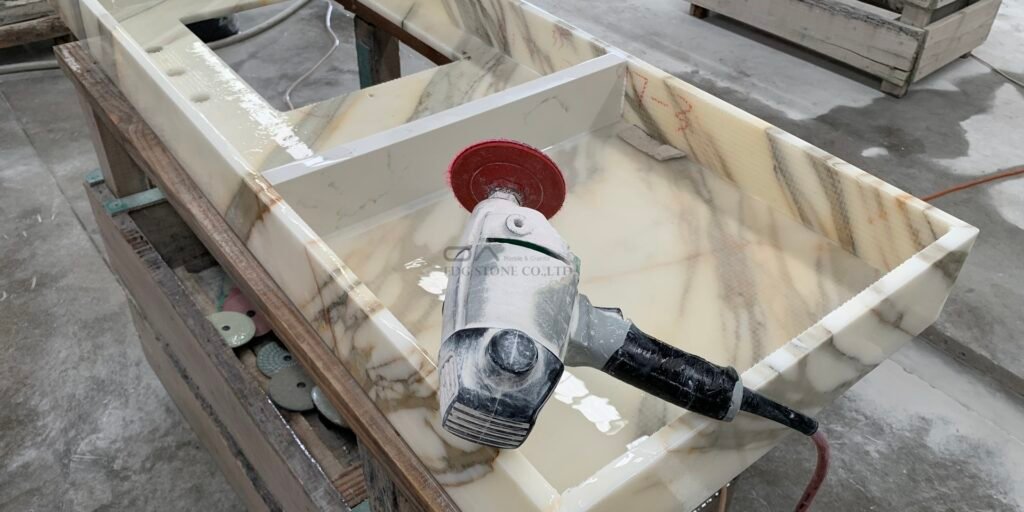
The single-supplier value proposition
What does “single supplier” mean operationally?
A true single-supplier model for countertops means one organization (or a tightly integrated factory + fabrication network) is accountable for slab procurement, fabrication, QA, delivery coordination, and warranty service. This structure centralizes responsibility and gives PMs one contract, one SLA, one escalation path, and one accountable operations team.
Communication & SLA simplification
Fewer vendors means fewer SLAs to manage and fewer competing schedules. A single supplier can present a consolidated lead-time, a joint quality-certification package, and coordinated logistics — simplifying weekly program management and reducing the number of meetings needed to keep the program moving.
Quality, consistency, and aesthetic control
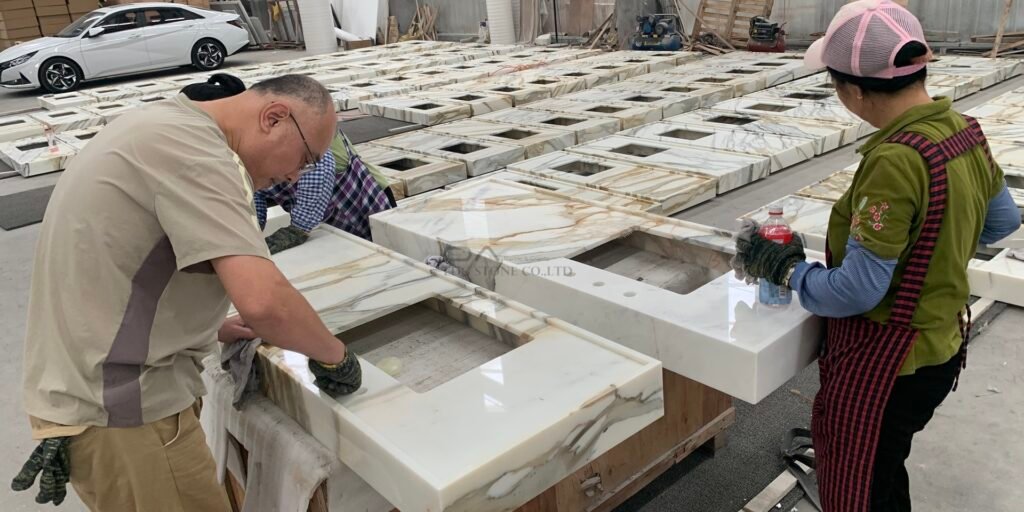
A supplier that controls slab sourcing and fabrication guarantees that matched slabs are held and scheduled to the same job, avoids inconsistent cut methods, and can provide better pre-install inspection processes. That reliability reduces field decision-making and punchlist volume.
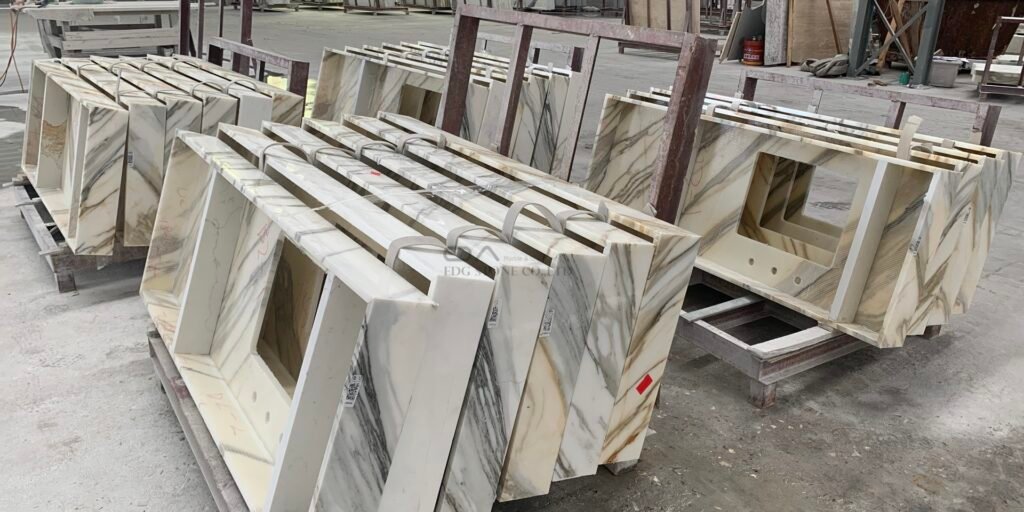
Quantifying project-management time savings
Time-savings model: baseline vs single-supplier
To make the benefit concrete, use a simple phases model: procurement + fabrication coordination + delivery & install + punchlist & warranty. Each phase has PM-hours per supplier. Consolidation reduces duplicated hours.
Example baseline assumptions (per typical mid-sized residential or commercial unit):
Procurement & vendor onboarding: 6–12 PM-hrs per supplier.
Fabrication coordination (scheduling, approvals): 4–8 PM-hrs per supplier.
Delivery & install coordination (scheduling, site changes): 3–6 PM-hrs per supplier.
Punchlist & warranty handling: 2–6 PM-hrs per claim/vendor.
If a project uses 4 different vendors, the “per-supplier” overhead multiplies. Switching to a single supplier collapses duplicate tasks and reduces the total PM time substantially.
Worked scenario — 100-unit multifamily
Baseline (multi-vendor): assume 4 suppliers -> average 20 PM-hrs per unit across all phases (procurement, coordination, delivery, punchlist). For 100 units: 2,000 PM-hours.
Single-supplier: consolidated process reduces duplicated tasks; assume 60% reduction in coordination hours -> 8 PM-hrs per unit -> 800 PM-hours for 100 units.
PM hours saved: 1,200 hours. Even at a conservative blended PM rate of $60/hr, this equals $72,000 in project-management labor savings—before counting reduced schedule risk and lower rework costs.
Small residential job example
A single-family kitchen that would otherwise require 10–15 hours of PM coordination across vendors often requires 3–6 hours with a single supplier — a net savings that shortens closeout and reduces punchlist surprises.
Cost impact & total cost of ownership
Direct cost effects
Single suppliers often offer volume discounts, consolidated shipping, and fewer change orders — all leading to lower hard costs. Bulk purchasing and predictable schedules let suppliers optimize production runs and shipping, lowering unit costs.
Indirect savings: reduced downtime and faster occupancy
Time saved on PM work is time regained in schedule reliability. For commercial builds or multi-unit turnovers, faster install and fewer punchlist items accelerate lease-up or sales, producing real revenue benefits that often outweigh small per-unit material cost differences.
ROI timeframe & breakeven
Using the multifamily example above, if consolidation saves $72K in PM labor and reduces rework cost by $30K, the combined savings can justify modestly higher slab or fabrication price premiums and still return net positive ROI within the project lifecycle.
Risk management & compliance simplification
Centralized safety and silica compliance
Fabrication of stone surfaces produces respirable crystalline silica. Regulatory agencies (including Occupational Safety and Health entities) have active emphasis programs and standards to manage silica exposure during cutting and finishing. Buying from a single certified supplier with documented silica controls, wet-cutting capability, and HEPA filtration reduces the compliance due diligence burden and centralizes safety documentation for the owner and contractor.
Insurance, warranty, and liability
Consolidated supplier arrangements simplify insurance verification and consolidate warranty escalation paths. When issues arise, consolidated responsibility prevents the “blame game” and reduces time spent mediating between multiple parties.
Supply interruption and contingency planning
While consolidation simplifies operations, good procurement practice includes contingency clauses — e.g., sub-supplier backup, inventory hold policies, and lead-time penalties. Single suppliers with multi-factory footprints or strategic inventory can provide a resilient supply even during market volatility.
Operational playbook: how to transition to a single supplier
RFQ & vendor qualification checklist
Require the following in your RFQ: slab holding policy, factory capacity, sample slab program, silica control documentation, fabrication warranty terms, lead time guarantees, and insurance certificates. Ask for proof of production capacity for your peak demand windows.
Contract & SLA clauses to include
Single point of contact and escalation chain
Defined lead times with remedies for late delivery
Slab hold and match guarantee language
Clear warranty terms and on-site repair SLAs
Health & safety compliance documentation (silica controls)
Logistics & scheduling
Map delivery windows with the supplier’s logistics team, use coordinated delivery manifests, stage materials in protected on-site zones, and require pre-install sign-offs via photos or site walkthroughs. A single supplier can provide consolidated manifests that reduce on-site juggling across multiple carriers.
Onboarding & comms cadence
Set weekly program meetings during peak phases, a dedicated supplier PM, and a digital shared dashboard for status updates. These simple cadences reduce ad-hoc calls and informal escalations that consume PM time.
Case studies & real-world examples
Retail rollout — 50 stores
A national retailer that consolidated to one supplier for countertops reduced per-store PM coordination from 18 hours to 6 hours by standardizing slab choices, staging deliveries, and using a single pre-approved installer network. The centralized supplier managed staging and just-in-time shipments, enabling the rollout to finish 30% faster than phased stores using multiple vendors.
Multifamily 100-unit build
As modeled earlier, consolidating to a single supplier produced an estimated 1,200 PM-hours saved and reduced punchlist incidence by an estimated 40% because slab matching and QA were handled at the source.
Hospitality demonstration — hotel renovation
A hotel renovation required matched veining across reception desks and bar tops. The single supplier held and scheduled matched slabs for all rooms, guaranteeing poly-chromatic consistency and reducing onsite aesthetic decisions—saving the interior team weeks of approvals and reducing rework.
KPIs, reporting & how to measure success
Recommended KPIs
PM hours per unit (before/after consolidation)
Punchlist items per 100 units
On-time delivery rate (%)
Warranty calls per 1,000 installed linear feet
Average cycle time from order to install
Dashboard & reporting cadence
Track monthly KPIs and report variances to procurement and PM leadership. Use a rolling 90-day view and a per-project view to attribute improvements directly to supplier consolidation.
Using data to refine SLAs
Data-driven KPIs let you negotiate better SLAs: reduced lead-time windows, repair timelines, or penalties on repeated non-conformance.

Procurement SEO
Suggested long-tail, purchase-intent keywords
“EDG Stone countertop manufacturer factory wholesale”
“Buy countertops wholesale factory direct near me”
“countertop supply chain management for multifamily builders”
“countertop supplier phoenix manufacturer wholesale”
“commercial quartz countertops manufacturer bulk pricing”
Regulatory & market context
Market sizing & momentum
The global countertops market is large and growing, with reputable market analyses estimating the industry’s global value in the tens or hundreds of billions. This scale supports investments in vertically integrated supply models and factory-capacity expansion.
US industry snapshot
Industry analysis shows steady expansion of the countertop manufacturing sector with healthy demand in both renovations and new construction—supporting supplier consolidation strategies that can deliver predictable capacity and reduced procurement friction.
Why does regulation push buyers to certified suppliers?
Regulatory focus on fabrication hazards — especially respirable crystalline silica — means buyers increasingly ask for documented health-and-safety controls as a condition of purchase. That expectation favors suppliers who centralize safety processes and can demonstrate compliance across their facilities.
FAQ — Google hot-search optimized Q&A
What is a single supplier for countertops, and why does it matter?
A single supplier provides slabs, fabrication, logistics, and warranty under a single contract. It matters because it reduces touchpoints, simplifies warranty and compliance documentation, and centralizes responsibility—leading to fewer delays and less PM time.How many project-management hours can consolidation save?
Savings vary by project size. In multi-unit builds, we often see coordination hours drop by 40–60%; a 100-unit project can conservatively save over 1,000 PM-hours when coordination, rework, and punchlist reductions are combined.How does single-supplier buying affect cost?
Although unit prices may be comparable, consolidation frequently produces direct savings through bulk pricing, fewer change orders, lower logistics spend, and indirect savings from reduced PM labor and faster occupancy.What compliance documentation should I ask a supplier for?
Ask for silica-control procedures (wet cutting, HEPA systems), OSHA or local safety program evidence, insurance and warranty terms, and factory capacity statements.How do I transition my current multi-vendor program to one supplier?
Start with an RFQ that holds suppliers accountable for slab holds and production capacity, include SLAs for lead times and quality, pilot on a small subset of units, and scale after the supplier demonstrates reliable delivery and QA.
Why: Because reducing the number of vendors reduces duplicate coordination work, fewer on-site decisions, and fewer punchlist disputes — which directly reduces PM hours and schedule risk.
What: What to expect: shortened procurement cycles, improved on-time delivery rates, consolidated warranty handling, and a predictable single escalation channel for issues.
Option (detailed): For risk-tolerant programs, choose a single supplier with multi-factory footprints or partner with two primary suppliers (regional + backup) under a master agreement to balance consolidation with supply continuity.
Consideration (detailed): Don’t confuse consolidation with single-source dependency. Include contingency clauses, slab-alternative substitutions, and transparent lead-time penalties. Prioritize suppliers who can demonstrate OSHA-compliant silica controls and verifiable QA processes to avoid downstream liabilities.