Introduction
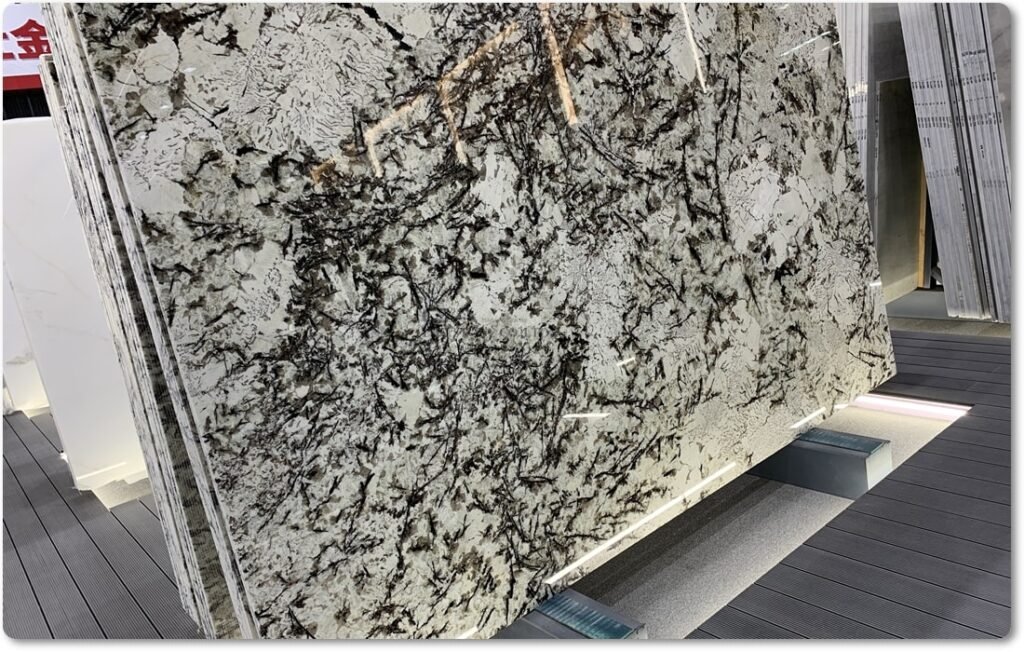
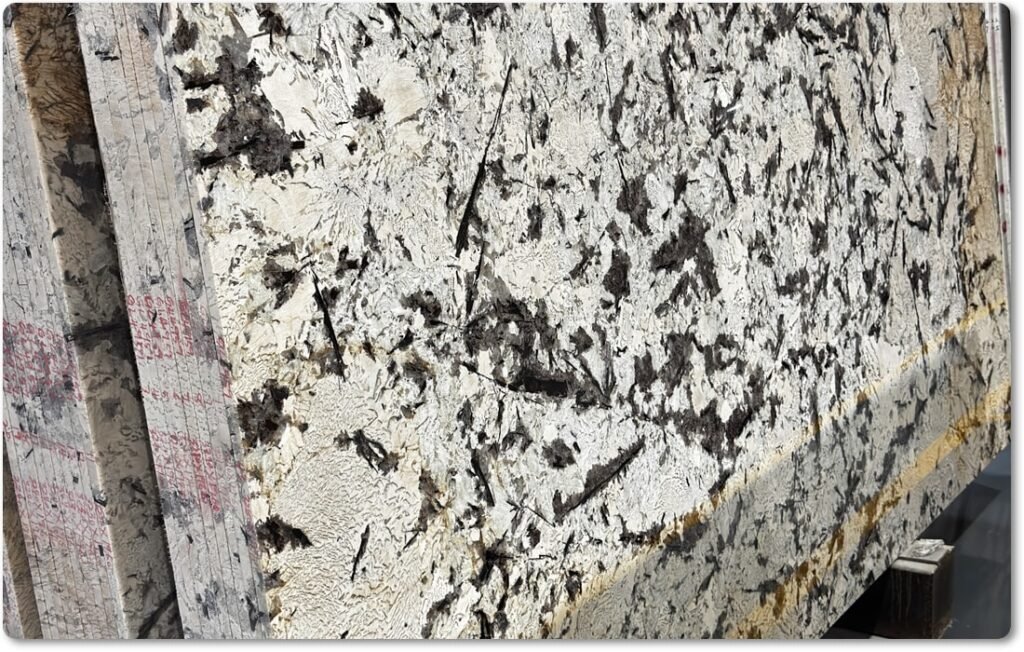
Quartzite is not just another decorative stone category. It is a metamorphic rock formed when quartz-rich sandstone is altered by heat, pressure, and mineral activity, resulting in a dense, interlocking structure that makes it attractive for architectural surfaces and demanding countertop applications. In procurement terms, that geological origin matters because it affects color variation, breakage risk, finishing yield, and the way slabs move through the supply chain from quarry to processor, exporter, distributor, and end project.
For buyers, the real economics of quartzite are determined less by list price and more by three linked variables: minimum order quantity (MOQ), container utilization, and landed cost. Trade terms and customs valuation also matter because the amount paid for the goods, the freight structure, and the Incoterms rule used in the contract all affect the final import cost and risk allocation. The WTO customs valuation framework and ICC Incoterms rules exist precisely because transaction value and delivery responsibility must be defined consistently in international trade.
1) Understanding Quartzite Supply Chains
Quarry
The quarry is the source of the raw block. At this stage, commercial value is still highly uncertain because fracture behavior, internal veining, color movement, and recoverable slab yield are not fully known until the stone is extracted and cut. Quartzite’s metamorphic origin makes it visually powerful, but also less uniform than engineered materials. That is why block selection, sorting, and recovery planning are central to procurement economics.
Processor
The processor converts blocks into slabs and adds value through cutting, resin treatment where applicable, calibration, polishing, finishing, and grading. This is where yield is created or lost. A processor that manages sawing strategy, slab thickness consistency, edge damage prevention, and grade separation well will usually produce a lower true cost per sellable square foot, even if the nominal slab price is higher. This is a procurement inference based on how value is created in dimension stone supply chains. U.S. dimension stone production remains a significant industrial segment, with the USGS estimating 2.3 million tons sold or used by U.S. producers in 2025, valued at $460 million.
Exporter
The exporter coordinates documentation, packing, export compliance, inland transport, and ocean booking. This is where contract structure matters. Under Incoterms, the seller and buyer do not merely “split shipping”; they allocate responsibility, cost, and risk at a defined delivery point. That affects whether the buyer is comparing FOB, CFR, CIF, DAP, or DDP pricing, and it changes which charges belong in the landed-cost model.
Distributor
The distributor is the market-facing inventory holder. In quartzite, the distributor makes money by balancing inventory depth against turnover, and by carrying enough variety to close projects without holding too much slow-moving stock. The distributor model works best when slab variety, replenishment reliability, and container efficiency are aligned. It fails when the MOQ is too high relative to local demand or when the importer buys beautiful but undifferentiated inventory that cannot be sold quickly enough.
2) MOQ Strategies That Actually Work
MOQ is not only a supplier policy; it is a cash-flow design tool. In quartzite procurement, MOQ usually reflects block yield, fabrication efficiency, packaging cost, freight density, and the seller’s willingness to reserve production capacity. A buyer should never treat MOQ as a fixed obstacle. It should be evaluated against forecast demand, lead time, inventory carrying cost, and sales velocity.
Trial Orders
Trial orders are the safest entry point when a buyer is testing a new quarry, color, or exporter. A trial order should be designed to answer three questions: can the stone be processed consistently, does the actual slab appearance match the sample range, and can the export packing survive transit without unacceptable damage? A small order is not only a quality test; it is a logistics test. For quartzite, where variation across slabs is common, a trial order helps buyers verify whether the product is suitable for bookmatching, selection sales, or bulk project supply.
Mixed Containers
Mixed containers are often the best MOQ solution for buyers with broad but shallow demand. A mixed load can combine multiple quartzite colors, thicknesses, or finishes, reducing concentration risk and improving sales coverage. The trade-off is more complex packing, more careful documentation, and potentially less efficient cube utilization than a mono-color container. Yet for many distributors, a mixed container is economically superior because it converts a single high-risk buy into a portfolio of saleable stock.
Annual Agreements
Annual agreements work when the buyer has repeat demand and the supplier has stable production capacity. The benefit is not only price stability; it is also priority allocation, tighter scheduling, and better alignment between forecast and production. Annual agreements can reduce the need for emergency replenishment and can support better color consistency if the same quarry face and production specification are reserved over time. The key is to keep the commitment flexible enough to reflect actual consumption, not just optimistic forecasts.
3) Container Optimization: 20FT, 40FT, and Packaging Efficiency
For quartzite slabs, container optimization is usually a weight-and-damage problem, not just a volume problem. Standard dry containers have strict payload limits. Maersk lists a 20-foot standard steel container with a maximum payload of 28,300 kg and a 40-foot standard steel container with a maximum payload of 28,870 kg; Hapag-Lloyd lists similar general-purpose payload limits and provides standard internal dimensions for 40-foot containers. In practice, dense stone often approaches weight limits before it fills the available cubic volume. That makes dunnage design, crate geometry, and slab thickness planning economically important.
20FT Containers
A 20FT container is often useful for smaller, heavier, or more tightly controlled quartzite shipments. It can be preferable when the buyer wants to reduce exposure, test a supplier, or separate high-value slabs from broader stock. It also helps when destination handling is difficult, and a shorter container improves unloading flexibility. The downside is a lower total shipment scale, which may raise per-unit freight and handling costs.
40FT Containers
A 40FT container is generally better when the buyer has enough volume to justify a larger ship-to-stock program. Because the payload limit remains in the same general band as a 20FT container,r while the internal volume is much larger, a 40FT container can improve packaging efficiency if the stone is not weight-saturated. That said, if the slab package is too dense, the extra cube may not translate into extra productive loading. The buyer must model both payload and slab count, not just container length.
Packaging Efficiency
Packaging efficiency in quartzite is about protecting value per cubic meter. Good packing reduces breakage, edge chipping, and handling damage. In practical terms, buyers should evaluate crate strength, slab orientation, interleaving material, vertical support, and container restraint. The highest-value container is not the one that carries the most slabs; it is the one that arrives with the highest sellable yield after transit, unloading, and inspection.
A useful procurement rule is this: if the packing design reduces breakage by even a small percentage, the savings can exceed the freight cost difference between loading styles, especially for premium quartzite. That is an operational inference, but it is grounded in the fact that landed cost includes all charges needed to bring the goods to market, not just the freight line on the booking confirmation.
4) Landed Cost Analysis: The Only Cost That Matters
The landed cost is the true cost of getting quartzite into saleable inventory at the destination market. Trade guidance from U.S. export and customs resources repeatedly emphasizes that buyers care about the final price, including shipping and taxes, while customs valuation determines the basis on which duties are assessed. The WTO describes customs valuation as a fair, uniform, and neutral system, and CBP explains that the customs value is built around the price paid or payable for the merchandise, subject to the relevant rules.
Landed Cost Formula
A practical landed-cost model for quartzite should include:
Landed Cost = Material Price + Processing Cost + Inland Freight + Export Handling + Ocean Freight + Insurance + Destination Handling + Duty/Tax + Finance Cost + Damage Allowance
This is not a legal formula; it is a commercial model. But it is the model procurement teams should use when comparing suppliers, Incoterms, and container strategies. Incoterms determine which party pays and bears risk at each stage. ICC also notes that Incoterms 2020 aligned insurance treatment in CIF and CIP and clarified several delivery rules.
Why Customs Value Matters?
If the customs value is wrong, the duty base is wrong. That means two suppliers can appear to have similar ex-factory pricing while producing different landed results because one quote excludes charges that later enter customs value or destination cost. WTO guidance and CBP rulings emphasize transaction value as the primary basis of appraisement, subject to the applicable conditions. This is one reason experienced buyers insist on clean invoices, clear terms, and documented charge separation.
A Simple Procurement Decision Rule
If two quotations are identical at the slab level, choose the one with:
- clearer Incoterms definition,
- lower expected damage rate,
- better load efficiency,
- stronger customs documentation,
- and more predictable replenishment.
That is usually the quote with the lower true landed cost, even if the sticker price is higher.
5) ROI Analysis: Distributor Model vs Project Supply Model
Quartzite procurement should be evaluated by business model, not by stone alone.
Distributor Model
The distributor model earns profit through inventory rotation, margin spread, and repeat customers. The financial priority is turnover. A distributor benefits from a mix of standard sellers, premium visual pieces, and occasional special-order material, but only if the average stock is sellable within a reasonable cycle. High MOQ can hurt this model if it creates dead inventory or too much cash tied up in a single color family.
A distributor should measure:
- gross margin per sellable square foot,
- inventory days on hand,
- breakage-adjusted yield,
- and replenishment lead time.
If the quartzite line cannot support healthy turns, the distributor should switch to smaller trial buys, mixed containers, or annual call-off agreements.
Project Supply Model
The project supply model is different. Here, the buyer sells into a specific job, so the priority is specification match and schedule certainty. A project buyer may accept lower inventory rotation if the slabs are booked to a real job with known dimensions, finish, and delivery sequence. This model rewards accurate sample approval, batch locking, and container timing more than a broad assortment.
In project supply, ROI improves when the supplier can reduce re-selection, reduce mismatch risk, and deliver all required material from one controlled production run. That is why a project buyer may pay more for a better-controlled batch but still achieve a stronger project ROI.
Break-Even Logic
The break-even point in quartzite procurement is reached when:
Gross Profit per Job or per Inventory Cycle > Total Landed Cost + Carrying Cost + Risk Cost
The “risk cost” includes:
- breakage,
- color mismatch,
- late delivery,
- and rework.
This is where many buyers misjudge value. A slightly cheaper slab that causes one broken project schedule can destroy more margin than several expensive but reliable containers.

6) How to Rebuild the Buying Logic by Scenario
Scenario A: New Importer
Use trial orders, request a full slab-selection report, and keep the first container small enough to inspect in detail. Focus on risk control over price aggression.
Scenario B: Established Distributor
Use mixed containers or annual agreements. Prioritize color consistency, replenishment planning, and sell-through rate.
Scenario C: Project Contractor or Fabricator
Lock the batch early. Demand sample approval, edge-detail confirmation, and shipping cadence aligned to installation dates.
Scenario D: Hospitality or Multi-Unit Residential Buyer
Use a controlled sourcing model with one primary batch and one backup batch. Quartzite visual variation can work beautifully in large spaces, but only if the project team accepts the grading logic before purchase.
7) EDG Stone Factory Case Module: Manufacturer and Exporter Workflow
In an EDG Stone Factory procurement model, the buyer should treat the factory as a global quartzite slabs & countertops manufacturer and exporter case study built around controlled sourcing, production transparency, and export readiness. The commercial goal is not simply to buy stone; it is to build a repeatable sourcing system that supports both slab resale and countertop fabrication.
A workable EDG Stone Factory case module should include:
- quarry-to-slab traceability,
- slab photo and grading records,
- thickness and calibration control,
- export-grade packing,
- document readiness for customs and shipping,
- and the ability to support both stock-slab and project-order logic.
For SEO and sales conversion, this module should be positioned as proof of operational capability: a source that understands procurement economics, not only appearance. It should speak to distributors, fabricators, and project buyers in the same article series, but with different call-to-action paths depending on whether the reader wants inventory, fabrication, or project support.
8) Whitepaper-Level Procurement Checklist
Before placing a quartzite order, the buyer should verify:
- the exact Incoterms rule,
- the quote inclusions and exclusions,
- slab count, thickness, and finish,
- batch consistency and selection method,
- container payload plan,
- crate and packing method,
- customs documentation package,
- insurance coverage,
- expected breakage reserve,
- replacement policy for damaged slabs.
This checklist is the simplest way to protect margin. The more expensive the quartzite, the more important it is to document quality, packing, and customs responsibility before the shipment leaves origin. That aligns with ICC’s allocation of trade responsibilities and with customs valuation practice that depends on a clean, supportable transaction structure.
9) Content Cluster Structure
This whitepaper should sit at the center of a 15-article ecosystem. The structure should move from foundation knowledge to application and then to commercial strategy, which matches buyer intent progression and improves internal linking. This is especially effective for Google-style topical authority and generative search visibility because each article answers one narrow problem while reinforcing the same entity set: quartzite slabs, countertops, procurement, manufacturing, export, landed cost, and project supply.
Suggested 15-Article Internal Link Matrix
| # | Article Title | Main Intent | Internal Anchor Example |
|---|---|---|---|
| 1 | Quartzite Slabs Procurement Economics: MOQ, Container Optimization, and Landed Cost Analysis | Core pillar | quartzite procurement economics |
| 2 | Quartzite Slabs for Sale: How Buyers Evaluate Inventory, Quality, and Value | Inventory buyer | quartzite slab evaluation |
| 3 | Quartzite and Granite Slabs Near Me: How to Evaluate Local Stone Suppliers | Supplier comparison | local stone supplier checklist |
| 4 | Quartzite Countertops and Slabs: Fabrication, Engineering, and Installation Best Practices | Fabrication | quartzite fabrication guide |
| 5 | Cristallo Quartzite Slabs and Exotic Quartzites: Procurement Standards for Ultra-Luxury Projects | Ultra-premium | exotic quartzite sourcing |
| 6 | Blue Quartzite Slabs: Evaluating Rare Stone Assets for High-End Architectural Projects | Rare-stone category | blue quartzite procurement |
| 7 | Taj Mahal Quartzite Slabs: The Global Benchmark for Premium Countertop Projects | Flagship product | Taj Mahal quartzite |
| 8 | Quartzite Slabs Quality Grading Guide: Color, Veining, Thickness, and Surface Control | Quality system | quartzite grading |
| 9 | Quartzite Slabs MOQ Strategy: Trial Orders, Mixed Containers, and Annual Supply Plans | MOQ intent | quartzite MOQ strategy |
| 10 | Quartzite Slabs Container Loading Guide: 20FT vs 40FT Optimization | Logistics intent | container loading guide |
| 11 | Quartzite Slabs Landed Cost Calculator: Freight, Duty, Insurance, and Handling | Cost intent | landed cost calculator |
| 12 | Quartzite Slabs Supplier Audit Checklist for Importers and Distributors | Audit intent | supplier audit checklist |
| 13 | Quartzite Countertop Project Supply Strategy for Builders and Fabricators | Project supply | quartzite project supply |
| 14 | How EDG Stone Factory Manufactures and Exports Quartzite Slabs and Countertops | Brand proof | EDG Stone quartzite factory |
| 15 | Quartzite Slabs Buying Guide for Distributors: Inventory, Margin, and Risk Control | Distributor intent | quartzite distributor guide |
Authoritative Data Sources Used
- USGS, Quartzite and metamorphic rock definitions — quartzite is a metamorphic rock formed from sandstone and composed mainly of quartz.
- USGS Mineral Commodity Summaries 2026 — dimension stone production value and U.S. industry context.
- ICC Incoterms® rules — official rules governing cost and risk allocation in international sales.
- ICC Incoterms 2020 release note — confirms insurance and delivery-rule updates.
- WTO customs valuation gateway — explains neutral customs valuation principles.
- CBP guidance on customs value and import duties — explains transaction value and invoice value concepts.
- U.S. export guidance on landed cost and Incoterms — explains why landed cost includes shipping and taxes.
- Maersk container cargo weight limits — standard 20FT and 40FT payload references.
- Hapag-Lloyd container specifications — container dimensions and general-purpose payload reference.
Conclusion
Quartzite procurement becomes profitable when buyers treat it as a systems problem rather than a price-shopping exercise. The winning model combines the right MOQ strategy, the right container plan, and the right landed-cost structure. When that model is paired with batch control, customs discipline, and a clear business use case, Quartzite can support both distributor margins and project delivery performance. The strongest whitepaper logic is simple: start with geology, move through supply chain reality, then make the commercial decision on true landed economics. That is the most reliable path from sourcing to margin.