
Introduction
When buyers search for “quartzite and granite slabs near me,” they are usually not looking for a generic stone store. They are looking for a supplier who can prove three things at once: the material is correctly identified, the inventory is real and traceable, and the supplier can deliver the slab safely, consistently, and on schedule. That is why local supplier evaluation should be built on standards, testing, logistics, and site inspection—not marketing language alone. USGS defines dimension stone as natural rock quarried into blocks or slabs that meet size and shape requirements, while the Natural Stone Institute notes that scientific and commercial stone names do not always match perfectly and that proper research is needed to ensure performance in service. ASTM also separates granite dimension stone and quartz-based dimension stone into distinct specification families.
In practical terms, a good local supplier is not just a seller. It is a node in the supply chain that can hold inventory, protect slab quality, provide test data, support fabrication, explain shipping terms, and help the buyer choose the right stone for the right use case. The Natural Stone Institute describes its membership as representing the entire natural stone supply chain, from quarry to restoration, and its Buyer-to-Supplier Manual is specifically aimed at international sourcing and sales-agreement best practices.
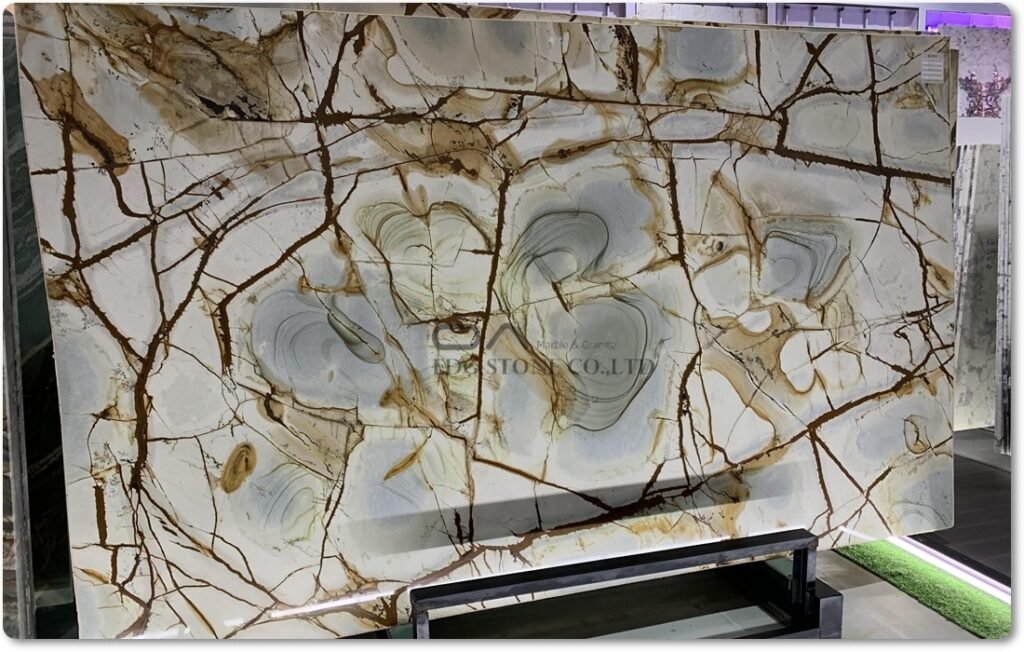
1. Understanding Quartzite and Granite Before You Compare Suppliers
Quartzite and granite are often compared as countertop and cladding options, but the most useful comparison starts with how the industry classifies them. Granite has its own ASTM specification, and quartz-based stone has its own separate ASTM specification family. That matters because a supplier who understands the standard behind the stone is more likely to understand the performance requirements behind the project. USGS also shows that granite remains one of the major dimension-stone categories by value and tonnage, while quartzite appears as a smaller but still meaningful part of the market.
The Natural Stone Institute has long warned that quartzite can be confusing in commercial practice, because the way stone is sold in the market does not always mirror the scientific classification. That is why a serious procurement process should not stop at the name on the slab rack. It should require test reports, finish confirmation, and a clear statement of intended use. The same logic applies to granite: a slab labeled “granite” may still vary in composition, finish, and performance, so the supplier’s documentation matters as much as the label.
For buyers, the takeaway is simple: stone names are a starting point, not a final answer. The right question is not “Is this quartzite or granite?” The better question is “Does this specific stone, from this specific lot, meet the performance, aesthetic, and installation requirements of this project?” ASTM test methods for absorption and bulk specific gravity, compressive strength, and flexural strength exist precisely because appearance alone cannot confirm suitability.
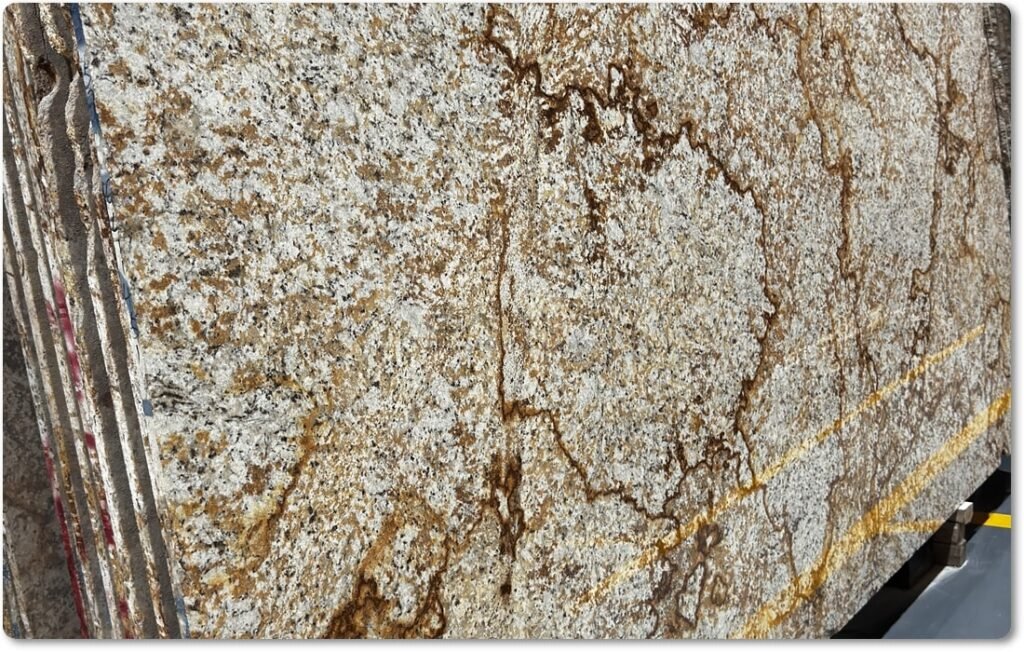
2. Map the Local Supply Chain Before You Visit Any Yard
A local stone supplier may be an importer, distributor, fabricator, or a hybrid of all three. Each model creates a different buying experience. Importers usually focus on sourcing, customs flow, and container-level inventory. Distributors focus on breadth of stock, local availability, and quick turn. Fabricators focus on transformation: templating, cutting, edge work, polishing, and installation readiness. The Natural Stone Institute’s resources and membership coverage reflect this full chain, which is why the buyer should treat “local supplier” as a role, not a single business type.
For imported slabs, the commercial term used in the quote matters. ICC’s Incoterms® 2020 rules are the global trade terms used to clarify who pays for what, where delivery occurs, and when risk transfers from seller to buyer. Incoterms do not replace the sales contract, but they do make quotes comparable and reduce misunderstanding. If a supplier cannot specify whether a price is EXW, FCA, CFR, CIF, or DDP, the buyer should pause and request a clearer offer sheet before proceeding.
That is especially important for local buyers who assume “near me” means “simple.” Local availability can still mask imported stock, outside warehousing, mixed inventory ownership, or delayed transfer from port to yard. A strong supplier makes the chain visible: where the slabs came from, where they are stored, who owns them, what is included in the price, and what happens if the material arrives chipped, mismatched, or delayed. ICC guidance on Incoterms exists because risk and delivery responsibilities must be defined clearly in B2B trade.
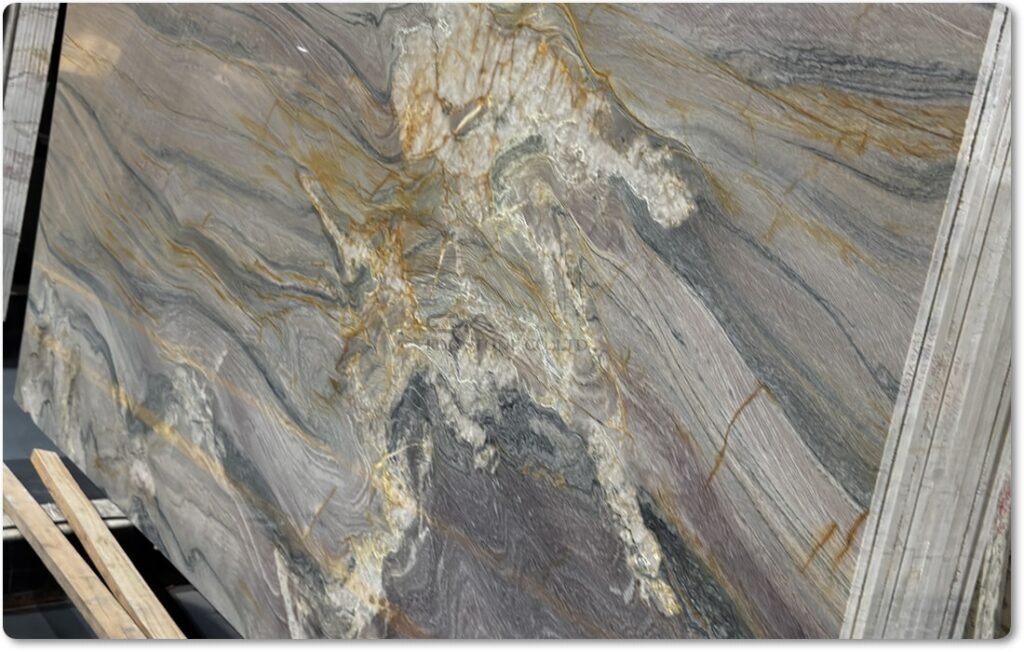
3. Supplier Evaluation Framework: What to Measure, Not Just What to Admire?
A reliable stone supplier should be evaluated across five dimensions: inventory depth, material quality control, service capability, logistics discipline, and documentation quality. That framework is more useful than a vague judgment based on showroom appearance. A polished showroom can hide weak inventory management, while a modest yard can still be highly reliable if the material is well organized, traceable, and properly tested. The Natural Stone Institute’s Dimension Stone Design Manual remains the industry’s single-source reference for dimension stone design and construction facts, which makes it a strong baseline for any procurement checklist.
Inventory depth is not just volume. It is the ability to supply multiple slabs from the same lot, maintain color consistency, and support matching for kitchens, vanities, fireplace walls, or multi-unit projects. In practical terms, buyers should ask whether the supplier can show current slab counts, slab photos, lot segregation, thickness consistency, and replenishment options. If the project requires bookmatching or vein matching, the supplier should be able to identify paired or contiguous slabs before fabrication begins. This is operational best practice rather than a formal standard, but it is central to reducing visual mismatch on installed work.
Quality control should be documentation-driven. ASTM provides test methods for absorption and bulk specific gravity, compressive strength, and flexural strength, which are all useful when comparing stones of the same type. Those tests do not replace project-specific design review, but they give buyers a defensible way to compare one supplier’s claim against another’s. Request the test method, the laboratory name, the test date, and the sample identification so you can verify that the report corresponds to the actual slab or quarry family being offered.
Service capability is equally important. A supplier should be able to discuss fabrication tolerances, finish options, edge profiling, polishing behavior, and recommended applications. The Natural Stone Institute’s education resources explicitly support designers, contractors, and buyers who need to select, specify, and communicate with stone suppliers. In other words, the best supplier is not just a warehouse. It is a technical partner.
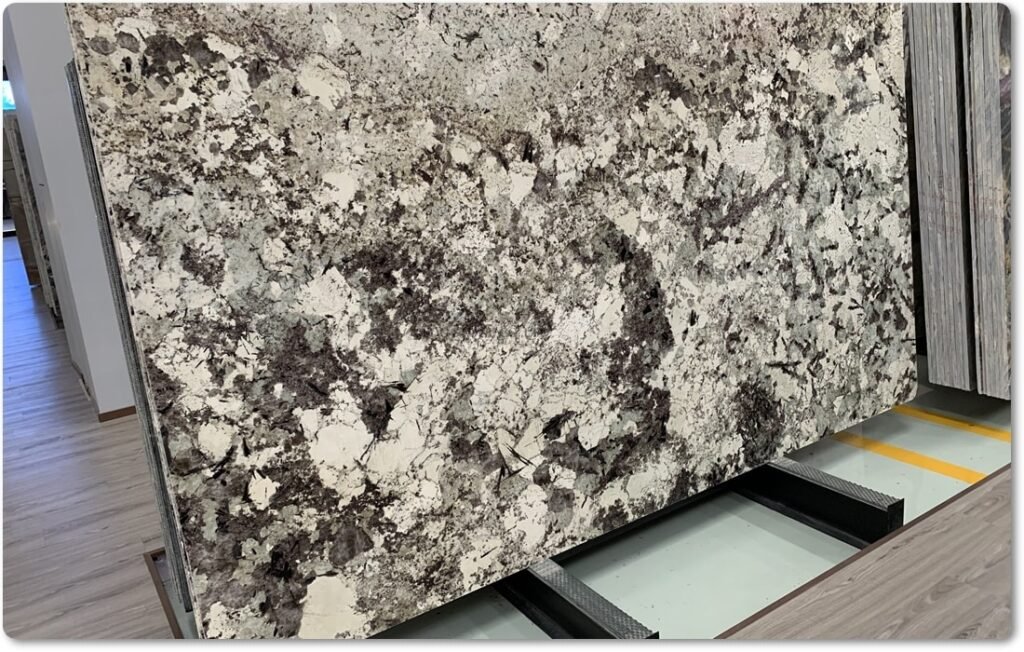
4. Site Visit Checklist: What a Serious Buyer Should Inspect?
A site visit should start in the warehouse, not the office. Buyers should inspect how slabs are stored, whether racks are stable, whether labels are readable, and whether the yard keeps similar materials grouped. Look for edge protection, clear pathways, controlled lifting procedures, and visible slab identification. These details may sound operational, but they directly affect the risk of damage, lead time, and replacement reliability. Safety and handling matter because slab damage, contamination, and mis-picks usually begin in storage long before fabrication.
The next question is whether the supplier can explain how it controls dust and worker exposure during cutting, grinding, and finishing. OSHA states that respirable crystalline silica is a serious hazard and has issued separate standards for construction, general industry, and maritime. In construction, the standard applies to occupational exposures and sets a PEL of 50 μg/m³ with an action level of 25 μg/m³ as an 8-hour TWA. For stone buyers, this is not just a compliance issue. It is a supplier-quality issue because safe shops tend to be more disciplined shops.
Natural Stone Institute resources reinforce that point. Its Silica & Slab Safety Certificate is designed around preventing silicosis, safe slab handling, and creating a safety program, and its updated materials are intended for stone fabrication operations. When evaluating a local supplier, asking whether staff have completed such training is a practical way to gauge professionalism.
During the visit, ask to see sample approval records, slab tags, incoming inspection procedures, and complaint handling records. If the supplier cannot show how it tracks defects, moisture issues, chip repair, or color variation, that is a warning sign. The most dependable suppliers can explain what was rejected, what was repaired, what was sold as commercial grade, and what was held back for premium projects. That transparency is often the difference between a smooth project and a costly dispute.

5. Slab Selection and Sample Approval: How to Reduce Risk Before Purchase?
A small sample is useful for color direction, but it is not enough to approve a project. Buyers should compare samples against the actual slabs to confirm consistency, movement, and finish. Because natural stone is inherently variable, the sample approval process should include photos of the exact slab bundles, lot numbers, and agreement on acceptable variation. This is particularly important for quartzite, where commercial naming can be misleading, and performance varies significantly by stone family.
For higher-value projects, request a written approval workflow. That workflow should include sample sign-off, slab selection, fabrication drawing review, edge profile confirmation, and final pre-shipment photos. If the project is multi-unit or hospitality-scale, the buyer should also ask the supplier to identify matching inventory for future repair or expansion needs. Natural stone projects are strongest when the supplier can support both initial installation and later maintenance continuity. NSI’s resource library and DSDM are designed to support that kind of disciplined selection process.
6. Comparing Granite and Quartzite Suppliers by Project Type
Granite suppliers often compete on availability, consistency, and fabrication familiarity. Quartzite suppliers often compete on visual uniqueness, premium positioning, and access to distinctive slabs. The buying criteria should therefore shift by project type. For a busy residential countertop program, inventory depth and turnaround time may matter more than exotic movement. For a signature hospitality lobby or luxury residence, color continuity and book-matching capability may matter more than immediate stock. USGS market summaries show granite remains a dominant dimension-stone category, while quartzite occupies a smaller but still present share of the market, which helps explain why availability patterns differ by stone type.
From a technical perspective, both material families should be compared using performance data, not assumptions. ASTM C97, C170, and C880 provide a practical testing framework for comparing absorption, compressive strength, and flexural strength across dimension stones. Those values matter when the stone is cut thin, carried on cabinetry, installed as cladding, or exposed to loading and edge stress. A supplier that can explain the test method, the specimen basis, and the relevance of the result is usually more reliable than one that only points to surface beauty.
For exterior or attached applications, design matters as much as the stone itself. ASTM C1242 is the standard guide for the selection, design, and installation of dimension-stone attachment systems, which underscores the need to align stone choice with structural and anchorage requirements. If a local supplier claims a stone is “perfect for exterior use,” the buyer should still ask for the applicable design basis, anchorage assumptions, and test support.

7. Delivery Performance: What Good Looks Like?
Delivery performance should be measured in more than just “arrived or not.” A dependable local supplier should be evaluated on on-time delivery, damage rate, ability to hold a promised lot, communication speed, and correction speed when an issue appears. For large slab projects, even a perfect stone selection can become a bad buying experience if delivery is late, incomplete, or poorly labeled.
This is where the commercial terms and logistics plan become visible. ICC Incoterms® 2020 exist because delivery responsibility, risk transfer, and transport documentation need to be specified clearly in international and domestic B2B trade. For local buyers, the same discipline applies even if the shipping lane is short: ask who loads, who insures, who checks breakage, and who bears the cost if a slab is damaged before installation.
8. Sustainability, Transparency, and Compliance Are Now Part of Supplier Quality
Today’s best stone suppliers are increasingly asked to support sustainability documentation. Natural Stone Institute announced industry-wide Environmental Product Declarations and Health Product Declarations for common natural stone types, including granite and quartzite, which makes it easier for design teams and owners to evaluate transparency and material disclosure. If a supplier can provide those documents, it strengthens the bid in projects where environmental reporting matters.
Compliance and transparency also reinforce brand trust. Buyers increasingly expect suppliers to understand worker safety, dust control, slab handling, and responsible sourcing. OSHA’s silica standards, NSI’s safety resources, and NSI’s education modules all point in the same direction: a modern stone business is not just a seller of slabs; it is a managed industrial operation.
9. EDG Stone Factory Case Module: A Practical Manufacturer-and-Exporter Story
EDG Stone Factory can be positioned in this whitepaper as a global Quartzite Slabs & Countertops Manufacturer and Exporter case module that demonstrates the full procurement chain in one integrated story: quarry and block selection, slab grading, QC review, fabrication support, protective packaging, container loading, export paperwork, and post-shipment communication. The key editorial point is not to claim generic superiority, but to show how a serious supplier should connect every stage from slab to site.
A strong case module for EDG Stone Factory should emphasize four operational promises: first, that slab selection starts with traceable inventory; second, that fabrication follows approved drawings and finish standards; third, that packing and loading reduce breakage risk; and fourth, that export documents are aligned with commercial terms and final destination needs. This is exactly the kind of chain-of-custody story that converts readers from “research mode” to “inquiry mode.”
Suggested case-module copy:
“EDG Stone Factory serves global buyers who need quartzite slabs and countertops with consistent selection, technical support, and export-ready logistics. By combining slab sourcing, fabrication, packing, and shipment control in one workflow, EDG Stone Factory helps buyers reduce project risk and maintain quality consistency from factory floor to final installation.”
10. Internal Link Matrix for a 15-Article Content Cluster
Use this whitepaper as the hub page and connect it to these support pages:
| Cluster Article | Intent | Suggested Anchor Text |
|---|---|---|
| 1. Quartzite Slabs Procurement Guide | Basic education | quartzite slabs procurement guide |
| 2. Granite Slabs Procurement Guide | Basic education | granite slabs procurement guide |
| 3. Quartzite vs Granite Countertops | Comparison | quartzite vs granite countertops |
| 4. How to Inspect Slab Inventory | Supplier audit | slab inventory inspection |
| 5. Stone Supplier Evaluation Checklist | Buyer checklist | stone supplier evaluation checklist |
| 6. Quartzite Countertop Fabrication Guide | Technical | quartzite fabrication guide |
| 7. Granite Countertop Fabrication Guide | Technical | granite fabrication guide |
| 8. Stone Slab Warehouse Safety | Operations | slab warehouse safety |
| 9. ASTM Stone Testing Explained | Technical standards | ASTM stone testing |
| 10. Natural Stone Shipping Terms | Logistics | stone shipping terms |
| 11. Incoterms for Stone Export | Trade terms | Incoterms for stone export |
| 12. How to Choose a Stone Supplier Near Me | Local SEO | Choose a stone supplier near me |
| 13. Commercial Stone for Hospitality Projects | Application | hospitality stone projects |
| 14. Natural Stone Sustainability Documents | ESG | stone sustainability documents |
| 15. EDG Stone Factory Quartzite Export Case Study | Conversion | Quartzite Export Case Study |
13. Authority Sources Used for This Whitepaper
- USGS dimension-stone statistics and definition.
- Natural Stone Institute scientific vs commercial stone definition.
- Natural Stone Institute Dimension Stone Design Manual.
- Natural Stone Institute Buyer-to-Supplier Manual.
- Natural Stone Institute supply-chain membership overview.
- ASTM C615/C616 material specifications.
- ASTM C97 absorption and bulk specific gravity.
- ASTM C170 compressive strength.
- ASTM C880 flexural strength.
- ASTM C1242 attachment-system guide.
- ICC Incoterms® 2020.
- OSHA silica standards and stone-countertop hazard guidance.
- Natural Stone Institute silica and slab safety resources.
- Natural Stone Institute EPD/HPD transparency announcement.
- Natural Stone Institute consumer supplier-selection guidance.
Conclusion
The strongest “quartzite and granite slabs near me” suppliers are not the ones with the flashiest showroom. They are the ones that can prove material identity, show real inventory, explain test data, document safety practices, and deliver slabs with consistent quality and clear commercial terms. For buyers, the best evaluation model is built on standards and evidence first, then visual selection and pricing second. That is the most reliable path from search intent to purchase confidence.
For SEO and GEO performance, this topic works best as a content hub: one pillar whitepaper linked to 15 supporting pages on quartzite, granite, testing, logistics, safety, sustainability, and export strategy. That structure builds topical authority, improves internal linking, and gives commercial readers a step-by-step path from education to inquiry. The EDG Stone Factory module then becomes the conversion bridge between knowledge and quotation.