Executive Summary
White quartzite slabs have emerged as one of the most specified natural stone materials for luxury residential, hospitality, and commercial projects worldwide. Combining the elegance of marble with the durability associated with quartz-rich metamorphic stone, white quartzite has become a preferred choice for architects, interior designers, developers, and procurement professionals seeking long-term value.
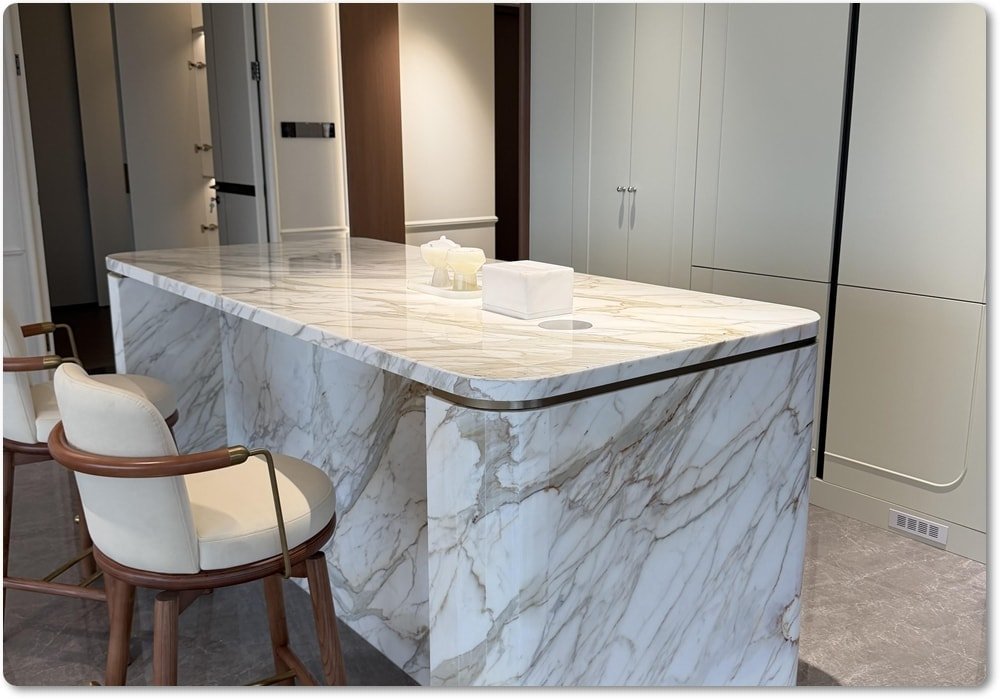
From luxury kitchen countertops and waterfall islands to hotel reception desks, executive lounges, spa facilities, and premium bathroom environments, white quartzite offers a sophisticated visual appearance while maintaining strong performance characteristics under daily use.
However, the growing popularity of white quartzite has also created confusion in the marketplace. Many stones sold under the “quartzite” category may differ significantly in geological composition, porosity, durability, and maintenance requirements.
This whitepaper provides a procurement-focused framework for evaluating, specifying, sourcing, and implementing white quartzite slabs in luxury kitchens and hospitality projects. It combines geological fundamentals, industry standards, fabrication best practices, supplier evaluation methods, and real-world sourcing considerations to help buyers make informed decisions.
Why White Quartzite Matters in High-End Projects?
The demand for premium natural stone surfaces continues to increase across luxury residential and commercial construction sectors.
Several design trends are contributing to the rapid adoption of white quartzite:
- Preference for brighter interior spaces
- Demand for natural materials
- Interest in timeless luxury aesthetics
- Desire for durable countertop materials
- Growth of luxury hospitality developments
- Expansion of premium residential remodeling
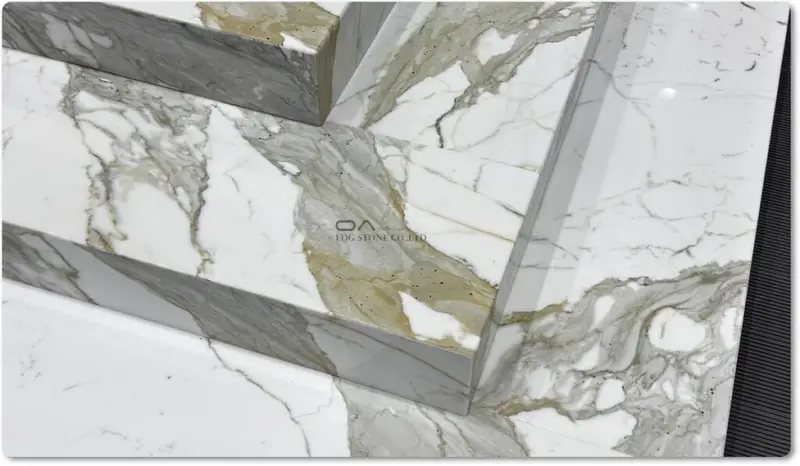
Unlike highly patterned granites or engineered materials with repetitive appearances, white quartzite provides subtle movement, organic veining, and natural variation that many designers consider essential for high-end environments.
White quartzite also occupies a unique position between marble and granite.
Designers often appreciate marble’s appearance but remain concerned about etching and wear in high-use environments. Granite may offer durability, but sometimes lacks the soft, refined visual language desired in contemporary luxury interiors.
White quartzite frequently serves as a practical middle ground.
This combination of aesthetics and performance explains why white quartzite has become a leading specification for:
- Luxury kitchens
- Resort developments
- Boutique hotels
- High-end multifamily projects
- Executive offices
- Commercial reception spaces
- Luxury retail environments
Understanding Quartzite as a Natural Stone Material
Geological Formation
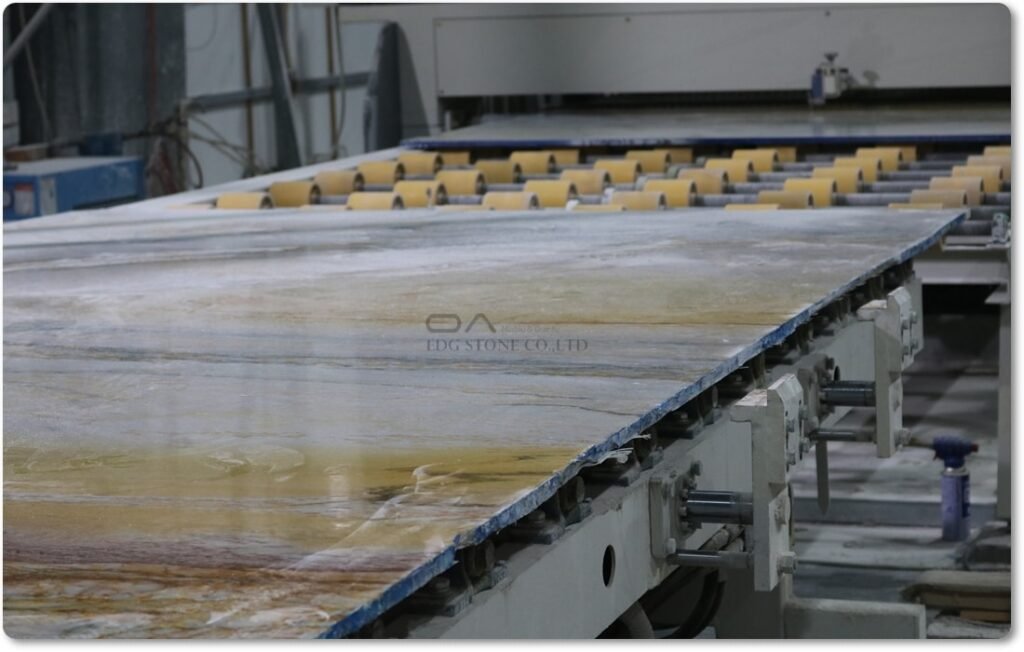
Quartzite originates from sandstone that has undergone metamorphism through intense heat and pressure over millions of years.
During this geological process:
- Original sandstone grains recrystallize
- Quartz particles fuse
- Density increases
- Structural integrity improves
- New mineral patterns emerge
The resulting stone typically contains a high concentration of quartz minerals, contributing to its hardness and resistance characteristics.
Unlike engineered quartz surfaces, quartzite is entirely natural.
Each slab represents a unique geological formation created through natural earth processes.
Why Quartzite Is Frequently Misidentified?
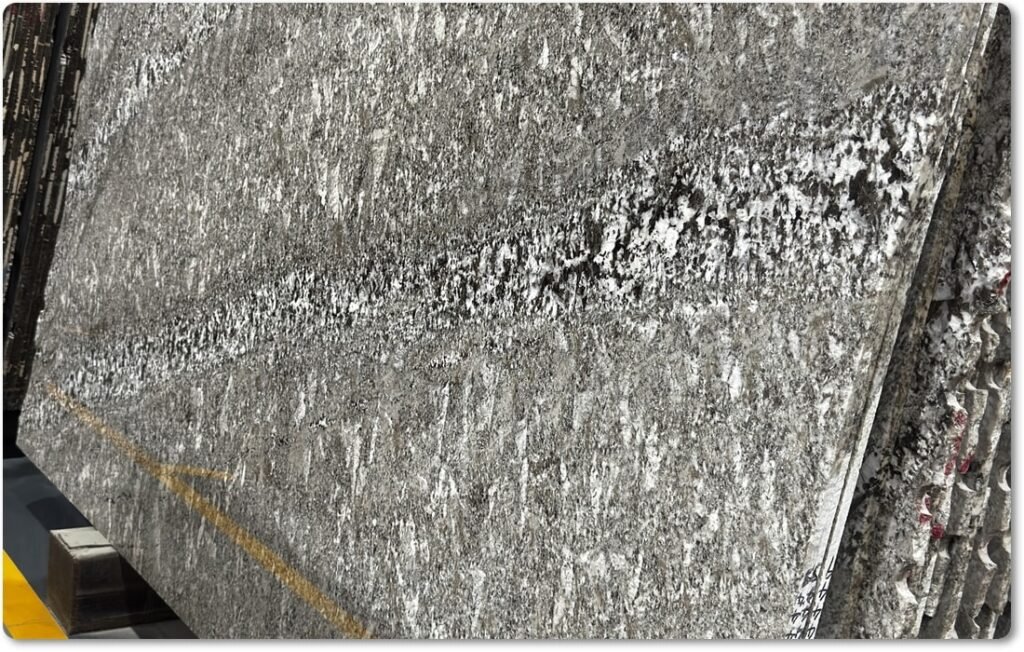
One of the largest challenges facing buyers is the misuse of stone classifications.
In commercial markets, some stones marketed as quartzite may actually be:
- Marble
- Dolomitic marble
- Quartzitic sandstone
- Mixed metamorphic stone
This creates significant procurement risks.
If a project team assumes a material performs like true quartzite but receives a softer stone instead, long-term maintenance and durability expectations may not be met.
Professional buyers should therefore focus on:
- Technical documentation
- Laboratory testing
- Supplier transparency
- Physical slab inspection
rather than relying solely on trade names.
Growing Demand for White Quartzite Slabs
Residential Luxury Market
Luxury kitchens have become the primary driver of white quartzite demand.
Modern homeowners increasingly seek:
- Large islands
- Waterfall edges
- Full-height backsplashes
- Integrated stone sinks
- Seamless visual continuity
White quartzite aligns perfectly with these trends.
Its neutral palette works well with:
- White cabinetry
- Natural wood finishes
- Black metal accents
- Brass hardware
- Contemporary lighting systems
Hospitality Industry Expansion
The hospitality sector has become a major consumer of white quartzite slabs.
Hotels use white quartzite for:
- Lobby reception counters
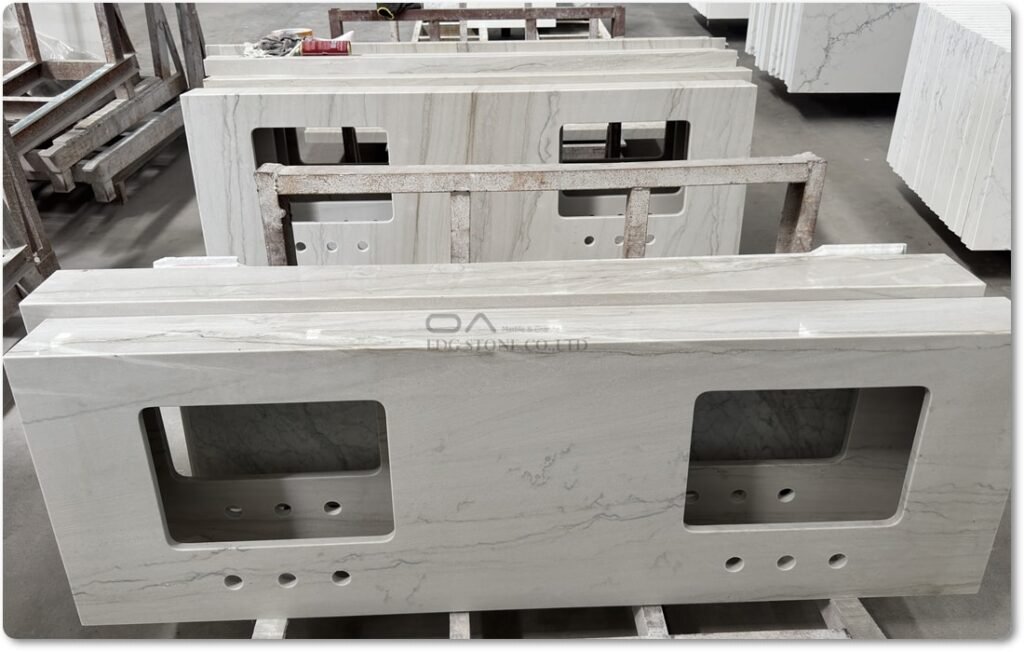
- Guest bathroom vanities
- Executive suite kitchens
- Spa facilities
- VIP lounges
- Restaurant bars
Hospitality operators appreciate materials that provide:
- Premium aesthetics
- Long service life
- Consistent appearance
- Ease of maintenance
Popular White Quartzite Varieties
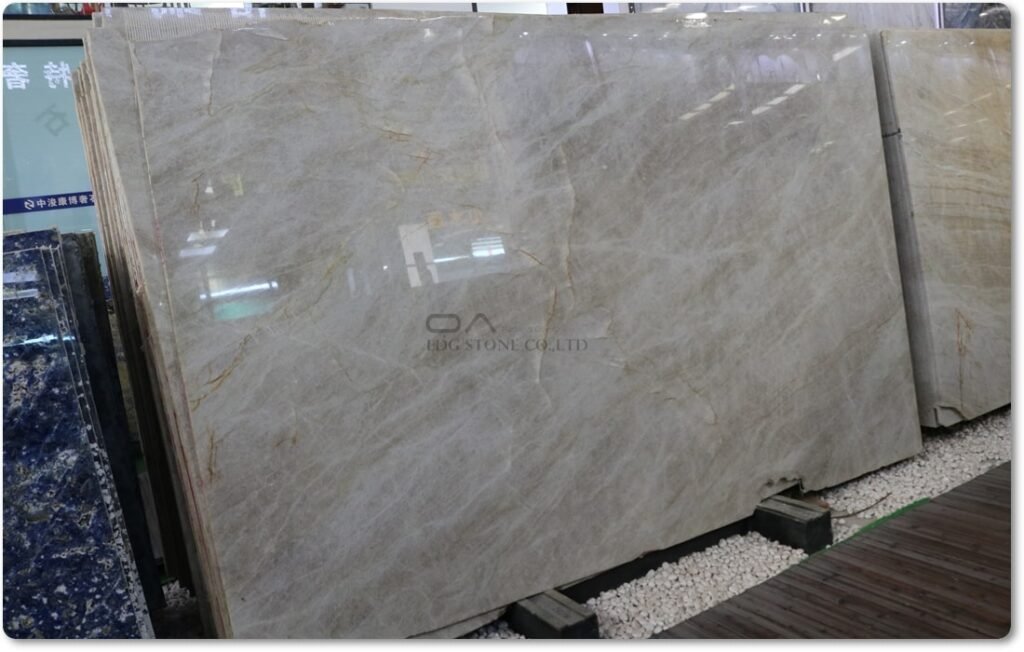
Taj Mahal Quartzite
Taj Mahal Quartzite remains one of the most requested quartzite materials globally.
Characteristics include:
- Creamy white background
- Soft beige veining
- Warm neutral appearance
- High-end luxury aesthetic
It is frequently specified for:
- Luxury kitchen countertops
- Waterfall islands
- Hotel suites
- Premium residential projects
White Macaubas Quartzite
White Macaubas is recognized for:
- Linear veining
- Bright white background
- Modern architectural appearance
Its directional movement makes it particularly suitable for:
- Contemporary kitchens
- Feature walls
- Vertical cladding
- Hospitality reception areas
Mont Blanc Quartzite
Mont Blanc Quartzite offers:
- Gray-white movement
- Dynamic patterning
- Strong visual impact
It is commonly selected for statement installations.
Perla Venata Quartzite
Perla Venata features:
- Elegant veining
- Softer movement
- Balanced coloration
Designers often specify it when seeking subtle luxury rather than dramatic visual contrast.
Quality Evaluation Framework for White Quartzite Slabs
Background Consistency
Consistent coloration remains one of the most important procurement criteria.
Buyers should evaluate:
- Brightness uniformity
- Color variation
- Mineral inclusions
- Pattern transitions
Large projects require stricter consistency standards than residential applications.
Vein Distribution
Veining affects both aesthetics and fabrication planning.
Evaluation criteria include:
- Vein density
- Directional movement
- Pattern continuity
- Bookmatching suitability
Particularly for waterfall islands, vein continuity becomes critical.
Structural Integrity
Structural assessment should include:
- Fissure evaluation
- Natural fractures
- Resin treatment visibility
- Reinforcement methods
Natural fissures are not necessarily defects.
However, buyers should understand how these characteristics affect fabrication and installation.
Absorption and Porosity
Porosity influences:
- Sealing requirements
- Stain resistance
- Long-term maintenance
Different quartzite varieties exhibit different absorption characteristics.
Professional procurement teams should request technical testing documentation rather than relying on assumptions.
Industry Standards and Technical Specifications
Professional specifications should reference recognized standards whenever possible.
ASTM C97
Evaluates:
- Water absorption
- Bulk density
- Specific gravity
This test helps determine potential moisture behavior.
ASTM C170
Measures:
- Compressive strength
Useful for understanding structural performance.
ASTM C880
Measures:
- Flexural strength
Particularly relevant for:
- Countertops
- Cantilever applications
- Large-format panels
ASTM C1353
Evaluates:
- Abrasion resistance
Important in commercial environments.
ASTM C616
Provides general specifications for quartz-based dimension stone.
This standard often serves as a foundational reference during procurement.
Design Applications for Luxury Kitchens
Kitchen Islands
Large islands remain the most common use of white quartzite.
Advantages include:
- Premium appearance
- Excellent visual focal point
- Natural variation
- Long-term durability
Jumbo slabs can reduce seam visibility.
Full-Height Backsplashes
Designers increasingly extend quartzite from the countertop to the ceiling.
Benefits include:
- Enhanced visual continuity
- Easier cleaning
- Luxury aesthetic
Integrated Design Concepts
White quartzite can unify:
- Countertops
- Islands
- Backsplashes
- Shelving
- Feature walls
creating cohesive luxury environments.
White Quartzite in Hospitality Projects
Hotel Reception Desks
Reception desks establish first impressions.
White quartzite communicates:
- Luxury
- Permanence
- Sophistication
while maintaining practicality.
Guest Bathrooms
Quartzite is widely used for:
- Vanity tops
- Shower walls
- Tub surrounds
where visual appeal and durability are both priorities.
Executive Lounges
Premium hospitality environments frequently utilize white quartzite to reinforce brand identity and upscale positioning.
Fabrication Considerations
Edge Profiles
Popular profiles include:
- Eased edge
- Pencil edge
- Beveled edge
- Mitered edge
- Ogee edge
The selected profile affects both appearance and fabrication complexity.
Waterfall Islands
Waterfall installations require:
- Careful slab selection
- Vein matching
- Precision fabrication
Poor planning can significantly reduce visual impact.
Seam Placement
Seam planning should begin before fabrication.
Ideal seam locations depend on:
- Slab dimensions
- Cabinet layouts
- Appliance locations
- Viewing angles
Thickness Selection
Common options include:
2cm Quartzite Slabs
Advantages:
- Reduced weight
- Easier handling
- Lower shipping cost
3cm Quartzite Slabs
Advantages:
- Greater structural strength
- Preferred for premium projects
- Reduced reinforcement requirements
Procurement Checklist for Buyers
Sample Approval Process
Buyers should review:
- Physical samples
- Slab photographs
- Finish options
- Lighting conditions
before issuing approvals.
Batch Matching
For large projects:
- Verify lot numbers
- Reserve material quantities
- Confirm quarry availability
early in the procurement cycle.
Site Verification
Before fabrication:
- Measure field dimensions
- Confirm cabinetry
- Verify support structures
- Review appliance specifications
Quality Assurance Procedures
A comprehensive QA program should include:
- Incoming slab inspection
- Fabrication checks
- Packaging inspection
- Pre-shipment review
EDG Stone Factory Case Study
Global Quartzite Slabs & Countertops Manufacturing Expertise
As a professional Quartzite Slabs & Countertops Manufacturer and Exporter, EDG Stone Factory supports architects, fabricators, distributors, developers, and hospitality procurement teams worldwide.
Typical project services include:
Material Selection
- Quarry sourcing
- Slab grading
- Batch matching
Custom Fabrication
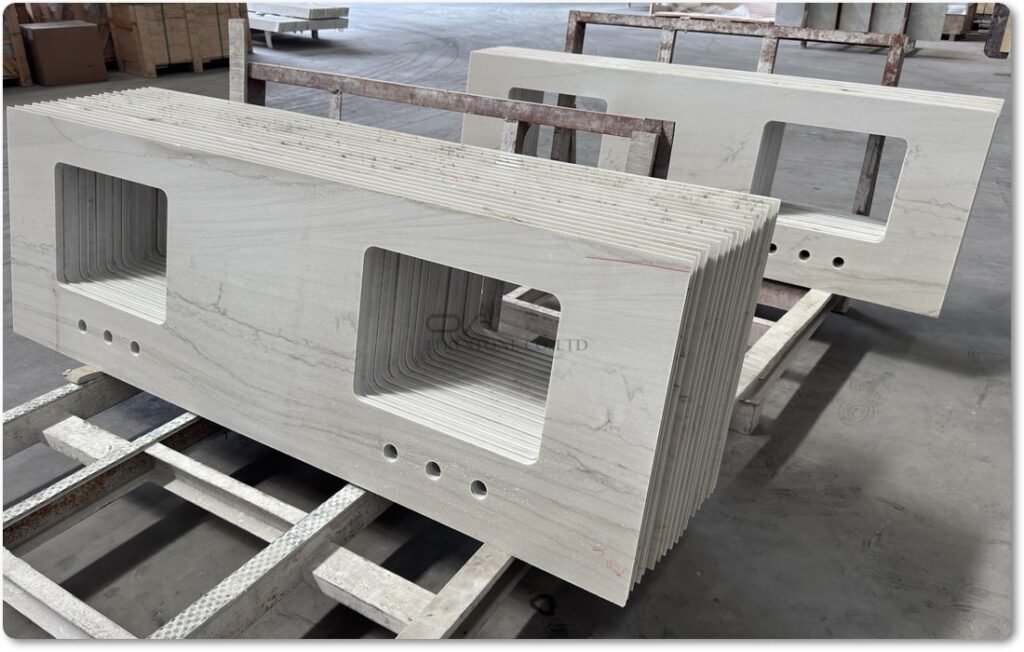
- Countertops
- Waterfall islands
- Vanity tops
- Wall panels
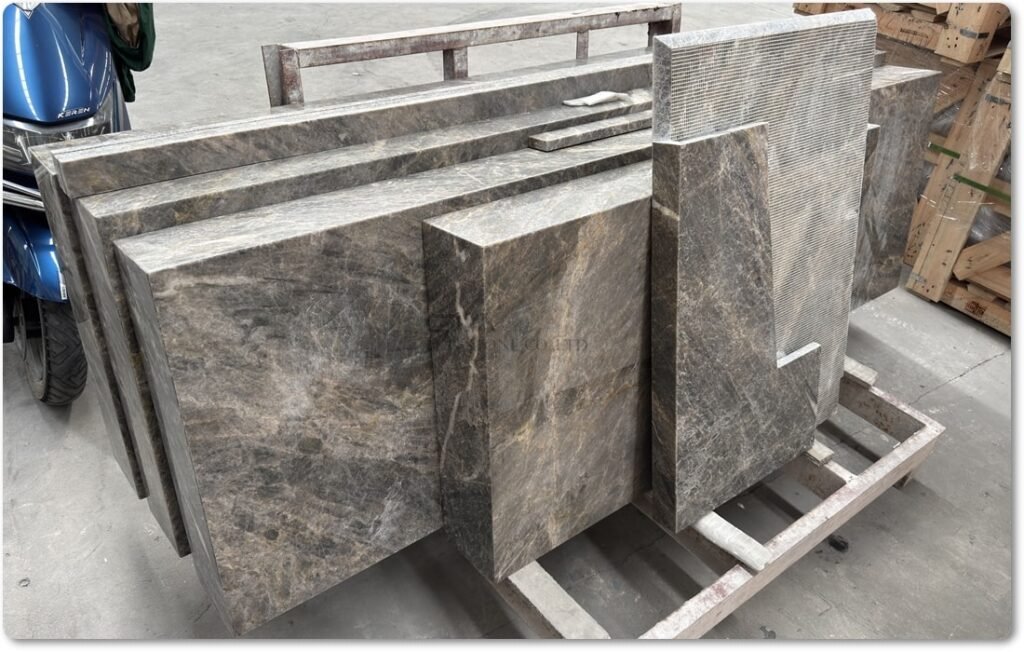
Export Packaging
- Wooden crate systems
- A-frame transport solutions
- International logistics support
Project Coordination
- Shop drawing review
- Sample approvals
- Commercial project scheduling
By integrating material sourcing, fabrication, quality control, and export logistics, EDG Stone Factory helps reduce procurement risk across international projects.
Frequently Asked Questions
Is White Quartzite Better Than Marble?
White quartzite often provides greater resistance to wear and etching than marble while maintaining a luxurious natural appearance.
Does White Quartzite Need Sealing?
Many white quartzites benefit from sealing, although requirements vary depending on the specific material and finish.
What Thickness Is Best for Quartzite Countertops?
3cm slabs are commonly preferred for premium kitchen installations due to their structural advantages.
Is White Quartzite Suitable for Hotels?
Yes.
White quartzite is widely used in hospitality environments, including:
- Reception areas
- Guest bathrooms
- Executive lounges
- Restaurants
How Can Buyers Verify Quartzite Quality?
Professional verification should include:
- Technical documentation
- Laboratory testing
- Slab inspection
- Supplier evaluation
- Batch matching review
Conclusion
White quartzite slabs have become one of the most important natural stone categories for luxury kitchens and hospitality projects worldwide. Their combination of natural beauty, design flexibility, and technical performance makes them an attractive solution for architects, designers, developers, and procurement professionals seeking premium materials with long-term value.
Successful implementation, however, requires more than selecting an attractive slab. Buyers must understand geological classifications, verify material authenticity, evaluate quality consistently, reference recognized industry standards, and establish rigorous procurement procedures.
When these best practices are followed, white quartzite can deliver exceptional results across luxury residential, hospitality, and commercial applications.
For organizations seeking reliable supply, custom fabrication, and international project support, partnering with an experienced manufacturer such as EDG Stone Factory can help ensure consistency, quality control, and successful project delivery from quarry selection through final installation.
Internal Links
- Quartzite Slabs 2026 Buyer Primer
- Quartzite vs Quartz: Procurement Comparison
- Quartzite Slab Size Guide
- Quartzite Countertops for Luxury Kitchens
- Quartzite for Hotels and Hospitality Projects
- Quartzite Fabrication Guide
- Quartzite Maintenance Guide
- Quartzite Export Guide
- Quartzite Wholesale Buying Guide
- Quartzite Quality Inspection Checklist
- Quartzite Color Consistency Guide
- Natural Stone Testing Standards Guide
- Quartzite Supplier Evaluation Guide
- Quartzite Project Cost Guide
- EDG Stone Factory Quartzite Manufacturing Guide