
The global natural stone industry continues to evolve as architects, contractors, luxury developers, and stone distributors seek more consistent, visually refined, and commercially reliable marble slabs for residential and commercial projects. From luxury hotel lobbies and kitchen countertops to feature walls and bathroom vanities, marble slabs remain one of the most recognized premium surface materials in modern construction and interior design.
However, many buyers still misunderstand how marble slabs are classified, produced, inspected, priced, and exported. Some buyers focus only on appearance and overlook structural performance, slab consistency, moisture sensitivity, or fabrication suitability. Others purchase based solely on price without understanding how quarry source stability, slab yield, polishing quality, and packaging standards affect long-term project success.
According to the United States Geological Survey (USGS), marble belongs to the broader category of “dimension stone,” which includes natural stone processed into standardized architectural and construction products for building applications. Global demand for dimension stone continues to be driven by urban development, hospitality projects, luxury residential construction, and commercial renovation markets. This demand has also increased the need for professional marble slab suppliers capable of maintaining stable quality, export compliance, and reliable production capacity.
This procurement whitepaper explains:
- What marble slabs are
- How marble slabs are manufactured
- How buyers should evaluate marble quality
- The most important procurement risks
- Why factory capability matters
- How global buyers reduce sourcing risk in 2026
For architects, builders, developers, distributors, wholesalers, and importers, understanding these procurement fundamentals is essential before selecting a marble slab supplier.
What Are Marble Slabs?
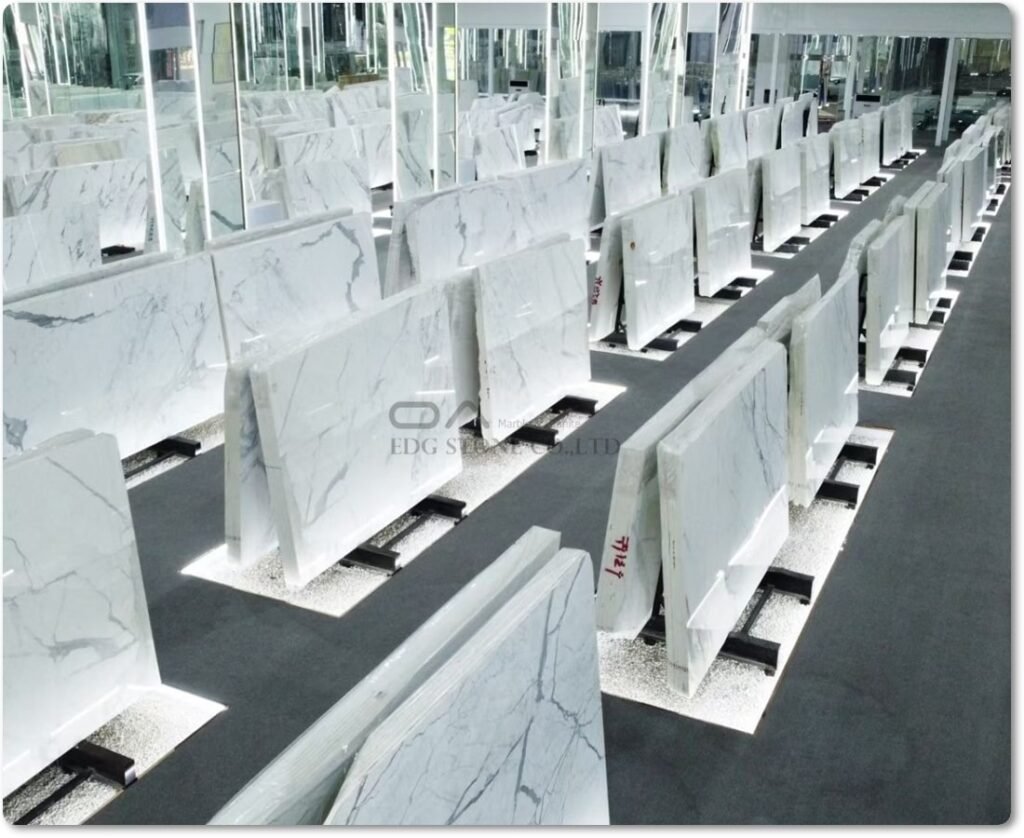
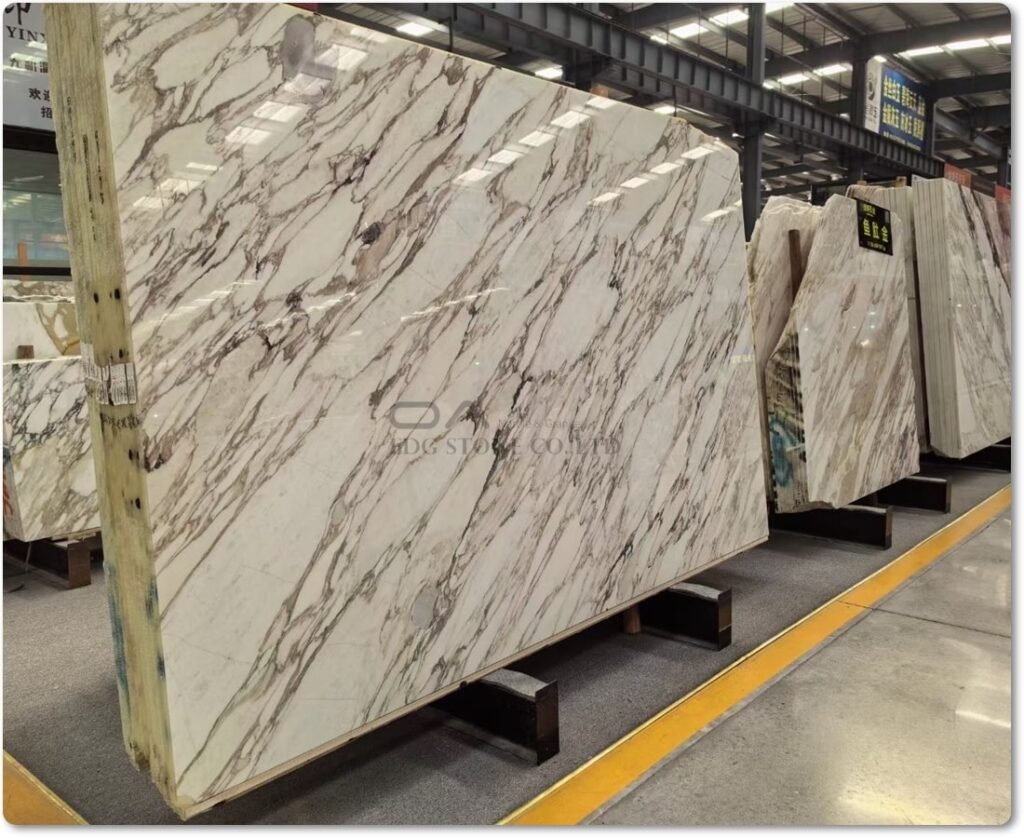
Marble slabs are large-format natural stone panels cut from quarry blocks and processed for architectural and construction applications. Unlike marble tiles, which are smaller modular units, slabs are typically produced in larger dimensions to preserve continuous vein movement and natural visual flow.
Most marble slabs are used for:
- Kitchen countertops
- Bathroom vanities
- Flooring
- Wall cladding
- Fireplace surrounds
- Reception counters
- Hotel lobby walls
- Luxury retail interiors
- Staircases
- Bookmatched feature walls
Typical slab thicknesses include:
- 16mm
- 18mm
- 20mm
- 30mm
Common slab finishes include:
- Polished
- Honed
- Leathered
- Brushed
- Antique
- Sandblasted
The Natural Stone Institute notes that marble is valued primarily for:
- Unique natural veining
- Luxury visual appeal
- Reflective surface quality
- Architectural prestige
- Long-term aesthetic value
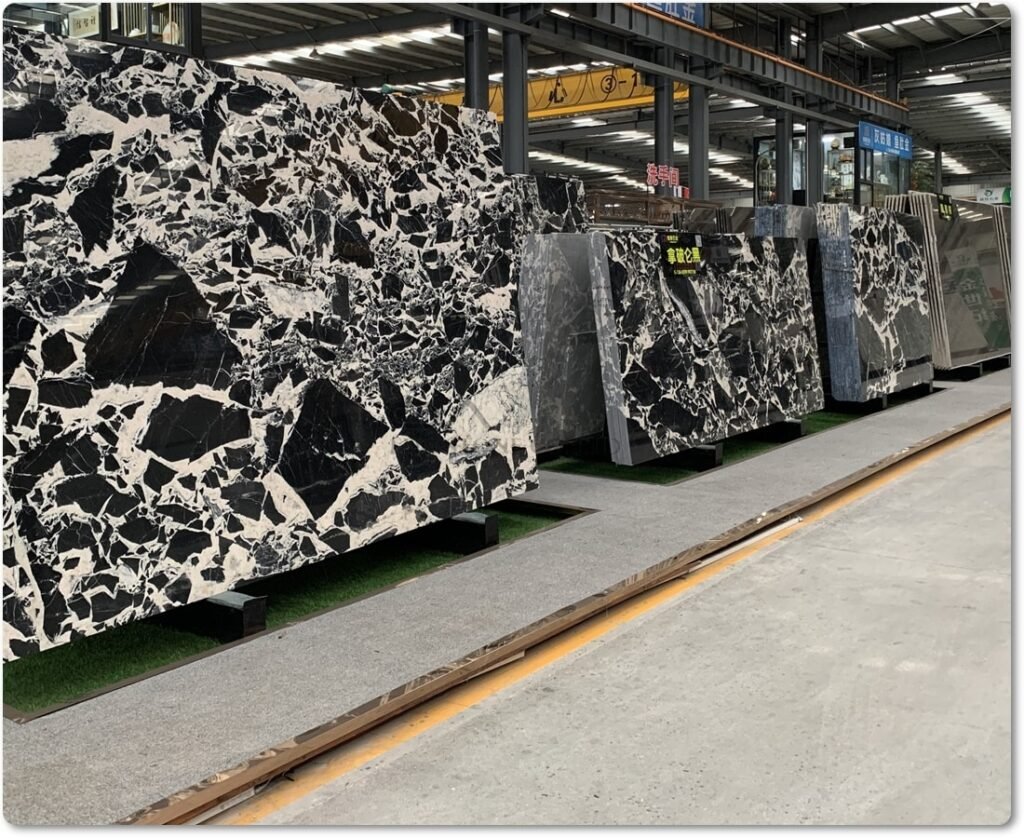
Unlike engineered surfaces, every marble slab is naturally unique. No two slabs are completely identical because vein distribution, mineral composition, and geological formation vary naturally over time.
This uniqueness is one of marble’s greatest commercial strengths in luxury architecture and interior design.
Why Marble Is Classified as Dimension Stone?
One of the most important concepts in stone procurement is understanding the term “dimension stone.”
The USGS classifies marble as a form of dimension stone because it is quarried and processed into standardized architectural products for construction.
Dimension stone generally refers to natural stone that has been:
- Cut
- Shaped
- Finished
- Sized
- Processed for building use
This distinction matters because:
- Customs classifications may differ
- HS/HSN codes may change
- Import taxes may vary
- Processing requirements affect pricing
- Fabrication capability becomes critical
For example:
- Rough marble blocks are treated differently from polished slabs
- Merely cutting marble may fall under a different tariff logic than finished architectural stone
- Highly processed marble products may move into different customs categories
Professional importers must therefore understand not only the stone itself, but also how processing levels influence procurement and compliance.
Marble Slabs vs Marble Tiles vs Cut-to-Size Stone
Many first-time buyers incorrectly assume all marble products are interchangeable. In reality, marble slabs, marble tiles, and cut-to-size products serve different purposes in procurement and installation.
| Product Type | Typical Use | Main Advantage |
|---|---|---|
| Marble Slabs | Countertops, walls, and luxury surfaces | Continuous natural veining |
| Marble Tiles | Flooring, bathrooms | Easier installation |
| Cut-to-Size Stone | Commercial projects | Precise project fabrication |
Marble slabs are preferred in luxury projects because they:
- Preserve large vein movement
- Reduce visible seams
- Enable bookmatching
- Create stronger visual continuity
Tiles, by contrast, prioritize installation efficiency and cost control.
Cut-to-size marble products are usually fabricated for:
- Hotels
- Commercial towers
- Airports
- Retail developments
- Public infrastructure projects
These products require highly accurate fabrication and dimensional consistency.
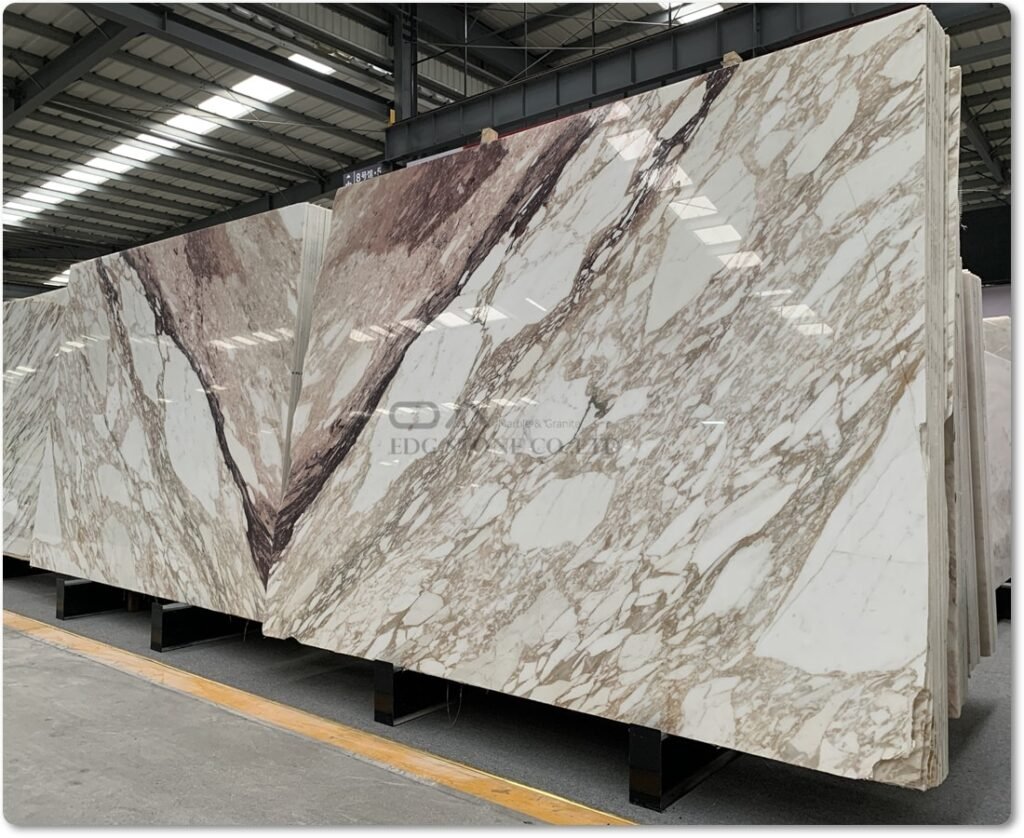
How Marble Slabs Are Manufactured?
Understanding marble slab production is critical for evaluating suppliers and identifying quality risks.
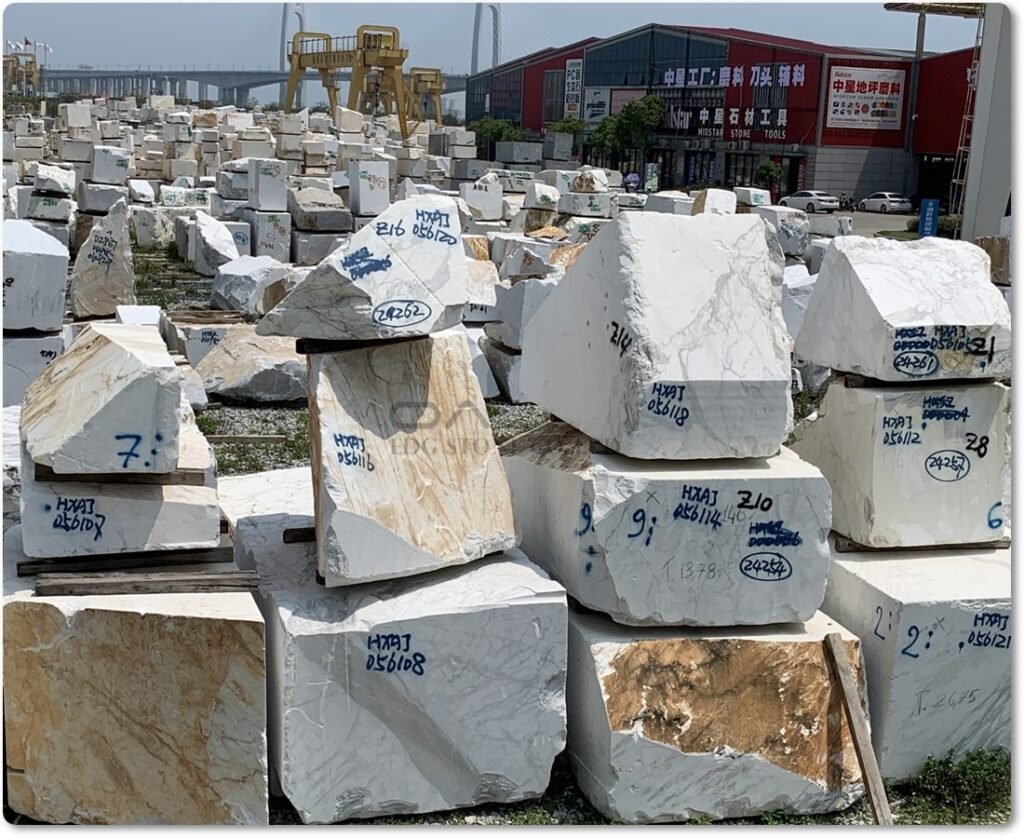
Quarry Extraction
The production process begins at the quarry.
Large marble blocks are extracted using:
- Diamond wire saws
- Chain cutters
- Controlled drilling systems
The quality of the quarry block significantly affects:
- Vein consistency
- Structural stability
- Slab yield
- Fracture risk
- Commercial value
Quarry source stability is especially important for large projects requiring repeat orders and batch consistency.
Block Cutting
After extraction, quarry blocks are transported to processing facilities where they are cut into slabs using:
- Gang saws
- Multi-wire saws
- Diamond blade systems
This stage determines:
- Slab thickness accuracy
- Surface flatness
- Production efficiency
- Material yield
High-quality cutting systems reduce:
- Thickness variation
- Surface warping
- Edge fractures
- Material waste
Resin Treatment and Reinforcement
Natural marble often contains:
- Micro fissures
- Hairline cracks
- Mineral voids
Factories commonly use resin treatment to:
- Improve structural stability
- Reduce fracture risk
- Enhance polishing quality
Fiberglass backing may also be applied to fragile materials for reinforcement.
Professional buyers should always ask suppliers:
- Whether slabs are resin-treated
- What reinforcement methods are used
- Whether mesh backing is applied
Calibration and Thickness Control
Thickness consistency is essential for:
- Fabrication accuracy
- Countertop installation
- Flooring alignment
- Commercial wall systems
Factories use calibration machines to standardize thickness across all slabs.
Poor calibration can lead to:
- Installation problems
- Lippage
- Fabrication delays
- Increased labor costs
Polishing and Surface Finishing
Polishing determines:
- Surface reflectivity
- Color depth
- Luxury appearance
Higher-quality polishing systems produce:
- Better light reflection
- Stronger color contrast
- Improved visual clarity
Additional finishes may include:
- Honed
- Leathered
- Brushed
- Sandblasted
- Flamed
The finish selection should always match the project application.
The Core Procurement Criteria Buyers Must Check
Many procurement failures occur because buyers focus only on price or photographs.
Professional marble slab procurement should evaluate multiple technical and commercial factors.
Vein Consistency
Large projects require:
- Similar vein direction
- Controlled visual variation
- Batch matching
Buyers should request:
- Full slab photos
- Slab layout plans
- Video inspections
- Bundle consistency review
Color Stability
Natural stone color can vary between:
- Quarry sections
- Production batches
- Processing cycles
Reliable suppliers control:
- Batch segregation
- Color sorting
- Bundle grouping
This is especially important for:
- White marble slabs
- Calacatta marble
- Bookmatched walls
Thickness Tolerance
Even small thickness variations can create:
- Fabrication problems
- Uneven countertops
- Installation defects
Professional buyers should verify:
- Calibration standards
- Thickness tolerance range
- Flatness inspection procedures
Surface Quality
Buyers should inspect:
- Resin filling
- Polishing uniformity
- Surface scratches
- Edge condition
- Natural fissures
Not all fissures are defects. Many are naturally occurring geological features. However, uncontrolled cracking is a risk factor.
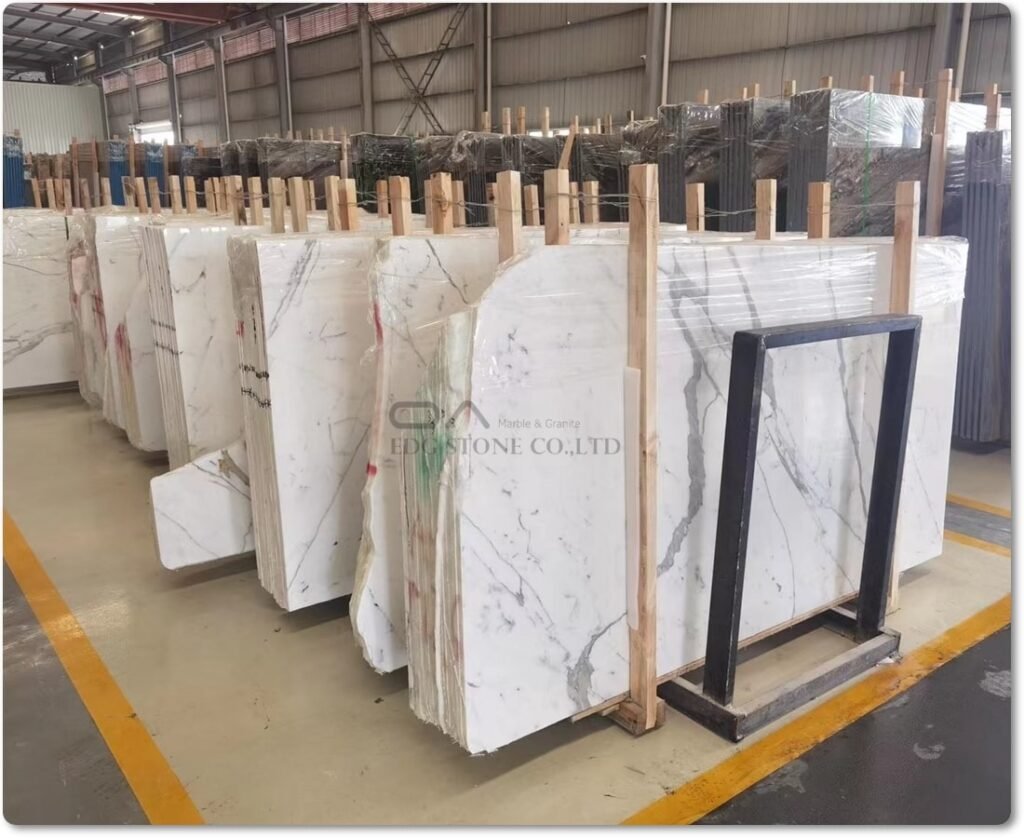
Packaging Standards
Export damage remains a major industry issue.
Professional export packaging should include:
- Heat-treated wooden crates
- Foam protection
- Reinforced supports
- Moisture protection
- Anti-vibration stabilization
Weak packaging increases:
- Insurance claims
- Breakage risk
- Delivery delays
Why Factory Capability Matters?
Many stone traders do not control actual production.
This creates risks involving:
- Quality inconsistency
- Unstable supply
- Delayed delivery
- Poor communication
- Limited customization capability
Working directly with a professional marble slab manufacturer, such as EDG Stone Factory, offers several advantages:
- Better production control
- Faster communication
- Stable batch management
- OEM fabrication support
- Export packaging expertise
- Lower sourcing risk
Factory-direct procurement is especially valuable for:
- Commercial developers
- Hospitality projects
- Stone distributors
- Long-term procurement programs
Major Marble Slab Applications in 2026
The 2026 marble market is increasingly driven by:
- Luxury residential construction
- Hospitality renovation
- Retail experience design
- Premium office interiors
- Mixed-use commercial developments
Kitchen Countertops
Marble remains popular in luxury kitchens due to:
- Elegant appearance
- Natural veining
- Premium branding value
Bathroom Vanities
White marble and light-tone marble slabs continue to dominate:
- Hotel bathrooms
- Spa environments
- High-end residences
Feature Walls
Bookmatched marble walls have become a signature element in:
- Luxury villas
- Hotel lobbies
- Retail flagship stores
Commercial Reception Areas
Large-format marble slabs create:
- Brand prestige
- Architectural impact
- Luxury visual identity
2026 Marble Procurement Trends
Several industry trends are shaping marble procurement decisions in 2026.
Larger Slab Sizes
Architects increasingly prefer larger slabs because they:
- Reduce seams
- Improve visual continuity
- Create stronger luxury aesthetics
Better Batch Consistency
Commercial buyers now prioritize:
- Repeatability
- Long-term supply capability
- Stable quarry sourcing
Increased Demand for Bookmatching
Bookmatched marble walls continue to grow in:
- Hospitality projects
- Luxury residences
- Retail design
Greater Focus on Logistics
Importers now pay closer attention to:
- Crate strength
- Shipping damage prevention
- Container optimization
- Export documentation
Procurement Checklist Before Ordering Marble Slabs
Before placing an order, buyers should verify:
Supplier Capability
- Does the supplier control production?
- Is factory inspection possible?
- Can they provide export references?
Slab Quality
- Full slab images
- Thickness consistency
- Surface inspection
- Bundle matching
Export Standards
- Wooden crate quality
- Container loading methods
- Insurance arrangements
- Moisture protection
Commercial Terms
- Lead time
- MOQ
- Payment terms
- Replacement policy
- Quality claim procedures
Conclusion
Marble slabs remain one of the most influential materials in luxury architecture, hospitality design, commercial interiors, and premium residential construction. However, successful marble procurement requires more than selecting attractive slab photos.
Professional buyers must evaluate:
- Quarry stability
- Production capability
- Slab consistency
- Surface quality
- Packaging standards
- Export experience
- Long-term supply reliability
As global competition increases in the natural stone industry, experienced manufacturers such as EDG Stone Factory continue to play an important role by supporting:
- Stable slab production
- Professional QC systems
- International export logistics
- Commercial project coordination
- Bulk procurement programs
For architects, distributors, contractors, and importers, understanding these procurement fundamentals is essential for reducing risk and improving project outcomes in 2026 and beyond.
FAQ
What is the difference between marble slabs and marble tiles?
Marble slabs are large-format natural stone panels designed for countertops, walls, and luxury surfaces, while marble tiles are smaller modular products typically used for flooring and easier installation.
How do buyers inspect marble slabs before purchasing?
Professional buyers usually request:
- Full slab photographs
- Bundle videos
- Thickness reports
- Surface inspection records
- Packaging photos
Some buyers also conduct third-party inspections before shipment.
Why is batch consistency important in marble procurement?
Natural marble varies in color and vein movement. Poor batch control can create visible differences across installed surfaces, especially in large commercial projects.
Are natural fissures in marble normal?
Yes. Many natural marble slabs contain geological fissures. However, buyers should distinguish between natural fissures and structural cracks that may affect durability.
Why do commercial buyers prefer factory-direct marble suppliers?
Factory-direct suppliers generally offer:
- Better QC control
- More stable supply
- Faster communication
- Improved customization
- Better export packaging
- Lower sourcing risk
References
- United States Geological Survey (USGS) — Dimension Stone Industry Reports
- ASTM C503/C503M — Standard Specification for Marble Dimension Stone
- Natural Stone Institute — Marble Care & Maintenance Guidelines
- International Trade Centre — Natural Stone Trade Data
- Global construction market trend reports (2025–2026)
- Hospitality and luxury interior design market analysis reports
- Customs classification guidance for natural stone products
- International shipping and packaging standards for dimension stone