——2026 Granite & Quartz Countertops Procurement Guide 14
Introduction
When someone searches “countertops near me,” they usually want more than a product page. They want a nearby place to see samples, compare colors, confirm lead time, get a quote, and move the project forward without unnecessary back-and-forth. That is why the local countertop market is split between big-box retailers, brand showrooms, local fabricators, and factory-direct suppliers. Home Depot, Lowe’s, and Floor & Decor all present countertop shopping as a combination of samples, design tools, and installation support, while Cambria, Caesarstone, and MSI emphasize showrooms, dealer locators, and authorized partners for project selection.
For buyers, the real question is not “Where is the closest countertop seller?” It is “Which nearby channel fits my project size, budget, timeline, and quality expectations?” A small kitchen remodel, a bathroom vanity replacement, and a multi-unit development should not be sourced the same way. That is also where a factory-direct path, such as an EDG Stone Factory procurement model, becomes relevant for larger or more standardized orders.
1. Why “near me” matters in countertop purchasing?
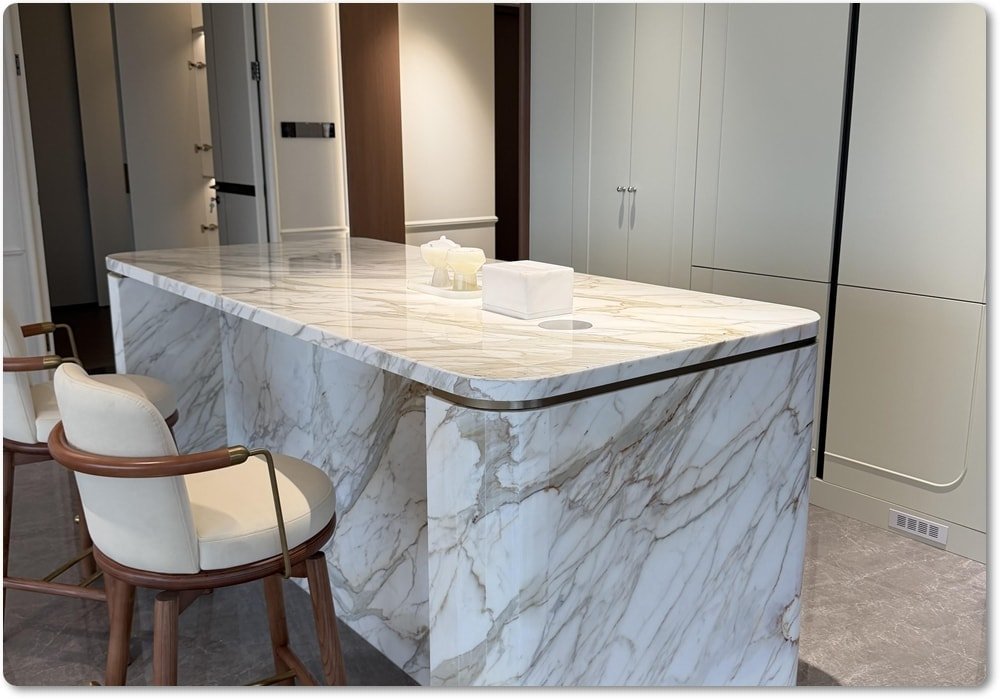
Countertops are one of those products that benefit from seeing the real surface, not just a photo. Cambria explicitly encourages customers to visit galleries, showrooms, or partner retail locations to see samples, slabs, and installations, and it notes that a sample chip is not the same thing as a full slab. That is a major reason “near me” searches matter: they let buyers reduce color risk before placing an order.
Local availability also affects workflow. Lowe’s describes a countertop installation process that starts with consultation, in-home measurement, fabrication, and then removal of old countertops and installation of the new ones. Home Depot likewise positions custom quartz countertops as a design-and-order process with consultations and sample boxes. In practice, “near me” means faster site visits, easier templating, and fewer surprises during fabrication.
2. The main buying channels: what each one is best for?
Big-box retailers are usually the most convenient entry point for homeowners. Home Depot offers custom quartz countertop ordering through an online design tool and a curated sample box, while Lowe’s provides countertop design and installation services that include consultation, in-home measurement, fabrication, removal of old countertops, and installation. Floor & Decor also sells prefab and custom countertops in-store or online and provides a free measuring guide, which makes it useful for shoppers who want to compare several materials in one place.
IKEA takes a more system-based approach. Its quartz countertops are available only as custom-made products, and the brand highlights durability, moisture resistance, scratch resistance, and easy cleaning. That makes IKEA a good fit for buyers who want a simple kitchen-system purchase rather than a highly bespoke stone procurement process.
Menards is another retail path, especially in the Midwest and surrounding regions. Menards offers quartz, laminate, solid surface, and butcher block countertops, and its CustomCraft quartz line highlights nonporous, stain-resistant, durable surfaces with a limited lifetime warranty. For buyers who want a local, retailer-led order with visible sample and templating options, Menards can be a practical choice.
3. Brand showrooms: best when you need slab selection and design confidence
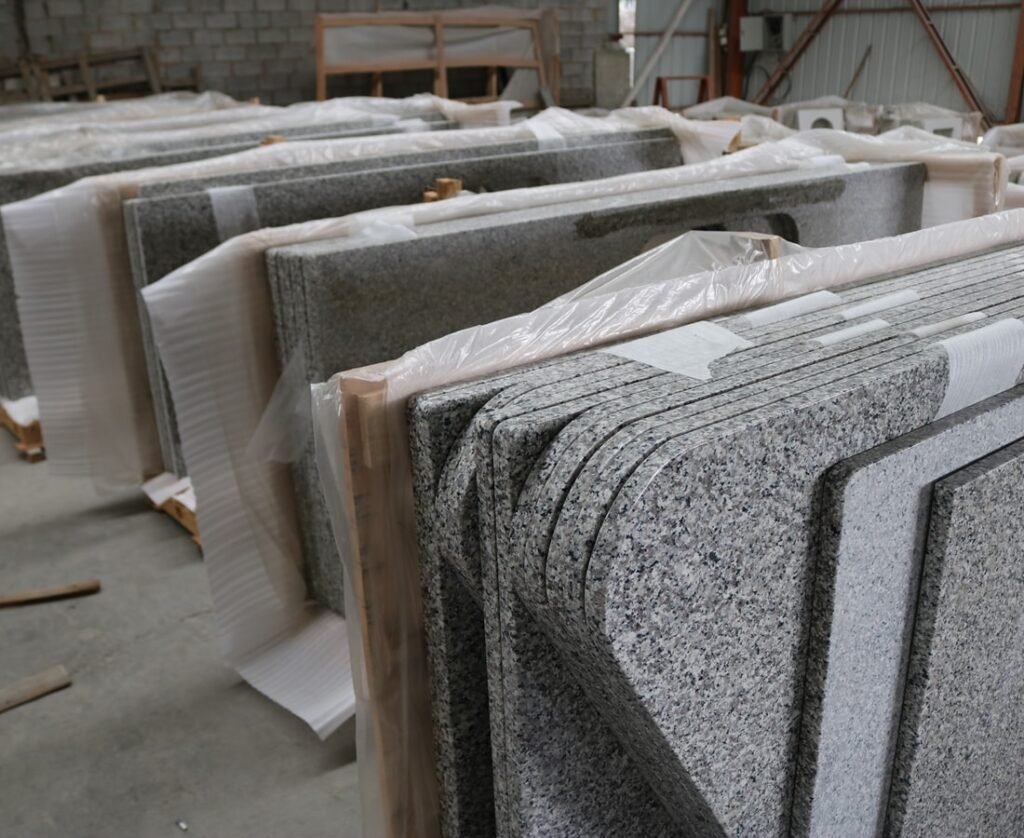
If the project is design-heavy, the best “near me” option is often not a retailer but a brand showroom. Cambria says its galleries and showrooms let customers see samples, slabs, and installations, and its dealer locator offers multiple pathways for project advice, retail visits, and consultation. Cambria also states that its quartz is backed by a transferable full lifetime warranty.
Caesarstone and MSI follow similar models. MSI says it does not sell directly to the public and instead uses authorized dealers and public showrooms for product viewing and selection. MSI showrooms also support product selection, project quantity estimation, and sample handling. This makes brand showrooms especially useful when slab consistency, color control, and project coordination matter more than speed alone.
4. Local fabricators: best for custom fit and faster hands-on coordination
Local fabricators are often the best choice when the project needs hands-on templating, unusual cutouts, complex edge profiles, or more direct communication. They can measure the site, fabricate to exact dimensions, and coordinate installation in a way that large retailers often cannot match as flexibly. Lowe’s describes the measurement-to-installation workflow clearly, and Home Depot offers a similar custom-countertop pathway through design and consultation.
The tradeoff is that local fabricators are usually more dependent on their own inventory, subcontractor network, and shop capacity. That is why it is important to ask whether they can show actual slabs, what lead time they need, and whether they manage removal and installation in-house or through partners. Cambria’s showroom and dealer-locator model reflects this reality: the closer you get to real slab selection and final installation, the more important professional support becomes.
5. Factory-direct sourcing: when it beats retail?
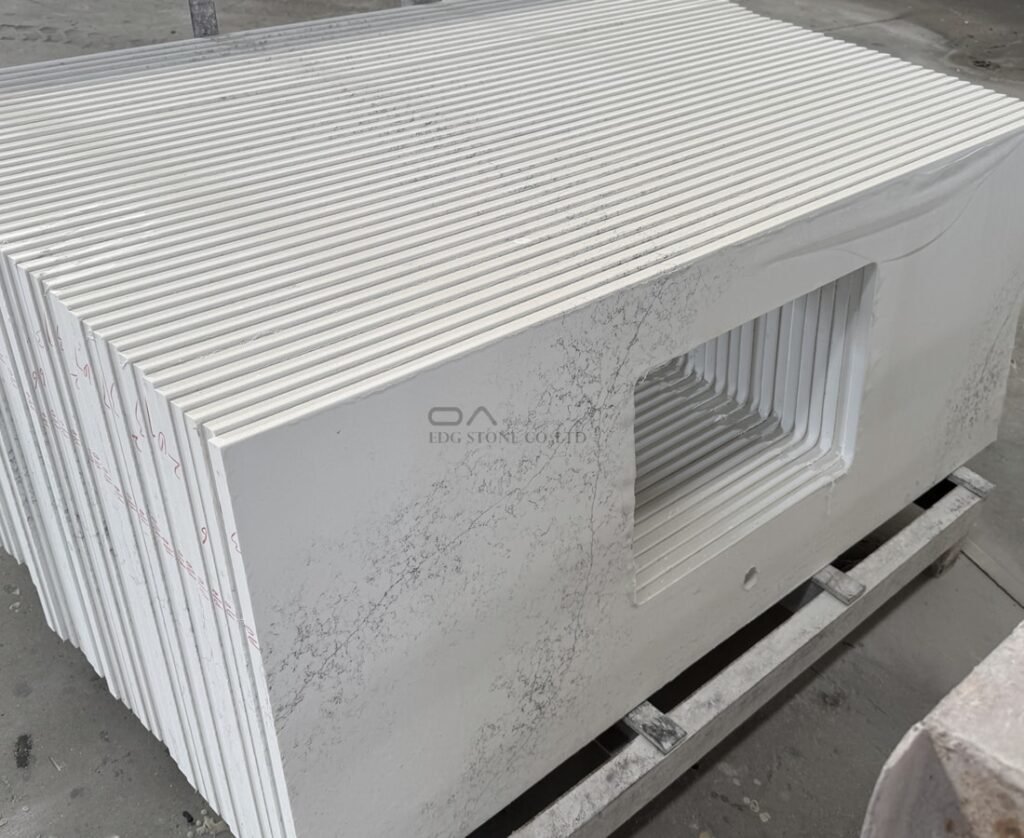
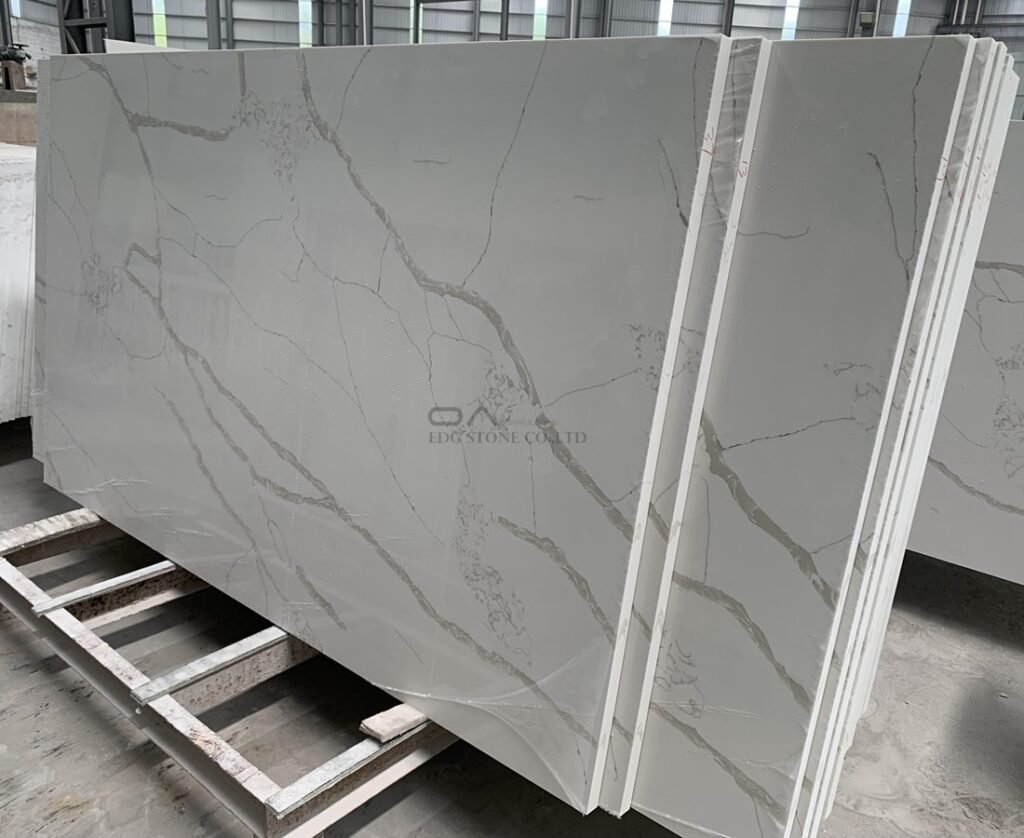
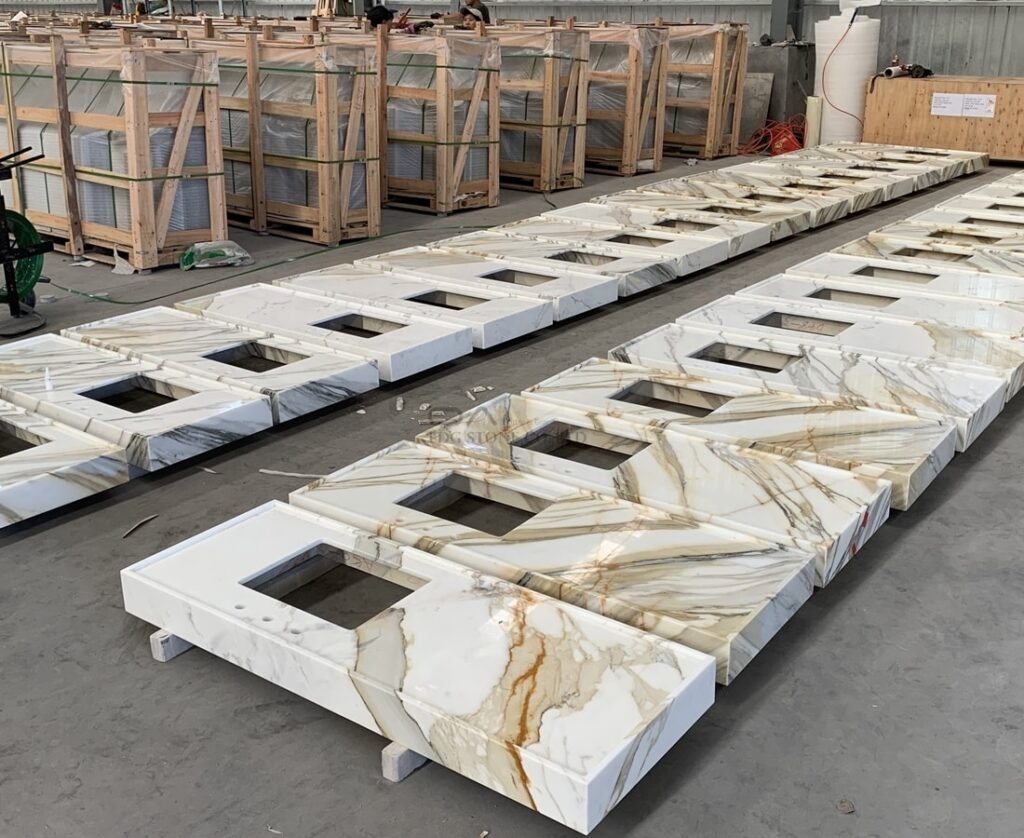
Factory-direct sourcing is usually the better path for larger projects, repeat orders, standardized colors, and export shipments. MSI’s own pages make the contrast very clear: it uses authorized dealers for public purchase and showrooms for selection rather than direct public retail. Cambria and Caesarstone also rely heavily on dealer and showroom ecosystems rather than direct consumer bulk sales. For B2B procurement, that means factory-direct supply can be a better model when the goal is to control color batches, pricing, packaging, and lead time.
That is where a supplier like EDG Stone Factory belongs in the conversation. For developers, builders, exporters, and project buyers, factory-direct sourcing can reduce middle layers and make large-volume coordination easier. The key is to compare not only slab price, but also templating, packaging, QC, and delivery discipline.
6. What does the installation timeline usually look like?
A good “near me” article should not stop at store names. It should show the buyer what happens after the quote is accepted. A typical countertop project begins with measurement and templating, moves into fabrication, then old countertop removal, and finally installation day. One industry timeline example places measuring and templating at 1–2 hours, fabrication at about 7–10 business days, removal of the old top at about half a day, and installation itself at roughly one day.
That timeline helps explain why “near me” matters so much. If the supplier, fabricator, or showroom is local, measurement, communication, and installation coordination are easier. If the supplier is remote or factory-direct, the buyer must manage shipping, scheduling, and site readiness more carefully.
7. How to compare quotes without getting misled?
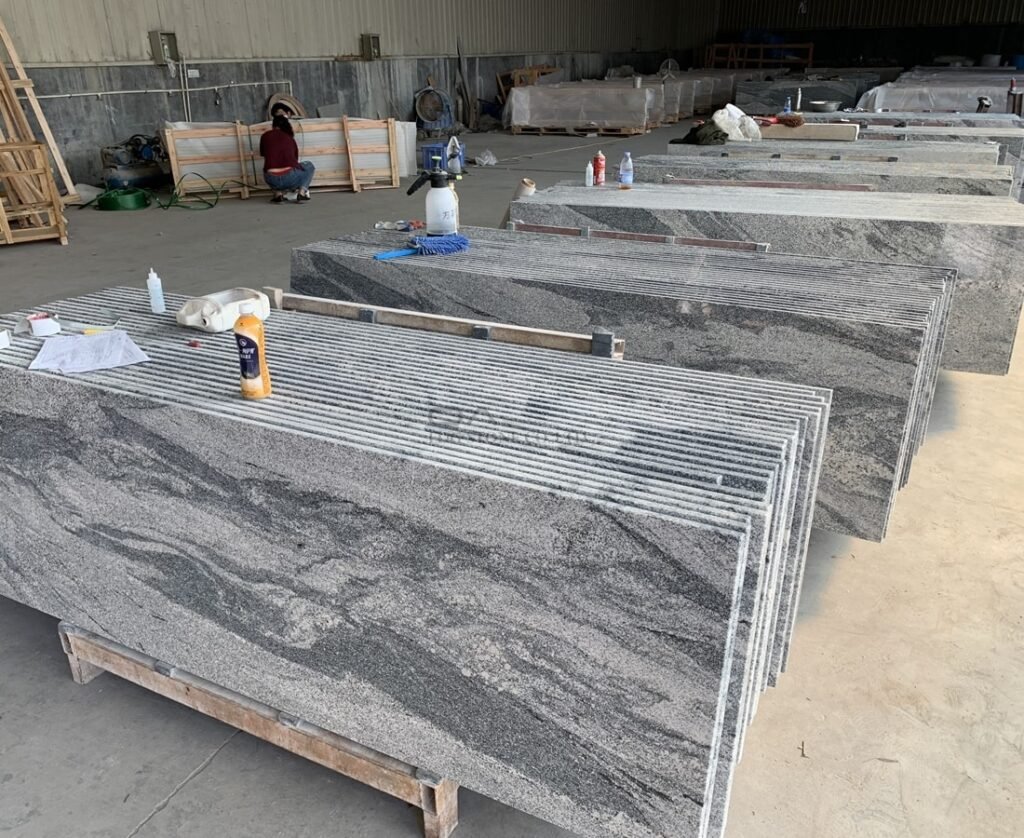
Quartz pricing can vary a lot by grade, edge profile, cutouts, removal, and installation. HomeAdvisor’s quartz cost guide notes that builder’s grade, commercial grade, and higher-choice quartz can land in very different price bands, and it also shows that edge treatments can add meaningful linear-foot costs. That means a quote is only useful when it clearly separates material, fabrication, edge work, removal, and installation.
For local buyers, a useful rule is simple: compare the same scope across every quote. Ask whether the price includes the sample, templating, fabrication, sink cutout, edge profile, old countertop removal, cleanup, and installation. Lowe’s explicitly states that its installation quote can include countertops, installation, and cleanup, which is a reminder that the total project price is usually bigger than the slab price alone.
8. What questions to ask before you buy?
Before placing an order, ask five things: whether you can see an actual slab, whether the supplier handles templating and installation, whether the warranty is local and transferable, whether the quote includes removal and cleanup, and how long the lead time is. Cambria says its sample pieces are not fully representative of the entire slab, which is why slab viewing matters; it also offers a full lifetime warranty through its dealer network.
You should also ask about safety and fabrication practices. OSHA states that countertop manufacturing, finishing, and installation can expose workers to silica, and its hazard alert explains that the risk comes from cutting, grinding, and polishing stone materials. A serious supplier should understand dust control, safe fabrication, and jobsite safety, not just product sales.
9. When local beats factory-direct, and when factory-direct wins?
Local retail or showroom sourcing is usually best for single-home projects, quick renovations, and buyers who want in-person help. Home Depot, Lowe’s, Floor & Decor, and IKEA are strong fits when the customer values convenience, sample visibility, and installation support. Cambria, Caesarstone, and MSI are stronger when the buyer wants brand consistency, showroom access, and dealer-backed project help.
Factory-direct sourcing, including an EDG Stone Factory model, wins when the project needs repeatable output, bulk coordination, export packaging, and sharper control over commercial terms. That is especially true for multi-unit housing, hospitality, and distributor programs. In those cases, the best “near me” result may not be the closest store; it may be the most reliable supply chain.
Conclusion
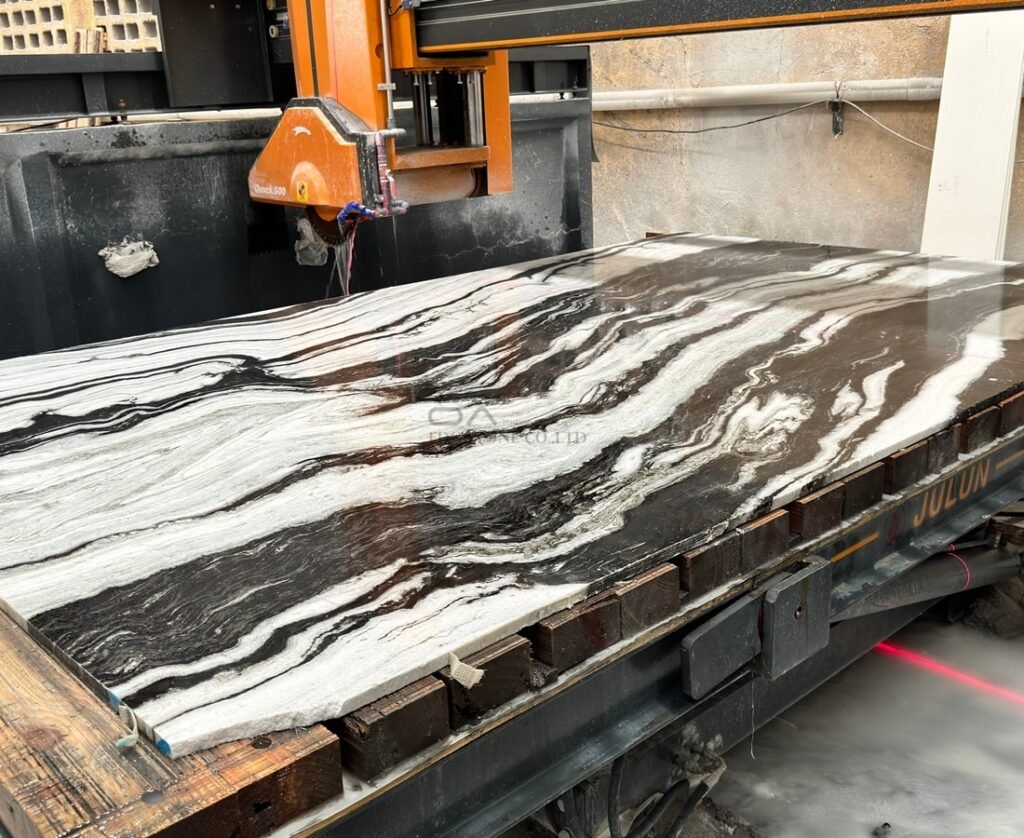
The phrase “countertops near me” hides a much bigger decision than most buyers realize. Local retail channels are great for convenience, showroom visits, and faster installation coordination. Brand showrooms are better for slab selection and project confidence. Local fabricators are strong when custom fit and hands-on service matter. Factory-direct sourcing, such as an EDG Stone Factory procurement path, becomes the smarter route when the order is larger, more standardized, or export-oriented.
A good countertop purchase is not just about finding something nearby. It is about finding the nearest channel that can actually deliver the right material, in the right size, with the right finish, on the right schedule. That is the real meaning of “near me” in 2026.
FAQ
Q1: Where can I find quartz countertops near me?
Home Depot, Lowe’s, Floor & Decor, IKEA, Menards, Cambria showrooms, Caesarstone showrooms, and MSI authorized dealers are all current paths for quartz countertop shopping.
Q2: Is it better to buy quartz from a local store or a factory-direct supplier?
Local stores are better for one-home projects and easier installation support. Factory-direct is better for bulk, export, or repeat orders where cost control and batch consistency matter more.
Q3: Should I see an actual slab before I buy?
Yes. Cambria notes that small samples are not fully representative of the entire slab, so slab viewing is the safer way to confirm color and pattern.
Q4: How long does countertop installation usually take?
A typical project includes measurement and templating, fabrication, old countertop removal, and installation day. A common timeline is roughly 2–4 weeks end-to-end, depending on the supplier and schedule.
Q5: Is quartz countertop fabrication safe?
It can create silica exposure during cutting and finishing, so dust control and safe fabrication practices are important. OSHA specifically warns about countertop manufacturing, finishing, and installation.