— 2026 Granite & Quartz Countertops Procurement Guide 06 (White Paper)
Introduction
In modern countertop procurement, porcelain countertops and quartz countertops represent two fundamentally different material technologies. Porcelain emphasizes ultra-high-temperature sintering, resulting in dense, UV-resistant, heat-tolerant surfaces suitable for indoor and outdoor use. Quartz, by contrast, is an engineered stone—typically composed of ~90% crushed quartz bound with resins—designed for consistency, low maintenance, and scalable production.
Industry leaders like MSI Surfaces highlight porcelain’s non-porous structure, UV resistance, and suitability for outdoor kitchens. At the same time, Caesarstone and Cambria emphasize quartz’s durability, ease of cleaning, and no-sealing requirement.
For buyers, the real question is not which is better, but which is more suitable for your project scenario. This guide breaks down the decision across material science, performance, applications, cost structure, and safety.
1. Material Nature: Two Completely Different Systems
Porcelain Countertops
Porcelain is made from refined clay, feldspar, silica, and minerals, then fired at extremely high temperatures. This results in:
- Ultra-low water absorption
- High density and surface hardness
- Excellent chemical and UV resistance
From a procurement perspective, porcelain is best understood as a “sintered high-performance surface.”
Quartz Countertops
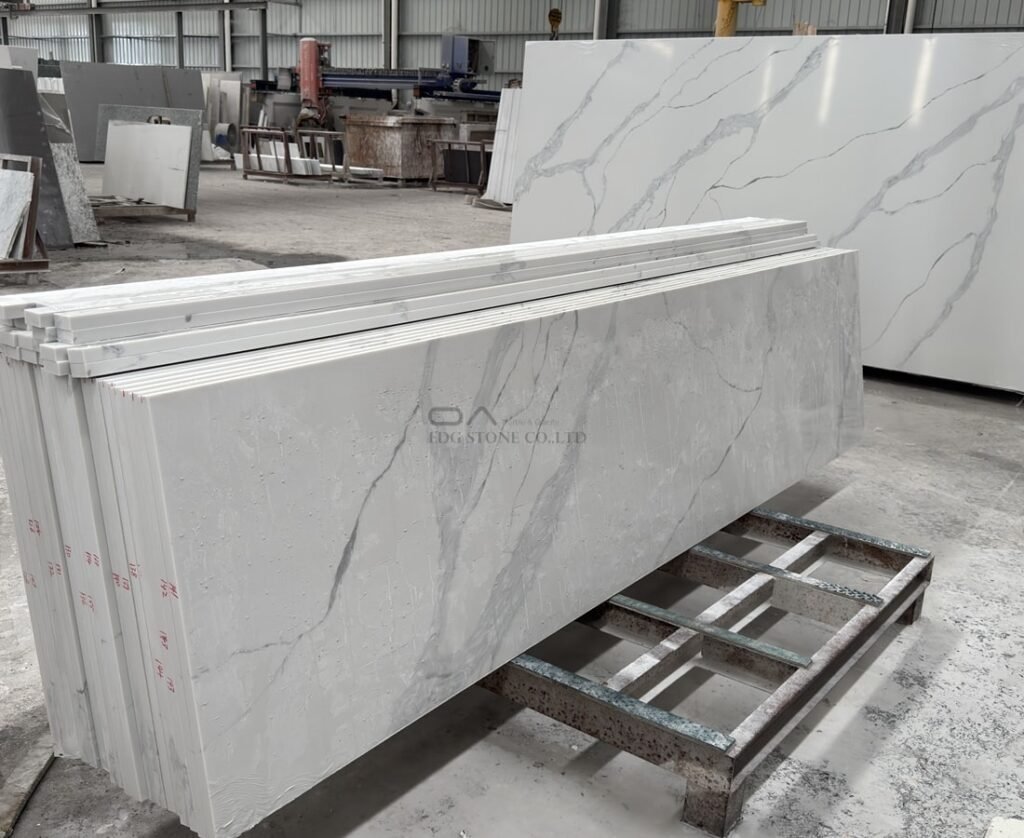
Quartz countertops are engineered materials consisting of:
- ~90% crushed natural quartz
- Polymer resins and pigments
This makes quartz a “resin-based engineered stone”, not a natural slab.
Key implications:
- Controlled appearance and uniformity
- Industrial-scale production
- Stable indoor performance
2. Core Performance Comparison
2.1 Heat Resistance
- Porcelain: Highly heat-resistant due to kiln firing; tolerates hot cookware better
- Quartz: Heat-resistant but not heat-proof; thermal shock can damage resin
👉 Procurement insight: Porcelain is safer for high-heat kitchens and outdoor cooking.
2.2 Stain Resistance & Water Absorption
- Porcelain: Extremely low absorption; excellent for wet environments
- Quartz: Non-porous; resists stains from coffee, wine, oil
👉 Both materials perform well, but porcelain has a slight edge in extreme conditions.
2.3 UV Resistance & Outdoor Use
- Porcelain: UV-stable, no fading → ideal for outdoor kitchens
- Quartz: Not recommended for prolonged sun exposure
👉 This is one of the most decisive differences.
2.4 Maintenance
- Porcelain: No sealing; easy cleaning
- Quartz: No sealing; very easy daily maintenance
👉 Both are low-maintenance, but quartz is easier for standardized indoor projects.
3. Design & Aesthetics
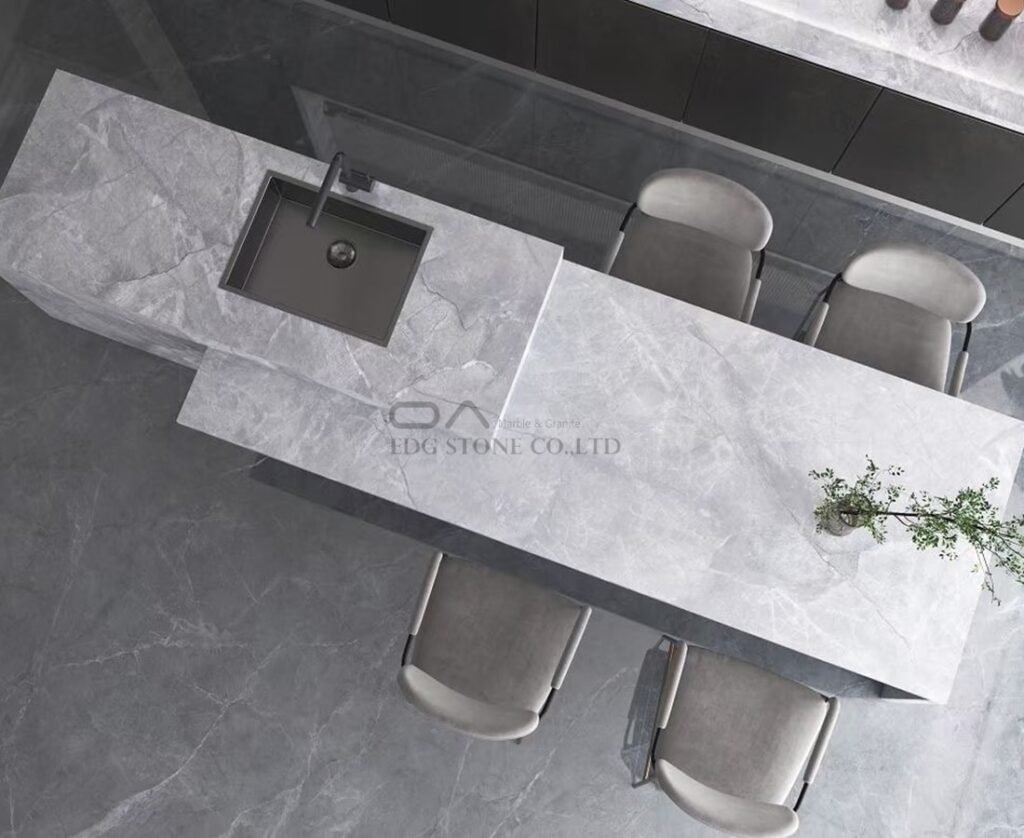
Porcelain: Thin, Architectural, Modern
- Ultra-thin profiles (12mm or less)
- Seamless indoor-outdoor transitions
- Strong architectural appeal
- Realistic stone replication
Quartz: Consistent, Scalable, Reliable
- Uniform color and veining
- Ideal for large-scale projects
- Easier matching across batches
👉 Designers prefer porcelain for visual impact; procurement teams prefer quartz for consistency.
4. Application Scenarios
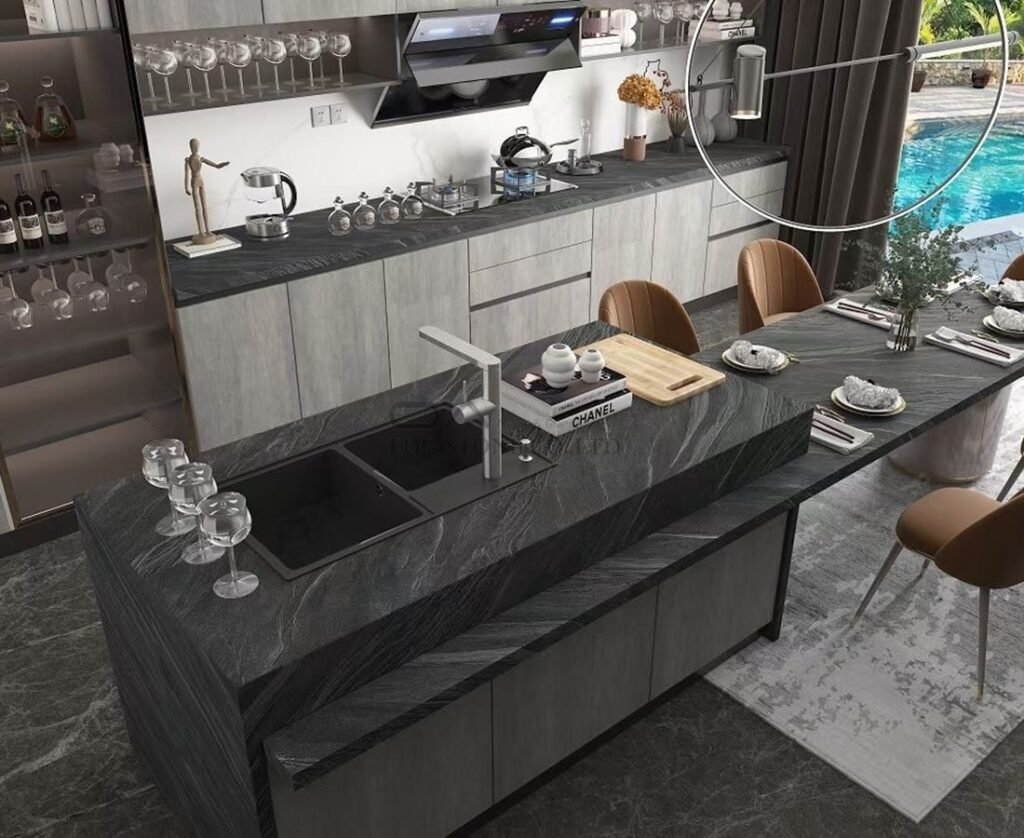
Kitchen Countertops
Porcelain advantages:
- Heat resistance
- Stain resistance
- Outdoor compatibility
Quartz advantages:
- Easy fabrication
- Stable supply chain
- Proven residential performance
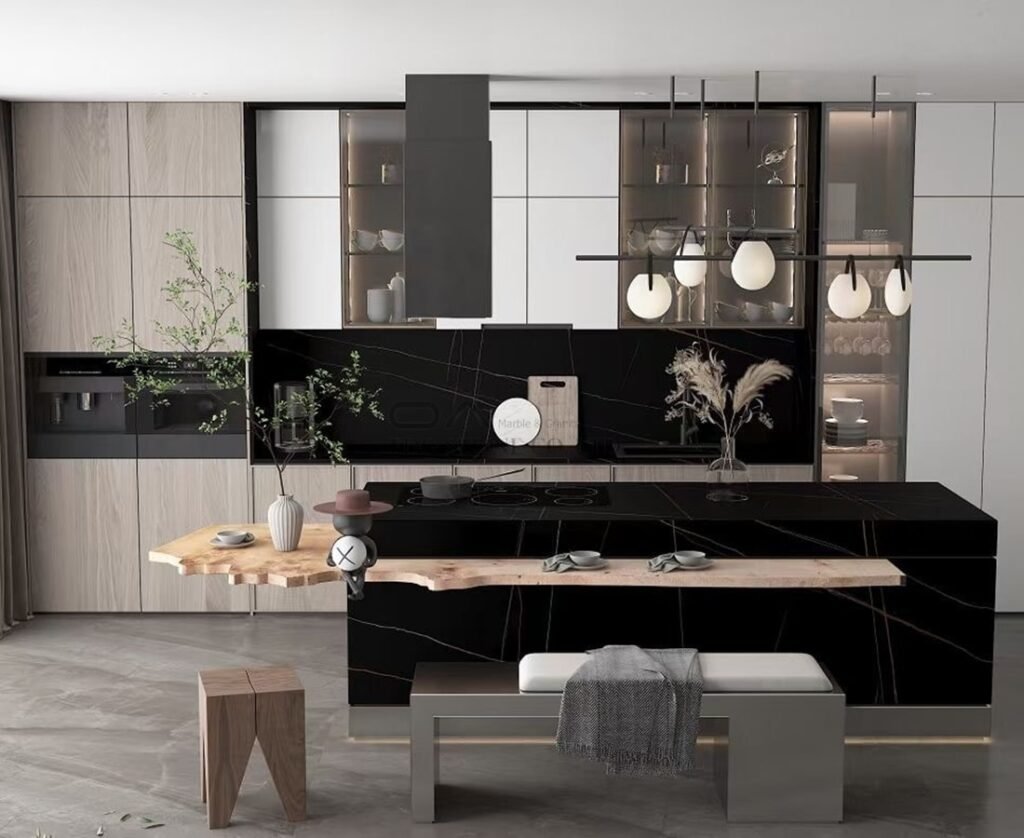
👉 Quartz remains the default mainstream choice for indoor kitchens.
Bathroom Vanity Tops
- Porcelain: Thin, modern, moisture-resistant
- Quartz: Reliable, low maintenance, clean appearance
👉 Quartz is typically safer for high-volume residential projects.
5. Cost Logic: Beyond Material Price
A realistic cost model includes:
- Material cost
- Fabrication cost
- Installation cost
- Transportation
- Breakage risk
- Long-term maintenance
Key Differences
Porcelain:
- Higher fabrication complexity
- More fragile during handling (thin slabs)
- Higher installation skill requirement
Quartz:
- Mature processing systems
- Lower installation risk
- Better scalability
👉 For large B2B projects, quartz often delivers better cost predictability.
6. Fabrication & Safety (Critical but Often Ignored)
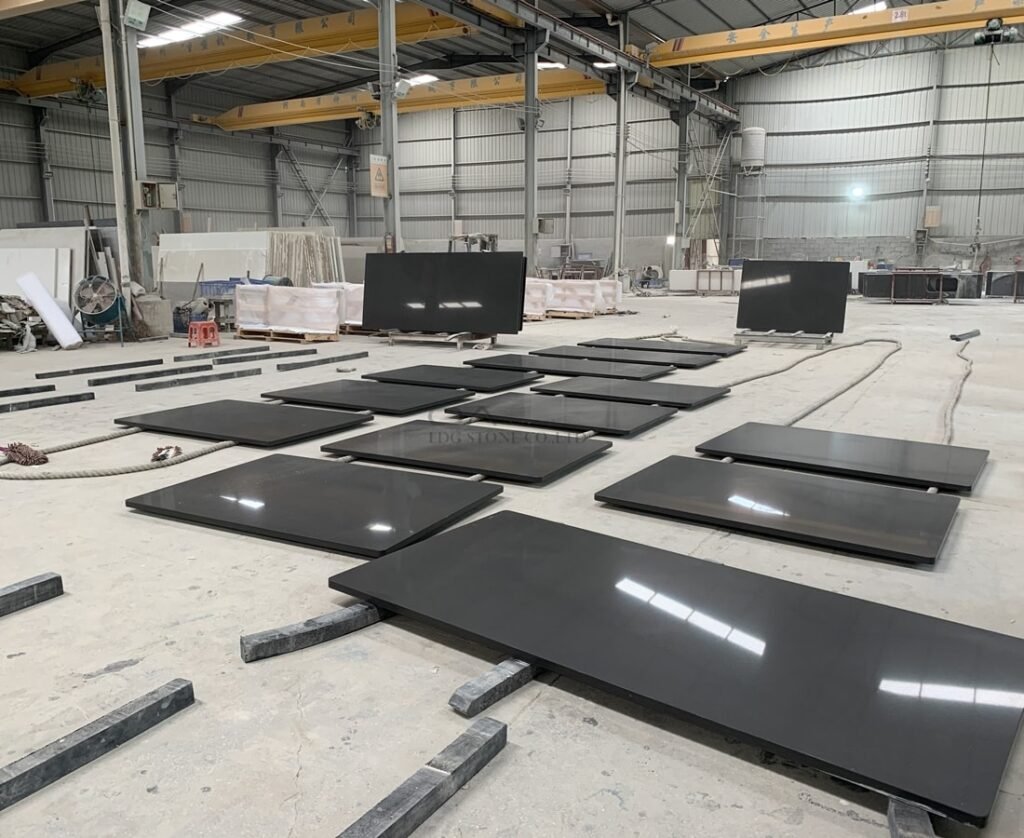
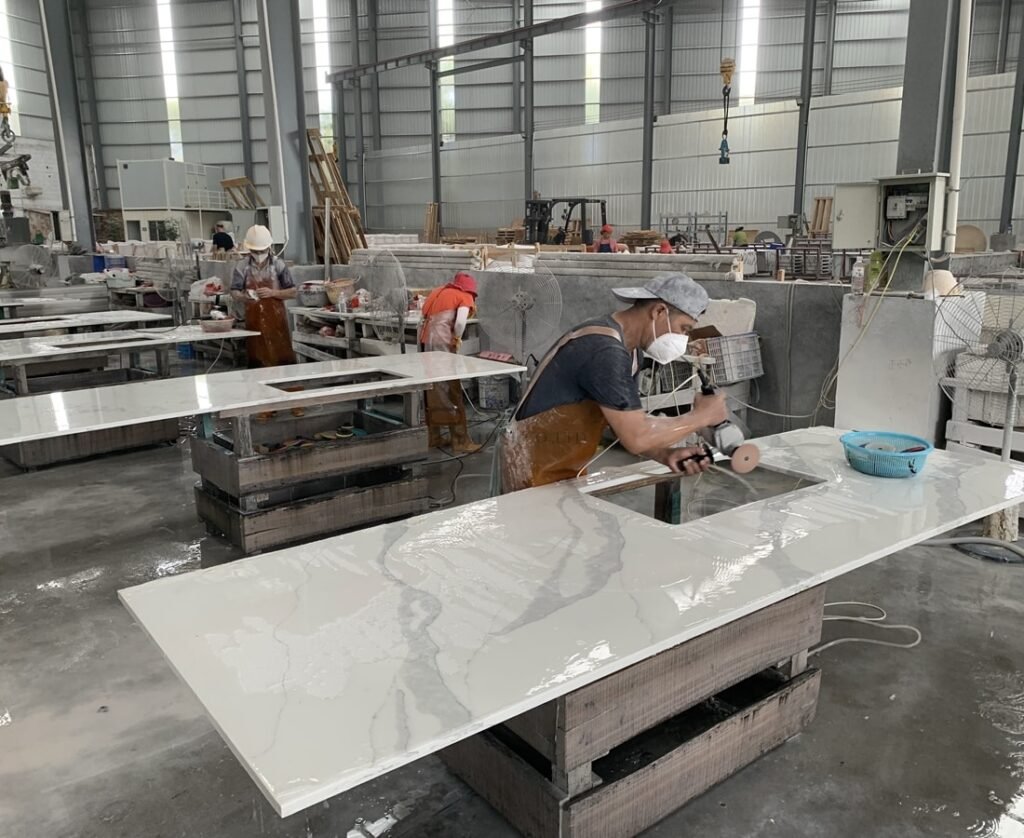
Both materials require cutting, polishing, and installation, introducing respirable crystalline silica risks.
According to OSHA (Occupational Safety and Health Administration):
- Countertop fabrication can expose workers to silica dust
- Engineered stone processing is a high-risk activity
- Wet cutting and dust control systems are essential
👉 Key procurement takeaway:
A supplier’s fabrication safety system is as important as the material itself.
7. Final Procurement Decision Matrix
Choose Porcelain If:
- Outdoor kitchens or UV exposure
- High-heat environments
- Ultra-thin or architectural designs
- Indoor-outdoor continuity
Choose Quartz If:
- Indoor kitchens and bathrooms
- Large-scale residential or hotel projects
- Standardization and repeatability are critical
- You need lower fabrication risk
Conclusion
The competition between porcelain and quartz countertops is not about replacement—it’s about application-driven selection.
- Porcelain = high-performance, architectural, outdoor-ready surface
- Quartz = stable, scalable, low-maintenance indoor solution
Data from MSI Surfaces, Caesarstone, and Cambria consistently confirms this positioning.
For professional buyers, the correct strategy is to evaluate:
Material performance + fabrication capability + installation risk + project scenario
Only then can countertops move from decorative elements to true project solutions.
FAQ (For Google Featured Snippets)
Q1: Is porcelain better than quartz countertops?
Not necessarily. Porcelain excels in outdoor, UV resistance, and heat performance, while quartz is better for indoor consistency and low maintenance.
Q2: Do quartz countertops need sealing?
No. Most quartz surfaces are non-porous and do not require sealing.
Q3: Are porcelain countertops suitable for outdoor kitchens?
Yes. They are UV-resistant, heat-resistant, and ideal for outdoor environments.
Q4: Can quartz countertops handle hot pans?
Not directly. Use trivets to prevent thermal damage.
Q5: Which is easier to maintain?
Both are low-maintenance, but quartz is easier for standardized indoor applications.