Introduction
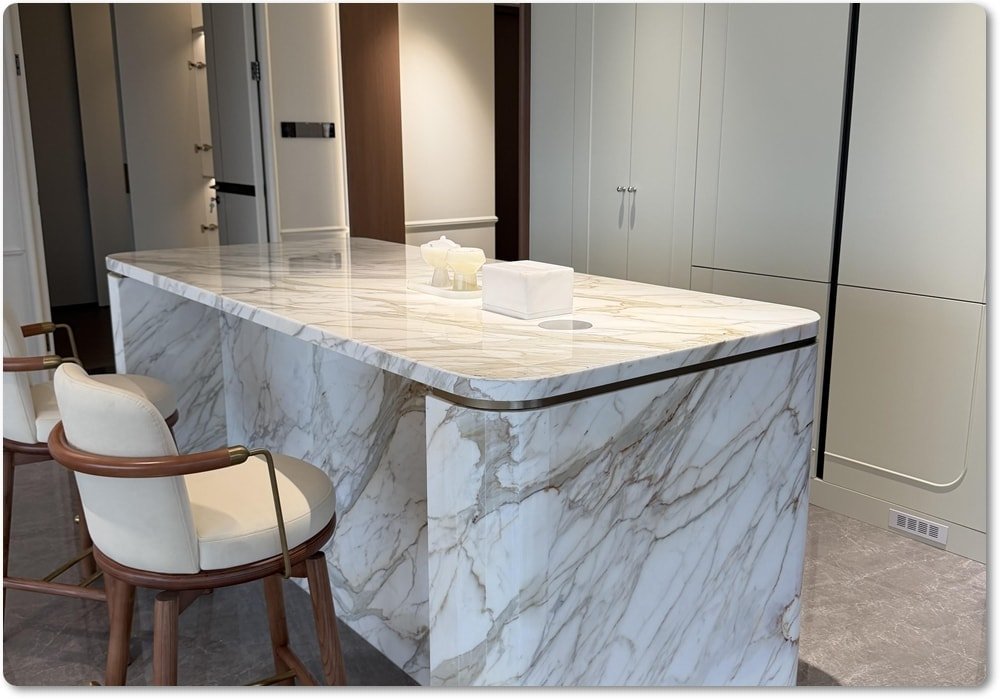
In real-world construction projects, procuring Carrara White Marble is never as simple as selecting a single slab.
Professional procurement is a structured project management process, involving:
- Sample approval
- Shop drawing verification
- Dimension breakdown
- Layout planning
- Batch control
- Production scheduling
- Quality inspection
- Packaging and shipping
- Logistics delivery
- On-site acceptance
In essence, marble procurement is not a one-step purchase—it is a closed-loop system from design to final installation.
Across hotels, residential buildings, and commercial projects, the biggest risks are rarely the material itself, but:
👉 Lack of process planning
👉 Undefined expectations
👉 Poor communication standards
This guide breaks down the full workflow to help you build a controllable, repeatable, and scalable marble procurement system.
Why can’t we rely only on Samples in Marble Projects?
Because Samples Don’t Represent Full Slabs
Natural stone inherently varies:
- Small samples ≠ Full slabs
- Slabs ≠ Entire batch
- Batch ≠ Final delivery
Carrara marble is especially sensitive to variations in veining, whiteness, and background tone.
👉 Samples define direction—not final results.
Because Projects Require Consistency, Not One Perfect Piece
Clients don’t need one beautiful slab—they need:
- Consistent design across spaces
- Stable batch appearance
- Accurate fabrication
- Predictable installation results
Because Bulk Mistakes Are Extremely Costly
Once production begins, issues scale quickly:
- Color inconsistency
- Wrong veining direction
- Incorrect cutouts
- Material damage
- Installation rework
👉 That’s why procurement must be locked early.
Step 1 – Sample Approval
Purpose of Sample Approval
Not just “Does it look good?” but:
- Color direction
- Veining style
- Surface finish
- Gloss level
- Texture and feel
- Match with the overall design
What You Must Review?
- Small samples
- Medium samples
- Full slab photos/videos
- Same-batch slabs
- Finished surface samples
👉 For luxury projects: always review full slabs, not just samples.
Common Mistakes
- Approving from one small sample
- Undefined finish
- Ignoring lighting conditions
- No batch reference
- No acceptable variation range
Step 2 – Shop Drawing Verification & Dimension Breakdown
Why It’s Critical?
The biggest risk is not a material shortage, but:
👉 Incomplete or unclear drawings
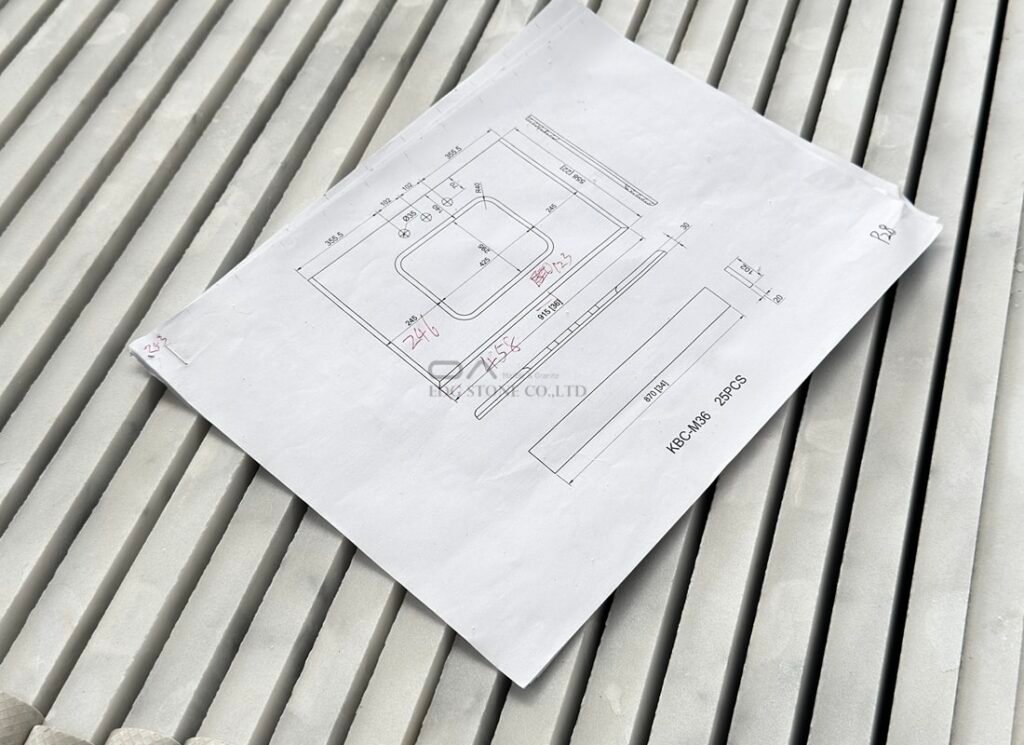
Required drawings include:
- Floor plans
- Elevations
- Detail drawings
- Cutout drawings
- Joint layouts
- Installation sequence
What Must Be Defined?
- Length/width/thickness
- Joint locations
- Edge profiles
- Cutouts
- Vein direction
- Corner treatments
Why On-Site Adjustments Don’t Work?
Natural stone fabrication must be pre-planned.
Late changes lead to:
- Waste
- Delays
- Cost overruns
- Installation errors
Step 3 – Layout Approval & Vein Control
Why Layout Matters More Than Size?
For Carrara marble, layout defines visual impact, especially for:
- Feature walls
- Lobbies
- Entrance flooring
- Kitchen islands
- Bathroom walls
Layout Includes
- Vein matching
- Bookmatching
- Mirror patterns
- Joint positioning
- Slab numbering
- Vein flow continuity
Why Layout Drawings Are Essential?
They translate design intent into fabrication instructions, ensuring:
- Factory accuracy
- Installation clarity
- Inspection standards

Step 4 – Batch Locking & Quality Standards
Why Batch Locking Is Critical?
Even classic Carrara marble varies by batch:
- Whiteness
- Grey tone
- Vein density
- Crystal structure
👉 Always minimize batch mixing.
Quality Standards Should Define
- Acceptable color variation
- Vein variation range
- Stain/impurity tolerance
- Crack & repair limits
- Finish quality
- Dimensional tolerance
Why Early Confirmation Matters?
Once production starts, standards become execution rules—not discussion points.
Step 5 – Mockup & Trial Installation
What Is a Mockup Area?
A real installed sample zone used to verify:
- Color
- Joints
- Lighting effect
- Vein continuity
- Finishing details
Why High-End Projects Require It?
Because real results differ from drawings.
Mockups reduce:
- Rework
- Misjudgment
- Design gaps
What to Confirm?
- Visual consistency
- Joint quality
- Vein alignment
- Finish suitability
Step 6 – Order Finalization Before Production
Why Changes Must Stop Here?
The biggest cost driver is rework, not production.
Must Be Locked
- Final dimensions
- Material grade
- Quantity
- Fabrication details
- Packaging method
- Delivery timeline
Step 7 – Production Scheduling & Factory Coordination
Why Scheduling Matters?
Projects must align with site progress.
Poor timing causes:
- Site delays
- Storage issues
- Installation conflicts
Factory Coordination Includes
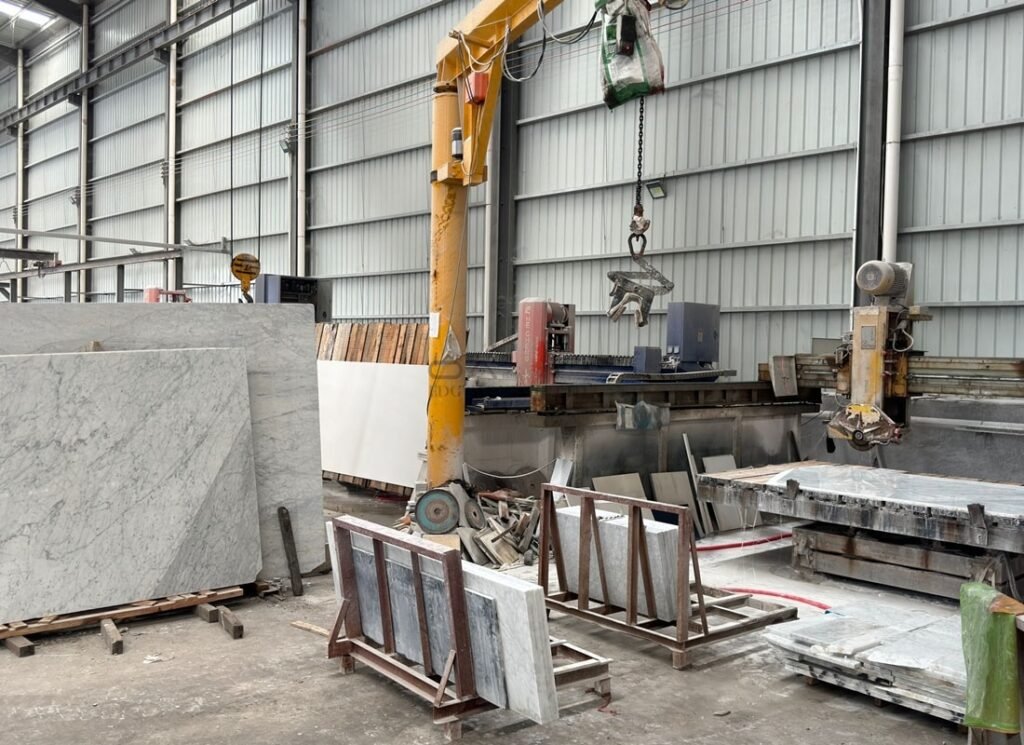
- Production sequence
- Priority slabs
- Special cuts
- Packaging batches
- Shipping milestones
Step 8 – Quality Inspection Before Shipment
Inspection Checklist
- Dimensions
- Thickness
- Surface finish
- Color consistency
- Vein direction
- Cutouts
- Edge integrity
- Packaging safety
Why It’s Non-Negotiable?
Fixing problems after shipping = high cost + delays

Step 9 – Packaging & Logistics Delivery
Why Packaging Matters?
Natural stone is fragile.
Risks include:
- Edge damage
- Cracks
- Surface scratches
- Breakage during unloading
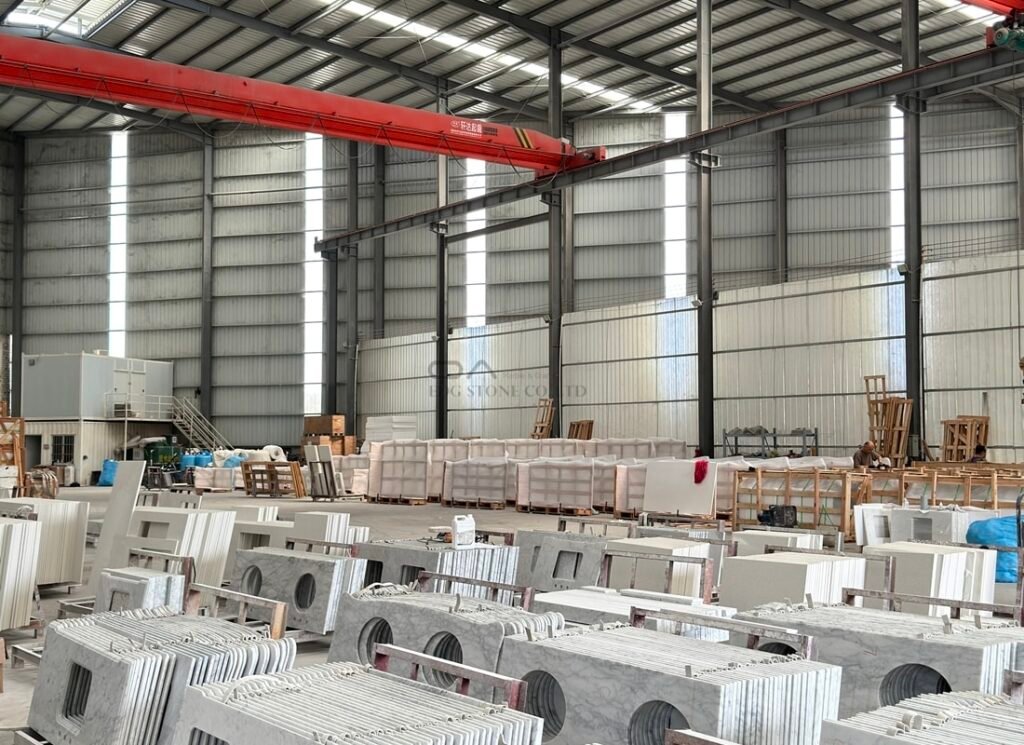
Standard Packaging
- Wooden crates
- A-frame supports
- Shock protection
- Edge guards
- Labeling system
- Sorted packing
Logistics Considerations
- Container loading sequence
- Weight distribution
- Site unloading conditions
- Damage claim procedures
Step 10 – On-Site Receiving & Pre-Installation Check
Receiving Checklist
- Packaging condition
- Label matching
- Quantity verification
- Damage check
- Order consistency
Before Installation
- Layout sequence
- Vein direction
- Joint alignment
- Cutout accuracy
- Fixing method
8 Common Mistakes in Marble Project Procurement
- Ordering before confirming drawings
- Relying only on samples
- Skipping mockups
- No acceptance standards
- No layout approval
- Poor packaging
- Ignoring waste allowance
- No factory-site coordination
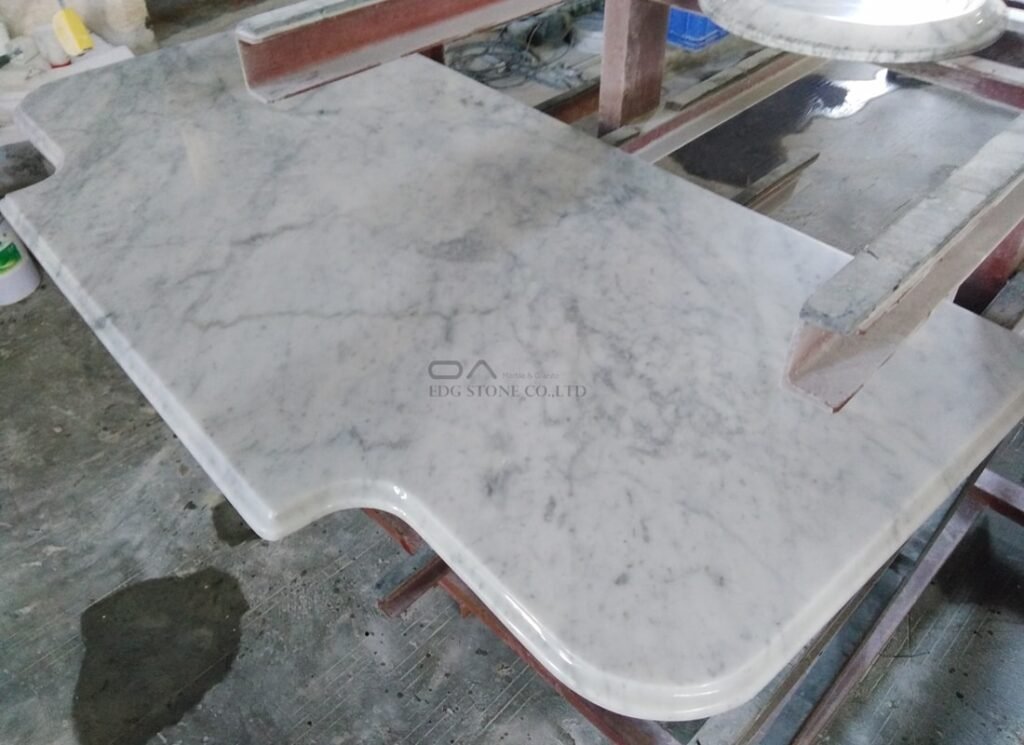
What does a Professional Procurement Process Look Like?
Sample → Drawings → Layout → Batch → Mockup → Order → Production → Inspection → Delivery → Installation
👉 This is not optional—it’s essential for project success.
Conclusion
The core of Carrara White Marble procurement is not buying stone—it’s building a reliable delivery system.
A professional project depends on:
- Sample approval
- Batch control
- Layout planning
- Quality standards
- Delivery coordination
👉 Materials are just the starting point—consistent delivery is the real goal.
FAQ (Google Featured Snippets)
What is the marble project procurement process?
It includes sample approval, drawing verification, layout planning, batch control, production, inspection, packaging, and delivery.
Why is sample approval important?
Because natural marble varies by slab and batch, samples define design direction before production.
What is a mockup area?
A real installed section is used to verify appearance, joints, and workmanship before full production.
How do you control marble quality?
By locking batches, defining standards, reviewing slabs, and performing strict inspections.
Why are layout drawings important?
They control cutting, veining direction, joints, and installation sequence.
Internal Linking Anchor Text Suggestions
- What is Carrara marble → Guide 01
- marble vs granite vs quartz → Guide 02
- Marble Quality Grading → Guide 03
- Carrara marble slab guide → Guide 04
- cut-to-size marble panels → Guide 05
- kitchen countertop guide → Guide 06
- bathroom vanity guide → Guide 07
- commercial countertop guide → Guide 08
- commercial vanity guide → Guide 09
- wall cladding guide → Guide 10
- flooring and stairs guide → Guide 11
- fabrication guide → Guide 13
- cost optimization guide → Guide 14
- bulk logistics guide → Guide 15