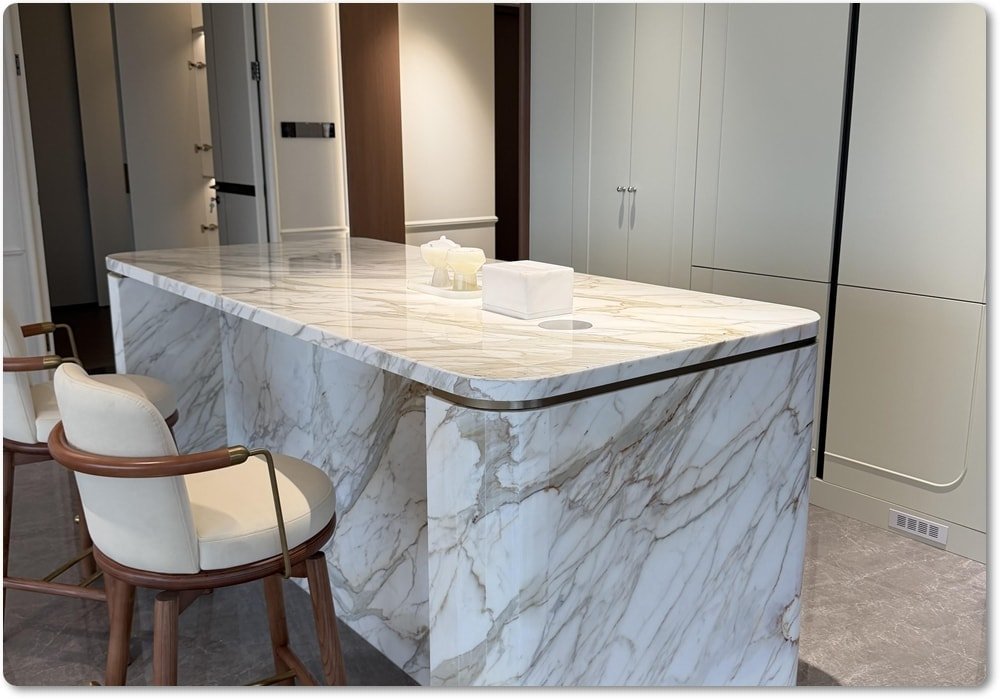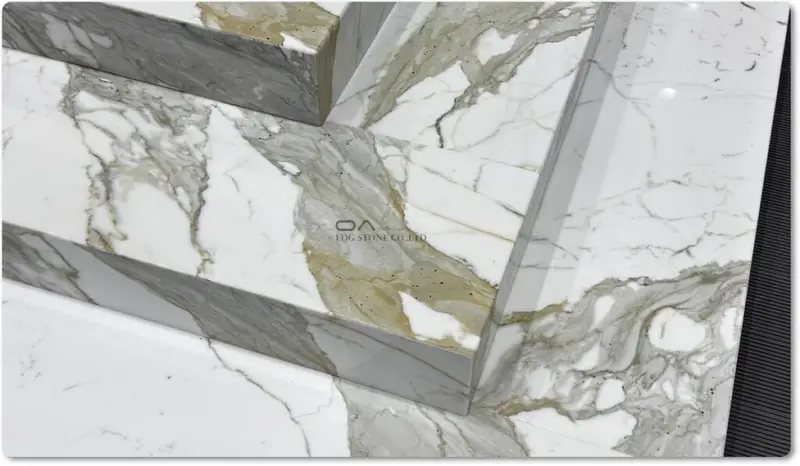
What Seamless Undermount Really Delivers?
Seamless Undermount is more than a visual detail. It is a performance-driven installation method that helps a stone countertop and undermount sink behave as one system, reducing leakage risk and making daily cleaning easier.
Why it matters: It improves hygiene, supports durability, and lowers the chance of moisture damage around the sink cutout.
How it works: the sink is aligned with precision, bonded with the right adhesive, reinforced with clips or straps, and finished with a neat watertight seal.
What buyers should look for: stable support, proper fabrication tolerances, sink compatibility, and a supplier that understands both installation quality and project-level consistency.
Seamless Undermount has become one of the most desirable details in modern stone fabrication because it sits at the intersection of design, hygiene, and durability. In a kitchen or bathroom, the sink edge is one of the most heavily used transition points in the entire room. Water, soap, heat, cleaning chemicals, and daily impact all concentrate at that junction. When the connection is done well, the countertop feels finished, the sink looks integrated, and maintenance becomes easier. When it is done poorly, the result is visible gaps, stress on the stone, water intrusion, and premature failure.
For EDG Stone, this topic is especially important because buyers do not just want a beautiful slab. They want a system that performs. A seamless-looking undermount joint signals professional fabrication, precise installation, and a higher standard of product delivery. It also supports stronger search intent because users asking questions such as “What is the best adhesive for an undermount sink to granite,” “How to install an undermount sink to granite,” or “Undermount sink clips for Quartz” are usually looking for both practical guidance and a trustworthy supplier perspective.
Across the stone industry, this conversation has also become more serious because the health and compliance environment around fabrication has tightened. OSHA maintains respirable crystalline silica standards for construction and general industry, and NIOSH continues to warn that countertop fabrication and installation can create serious silica exposure risks, especially in engineered stone applications that can contain very high crystalline silica content. At the same time, adhesive and sealant choices may be influenced by local VOC rules, including California air-quality regulations. That means Seamless Undermount is no longer just a design choice; it is part of a broader performance and compliance strategy.
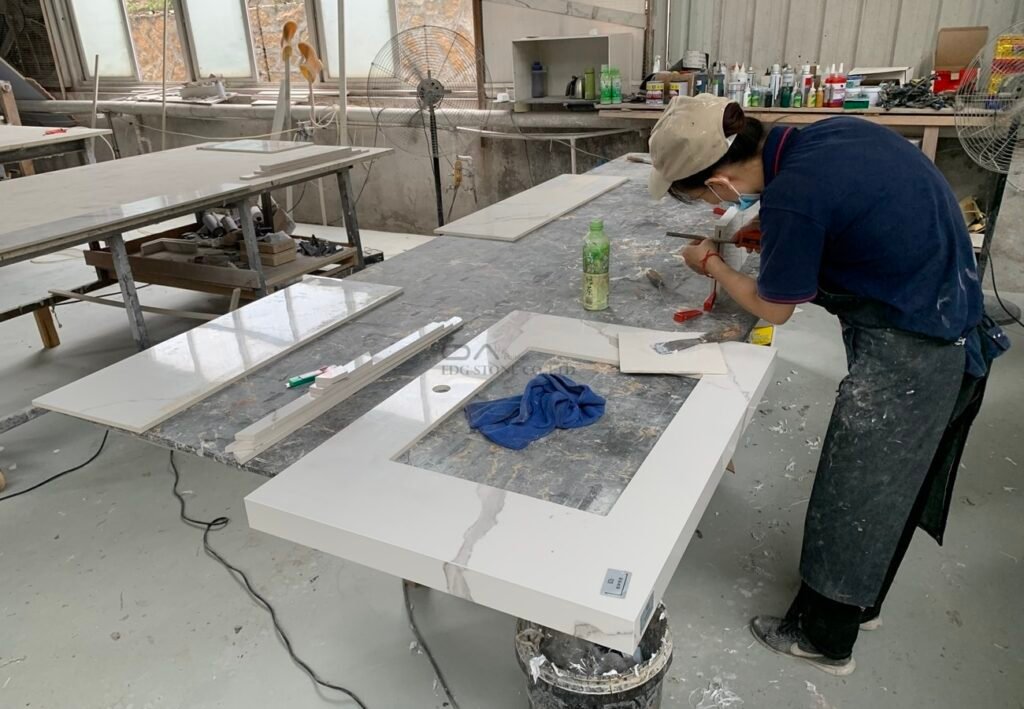
What Seamless Undermount Means in Stone Fabrication?
Seamless Undermount refers to a professional installation method in which the sink is mounted beneath the stone countertop so the visible top surface remains uninterrupted and easy to clean. The goal is not only a hidden sink rim, but also a controlled, stable, watertight interface that handles daily use without movement or moisture failure. In a good installation, the sink appears to “belong” to the countertop rather than simply being attached to it.
This technique is common in granite countertop and undermount sink projects, quartz countertop and undermount sink projects, and premium bathroom applications where clients expect a refined finish. It also appears in custom homes, hospitality projects, and commercial environments where appearance and sanitation both matter. Natural Stone Institute installation guidance reflects how much attention professional stone work places on sink mounts, tolerances, seams, and support details, because those small decisions determine how the finished surface performs over time.
Why does the word “seamless” matter?
The word does not mean the sink and stone are literally fused. It means the transition is engineered so carefully that the eye barely notices it, and the user experiences a smooth, practical surface. The seam should be minimal, the sealant should be neat, and the support system should keep the sink fixed in position without visible sagging or edge stress.
Why has this become a search-heavy topic?
Search users are often asking very specific questions with purchase intent or project intent. They may search for “undermount sink placement in countertop,” “undermount sink straps manufacturer,” or “undermount sink clips factory wholesale” because they are not only looking for information, but also for products, parts, and fabrication solutions. Content that explains the installation logic, the material compatibility, and the support system is far more useful than a short product pitch.
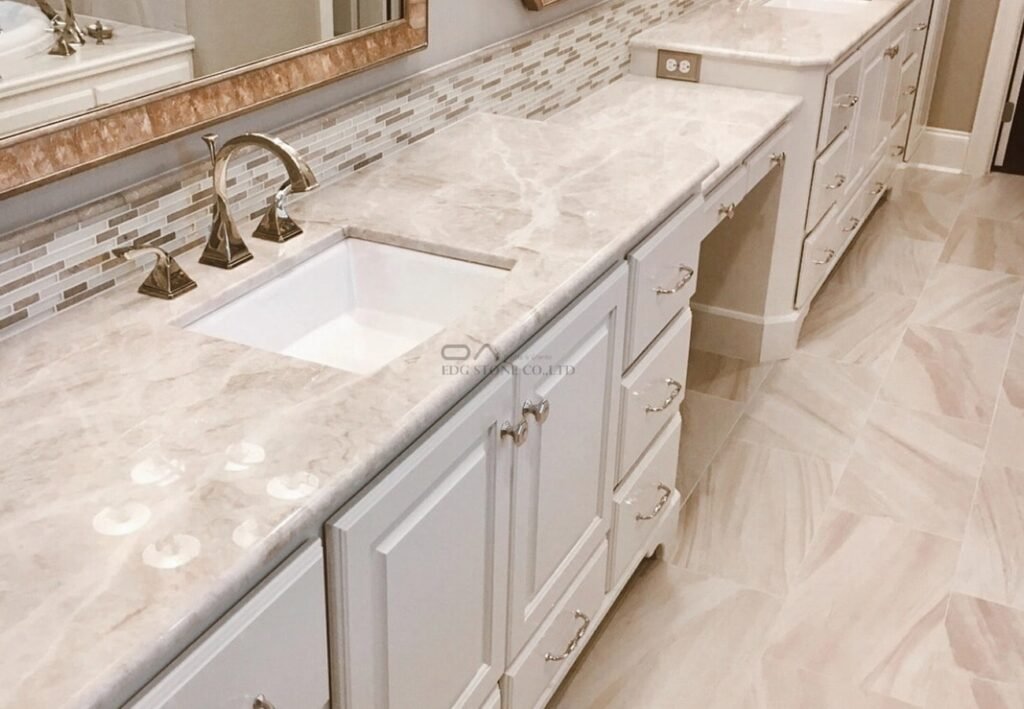
Why the Sink-to-Countertop Joint Matters So Much?
The interface between the sink and the countertop is a pressure point. It deals with standing water, splashback, thermal changes, physical knocks, and repeated cleaning. If the joint is weak, water can work its way into the seam, stains can develop, and the sink can slowly shift. If the joint is strong, the system stays cleaner, safer, and easier to maintain.
A watertight joint is important for three reasons. First, it limits moisture intrusion into the stone and substrate area around the cutout. Second, it reduces cleaning difficulty because debris does not accumulate on an exposed sink rim. Third, it helps protect the long-term appearance of the installation by reducing discoloration, sealant failure, and edge deterioration.
There is also a design reason. In modern kitchens, the visual language of a stone countertop and undermount sink has become a premium standard. Homeowners want a surface that looks continuous. Designers want fewer visual interruptions. Contractors want installations that are easier to explain, easier to sell, and less likely to come back with complaints. Seamless Undermount answers all three needs at once.
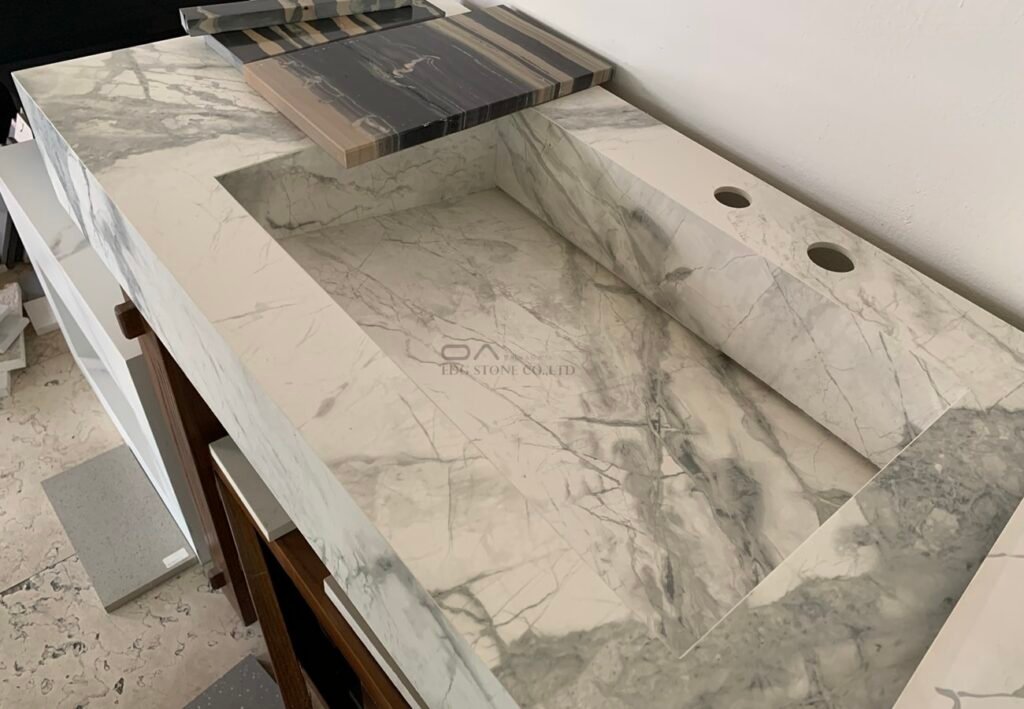
Materials Used in a Professional Seamless Undermount System
A reliable undermount installation is not built on adhesive alone. It depends on the system.
Stone countertop materials
Granite remains one of the most popular surfaces for undermount applications because it is strong, durable, and visually versatile. Quartz is equally common in modern interiors because of its consistent appearance and broad style range. Marble is often selected for luxury spaces, though it typically demands more careful maintenance and fabrication discipline.
Sink materials
The most common option is the stainless steel undermount sink, especially in kitchens. In some premium projects, clients may also ask for stone undermount kitchen sink solutions or other custom sink materials that create a highly integrated appearance. In every case, the sink’s flange geometry, weight, and edge profile affect how it should be supported.
Support hardware
This is where many installations succeed or fail. The most common reinforcement options include:
Undermount sink clips for granite
Undermount sink clips for Quartz
Undermount sink straps
Brackets and anchoring systems
These parts are not decorative. They help hold the sink in the correct position while the adhesive cures and continue to reduce load stress afterward. Installation guides from manufacturers and retailers commonly call for dry-fitting, bracket placement, careful cleaning, and a continuous sealant bead, which reflects the industry’s emphasis on support plus sealing rather than either one alone.
Adhesives and sealants
When people ask, “What is the best adhesive for an undermount sink to granite?” they are really asking which product can bond securely without compromising the stone or seal. In professional practice, the answer depends on stone type, sink weight, climate, local VOC rules, and the manufacturer’s instructions. In many projects, a high-quality silicone sealant is used to create the watertight perimeter, while other bonding or support materials help keep the sink mechanically secure. California air-district rules, including Rule 1168, show why VOC-compliant adhesives and sealants are an increasingly important consideration in commercial and industrial applications.
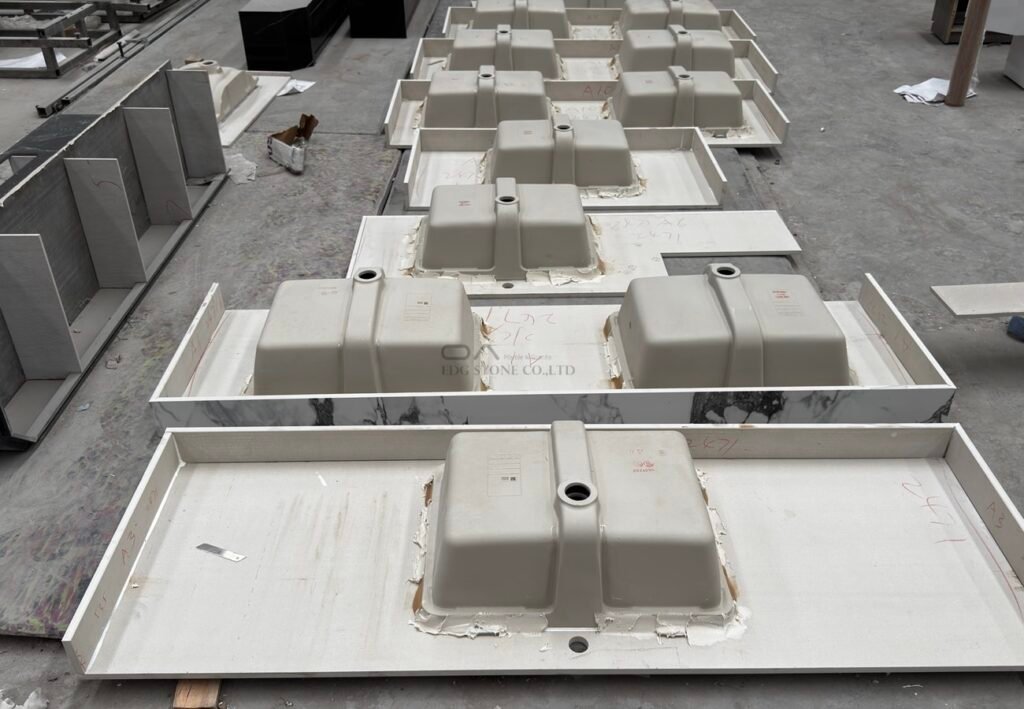
How to Install an Undermount Sink to Granite or Quartz?
The best installations begin long before the adhesive is applied. They begin with planning, measurement, and a clean fabrication workflow.
Step 1: Confirm sink size and placement
The sink opening must match the sink body, the flange, the cabinet conditions, and the plumbing layout. Proper undermount sink placement in countertop design avoids interference with drains, clips, and cabinet framing. A dry fit allows the installer to confirm alignment before anything becomes permanent.
Step 2: Prepare the stone and sink surfaces
The underside of the stone and the sink flange should be clean, dry, and free of grease or dust. This is essential because adhesives and sealants bond best to stable, prepared surfaces. Any contamination can weaken the connection and shorten the life of the seam.
Step 3: Install the support system
Mounting hardware, such as clips or straps, should be positioned so the sink is held evenly, not pulled from one side. A balanced support system helps prevent twisting and long-term stress around the cutout. This is especially important with heavier sinks or larger basin openings.
Step 4: Apply the adhesive and sealant
A continuous bead of the correct sealant is typically applied at the sink flange or interface, then the sink is lifted into its final position. The job is not to use as much material as possible; it is to use the right material in the right place. A neat, even bead gives better sealing and a cleaner appearance than an oversized, messy application.
Step 5: Allow proper curing and inspect the joint
The sink should remain supported and undisturbed until the adhesive has cured enough to carry the load. Once cured, the installer should inspect the seam, test the support, and verify that no movement, water gap, or uneven pressure remains. Professional installation instructions from mainstream sink brands consistently emphasize dry fitting, support placement, and careful sealing, which reinforces the same best-practice approach across the industry.
What professional installers avoid?
A weak installation usually fails because of one or more of these errors: poor surface cleaning, weak support hardware, sink misalignment, rushed curing, or the wrong adhesive for the stone type. In stone work, small errors are expensive because the failure point is often hidden until water damage or movement appears. That is why the best fabricators treat the sink connection as a precision task, not a quick finish step.
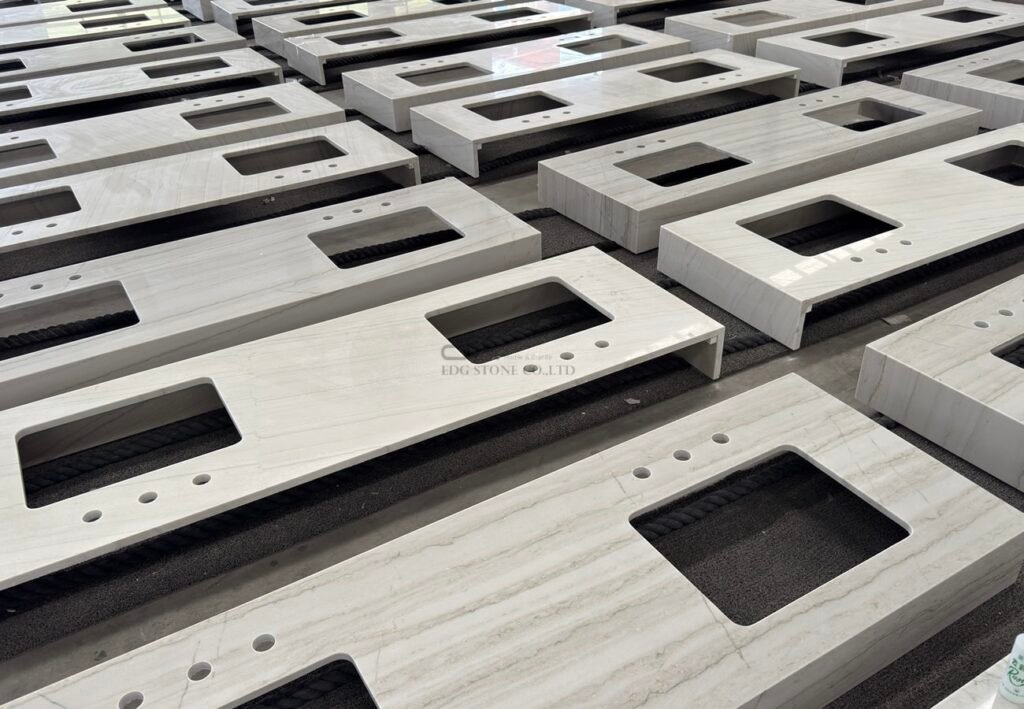
Best Practices for a Watertight Joint
A watertight joint is a combination of geometry, chemistry, and craftsmanship. The seal should close the visible gap without creating a thick or uneven line. The support should carry the load without transferring excess stress to the stone edge. The stone itself should be cut and finished to a standard that supports reliable bonding.
Surface preparation standards
Before installation, both the countertop underside and the sink flange should be clean and stable. If there is dust from fabrication, residue from polishing, or moisture from a wet workspace, the bond can be compromised. This is especially true in quartz countertop and undermount sink projects, where clean edges and consistent surfaces help the sealant behave predictably.
Why should clips and straps not be treated as optional?
For lighter, simpler installations, some people assume adhesive alone is enough. In professional work, that is too risky. Undermount sink clips for granite and undermount sink clips for Quartz help maintain geometry while the seal cures and help protect the joint against movement over time. Undermount sink straps can be especially useful when the installer needs broader load distribution or additional support under a heavier basin.
Stone edge quality matters
A polished, even sink cutout edge helps the sealant sit correctly and reduces the chance of micro-gaps. A rough or chipped edge can weaken the visual finish and create a point where water or stress begins to concentrate. In other words, Seamless Undermount starts with stone craftsmanship long before the sink is placed.
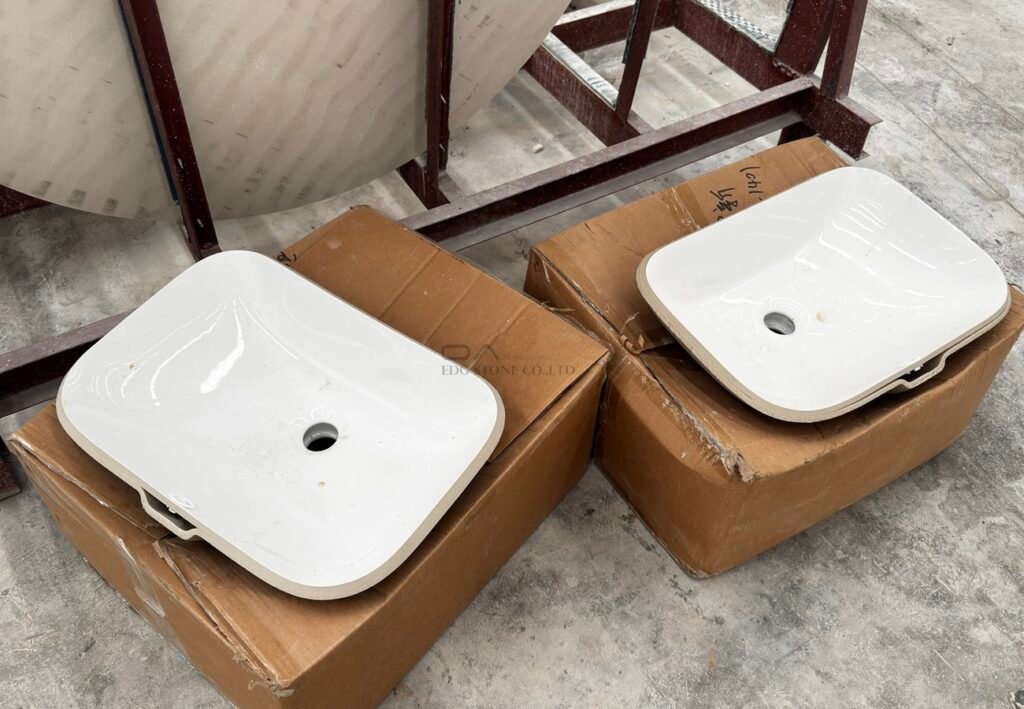
Granite vs Quartz: Why the Installation Approach Changes?
Granite and quartz are often discussed together, but they are not installed with the same mindset.
Granite countertop and undermount sink
Granite is a natural material with variation in structure and appearance. That variation is part of its appeal, but it also means the fabricator must pay attention to stone thickness, edge integrity, and reinforcement around the cutout. The result can be extremely durable when handled by an experienced shop.
Quartz countertop and undermount sink
Quartz is engineered for consistency, which helps with planning and visual matching. However, because many engineered stone products have high crystalline silica content, fabrication and installation safety matter greatly. NIOSH has repeatedly warned that countertop fabricators working with engineered stone face serious silicosis risks due to respirable crystalline silica exposure, with engineered stone often containing very high silica content. That makes safe fabrication, ventilation, wet cutting, and dust control part of the quality story, not just the safety story.
Stone sink and countertop integration
Some premium projects go beyond a standard sink and aim for a stone sink and countertop appearance that feels almost monolithic. These installations can be beautiful, but they demand even more discipline in fabrication, sealing, support, and maintenance planning. For buyers, the key question is not just whether the sink looks good on day one, but whether the entire assembly will continue to perform after years of hot water, detergents, and repeated use.
Can an Undermount Sink in Granite Be Replaced?
Yes, but replacement is not always simple. The answer depends on the sink condition, the stone edge condition, how the old sink was supported, and whether there is enough access to remove and reinstall the assembly without damaging the countertop. In some cases, the sink can be replaced while reusing the stone. In other cases, the work becomes a larger countertop service project.
When is replacement more realistic?
Replacement is easier when the stone edge remains sound, the cabinet opening is accessible, and the previous installation used a standard support system. If the old sink failed because of aging sealant or hardware, a trained installer may be able to remove it, clean the area, and install a new unit without major reconstruction.
When replacement becomes risky?
If the stone around the cutout is chipped, cracked, or weakened, sink replacement becomes much more complicated. Removing an old undermount sink can stress the stone, and any hidden movement can create new damage. This is why many professionals prefer to inspect the underside, support condition, and seam quality before promising a quick replacement.
The practical takeaway
For homeowners and contractors, the best strategy is prevention. A strong Seamless Undermount installation is easier to live with than a future repair. That is also why many buyers now ask not only about sink style, but about the quality of the installation method, the support hardware, and the long-term maintenance profile.
Regulatory Direction and Industry Trends
The direction of the industry is clear: safety, documentation, and quality control matter more than ever. OSHA’s respirable crystalline silica standards continue to govern exposure in construction and general industry, and OSHA has also issued special attention to countertop fabrication and installation work. NIOSH has continued to publish guidance and alerts showing that stone countertop workers can be exposed to hazardous dust, especially in engineered stone fabrication. In practical terms, this means that serious fabricators now treat dust control, wet processing, and worker protection as core operating standards.
At the same time, adhesives and sealants are not chosen in a vacuum. California’s air-quality rules, including Rule 1168 and related district rules, show how VOC emissions remain a real concern in commercial adhesive use. For fabricators, suppliers, and wholesale buyers, this means product selection should consider not only strength and cure time, but also regulatory fit, indoor air quality, and local compliance. In a more regulated market, the best products are the ones that perform well and travel cleanly through the approval chain.
For commercial food-service and healthcare-adjacent projects, sanitation standards can matter too. NSF/ANSI 51 addresses materials and finishes used in commercial foodservice equipment, and that standard can be relevant when sinks, sealants, or adjoining components are specified for hygiene-sensitive environments. The broader trend is that buyers increasingly expect stone systems to be beautiful, durable, and specifiable under professional standards.
What Buyers Should Ask Before Ordering?
If you are a contractor, designer, distributor, or purchasing manager, these are the questions that matter most.
What support system is included?
Ask whether the sink will rely on clips, straps, brackets, or a hybrid method. Heavy sinks, wide basins, and long-term commercial use all benefit from explicit support planning rather than vague assumptions.
What adhesive is recommended?
The answer should depend on the stone type and the project environment. Granite and quartz may accept similar sealing approaches, but the best choice still depends on weight, humidity, cure time, and local VOC rules.
Is the sink suitable for the countertop material?
Not every sink and stone combination behaves the same way. A product that performs beautifully in a quartz countertop and undermount sink project may need a different setup in natural granite or in a deeper sink profile.
Is the supply chain ready for factory or wholesale purchasing?
For buyers looking for “manufacturer,” “factory,” or “wholesale” options, consistency matters as much as product quality. A reliable supplier should understand packaging, lead times, hardware inclusion, and project documentation. That is especially important when the same Seamless Undermount specification must be repeated across multiple units or multiple job sites.
Does the supplier understand long-term performance?
A good supplier does not just sell stone. It helps reduce installation risk. For EDG Stone and similar professional suppliers, that means thinking about the whole system: slab quality, cutout accuracy, support hardware, sealing compatibility, and after-sales project guidance.
Why Seamless Undermount Is a Strong Selling Point for EDG Stone?
Seamless Undermount is a small detail with outsized value. It helps a countertop look more refined, a sink feel more integrated, and a project feel more professionally executed. It also gives EDG Stone a language for talking about performance rather than only appearance. That matters because B2B buyers are not just shopping for a slab; they are buying a finished result.
In today’s stone market, the strongest product pages and the strongest sales conversations are the ones that answer real user questions. What is the best adhesive for an undermount sink to granite? How to install an undermount sink in granite? Can an undermount sink in granite be replaced? What support hardware is needed for Quartz? When your content answers those questions clearly, it becomes useful to search engines, useful to AI systems, and useful to actual customers.
FAQ
What is Seamless Undermount?
Seamless Undermount is a professional installation method that creates a clean, stable, and watertight transition between a stone countertop and an undermount sink. The goal is to make the sink look integrated with the countertop while also improving hygiene and long-term durability. It depends on precise placement, proper sealing, and reliable mechanical support.
What is the best adhesive for an undermount sink to granite?
The best adhesive depends on the stone type, sink weight, and local compliance requirements, but the bond should always be paired with proper mechanical support. In many professional installations, a high-quality sealant is used to complete the watertight edge while clips or straps carry the structural load. The safest choice is the product specified by the sink and stone manufacturer or by an experienced fabricator.
How to install an undermount sink to granite or quartz?
The process usually starts with measuring and dry-fitting the sink, then cleaning the stone and sink surfaces thoroughly. After that, the installer applies the adhesive or sealant, positions the sink, adds clips or straps, and allows full curing before testing. A good installation is defined by alignment, support, and a neat, sealed joint, not just by getting the sink under the counter.
Can an undermount sink in granite be replaced?
Yes, an undermount sink in granite can often be replaced, but the success of the job depends on the condition of the stone and the original support system. If the countertop edge is intact and the sink area is accessible, replacement may be straightforward. If the stone is cracked, chipped, or weakened, the job becomes much more risky and may require more extensive repair work.
What should buyers ask before ordering undermount sink clips, straps, or support hardware?
Buyers should ask what type of sink weight the hardware is designed to carry, whether it is compatible with granite or Quartz, and whether it is intended for factory, wholesale, or site installation. They should also ask how the hardware works with the adhesive and sealing system, because support parts should complement the watertight joint rather than fight against it. The best hardware is the one that fits the full installation method, not just the sink model.
Reference
Occupational Safety and Health Administration (OSHA). “Silica, Crystalline – Overview.” OSHA.
Occupational Safety and Health Administration (OSHA). “Worker Exposure to Silica during Countertop Manufacturing, Finishing, and Installation.” OSHA Publication OSHA3768.
Centers for Disease Control and Prevention, NIOSH. “Engineered Stone and Silicosis.” Alyson Fortner et al.
Occupational Safety and Health Administration (OSHA). “Respirable Crystalline Silica Standard for Construction and General Industry.” OSHA.
California Air Resources Board (CARB). “Rule 1168: Adhesive and Sealant Applications.” CARB.
South Coast Air Quality Management District. “Rule 1168: Adhesive and Sealant Applications.” SCAQMD.
NSF International. “Food Equipment Standards: NSF/ANSI 51.” NSF.
Elkay. “How to Install Pro Quartz Undermount Sinks.” Elkay Help Center.