Countertop Edge Profile Analysis: Eased vs Ogee vs Mitered
Why Countertop Edge Profiles Matter in Modern Residential Design?
Countertop edge profile is both an aesthetic and functional specification: it determines how a slab meets the room visually and physically. The chosen edge can alter perceived thickness, influence light and shadow, affect daily maintenance, change safety for children and elderly occupants, and even influence the final cost and fabrication time. For contemporary residential work, edge selection is a design decision that bridges interior language (minimal vs ornate), material capabilities (natural stone, engineered quartz, porcelain, sintered stone), and practical constraints (fabricator capability, transport, on-site polishing).
Two load-bearing facts shape modern edge choices: first, accessibility and safety guidance commonly require softened edges or minimum radii on edges in some contexts; second, professional stone standards and manufacturer tolerances guide whether complex edges, such as mitered seams, are recommended for a given material and slab thickness.

Quick Definitions: Eased Edge, Ogee Edge, Mitered Edge (and related types)
Eased edge
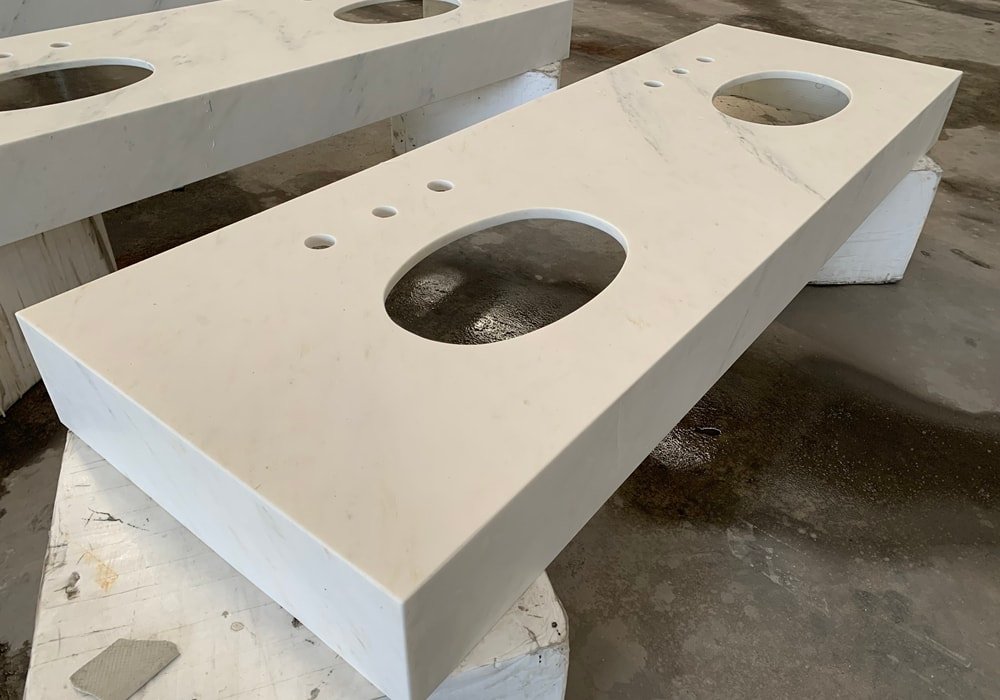
An eased edge is the simplest contemporary profile — essentially a square edge with a tiny radius (typically 1–3 mm) to remove the razor sharpness. It features crisp, modern lines, is inexpensive to fabricate, and is forgiving of alignment errors. Eased edges are the first choice when durability, low maintenance, and minimal visual weight are priorities.
Ogee edge
The ogee is a classical double-curve profile that reads as ornate and upscale. Ogee profiles have larger contours and can trap dirt along the curve; they also add visual thickness to a slab. They require more polishing steps and hand finishing; consequently, they raise fabrication cost and time.
Mitered edge
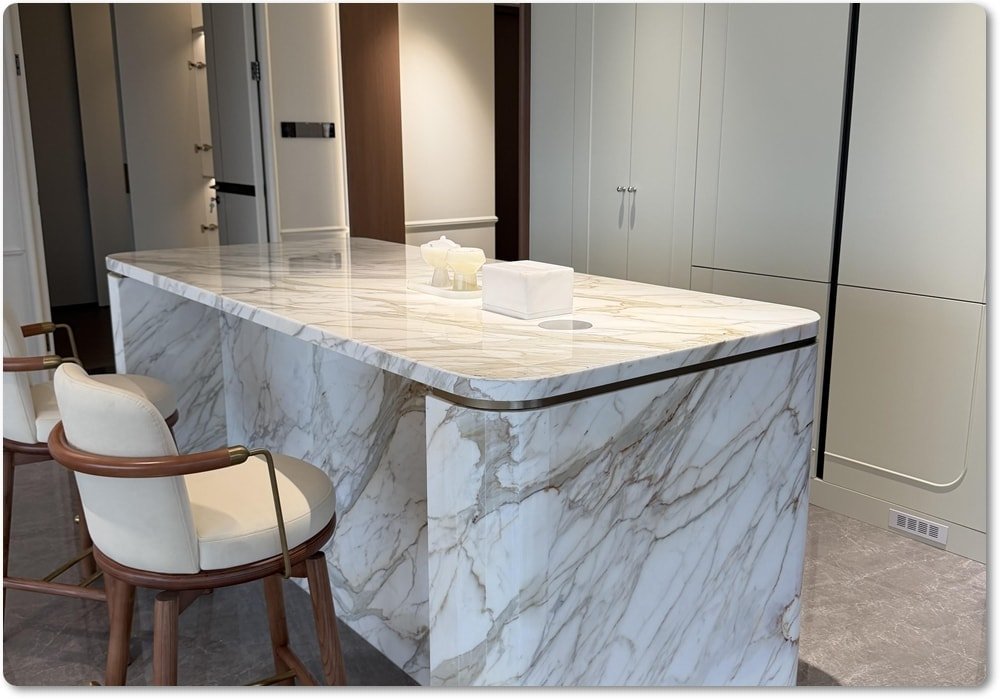
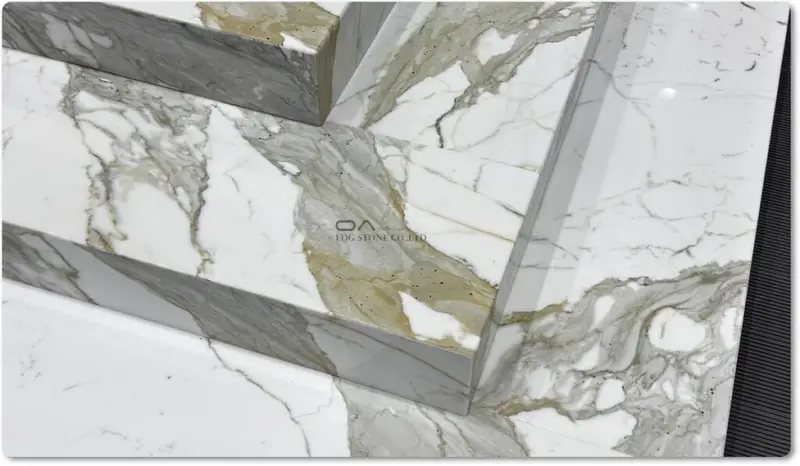
A mitered edge achieves the appearance of a thicker slab by joining two pieces at a precise 45° cut to form what appears as a single, thick edge. Properly executed, mitered edges (and laminated miter seams) produce a premium, monolithic aesthetic such as thick island edges or waterfall returns. They rely on adhesives and perfect alignment — meaning fabrication tolerances and shop expertise directly affect long-term seam integrity.
Other common profiles
Bullnose (full round), half bullnose, bevel, and cove edges are additional options; bullnose reads soft and traditional, bevels are crisp and contemporary, and cove profiles sit between a bevel and a soft roll.

Aesthetic Comparison: How Each Edge Reads in Contemporary Interiors?
Eased edges are synonymous with modern minimalism. Their slim profile preserves visual plane continuity and pairs well with handleless cabinetry, integrated sinks, and streamlined fixtures. Ogee edges introduce a classical flourish that conflicts with stark modern minimalism but works beautifully in transitional or traditional settings that aim for a luxe, finished appearance. Mitered edges bridge modern and high-end luxury: they let a designer specify a slab that visually reads two to three inches thick without the added weight (and cost) of solid thick stone. For waterfall islands or dramatic vanities, mitered edges create monolithic effects that command attention.
Practical design examples:
Small modern kitchens: eased or eased with a subtle chamfer to avoid visual clutter and maintain perceived space.
Luxury open-plan kitchens: mitered waterfall islands to create sculptural focal points.
Classic/historic renovations: ogee or bullnose edges to match period detail.
Technical & Fabrication Considerations (Manufacturer/Factory Perspective)
Material behavior & suitability
Natural stone (marble, granite, quartzite) and engineered stone (quartz) differ in tensile strength, flexural capacity, and porosity. For mitered edges, the clarifying variable is slab thickness and flexural strength: engineered quartz slabs are commonly fabricated into mitered assemblies, but support (rods, coring, reinforcement) may be needed for long overhangs. Porcelain and sintered surfaces require specialized tooling and adhesives for miter seams and may behave differently under thermal expansion.
Tooling, tolerances & seam quality
High-quality miter seams require precise 45° cuts, perfectly matched grain/pattern at the seam, and adhesives that cure without significant shrinkage or color change. Industry design manuals and fabrication tolerances outline expected seam width and acceptable variation; they also caution that mitered corners are more demanding and, in some design manuals, not recommended for certain stone applications without appropriate engineering.
Adhesives & joinery
Adhesives used in mitered seams must be compatible with the slab material and should be applied in controlled factory conditions where ultraviolet exposure, clamp pressure, and curing temperature are monitored. For laminated miters (to create very thick visual edges), epoxy and polyester resins are common; care must be taken to avoid visible discoloration at the joint.
Factory capabilities
Manufacturers must disclose minimum radius capabilities, maximum miter thickness, and polishing sequence. A reputable factory will provide shop templates, use CNC and digital polishing systems for repeatability, and document tolerances to avoid field surprises.
Durability, Maintenance & Safety (Data-driven points)
Scratch and chip resistance
Rounded profiles and eased edges hide minor chips better than sharp square edges. Ogee profiles have more exposed surface area at the curves and may present more vulnerable edges in high-traffic kitchens. Mitered seams, when executed correctly, distribute mechanical loads well but can reveal joint separation over time if adhesive or reinforcement fails.
Water infiltration & hygiene
Seam performance affects hygiene: mitered seams and ogee curves can create small crevices where water or food particles can collect if not perfectly sealed or if the joint opens slightly with movement. For commercial kitchens or areas with strict sanitation needs, simple profiles with fewer joints are generally preferred. Industry guidance emphasizes tight joint control and appropriate sealing to reduce water ingress.
Safety and accessibility
Rounded edges and small radii reduce the chance of injury in homes with children or elderly individuals. Accessibility guidance broadly encourages softer edges and avoidance of sharp protrusions in elements within reach range; some regional codes and guidance documents reference minimum edge radii in public contexts.
Cleaning recommendations
Eased edges and simple bullnose profiles are the easiest to keep clean; ogee profiles require more attention in the crevice. Use pH-neutral cleaners for natural stone and manufacturer-approved cleaners for engineered surfaces to avoid degrading resin binders or finishes.
Cost & Time: Pricing, Lead Times, and Labor Intensity
Edge complexity correlates with cost:
Eased edge — lowest fabrication and installation cost; fast turnaround.
Bullnose / Bevel — moderate cost; more polishing passes.
Ogee — higher cost due to additional tooling and hand finishing.
Mitered edge — the highest cost among common residential edges due to precision cutting, adhesive labor, reinforcement, and potential shop assembly.
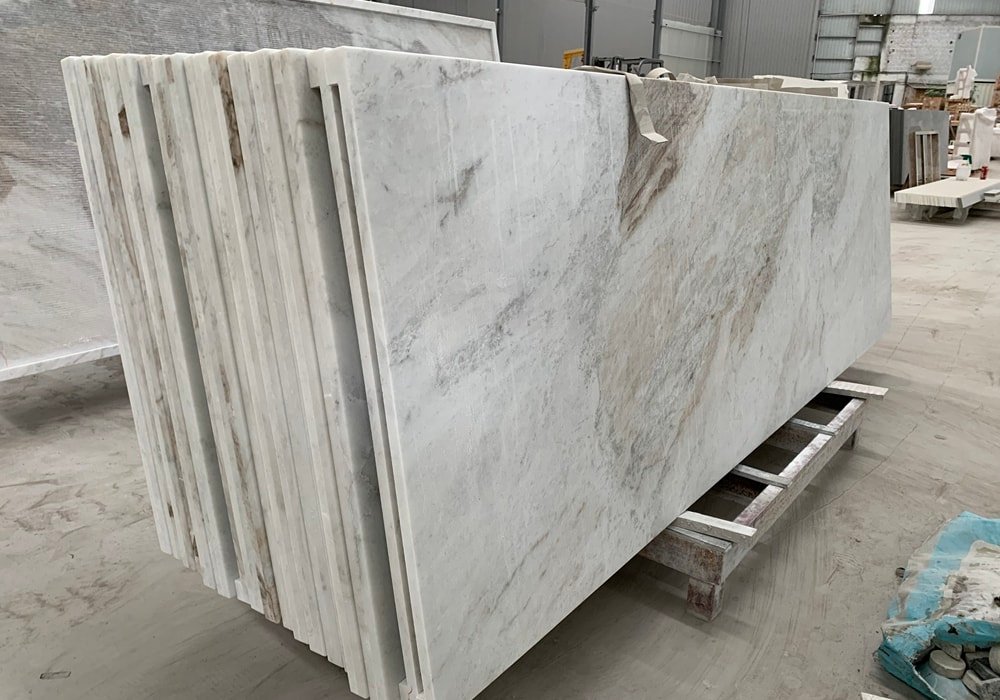
Lead times increase with complexity: mitered or laminated edges often require additional shop time and quality checks to ensure seam invisibility. Wholesale or factory manufacturing can reduce per-piece cost for large volume runs, but customization (pattern matching for bookmatched miter seams) increases time and expense.
Regulatory & Compliance Trends Affecting Edge Selection
Regulatory guidance influences edge choices both directly and indirectly. Accessibility standards (for public or multi-family common areas) encourage rounded or eased edges and specify reach and height constraints for countertops; these standards shape expectations for safer edge treatments.
Environmental and chemical compliance trends are also relevant: increasingly, jurisdictions monitor emissions and chemical content of adhesives and resin systems used in engineered stone fabrication; manufacturers are adapting to lower-VOC adhesives and disclosing material safety information. Industry technical documents and installation standards now recommend choosing adhesives that meet local environmental and indoor-air quality guidelines.
Sustainability & Supply Chain: Quarrying to Factory (Manufacturer Focus)
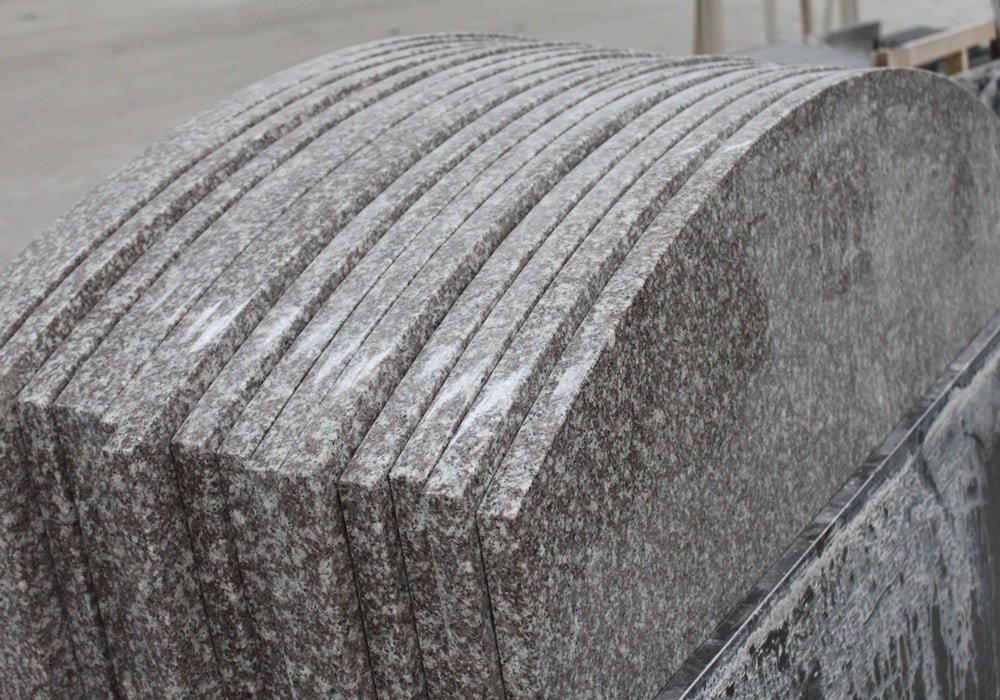
Life cycle assessments (LCAs) show tradeoffs between natural and engineered materials. Some recent LCA work demonstrates that, under certain conditions, engineered/artificial surfaces can have lower energy and greenhouse gas footprints during manufacture than certain natural stones — though data vary by region, quarrying practices, and transportation distances. Conversely, natural stone may outlast some engineered products and can be reused or repurposed, which shifts LCA outcomes over long time horizons.
Edge selection affects waste: ornate edges and mitered assembly produce more fabrication waste (trim loss, rejected pieces) than simple eased edges. Factories that manage remnant utilization (cutting smaller pieces for vanities, thresholds, or test panels) reduce waste and lower effective project carbon intensity.
Sourcing transparency and supplier certifications (chain-of-custody, environmental management ISO standards) are becoming differentiators in the market and should be requested by project teams seeking greener specifications.
Who Should Choose Which Edge? (Decision Matrix + Use Cases)
Homeowner personas & recommendations
Minimalist renter/budget remodel: Eased edge. Low cost, simple install, low maintenance.
Family with small children: Eased or small bullnose for softer impact surfaces.
Luxury homeowner/hospitality project: Mitered waterfall islands and thick visual edges for drama. Mitered or ogee, depending on classical vs contemporary language.
Vacation/secondary homes: Eased or mitered depending on maintenance expectations and desired impact.
Designer/fabricator checklist
Material & slab availability (veins, bookmatching).
Slab thickness and whether mitered construction is recommended.
On-site access for large mitered sections; plan for shop assembly where possible.
Adhesive selection, backup reinforcement, and warranty terms.
Textual decision flow
If you want minimal cost and modern lines → choose eased; if you want classical detail → choose ogee; if you want the illusion of thick stone or a waterfall island → choose mitered (but verify factory capability and plan for increased cost and QA).
Installation Best Practices & Common Pitfalls (Field Guide)
Templating precision: Accurate shop templates reduce field adjustments. For mitered corners, templating must account for cladding thickness, adhesive gap, and polishing finish.
Clamping & curing: Mitered seams require adequate clamp pressure and cure time in controlled conditions. Rushed cure or insufficient pressure leads to visible seams or joint failure.
Color matching: Epoxy fillers and adhesives should be tested and tinted to match the slab color to avoid visible glue lines.
Waterproofing junctions: Where ogee or mitered edges meet backsplashes or appliance cutouts, seal with appropriate silicone or solid-surface transition profiles to prevent ingress.
Common pitfalls include: underestimating fabrication time for ornate profiles, failing to reinforce long laminated miters, and letting field conditions (dust, humidity) interfere with adhesive curing.
Cost Example Scenarios & Sample Quotes (Illustrative)
(The following are illustrative, relative cost drivers rather than vendor quotes.)
Small bathroom vanity (one 30-in x 22-in slab)
Eased edge: minimal fabricator time, fast finish. Low cost.
Ogee: increases labor by polishing steps; moderate cost increase.
10-ft kitchen island with standard overhang
Eased: straightforward seam, lower total labor.
Mitered waterfall: highest complexity — requires precision, reinforcement, and potential shop assembly; premium pricing.
Luxury 14-ft waterfall island (bookmatched veins)
Mitered laminated edge with pattern matching: top-tier cost due to pattern book-matching, increased shop time, and additional QA.
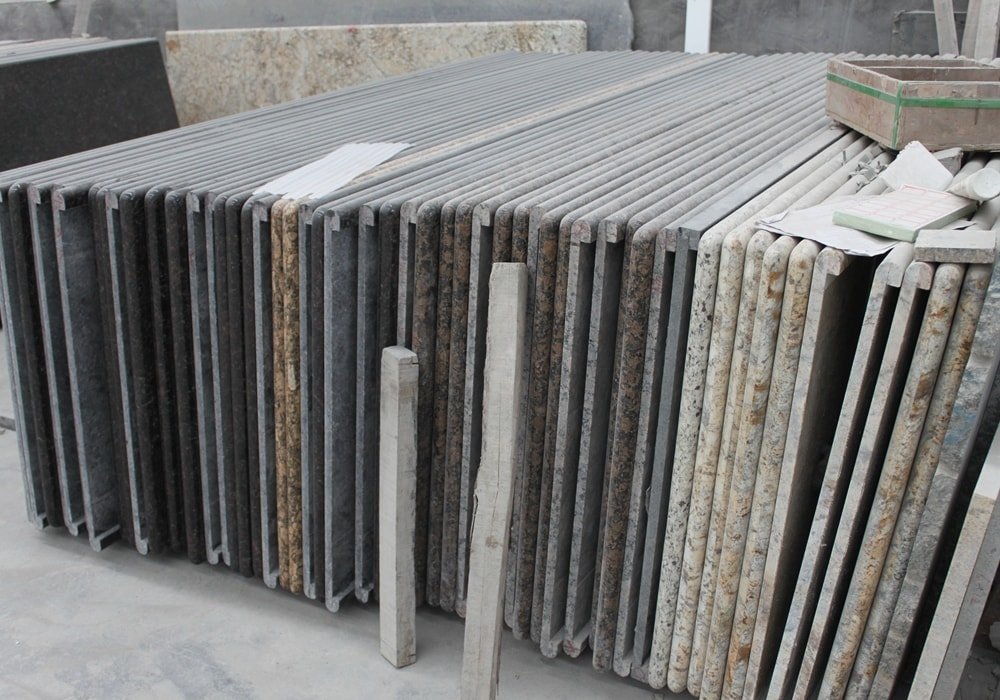
Manufacturers can reduce costs for large projects through prefabrication runs, factory-set profile tooling, and purchasing adhesives/consumables at volume.
Semantic Closure Content Block — (How / Why / What / Options / Considerations)
How to choose?
Start by defining project priorities: visual language (minimal vs ornate), occupant profile (kids, elderly), and performance expectations (stain resistance, heat, food prep). Match the material to the edge: choose eased for the greatest resilience and lowest cost, ogee for classical aesthetics, and mitered where a thick, high-end look is required.
Why does it matter?
Edge choice influences perceived value, maintenance burden, and long-term durability. It affects how light and shadow emphasize the slab, how edges weather over time, and how the home feels functionally and emotionally.
What are the options?
Eased, bullnose, bevel, ogee, mitered (laminated), waterfall, and bespoke profiles. Each option carries tradeoffs in material waste, shop time, and installation complexity.
Options & considerations (detailed)
– Budget: If constrained, prioritize simple profiles and invest in better slabs rather than ornate edges.
– Maintenance: For audiences that value low maintenance, choose easy and engineered materials with stronger resin content.
– Sustainability: Request LCA or environmental product declarations from suppliers where sustainability is a key buyer concern.
– Warranty & Fabricator Capability: Match profile selection to proven factory capabilities and documented warranty terms.
FAQ — Google hot-search style
Q1: What is the most durable countertop edge for everyday family use?
A1: For everyday family kitchens, the eased edge or small bullnose is typically the most durable and forgiving. These profiles minimize sharp edges and hide minor chips, require fewer polishing passes, and are easiest to maintain and clean.
Q2: Are mitered edges waterproof, and do they cause hygiene issues at the seam?
A2: Properly fabricated and sealed mitered seams are effectively water-tight under normal residential use; however, if seams open or adhesives discolor, small crevices can develop that trap debris. Choosing a skilled fabricator, an appropriate adhesive, and ensuring correct clamping and curing are essential to avoid hygiene problems.
Q3: How much more does a mitered edge or ogee profile typically cost compared with an eased edge?
A3: Costs vary widely by region and material, but generally complexity drives price: eased edges are the least expensive; ogee edges add time and hand finishing; mitered laminated edges require precision cutting, adhesives, and sometimes reinforcement, making them the most expensive common residential options. Ask your manufacturer for itemized quotes to compare.
Q4: Can I get a waterfall island with a mitered edge on engineered quartz?
A4: Yes — engineered quartz is commonly used for mitered waterfall islands and laminated thick edges, provided the fabricator has the proper tooling and reinforcement plan. Pay attention to seam matching and backing support to avoid deflection or seam failure.
Q5: What edge profile is best for a small modern kitchen to visually enlarge the space?
A5: Eased edges and slim chamfers are best for visually expanding a small modern kitchen because they keep horizontal planes clean and reduce visual clutter, allowing cabinetry lines and reflective surfaces to dominate.
References (author, article title, source — no links)
U.S. Department of Justice / ADA — “2010 Standards for Accessible Design” (U.S. Department of Justice / ADA Standards).
Polycor — “Life Cycle Assessment of Stone Countertops” (Polycor LCA study, natural stone).
Transparency Catalog / NSI — “Life Cycle Assessment: Stone Countertops” (industry LCA report).
ScienceDirect — “Comparative life cycle energy and greenhouse emissions study” (peer-reviewed LCA comparative study).
Informed / Habitable Future — “Countertops Product Guidance” (product hazard and chemicals guide).
U.S. Access Board — “Guidance on 2010 ADA Standards” (accessibility guidance excerpts).