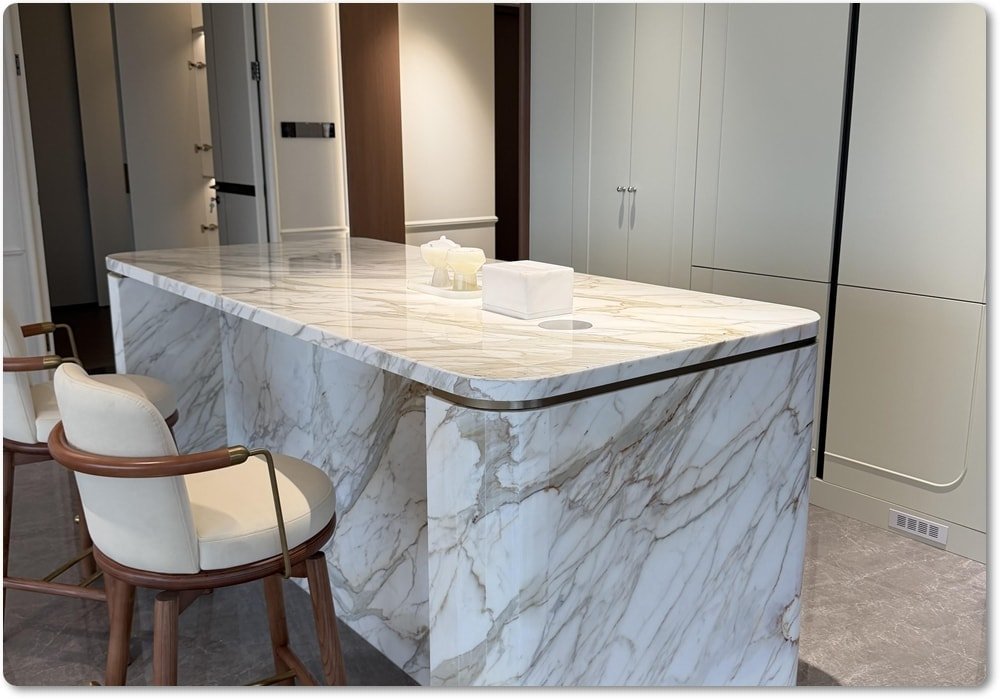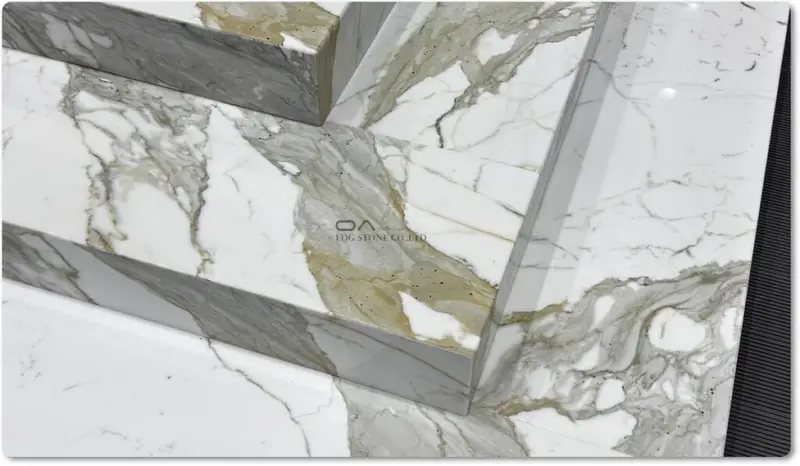
Quick Summary: The Quartzite vs. Marble Dilemma Solved
The Problem: Homeowners desire the prestigious veining of marble but struggle with its susceptibility to scratching, etching, and staining in high-traffic kitchens.
The Solution: Natural Quartzite countertops offer the ultimate compromise. Geologically superior in hardness (Mohs 7), quartzite provides the sophisticated aesthetic of marble with the structural resilience of granite.
Market Insight: As of 2026, leading manufacturers like EDG Stone report a massive shift toward quartzite as the premier legal alternative to high-silica engineered stones, combining luxury with extreme durability and regulatory safety.
For decades, the luxury interior design market has been locked in a tug-of-war between aesthetics and utility. On one side stands marble countertops—the gold standard of elegance, favored by Renaissance sculptors and modern architects alike. On the other side stands the practical need for a surface that can survive a lemon juice spill or a heavy cast-iron skillet.
Enter Quartzite countertops. Often misunderstood and frequently mislabeled, quartzite has emerged as the “super-material” of the stone world. It is the only natural stone that effectively bridges the gap, offering the crystalline depth of marble with a physical hardness that exceeds granite. As we move into 2026, this stone is not just a trend; it is the strategic choice for high-end residential and commercial projects. At EDG Stone, our role as a specialist quartzite factory has allowed us to witness this evolution firsthand, helping clients navigate the complexities of sourcing, fabrication, and long-term maintenance.
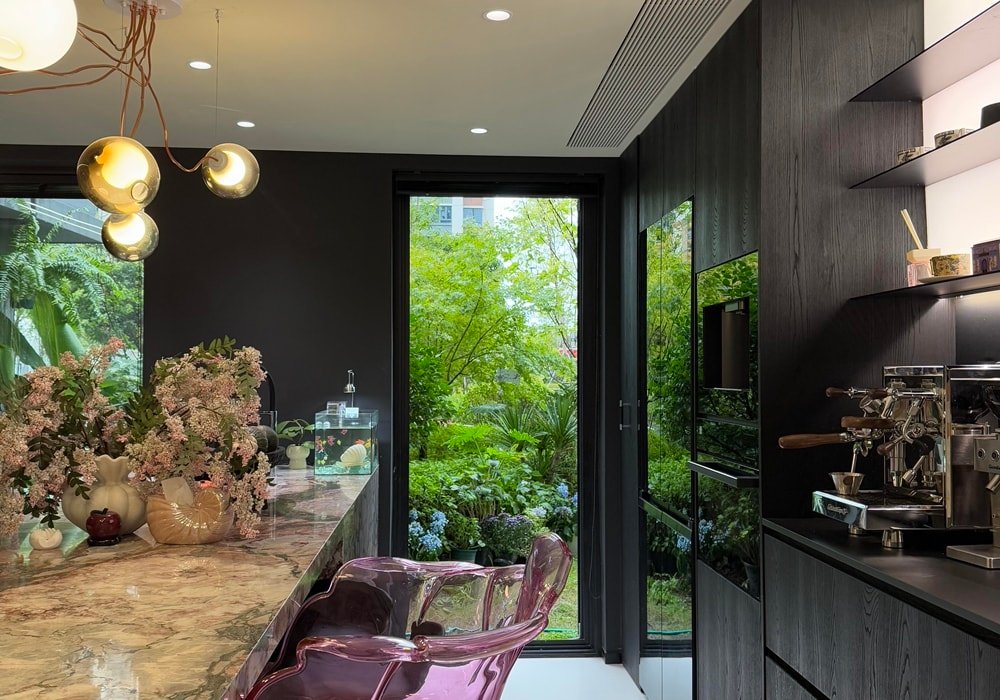
Geological Alchemy: Quartzite vs. Marble Geology
To understand why quartzite is the ultimate alternative, we must look at its birth. The difference between these two stones is written in their chemical DNA.
From Sandstone to Shield: The Quartzite Metamorphism
Quartzite vs marble: Geology reveals a fascinating contrast. Quartzite begins its life as quartz-rich sandstone. Through intense tectonic heat and pressure, the sand grains are recrystallized and fused into a dense, interlocking structure of quartz.
Mineral Composition: Quartzite is primarily silica (SiO2). On the Mohs scale of mineral hardness, quartz is a 7. This makes it harder than a steel knife blade.
Density: The metamorphic process eliminates the pores found in sandstone, creating a stone that is incredibly resistant to water absorption.
The Vulnerability of Marble: Calcium Carbonate
In contrast, Quartzite vs marble metamorphic rock studies show that marble originates from limestone or dolomite. Its primary component is calcium carbonate (CaCO3).
Hardness: Marble typically sits at a 3 or 4 on the Mohs scale. It is physically “soft.”
Chemical Reactivity: Because it is carbonate-based, marble reacts instantly to acids. This is the cause of “etching”—the dull spots left behind by wine, vinegar, or citrus. Quartzite, being silica-based, does not react to these household acids.
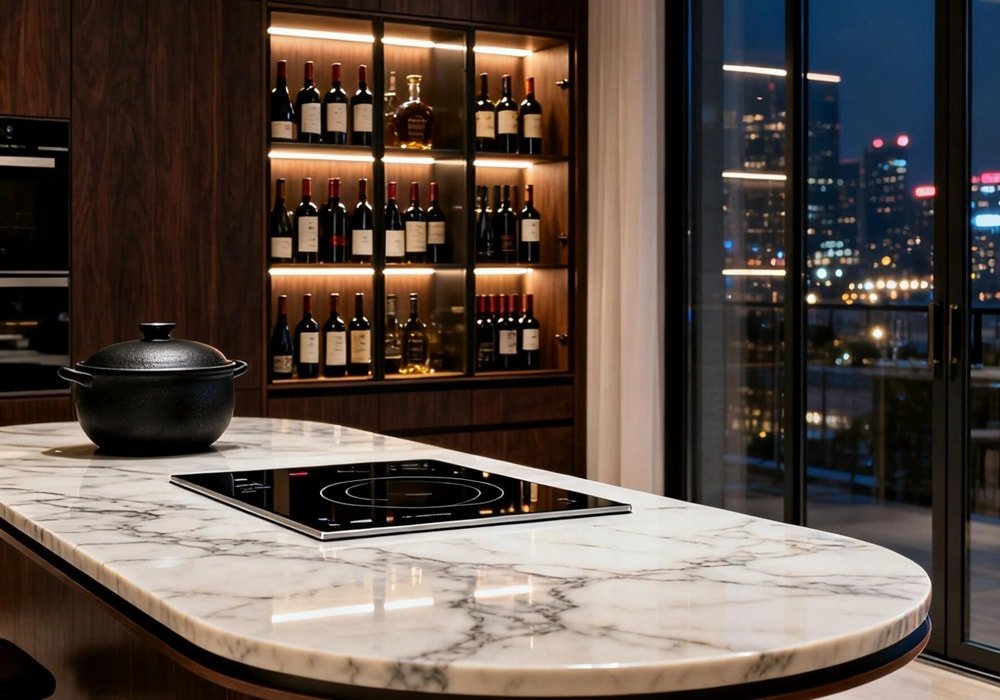
The Great Showdown: Quartzite vs. Marble vs. Granite vs. Quartz
When selecting a surface, buyers often compare four major players. Understanding the Quartzite vs marble vs granite and Quartzite vs quartz distinctions is critical for a long-term investment.
1. Durability and Hardness (The Scratch Test)
Quartzite is the undisputed champion of hardness. While granite is often touted as the “tough” stone, many quartzites are actually denser and more scratch-resistant.
Marble: Easily scratched by keys or knives.
Granite: Highly resistant, but can chip if struck by heavy objects.
Quartzite: Extremely difficult to scratch. In a “scratch test,” a piece of true quartzite will cut through glass effortlessly.
2. Heat Resistance: Natural vs. Man-made
This is where the Quartzite vs quartz debate ends for many professional chefs. Engineered quartz is a composite of stone chips and petroleum-based resin.
The Resin Limit: If a hot pan (above 300°F) is placed on engineered quartz, the resin can melt or discolor permanently.
Natural Stone Superiority: Quartzite and marble are forged in the earth’s crust at thousands of degrees. They are naturally heat-proof, though we always recommend trivets for quartzite to prevent thermal shock to the sealers.
3. UV Stability for Outdoor Kitchens
As outdoor living spaces become a staple of modern architecture, the choice of material matters. Engineered quartz will yellow and fade under the sun’s UV rays due to the resin content. Both quartzite countertops and granite are UV stable, making them the superior choice for alfresco dining areas and outdoor bars.
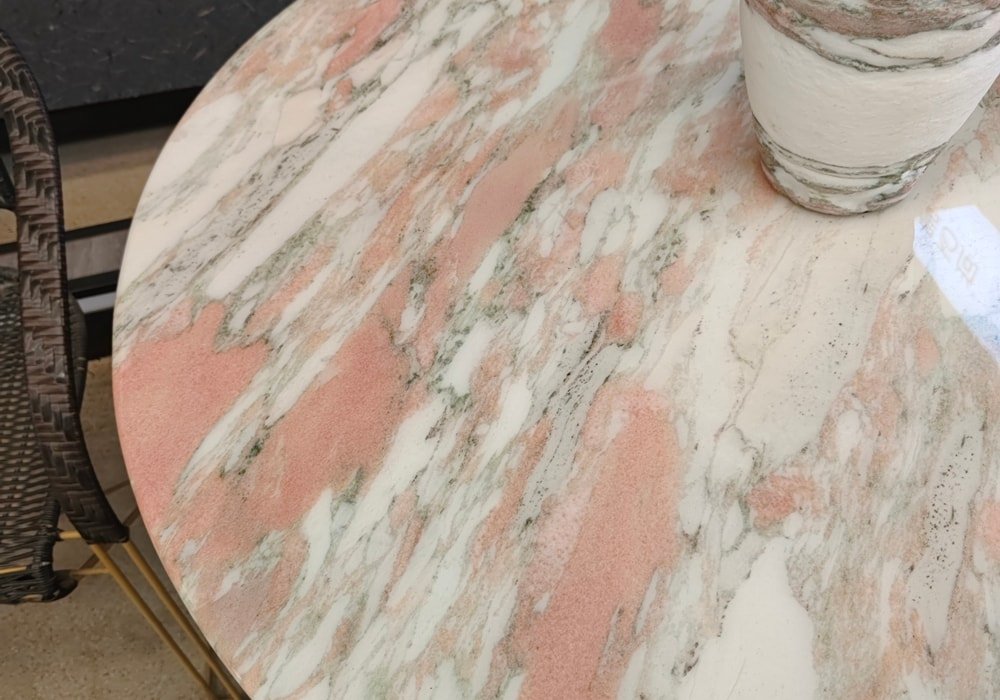
Identification Guide: How to Tell the Difference Between Marble and Quartzite?
One of the biggest challenges in the industry is mislabeling. Some stones, known as “Soft Quartzites,” are actually hard marbles or dolomites. As a wholesale quartzite slabs manufacturer, EDG Stone emphasizes the importance of the following tests:
The Glass Test
Because Quartzite vs marble rock properties differ so vastly in hardness, you can use a glass tile as a diagnostic tool.
Procedure: Take a sharp corner of a stone remnant and try to scratch a glass bottle or tile.
Result: True quartzite will leave a deep, permanent scratch in the glass. Marble will leave a white powder (the stone itself grinding down), but the glass will remain unharmed.
The Acid/Etch Test
If you are unsure if a slab is “Soft Quartzite,” apply a drop of lemon juice or white vinegar to an inconspicuous area.
Result: If the area becomes dull or “etched” within a few minutes, the stone contains calcium carbonate and is technically a marble or dolomite, regardless of what the label says.
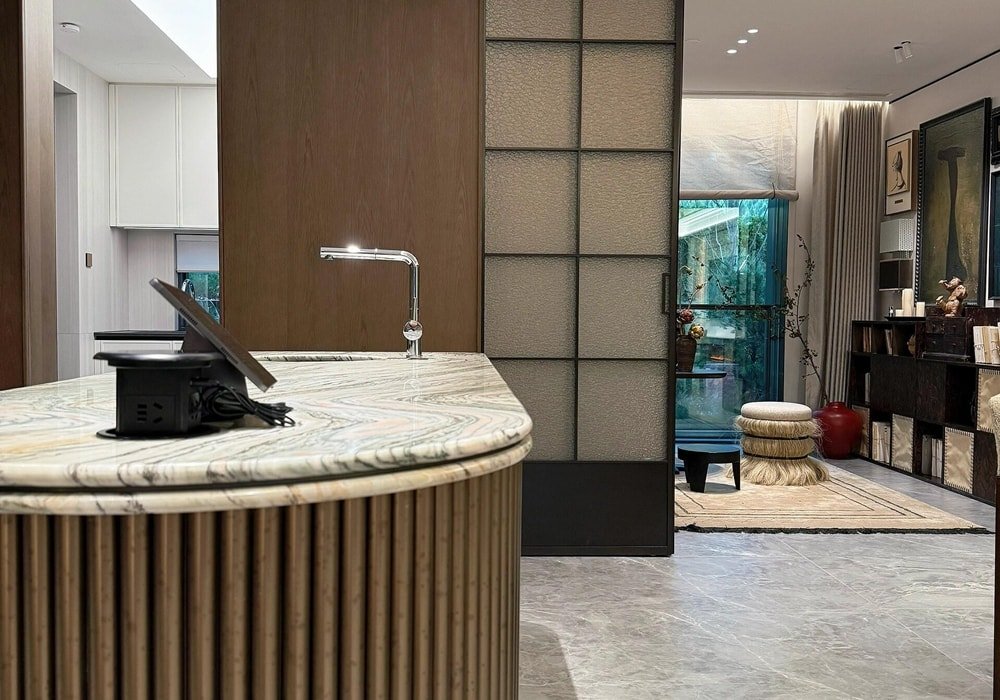
The Price of Perfection: Quartzite vs. Marble Price Analysis
Is quartzite more expensive? Usually, yes. But the Quartzite vs. marble price is not just about the raw material; it’s about the labor.
Material Scarcity and Extraction
While marble is abundant in regions like Carrara, Italy, high-quality quartzite is harder to find. Exotic varieties like Taj Mahal, Cristallo, or Blue Roma are quarried in limited quantities, often in remote parts of Brazil. This scarcity drives up the initial slab cost.
Fabrication: The “Diamond Eater”
The very hardness that makes quartzite desirable makes it a nightmare to cut.
Tooling Costs: Fabricating quartzite countertops requires specialized diamond-tipped blades and water-cooled CNC machines. These blades wear out 3-4 times faster when cutting quartzite than when cutting marble.
Labor: Because the stone is so hard, it must be cut at a much slower feed rate. Slower production translates to higher labor costs for the consumer.
Wholesale Opportunities
For large-scale developers and designers, sourcing from a Quartzite factory like EDG Stone can significantly mitigate these costs. By bypassing middle-tier distributors, B2B buyers can access premium slabs at a more manageable price point, making the “Ultimate Alternative” a viable reality for multi-unit luxury projects.
Design Trends 2026: Why Quartzite is Taking Over Kitchen Islands?
In the 2026 design forecast, the kitchen island is treated as a piece of sculptural furniture. This shift has propelled quartzite to the forefront of modern countertops.
The Shift to “Warm Luxury”
While the 2010s were dominated by stark white marble, 2026 is seeing a move toward “warm luxury.” Quartzites like Perla Venata and Taj Mahal offer creamy, beige, and gold tones that provide a more inviting, organic feel than the cold blues of traditional marble.
Backlighting: The Cristallo Phenomenon
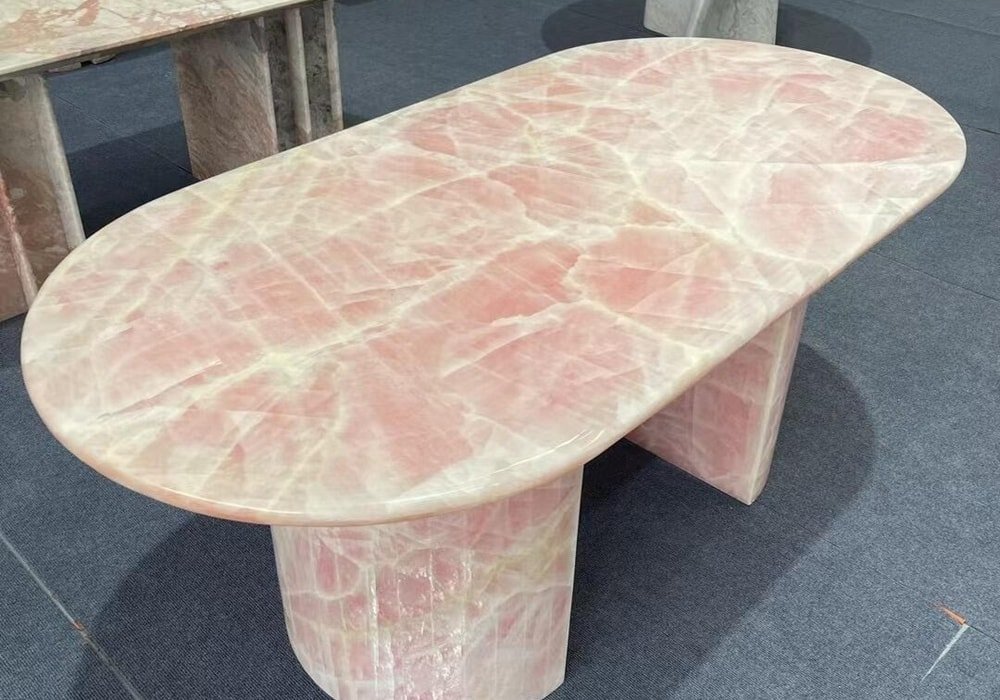
Certain quartzites, particularly the Cristallo family, are semi-translucent. When paired with LED light panels, these quartzite countertops glow from within, turning a kitchen island into a dramatic light feature. This is an effect that neither granite nor marble can achieve with the same structural integrity.
Regulatory Landscape & Sustainability: The Silica Conversation
The stone industry is currently undergoing its most significant regulatory shift in fifty years.
The 2025-2026 Engineered Stone Bans
Following the lead of Australia, several regions in the US and Europe are placing strict limitations or total bans on engineered stone (quartz) due to the high levels of crystalline silica and the risk of silicosis for workers.
Quartzite as a Safe Haven: While all stone contains silica, natural quartzite is processed using traditional wet-cutting methods that have been safely managed for decades.
Compliance: EDG Stone adheres to strict Low-silica stone fabrication regulations, ensuring that our factory environments are safe and our products remain a legal, premium alternative for markets where artificial quartz is under scrutiny.
Conclusion: The Investment in Forever
When we compare Quartzite vs marble vs quartz, we aren’t just comparing colors—we are comparing lifestyles. Marble is for those who embrace the “patina” of age and don’t mind the occasional etch. Quartz is for those seeking a budget-friendly, man-made uniform look (provided they stay away from high heat).
However, for the homeowner or developer who refuses to compromise, Quartzite countertops remain the ultimate alternative. It is the only material that provides a 100% natural, unique masterpiece for your home that can actually withstand the rigors of a modern, active kitchen.
At EDG Stone, we believe that your countertops should be as resilient as they are beautiful. By choosing authentic quartzite, you are investing in a geological legacy that will look as stunning in twenty years as it does the day it is installed.
Are you looking to source authentic, high-grade quartzite for your next luxury project? Contact EDG Stone today to explore our wholesale collection and expert fabrication services.
Frequently Asked Questions: Quartzite vs. Marble
1. Is quartzite harder than marble?
Yes, quartzite is significantly harder than marble. On the Mohs scale of mineral hardness, quartzite typically scores a 7, whereas marble usually scores between 3 and 4. This means quartzite is highly resistant to scratching from knives and kitchen utensils, while marble can be damaged quite easily by everyday items.
2. Does quartzite etch as marble does?
No, true quartzite does not etch. Etching is a chemical reaction that occurs when acidic substances (like lemon juice or vinegar) come into contact with the calcium carbonate in marble. Because quartzite is made of silica and does not contain calcium carbonate, it will not develop dull spots or “etch marks” when exposed to acidic foods.
3. Why is the price of quartzite often higher than that of marble?
Quartzite is often more expensive due to two main factors: scarcity and fabrication difficulty. High-quality quartzite is rarer to quarry than common marbles. Additionally, because quartzite is so hard, it requires expensive diamond-tipped tools and much more time to cut and polish, which increases the labor cost of fabrication.
4. Can I use quartzite for an outdoor kitchen?
Absolutely. Quartzite is one of the best materials for outdoor use because it is UV-resistant and won’t fade or yellow in the sun. Unlike engineered quartz, which contains resins that break down under UV light, quartzite is a 100% natural stone that can withstand the elements and high heat without losing its structural integrity.
5. How can I tell if I am buying real quartzite or mislabeled marble?
The most reliable DIY method is the “Glass Test.” A real piece of quartzite will easily scratch a glass bottle or tile, whereas marble will not. Additionally, you can perform an etch test with lemon juice; if the stone shows any dullness after a few minutes, it is likely a marble or a “soft” dolomite rather than a true quartzite.
Strategy Insight: Choosing Between Quartzite and Marble in 2026
The Performance Gap
From a Geological perspective, the choice is clear: Quartzite provides a silica-based shield that is immune to the “acid etching” that plagues marble countertops. For high-use areas like kitchen islands and bathroom vanities, quartzite represents a lower “Total Cost of Ownership” despite its higher upfront price.
Supply Chain Advantage
Working with a direct factory like EDG Stone ensures that you are receiving geologically verified slabs. With the rise of “mislabeled marble,” having a manufacturer who performs scratch and acid tests at the point of origin is the best way to protect your investment.
Key Considerations for Wholesale Buyers
- Hardness Verification: Always request a scratch test on the specific lot number before purchase.
- Sealing Protocols: While quartzite is dense, it still requires high-quality penetrative sealers to protect the crystalline pores from oils.
- Regulatory Compliance: As 2026 silica regulations impact engineered stone, natural quartzite remains a globally compliant and premium alternative for large-scale developments.
References
Geological Society of America – Metamorphism of Siliceous Sedimentary Rocks.
Consumer Reports – Countertop Durability Testing: Natural Stone vs. Engineered Composites.
Safe Work Australia / OSHA – Hazardous Chemicals and Crystalline Silica Content in Natural Stone.
Architectural Digest – Why Designers are Choosing Quartzite Over Marble for High-End Projects.
Journal of Metamorphic Geology – Recrystallization Rates of Quartzite vs. Carbonate Rocks.
Kitchen & Bath Design News – The Economics of Stone Fabrication: Labor and Tooling Costs.