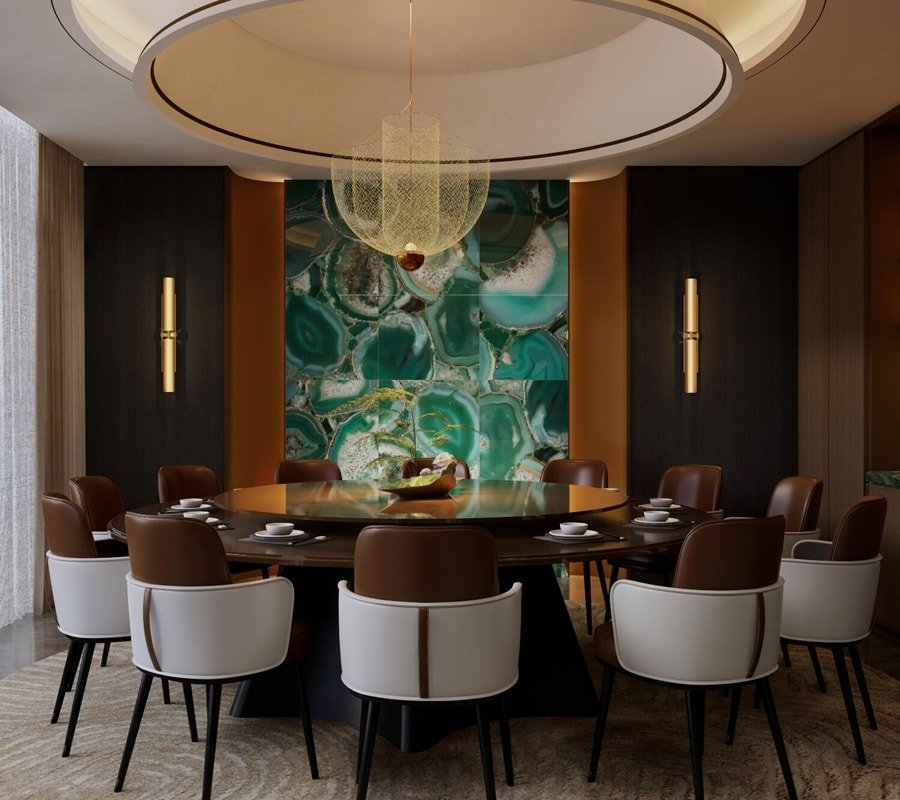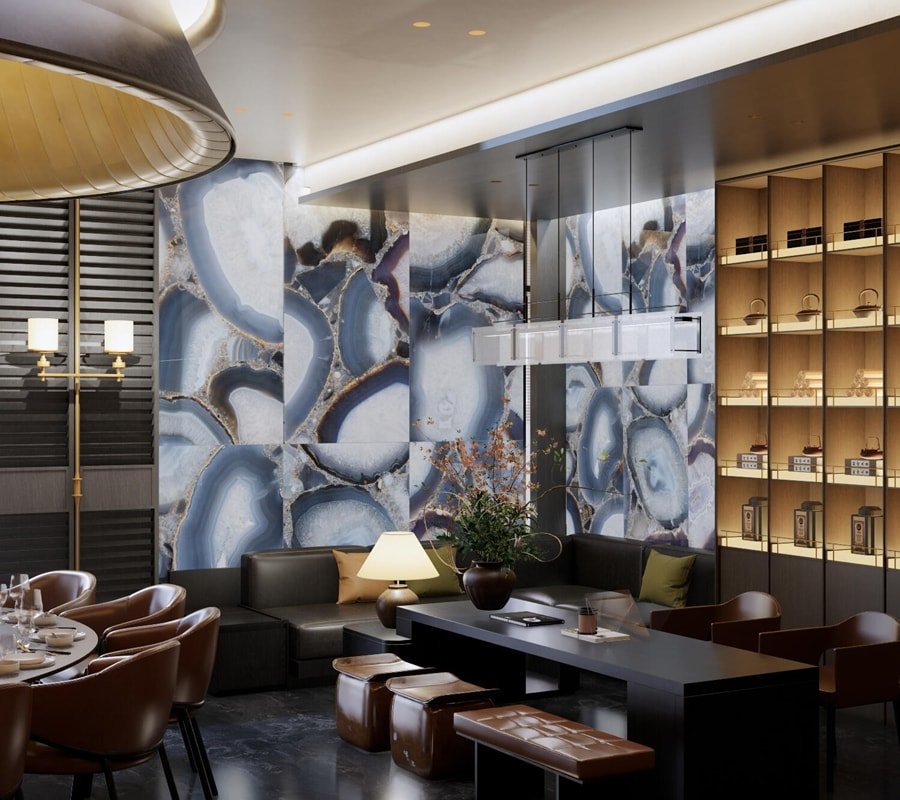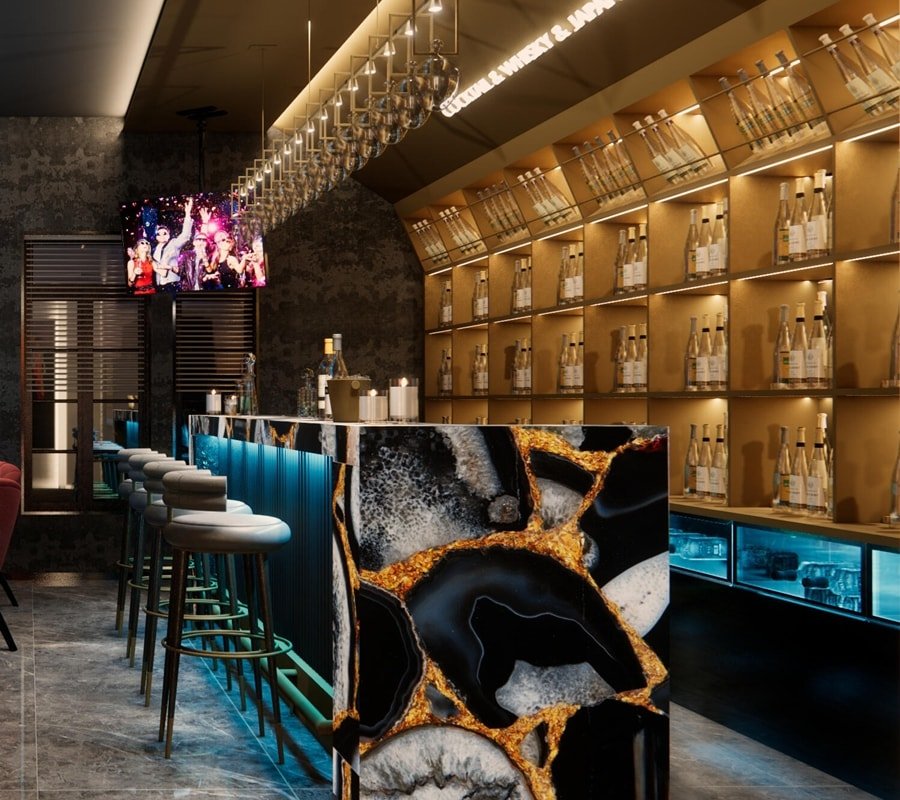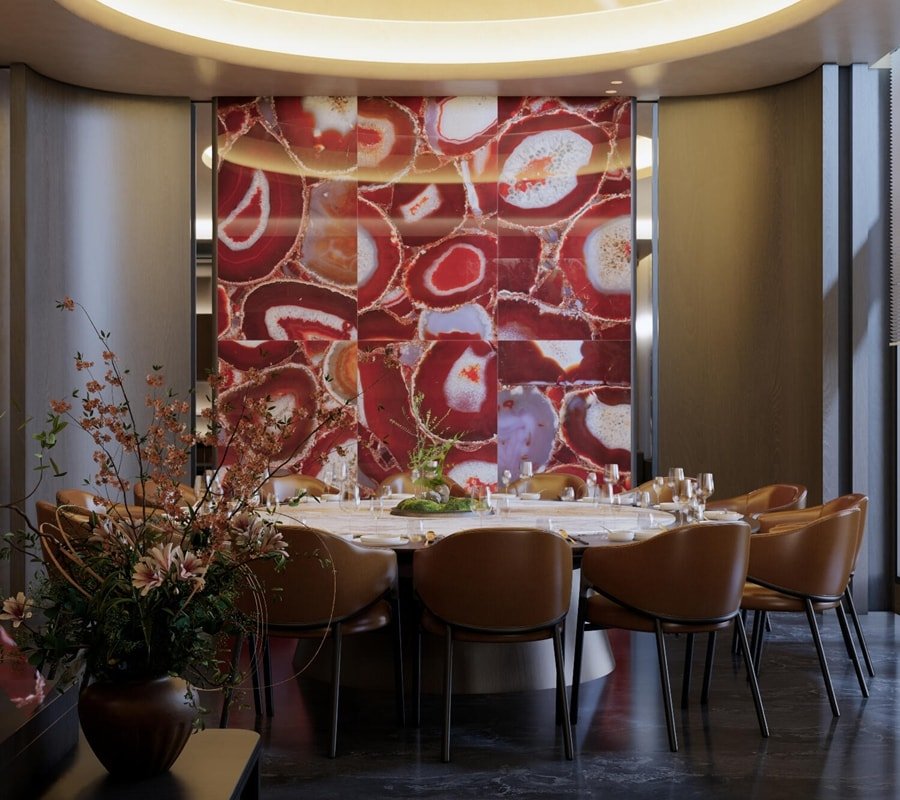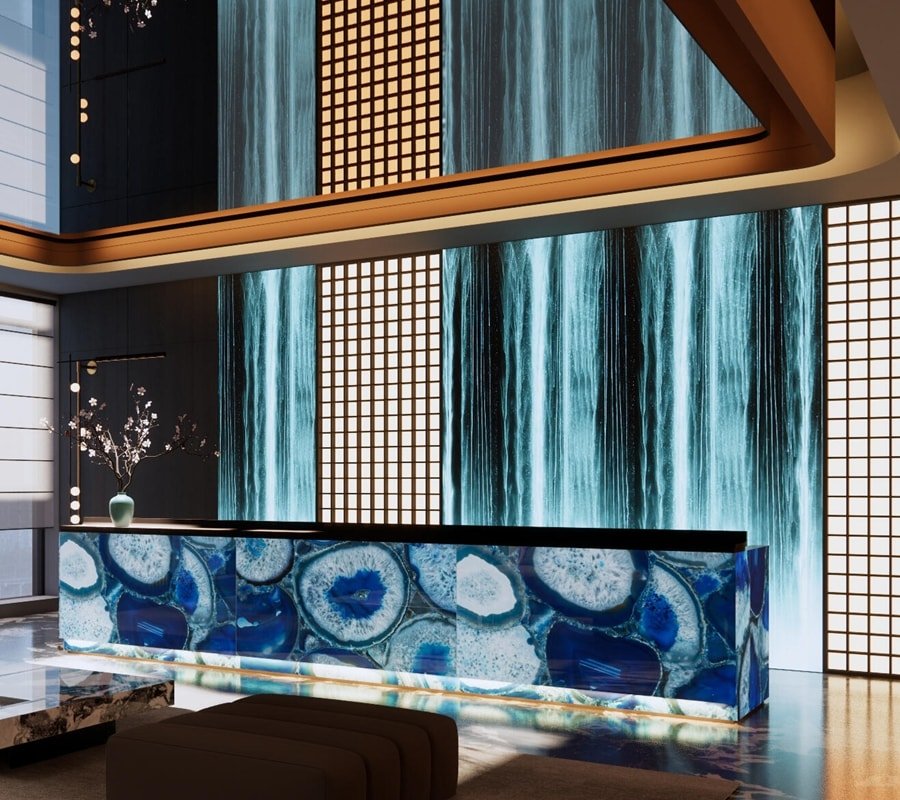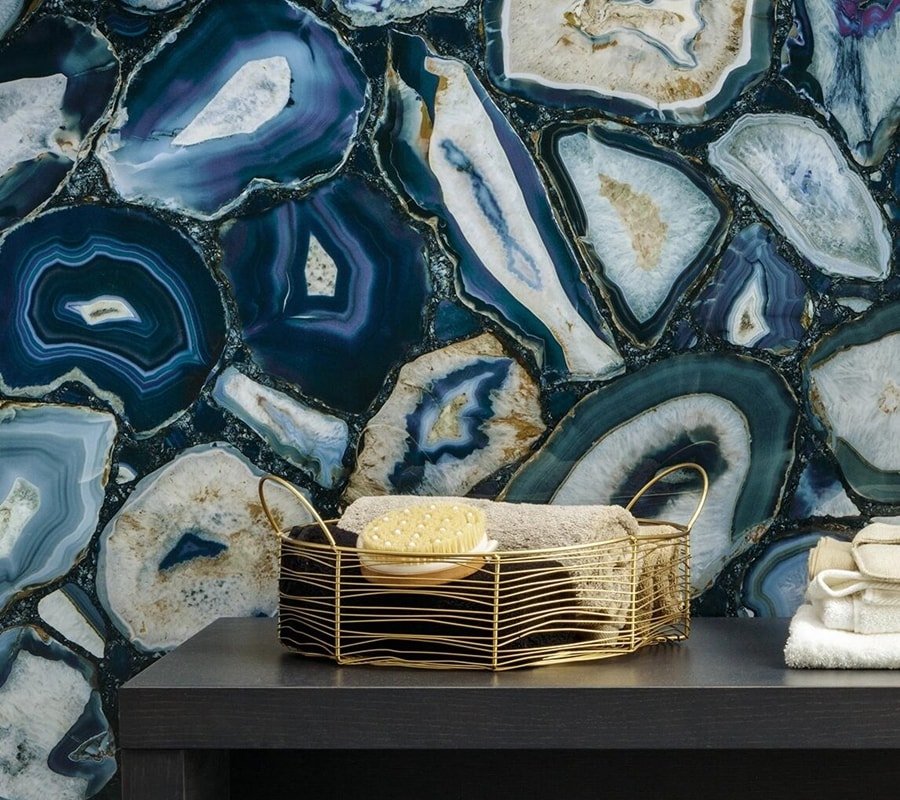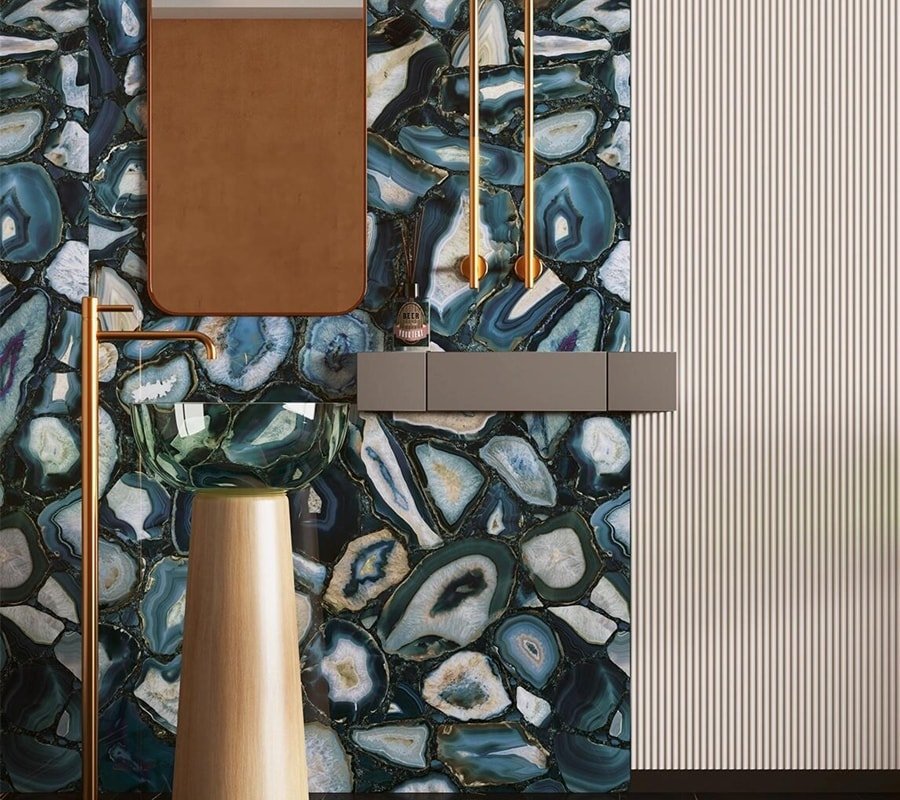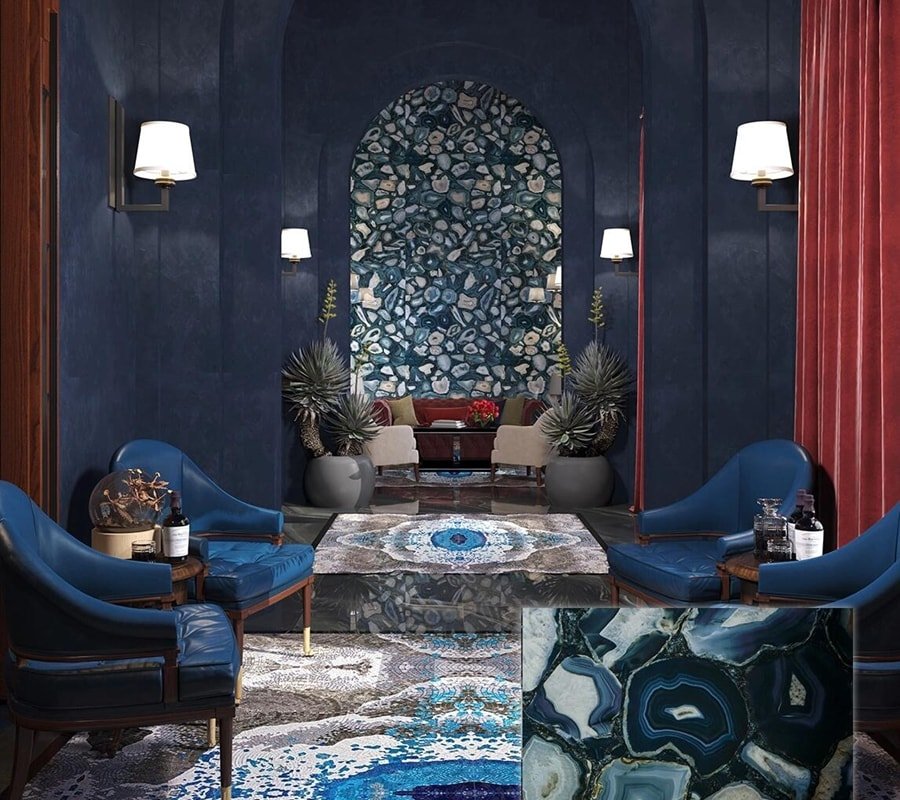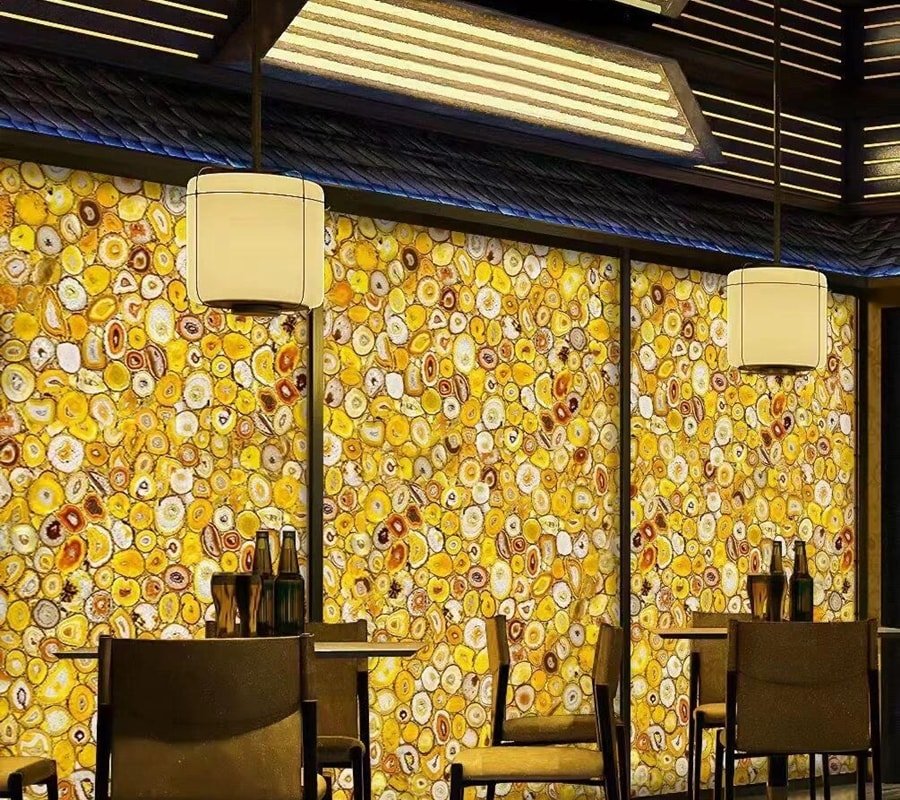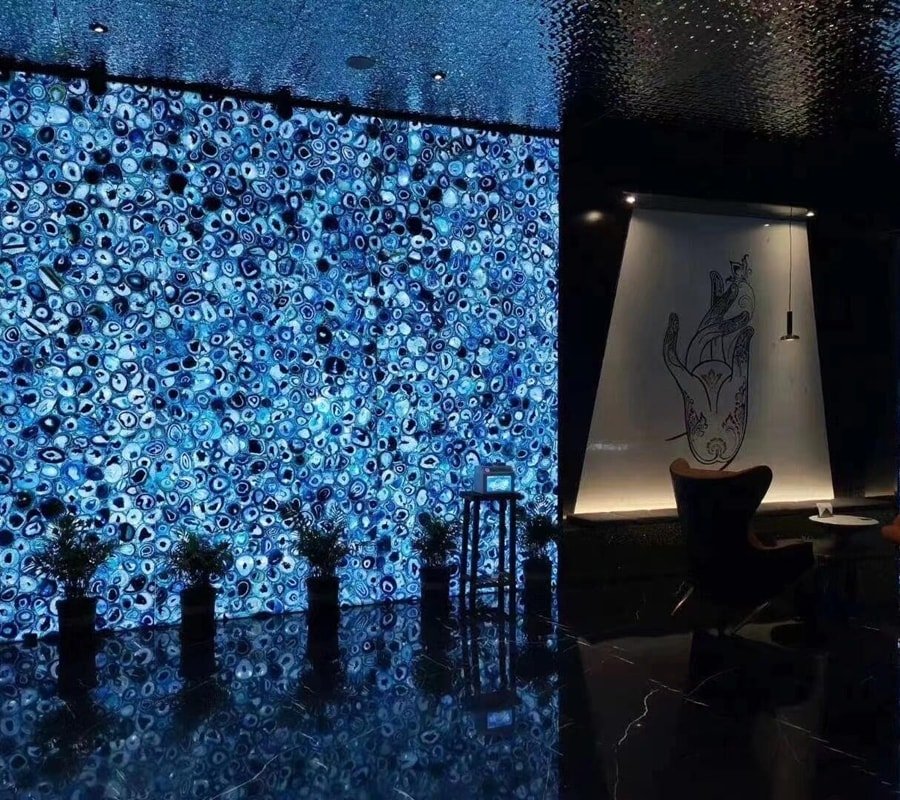
Executive Introduction: Why are backlit amethyst walls trending now?
Backlit amethyst walls are a convergence of ancient materiality and modern lighting technology: large-format, translucent slabs of amethyst (and related geode/agate stones) are installed with engineered LED illumination behind or alongside the stone to reveal depth, color, and crystalline structure in ways traditional finishes cannot. Designers and developers favor backlit semi-precious walls for their high visual impact, storytelling potential, and ability to become instant focal points in hospitality, retail, and luxury residential projects. This article is a practical, industry-minded guide for architects, manufacturers, and specifiers covering materials, lighting design, fabrication, compliance, sustainability, procurement, and long-term performance.
What is a Backlit Amethyst Wall? — Materials & Visual Science
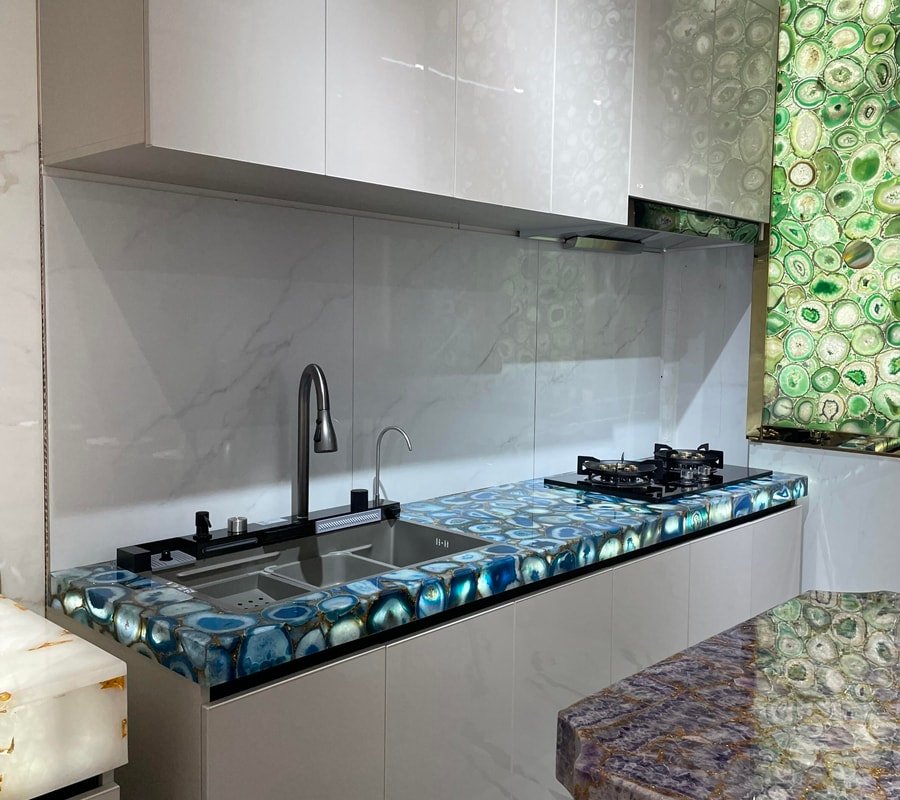
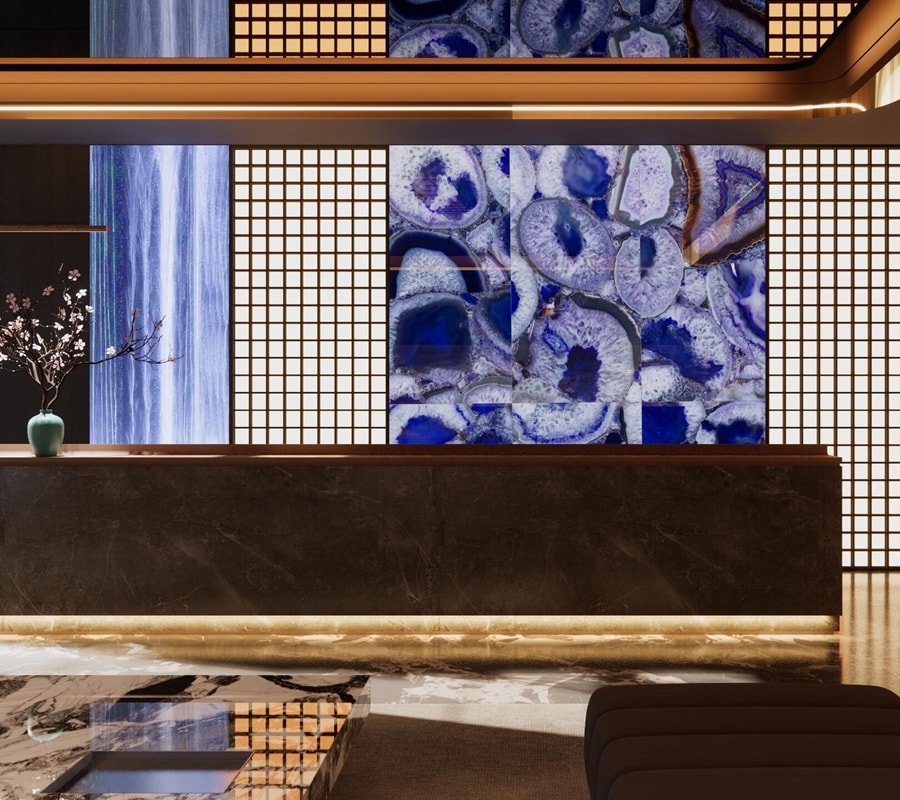
A backlit amethyst wall is a vertical application of natural amethyst or geode slabs arranged and illuminated so that light passes through portions of the stone. Amethyst slabs used for this purpose are selected for translucency, consistent tonal depth, and minimal veining that would block light transmission. Common market variations include fully translucent, thin slices of amethyst, composite geode slabs (where multiple slices are bookmatched or resin-bonded), and hybrid panels that combine natural stone with engineered resin backings to enhance uniformity.
Translucency is the key metric — successful backlit installations typically use slabs that allow partial light transmission (measured as percent light transmission or lux-rated test values) so the internal crystalline structure, color bands, and inclusions are revealed without becoming over-lit or washed out. Thicknesses vary depending on aesthetic goals and backlighting strategy: edge-lit thin slabs (6–12 mm) read differently than thicker, rear-lit panels (15–30 mm) that show deeper color saturation.

Backlighting Technologies & Lighting Design (LEDs, OLED, Fiber, Diffusion Systems)
Lighting choice determines the perceived color, depth, and mood of the backlit stone. Low-voltage LED panels and strips are the industry standard because they offer high luminous efficacy, long life, dimmability, and compact form factors. For gemstone surfaces, select LED systems with a high Color Rendering Index (CRI) — a CRI of 90 or higher is recommended for accurate color rendering of gemstones and mineral tones. A CRI of 95 or higher is desirable in museum or jewelry-display-level installations to reveal true hue and saturation.
Light distribution strategy is equally important. Typical approaches:
Rear panel LED arrays — uniform, diffused backlighting mounted on an access service cavity behind thicker slabs; excellent for large, seamless fields.
Edge-lit systems — LED strips or light-guides installed at the panel perimeter to create a halo or glow; these work best with thinner, uniform slabs.
Hybrid diffusion — a combination of micro-prismatic diffusers and frosted acrylic to even out hotspots while preserving the stone’s texture.
Power and thermal management: use UL- or equivalent certified LED drivers and housings designed for continuous use; attention to heat dissipation prevents thermal stress on adhesives and resin backings. UL 8750 (LED equipment) and related luminaire standards are frequently cited benchmarks for product safety and compliance in LED systems.
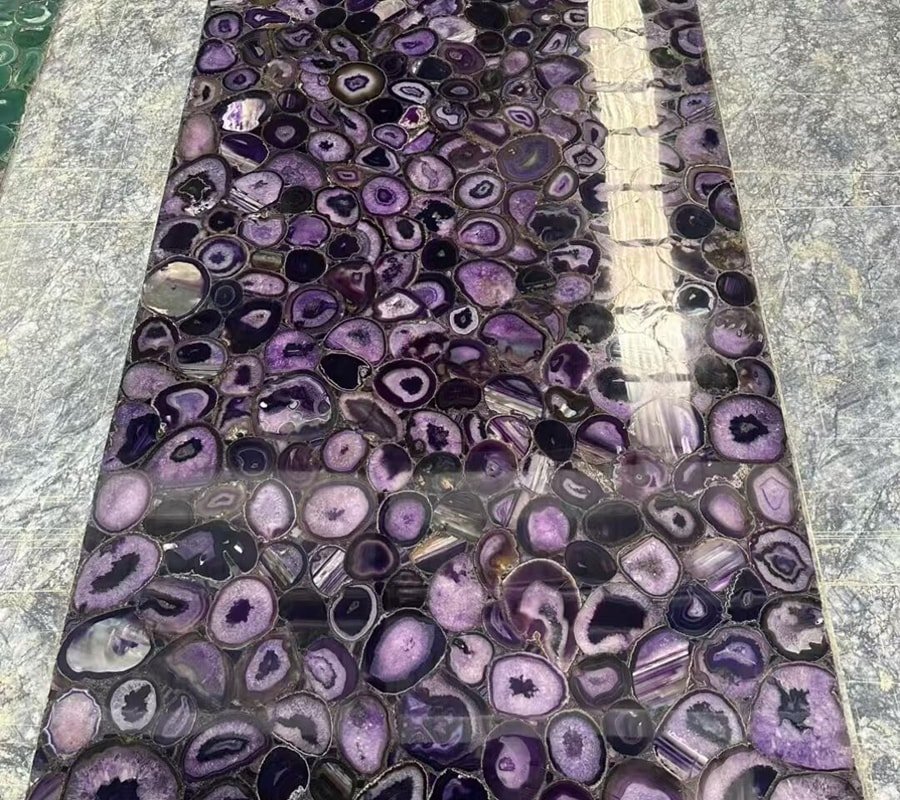
Fabrication & Installation Workflow (Manufacturer / Factory / Project Supply Focus)
Manufacturers and factory partners transform raw amethyst blocks and geodes into slabs suitable for backlighting. Key workflow steps:
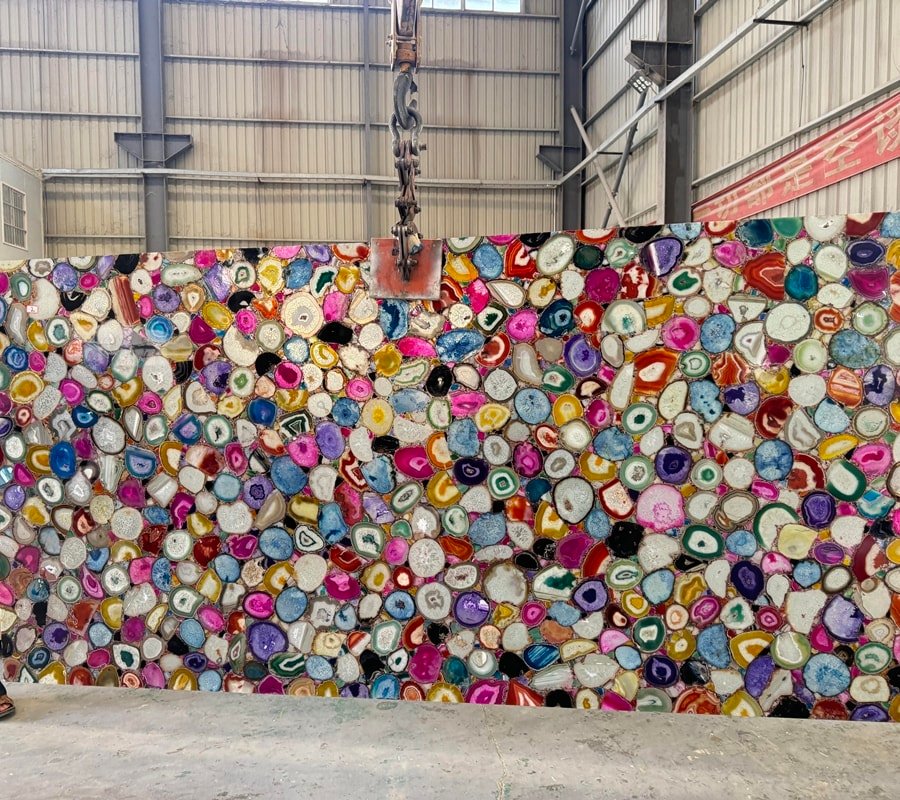
Slab selection — quarry or supplier sorts slabs by translucency, color, and pattern.
Cutting & polishing — CNC saws and waterjet cutting create exact panel dimensions; edges can be polished, chamfered, or left raw depending on mounting strategy.
Bookmatching & layout — designers often bookmatch adjacent slabs to create reactive, symmetrical patterns; planning includes seam placement and inclusion avoidance.
Substrate & backing — for rear-lit systems, stone is mounted to framed panels with a ventilated cavity; sometimes a thin, optically clear resin is applied to stabilize fractures and improve translucency uniformity.
Electrical & service integration — LED panels, drivers, and junction boxes are installed in accessible chases; service panels or removable sections are recommended for maintenance.
Quality-control checklists used by factories should include: light uniformity testing under project-specified luminance, mechanical bond strength tests for resin or adhesives, and verification that all electrical components meet local safety standards.
Compliance, Regulations & Industry Standards (Latest Direction & Data)
When integrating electrical systems into architectural finishes, it’s essential to design according to the applicable electrical and building codes. The National Electrical Code (NEC) includes illumination and access provisions for electrical equipment and specifies requirements intended to protect users and service personnel; coordination with the local authority having jurisdiction (AHJ) is mandatory for installations in public assembly or hospitality spaces.
For LED equipment itself, UL 8750 and related luminaire safety standards govern product safety parameters, insulation, driver certification, and performance in the visible spectrum; designers and procurement teams should require UL-listed (or equivalent) LED modules and drivers in their specifications.
Fire safety, ingress protection, and fire-rating continuity across wall assemblies must also be reviewed early in the design phase—this often affects mounting strategies and the need for rated service panels when the installation crosses fire-rated partitions. Finally, accessibility standards (e.g., placement of lighting controls) and local energy codes (efficacy and control requirements) can influence the final electrical design.
Sustainability, Supply Chain & Sourcing (Quarry to Factory Transparency)
Demand for ethically sourced minerals and transparency in supply chains has surged. International guidance and due-diligence frameworks (OECD guidance on responsible mineral supply chains and certification standards for gemstones) are increasingly used by buyers to ensure that raw material sourcing avoids human-rights abuse and significant environmental damage. Procurement teams should ask suppliers for traceability documentation, mine-of-origin declarations, and any third-party certifications (where available).
From a product carbon perspective, natural stone has an embodied-energy footprint tied to extraction and shipping, but its long service life and reparability can be sustainability advantages. Some stone manufacturers and specialty gemstone suppliers also offer “Responsible Source” or equivalent standards for gemstones that combine social and environmental accountability in the supply chain.

Design Applications & Use Cases
Backlit amethyst walls are versatile:
Hospitality: Grand lobbies and signature bar backdrops where luminous mineral surfaces shape guest perception and brand storytelling.
Retail & Showroom: High-end jewelry and luxury retail environments use backlit stone to accent display and slow customer circulation.
Residential: Feature walls in living or dining areas, headboards, or vanity surrounds deliver bespoke interiors and strong resale differentiation.
Wellness & Spa: Soothing, immersive environments use warm, diffused backlight to enhance relaxation.
When specifying, weigh acoustic performance (stone is reflective) and structural loading (heavy slabs may need reinforced substrates). Use of isolation clips, floating frames, or secondary backer panels can mitigate sound reflection and reduce transmitted vibration.
Case Studies & Project Gallery (Three Mini Case Studies)
Hotel Lobby — Urban Luxury Hotel
Objective: Create a landmark arrival experience. Materials: 12 matching amethyst bookmatched slabs, 20 mm thickness, rear LED matrix with microprismatic diffuser. Outcome: The wall became a social-media focal point and increased perceived guest value; install included a sealed service chase and dimmable rhythm-controlled lighting for day/night scenes.
Private Residence — Mountain Retreat
Objective: A bespoke statement wall behind a floating fireplace. Materials: Thin-edge amethyst slices laminated to tempered glass backing; edge-lit system with warm CCT control. Outcome: Achieved dramatic glow while maintaining safe thermal margins and simplified maintenance access through removable panels.
Retail Flagship — Fine Jewelry
Objective: Enhance display lighting and brand prestige. Materials: Thin translucent agate panels interspersed with amethyst geode slices, high-CRI LED modules (CRI ≥ 95). Outcome: Increased dwell time in display zones and measurable uplift in average transaction value during campaign months. (Note: high CRI improves perceived color fidelity on precious materials.)
Purchasing Guide: Where to Buy, What to Ask, Pricing & Lead Times?
When requesting quotes from suppliers, ask for:
Light transmission samples or small test panels assembled with the proposed LED system.
Manufacturer details: quarry access, factory capacity, lead times, minimum order quantities (MOQs), and typical shipping methods.
Technical data: slab thickness options, percent translucency/lux sample readings, recommended LED wattage per square meter, and mounting details.
Price drivers: slab rarity and size, backlighting complexity, shipment weight & origin, on-site installation labor, and local code compliance work. For large projects, negotiate sample run rates and request a mockup to validate color, light uniformity, and maintenance access.
Maintenance, Durability & Long-Term Care
Care and maintenance extend system life and preserve visual quality:
Clean stone with pH-neutral cleaners and soft microfibers; avoid abrasive pads or high-alkaline chemicals that can dull polish or affect resin coatings.
Ensure LED drivers are placed in ventilated, accessible locations; plan for driver replacement access (most LED modules are long-lived, but drivers typically require service sooner).
Periodic inspection: check seals and mounting hardware annually for signs of moisture ingress or adhesive degradation.
For insurance and facility management, document maintenance procedures and recommended cleaning products in an O&M manual.
Cost, ROI & Commercial Justification
Typical cost ranges vary widely by stone rarity and system complexity: small backlit accent panels (under 3 m²) can be achieved at modest premium pricing above standard stone cladding, while large, bespoke walls with bookmatched geodes and custom lighting can reach luxury project budgets. Market data suggests rapidly growing demand for backlit stone solutions in luxury interiors — market research reports estimate a multi-billion-dollar backlit stone wall market with mid-to-high single-digit annual growth rates. This premium can be justified by increased perceived customer value, improved dwell time in retail environments, and distinctive marketing/PR opportunities for hotels and commercial spaces.

FAQ — Top 5 Google Hot-Search Questions
Q1: What is a backlit amethyst wall, and how is it made?
A: A backlit amethyst wall is a vertical surface composed of translucent amethyst or geode slabs illuminated from behind or from the edge. It is made by selecting translucent slabs, cutting and finishing to size, installing a ventilated mounting frame, and integrating LED lighting panels, diffusers, and accessible electrical service components so that light reveals the stone’s internal color and crystalline features.
Q2: How energy-efficient are backlit semi-precious stone walls?
A: Modern LED systems used in backlit stone walls are energy-efficient and long-lived compared with legacy lighting. Properly engineered low-voltage LED panels with high luminous efficacy and dimming control deliver visually rich illumination while keeping operational energy consumption low; selecting high-efficiency drivers and optimizing lumen output for the application is essential.
Q3: How do I maintain and clean a backlit amethyst wall?
A: Clean gently with pH-neutral stone cleaners and soft cloths; avoid harsh acids, abrasive pads, or solvents that can damage polish or resin backings. Schedule annual inspections for LED drivers, seals, and mounting hardware to confirm there is no moisture ingress or adhesive degradation.
Q4: How to choose the right LED for accurate gemstone color?
A: For gemstone-grade color fidelity, specify LEDs with CRI ≥ 90 as a baseline, with CRI ≥ 95 recommended for museum-level or high-jewelry displays. Also choose controllable color temperature (CCT) and dimming to tune the mood without distorting the stone’s natural hue.
Q5: What sustainability and sourcing questions should I ask my stone supplier?
A: Request mine-of-origin documentation, evidence of responsible mining practices, third-party audits or certifications if available, and a supplier statement about traceability. Many buyers expect suppliers to follow OECD due diligence frameworks or recognized responsible-sourcing standards for gemstones.
Semantic Closure: How / Why / What / Options / Considerations
Why: Backlit amethyst walls provide unmatched visual depth and a narrative-driven materiality that elevates a space’s perceived luxury and marketing potential. They combine natural rarity with programmable lighting controls for dynamic daytime-to-night transformations.
What (Options): Rear-lit thick slabs (deep color, diffuse glow), edge-lit thin panels (halo effect), or composite resin-backed panels (uniformity). Lighting can be tuned with CCT and dimming controls to match brand or residential requirements.
Considerations: Confirm applicable electrical and fire codes early, request traceability documentation from the supplier, document maintenance protocols, and plan for driver/service access. For procurement, prioritize suppliers that can provide light-test panels and clear manufacturer/factory lead times.
Trend & Regulation Snapshot: The backlit stone market is growing; buyers should expect increased scrutiny on responsible sourcing and product safety certifications (LED luminaire and driver standards).
References (author/title/source — no URLs)
UL Standards & Engagement — “Updates to LED Equipment for Use in Lighting Products (UL 8750)” — UL.
National Electrical Code (NEC) commentary — “NEC Illumination Requirements for Electrical Equipment Spaces” — Electrical Licensing Continuing Education.
ResearchIntelo — “Backlit Stone Wall Market Research Report 2033” — ResearchIntelo.
The Business Research Company — “Natural Stone Global Market Report” — The Business Research Company.
Grand View Research — “Natural Stone Market Report” — Grand View Research.
OECD — “Responsible Mineral Supply Chains: Due Diligence Guidance” — OECD.
SCS Standards — “Responsible Source™ Standard for Gemstones” — SCS Standards.
KingOrnan — “Guide to Jewelry Store Lighting Design” — KingOrnan (lighting design guidance for CRI and color).
HitLights / Lighting product technical guidance — “UL-listed vs non-UL LED strip considerations” — HitLights.
MarketGrowthReports — “Onyx Stone Market Size & Forecast” — MarketGrowthReports.