Introduction: The Titans of Italian White Marble
When envisioning a luxurious kitchen or a spa-like bathroom, the image that often comes to mind is gleaming white Italian marble. For centuries, this natural stone has been the medium of Michelangelo and the foundation of high-end architecture. However, navigating the world of white marble can be confusing for homeowners and designers alike. The two most famous names, often mistakenly used interchangeably, are Carrara and Calacatta.
While they share a geographical heritage, they are distinct materials offering vastly different aesthetics and price points. A Calacatta marble countertop makes a completely different visual statement than one made of Carrara. This comprehensive guide, informed by industry expertise from leading manufacturers like EDG Stone, will dissect the anatomy of these two titans, clarifying the confusion surrounding terms like “Calacatta Carrara marble” and providing the data needed to make an informed investment. Understanding the nuances of Calacatta vs Carrara marble price, texture, and color is essential before finalizing your design specifications.
The Shared Heritage: Geological Roots and the “Calacatta Carrara” Confusion
To understand their differences, we must first acknowledge their shared origin. Both Carrara and Calacatta marble are quarried in the Apuan Alps in the Carrara region of Tuscany, Italy. They are, geologically speaking, siblings born from the same mountain range. This shared source is the primary reason for the widespread confusion between the two.
Origin Story: The Apuan Alps of Italy
For over 2,000 years, these mountains have yielded some of the world’s finest stone. The geological processes here—immense pressure and heat transforming limestone into marble over millions of years—created a spectrum of white marble. Some quarries yield the grayer, more abundant Carrara, while specific, rarer veins within the same region produce the bright white, heavily veined Calacatta.
Demystifying the Term “Calacatta Carrara Marble”
One of the most common search queries and sources of frustration is the term “Calacatta Carrara marble.” It is crucial to clarify that this is often an industry misnomer rather than a distinct geological classification.
The Grading Blur: Sometimes, stone suppliers use this term to describe a slab that sits in the middle ground—a very white Carrara or a less sharply defined Calacatta.
Marketing vs. Reality: It can also be a marketing tactic used by less scrupulous sellers to inflate the price of standard Carrara by attaching the prestigious “Calacatta” name. Therefore, sourcing from a reputable manufacturer or direct factory source like EDG Stone, which adheres to strict Italian grading standards, is paramount to ensuring you receive the authentic material you pay for.

A Visual Anatomy: Comparing Color, Veining, and Texture
The most reliable way to distinguish between the two is through a close visual inspection of their base color and veining patterns.
Bianco Carrara: The Classic Subtle Elegance
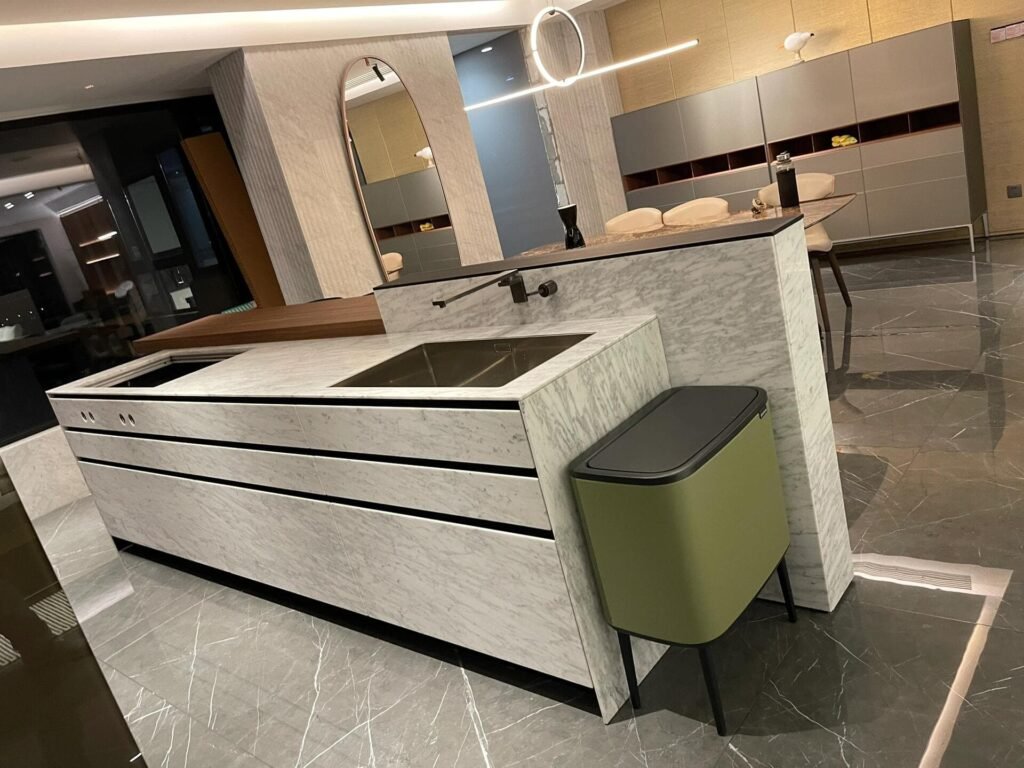
Carrara marble (often referred to as Bianco Carrara) is the most common and deeply traditional of Italian marbles.
Color Palette: Its defining characteristic is its background color, which is rarely a pure, stark white. Instead, it leans towards a soft, “muddy,” or cool gray base.
Veining Patterns: The veining in Carrara is typically subtle, fine, and feathery. It often appears as soft gray streaks or “spaghetti” veins that are relatively uniform across the slab. The overall effect is softer and more subdued, offering an elegant backdrop rather than a dramatic focal point.
Calacatta Marble: The Dramatic Luxury Statement
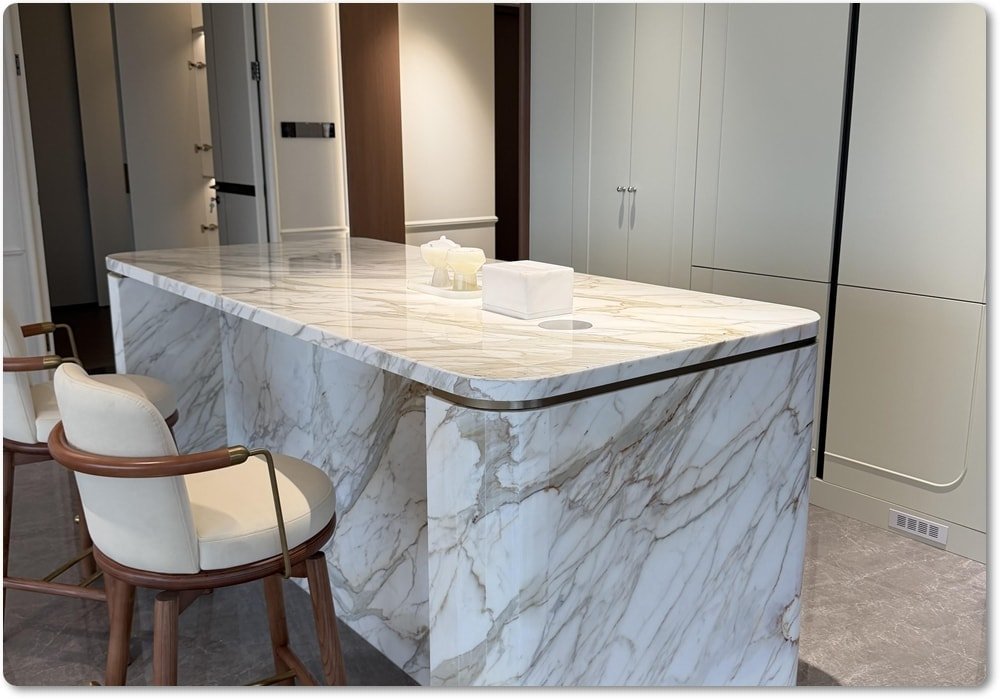
True Calacatta marble is bolder, brighter, and more exclusive. It is the material of choice for those seeking high-impact design.
Color Palette: The background of high-grade Calacatta is a crisp, bright, milky white. This pure white field provides a stark contrast that makes the veining pop.
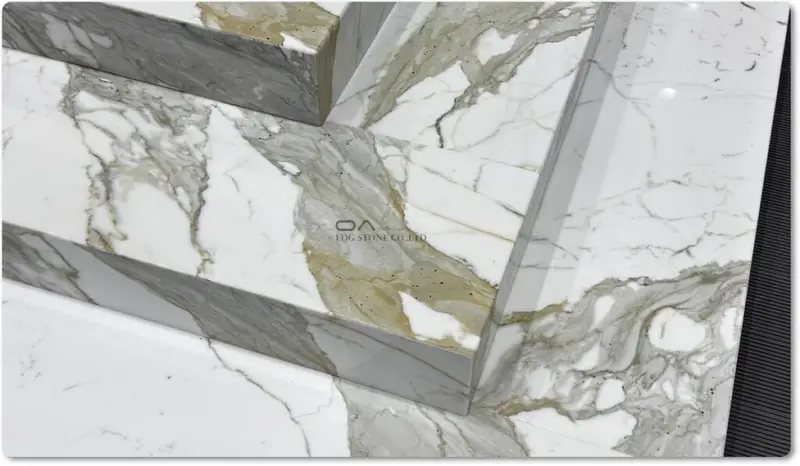
Veining Patterns: Unlike Carrara’s fine lines, Calacatta features thick, bold, and dramatic veining. The patterns are larger, less frequent, and often create striking geometric shapes across the surface.
Varieties Spotlight – Calacatta Marble Gold: A highly sought-after subspecies is Calacatta marble Gold. In these slabs, the dramatic gray veining is interspersed with rich ribbons of gold, taupe, or beige, adding a layer of warmth and supreme luxury that is unmatched by Carrara.
Texture and Feel: Beyond the Visual
While the stone itself is chemically similar, the finish applied by the factory impacts its texture and perception. A polished finish enhances the contrast, making Calacatta’s white background appear brighter and its veins sharper. A honed (matte) finish softens the look of both, making the gray background of Carrara appear flatter and the bold veins of Calacatta slightly more muted and organic.
The Economics of Prestige: Calacatta vs Carrara Marble Price Analysis
When analyzing Calacatta marble vs Carrara marble, price is often the deciding factor. The cost difference between the two is substantial and is driven almost entirely by supply and demand economics.
The Scarcity Factor: Why Calacatta Commands a Premium?
The mountains around Carrara produce vast quantities of the gray-based Bianco Carrara. It is abundant and relatively easy to quarry in large, uniform blocks.
Conversely, the specific geological conditions required to create the bright white background and dramatic veining of Calacatta occur much less frequently. Finding a quarry face that yields high-quality Calacatta is akin to finding a diamond in the rough. This natural scarcity, combined with intense global demand for luxury projects, drives the Calacatta Marble price significantly higher.
Comparative Cost Insights for Homeowners and Developers
While prices fluctuate based on market conditions and specific block selection, a general rule of thumb can be applied:
The Price Gap: Calacatta marble can easily cost three to five times more per square foot than standard Carrara marble.
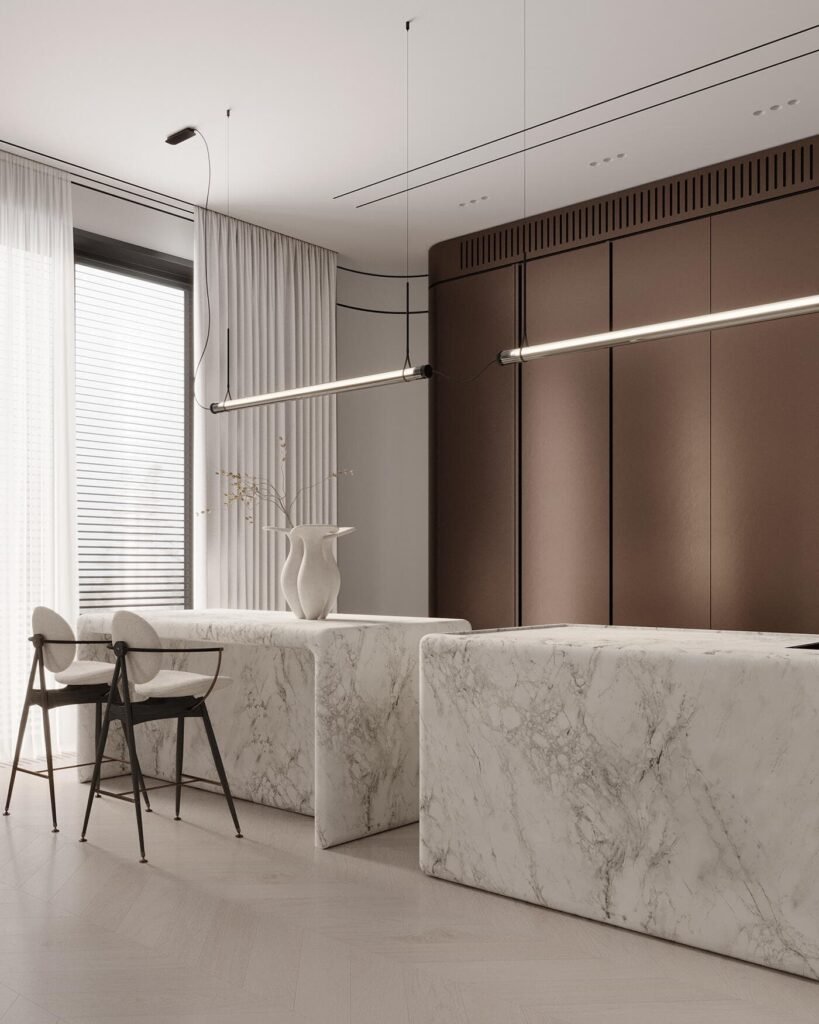
Market Positioning: Carrara is generally considered an accessible luxury, suitable for large-scale applications like flooring or expansive countertops in mid-to-high-end homes. Calacatta is positioned as an exclusive, premium material, often reserved for feature islands, statement backsplashes, or luxury primary bathrooms where the budget allows for a significant splurge. Buying wholesale slabs directly from a source connected to Italian quarries can mitigate some costs, but the differential remains.
Market Trends & Data
Recent industry reports indicate a continued surge in demand for highly figured, dramatic natural stones in post-pandemic renovations. Homeowners are increasingly prioritizing unique, statement materials for their living spaces. This trend has further cemented Calacatta’s position at the top of the market, leading to price appreciation even as Carrara prices remain relatively stable.
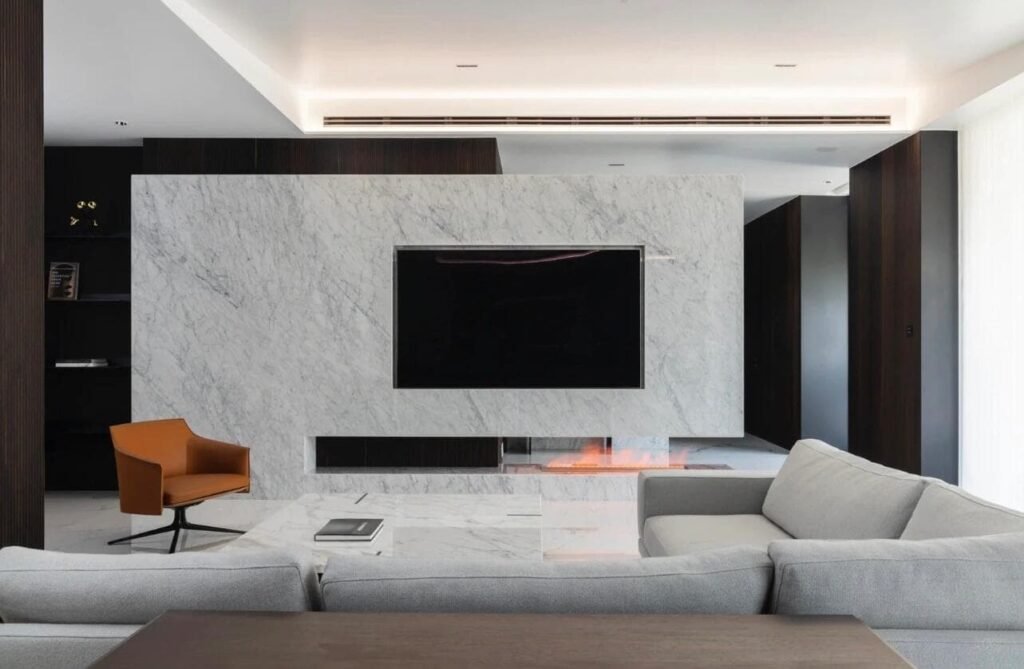
Broadening the Horizon: Statuario and Engineered Alternatives
While Carrara and Calacatta are the main protagonists, other materials often enter the conversation.
Statuario Marble vs. Carrara Marble: The Third Player
When discussing high-end white marble, Statuario must be mentioned. Like Calacatta, Statuario has a bright white background and is far more expensive than Carrara. However, Statuario marble vs Carrara marble is a different comparison. Statuario’s veining is typically dark gray and finer than Calacatta’s bold strokes, but more distinct than Carrara’s soft feathers. It is equally rare and prized.
The Rise of Alternatives: Calacatta Marble Laminate and Quartz
For projects with budget constraints or requirements for low maintenance, the market has responded with engineered alternatives.
Engineered Quartz: High-end quartz manufacturers now produce stunningly realistic imitations of Calacatta marble. These offer high durability and stain resistance, often at a price point falling between real Carrara and real Calacatta.
Calacatta Marble Laminate: At the entry-level price point, Calacatta marble laminate technology has improved significantly. Modern high-definition printing can mimic the look of Calacatta for surfaces that receive less wear, though it lacks the depth, cool touch, and value-adding properties of natural stone.
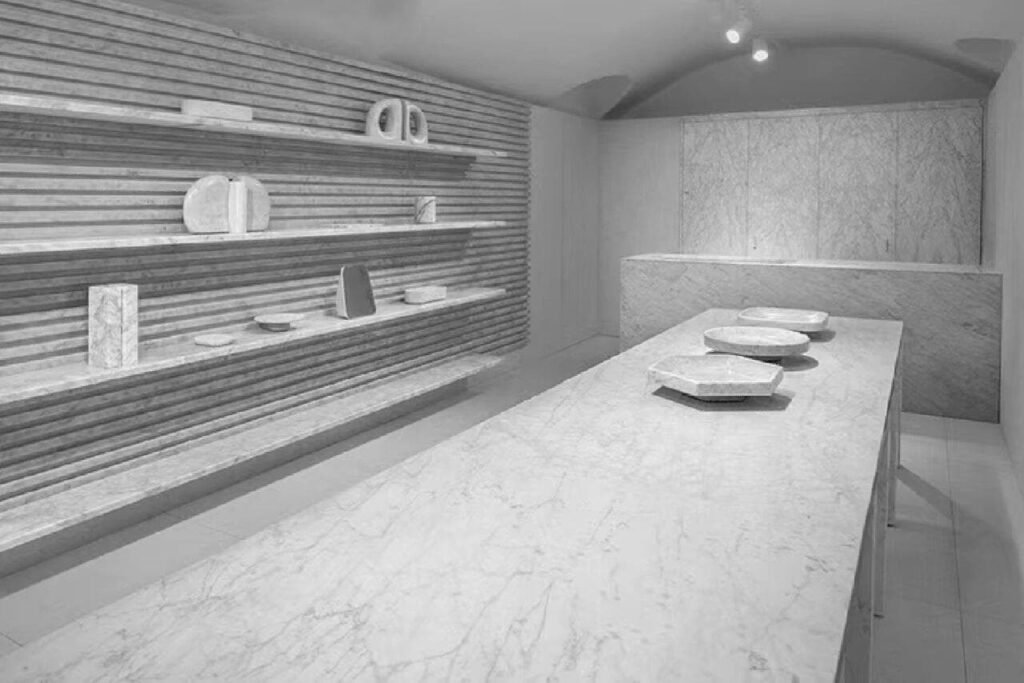
Sourcing, Sustainability, and Industry Direction in 2025
Selecting the right marble goes beyond aesthetics; it involves responsible sourcing and understanding industry shifts.
Navigating the Supply Chain: From Quarry to Wholesale
Securing authentic Calacatta requires navigating a complex supply chain. Relying on photographs alone is risky. It is essential to work with a reputable manufacturer or wholesale distributor who has direct relationships with Italian quarries. Companies like EDG Stone act as critical gatekeepers, ensuring that slabs labeled “Calacatta” meet the strict criteria for background purity and vein definition, protecting buyers from mislabeled, lower-grade stone.
Generated Long-tail Keywords for Purchase Intent:
Direct Carrara marble slabs factory Italy connection
Wholesale Calacatta Gold marble tiles supplier for projects
Best price for authentic Calacatta marble slabs near me
Reputable Italian marble manufacturer EDG Stone sourcing guide
Sustainability and Regulatory Trends in Stone Quarrying
The Italian marble industry is under increasing regulatory pressure to operate sustainably. Modern quarries in the Carrara region are adopting advanced technologies to reduce water consumption during cutting and to manage quarry waste responsibly. Furthermore, strict EU regulations regarding worker safety and environmental impact are shaping the industry. Today’s luxury consumer increasingly demands not just beauty, but also assurance that their stone was sourced ethically and responsibly.
Frequently Asked Questions (FAQ)
1. Is Calacatta marble better than Carrara marble?
One is not inherently “better” than the other; they serve different design goals and budgets. Calacatta is rarer, more expensive, and offers a more dramatic, high-contrast look with bold veining on a white background. Carrara is more abundant, affordable, and provides a softer, classic aesthetic with feathery veining on a grayish background.
2. Why is Calacatta marble so expensive compared to Carrara?
The primary driver is rarity. While both come from the same region, the specific geological veins that produce true Calacatta marble are scarce compared to the abundant deposits of Carrara. High global demand for this rare, brightly colored stone drives its price significantly higher than the more common Carrara.
3. Can you tell the difference between Carrara and Calacatta easily?
Yes, in most cases. Look at the background color and the veining. If the background is a cool, slightly muddy gray and the veins are fine and feathery, it is likely Carrara. If the background is stark, bright white, and the veins are thick, bold, and dramatic (sometimes with gold tones), it is likely Calacatta.
4. What is the best usage for Calacatta vs Carrara marble in a home?
Due to its high cost and dramatic look, Calacatta is often used for focal points like kitchen islands, feature walls, or luxury master baths. Carrara, being more affordable and subtle, is excellent for larger surface areas, flooring, tiling, or secondary bathrooms where a classic look is desired without breaking the budget.
5. Does Calacatta marble stain more easily than Carrara?
Geologically, they have similar porosity. Both are natural calcium carbonate stones and are susceptible to etching from acids (like lemon juice) and staining from colored liquids (like red wine) if not properly sealed. The perception that Calacatta stains more easily may stem from its bright white background, which shows stains more readily than Carrara’s grayer base. Both require regular sealing and careful maintenance.