
What is Quartzite?
Formation and natural properties
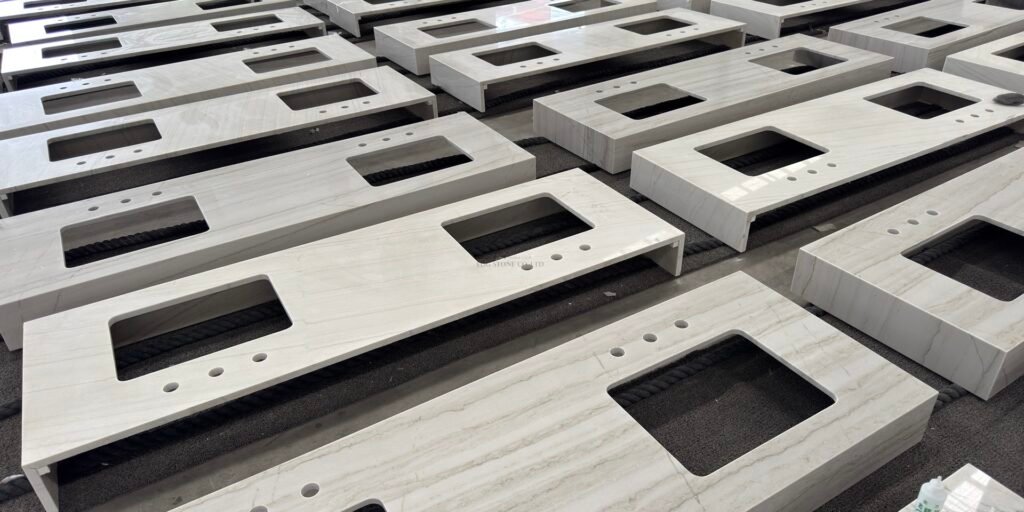
Quartzite is a metamorphic rock formed when quartz-rich sandstone is subjected to high heat and pressure; individual quartz grains recrystallize and fuse into an interlocking mosaic. That dense microstructure is why quartzite combines strength with the translucent veining and color variations prized in high-end interiors.
Typical hardness & implication for wear
On the Mohs hardness scale, quartzite typically ranks around 7, making it substantially harder than many marbles and comparable to or slightly harder than many granites, yielding high scratch and abrasion resistance in daily commercial use.
Quartzite vs Quartz (Engineered) in commercial countertop use
Visual & aesthetic differences
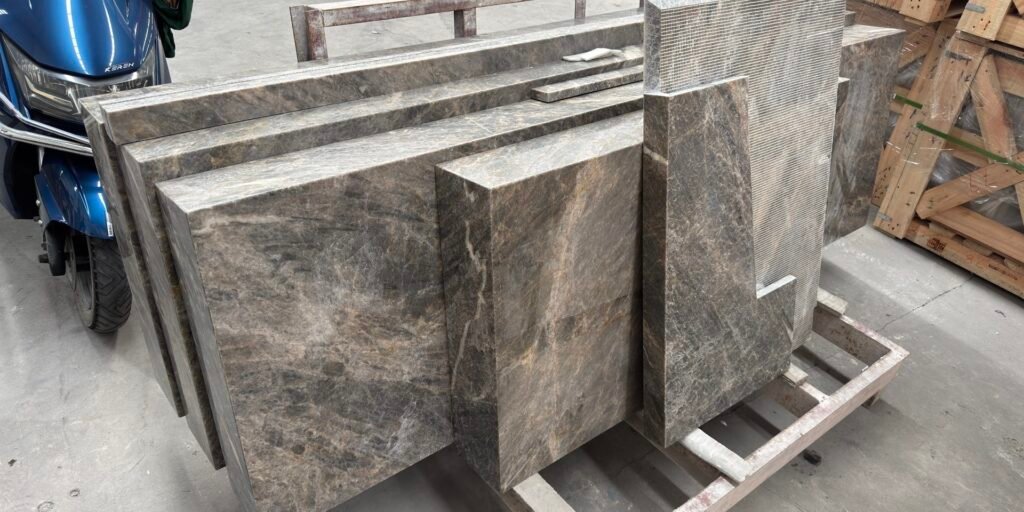
Quartzite is a natural stone—no two slabs are identical—so it offers authenticity and natural variation. Engineered quartz (commonly called “quartz countertops”) is manufactured from crushed quartz and polymer resins, which allows predictable uniformity and color control but limits the unique, natural veining that designers prize.
Durability, heat & scratch resistance
Quartzite’s crystalline structure offers greater heat resistance than resin-based quartz; hot pans and continuous-service counters in hospitality and concession areas are more forgiving on quartzite. Engineered quartz resists staining better because it is non-porous, but it can soften or discolor under very high heat because of resin content. For high-abrasion zones, quartzite’s natural hardness provides a longevity advantage.
Maintenance differences: sealing, stain resistance, repairability
Quartzite is naturally porous to varying degrees and generally requires periodic sealing to protect against staining, especially where acidic liquids or oils are common. Engineered quartz is non-porous and typically does not require sealing. That maintenance trade-off must be budgeted into commercial lifecycle plans and warranty commitments.
Cost & lifecycle value
Upfront costs for premium quartzite slabs can be higher than mid-grade engineered quartz, but the total cost of ownership for high-traffic installs—when factoring replacement cycles, downtime, and aesthetic retention—often favors quartzite due to its abrasion and heat durability.
Why Quartzite wins for high-traffic commercial spaces?
Abrasion resistance and hardness in daily operations
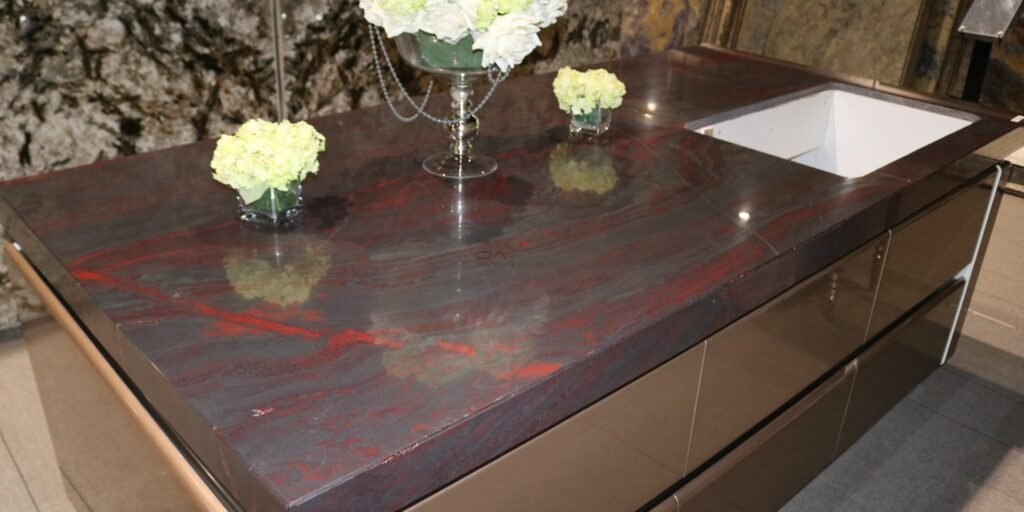
High-traffic commercial counters (e.g., airport kiosks, banking teller counters, hotel check-in desks) are subject to constant abrasion: luggage drag, bag corners, cash trays, trays, and carts. Quartzite’s hardness reduces visible wear and preserves edges and profiles longer than softer stones—yielding a clear visual and operational advantage over time. (See Mohs hardness discussion above.)
Heat, impact, and longevity case examples
In kitchen pass-throughs and staff stations where heat and impact are common, quartzite tolerates thermal stress better than many engineered surfaces. In lobbies and public counters, the long-term “look” (minimal micro-scratching and preserved polish) can support a longer replacement interval, improving total cost of ownership.
Real-world use-cases
Airports: security, concession, and check-in counters benefit from a scratch-resistant surface resistant to luggage and cart abrasion.
Banks: high-touch teller counters where clean lines and chip-resistance maintain professional appearance.
Hotels & Restaurants: reception desks, bar tops, and kitchen pass areas where aesthetics and durability matter.
Compliance, Safety & Industry Direction
Worker safety: respirable crystalline silica and fabrication rules
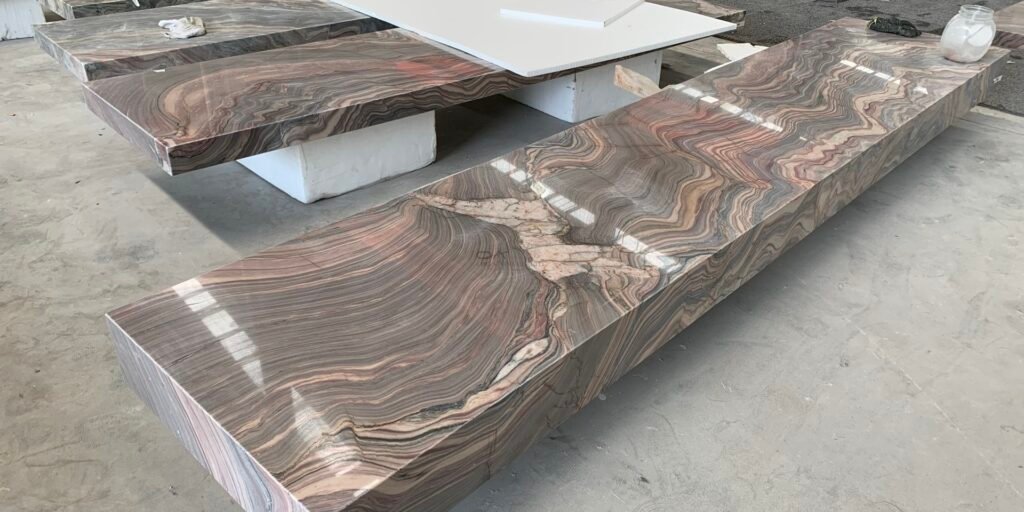
Stone fabrication produces respirable crystalline silica dust when cutting, grinding, or polishing—this has been central to regulatory action. OSHA and national regulators now enforce silica exposure limits and have targeted engineered stone and natural stone fabrication for enhanced inspections and compliance assistance. Fabrication shops and manufacturers are required to implement controls (wet cutting, local exhaust ventilation, HEPA filtration, and respiratory protection programs) to limit worker exposure. Compliance is no longer optional: it affects where and how you source materials and which factories you will permit on commercial projects.
Regulatory trends affecting material sourcing and fabrication
Several jurisdictions (including state-level boards) have adopted or are evaluating tougher rules and reporting requirements for silicosis and silica exposures in the countertop industry, pushing demand toward certified factories with documented dust-control systems and training. This regulatory pressure is shaping the supply chain: specifiers increasingly require fabrication certificates, documented PPE programs, and emissions records as part of vendor prequalification.
What must manufacturers and facility owners do?
Require factory/supplier silica control documentation in RFQs.
Favor vendors using wet-cut and HEPA/filtered systems.
Include silica control and worker-safety clauses in purchase contracts and site installation specifications.

Practical Specification Guidance for Commercial Projects
Selecting the right grade and thickness
Thickness: 2 cm is common for lighter-duty counters; 3 cm or 4+ cm (with structural support) is recommended for heavy-duty, high-wear commercial tops.
Grade selection: look for tightly recrystallized, low-porosity quartzite slabs for counters; request porosity and water absorption test reports from slab suppliers.
Edge profiles, finish choices, and treatment options
Polished finishes show veining and color depth but may highlight micro-scratches in very high traffic; honed or leathered finishes hide abrasion well and reduce glare.
Edge profiles should protect corners—rounded or eased edges reduce chipping risk in busy environments.
Installation, sealing schedule, and maintenance plans
Sealing: apply a high-quality penetrating sealer at install and schedule re-sealing (frequency depends on porosity and use; for heavy-traffic commercial, 6–12 months is common).
Cleaning: daily neutral pH cleaning; avoid prolonged exposure to strong acids and oils.
Repair plan: have vendor-approved repair kits and access to certified fabricators for on-site repairs.
Procurement checklist (manufacturer/factory / wholesale intent)
Confirm: slab provenance, production capacity, factory safety & silica controls, sample slab availability, MOQ, lead time, and warranty.
Suggested purchasing keywords to include in RFQs and site searches: “quartzite slab manufacturer factory wholesale,” “white quartzite countertops manufacturer,” “quartzite countertops factory direct wholesale.”
Cost, Market Signals & Future Outlook
Market size & growth signals for countertop materials
The global countertops market was estimated at USD 148.3 billion in 2024, with forecast growth into the 2030s—this growth supports continued investment in premium natural and engineered stone supply chains for commercial projects.
Sustainability, circularity, and material transparency trends
Specifiers increasingly demand Environmental Product Declarations (EPDs), chain-of-custody data, and lower embodied energy choices. Quarry transparency, low-waste cutting, and factory recycling programs are becoming RFP differentiators.
Long-tail Keywords & SEO Placement
Suggested long-tail purchase intent
“white quartzite countertops manufacturer factory wholesale”
“quartzite countertops kitchen near me manufacturer”
“Buy quartzite slabs wholesale for commercial projects”
“quartzite countertops vs quartz for hotels and airports”
“EDG Stone quartzite factory direct commercial slabs”
Conclusion
Quartzite is a compelling choice for commercial countertop applications where look, scratch/heat resistance, and lifecycle value matter. While it requires scheduled sealing and careful fabrication controls (to manage silica exposure), its combination of natural aesthetics and hardness makes it a long-term asset for high-traffic installations. When specifying quartzite, require factory safety documentation, select the right finish and thickness for traffic levels, and embed procurement clauses for silica-control and warranty. For suppliers like EDG Stone, emphasizing certified fabrication, slab provenance, and clear purchase-intent messaging (manufacturer/factory/wholesale) will make commercial RFPs more winnable.
Google Hot-search FAQ
Google Hot-search FAQ
Q: Is quartzite better than quartz for commercial countertops?
A: For high-heat and high-abrasion environments, quartzite often outperforms engineered quartz due to its higher natural hardness and heat resistance; engineered quartz is more stain-resistant and lower-maintenance regarding sealing.Q: How hard is quartzite (Mohs scale), and what does that mean?
A: Quartzite typically rates around Mohs 7, meaning it resists many daily scratches and abrasion—great for public counters subject to luggage, trays, and continuous surface contact.Q: Do quartzite countertops need to be sealed for commercial use?
A: Yes — quartzite is porous and benefits from an initial penetrating sealer at installation and a scheduled reseal plan (frequency depends on porosity and use).Q: What safety rules affect quartzite fabrication?
A: Fabricators must control respirable crystalline silica (wet cutting, local exhaust, respiratory protection) under OSHA standards and related enforcement initiatives; buyers should require factory silica-control documentation.Q: Where can I find wholesale quartzite slabs and a reliable manufacturer?
A: Search for factory-direct suppliers that provide slab provenance, capacity data, silica-control certification, and sample availability; include purchase-intent keywords like “manufacturer,” “factory,” and “wholesale” in RFQs.
Semantic Closure: How / Why / What / Options / Considerations
Why: Because quartzite’s Mohs ~7 hardness and fused crystalline structure provide superior abrasion and heat resistance versus many alternatives—leading to longer visual lifespan in public-facing, high-traffic installations.
What: What buyers should request — slab tests (water absorption), finish samples (polished/honed/leathered), and manufacturer safety & capacity documentation (lead time, MOQ, wholesale pricing).
Option (detailed): Choose leathered or honed finishes for very high abrasion zones; choose polished for premium reception areas where polish retention is prioritized. Consider 3–4 cm slabs for heavy counters and engineered substrate backing for long spans.
Consideration (detailed): Factor in sealing lifecycle costs, approved repair procedures, and regulatory exposure: ensure vendor compliance with silica rules (wet cutting, HEPA filtration, respiratory program) to avoid downstream liabilities and supply interruptions.