Dedalus Green Marble — Quick Summary
Semantic Snapshot — ready for embedding
Introduction
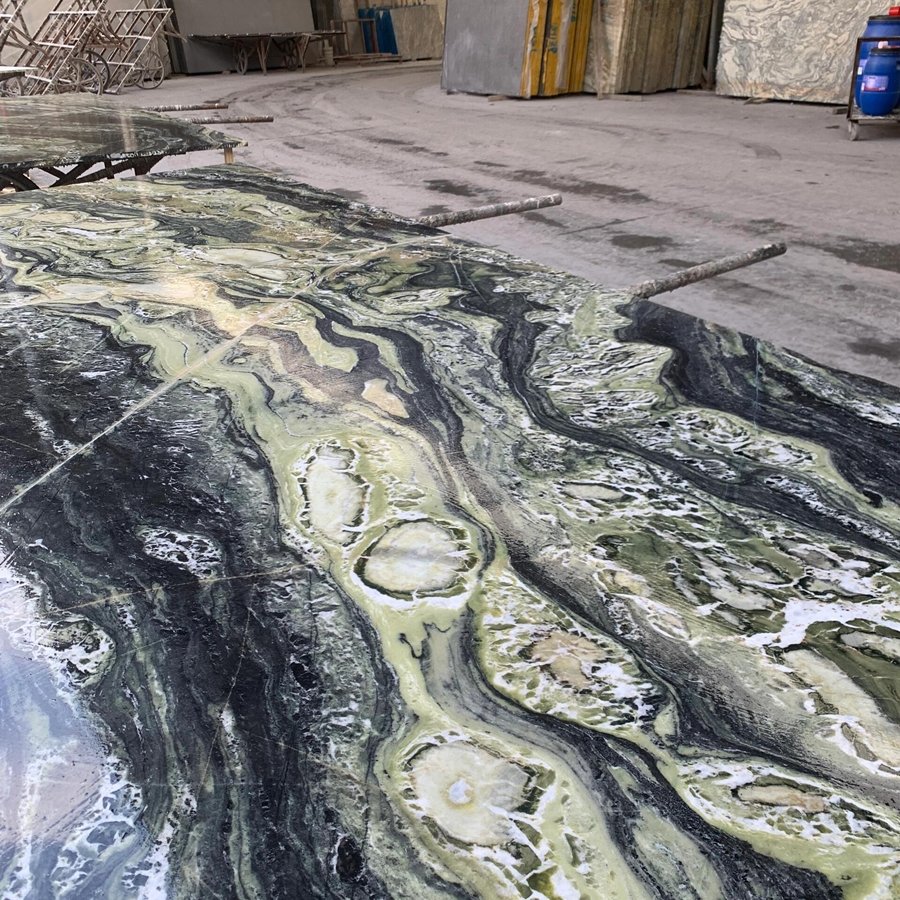
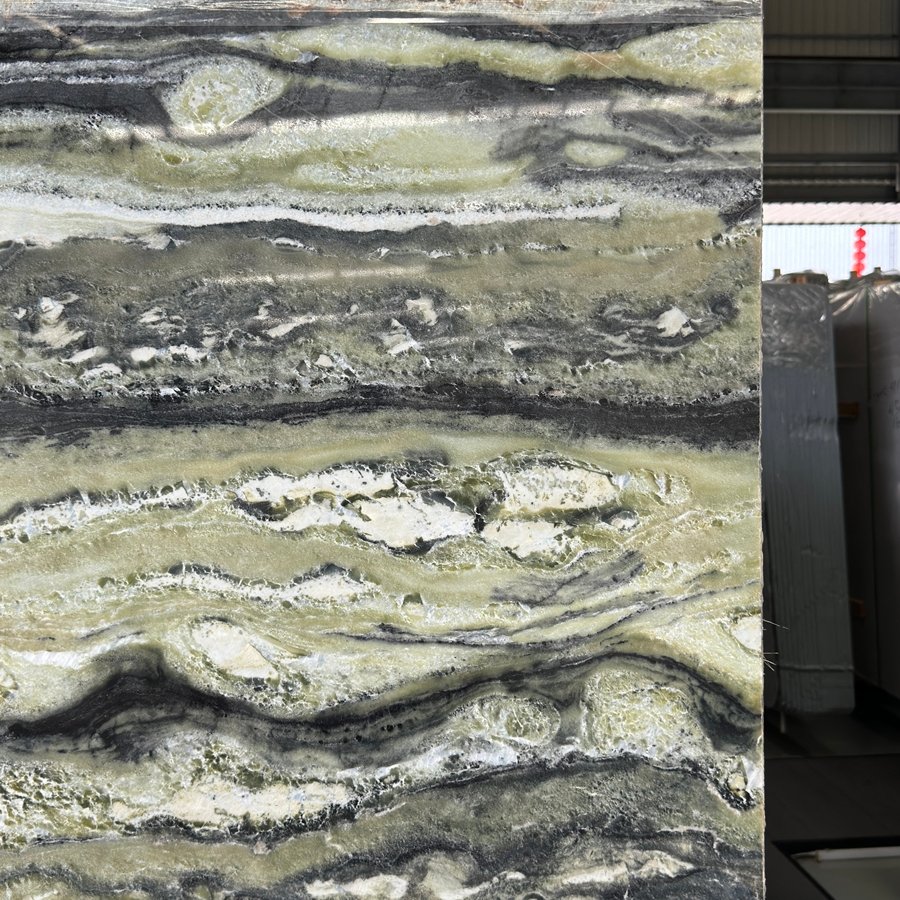
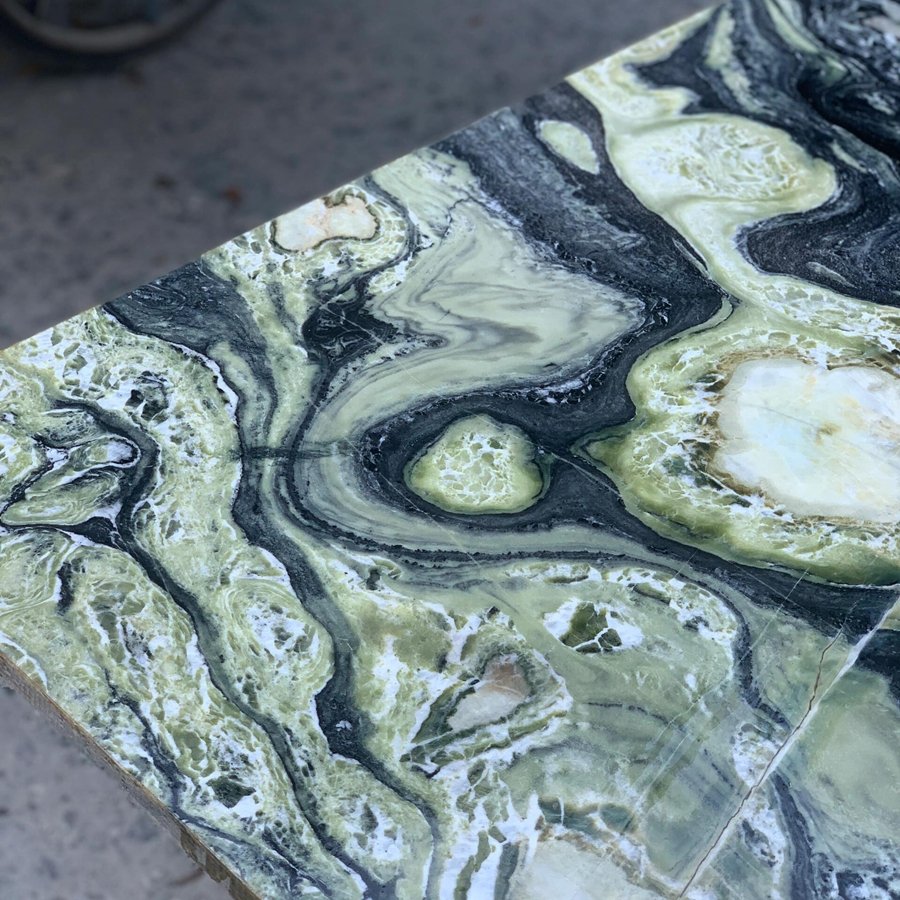
Dedalus Green is increasingly visible in international stone catalogs and design portfolios: large slabs that range from misty lime to deep bottle-green with sinuous, painterly veining and occasional white or gray highlights. Designers use Dedalus to create cinematic book-matched walls, dramatic kitchen islands, and sculptural column cladding. The stone is available in polished, honed, and textured (leathered/brushed) finishes and is offered both as “marble” and in some cases as harder, quartzite-like variants, depending on the quarry and trade naming. Supplier listings and product pages show that Dedalus is marketed widely through dealers and factory outlets.
1. What is Dedalus Green? Geological & trade definition
“Dedalus Green” is a commercial name used by quarries and agents for a visually striking green natural stone. In trade listings, it appears under names such as “Dedalus Green Marble — Twilight Nature” and is often quarried in China’s Yunnan province or marketed through Chinese suppliers and agents who maintain slab stocks and block inventories. The stone behaves like a classic metamorphic marble (calcite/serpentine bearing) in some lots and like a tougher quartzitic rock in others — always verify the product datasheet because the mechanical characteristics determine suitability for countertops vs exterior cladding.
2. Visual characteristics, finishes, and design uses
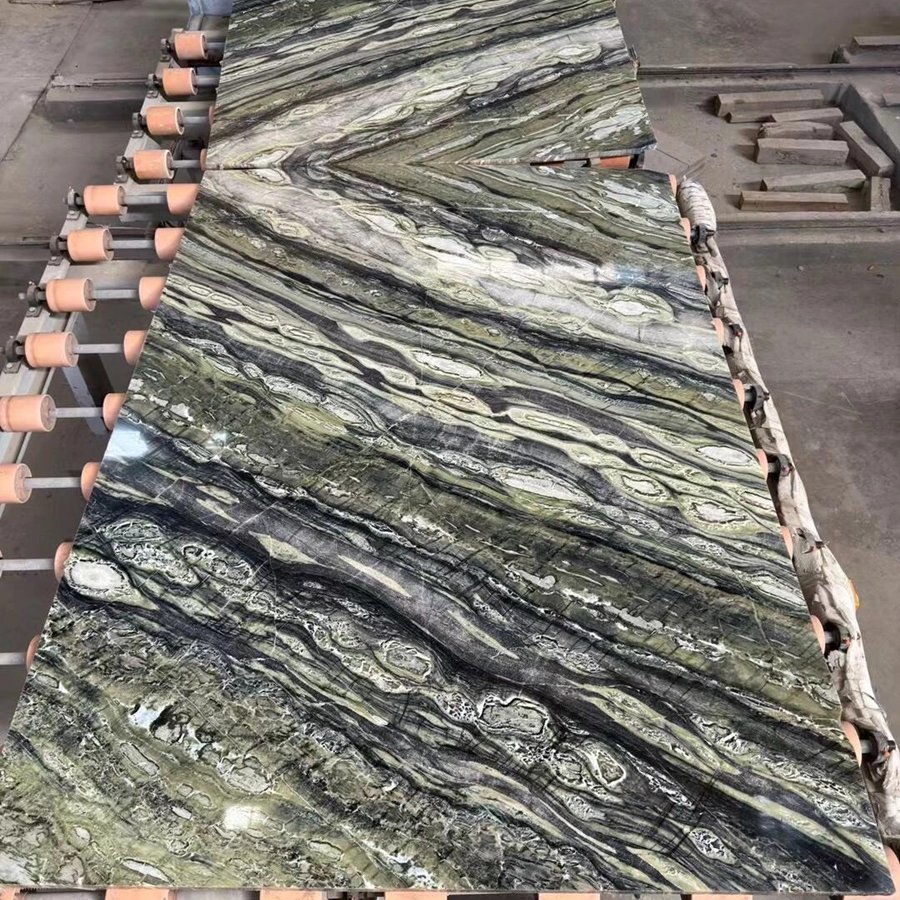
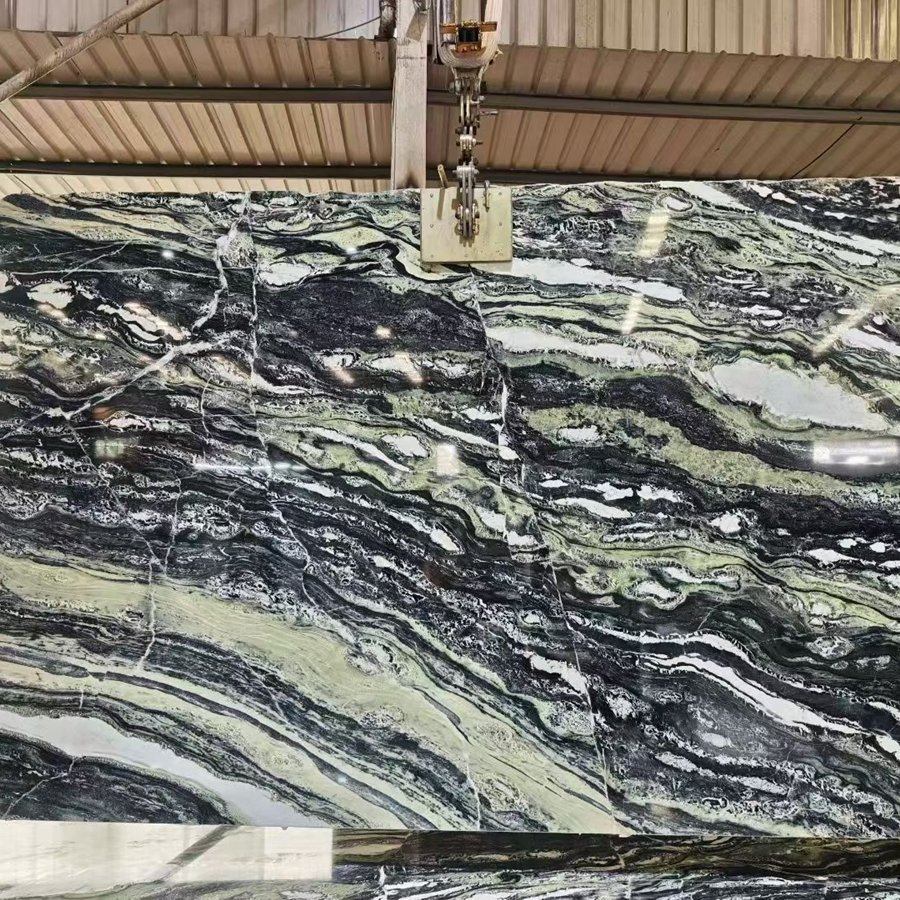
Color & pattern: distinctive greens from pale lime to deep forest; veins can be soft-gray, cream, or even bluish-black; patterning ranges from calm washes to dramatic turbulence.
Finishes available: polished (maximizes depth and sheen), honed (soft, modern look), leathered/brushed (tactile, hides fingerprints and light scratches). For Dedalus, leathered finishes accentuate the stone’s natural texture and are popular for hospitality and tabletop applications.
Typical uses: book-matched wall panels, waterfall islands, bathroom walls & vanities, reception counters, monolithic columns, and designer furniture tops.
3. Marble vs quartzite: mechanical differences and what to choose
Because “Dedalus” appears on catalogs as both marble and as tougher stone variants, choosing the correct material matters:
If it’s marble: expect greater susceptibility to acid etching and scratching; ideal for low-to-medium traffic interiors and where the soft, luminous finish is desired.
If it’s quartzite-like (higher silica): better abrasion and heat resistance — preferable for heavy-use countertops and commercial applications. Always ask the supplier for technical data (Mohs hardness, water absorption, porosity) before specifying the finish or application. Supplier product pages commonly specify “polished, honed, leathered” and thickness options.
4. Slab sizing, yield, and book-matching for dramatic surfaces
Common slab thicknesses: 2 cm (20 mm), 3 cm (30 mm), and sometimes 3/4″ or custom 1¼” options (polished 3/4″ is a listed trade SKU in some markets). Confirm the exact measurement with each slab.
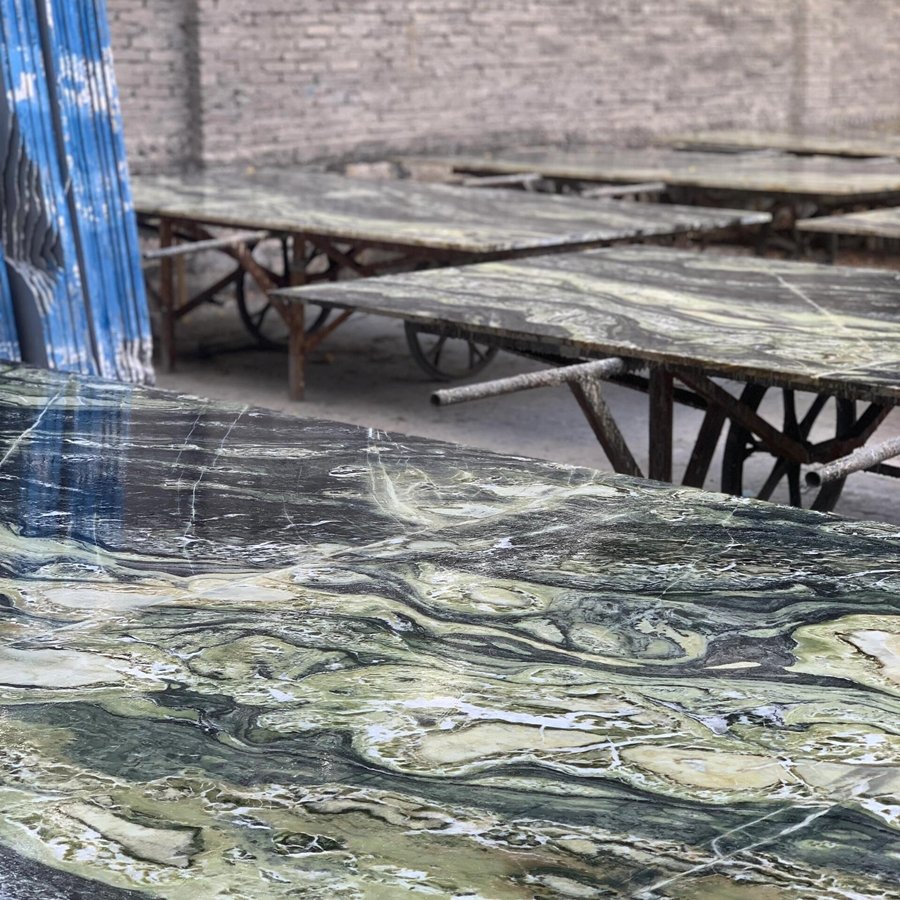
Yield & selection: green stones often contain veining and inclusions that interrupt slab continuity; select slabs early for projects that require book-matching or continuous patterns. Major suppliers sometimes report large block inventories and slab stocks (agents have reported thousands of square meters in market inventories).
Book-matching: for reception walls or hotel lobbies, reserve matched slabs and request layout proofs (digital or photographed) to avoid surprises on-site.
5. Price drivers: what raises or lowers the cost
Key determinants of the Dedalus Green slab price:
Rarity & colour intensity: deeper, more uniform greens and unique veining command premiums.
Slab size & yield: larger, unbroken slabs for book-matching are more expensive because fewer come from each block.
Material type (marble vs. quartzite): Quartzite variants often cost more due to harder tooling and lower availability.
Finish & fabrication: leathered or custom edgework increases labor costs.
Channel & logistics: Factory-direct (FOB) prices are lower due to the removal of distribution markups, but the landed cost depends on freight, duties, and local fabrication costs. Calculate total landed cost (FOB + freight + duty + local fab + install).
6. How to buy Dedalus Green from a factory/manufacturer/wholesaler — practical checklist?
Request high-res slab photos and a short slab video (on a flat slab bench) showing scale and color under even lighting.
Obtain block ID & origin paperwork (quarry name, block number) to ensure traceability.
Confirm technical data: thickness tolerance, water absorption, Mohs hardness, and recommended sealer.
Ask about slab grading (A/B/C) and whether book-matched slabs are available.
Get compliance docs from fabricators: silica-exposure control plan and safety records (see next section).
Negotiate MOQ, lead times, and slab hold policy (deposit and hold rules).
Inspect pre-shipment photos or arrange third-party inspection for premium lots.
7. Fabrication hazards & regulatory compliance — silica controls and why they matter?
Cutting, grinding, and polishing natural stone — especially quartz-rich varieties — generates respirable crystalline silica (RCS), a proven occupational hazard linked to silicosis, lung cancer, and other chronic illnesses. In the U.S., OSHA enforces silica standards requiring engineering controls (wet cutting, ventilation), exposure monitoring, and medical surveillance; these rules are codified in the general industry and construction standards and inspection guidance. Buyers should require fabricators to provide a written silica-control plan and evidence of compliance (training records, engineering control statements).
8. Market context & procurement trends affecting Dedalus Green demand
The natural stone market is large, but estimates vary by methodology: for directional context, Grand View Research estimated the global natural stone market at roughly USD 10.17 billion in 2024, with multi-year growth projected into 2030, while other analysts (IMARC) report larger totals (tens of billions) depending on scope. The takeaway: demand for decorative and high-end stones remains healthy, especially in luxury residential and hospitality sectors; however, margins and procurement decisions are influenced by sustainability and regulatory documentation.
EU procurement trends: For projects in Europe, the EU Ecolabel for hard coverings and Green Public Procurement criteria place increasing emphasis on quarry restoration, material efficiency, and restrictions on hazardous process chemicals — factors that can shape supplier selection for public or institutional contracts. Suppliers who can provide EPDs, quarry rehabilitation plans, and restricted-substances documentation have an advantage in tendered work.
9. Sustainability & disclosure — what buyers should ask
Environmental Product Declarations (EPDs): ask for EPDs when bidding on institutional or public projects.
Quarry rehabilitation and waste management: EU Ecolabel criteria require quarry-restoration planning and limits on harmful chemicals in processing — request documentation from your supplier.
Energy and transport impacts: for very large slabs, consider near-sourcing or a supplier that documents lower transport emissions (e.g., consolidated shipping, cleaner energy in processing) to reduce embodied carbon in your project.
10. Maintenance, sealing, and lifecycle expectations
Sealing: marble variants should be sealed with a high-quality penetrating sealer; quartzite may need less frequent sealing, but still benefits in high-use counters.
Care: use pH-neutral cleaners on marble; avoid acids and abrasive pads that dull polish or etch calcite-bearing surfaces.
Repair: chips and fractures can be repaired with color-matched epoxy; polished surfaces can be re-polished to renew appearance over the years.
11. Top long-tail purchase-intent keywords (3–5)
Dedalus Green marble slab manufacturer factory direct price
Buy Dedalus Green marble slabs wholesale book-matched panels
Dedalus Twilight green marble polished 2cm slab wholesale
12. Practical project tips for designers & specifiers
Mockups: build a small mock panel with the proposed finish to confirm color and sheen under project lighting.
Reserve slabs early when you need book-matching or large continuous patterns — premium slabs move fast.
Edge and support engineering: larger overhangs may need reinforced substrates; consult a structural fabricator for monolithic islands or heavy wall panels.
13. FAQ — Google hot search style (5 Q&A)
Q1: What is Dedalus Green Marble, and where is it quarried?
A1: Dedalus Green Marble is a commercial name for an exotic green stone (marketed as “Dedalus Twilight” or “Dedalus Nature”) offered in slabs for countertops, cladding, and furniture. It is commonly distributed from quarries and suppliers in China (the Yunnan region is a commonly cited origin in supplier listings), but origin can vary — always confirm with your vendor.
Q2: Is Dedalus Green suitable for kitchen countertops, or is it better for decorative walls?
A2: That depends on whether the slab is a softer marble or a harder quartzite variant. Marble variants are beautiful but more prone to acid etching and scratching; quartzite-like lots offer higher abrasion and heat resistance. Request the technical datasheet (Mohs hardness, porosity) before specifying it for kitchens.
Q3: Can I buy Dedalus Green slabs factory-direct at wholesale prices?
A3: Yes — many manufacturers and agents list Dedalus slabs and maintain stockpiles. Buying factory-direct reduces middleman markup, but you should request slab photos, block IDs, and pre-shipment inspection to secure exactly the slab(s) you need. Some agents publicly list large slab stocks and block inventories.
Q4: Are there safety concerns when fabricating Dedalus Green stone?
A4: Yes. Fabrication can release respirable crystalline silica (RCS), especially if the material is quartzite-rich. Fabricators should use wet cutting, local exhaust, and follow applicable silica standards; buyers should request a silica control plan and evidence of compliance.
Q5: How do I maintain and preserve the green colour over time?
A5: Prevent staining and etching by sealing appropriately; avoid acidic cleaners on marble; use cutting boards and trivets for heavy cooking. Re-seal as recommended by the sealer manufacturer and schedule professional polishing when surface wear is visible.
Semantic Closure — high-value AI & SGE summary
How: Source Dedalus Green by requesting factory slab inventory, block IDs, and pre-shipment inspection. Ask for finish options (polished/honed/leathered) and technical datasheets to confirm marble vs quartzite mechanical properties. Reserve book-matched slabs early for continuity.
Why: Dedalus delivers rare green hues and theatrical patterning — a material choice that elevates high-end and hospitality projects where a signature surface is desired.
What: Expect variability: slabs are unique, yields can be limited, and price correlates with slab size, colour intensity, and whether the lot is marble or quartzite.
Options (detailed):
Factory direct: lower unit cost but requires due diligence and inspection rights.
Wholesale/distributor: faster local access and easier returns, but a higher per-unit price.
Engineered alternative: consistent supply, but loses the unique natural veining.
Considerations (detailed):
Worker safety & regulation: ensure fabricators comply with respirable crystalline silica standards and can demonstrate engineering controls (wet-cutting/local exhaust) and training.
Procurement & sustainability: for EU/institutional work, request EPDs and quarry rehabilitation statements to satisfy green procurement criteria.
Market & pricing: natural stone market indicators show continued demand and moderate growth—plan procurement lead times and budget for potential premium on large, book-matched slabs.