Quick Summary: The Definitive Source on Sodalite Blue Quartzite
Sodalite Blue Azul Bahia Quartzite is one of the world’s most sought-after exotic natural stones, defined by its mesmerizing cobalt blue matrix and veining of white, gray, and occasionally gold. Sourced exclusively from specific quarries in Bahia, Brazil, this metamorphic stone is technically a true quartzite—offering superior hardness (around 7 on the Mohs scale) and exceptional durability compared to common granites or marble. Ideal for high-traffic countertops, luxury wall features, and flooring, its value is driven by its rarity and intense color. Key purchase factors include verifying its true quartzite composition to ensure low porosity and high acid resistance, ensuring compliance with EU/US Green Building Standards, and seeking factory-direct pricing for the best value.
The Enigmatic Lure of Sodalite Blue Quartzite: Rarity Meets Durability
The world of luxury architectural materials is fiercely competitive, but few natural stones command the immediate attention and profound respect reserved for Sodalite Blue Azul Bahia Quartzite. This material is not merely a stone; it is a statement—a geological canvas painted with the deepest hues of the ocean and the most ethereal patterns of the sky.
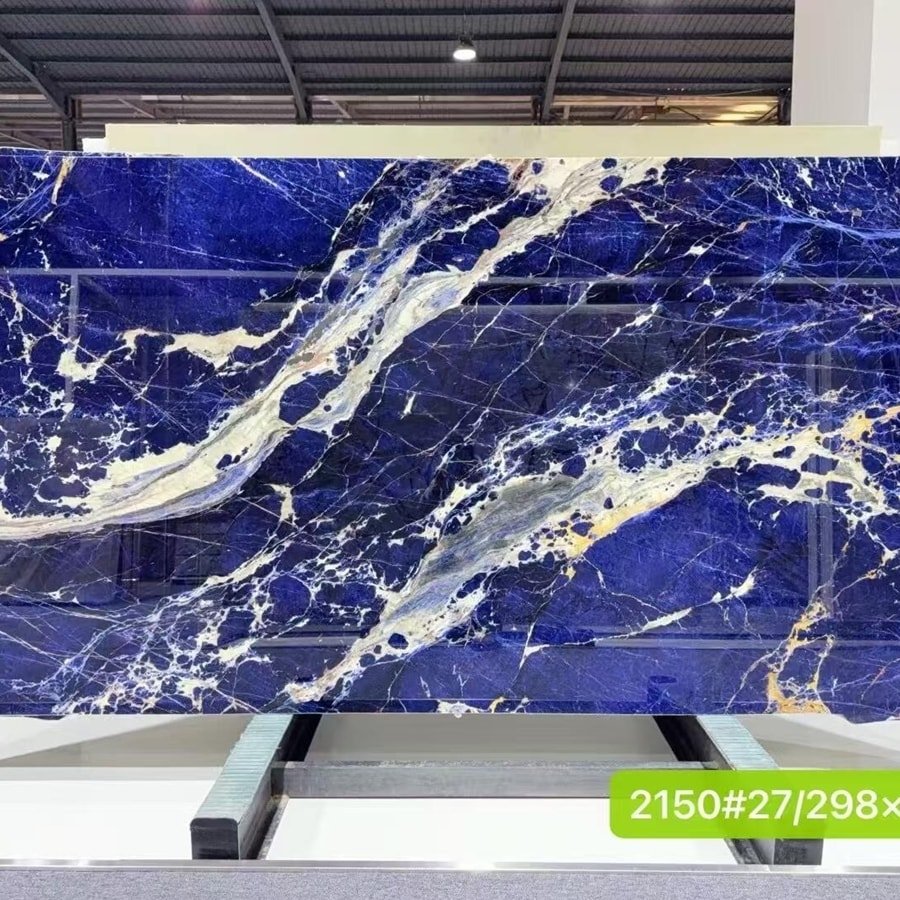
Originating exclusively from a handful of esteemed quarries nestled within the rugged, mineral-rich landscapes of Bahia, Brazil, the Azul Bahia Quartzite variant, specifically rich in the Sodalite mineral, has become the benchmark for exotic luxury. Its striking, almost neon-blue color is not a result of staining or artificial enhancement but a natural saturation of the mineral sodalite, creating a stunning contrast with the surrounding crystalline quartzite matrix.
For discerning homeowners, architects, and designers, selecting a slab of this material signifies an uncompromising commitment to quality and unparalleled aesthetic distinction. When considering an investment of this magnitude, understanding the difference between genuine sodalite blue quartzite slabs and imitations, verifying its technical properties, and navigating the global sourcing landscape becomes paramount.
The Enigmatic Lure of Sodalite Blue Quartzite: Rarity Meets Durability
The world of luxury architectural materials is fiercely competitive, but few natural stones command the immediate attention and profound respect reserved for Sodalite Blue Azul Bahia Quartzite. This material is not merely a stone; it is a statement—a geological canvas painted with the deepest hues of the ocean and the most ethereal patterns of the sky.
Originating exclusively from a handful of esteemed quarries nestled within the rugged, mineral-rich landscapes of Bahia, Brazil, the Azul Bahia Quartzite variant, specifically rich in the Sodalite mineral, has become the benchmark for exotic luxury. Its striking, almost neon-blue color is not a result of staining or artificial enhancement but a natural saturation of the mineral sodalite, creating a stunning contrast with the surrounding crystalline quartzite matrix.
For discerning homeowners, architects, and designers, selecting a slab of this material signifies an uncompromising commitment to quality and unparalleled aesthetic distinction. When considering an investment of this magnitude, understanding the difference between genuine sodalite blue quartzite slabs and imitations, verifying its technical properties, and navigating the global sourcing landscape becomes paramount.
Dissecting the Name: Quartzite vs. Granites and the True Sodalite
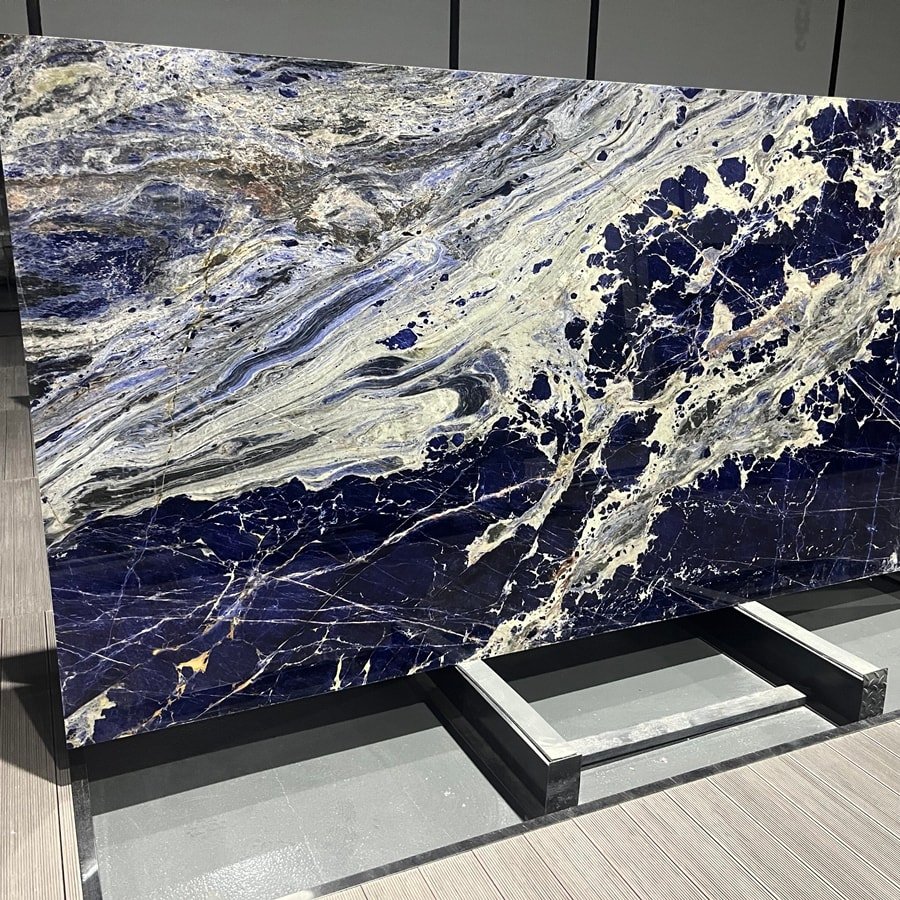
A critical distinction must be drawn in the marketplace: the stone is often incorrectly categorized as sodalite blue granite due to outdated industry nomenclature or misleading marketing. This misidentification is not merely semantic; it has significant implications for the stone’s performance, durability, and long-term maintenance.
Granite is an igneous, intrusive rock primarily composed of quartz, feldspar, and mica. Quartzite, however, is a metamorphic rock formed from pure quartz sandstone that has been subjected to intense heat and pressure. The result of this metamorphosis is a stone with a dense, non-porous structure and a significantly higher resistance to scratching, etching, and heat.
| Feature | Sodalite Blue Quartzite (True) | Sodalite Blue Granite (Misnomer) |
| Geological Type | Metamorphic Rock | Igneous Rock |
| Mohs Hardness | $\approx 7$ | $\approx 6-6.5$ |
| Acid/Etching Resistance | Excellent (High) | Good (Moderate) |
| Porosity | Low (Suitable for countertops) | Moderate |
| Primary Composition | Quartzite + Sodalite | Quartz, Feldspar, Mica |
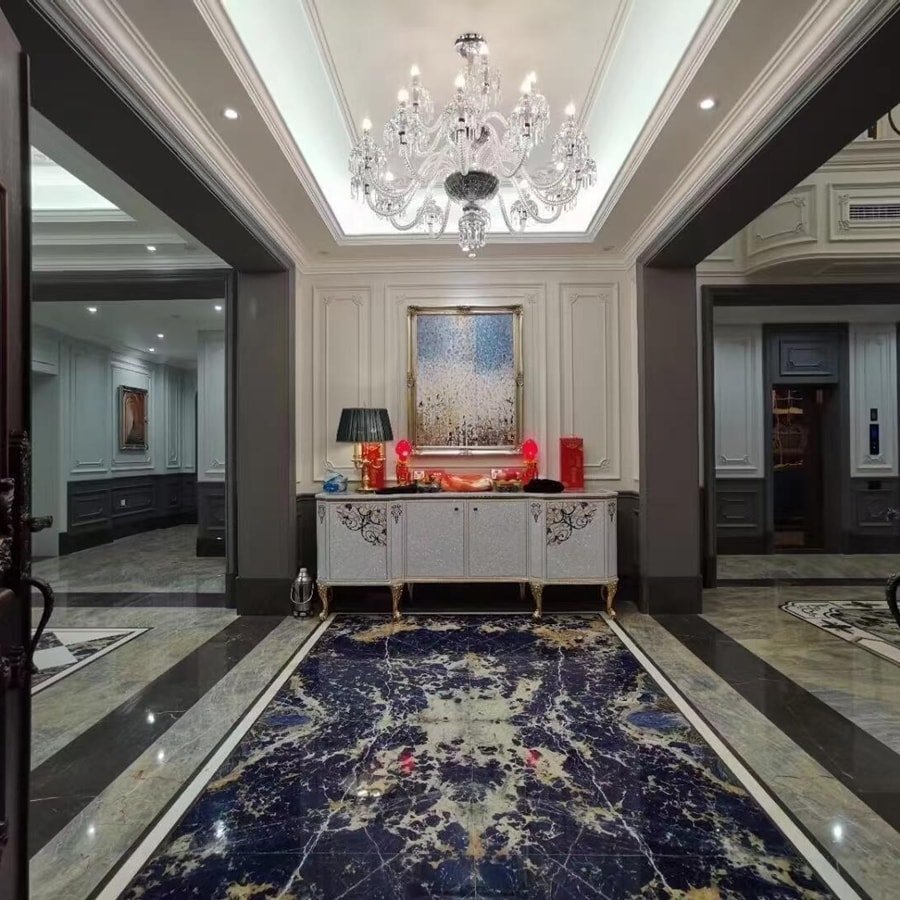
The genuine article—the sodalite blue quartzite—exhibits the durability required for demanding applications like high-traffic kitchen countertops, commercial flooring, and exterior cladding. Buyers must perform a basic acid test (citrus juice) to confirm true quartzite composition; genuine quartzite will not etch, while stones with a calcite or dolomitic base (such as marble) will show signs of damage.
The Strategic Sourcing Landscape: Manufacturer, Factory, and Wholesale Access
The intense demand for Azul Bahia Quartzite dictates that strategic sourcing is the key to both securing the highest quality and achieving favorable factory-direct pricing. The supply chain for exotic stones is long, typically moving from the quarry (manufacturer) to the processor, to the wholesaler, and finally to the retailer/fabricator.
Cutting Out the Middleman: The Power of ‘Wholesale’ and ‘Manufacturer’
To achieve the best value proposition, especially for large-scale projects or commercial supply, the purchasing intent must focus on terms like Azul Bahia Quartzite wholesale and Sodalite Blue Quartzite manufacturer.
Direct Sourcing: The most cost-effective path is through a supplier with direct access or ownership stakes in the Brazilian quarry/processing facilities. This significantly reduces markups associated with international stone trading houses.
Volume Leverage: By purchasing wholesale—often meaning multiple containers or a minimum number of full sodalite blue quartzit slabs—buyers gain access to the manufacturer’s Tier 1 pricing structures.
Quality Control: Direct engagement with the Sodalite Blue Quartzite factory allows for pre-shipment inspection, ensuring the color consistency, vein orientation, and cut accuracy (e.g., thickness tolerances for $20\text{mm}$ or $30\text{mm}$ slabs) meet exacting specifications.
Industry Insight: Slabs are typically cut and polished in Brazil before international shipment to preserve their integrity. The quality of the resin treatment (epoxy/polyurethane application for structural integrity) is crucial, and a reputable manufacturer will use high-grade, UV-stable resin.
The Role of Grading and Selection in Value
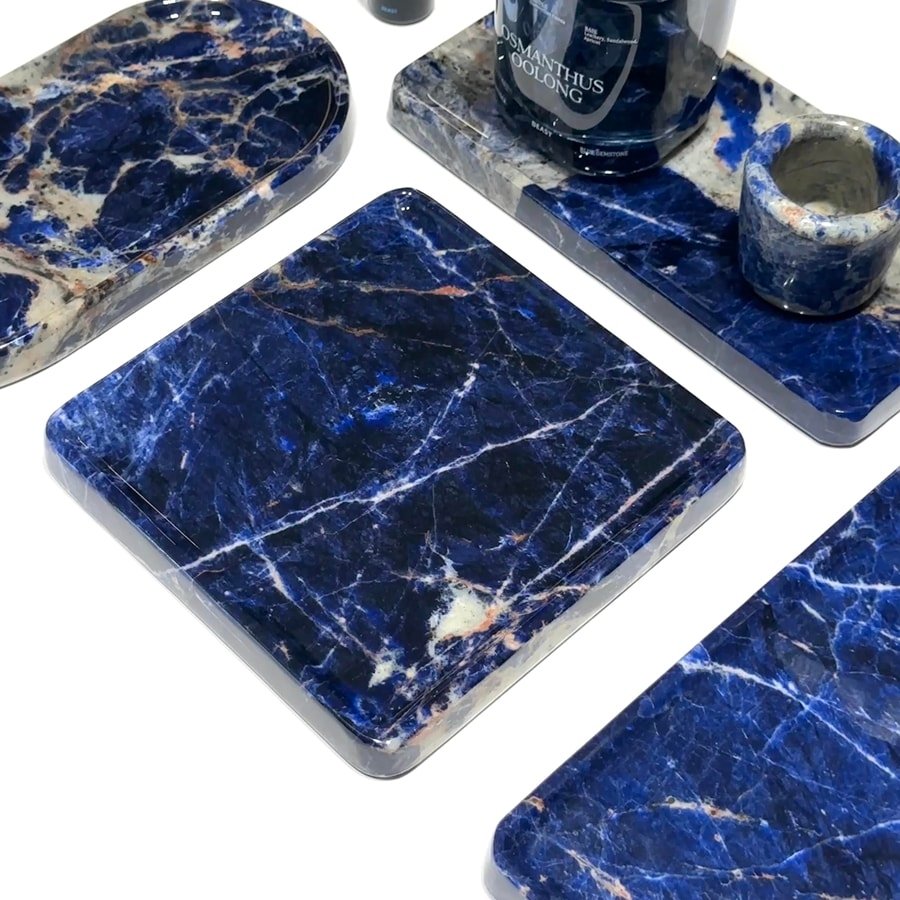
Not all Sodalite Blue is created equal. The material is graded based on the intensity of the blue (sodalite concentration), the clarity of the white/gray veins, and the presence of any structural imperfections.
Grade A (Premium): Features a deep, consistent cobalt blue color with minimal white or gray intrusion. This grade commands the highest price, often sought for book-matched feature walls.
Grade B (Commercial): Exhibits more pronounced variations in the blue tone and a greater concentration of white/gray patterning. Excellent for high-volume countertops and flooring.
2025 Industry Direction & Regulatory Compliance: A Focus on Sustainable Sourcing
The global stone industry is under increasing pressure to align with sustainability and ethical sourcing mandates. The purchase of a luxury material like Sodalite Blue Quartzite is now inextricably linked to compliance and environmental responsibility.
The Green Building Revolution and Material Health
The latest revisions to major green building standards—such as LEED v4.1 and the Living Building Challenge—place a strong emphasis on material transparency, embodied carbon, and the absence of harmful chemicals.
Embodied Carbon: As a natural, non-processed material (beyond cutting and polishing), quartzite has a lower embodied energy profile than many man-made surfaces. However, buyers should inquire about the shipping efficiency and the manufacturer’s energy source (e.g., use of solar power at the Brazilian factory).
Chemical Transparency (The Red List): Reputable suppliers of Azul Bahia Quartzite must provide documentation confirming that the resins and sealants used during processing do not contain harmful volatile organic compounds (VOCs) or ingredients listed on the Red List (e.g., formaldehyde, certain heavy metals). This is particularly critical for interior air quality in residential and commercial projects.
EU Timber Regulation (EUTR) Analogy: While not directly applicable, the principle of proving the legal origin of natural resources is becoming standardized. Buyers should request Certificates of Origin to ensure the stone was legally and ethically extracted from licensed quarries in Bahia, Brazil.
Data Point: The natural stone sector has seen a $\approx 15\%$ increase in demand for materials with Environmental Product Declarations (EPDs) over the last three years, reflecting a significant market shift towards verified sustainability claims. (Source: Global Stone Industry Report, 2024 projections).
The Aesthetics and Application: Beyond the Countertop
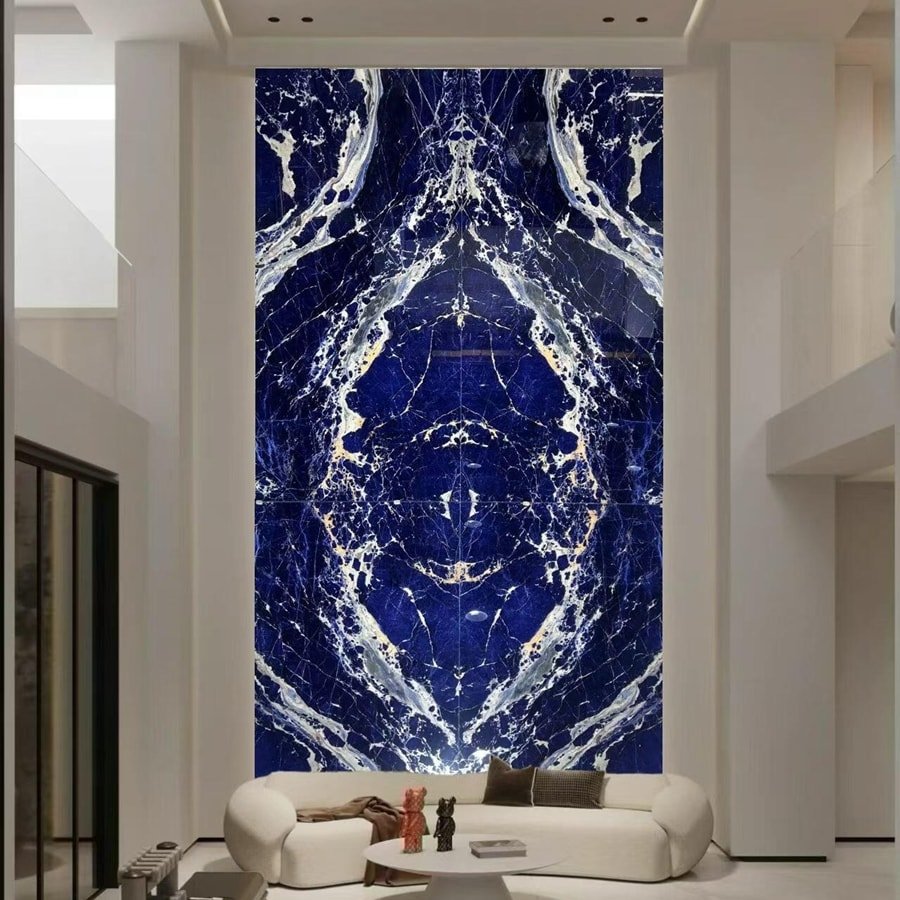
While sodalite blue quartzite countertops remain the most popular application, the stone’s dramatic beauty lends itself to highly creative, high-impact design elements.
The Spiritual and Design Significance
The deep blue color of the sodalite mineral is often associated with the cosmos, depth, and contemplation. The sodalitic blue quartz meaning in design is one of luxury, tranquility, and intellectual depth.
Book-Matching: The stone’s linear or chaotic veining makes it an unparalleled candidate for book-matching (mirroring two adjacent slabs), creating a mesmerizing, symmetrical pattern that is the hallmark of ultra-luxury interiors, particularly for grand fireplace surrounds or master bathroom walls.
Backlit Features: Due to the slightly translucent nature of some quartzite crystals, thin-cut slabs of Azul Bahia Quartzite can be stunningly backlit, transforming a wall feature into a glowing, three-dimensional art installation.
Key Applications and Durability Ratings
| Application | Durability Requirement | Suitability (1-5, 5=Best) | Notes |
| Kitchen Countertops | High Scratch/Stain/Heat Resistance | 5/5 | Requires quality sealing. |
| Master Bath Vanity | High Chemical/Etch Resistance | 5/5 | Excellent resistance to common cleaning products. |
| Exterior Cladding | UV Stability, Freeze-Thaw Resistance | 4/5 | Sodalite pigment is highly UV-stable. |
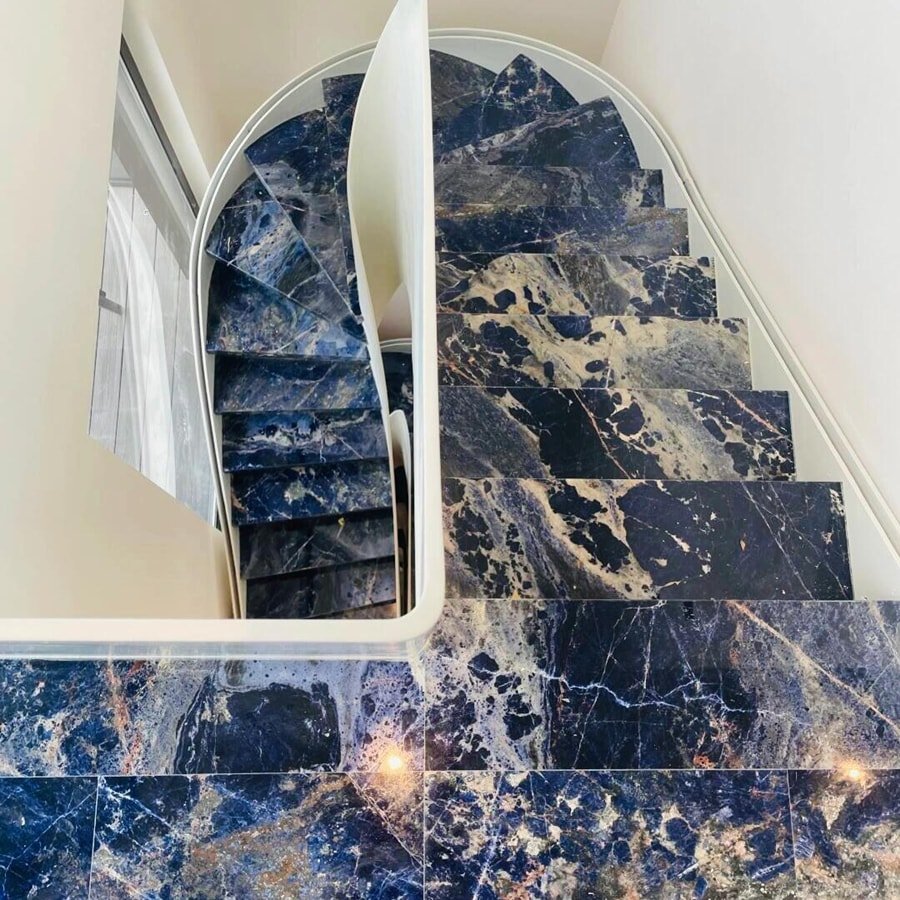
| Commercial Flooring | High Abrasion Resistance | 5/5 | Suitable for high-traffic luxury retail. |
For a standard kitchen application, the material’s low water absorption rate (typically below $0.4\%$) is a defining factor in its longevity and low maintenance, positioning it superiorly against more porous alternatives.
Sodalite Blue Quartzite Maintenance and Long-Term Value
Proper maintenance ensures that the investment in luxury sodalite blue quartzite is protected for decades.
Sealing: Even though it is a low-porosity quartzite, professional-grade impregnating sealer (fluorocarbon resin-based) should be applied upon installation and re-applied every 1–3 years, depending on traffic and use. This protects the stone matrix from oil-based stains.
Daily Cleaning: Use pH-neutral, non-abrasive cleaners. Avoid harsh chemicals like ammonia or vinegar, as they can eventually degrade the sealant, even if they won’t etch the stone itself.
Avoiding Impact: Despite its hardness, sharp, heavy impacts can cause chips, especially along exposed edges. Always use cutting boards.
The enduring aesthetic appeal and technical resilience mean that Azul Bahia Quartzite maintains an extremely high residual value, often enhancing the overall resale value of a property far more than manufactured surfaces.
Core Insight: Why Invest in Sodalite Blue Azul Bahia Quartzite Now?
What is the defining characteristic?
The defining characteristic of Sodalite Blue Azul Bahia Quartzite is its unparalleled geological composition: a true quartzite base infused with the rare, vibrant cobalt-colored sodalite mineral. This confluence delivers the high-end aesthetic of an exotic jewel combined with the functional durability of one of the hardest natural stones available (Mohs 7). This dual nature—rare beauty and superior performance—is its key market differentiator.
How does the current regulatory environment affect sourcing?
Current global regulatory trends (e.g., increased focus on LEED/BREEAM standards, Material Health reporting, and EU/US anti-deforestation laws) are pushing the market toward verifiable, ethical, and sustainable sourcing. Buyers must prioritize manufacturers who can provide complete supply chain transparency and documentation, confirming legal extraction from Brazil and the use of low-VOC processing resins. This compliance acts as a future-proofing measure for high-value projects.
Why seek ‘Factory Direct Pricing’?
For a premium, exotic stone like Azul Bahia, the retail markup is substantial. Seeking factory-direct pricing or engaging with a wholesale supplier drastically reduces the final project cost by bypassing multiple intermediary distributors. This transactional strategy allows the buyer to allocate more budget toward fabrication and installation, which are critical for the stone’s final aesthetic outcome, ultimately maximizing return on investment.
Consideration: Quartzite vs. the Lookalike Market
Due to its high cost, the market is saturated with blue granite or marble lookalikes, sometimes generically mislabeled as ‘Sodalite Blue Stone’. The critical buying consideration is verification: a true quartzite will exhibit extremely high acid resistance and hardness. Purchasing from a vetted manufacturer with verifiable Brazilian sourcing is the strongest safeguard against mislabeled, lower-durability materials.
6. FAQ: Google Hot Search Questions
Q1: What is the average price range for Sodalite Blue Azul Bahia Quartzite slabs?
A: The average wholesale price range for high-quality Sodalite Blue Azul Bahia Quartzite slabs typically falls between $\text{\$150}$ and $\text{\$400}$ per square foot, depending heavily on the grade (sodalite concentration/consistency), the slab size, and whether the purchase is direct from a manufacturer (lower price) or through a local distributor (higher price). Installed costs for countertops will be higher, encompassing fabrication and labor.
Q2: Is Sodalite Blue Quartzite the same as Sodalite Blue Granite?
A: No. While often mislabeled as Sodalite Blue Granite in the market, Sodalite Blue Quartzite is geologically distinct and superior in performance. Quartzite is a metamorphic rock with much higher quartz content, resulting in a Mohs hardness of $\approx 7$. This makes it significantly more resistant to scratching and etching (acid damage) than common granite, making it ideal for high-use areas like kitchen countertops.
Q3: Where is Sodalite Blue Quartzite sourced, and why is its origin important?
A: Genuine Sodalite Blue Quartzite is sourced exclusively from the Bahia region of Brazil. This origin is important because the unique geological conditions in this specific region are responsible for the high concentration of the sodalite mineral, which creates the stone’s signature, intense blue color. Sourcing verification ensures the authenticity and high-quality mineral composition of the exotic material.
Q4: How durable are Sodalite Blue Quartzite countertops against staining and heat?
A: Sodalite Blue Quartzite countertops are highly durable. As a true quartzite, the stone has an extremely low porosity (typically $<0.4\%$ water absorption), providing excellent natural resistance to staining when properly sealed. Its high heat resistance means it can easily withstand hot pots and pans without damage, a key advantage over engineered surfaces.
Q5: Can Sodalite Blue Quartzite be used for outdoor applications like patio kitchens?
A: Yes, Sodalite Blue Quartzite is an excellent choice for outdoor applications. The material’s durability, low porosity, and the high UV-stability of the sodalite pigment ensure that its vibrant blue color will resist fading from sunlight. It is highly resistant to weathering, making it suitable for outdoor kitchens, patio countertops, and exterior wall cladding in most climates.