
Micro Summary Card: Defining Calacatta Excellence
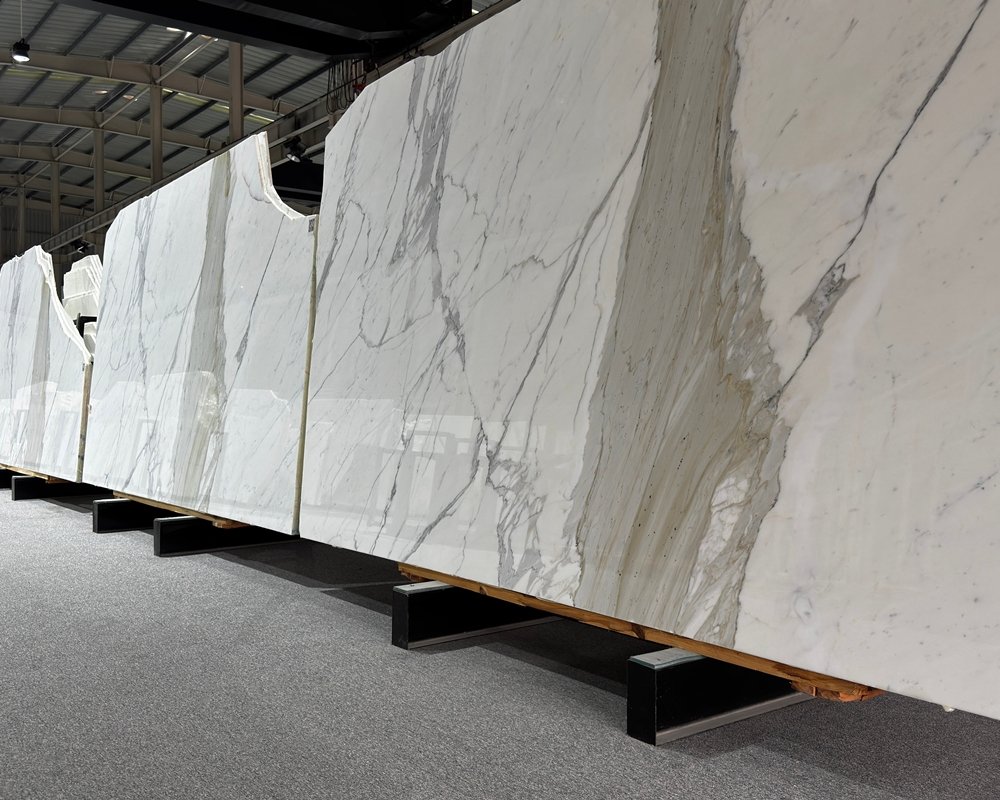
Calacatta marble represents the zenith of Italian natural stone, renowned globally for its unparalleled aesthetic and premium status. Sourced exclusively from the Apuan Alps near Carrara, Italy, Calacatta is significantly rarer and more exclusive than its counterparts, Carrara and Statuario marble.
The defining aesthetic is characterized by a pure, bright white background that serves as a canvas for bold, thick veining, often in dramatic grey, gold, or purple hues, which commands a premium price and is highly desired for high-visibility architectural features. Technically, Calacatta exhibits high density, ranging between 2,680 kg/m³ and 2,720 kg/m³, and remarkably low porosity (0.10% to 0.26%). This makes it suitable for high-end interior applications like countertops and cladding, provided rigorous sealing and compliance with international standards (such as ASTM and EN) are maintained.
I. The Undeniable Appeal of Calacatta: Origin, Rarity, and Aesthetics
01. The Geographical Exclusivity: Sourcing Italian Prestige
Calacatta marble’s formidable reputation and premium valuation are fundamentally tied to its geographical exclusivity. This stone is quarried from a small, specific zone within the Apuan Alps, located near the town of Carrara, Italy. This limited geographical availability imposes a critical supply-side constraint, which is the immediate driver of the material’s high cost and elevated status within the luxury materials market. The scarcity ensures that Calacatta marble is priced higher than many other types of marble.
The stone carries substantial historical prestige, tracing its use back to antiquity. It is famously documented as the stone of choice for the great Italian sculptor Michelangelo, who sourced material from the very quarries that supply modern Calacatta. This long-standing connection to architectural and artistic excellence ensures that choosing Calacatta is perceived not merely as an aesthetic preference but as an investment in centuries of established architectural value.
The resulting visual signature sets Calacatta apart. Unlike other white marbles, Calacatta is sought after for its pristine, bright white background. This background acts as a brilliant canvas for the stone’s signature characteristic: bold, high-contrast veining that often includes warm, golden, or dramatically colored hues. This combination of rarity and distinctive appearance translates into a valuable architectural asset. Data from 2024 suggests that properties featuring marble flooring or countertops can appreciate by 10 to 15% more than those with alternatives, confirming that Calacatta is indeed a high-value asset.
02. Calacatta vs. The White Marble Hierarchy: Carrara and Statuario
The decision to specify Calacatta often involves a direct comparison with its common white marble rivals: Carrara and Statuario. While all three are sourced from the same Italian region, their visual characteristics, availability, and resulting commercial value differ significantly.
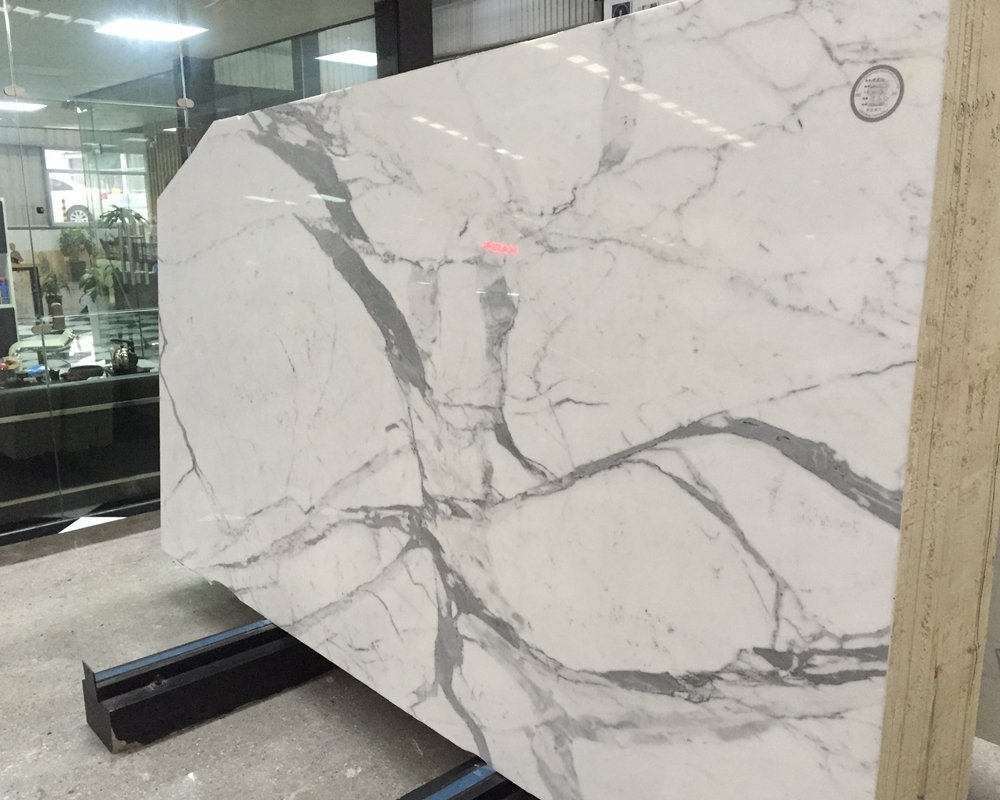
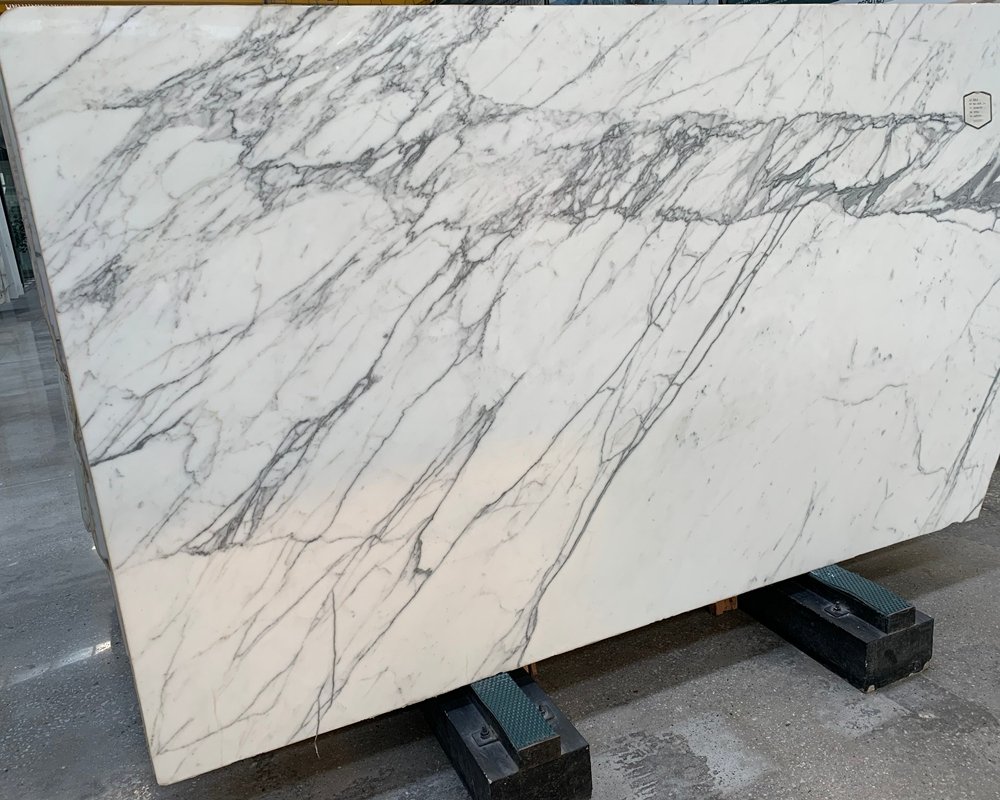
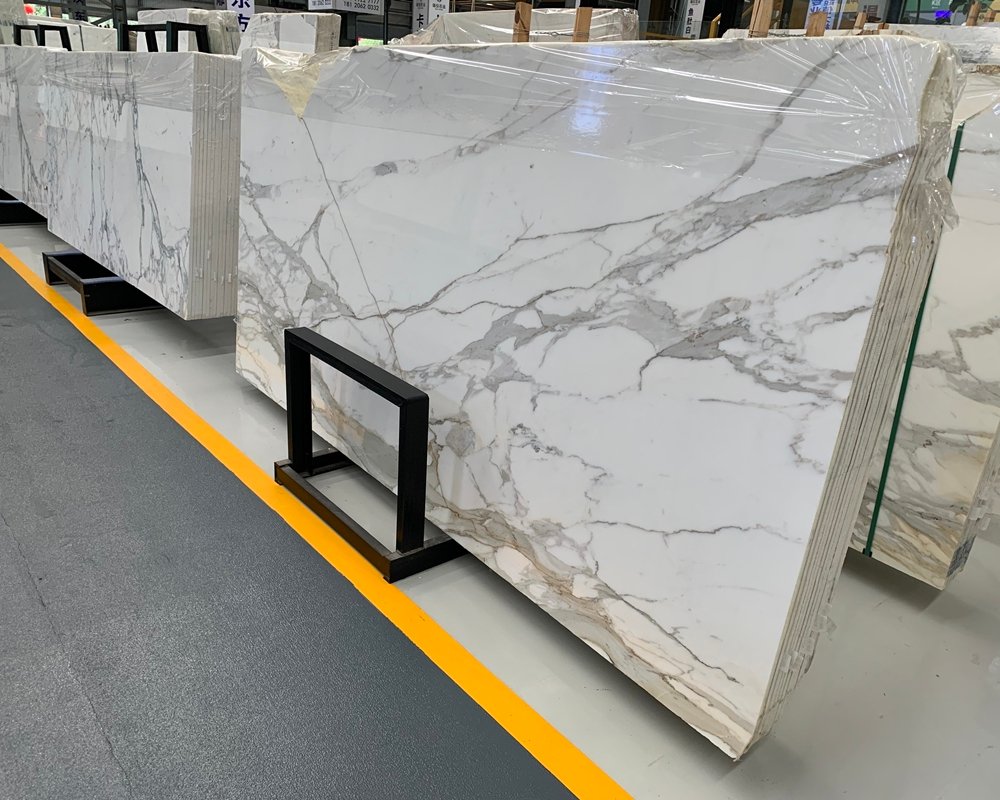
Carrara marble is the most common and therefore the least expensive of the three major Italian white marbles. It is characterized by a cloudier, slightly greyer background and features subtle, softer, and more linear grey veining. Calacatta, in contrast, consistently features a purer, brighter white base and more prominent, dramatic veining patterns.
Statuario marble falls between the two in terms of aesthetic. Statuario generally presents a cooler white base compared to the warmer tones often found in Calacatta, with veining that is typically finer and more feathery. However, in some cases, the veining in Statuario can appear more dense and concentrated, lending a dramatic look that rivals Calacatta. Both Calacatta and Statuario are considered rarer and more expensive than Carrara.
In terms of physical performance, all three stones are based on calcium carbonate and share a common vulnerability: high susceptibility to acid etching from substances such as vinegar or citrus juice. While Calacatta possesses a slightly higher calcite concentration, ranking approximately 3 on the Mohs hardness scale compared to Carrara’s dolomite, which ranks between 2.5 and 3, this marginal difference in hardness is generally insignificant for practical, everyday applications. The conclusion drawn by experienced fabricators and specifiers is that since the critical technical vulnerability (etching) is shared, the differentiation and purchase justification must shift almost entirely to aesthetic impact and perceived status. Therefore, Calacatta’s high market value is primarily driven by its bold, artistic visual statement, rather than a significant practical resilience advantage over Carrara.
II. Navigating the Nuances: A Deep Dive into Calacatta Variants
The naming conventions applied to Calacatta marble—such as Gold, Viola, or Lincoln—are not arbitrary; they directly reflect the subtle mineral deposits and unique vein coloration that give each slab its distinctive, high-value signature. This variety allows designers to select the precise level of drama, warmth, or contrast required for a specific architectural statement.
03. The Palette of Prestige: Detailed Variant Analysis
Calacatta Gold (Oro & Oro Extra)
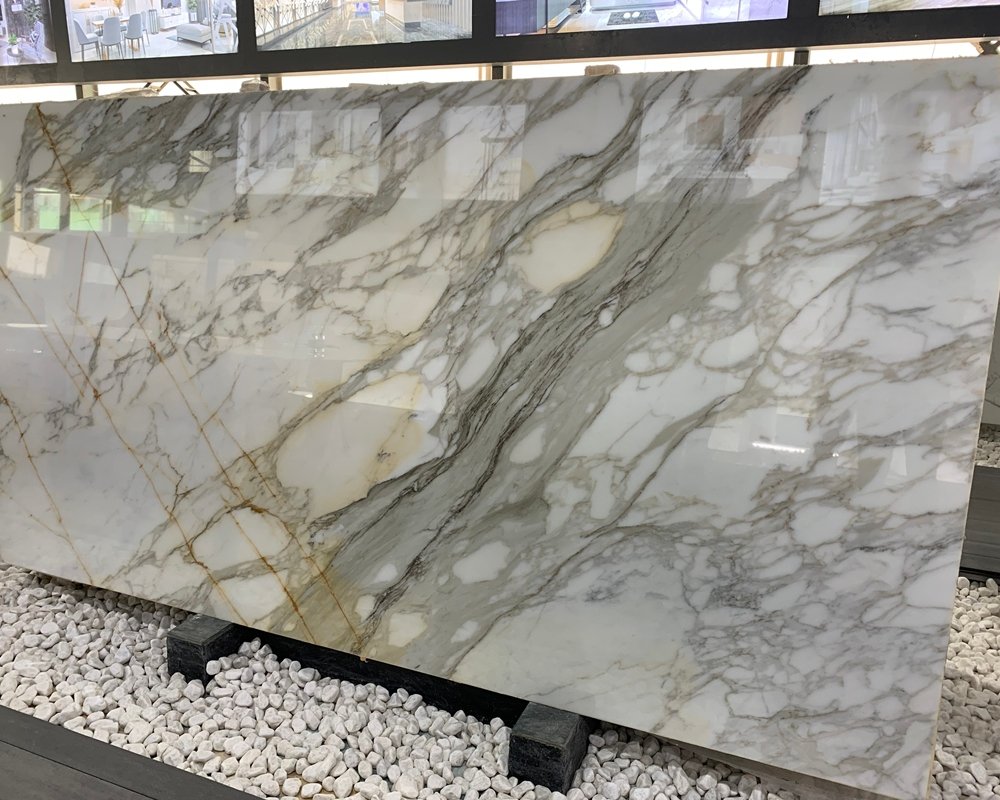
Calacatta Gold is one of the most highly demanded and trending varieties. It is distinguished by a warmer white or creamy background and features delicate grey veining that is intricately interwoven with pronounced gold or ochre undertones. This unique combination of classic Calacatta characteristics with a modern warmth has driven its immense popularity in recent years. It pairs exceptionally well with contemporary design elements like brushed brass fixtures. Wholesale pricing for premium Calacatta Gold slabs generally reflects this high demand.
Calacatta Lincoln
Calacatta Lincoln is characterized by a cloudier background—less pristine and bright than some other types—and features fine, often soft grey veining that may include blushes of silver. A key feature of Calacatta Lincoln is its flowing vein patterns that form stunning open-spot compositions. This pattern makes the stone highly suitable for bookmatched installations, where paired slabs create mirror-like symmetry across a large surface, making it an excellent centerpiece in luxury bathrooms, kitchens, and lobbies.
Calacatta Viola (and Lilac/New York)
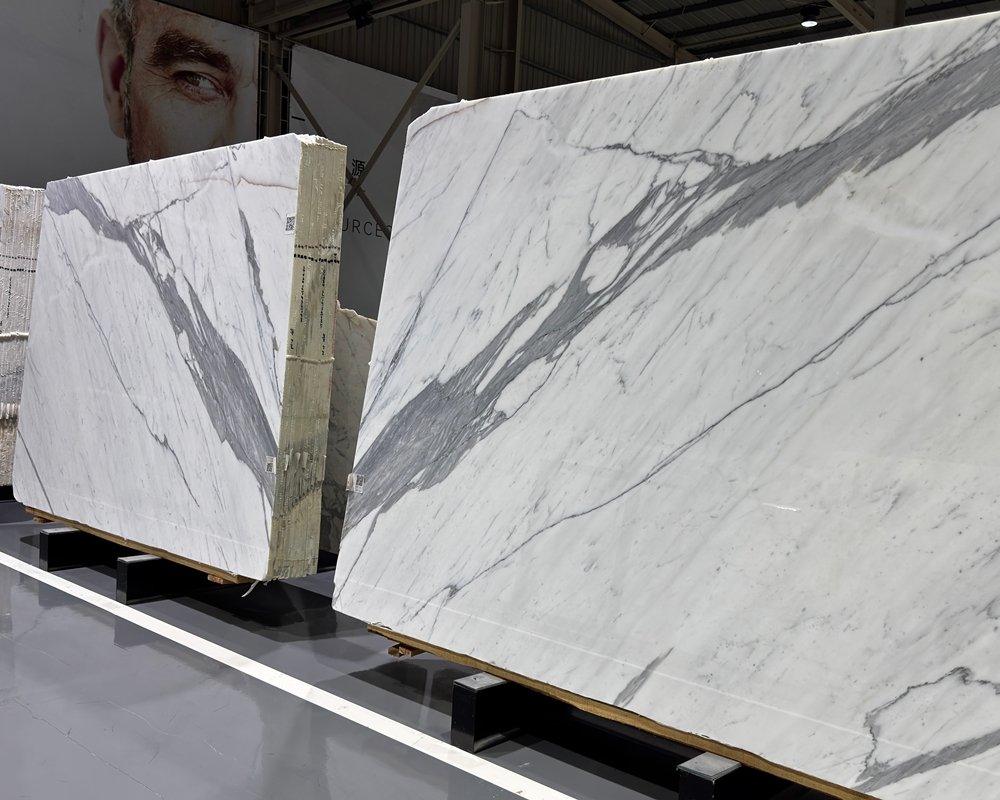
This is arguably the most dramatic and artistically pronounced variant. Calacatta Viola is defined by its pristine, almost porcelain-like white base, which is intricately interwoven with bold, river-like veins in rich violet, purple, or purple-red hues. The high contrast delivered by the dense purple veining against the pure white background makes it a preferred choice for designers aiming to create visually captivating interiors and high-drama accents. For example, Calacatta Viola slabs have been observed retailing for upwards of $230 per square foot for the material alone. Geographically, Italian-sourced Viola tends to showcase more vivid and densely packed veining compared to the softer transitions found in Turkish Calacatta Viola.
Calacatta Michelangelo
Named in tribute to the famed sculptor, Calacatta Michelangelo represents the most subtle end of the Calacatta spectrum. Unlike the dramatic patterns of Gold or Viola, Michelangelo features very fine, delicate veining against a pure white background. It is often selected when the purity of the white background is prioritized over the boldness of the veining, lending itself to understated elegance in applications like flooring, cladding, and bathrooms.
Other Notable Variants
Other variants serve niche design requirements. Calacatta Borghini boasts thick, gray veining with occasional gold undercurrents. Calacatta Vagli is known for its intricate, multi-colored veining, which can include hints of gold, beige, and various greys, offering a soft yet striking aesthetic.
The significant variation in aesthetic value across these types explains why aesthetic trends directly influence commercial pricing and application suitability. For instance, the demand for dramatic veining, a key trend for 2025, solidifies the premium associated with Calacatta Viola and Calacatta Gold. Functionally, all variants require similar installation and maintenance care, but their unique visual rarity dictates their use as architectural focal points—such as the symmetrical patterns of Lincoln being specifically desirable for high-cost bookmatched feature walls, maximizing visual flow and structural appeal.
The following table summarizes the primary visual distinctions and applications of the major Calacatta variants.
Calacatta Variant Aesthetics and Recommended Use
| Variant | Background Tone | Veining Characteristics | Distinctive Hue | Aesthetic Focus |
| Calacatta Gold (Oro) | Warm White/Creamy | Thick, Dramatic, Flowing | Gold, Ochre, Deep Grey | Classic Opulence, Warmth |
| Calacatta Lincoln | Cloudier White | Fine, Subtle, Symmetrical | Silver, Light Grey | Bookmatching, Sophistication |
| Calacatta Viola | Pristine White | Bold, Rivers of Color | Violet, Purple-Red | High-Drama Accents, Modern Contrast |
| Calacatta Michelangelo | Pure White | Very Fine, Delicate, Minimal | Light Grey, Silver | Understated Elegance, Cladding |
| Calacatta Borghini | White | Thick, Heavy Sequences | Grey, Occasional Gold | Robust Visual Impact |
III. The Data Foundation: Technical Specifications and Quality Assurance
For architects, engineers, and large-scale procurement professionals, the technical specifications of Calacatta marble are essential for professional specification and ensuring the material’s long-term fitness for purpose. The material’s high E-E-A-T (Expertise, Experience, Authority, Trustworthiness) status relies on verifiable performance data.
04. Calacatta Technical Performance Metrics
Calacatta exhibits a highly consistent and dense physical profile. The apparent bulk density ranges robustly between 2,680 kg/m³ and 2,720 kg/m³. This dense grain structure contributes to its structural integrity and its ability to resist cracking and stress damage during use. Furthermore, the compressive strength observed in Calacatta stone is robust, ranging from a minimum average of 48.70 MPa to maximum recorded values of 148 MPa. This strength profile confirms its suitability for heavy-load applications such as flooring and structural cladding.
Crucially, Calacatta possesses remarkably low water absorption and porosity. Water absorption at atmospheric pressure is measured at a very low 0.10% to 0.26%. Open porosity levels are similarly low, typically falling between 0.20% and 0.30%. Although these metrics are impressive, the material remains porous enough to necessitate meticulous sealing to prevent staining, particularly from commonly used acidic or pigmented liquids like wine or juice.
Regarding wear resistance, Calacatta shows moderate abrasion resistance, with test values ranging from 19.90 mm to 26 mm. While suitable for residential and low commercial traffic, this moderate resistance suggests caution in high-wear environments, such as heavy commercial areas or malls, as specified in some usage guidance.
The following table consolidates the critical technical properties of Calacatta marble, verified under international standards.
Consolidated Calacatta Marble Technical Specifications
| Property | Standard | Metric (Typical Range) | Implication for Use |
| Apparent Density | EN 1936 / ASTM C97 | $2,680 – 2,720 \text{ kg/m}^3$ | High material solidity and strength. |
| Water Absorption | EN 13755 / ASTM C97 | $0.10\% – 0.26\%$ | Low, but requires sealing to prevent staining. |
| Compressive Strength | EN 1926 / ASTM C170 | $48.7 – 148 \text{ MPa}$ | Ability to bear heavy loads (flooring, cladding). |
| Flexural Strength | EN 12372 / ASTM C880 | $7.72 – 15 \text{ MPa}$ | Resistance to breaking under bending stress. |
| Abrasion Resistance | EN 1341 / UNE EN 14157 | $19.9 – 26 \text{ mm}$ | Moderate wear resistance; best in low-traffic areas. |
05. Global Compliance and Standards for Procurement
For procurement professionals, compliance is a non-negotiable factor. High-quality Calacatta marble must be rigorously inspected and verified against international standards to ensure its longevity and performance. Key regulatory checks include the American standard ASTM C503 (Standard Specification for Marble Dimension Stone) and European norms such as EN 1926 (Compressive Strength) and EN 13755 (Water Absorption).
This focus on measurable compliance transforms the purchasing process from a simple aesthetic choice into a rigorous due diligence process. The high technical specification values observed—such as density and strength—while important, are not unique to premium marbles. What validates the premium price point for B2B buyers is the certification under recognized bodies like ASTM and EN, which confirms the material’s measurable performance and compliance-ready durability. This scientific approach ensures that the high-cost Calacatta material resists cracking, water absorption, and stress damage under specified conditions. By demanding this documented certification, professional buyers are effectively mitigating long-term structural risk associated with such an expensive installation.
IV. The Commercial Imperative: Pricing, Procurement, and Market Trends
Calacatta marble is priced as a high-end luxury commodity, with its cost heavily influenced by its geological scarcity and the aesthetic uniqueness of the veining patterns.
06. Comprehensive Calacatta Pricing Guide (2025 Outlook)
The pricing structure for Calacatta is highly tiered, separating direct sourcing costs from consumer retail and installation fees. Wholesale pricing for high-grade slabs, such as Calacatta Gold, typically ranges from $45 to $85 per square foot. These base prices are maintained by large fabricators who benefit from direct quarry sourcing and bulk purchasing arrangements.
End consumers, however, face significantly higher retail and installation costs. The material cost alone generally starts from $75 and can reach up to $180 per square foot for premium slabs. Once professional fabrication, cutting, specific edge detailing, and installation labor are factored in, the total installed cost often falls between $180 and $400+ per square foot. Individual, highly unique slabs can command prices exceeding $16,000, depending on size and grade.
Several factors contribute to these escalating costs:
Quality and Grade: The purity of the white background and the clarity and consistency of the dramatic veining are paramount.
Size and Thickness: Larger slabs are more difficult to quarry and transport, automatically increasing their price per unit area. Thicker slabs (e.g., 3cm vs. 2cm) require more raw stone and labor.
Variant Exclusivity: Variants favored by current trends, such as Calacatta Gold and the highly dramatic Calacatta Viola, command higher price tags due to trend-driven demand and their color rarity.
For industry professionals and bulk purchasers seeking better margins, investigating the Calacatta marble wholesale price per slab is necessary to achieve cost efficiencies. Sourcing options such as “buy Calacatta Gold factory direct” offer a path to potentially circumvent multiple intermediary markups. Establishing relationships directly with an established Calacatta Lincoln marble manufacturer can ensure both cost savings and better control over quality and grading consistency.
Calacatta Pricing & Cost Drivers (2025 Market)
| Pricing Segment | Cost Range (USD per sq. ft) | Total Installed Cost (USD/sq ft) | Primary Driver |
| Wholesale Slab (A-Grade) | $45 – $85 | N/A | Direct quarry sourcing, bulk volume, thickness (2cm/3cm). |
| Retail Slab (Material Only) | $75 – $180+ | N/A | Rarity, veining pattern exclusivity, and supplier overhead. |
| Typical Installed Project | N/A | $180 – $400+ | Fabrication complexity, installation labor, and regional freight. |
07. Supply Chain Dynamics and Trade Policy
The high-end natural stone market continues to experience steady growth, driven by global infrastructure investments and demand in luxury real estate development. The global natural stone market is projected to expand from $42.04 billion in 2024 to an estimated $51.77 billion by 2029, with marble maintaining a strong 20% to 25% market share.
However, the supply chain for materials sourced exclusively from the Carrara region is subject to geopolitical instability. The Italian marble industry is heavily dependent on the US market, with processed marble exports to the US totaling €150 million in 2023. This significant reliance exposes the Calacatta supply chain to instability related to international trade policy. Threats of tariffs on imported Italian marble directly risk causing a contraction in exports and subsequently increasing construction costs for US buyers.
Savvy procurement strategies must account for this geopolitical risk and logistical costs. The cost of Calacatta is not fixed; it is vulnerable to international trade tensions and shipping volatility. If tariffs are imposed, prices rise, potentially shifting design specifications toward high-grade engineered alternatives. Therefore, commercial buyers specifying materials like Calacatta Viola marble for commercial projects must secure contracts that clearly address and allocate tariff risks or explore methods such as bonded warehousing to stabilize procurement costs.
V. Sourcing Ethically and Sustainably
As the construction industry focuses increasingly on environmental, social, and governance (ESG) metrics, the sustainability profile of luxury materials like Calacatta marble has become a critical factor for procurement.
08. The Environmental Footprint and Ethical Sourcing
Marble extraction is inherently resource-intensive. The process is known to generate significant waste, with estimates indicating that 30% to 70% of the raw material is transformed into waste and refuse during quarrying, cutting, and processing. Heavy machinery used in extraction produces damaging pollutants, including carbon dioxide and sulfur dioxide, contributing to air pollution. Furthermore, the process consumes vast amounts of energy and water, posing risks of groundwater contamination from waste disposal and chemical runoff.
In response, the industry is undergoing a shift toward sustainable stone sourcing. Modern procurement practices now demand adherence to four core principles: environmental stewardship, economic viability, social responsibility (including fair labor practices), and cultural preservation. Innovative quarrying techniques are being adopted, such as diamond wire sawing, which can maximize usable material from each block and reduce waste by up to 40% compared to traditional methods.
The implementation of sustainability documentation, specifically Environmental Product Declarations (EPDs) and digital product passports, is increasingly becoming a mandatory requirement for global trade, particularly in European and US markets. EPDs verify the marble’s environmental impact throughout its lifecycle. This EPD compliance is not just a marketing preference; it is a competitive and legal necessity. Certified, responsibly sourced marble contributes necessary LEED and BREEAM points, securing the material’s viability in ESG-driven, green building projects and increasing the competitiveness of bids. The need for EPDs increases the operational costs for the Calacatta marble factory, which is ultimately reflected in the price, but it ensures the material meets the stringent standards demanded by modern architectural specifications.
VI. Durability and Installation: Lifetime Ownership Guide
The longevity and aesthetic quality of Calacatta marble rely heavily on two critical decisions: the surface finish and the quality of the installation.
09. Finish Selection: Honed vs. Polished—The Durability Trade-Off
The surface finish determines the material’s reaction to daily wear, light, and chemical interaction. This decision represents a direct trade-off between the visibility of physical damage (scratches) and vulnerability to chemical damage (stains and etching).
Polished Finish: This high-gloss, reflective finish amplifies light, making the veining and colors of the stone appear more vibrant, which can make rooms feel brighter and more open. The surface is extremely dense, which offers a slightly better defense against immediate staining. The key vulnerability is that polished surfaces readily show light etching (dull marks caused by acidic contact) and minor scratches, requiring diligent, constant care to maintain their pristine appearance, particularly in high-traffic areas.
Honed Finish: This finish provides a soft, non-reflective, matte appearance that absorbs light, creating a cozier atmosphere. The honed surface is significantly more forgiving of everyday use, as minor scratches, scuffs, and etching are much less noticeable than on polished stone. The key trade-off is that the matte surface is slightly more porous than polished stone and is consequently more susceptible to absorbing stains, making immediate cleanup of spills absolutely crucial. For high-activity areas like kitchen countertops, where spills are frequent, the use of a high-performance, penetrating sealant is of paramount importance for honed Calacatta surfaces.
10. Maintenance and Etch Repair
Maintaining the inherent beauty of Calacatta marble requires a proactive and consistent care regimen. Due to its porous, calcite-based composition, the material must be sealed regularly, typically every 6 to 12 months, using a high-quality penetrating sealer to protect against both staining and etching. Cleaning practices must adhere strictly to the use of pH-neutral cleaners and soft cloths, as abrasive products can damage the finish. All spills, especially acidic liquids like juice or wine, must be wiped up immediately with a clean, dry cloth.
Etching, which manifests as dull or shadowy marks caused by acid reacting with the calcium carbonate, is the most common issue. These are superficial chemical burns, not stains. For light etching on polished surfaces, particularly on light-colored stones like Calacatta, specialized DIY marble repair kits are available. These kits are formulated to restore the shine and surface uniformity, often providing a cost-effective alternative to professional restoration for minor damage.
11. Installation Mastery: Avoiding Costly Errors
Given the significant cost and rarity of Calacatta slabs, installation must be viewed as the highest-leverage investment protecting the material’s value. Failure to hire a qualified professional installer risks catastrophic failures such as cracked slabs, uneven seams (lippage), and misaligned veining, which is critical for bookmatched designs.
Professional installers utilize specialized diamond tools to ensure precision cutting and meticulously assess site conditions, including moisture levels and temperature ranges, prior to commencing work. The most common and fatal mistakes, which lead to expensive remediation, include:
Skipping Surface Preparation: Marble requires a perfectly flat and clean surface; an uneven base will cause cracking or shifting.
Adhesive Misuse: Using the wrong type of adhesive or failing to “back-butter” large-format tiles.
Ignoring Curing Times: Rushing the curing time of the setting material before sealing and grouting.
Ignoring Waterproofing: A critical step, especially in wet areas like showers or high-moisture bathrooms.
A professional installation minimizes risk, ensures the veining is properly aligned to maximize aesthetic flow, and leverages the material’s light-reflective properties to enhance the perceived size and illumination of the room. The cost of professional installation is a mandatory fraction of the total budget; risking a marble flooring investment that could cost upwards of $33,000 to save on installation fees is highly discouraged.
VII. Calacatta vs. Engineered Alternatives
The modern market offers several high-quality alternatives designed to mimic Calacatta’s appearance, notably quartz and porcelain. The choice between natural stone and these engineered materials generally comes down to a choice between durability/convenience and authenticity/long-term asset value.
12. The True Comparison: Natural Marble vs. Quartz vs. Porcelain
Aesthetic Authenticity and Composition
Engineered quartz products are typically manufactured from 80% natural quartz mineral combined with 10% resin, a process that creates consistency and durability. While these materials effectively imitate the striking white background and prominent veining of Calacatta, they inherently lack the unique qualities, natural impurities, and subtle, organic flow patterns found in genuine quarried stone. Porcelain tiles similarly offer a durable, marble-effect surface (such as Calacatta Dover or Alaskan Calacatta White) without the need for sealing.
Durability and Maintenance
Quartz and porcelain alternatives offer greater overall resistance to scratches and staining than natural marble. These alternatives require significantly less maintenance and are therefore ideal for extremely busy commercial settings or high-impact residential kitchens where continuous diligent care cannot be guaranteed. Marble, conversely, requires continuous, routine maintenance, specifically the mandatory 6–12 month sealing regimen.
Investment Value and Longevity
Despite the higher maintenance requirement, natural Calacatta marble provides a significantly superior return on investment. Studies indicate that properties featuring marble surfaces appreciate by 10 to 15% more compared to alternatives. This contrasts sharply with engineered stone, which typically provides an appreciation of 5 to 7%. Furthermore, natural marble is considered a 50+ year material when properly maintained, whereas engineered stone generally has an expected lifespan of 20–25 years.
For the high-end buyer, the decision hinges on the desire for long-term architectural prestige and superior asset appreciation, justifying the higher initial cost and commitment to maintenance. Additionally, natural marble is EPD-ready, offering strong sustainability credentials and securing LEED and BREEAM points, whereas engineered stone may present higher compliance complexity due to potential VOC risks associated with resins.
VIII. Semantic Closure Block & Final Purchase Recommendations
13. Strategic Sourcing Checklist and Final Decision Summary
The specification of Calacatta marble is a commitment to timeless elegance and enduring value. To maximize the long-term return on this premium material, purchasers must adopt a strategic approach that balances aesthetic requirements with technical diligence and professional installation.
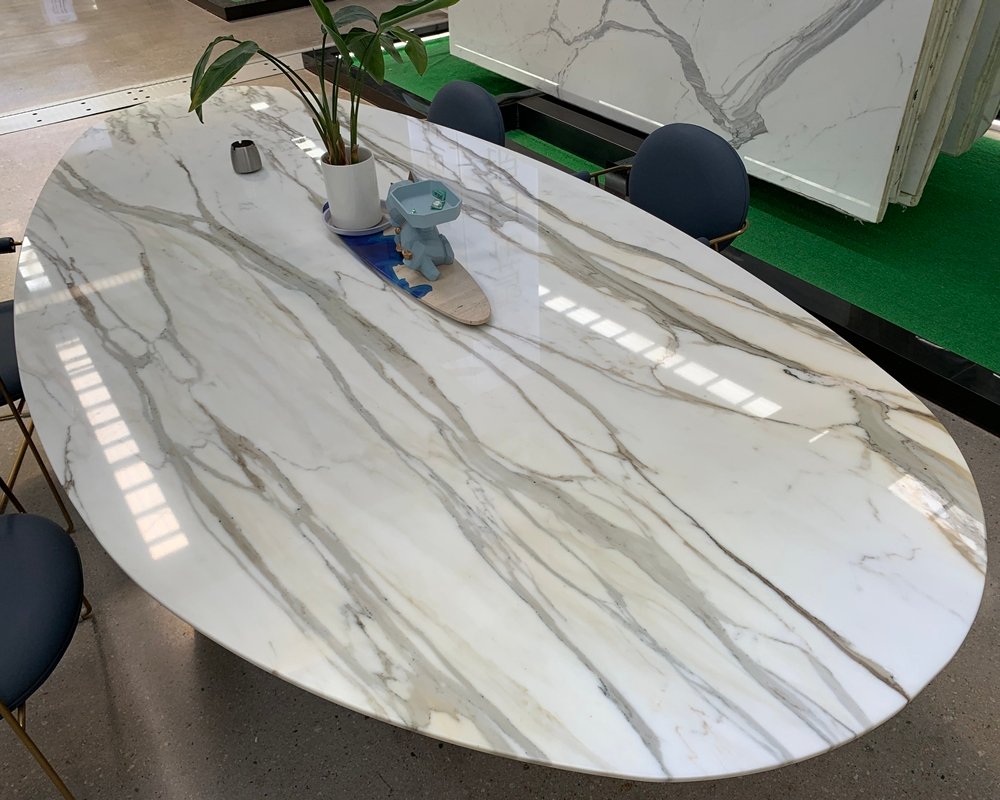
The most critical initial step is Grade Selection. Purchasers must visually inspect slabs (either in person or through high-resolution video) to prioritize those with the brightest, purest white background and the most dramatic, consistent veining patterns, especially for high-value variants like Gold or Viola. This in-person assessment is essential for gauging the veining flow and natural imperfections.
Supplier Credibility is non-negotiable. Suppliers must provide complete documentation, including verifiable EN and ASTM technical data sheets and, increasingly, Environmental Product Declarations (EPDs) for sustainability compliance. Identifying the best Calacatta marble slab supplier near me should involve verifying their installation history and warranty coverage, focusing on those who provide evidence of compliance-ready material.
Cost Management requires understanding that professional installation is the highest leverage investment. Given the extreme cost of the material, compromising on installation quality to save a fraction of the budget severely risks catastrophic failure or aesthetic defects. The final decision to purchase Calacatta should be made with a clear Maintenance Commitment, recognizing it as a “living material” that necessitates routine sealing every 6 to 12 months and the immediate attention to spills and etching.
IX. Google Hot Search FAQs
The following frequently asked questions address high-volume queries related to Calacatta marble procurement and ownership.
1. What is the average installed cost of Calacatta Gold marble countertops?
Installed Calacatta Gold typically ranges from $75 to $180 per square foot for the raw material alone. The total installed costs generally range from $180 to $400+ per square foot, with the final price heavily influenced by the slab grade, thickness (2cm versus 3cm), complexity of fabrication (including precise cutouts and custom edge profiles), and regional labor rates for professional installation.
2. How often do I need to seal Calacatta marble countertops?
Calacatta marble should be professionally sealed every 6 to 12 months using a high-quality, penetrating sealer. This routine step is absolutely critical, as it works to lower the stone’s natural porosity (0.10% to 0.26%), thereby protecting the surface against penetration from staining liquids and mitigating the effects of acid etching.
3. What is the main difference between Calacatta and Carrara marble?
While both marbles originate from the renowned Carrara region of Italy, Calacatta is distinctly rarer and more expensive. Calacatta features a purer, brighter white background and exhibits bolder, more dramatic veining that often includes striking golden or ochre hues. In contrast, Carrara is more common, presents a cloudier or greyer background, and possesses softer, more subtle, and linear veining patterns.
4. Can I use Calacatta marble in a high-traffic kitchen?
Yes, Calacatta marble is suitable for use in a high-traffic kitchen, provided that it is professionally sealed and that owners maintain meticulous care standards. The surface finish is a key factor: Honed finishes hide minor scratches better, offering practical resilience, but Polished surfaces provide slightly greater density against immediate staining. The immediate cleanup of acidic spills (such as citrus, wine, or vinegar) is non-negotiable to prevent permanent etching.
5. Is Calacatta marble more durable than Quartz or Porcelain alternatives?
Natural Calacatta marble is unmatched in its aesthetic authenticity and offers a significantly higher long-term investment value, potentially adding 10 to 15% to property appreciation. However, engineered alternatives like Quartz and Porcelain generally offer superior resistance to scratching and chemical etching (higher functional durability) for high-impact use areas. Marble requires continuous maintenance (sealing) for its longevity, whereas engineered alternatives offer low-maintenance convenience.