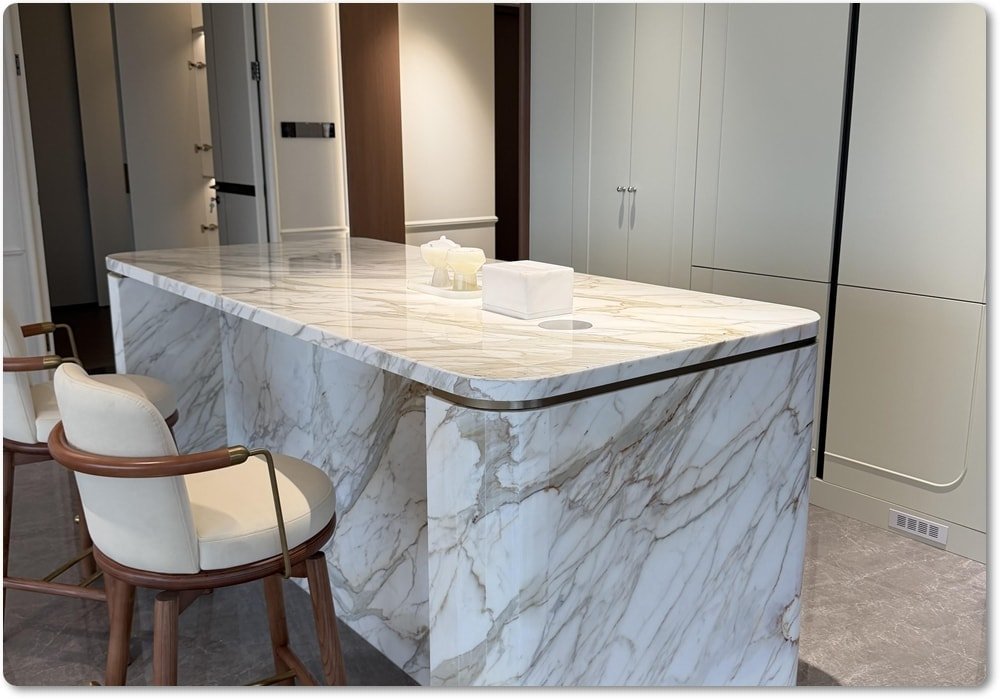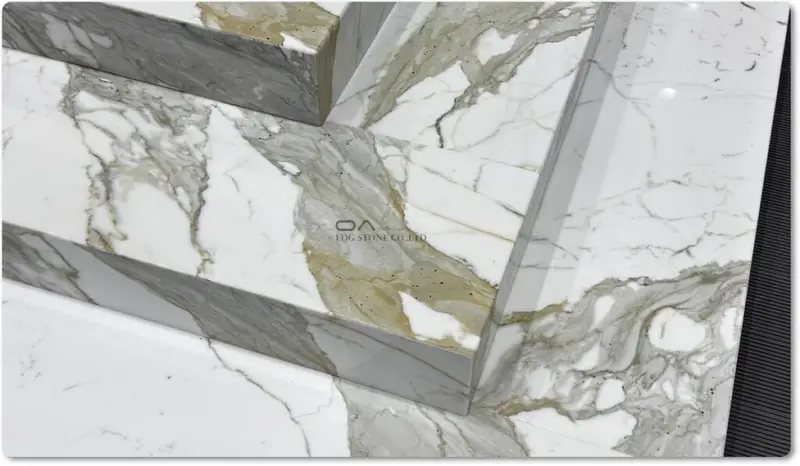
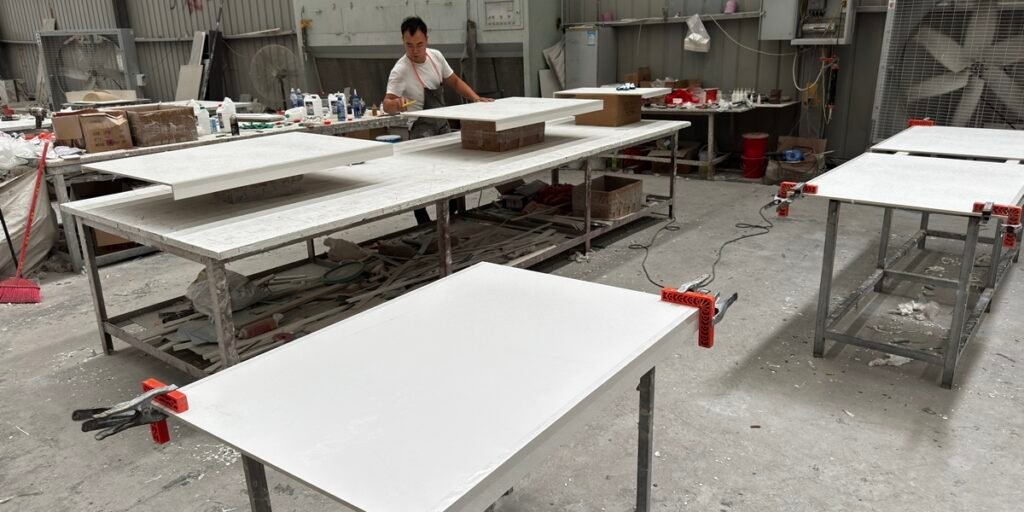
Cutting sintered stone safely and cleanly requires the right machine, blades, water/dust control, and knowledge of the material’s behavior. This guide walks you from fundamentals (what sintered stone is) through practical workshop and job-site workflows, finishing, compliance with silica regulations.
What is sintered stone?
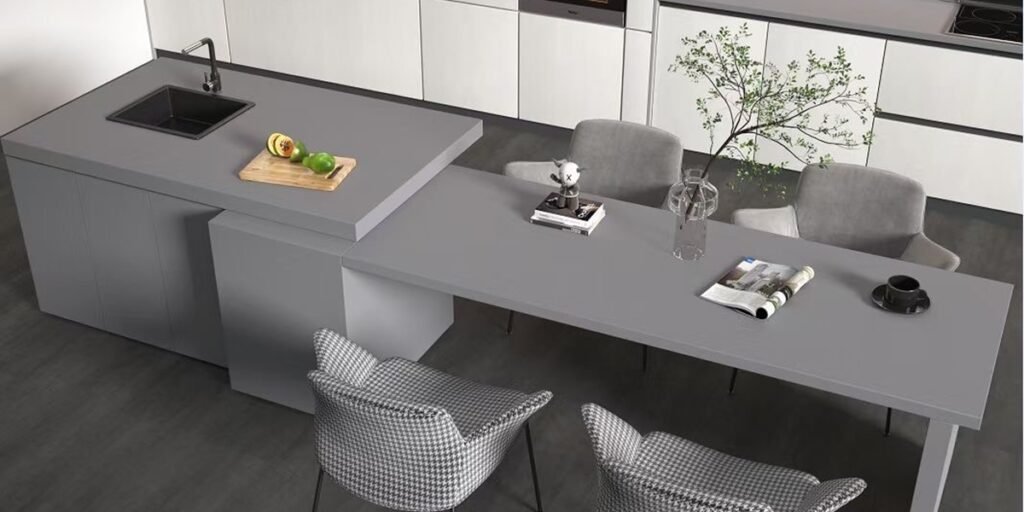
Sintered stone is a high-performance, fully sintered slab made from mineral raw materials compacted and fired under extreme heat and pressure. It combines ceramic and engineered-stone technologies to achieve very low porosity, high scratch/heat/UV resistance, and large slab formats used for countertops, cladding, and furniture. Brands include Dekton (Cosentino), Neolith (Pamesa), and others; manufacturers publish technical manuals with recommended cutting and fabrication practices.
Sintered stone vs quartz
Short takeaway: quartz (engineered quartz) is a resin-bound slab with high silica + polymer; sintered stone is ceramicized, with much higher firing temperatures and lower resin content — yielding different cutting and polishing needs and improved heat/UV resistance. For fabrication, sintered stone behaves more like porcelain/ceramic; cutting protocols reflect that. (See brand technical manuals for exact tooling and RPM guides.)
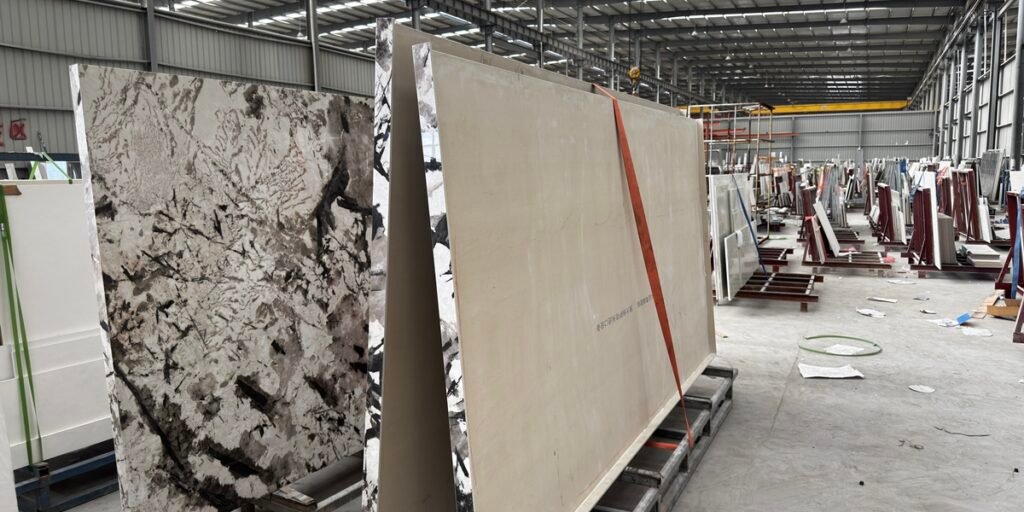
Key long-tail / buyer intent keywords to target here (examples)
Buy sintered stone countertops manufacturer
sintered stone countertops wholesale supplier
sintered stone factory near me for countertops
How to cut sintered stone countertops at home
sintered stone vs quartz countertops cost comparison
How to cut sintered stone: tools & why they matter?
Recommended tools
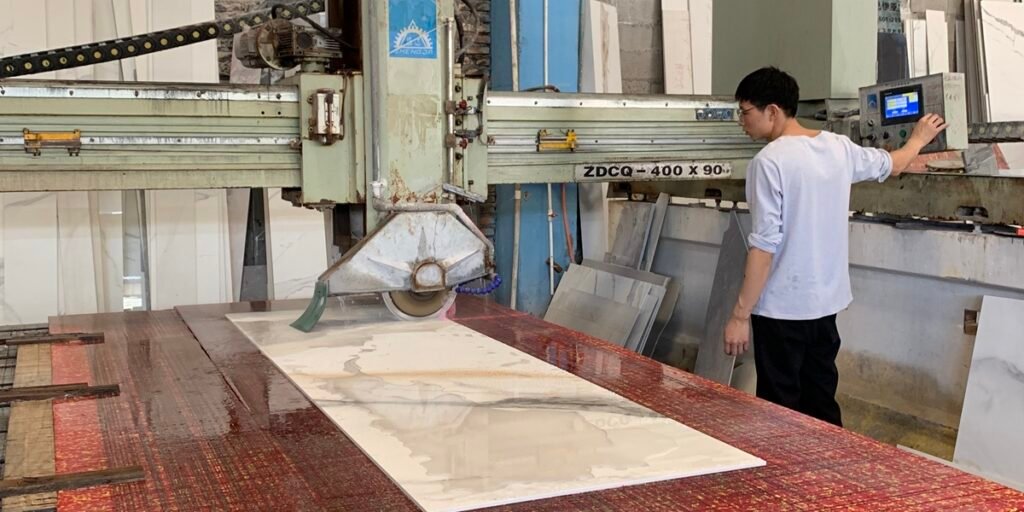
Bridge saw (wet) with continuous-rim diamond blades for straight cuts (workshop).
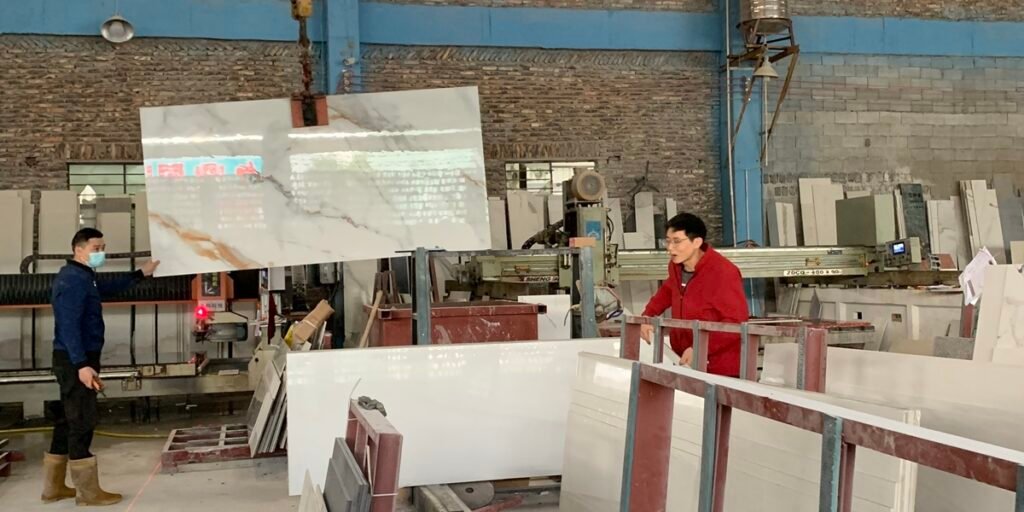
CNC gantry table with water supply and diamond tooling for precision cutouts, drilling, and profiling.
Waterjet for shapes, undermount sink pockets, and zero-chip edges when extreme precision is required.
Angle grinder or hand grinder with porcelain/sintered diamond blades for small field cuts (wet when possible).
Diamond polishers & polishing pads (coarse → fine) for finishing edges.
Wet core drills with diamonds for tapers, hob cutouts, and plumbing penetrations.
Dust capture systems / HEPA vacuums and fixed local exhaust when water use is not possible.
Why is wet cutting or dust capture essential?
Cutting sintered stone generates fine respirable crystalline silica (RCS). Regulatory frameworks require controls — wet cutting or engineered dust capture — to limit worker exposure. In the United States, OSHA’s silica standard defines exposure limits and mandates exposure control measures; in the EU, similar directives and limit values apply. Using wet cutting + local exhaust not only protects workers but also reduces chipping and extends diamond life.

Step-by-step: workshop (controlled environment) method
Goal: straight cuts, openings, edge profiles with minimal chipping and compliant dust controls.
Layout & measure. Confirm slab flatness, mark cuts with pencil/grease marker; allow 3–5mm tolerance depending on joinery method.
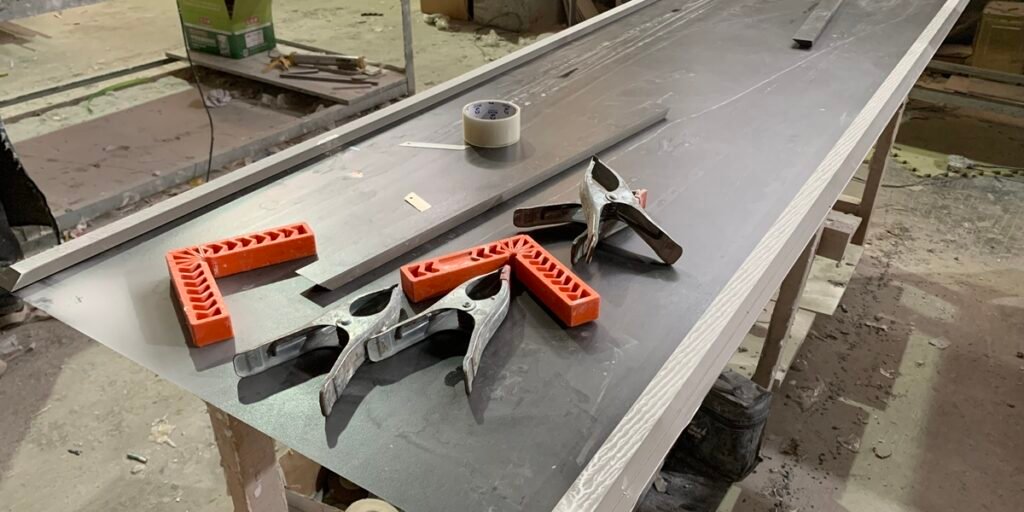
Support & clamp. Place the slab on a flat, supported cutting table or rubber mats to reduce vibration. Ensure full slab support to the cut line.
Choose blade & RPM. Use a continuous-rim or segmented diamond blade recommended for porcelain/sintered stone; check manufacturer RPM limits. For angled cuts, slow feed and multiple shallow passes produce the best results.
Wet feed or waterjet. If using a bridge saw/CNC, ensure steady water flow to the blade to suppress dust and cool the diamond segments. For intricate contours, use a waterjet to avoid mechanical stress.
Cut in passes. For thick slabs (>12–20 mm), consider multiple passes to reduce stress on the blade and slab. Keep feed consistent and avoid abrupt stops/starts on the cut.
Edge finishing. Use diamond profiling wheels or cup wheels to create the chosen edge (eased, bullnose, pencil). Progress through the grit sequence and finish with polishing pads.
Inspection. Check seams, miter joints, and edge integrity before installation.
Step-by-step: field (on-site) method
Field constraints require extra safety measures (mobile wet saws, HEPA vacuums, containment):
Jobsite prep. Isolate the work area, post warnings, and restrict access. Lay drop cloths; maintain water containment to avoid slip hazards.
Use portable wet cutters with dust suppression. If wet cutting is impractical, use a HEPA-equipped shroud + vacuum attached to angle grinders. Note: Wet cutting is preferred where possible because it traps silica in slurry.
Workers’ PPE. Fit-tested respirators (P100) or Powered Air-Purifying Respirators (PAPR) as required by local regulations; gloves, eye/face protection, and hearing protection.
Collect slurry & waste. Do not wash silica slurry into public drains — filter and collect for proper disposal per local regulations.
Finish & seaming. Final polishing and seam filling should be done with dust control measures still in place.
Safety & regulatory compliance
Key regulatory anchors
United States (OSHA): OSHA’s respirable crystalline silica standard for construction sets an action level and PEL and requires written exposure plans, engineering controls, respiratory protection, medical surveillance, and training. Employers must limit exposures and implement controls such as wet cutting or local exhaust. (OSHA standard 1926.1153 and silica resources.)
Practical note: OSHA’s standards require monitoring and documented control plans — fabricators should maintain exposure records.European Union: The EU’s amended Carcinogens and Mutagens Directive set a workplace limit value of 0.1 mg/m³ (100 µg/m³) for RCS; member states have implemented national measures (some stricter). This directive shapes shop practices and product claims across Europe.
Operational controls you must implement
Favor wet cutting or enclosed CNC with dust capture.
Use HEPA filtration vacuums for dry grinding tasks.
Provide fit-tested respiratory protection where engineering controls cannot reduce exposure sufficiently.
Train workers on silica hazards, slurry handling, and emergency procedures.
Keep records of exposure monitoring and equipment maintenance.
Finishing, polishing, and edge details
Edge profiles: Use diamond profiling wheels, starting coarse and progressing to finer grits. Sintered stone can take a high polish similar to porcelain when a correct grit sequence is followed.
Seams & adhesives: Use polymeric adhesives formulated for low-porosity surfaces; manufacturers often recommend specific products for sintered stone to ensure color match and bond strength.
Polishing tips: Keep water flow consistent; avoid overheating. Finish with resin-impregnated polishing pads if high gloss is required.
Troubleshooting common problems
Chipping along cut: Slow feed, increase water flow, or use a blade designed for porcelain/sintered materials. Consider making a slightly oversized cut and sizing by polishing.
Blade glazing or poor cut quality: Blade worn or clogged — dress or replace blade; check RPM and feed.
Excessive dust: Check water supply, nozzle alignment, and vacuum performance; confirm HEPA filter integrity.
Market & regulatory trends shaping the industry
The sintered stone market has shown steady growth driven by architectural adoption and performance benefits; recent industry reports estimate a market size in the high-hundreds of millions USD with 5–8% CAGR forecasts through the late 2020s. At the same time, tightening silica regulations (OSHA and EU directives) and increased attention to worker safety are pushing fabricators toward automated enclosed workflows (CNC with capture), waterjet adoption, and stricter waste handling policies. These two forces — demand and regulation — are incentivizing investment in safer, more productive fabrication lines.
Semantic Closure — How / Why / What / Options / Considerations
How: Cut sintered stone using wet diamond tools (bridge saws, CNC gantries) or waterjet for precision. Use staged passes, steady water, and diamond grit progression for finishing.
Why: Sintered stone performs like ceramic: low porosity, high heat resistance, and UV stability. Proper cutting methods preserve aesthetics and structural integrity while minimizing silica exposure.
What are the options: Workshop (bridge saw + CNC) for volume and accuracy; waterjet for complex profiles; field portable wet cutters with HEPA vacs for on-site adjustments. Choose enclosed CNC + dust capture where regulation or scale demands it.
Considerations (detailed):
Compliance: OSHA and EU rules require engineering controls and documented exposure plans.
Waste handling: Slurry is silica-laden — treat as industrial waste and prevent drainage to public systems.
Supply chain & purchase: For wholesale or manufacturer sourcing, request technical datasheets and fabrication guides from brands (e.g., Dekton, Neolith) to match tooling and warranty conditions.
FAQ — Google hot search FAQ
Q: Can you cut sintered stone at home?
A: Technically yes, for very small pieces using the correct wet diamond blades and PPE, but for full slabs and seams, you should use professional shop equipment (CNC/bridge saw/waterjet) to ensure clean joins and safe dust control.Q: How do professionals cut sintered stone countertops?
A: Professionals use bridge saws with continuous diamond blades, CNC gantries with water cooling, or waterjets for complex shapes; wet cutting and dust capture control silica exposure.Q: Is sintered stone better than quartz for countertops?
A: They serve different needs: sintered stone is more heat/UV resistant and lower-porosity; quartz offers a wider range of engineered patterns and typically easier field handling. Choice depends on end use and fabrication capabilities.Q: Where can I buy sintered stone countertops wholesale?
A: Contact manufacturers and authorized distributors (Neolith, Dekton/Cosentino, FMG, etc.) or regional fabricator wholesalers; request material datasheets, wholesale pricing, and fabrication support.Q: What safety measures are required when cutting sintered stone?
A: Use wet cutting or high-efficiency local exhaust, HEPA vacuums, proper PPE (P100 respirators or PAPRs), medical surveillance if applicable, and follow local silica regulations and exposure-control plans.
Focus Keyword, 50 SEO tags
Focus Keyword: how to cut sintered stone
50 SEO tags (mix of short and long-tail, including purchase intent):
sintered stone,how to cut sintered stone,how to cut sintered stone countertops,sintered stone countertops,buy sintered stone countertops,sintered stone manufacturer,sintered stone factory,sintered stone wholesale,where to buy sintered stone countertops,sintered stone vs quartz,can you cut sintered stone,how do you cut sintered stone,cut sintered stone at home,cut sintered stone with waterjet,bridge saw sintered stone,Dekton cutting guide,Neolith cutting manual,wet cutting sintered stone,silica safety sintered stone,respirable crystalline silica,OSHA silica standard,EU silica limit value,diamond blade for sintered stone,CNC sintered stone cutting,waterjet sintered stone,sintered stone polishing,edge profiling sintered stone,sintered stone countertops price,sintered stone wholesale supplier,sintered porcelain countertops,cut porcelain countertops,how to cut stone slabs,how to cut soft stone,how to polish stone carving,sintered stone installation tips,sintered stone slab fabrication,sintered stone market 2025,sintered stone regulations,kitchen countertops sintered stone,bathroom sintered stone vanity,sintered stone maintenance,sintered stone vs quartz price,buy sintered stone slab factory,sintered stone fabricator near me,sintered stone troubleshooting,sintered stone edge finishing,sintered stone core drilling,sintered stone water slurry disposal,professional sintered stone cutting,sintered stone safety checklist.