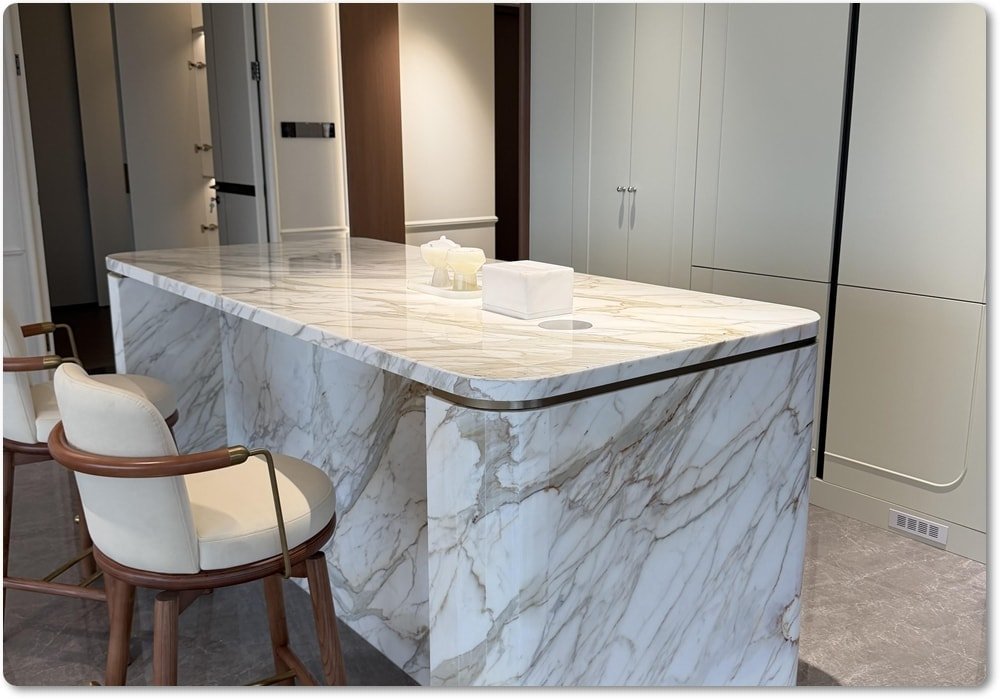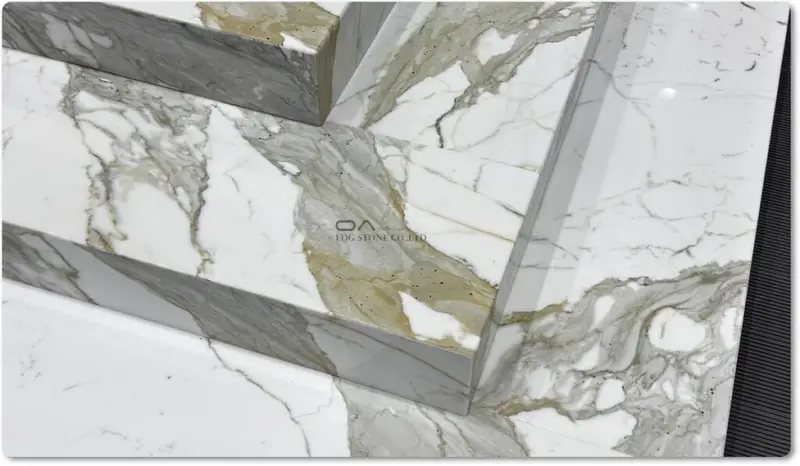
What the numbers say — real price ranges and why they vary?
Typical quartz pricing (engineered)
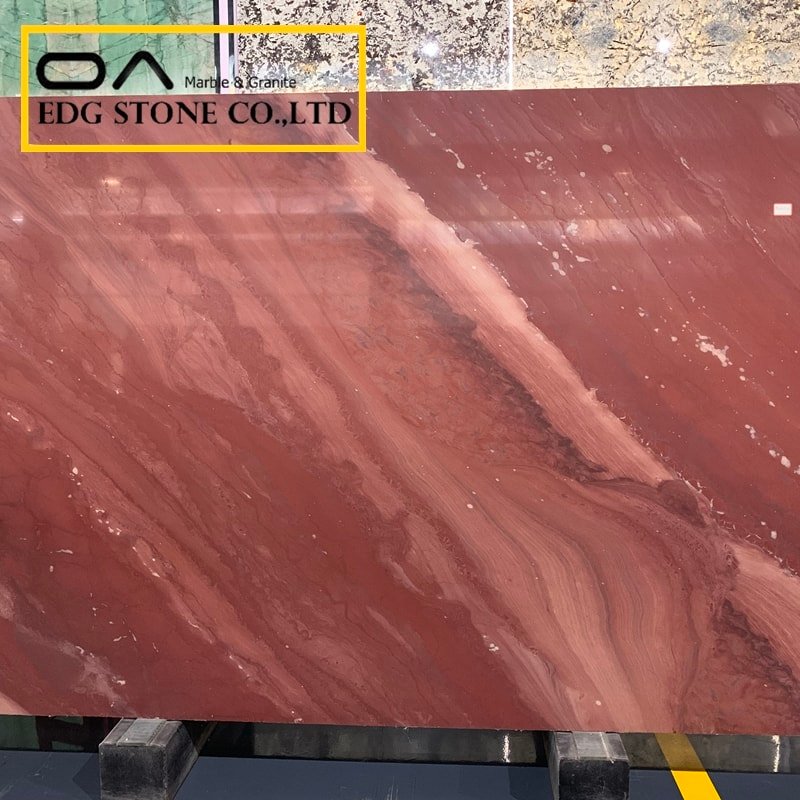
Engineered quartz (factory-made slabs combining crushed quartz and polymer resin) is a broad category: entry-level quartz can be very affordable while premium designer brands and specialty finishes push prices to the high end. Market guides and fabricator price calculators in 2024–2025 commonly place installed quartz between about $40 and $200+ per square foot, with labor, seam work, sink cutouts, edge profiles, and regional market shifts accounting for a big portion of the total.
Why quartz prices vary
Brand (Caesarstone, Cambria, Silestone, etc.) and proprietary patterns.
Pigments/veining complexity and slab yield (waste from cutouts).
Thickness (2 cm vs. 3 cm), finish, and edging.
Installation complexity and local labor rates.
Typical onyx pricing (natural)
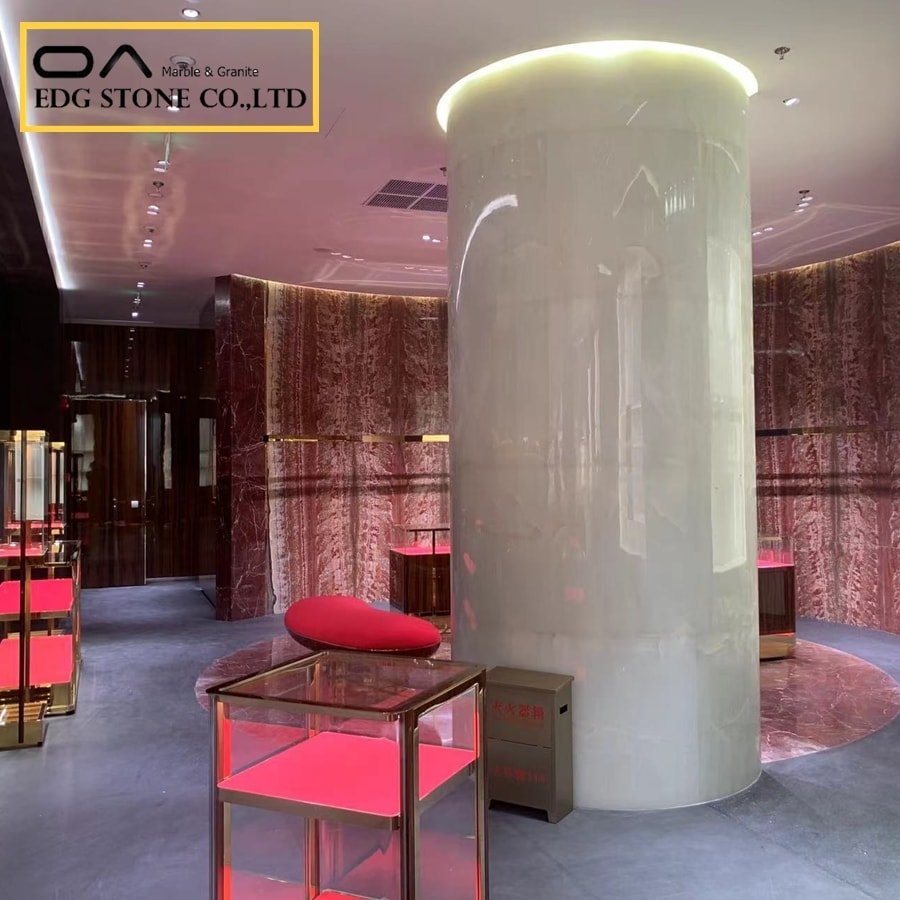
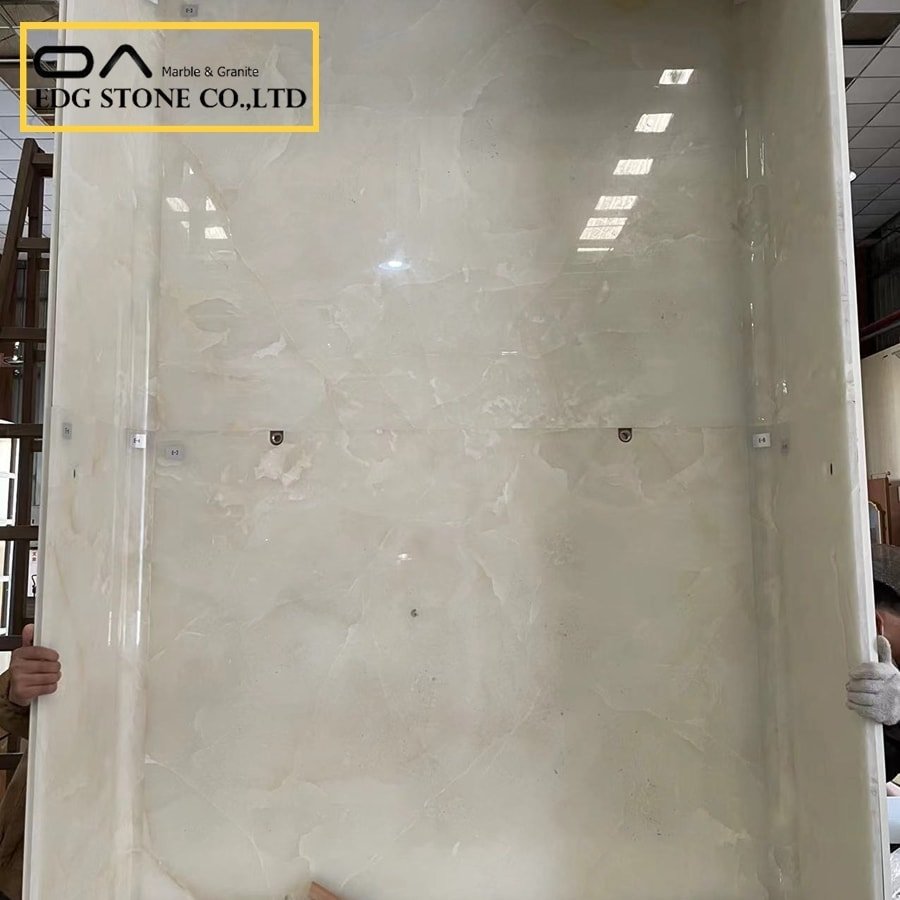
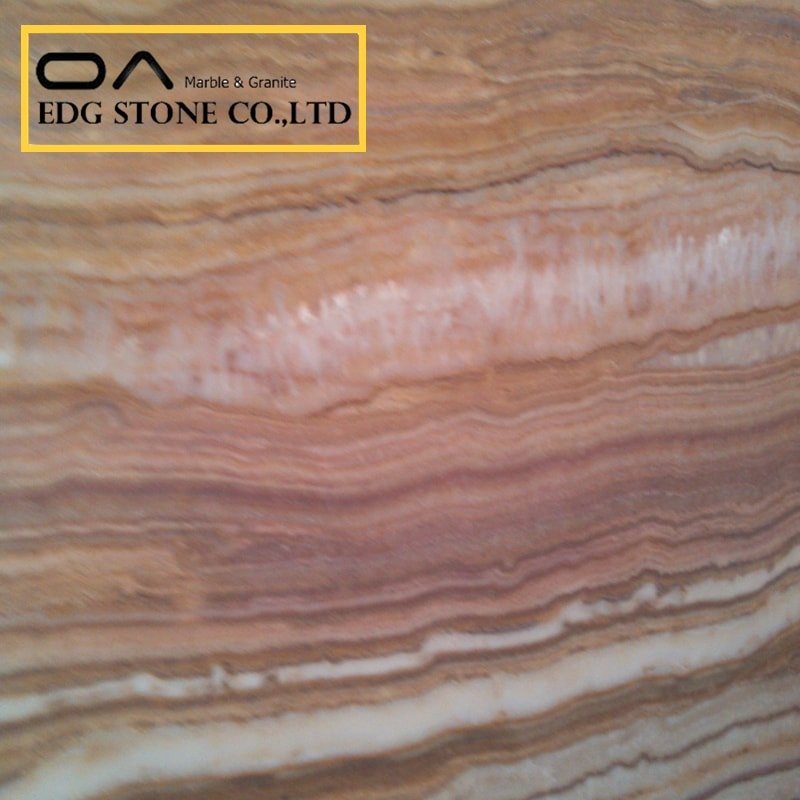
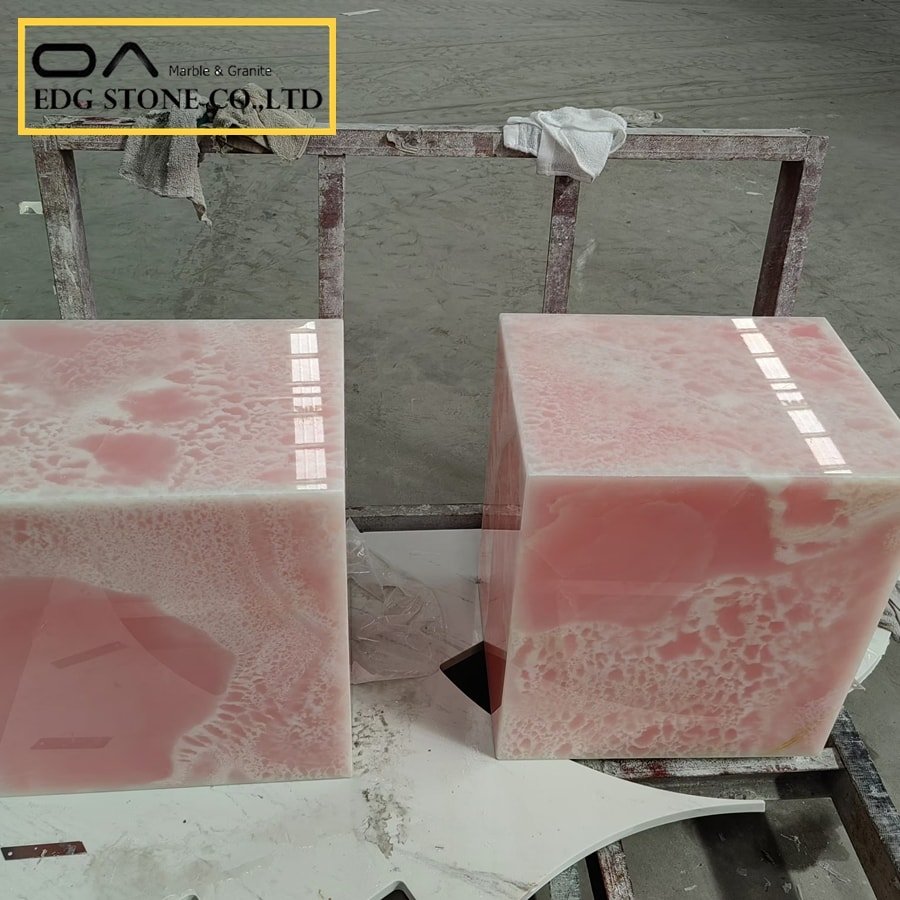
Onyx is a natural, semi-precious stone prized for translucency and rare colors. On average, installed onyx countertop prices commonly range from roughly $50 to $300 per square foot, but specialty or very rare onyx slabs (large, highly translucent, exotic colors) can command higher premiums and custom shipping + packing costs. Onyx frequently appears as a feature — backlit walls, bar fronts, or small vanity tops — where scarcity and finish elevate per-ft² cost.
Rarity of color or pattern (some colors are regionally scarce).
Slab translucency and the desire for backlit performance.
Fragility and higher fabrication loss rates (more waste, specialized handling).
Shipping/handling and the need for reinforcement or special mounting.
Value comparison — durability, maintenance, and lifecycle cost
Durability & daily use
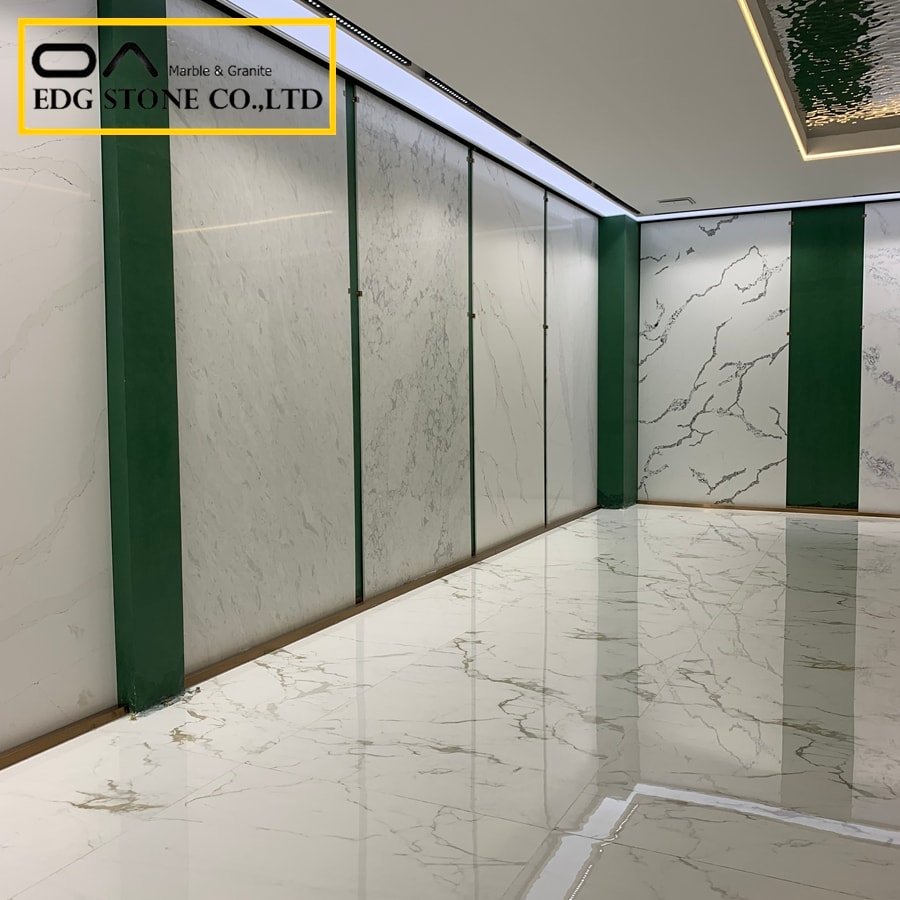
Quartz: Non-porous, highly scratch/stain resistant for normal kitchen use, low maintenance (no routine sealing). Good for heavy daily use.
Onyx: Softer and more brittle; scratches, chipping, etching, and staining are real risks. Often recommended for low-traffic luxury features rather than everyday kitchen prep zones.
Practical implication: A homeowner buying purely on value-for-durability will usually get better lifecycle value from quartz. If the goal is a dramatic, bespoke centerpiece, onyx may be worth the premium, but expect higher maintenance costs and possible repairs.
Resale and perception
Onyx can be a showstopper that signals luxury (and may increase perceived value), but its niche use-cases and maintenance needs mean it doesn’t always convert to universal resale value the way low-maintenance quartz often does. Quartz’s consistency and broad appeal typically map to stable ROI in many markets. (See market guides for localized ROI data.)
Use-cases — when to choose quartz vs onyx
Choose quartz if:
You need a low-maintenance, durable surface for kitchens and high-traffic areas.
You want a consistent, repeatable look (matching island and counters).
You want broader price and design choices across budgets.
Choose onyx if:
You want a statement material — backlit bar fronts, feature walls, reception desks.
You prioritize uniqueness (no two onyx slabs look the same) and are comfortable with careful maintenance.
Market trends & regulatory forces reshaping cost (important for manufacturers, importers, and buyers)
Engineered quartz and silica regulation — why it matters?
Engineered stone contains crystalline silica. Regulatory attention is increasing worldwide because respirable crystalline silica (RCS) causes silicosis and other diseases. The U.S. OSHA has silica standards aimed at limiting worker exposure in construction and fabrication. These rules affect how fabricators must control dust (wet cutting, ventilation, PPE), which increases compliance and operating costs.
Example: Australia’s engineered-stone import and use bans (supply shock)
Australia has taken decisive regulatory steps: domestic bans on the manufacture/supply/processing of engineered stone began in stages (mid-2024), and imports of engineered stone benchtops/panels/slabs with ≥1% crystalline silica were prohibited at the border from 1 January 2025 unless a permit/exemption is obtained. This is shifting supply chains, creating potential price and availability impacts for suppliers and installers serving export markets, and underscoring compliance costs for global manufacturers.
Takeaway for pricing: Regulatory interventions that raise compliance costs or restrict trade (as in Australia) can increase installed prices for engineered quartz in affected markets and reallocate demand to alternative materials — sometimes boosting demand (and price) for natural stones like onyx in certain niches, or for safer natural alternatives in others.
Supply chain, fabrication yield, and why onyx can cost more per usable square foot
Onyx slabs are fragile and often cut into smaller panels to preserve aesthetic continuity; yield loss (wastage from banding, cracks) raises per-usable-square-foot costs. Backlit installations require thicker, consistent translucency slabs; sourcing those increases price. Conversely, engineered quartz offers higher slab yields and factory-controlled consistency, giving manufacturers economies of scale that can lower costs for popular lines.
Environmental and ethical considerations (buyers & B2B)
Engineered quartz: contains resin and pigments; manufacturing energy and resin disposal are considerations. Regulatory pressure around worker safety and waste handling is increasing in several jurisdictions.
Onyx: natural stone extraction has land-use and transport impacts (fragility requires careful packaging), but it’s an unprocessed natural product (no polymer resins). Responsible quarrying and certified sourcing matters.
Five long-tail keyword suggestions (purchase intent + manufacturer focus)
“Is onyx more expensive than quartz manufacturer price per slab”
“onyx slab wholesale supplier backlit onyx factory price”
“quartz countertop cost per square foot manufacturer direct”
“Buy onyx slab wholesale for backlit installations.”
“engineered quartz trade pricing factory supplier wholesale”
(Use these in category pages, product feeds, and schema attributes to capture buyer intent at the supplier/manufacturer level.)
Conclusion — cost vs. value (short)
If you want durability and broad value, quartz is generally the smarter buy. If you want singular luxury, translucency, and visual drama, onyx may be worth the premium — but budget for protective care, possible repairs, and special installation. Regulatory developments (worker safety and import restrictions) are actively reshaping engineered-stone markets in some countries and should be part of purchasing decisions for manufacturers, importers, and architect/spec writers.
FAQ — Top Google-search FAQ (5 items)
Is onyx more expensive than quartz?
Answer: On average, onyx is positioned as a luxury material and often costs as much as or more than mid-range quartz on a per-square-foot installed basis; high-end quartz lines, however, can overlap or exceed onyx pricing depending on brand and finish.Which countertop is most expensive?
Answer: The most expensive countertops are typically bespoke, rare natural stones (certain onyxes, exotic marbles, rare quartzites) and highly engineered, specialty quartz products; custom backlit onyx and rare quartzite slabs frequently sit at the top of the price ladder.What is the difference between quartz and onyx?
Answer: Quartz (engineered) is factory-made from crushed quartz and resin—non-porous and low maintenance—while onyx is a natural, translucent stone prized for aesthetics and backlighting, but softer and more fragile.What is the most affordable stone countertop?
Answer: Budget-friendly options typically include laminate, tile, or some lower-tier granite and quartz lines; among natural stones, common granites and some marbles can be more affordable than exotic stones like onyx or high-end quartz brands. Exact prices vary by region and installation complexity.Is onyx worth any money?
Answer: Yes — onyx commands value because of rarity, translucent beauty, and its use as a designer statement material; it is “worth” the money when buyers prioritize aesthetics and exclusivity over low maintenance and durability.
Semantic Closure: How, Why, Options, Considerations
How to choose: quantify your daily usage (meal prep frequency, spills, kids/pets), then map to required durability (choose quartz) or to design priority (choose onyx for statement pieces).
Why prices differ: brand manufacturing economics vs. quarry rarity; engineered quartz benefits from scale, onyx is priced for scarcity and translucency-backed finishing, and transport costs.
Options to bridge the gap: hybrid designs (quartz in prep areas + onyx feature panels), backlit resin-backed onyx veneers, or engineered quartz with premium veining for the “look” at lower maintenance.
Considerations for buyers & B2B: include fabrication yield, compliance costs (silica controls for engineered stone), import/export restrictions (e.g., Australia’s 2025 import prohibition on engineered stone with ≥1% crystalline silica), and long-term maintenance budgets. Prioritize supplier transparency, testing certificates (crystalline silica content for engineered products), sample approvals, and documented warranty and repair pathways.
Focus Keyword, 50 SEO tags
Focus Keyword: Is onyx more expensive than quartz
50 SEO tags:
onyx vs quartz, onyx countertop price, quartz countertop price, is onyx more expensive than quartz, quartz vs onyx durability, backlit onyx, onyx slab wholesale, quartz slab manufacturer, quartz slab factory, onyx slab supplier, onyx price per square foot, quartz price per square foot, engineered quartz regulations, silica engineered stone ban, quartz countertop cost 2025, onyx countertop care, buy onyx slab wholesale, quartz manufacturer China, quartz factory direct, onyx factory price, backlit stone suppliers, luxury countertop materials, most expensive countertops, affordable stone countertops, quartz vs granite vs onyx, onyx kitchen ideas, marble vs onyx, engineered stone safety, import ban engineered stone, onyx translucency, kitchen countertop trends 2025, quartz brands comparison, onyx slab colors, wholesale stone slabs, quartz wholesale price, buy quartz slabs, engineered quartz silica, onyx restoration, bespoke stone countertops, onyx backlit installation, supplier wholesale onyx, quartz countertops manufacturer, custom onyx panels, slab yield cost, stone fabrication costs, onyx vs quartz maintenance, onyx countertop ROI, designer stone materials, stone countertop buying guide, onyx marble alternatives, SGE friendly content, schema FAQ stone countertops.