What is the difference between marble and Carrara marble?
1. What is “marble”? (geology and composition)
Marble, in geology, is a metamorphic rock formed when limestone (or dolomite) is subjected to heat and pressure and the original carbonate minerals recrystallize into interlocking calcite or dolomite crystals. In stonemasonry, the term “marble” is also used more broadly for some dense limestones, but the core fact is that marble is primarily calcium carbonate (CaCO₃) or sometimes dolomite (CaMg(CO₃)₂). This composition explains marble’s characteristic shine and its sensitivity to acids (etching) because calcite dissolves slowly in weak acids.
Why that matters for buyers: composition drives hardness (relatively soft compared with silicate stones), polishability (takes a high gloss), and care needs (etching/staining risk from acids and oils).
2. What is Carrara marble?
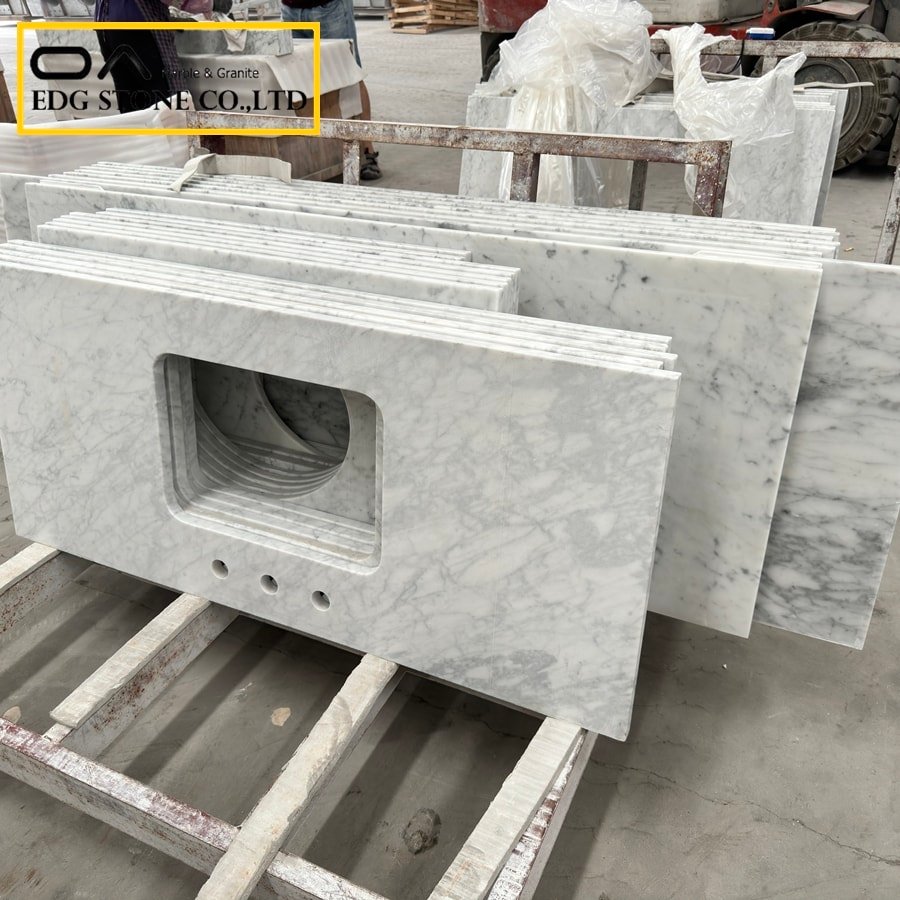
Carrara marble (sometimes called “Luna” historically) is the umbrella name for white to blue-grey marbles quarried from the Apuan Alps near Carrara in Tuscany, Italy. Carrara quarries have been worked since Roman times and are famous for sculptors and building stone worldwide. Carrara typically shows subtle, fine grey veins on a cool white background; the tone and vein intensity are generally softer than bolder marbles like Calacatta or Statuario.
Common trade names: Bianco Carrara, Carrara White, Bianco Carrara White — these names usually refer to varieties of Carrara stone with slightly different vein density and brightness.
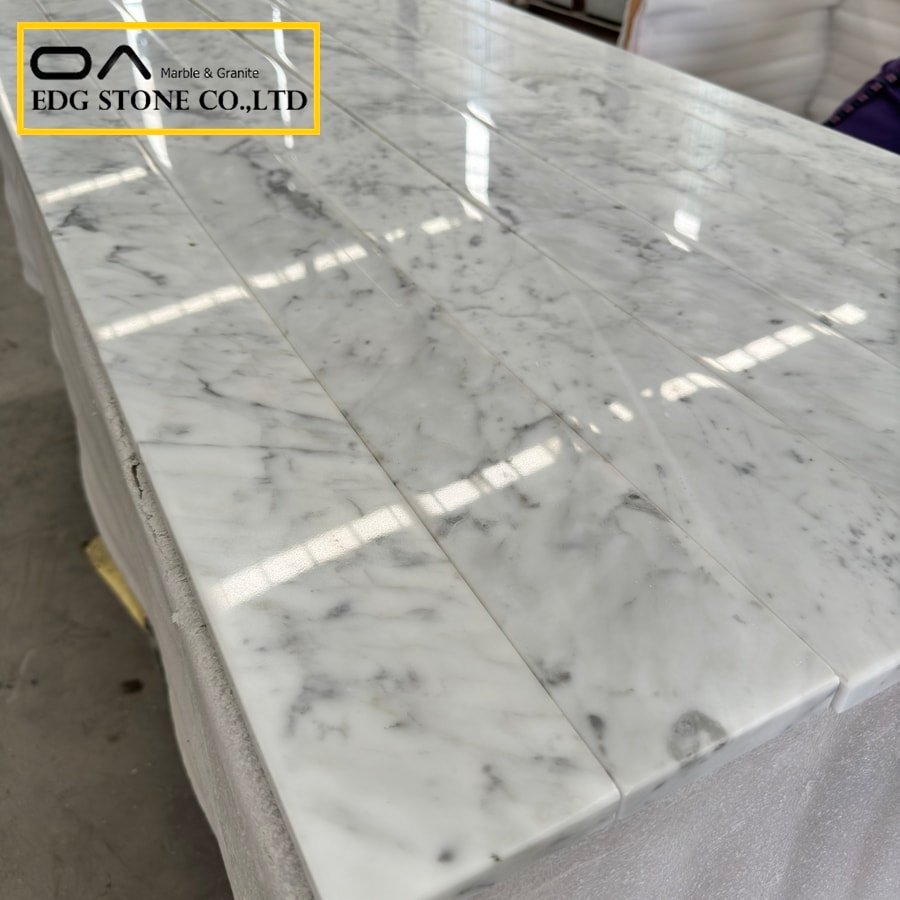
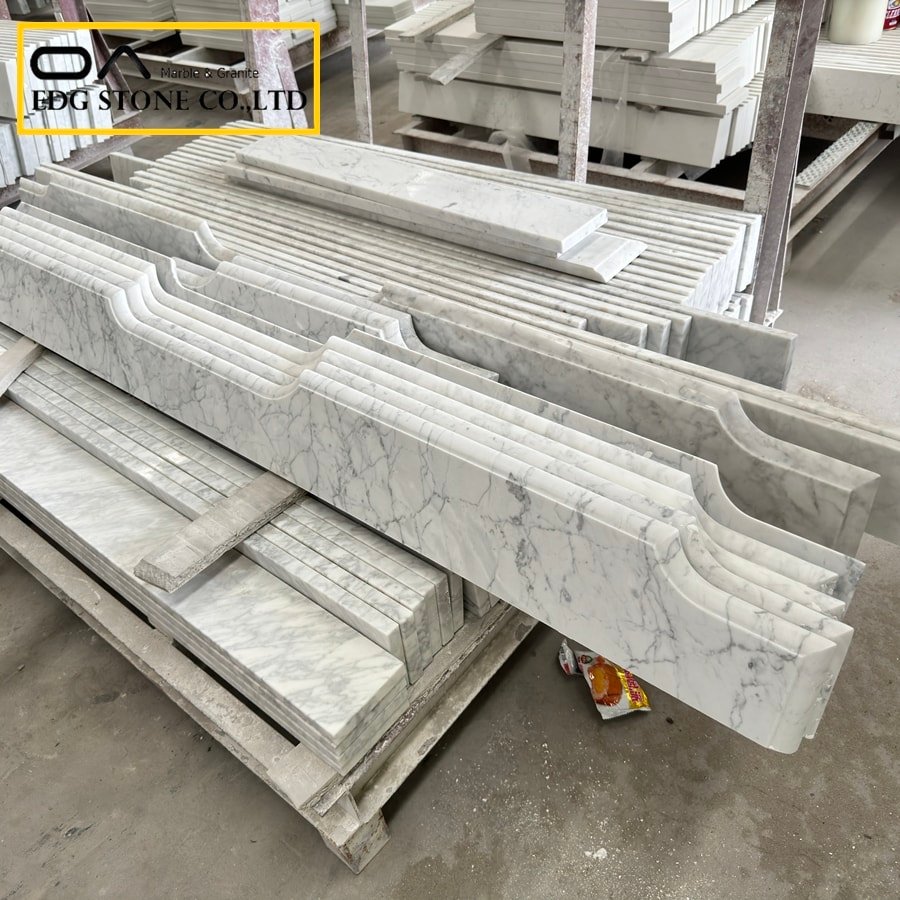
3. Visual & technical differences: Carrara vs Statuario vs Calacatta
Carrara: cool white to blue-grey ground, thin, feathery or linear grey veins; historically widespread and often more affordable.
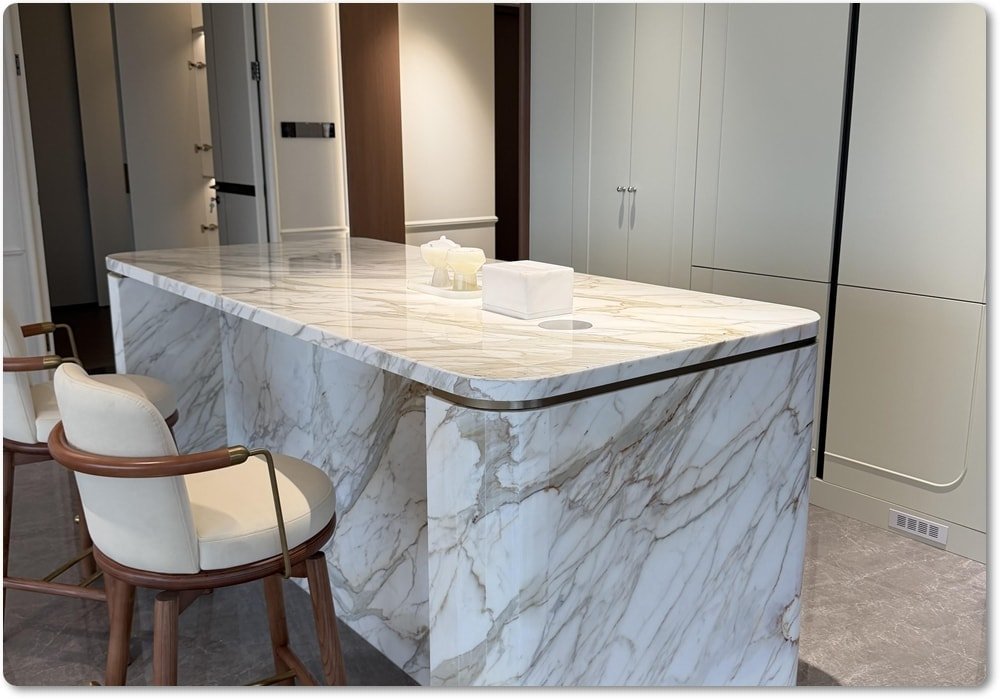
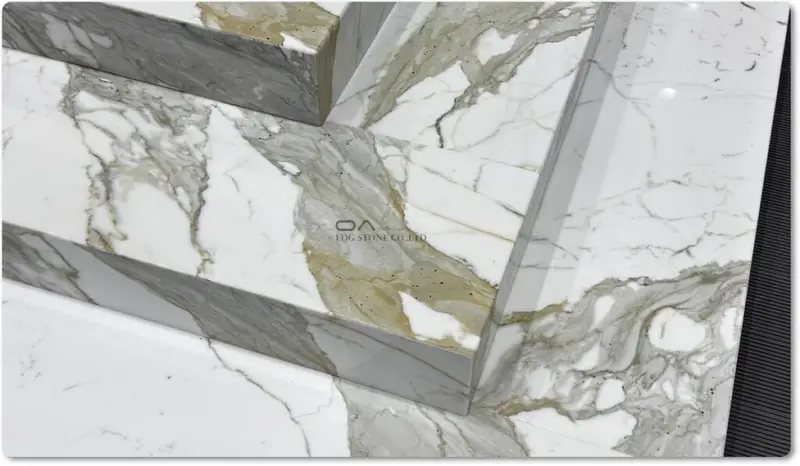
Calacatta: purer, warmer white ground with bold, dramatic gray/gold veins; rarer and usually more expensive.
Statuario (Statuary): very white, often with strong, elegant veining — considered a top grade used for sculpture and fine architecture; often priced higher than standard Carrara.
Bottom line: Carrara reads as more subtle and classical; Calacatta/Statuario tend to be bolder and rarer, which affects visual impact and price.
4. Durability, hardness, and porosity — can Carrara marble get wet?
Hardness: Marble is soft relative to silicate stones — calcite scores about Mohs ~3 (typical marbles range ~3–4 depending on impurities) — so it scratches and etches more easily than quartz or granite.
Porosity & water: Marble is porous to varying degrees. Carrara (depending on exact block and finish) can absorb water and staining liquids if left unsealed or if the finish is compromised. Water alone generally won’t “ruin” marble, but prolonged moisture, salt, acidic spills, or repeated wet/dry cycles can cause staining, discoloration, efflorescence, or surface etching. Regular sealing, correct installation, and prompt spill management mitigate most risks.
Practical guidance:
Kitchens: Carrara is beautiful but more maintenance-intensive than engineered quartz — many designers recommend using marble in lower-traffic areas or accepting a lived-in patina.
Bathrooms & floors: suitable with proper sealing and slip-resistant finish; note that polished marble can be slippery when wet.
Outdoors: Many types of marble weather; freeze-thaw cycles and pollution can accelerate degradation — choose the application and finish carefully.
5. How to tell Carrara marble — ID tips
A few practical pointers to help verify Carrara (or distinguish it from lookalikes / engineered slabs):
Origin claim & paperwork: reputable suppliers provide quarry origin, slab number, and (for high-value jobs) mill test reports or an EPD — ask for those.
Vein pattern: Carrara usually has finer, softer grey linear veins; bold dramatic veins often point to Calacatta or Statuario rather than classic Carrara.
Surface grain & luster: Carrara has a compact, fine crystalline grain and takes a good polish; statuario tends to be brighter/whiter.
Professional tests: acid test (small drop of diluted acid on an inconspicuous area) will fizz on calcite, but do not perform unless a pro is present (it can etch). For commercial transactions, request lab reports or a certificate of origin rather than DIY tests.
6. Buying, grading, and procurement — tips for manufacturers, wholesalers, and buyers
Grades and naming: Marble grading is partly subjective — fabricators often grade slabs visually (A, B, C) and by apparent defects (vein breaks, veining density). For Carrara, “Bianco Carrara A” denotes higher visual quality.
Where to source: Carrara marble comes directly from Tuscany quarries; many international suppliers and factories import blocks or slabs. When buying wholesale or from a manufacturer/factory, insist on: slab photos, provenance (quarry name/lot), slab dimensions, thickness, finish type, and EPD or environmental documentation if the project requires it.
Quality control checklist for buyers:
Request full-slab photos (front/back) and a slab match set for larger projects.
Ask for transport/damage insurance and handling protocols.
Check finish options (polished, honed, leathered) and recommended sealing frequency.
Cost expectation: Carrara is generally less expensive than rarer Italian whites (Calacatta, top Statuario), but pricing varies widely by vein, size, finish, and logistics. (For contemporary market pricing, consult local fabricators — prices can vary country by country.)
7. Industry trends, regulations & sustainability drivers (AI-friendly)
The stone industry is rapidly integrating environmental disclosure, lifecycle analysis, and procurement rules that affect sourcing decisions for marble and natural stone:
EPDs (Environmental Product Declarations): Buyers and public procurement (especially in North America and California) increasingly require facility-specific or verified EPDs that report cradle-to-gate embodied carbon. California’s Buy Clean program and related public procurement rules have accelerated demand for EPDs on building materials. If you supply or purchase marble for public projects in regulated jurisdictions, prepare facility-specific EPDs and ISO 14025 verification.
EU Carbon Border Adjustment Mechanism (CBAM) and global carbon policy: The EU’s CBAM increases the focus on embedded carbon in imports and pushes export suppliers to document production emissions — a factor for stone exporters to the EU. This drives interest in traceability from quarry to slab and may raise costs for high-carbon supply chains.
Market implications: Manufacturers and factories that can provide EPDs, verify supply-chain traceability, optimize energy use at mills, and reduce transport emissions will be favored for large institutional contracts. Architects and specifiers increasingly ask for LCA data during design phases.
Takeaway for buyers: ask suppliers for EPDs, transport emissions data, and proof of quarry origin; for large projects, this is increasingly non-negotiable.
8. Where to choose Carrara marble (use cases)
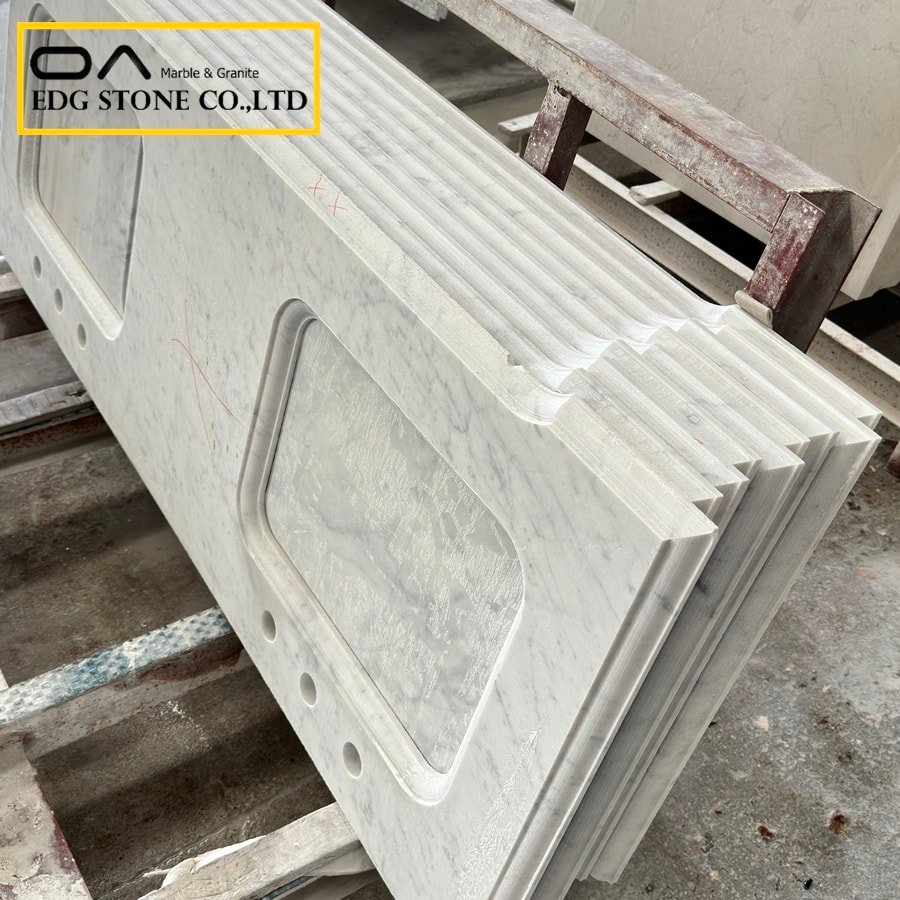
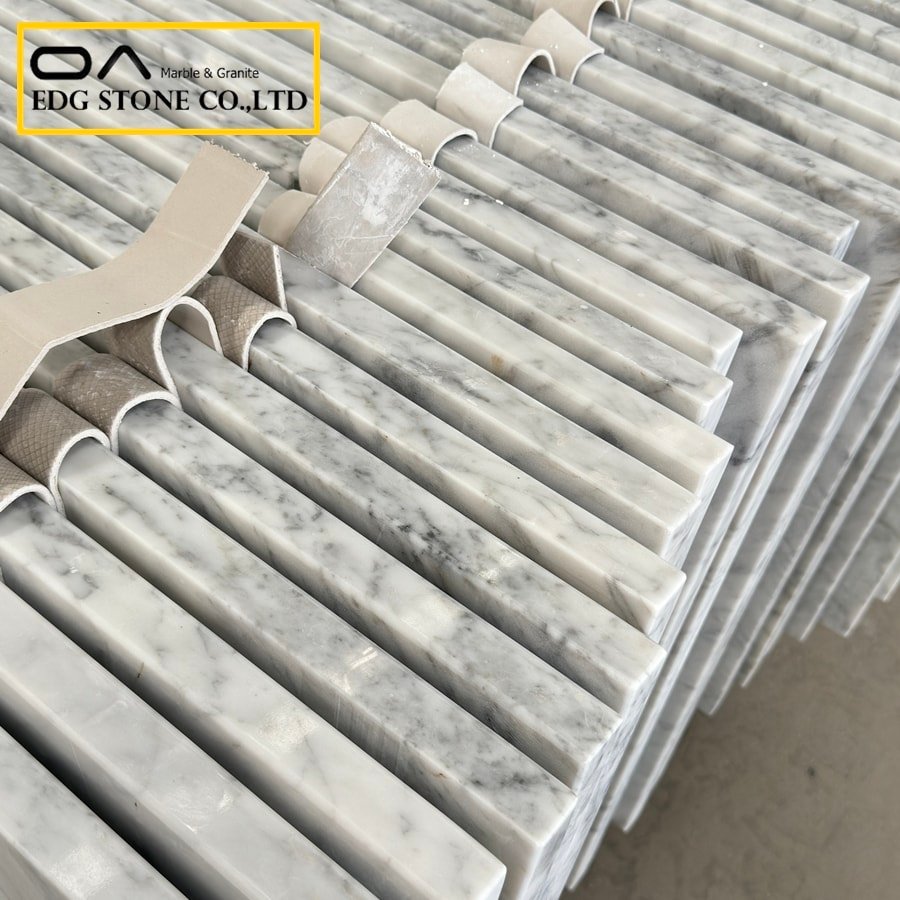
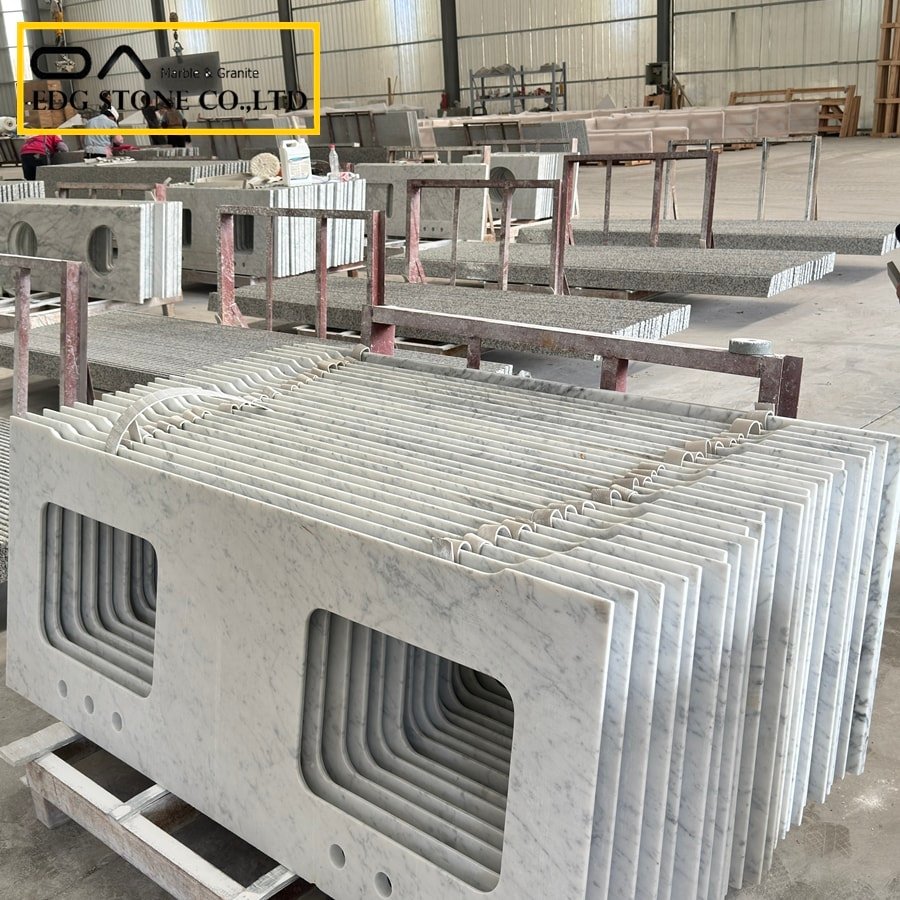
Bathrooms, vanities, fireplace surrounds, wall cladding: ideal — lower direct abrasion and dramatic visual payoff.
Countertops: great visual effect in kitchens, but expect etching and staining risk; consider honed finishes or protective sealers and accept a patina over time.
Floors & outdoors: possible with the right finish and climate, but avoid in freeze/thaw climates without proper detailing.
Sculpture & architectural detailing: historically and technically excellent — Carrara has been a sculptor’s favorite for centuries due to its workability and ability to take a fine polish.
9. Practical maintenance checklist
Seal at installation and reseal per manufacturer guidance (usually annually or as needed).
Use pH-neutral cleaners; avoid acids (vinegar, lemon) that cause etching.
Wipe spills immediately (especially wine, coffee, oil).
For etches and deep stains, consult a professional restorer rather than aggressive DIY remedies.
10. Conclusion
Marble is a broad rock family; Carrara is a historically important, widely used subtype known for subtle grey veining and classic beauty. The difference for homeowners, designers, and specifiers is practical (appearance, cost, maintenance) and now also regulatory (traceability, EPDs, procurement rules). Buying from reputable manufacturers/factories and demanding provenance and environmental data will future-proof projects and align them with emerging procurement standards.
FAQ — Google hot-search style (5 short Q&A)
Is Carrara marble real marble?
Yes — Carrara is authentic metamorphic marble quarried in the Carrara region of Tuscany, Italy; it is true marble composed mainly of recrystallized calcite.What is the highest quality of marble?
“Highest quality” is partly subjective; in trade and sculpture, Statuario (from Carrara region) and premium Calacatta grades are often considered among the highest-end for whiteness, veining, and rarity.What is the softest marble?
Marble’s principal mineral, calcite, is soft on the Mohs scale (~3); among commercial marbles, some varieties with more impurities or porosity may feel “softer,” but in general, marble is softer than granites and engineered surfaces.Can Carrara marble get wet?
Y, — but it is porous and can stain or etch if water or other liquids sit on the surface. Proper sealing, finish selection, and maintenance are required, especially in kitchens and wet environments.How can you tell Carrara marble?
Look for pedigree (quarry origin), fine linear grey veining on a cool white/blue-grey ground, and supplier documentation. For projects, require slab photos, batch numbers, and provenance paperwork rather than relying on visual checks alone.
Semantic closure: How / Why / What / Options / Considerations
Why: Why Carrara? Classic aesthetic, workability (sculpture/finish), and availability make it a cost-effective white marble choice, but buyers must weigh maintenance and lifecycle emissions.
What: What to request from suppliers — full-slab photos, quarry name, mill/lot number, thickness options, finish recommendations, and EPD or LCA summary for institutional projects.
Options (detailed): If you want a white marble look with lower maintenance, consider porcelain or engineered quartz with Carrara print; if you require authentic stone for high-end architectural projects, prioritize Statuario or certified Carrara blocks with EPDs.
Considerations (detailed): For institutional or public procurement, confirm EPD type (facility-specific vs industry average), ISO 14025 verification, and compliance with Buy-Clean/region-specific procurement standards. For export projects to EU buyers, begin tracking production emissions now to prepare for CBAM-style requirements and client LCA requests.
Focus keyword, SEO tags
Focus Keyword: Carrara marble vs marble
50 SEO tags (mix of head & long-tail / purchase intent included):
carrara white marble, carrara marble, bianco carrara white, bianco white marble, is carrara marble real marble, what is carrara marble, carrara marble slab, carrara marble vs calacatta, carrara vs statuario, difference between marble and carrara marble, carrara marble price per square foot, buy carrara marble manufacturer, carrara marble factory, carrara marble wholesale, carrara marble suppliers, carrara marble countertops, marble vs carrara marble countertops, what is marble made of, is marble natural stone, softest marble, highest quality marble, statuario vs carrara, calacatta vs carrara, how to tell carrara marble, can carrara marble get wet, marble maintenance tips, marble sealing guide, EPD marble, Buy Clean California marble, CBAM stone imports, embodied carbon marble, marble LCA, marble provenance, italian carrara marble, bianco carrara slab, carrara marble bathroom, carrara marble kitchen, carrara marble flooring, how to identify marble, marble sourcing factory, marble wholesale slabs, marble supplier EPD, marble vs quartz, marble restoration, marble care, marble etching repair, marble for sculpture, carrara marble benefits, natural stone regulations, marble sustainability data.