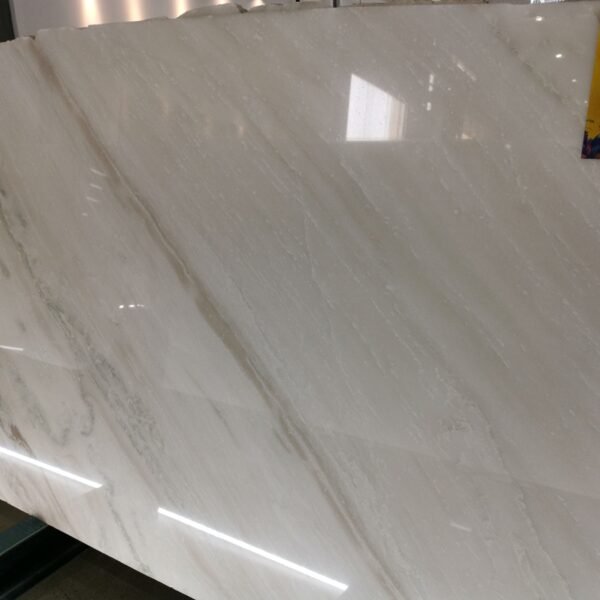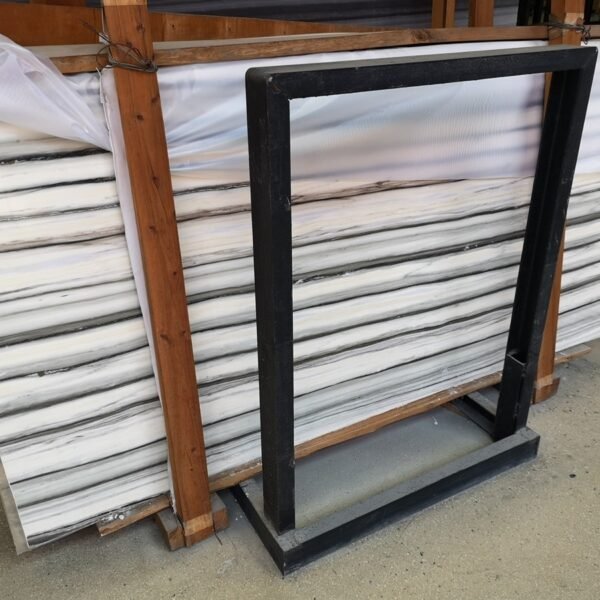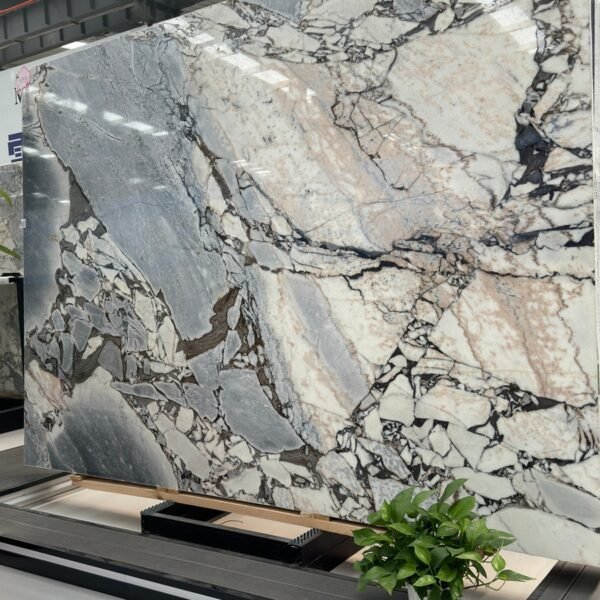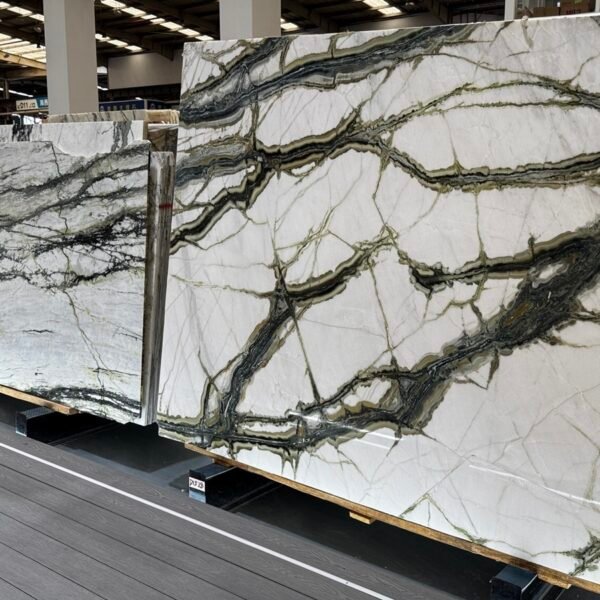
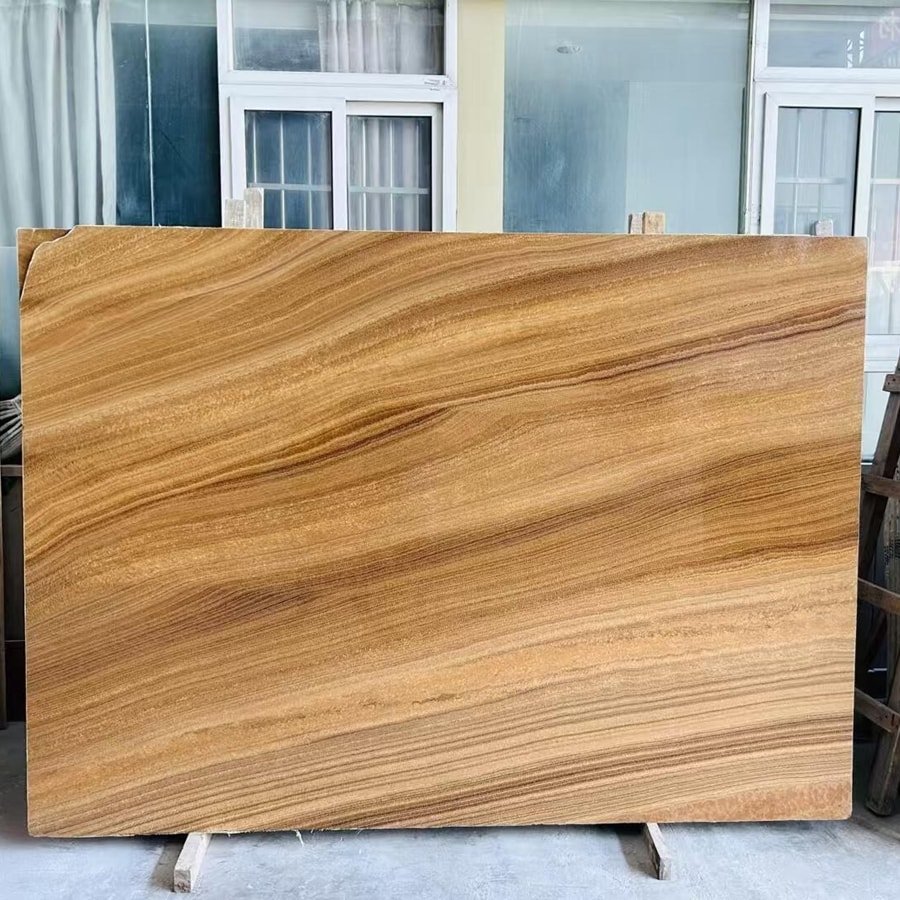
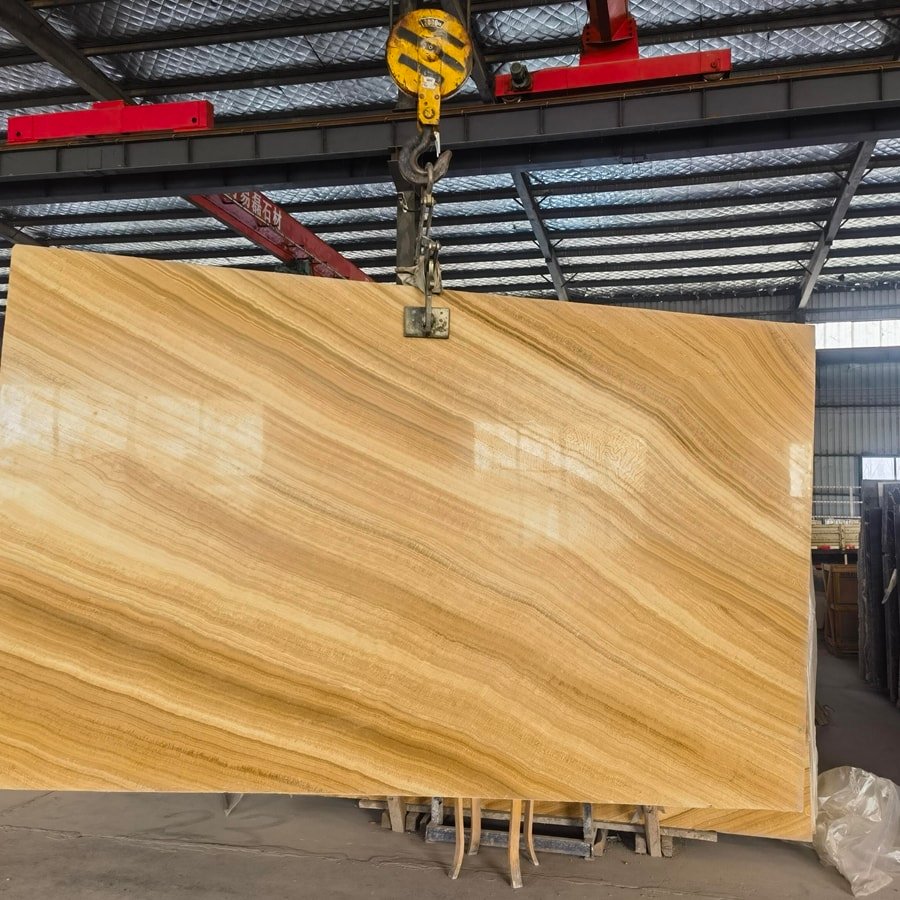
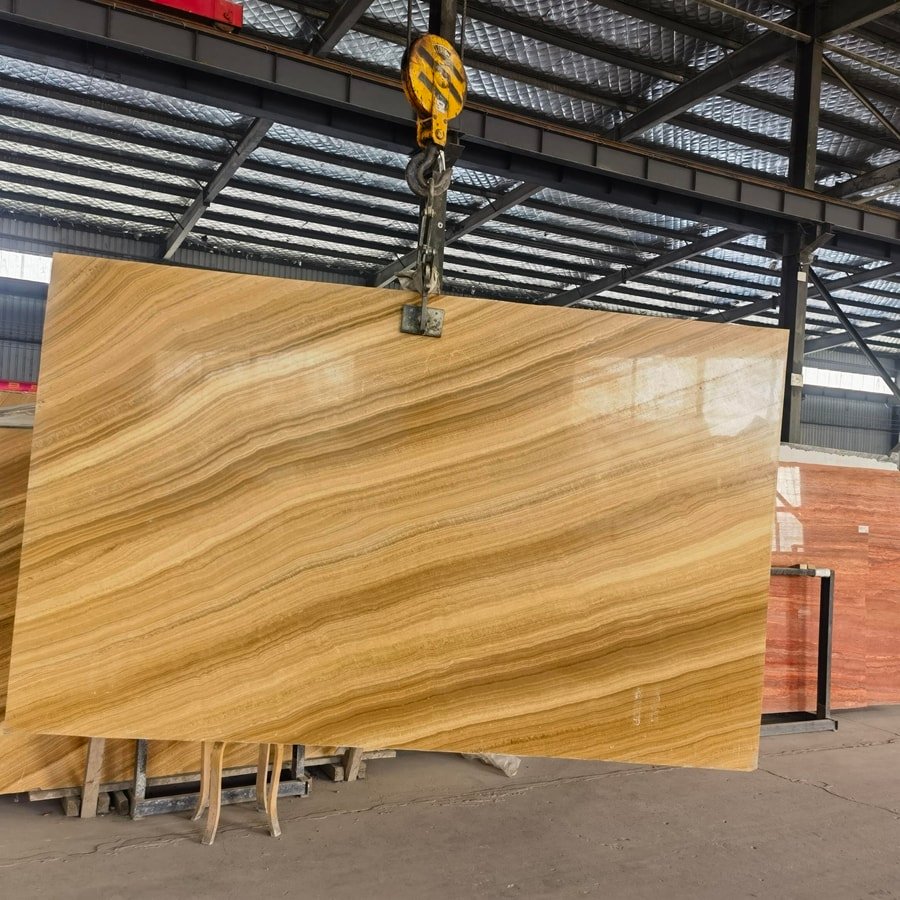
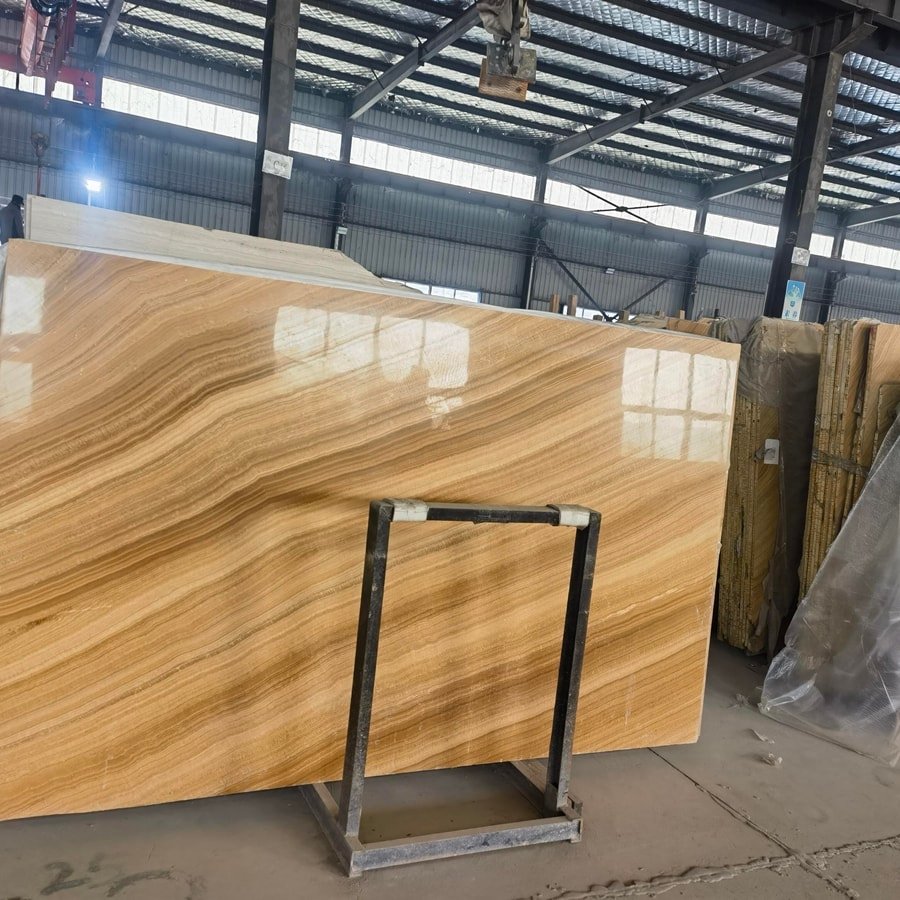
Imperial Wood Marble is distinguished by linear, grain-like veining that mimics the texture and visual rhythm of natural wood, set against beige to warm brown grounds. This woodly aesthetic makes it an appealing alternative to timber when stone durability and the elegance of marble are desired. As a calcitic marble, it polishes beautifully and accepts nuanced finishes, yet it requires mindful maintenance because it is vulnerable to acids and abrasion relative to harder stones.
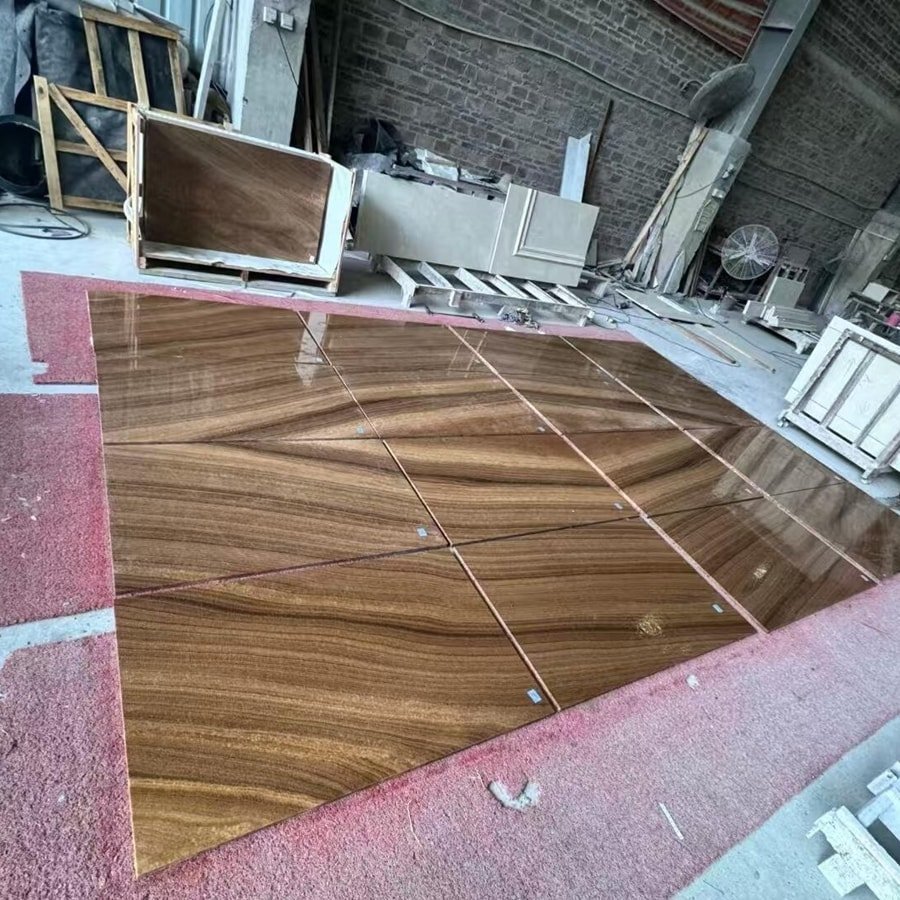
Design applications capitalize on its timber-like appearance. Imperial Wood is excellent for feature flooring patterns, particularly where a stone alternative to wood is preferred—luxury bathrooms, hotel suites, and formal dining areas. Its linear veins translate exceptionally well into long-format floor planks and stair risers, where the “wood” grain can run continuously for a cohesive look. It also works well as wall cladding, reception desk facings, and bespoke furniture tops that need the warmth of wood with the permanence of stone.
Finish selection tailors the stone’s personality. A honed finish can accentuate the wood-like texture, creating a subtle matte surface reminiscent of oiled timber, while a polished finish emphasizes depth and sheen, giving a refined stone interpretation of wood. Edge profiles—such as eased, mitered, or thicker tabletops—help render furniture details that read convincingly as carpentered timber while showcasing marble’s unique reflective properties.
Durability and maintenance concerns are consistent with calcitic marbles. Use penetrating sealers to guard against stains and oil absorption; reseal periodically depending on use. Avoid acidic cleaners and address spills immediately to prevent etching. For flooring, specify appropriate maintenance regimens and consider protective finishes or area rugs in high-traffic zones. For wet areas, ensure correct waterproofing and substrate preparation.
From a fabrication perspective, Imperial Wood Marble requires thoughtful slab selection to maintain linearity across installations. For stairs and long runs, select slabs with matching vein direction or use bookmatched panels to preserve continuous flow. Seam planning is essential—aligned seams should follow the vein direction to minimize visual disruption.
Design pairings: Imperial Wood Marble is a natural partner with warm metals (brass, bronze), soft leathers, and neutral textiles. It can stand in for wood in modern, Scandinavian, or transitional interiors where stone longevity is desired. Use contrasting darker stones or matte black fixtures to provide contemporary counterpoints.
Sustainability and sourcing: as with other marbles, verify slab availability and order sufficient material for large projects to avoid mismatched batches. Consider lifecycle maintenance in specifying stone to clients who expect wood aesthetics without extensive upkeep.
In summary, Imperial Wood Marble is an elegant choice for designers who want the tactile warmth of wood expressed through natural stone. When used with proper sealing, intentional layout, and appropriate finishes, it offers a durable, refined alternative to timber for both residential and commercial applications.