
1. What is Labradorite / Lemurian Blue?
Labradorite is a feldspar mineral known for labradorescence—an iridescent flash of blue, green, gold, or purple when light hits internal crystal layers. In slab form used for countertops, the stones marketed as Labradorite Blue, Lemurian Blue, Madagascar Blue, or Blue Labradorite granite are natural granites or labradorite-rich granitic gneisses quarried in places such as Madagascar and select zones in South America and Asia. Lemurian Blue is a trade name commonly used for high-labradorite slabs quarried in Madagascar and is effectively a labradorite-rich granite well suited to countertops and panels.
2. Visual characteristics and why designers love it
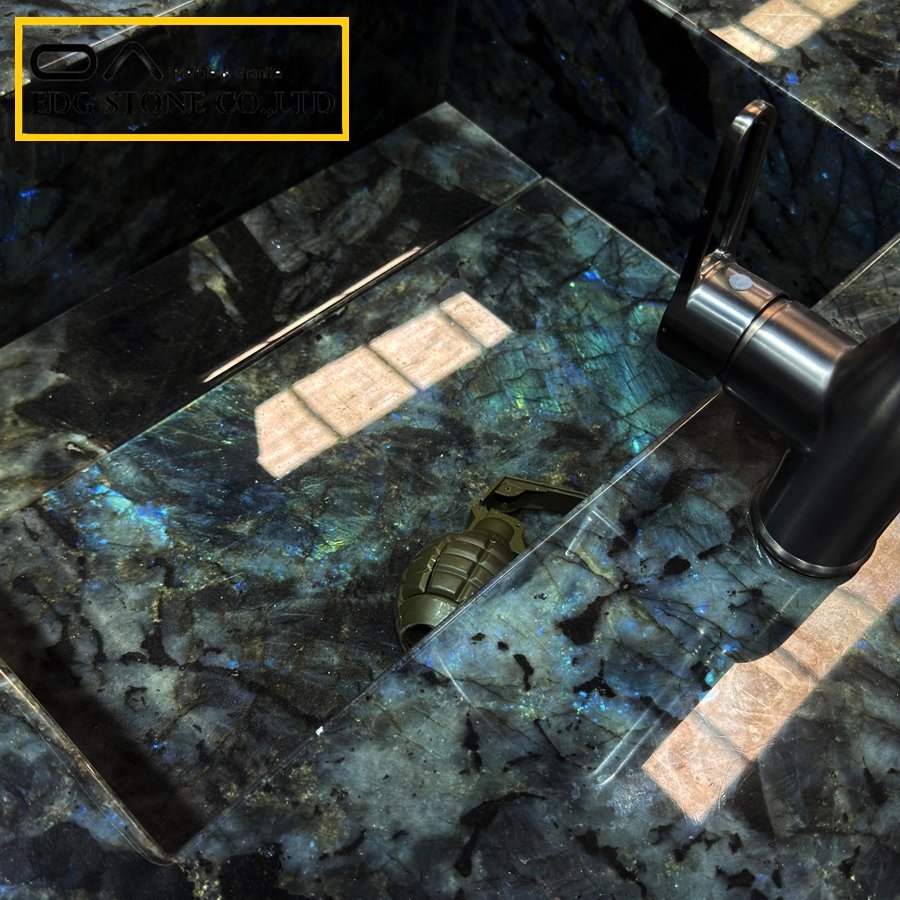
Labradorite Blue slabs are prized for dramatic, gem-like blue flashes set into dark green, black, or grey ground—sometimes with veins, mica clusters, and crystalline pockets that glitter like polished gemstones. Each slab is unique: some show broad, mirror-like blue fields (ideal for bookmatching) while others present a constellation of small labradorite chips across the surface. The effect is luxurious and theatrical—great for feature islands, full-height backsplashes, or statement reception desks.
Designers often pair Labradorite Blue with:
Warm brass or aged bronze hardware (for contrast with blue flashes)
Matte black or deep charcoal cabinetry (to make the blues pop)
Natural walnut or warm oak (for approachable luxury)

3. Slab sizes, finishes, and fabrication notes
Common slab sizes & thicknesses
Typical slabs sold by slab houses: ~120–140 in × 70–80 in (305–355 × 178–203 cm), with some variability by quarry and cut.
Thickness: 2 cm (¾”) and 3 cm (1¼”) are standard; some fabricators offer 1.2 cm or laminated/mitered 4 cm looks.
Finishes
Polished — highest sheen and maximum labradorescence. Best when you want intense color play.
Honed — softer appearance, subdues reflections.
Leathered/textured — emerging finish for granites, but leathering may mute labradorescence.
Fabrication tips
Always inspect full slabs under real light—labradorite shine can vary dramatically with angle and lighting.
Bookmatching is a dramatic option: two slabs cut and reversed to mirror patterns create a symmetrical ‘butterfly’ of blue flashes.
Wet cutting and dust suppression are essential in shops that cut and polish Labradorite materials (see safety section).
Be cautious with seams—align flashes when possible for visual continuity. CNC routing and precise polishing are recommended for complex edges.

4. Price guide — realistic ranges and what drives cost
Typical price bands (indicative)
Commodity granite: $40–$80 per sq. ft. installed (typical lower-end granites).
Premium / exotic labradorite stones (Lemurian Blue / high-flash Labradorite): $100–$300+ per sq. ft. installed in many markets, with some rare bookmatched slabs or showpieces fetching $150–$300+/sq ft. Reported prices vary widely: consumer remodeling guides and specialty slab listings show figures from ~$100/sq ft up to $200–300+/sq ft depending on rarity and slab yield.
What influences price
Rarity and flash intensity of the Labradorite crystals
Slab size, usable yield, and the number of seams required
Finish choice (polished vs textured) and edge complexity
Freight and import origin (Madagascar stones carry higher shipping/clearance costs)
Fabrication complexity (bookmatching, large islands, integrated sinks, mitered edges)
Pro tip: Always request per-slab photos and a full price breakdown (stone + fabrication + installation + freight + removal of old counters). Wholesale / factory direct sourcing can lower the stone cost, but not always the overall installed cost once logistics are included. Alibaba and other B2B stone platforms show factory listing prices and MOQ options for Labradorite slabs.
5. Where to use Labradorite Blue
Kitchen islands & countertops: centerpiece material—best in large, uninterrupted fields and where lighting accentuates flashes.
Backsplashes & full-height feature walls: dramatic when bookmatched or used as a single slab.
Bathroom vanities & walls: polished slabs lend a high-end spa feeling; be mindful of weight for wall mounting.
Commercial features: hotel lobbies, bar fronts, and boutique retail counters where visual drama sells the experience.

6. Maintenance, sealing, and durability expectations
Labradorite is a natural stone and behaves like many granites: it is hard and heat-tolerant, but some slabs with pronounced fissures or crystalline pockets may be slightly more porous.
Seal upon installation using a quality penetrating stone sealer; reseal schedules vary (commonly annually or per product instruction).
Use pH-neutral stone cleaners for day-to-day care; avoid harsh acids or abrasive pads.
For polished high-flash slabs, use microfiber cloths to maintain sheen; avoid leaving acidic spills for prolonged periods.
7. Health, safety & regulatory context: silica, Prop 65 & radon
Respirable crystalline silica (RCS) — fabrication risk:
Cutting, grinding, and polishing natural stone releases respirable crystalline silica dust. OSHA and similar authorities require exposure controls (wet cutting, local exhaust ventilation, respirators when needed) because RCS causes silicosis, lung cancer, and other diseases. Fabricators handling Labradorite-rich slabs must operate with wet methods, on-tool water feeds, and HEPA filtration to protect workers. Failure to control silica exposure is a material compliance and reputational risk for factories and importers.
California Proposition 65:
Crystalline silica (airborne particles of respirable size) is listed under Prop 65. Businesses selling or distributing stone products in California often add Prop 65 warnings to stone product pages or packaging, and fabricators supplying California markets should include SDS and clear instructions regarding silica hazards. Buyers and B2B purchasers shipping slabs into California must request compliance documentation.
Radon & radioactivity concerns:
Public concern about radon or radioactivity from granite countertops has recurred, but major authorities (EPA, Natural Stone Institute) conclude that typical granite countertops are unlikely to meaningfully increase household radon exposure; where worry exists, sample testing of specific slabs is the pragmatic approach. For commercial or large-scale projects requiring certification, buyers can request radioactivity testing from the supplier.
8. How to buy: manufacturer/factory / wholesale sourcing checklist
When sourcing Labradorite Blue slabs—especially for specification or bulk purchase—use this checklist and include long-tail purchase keywords in outreach:
Sourcing checklist
Request quarry origin & slab photos — “Please provide full-slab high-resolution photos and slab IDs.”
Ask for technical data — thickness, finish, tensile strength, porosity, and recommended sealer type.
Compliance & safety docs — SDS, evidence of silica control in the factory, Prop 65 statements if shipping to California.
MOQ & lead times — confirm minimum order, palletization, and expected FOB/CIF costs.
Samples & bookmatch examples — request physical samples and photos of bookmatched slabs (if you want mirror effects).
Freight & insurance — get line-item shipping quotes and delivery windows.
Payment and warranty terms — negotiate payment terms, inspection acceptance, and warranty on fabrication work.
Buyer-intent long-tail keywords to use in outreach & product pages
“Labradorite Blue granite slab manufacturer factory wholesale”
“Buy Lemurian Blue granite slabs bulk price per slab”
“Labradorite countertop supplier near me factory direct”
“Labradorite blue granite slabs price CIF/FOB”
“Lemurian Blue bookmatched slabs wholesale”
Sourcing platforms and B2B stone marketplaces (Alibaba, specialized slab houses, direct quarry exporters) list Labradorite slabs and often show MOQ and sample policies—use them for initial supplier discovery.
9. Design & installation tips + 10 styling ideas
Top installation tips
Prioritize large, continuous slab areas for the best labradorescence effect.
Align lighting—pendants and undercabinet lights should be tested with slab samples to confirm aesthetic.
Plan seems on the least visible zones; try to match flash orientation.
10 styling ideas
Bookmatched island slab with mirrored blue flash.
Thin polished countertop + contrasting matte cabinetry.
Full-height bookmatched backsplash behind range for gallery effect.
Dark floor tiles + Labradorite countertop for cinematic contrast.
Waterfall island with a mitered edge to create a thick, gemstone block look.
Integrated lighting inside glass-front cabinets to reflect labradorite flashes.
Bar front clad in slabs with vertical grain for dramatic streaks.
Pair with gold or brass hardware to warm the palette.
Use honed edge for a softer, tactile luxury.
Accent shelving inset into a slab backsplash to highlight flashes.


11. FAQ — Google trending questions (visible)
What is the difference between Lemurian Blue granite and Labradorite?
Lemurian Blue is a trade name for a labradorite-rich granite (commonly from Madagascar) with strong blue flashes. “Labradorite” describes the feldspar mineral in the stone; in trade usage, the terms overla,p but Lemurian Blue usually refers to the specific Madagascar material, and Labradorite is the mineral causing the blue flashes.How much does a Labradorite countertop cost?
Prices vary widely. Premium Labradorite/Lemurian Blue slabs often range from roughly $100 to $300+ per sq. ft. instal, led depending on flash, slab yd, and fabrication complexity — exceptional slabs can fetch higher prices. Always get per-slab quotes and include fabrication and freight in estimates.Is Labradorite granite durable for kitchen use?
Yes — like most granites, Labradorite is heat-tolerant and scratch-resistant. Some slabs with heavy crystalline pockets may need careful edge support and sealing. Proper fabrication and sealing ensure long life.Are there any health risks (silica or radon) with Labradorite countertops?
The primary health risk is to workers during cutting/polishing from respirable crystalline silica; fabricators must use wet cutting and dust controls. For installed countertops, authorities (EPA, Natural Stone Institute) consider typical radiological/radon risks from granite countertops to be negligible, but buyers can request slab testing when needed.Where can I buy Labradorite granite slabs wholesale or direct from a factory?
Contact slab houses, B2B stone marketplaces, and quarry exporters. Use purchase-intent search terms like “Labradorite slab manufacturer factory wholesale” and request slab photos, SDS, MOQ, lead ttimnd shipping terms. Many factories in China, Brazil, and Madagascar list Labradorite slabs on global B2B platforms.
Semantic Closure: How • Why • What • Options • Considerations
Why: Why choose it — unique iridescence, luxury appeal, and rarity make Labradorite a statement material for high-visibility projects and hospitality features.
What: What to expect — natural variation between slabs, higher price for rare high-flash pieces, and the need for careful fabrication and lighting to realize the stone’s visual potential.
Options: Options include polished for maximum flash, honed for subtlety, bookmatching for showpiece walls, and mitered/laminated edges for a thicker look. Consider integrated lighting to accent flashes.
Considerations: Consider worker safety (silica controls and Prop 65 if selling in California), freight and lead times from Madagascar or other exporters, slab yield (to reduce seams), and warranty/inspection terms when buying wholesale or factory direct.
Focus Keyword, 50 SEO Tags
Focus keyword (primary): Labradorite blue granite countertop
Long-tail / purchase-intent keywords (3–5):
Labradorite blue granite slab manufacturer factory wholesale
Lemurian Blue granite vs Labradorite comparison guide
Buy Labradorite countertop slabs bulk price per slab
Labradorite granite supplier near me factory direct
Labradorite countertop price installed per sq ft
50 SEO tags:
Labradorite, Labradorite blue granite, Lemurian Blue granite, Lemurian Blue vs Labradorite, Labradorite countertop, Labradorite granite price, Labradorite countertop price, Labradorite slabs, buy Labradorite wholesale, Labradorite manufacturer, Labradorite factory, Lemurian Blue slabs, Madagascar Lemurian Blue, labradorescence granite, blue granite countertops, bookmatched Labradorite, luxury granite countertops, exotic stone slabs, Labradorite backsplash ideas, Labradorite kitchen island, Labradorite vanity top, labradorite slab photos, labradorite suppliers, labradorite exporters, labradorite granite near me, labradorite wholesale slabs, labradorite factory direct, labradorite slab price per sq ft, labradorite installation, labradorite sealing, labradorite maintenance, labradorite finishes, polished labradorite, honed labradorite, labradorite edge profiles, labradorite bookmatch, Madagascar blue granite, blue feldspar granite, labradorite suppliers China, labradorite suppliers Madagascar, labradorite importer, labradorite stone safety, silica in granite, Prop 65 granite, granite radon info, granite vs quartz, exotic stone buying guide, granite niche slabs, high flash granite, labradorite design ideas.